Preclinical Evaluation of Anti-inflammatory, Antidiarrheal Activities of Ethanolic Extract of Whole Plant Oxalis Latifolia Kunth
- Basavaraj k somapur , Department of Pharmacology, Rajiv Gandhi University of Health Sciences, Visveswarapura institute of pharmaceutical sciences, Bengaluru-560035, Karnataka, IN
- Bharathi K N , Professor, Department of Pharmacology, Rajiv Gandhi University of Health Sciences, Visveswarapura institute of pharmaceutical sciences, Bengaluru-560035, Karnataka, IN,
Article Information:
Abstract:
Background: The anti-inflammatory and antidiarrheal properties of the ethanolic extract of Oxalis latifolia Kunth-a traditional medicinal plant known to have therapeutic effects-generalize this trail. This study was aimed at scientifically validating its traditional usage in ascertaining treatment against fever and pain through in vivo studies. The anti-inflammatory activity was done using the carrageenan-induced paw edema and cotton pellet-induced granuloma in rats and invitro model HRBC membrane stabilization, where decrease in inflammation was measured after the extract was administered Antidiarrheal activity was evaluated using castor oil–induced diarrhea, charcoal meal gastrointestinal motility, and histamine-induced ileum contraction models where blocking histamine-induced smooth muscle contraction, indicating a mechanism involving H₁-receptor inhibition, reduction of histamine release, and relaxation of intestinal smooth muscle. Preliminary phytochemical analyses detected the following bioactive compounds in Oxalis latifolia Kunth: flavonoids, tannins, alkaloids, and saponins-most of these active compounds may be acting through modulation of pro-inflammatory pathways in the group of compounds. The extract showed a significant decrease in inflammation and diarrhea, which is as good as standard drugs-and without any accompanying side effects. These results substantiate the plant's traditional use in folk medicine for treating inflammation and diarrhea and provide a safer option than synthetic anti-inflammatory and antidiarrheal drugs, which are associated with risks of developing gastrointestinal and renal side effects. More studies are required to isolate its active constituents and understand their mechanisms at the molecular level through which these effects are mediated, thus furthering Oxalis latifolia Kunth as an effective candidate in the search for new treatments for inflammation, diarrhea, pain and fever.
Keywords:
Article :
INTRODUCTION :
Inflammation and diarrhea represent a spectrum of symptoms commonly associated with various pathological conditions. The underlying symptoms are already mild but may increase to a level where they greatly impair the quality of life. The current pharmacological approaches used in treating this spectrum of conditions include non-steroidal anti-inflammatory agents and antidiarrheal agents that are widely exploited but sufficiently problematic in adding side effects like gastrointestinal discomfort and renal complications.
Modern limitations have led to a renewed interest in plant-based alternatives to chemotherapeutic agents. This research work will, however, focus more on the natural path that seems to carry fewer adverse effects but might still be able to offer a therapeutic walk back.
Oxalis latifolia Kunth, more commonly referred to as broadleaf wood sorrel, is a perennial herb that originated from parts of Central and South America and Mexico. It is a perennial herb that spreads by theft and grows from a group of diminutive bulbs. There is no stem, with the leaves comprising three roundly heart-shaped leaflets, about 4.5 cm wide, arising from the ground on long petioles. The inflorescence is composed of many flowers, each of which usually has five pink petals. Broadleaf wood sorrel is a wonderful natural plant that encompasses all the necessary components for humans to attain normal, healthy health. It has many biological options and has a good history in Europe folk medicine for dealing with fever, pain, inflammation, microbial attack, diabetes, warts, opacities of the cornea, and diarrhea. The phytochemicals present in the plant, like tannins, flavonoids, saponins, and phenolic compounds, are generally believed to confer on the plants, this wide variety of therapeutic functions. Consequently, scientific evidence to support the efficacy of O. latifolia as an anti-inflammatory and antidiarrheal is scanty(Krishnan and Murugesh, 2019 et al., ).
The present study aims to evaluate both the anti-inflammatory and antidiarrheal effects of the ethanolic extract of Oxalis latifolia Kunth in preclinical models. The investigation prospects to validate cultural knowledge through scientific validation.
METHODS AND MATERIALS:
1.1 Plant Material:
The fresh plant leaves of oxalis latifolia kunth was collected during the month of December-February from the, Bengaluru rural, Karnataka, India. The plant specimen was authenticated by Dr. Rama Rao Research officer (Botany), central ayurveda research institute, Uttarahalli, Bangalore, Karnataka. The herbarium specimen with voucher number authentication/SMPU/CARI/BNG/2023-24/2179 was deposited in central ayurveda research institute Uttarahalli, Bangalore, Karnataka.
1.2 Chemicals:
In the study, diclofenac sodium, tramadol, paracetamol were sourced from kapl and Biocon Pvt Ltd, and all other reagents used were of high purity and analytical grade.
1.3. Plant material extraction:
After being Collected plants were shade dried and coarsely powdered, extracted from ethanol as the solvent, using the Soxhlet apparatus. The yield obtained was 5.05%w/v. First of all, weight approximately 100g sample in filter paper. Please note that sample should be in powder form. Close the filter paper and keep in siphon tube Also weight empty ask Adjust the apparatus like in picture. Fit water IN and OUT in condenser must remember cool water should pass through below to top of condenser to avoid air bubbles. Then after fill ethanol (40-60C) in siphon tube it would first siphon then fill half as well on siphon tube. Start healing on water bath the temperature of water bath should be 70-75C. Run the system till 7 hours, for clearance will clear at siphon tube, it means extraction is completed. Then after remove the sample from siphon tube, recover n-hexane, Keep filter paper sample and ask in drying oven for 3 hours. When the smell of sample is free from ether it means it has been dried. Weigh filter paper & ask. Extracted oil will collect in ask(Hussain, 2024 et al.,).
1.4. Experimental animals:
Female Albino wistar rats weighing 150-200g are procured from vertebrates, Magadi road bangalore-5620202, Reg no:2138/po/RcBIBt/ 21/ CPCSEA and kept in the animal house of Visveswarapura institute of pharmaceutical sciences, Bangalore. The animals were kept in polyacrylic cages with not more than six animals per cage in a room maintained under standard controlled atmospheric conditions like standard laboratory temperature (27±2⁰C) and humidity (65±2%), with the natural day and night cycle for two weeks before and during the experiment in institutional animal house, (Reg no.152/99/CPCSEA). The animals were provided with standard feed (Venkateshwara traders Rajajinagar Bangalore) and water ad libitum. Institutional animal ethical committee permission was taken before starting this study. The rats were acclimatized to laboratory conditions for 7 days before commencement of the experiment.
Experimental Model
2.1.1 Carrageenan induced paw edema for acute inflammation
After being weighed, the Wistar rats were split up into the following groups, each with 6 individuals (Ashok et al., 2010)
Group I: Animals were administered with carrageenan 1 %w/v (0.1 ml)
Group II: Animals were administrated with carrageenan 1 %w/v (0.1 ml) + treated with 100 mg/kg b.w.p.o., of ethanolic extract of oxalis latifolia kunth
Group III: Animals were administrated with carrageenan 1 %w/v (0.1 ml) + treated with 400 mg/kg b.w.p.o., of ethanolic extract of oxalis latifolia kunth + Acetic acid 3%v/v (10ml/kg b.w.i.p.,)
Group IV: Animals were treated with standard drug indomethacin 10 mg/kg b.w.p.o)
2.1.2 Cotton pellet granuloma method in albino rats of wistar strain for chronic inflammation
After being weighed, the Wistar rats were split up into the following groups, each with 6 individuals (Ignacimuthu S et al., 2009), (Kakoti BB et al.,2016), (Viswanathaswamy AH et al .,2010)
Group I: Animals were administered with vehicle.
Group II: Animals were treated with low dose of ethanolic extract of oxalis latifolia kunth (100 mg/kg b.w.p.o.,) for 7 days.
Group III: Animals were treated with high dose of ethanolic extract of oxalis latifolia kunth (400 mg/kg b.w.p.o.,) for 7 days.
Group IV: Animals were treated with standard drug diclofenac sodium (10 mg/kg b.w.p.o.,)
2.1.3 IN VITRO METHOD
HRBC (human red blood cell) membrane stabilization assay
Preparation of HRBCs (Human Red Blood Cells): Blood would be collected from blood bank and centrifuged. The supernatant would be carefully pipetted with sterile pipettes. The packed cells would be resuspended in an equal volume of isosaline and centrifuged. The process would be repeated 4 times until the supernatants would be clear. A 10% HRBC suspension was then prepared with normal saline and kept at 4°C until use. (Srisailam K et al., 2017), (Duraisami R et al.,2010)
Effect of Plant Extracts on HRBC System:
The reaction mixture (4.5 ml) consisted of 2 ml hyposaline (0.25% w/v NaCl), 1ml of isosaline buffer solution, PH 7.4 (6.0 g TRIS, 5.8 gm NaCl, HCl to regulate the PH and water to make 1000 ml) and varying volumes of the extract solution in isotonic buffer (concentration=100 mg/ml) to make the volume to 4.0 ml. Then 0.5 ml of 10% HRBC in normal saline would be added. Two controls would be performed.
Control 1 = 1 ml of isosaline buffer instead of extract
Control 2 = 1 ml of extract solution and without red blood cells
The mixture would be incubated at 56°C for 30 mins. Then the tubes would be cooled under running water for 20 mins. The mixture would be centrifuged and the absorbance of the supernatant would be read at 560 nm using spectrophotometer.
The percentage of membrane stabilization was determined using the formula:

ANTIDIARRHEAL ACTIVITY
2.2.1 Castor oil induced diarrheal activity (Kumar B et al., 2010)
Group I: Animals were administered with 1 ml castor oil orally.
Group II: Animals were administered with 1 ml castor oil orally + treated with low dose of ethanolic extract of oxalis latifolia kunth (100 mg/kg b.w.p.o.,)
Group III: Animals were administered with 1 ml castor oil orally + treated with high dose of ethanolic extract of oxalis latifolia kunth (400 mg/kg b.w.p.o.,).
Group IV: Animals were administered with 1 ml castor oil orally + treated with standard drug loperamide (3 mg/kg b.w.p.o.,)
2.1.3 Gastro intestinal motility test by charcoal meal. (Pramod PS .,2019) ( Sumi CD et al., 2015)
Group I: Animals were administered with 1 ml castor oil orally.
Group II: Animals were treated with low dose of ethanolic extract of oxalis latifolia kunth (100 mg/kg b.w.p.o.,)
Group III: Animals were treated with high dose of ethanolic extract of oxalis latifolia kunth (400 mg/kg b.w.p.o.,)
Group IV: Animals were treated with standard drug loperamide (5 mg/kg b.w.p.o.,)
2.1.2 Assessment of effect of oxalis latifolia plant extract on gastro intestinal tract motility of rat intestine
Animal would be provided with water ad libitum but underwent fasting for 24 h prior to experimentation. The rabbit would be sacrificed by anaesthetic agent. The jejunum and ileum was isolated, flushed and put in Tyrode’s solution. The jejunum and ileum was cut, and mounted vertically in organ bath containing Tyrode’s solution maintained at (37 ± 0.5 °C) which is connected to aerator. After loading 1 g tension, the tissue was allowed to equilibrate for 30-45 min before adding the active compound. After an equilibrium period of 20 min in Tyrode’s solution, then different concentrations of oxalis latifolia extract solution injected. where the effect of oxalis latifolia kunth plant extract on gastro intestinal tract motility of rat intestine would be measured(Chandrasekaran PR et al.,2020)
2.3 Statistical Analysis
The results of anti-inflammatory and antidiarrheal activities are presented as the mean ± SD. For anti-inflammatory and antidiarrheal activities, Tukey–Kramer test will be run after one-way analysis of variance (ANOVA) is used for the statistical analysis. The mean ± SD of the results will be displayed, with a significance threshold of p < 0.05.
RESULTS:
Carrageenan induced paw edema in rats.
It has been reported that the treatment of ethanolic extract of oxalis latifolia kunth plant at 100 and 400 mg/kg b.w.p.o., significantly (***P< 0.001) reduced paw volume in rats compared to control. where standard showed early onset of action compared to plant extracts. but potency of standard dose was greater (Kalia AN et al.,2010) , ( Perumal P et al ., 2013)
Table no 1: Anti-inflammatory effect of oxalis latifolia kunth plant ethanolic extract on carrageenan induced paw edema in rats
|
Group (n=6). |
Mean values of Paw edema volume indicating inflammation (ml) |
||||
|
0 hour |
1 hour |
2 hour |
3 hour |
4 hour |
|
|
Control |
0.05±0.02 |
0.31±0.01 |
0.53±0.02 |
0.63±0.03 |
0.76±0.03 |
|
EOLK 100 mg/kg b.w.p.o., |
0.05±0.02 |
0.23±0.03 |
0.5±0.05 |
0.43±0.06* |
0.3±0.04*** |
|
EOLK 400 mg/kg b.w.p.o., |
0.05±0.01 |
0.21±0.03 |
0.43±0.03 |
0.35±0.04*** |
0.21±0.04*** |
|
Standard Indomethacin 10mg/kg b.w.p.o., |
0.03±0.02 |
0.33±0.04 |
0.23±0.02*** |
0.15±0.02*** |
0.11±0.01*** |
n=6 Values are expressed as mean±SD and analysed by ANOVA followed by Tukey’s
-Kramer Multiple Comparisons Test,***P< 0.001, when compared to control .
3.1.2 cotton induced granuloma in rats.
It has been reported that the treatment of ethanolic extract of oxalis latifolia kunth plant at 100 and 400 mg/kg b.w.p.o., significantly (***P< 0.001) reduced granuloma (indicating inflammation) in rats compared to control group. where drugs shown to be dose dependent action of inhibition of inflammation. but potency of standard dose was greater. (Ignacimuthu S et al., 2009), (Kakoti BB et al.,2016), (Viswanathaswamy AH et al.,2010)
Table no 2: Anti -inflammatory effect of oxalis latifolia kunth plant ethanolic extract on cotton induced granuloma in rats.
|
Group (n=6) |
Wet weight of cotton pellets |
Percentage inhibition of inflammation |
Dry weight of cotton pellets |
Percentage inhibition of inflammation |
|
Control |
264±5.6 |
- |
54±5.5 |
- |
|
EOLK 100 mg/kg b.w.p.o., |
153 .41±7.2*** |
42% |
50±6.5* |
8 % |
|
EOLK 400 mg/kg b.w.p.o., |
123.75±3.5*** aa |
53% |
46.8±3.8*** |
13 % |
|
Standard Diclofenac Na 10mg/kg b.w.p.o., |
98.1±5.1 ***aaa bb
|
64% |
42.6±4.2*** aaa bb |
21 % |
n=6 Values are expressed as mean±SD and analyzed by ANOVA followed by Tukey’s
-Kramer Multiple Comparisons Test, ***P< 0.001, *P< 0.05, when compared to control, aaaP< 0.001, aaP< 0.01 when compared with ELOK 100 mg/kg, bbP< 0.01 when compared with ELOK 400 mg/kg.
3.1.3 HRBC membrane stabilization Assay.
It has been reported that the treatment of ethanolic extract of oxalis latifolia kunth plant at 100 and 400 mg/kg b.w.p.o., potential therapeutic activity to mitigate inflammation- induced lysis of HRBC by membrane stabilization. where drugs shown to be dose dependent action of inhibition of inflammation. (Srisailam K et al., 2017), (Duraisami R et al.,2010)
Table no :3 Anti -inflammatory effect of oxalis latifolia kunth plant Ethanolic extract on HRBC membrane stabilization.
|
Group |
WL 560 nm |
|
Negative control |
0.80 |
|
Blank |
1.00 |
|
100 mcg (extract + hrbc) |
0.70 |
|
400 mcg (extract + hrbc) |
0.50 |
Percentage membrane stabilization of 100 mcg = 110 %
Percentage membrane stabilization of 400 mcg = 130%
3.2.1 Castor oil induced diarrhoea in rats.
It has been reported that the treatment with ethanolic extracts significantly (***P< 0.001) reduced mean number of feacal drops and feacal weight in rats at dose dependent manner when compared to control group, effect of 400mg/kg extract was comparable with standard. where drugs shown to be dose dependent action (Kumar B et al., 2010)
Table no :4 Anti-diarrheal effect of oxalis latifolia kunth plant ethanolic extract on Castor oil induced diarrhoea.
|
Group (n=6) |
Mean weight of fecal matter (g) |
Mean number of fecal drops |
Percent inhibition |
|
Control |
14.11 ± 0.5 |
9 ± 0.5 |
– |
|
EOLK 100 mg/kg b.w.p.o. |
11.51 ± 0.5 ** |
6 ± 0.4 ** |
18.42% |
|
EOLK 400 mg/kg b.w.p.o. |
10.65 ± 0.3 *** |
6.1 ± 0.6 ** |
24.5% |
|
Standard Loperamide 3 mg/kg b.w.p.o. |
8.21 ± 0.4 *** |
4.8 ± 0.5 *** |
41.81% |
n=6, Values are expressed as mean±SD and analysed by ANOVA followed by Tukey’s -Kramer Multiple Comparisons Test, ***P< 0.001, **P< 0.01, when compared to control.
3.2.2 Gastro intestinal motility test.
It has been reported that the treatment with ethanolic extract 400 mg/kg b.w.p.o., significantly (***P< 0.001) reduced the movement of charcoal in intestine in rats compared to control group and also the percentage inhibition of motility was comparable with standard. where drugs shown to be dose dependent action. (Pramod PS.,2019) (Sumi CD et al., 2015)
Table no :5 Anti-diarrheal effect of oxalis latifolia kunth plant ethanolic extract on movement of charcoal meal in Gastro intestinal motility test.
|
Group (n=6) |
Mean length of Intestine in cm (pylorus to cecum) |
Mean distance travelled by charcoal meal (cm) |
Percentage mean movement of charcoal meal |
Percentage Inhibition |
|
Control |
81±0.89 |
70±0.68 |
86% |
- |
|
EOLK 100 mg/kg b.w.p.o., |
87±0.96 |
65±1.3 |
74% |
13.9% |
|
EOLK 400 mg/kg b.w.p.o., |
86.5±2.2 |
58.6±2.2*** |
67% |
22% |
|
Standard Loperamide 3 mg/kg b.w.p.o., |
83±2.9 |
52±1.9*** |
62% |
24% |
n=6 Values are expressed as mean±SD and analysed by ANOVA followed by Tukey’s - Kramer Multiple Comparisons Test, ethanolic extract of whole plant oxalis latifolia kunth.***P< 0.001, when compared to control ..
3.2.3 Assessment of effect oxalis latifolia kunth ethanolic extract on histamine induced contraction on rat ileum preparation (mechanism of action ).
It has been reported that the treatment with ethanolic extract blocked histamine induced contraction in rat ileum preparation, where effect started at 10 mg and 800 mg completely blocked the action of histamine (40 μg ) therefore drug is acting by blocking h1 receptor. (Chandrasekaran PR et al.,2020)
|
Dose of ethanolic extract of oxalis latifolia plant |
% Inhibition of histamine (40 μg) induced contraction |
|||
|
I |
II |
III |
Average Inhibition of histamine induced contraction. |
|
|
10 μg |
40 % |
43 % |
42 % |
41.6 % |
|
100 μg |
43 % |
56 % |
58 % |
52.3 % |
|
200 μg |
79 % |
58 % |
75 % |
69.6 % |
|
400 μg |
87 % |
88 % |
88 % |
87.6 % |
|
800 μg |
100 % |
100 % |
100 % |
100 % |
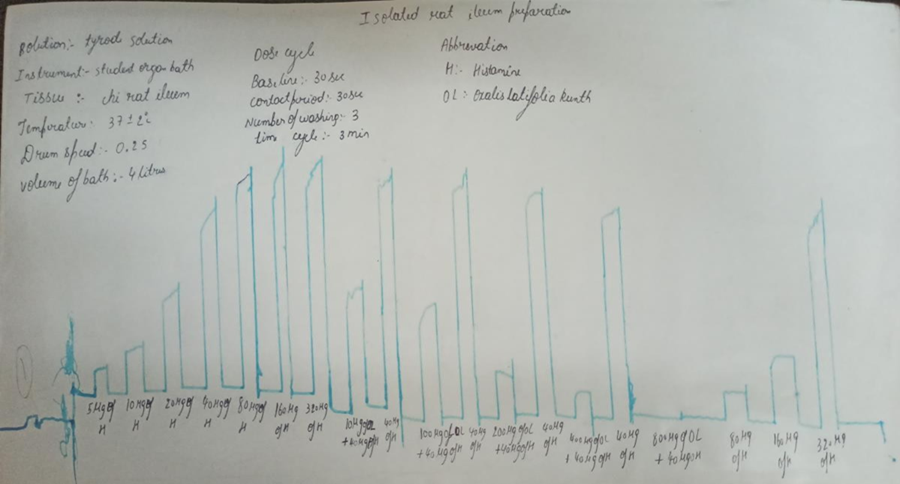
Fig 1 : effect oxalis latifolia kunth ethanolic extract on histamine induced contraction on rat ileum preparation
DISCUSSION:
The present study assessed the anti-inflammatory, and antidiarrheal activities of Oxalis latifolia Kunth using standardised animal models. The results have been summarised and are presented in the context of previous literature.
Anti-inflammatory Activity
Ethanolic extracts of Oxalis latifolia Kunth at doses of 100 mg/kg and 400 mg/kg b.w.p.o. showed significant, dose-dependent anti-inflammatory activity in the cotton pellet-induced granuloma and HRBC membrane stabilization models. The reduction in wet and dry pellet weights indicates inhibition of both exudative and proliferative phases of chronic inflammation, though the standard drug diclofenac exhibited greater potency. The anti-inflammatory effect is likely mediated through inhibition of COX enzymes and suppression of pro-inflammatory cytokines (TNF-α, IL-6), attributed mainly to flavonoids, phenolic acids, and alkaloids. These phytoconstituents stabilize cell and lysosomal membranes, reduce oxidative stress, and inhibit inflammatory mediator release, consistent with reports on related medicinal plants showing similar mechanisms. these findings align with previous studies that have identified similar properties in other species like Allium cepa, Gendarussa vulgaris119, Piper chaba120, Solanum aethiopicum 157 Therefore the plant extracts of oxalis latifolia kunth showed the anti-inflammatory effect due to presence of same phytochemicals in them.
Antidiarrheal Activity
Ethanolic extracts of Oxalis latifolia Kunth at doses of 100 mg/kg and 400 mg/kg b.w.p.o. exhibited significant, dose-dependent antidiarrheal activity in castor oil-induced diarrhoea and gastrointestinal motility models. The extract significantly reduced the number and weight of fecal output, with the 400 mg/kg dose showing activity comparable to loperamide. Castor oil-induced diarrhoea is mediated by Ricinoleic acid, which increases intestinal secretion and motility through prostaglandin release and inhibition of water reabsorption. The antidiarrheal effect of Oxalis latifolia Kunth may be attributed to flavonoids, which inhibit prostaglandin-mediated secretion, reduce histamine release, and decrease intestinal motility.
In the charcoal meal test, the extract significantly reduced intestinal transit, indicating suppression of peristalsis. Additionally, the extract effectively inhibited histamine-induced contraction of rat ileum, suggesting H1 receptor antagonism and smooth muscle relaxation. These findings are consistent with reports on other medicinal plants such as Anethum graveolens, Plantago asiatica, Zingiber officinale, and Glycyrrhiza glabra, supporting a common phytochemical-mediated mechanism for antidiarrheal activity.
Results of this study indicated that the phytochemicals in Oxalis latifolia Kunth, mainly flavonoids and alkaloids, possess anti-inflammatory and antidiarrheal effects. These results correspond to other studies where it was shown that these compounds exerted pain and fever modulation through common biochemical pathways
CONCLUSION:
The present study comprehensively evaluated the preclinical efficacy of the ethanolic extract of Oxalis latifolia Kunth for its antipyretic and analgesic properties.
The findings provide substantial scientific evidence supporting the traditional use of Oxalis latifolia kunth in folk medicine for managing fever, pain, inflammation, and diarrhoea, validating its role as a multi-functional therapeutic agent. Thus, proves scientifically the treatment of Ethanolic extract of oxalis latifolia kunth plant at 400 mg/kg b.w.p.o., and 100 mg b.w.p.o., has shown potent effect on anti-inflammatory and antidiarrheal activity. where 400 mg/kg b.w.p.o., has shown dose dependent action due to presence of concentration of flavonoids is high at this dose. this 400 mg/kg b.w.p.o., dose can be extrapolated to the human use
REFERENCES:
1. Hussain G. Soxhlet Extraction principal, working & Usage. ResearchGate. Available from: (PDF) Soxhlet Extraction principal, working & Usage. Accessed October 26, 2024.
2. Krishnan G, Murugesh P. Phytochemical analysis, anti microbial and anti- oxidant potential of Oxalis latifolia Kunth. European Journal of Biotechnology and Bioscience. 2019;7:88-93.
3. Singh M, Kumar V, Singh I, Gauttam V, Kalia AN et al . Anti-inflammatory activity of aqueous extract of Mirabilis jalapa Linn. leaves. Pharmacog Res. 2010;2(6):364.
4. Kumar RS, Rajkapoor B, Perumal P. Anti-inflammatory and anti-nociceptive activities of methanolic leaf extract of Indigofera cassioides Rottl. Ex. DC. J Acute Dis. 2013;2(4):322-6.
5. Babu NP, Pandikumar P, Ignacimuthu S. Anti-inflammatory activity of Albizia lebbeck Benth., an ethnomedicinal plant, in acute and chronic animal models of inflammation. J Ethnopharmacol. 2009;125(2):356-60.
6. Lalawmpuii PC, Malsawmtluangi C, Vanlalruata R, Kakoti BB et al. Evaluation of anti-inflammatory activity of Helicia nilagirica Bedd on cotton pellet-induced granuloma in rats. Int J Pharm Pharm Sci. 2016;8(7):455-6.
7. Ashok P, Koti BC, Thippeswamy AH, Tikare VP, Dabadi P, Viswanathaswamy AH. Evaluation of Antiinflammatory Activity of Centratherum anthelminticum (L) Kuntze Seed. Indian J Pharm Sci. 2010;72(6):697-703
8. Radhika B, Begum N, Srisailam K et al. In-Vitro and In-Vivo Anti- Inflammatory and Analgesic Activity of Bixa orellana Linn Leaf Extracts. Int J Pharm Pharmacol. 2017;1:108.
9. Saleem TM, Azeem AK, Dilip C, Sankar C, Prasanth NV, Duraisami R et al. Anti–inflammatory activity of the leaf extacts of Gendarussa vulgaris Nees. Asian Pac J Trop Biomed. 2011;1(2):147-9.
10. Kulkarni SK. Hand book of experimental pharmacology. Vallabh prakashan; 1987.
11. Sharma P, Vidyasagar G, Singh S, Ghule S, Kumar B. Antidiarrhoeal activity of leaf extract of Celosia Argentea in experimentally induced diarrhoea in rats. J Adv Pharm Technol Res. 2010;1(1):41.
12. Pramod PS, Math NH, Patil VP, Hugar S. Evaluation of Antidiarrhoeal Activity of Extract of Moringa Oleifera Pods. International Journal of Pharmaceutical and Phytopharmacological Research. 2019;9(3):134-40.
13. Rahman MK, Chowdhury MA, Islam MT, Chowdhury MA, Uddin ME, Sumi CD et al. Evaluation of antidiarrheal activity of methanolic extract of Maranta arundinacea Linn. leaves. Adv Pharmacol Sci. 2015;2015:25705.
14. Murugan S, Purusothaman D, Richard EJ, Chalichem NS, Bethapudi B, Chandrasekaran PR et al. Anti-diarrhoeal activity of a polyherbal formulation in rats and elucidation of its cellular mechanisms. Avicenna J Phytomed. 2020;10(4):417-27.