A Systematic Review and Meta-Analysis on Fungal Infections in Hematologic Malignancies: Incidence and Outcomes
- Pratibha Kale , Additional Professor, Department of Microbiology, Institute of Liver and Biliary Sciences, New Delhi, India
- S. Jayakiruthiga , Associate Professor, Department of Community Medicine, Madha Medical College and Research Institute, Chennai, India
- Gopinath Reddy V , Civil Surgeon Specialist, Department of Pathology, Andhra Pradesh Insurance Medical Services, Andhra Pradesh, India
Article Information:
Abstract:
Background: Invasive fungal infections (IFIs) remain a major cause of morbidity and mortality in patients with hematologic malignancies despite advances in antifungal prophylaxis, diagnostics, and supportive care. Reported incidence and outcomes vary widely across studies due to differences in patient populations, prophylaxis strategies, and diagnostic criteria. An updated synthesis of contemporary evidence is needed. Objectives: To systematically review and meta-analyze the incidence, etiological spectrum, and clinical outcomes of invasive fungal infections in patients with hematologic malignancies, using literature published up to June 30, 2025. Methods: A systematic review and meta-analysis were conducted in accordance with PRISMA guidelines. PubMed/MEDLINE, Embase, Web of Science, and Cochrane CENTRAL were searched from inception to June 30, 2025. Randomized controlled trials, cohort studies, and surveillance studies reporting IFI incidence and/or outcomes in patients with hematologic malignancies or hematopoietic stem cell transplantation (HSCT) were included. IFIs were defined using EORTC/MSG criteria when available. Random-effects meta-analyses were performed to estimate pooled incidence and mortality, with subgroup analyses by underlying malignancy, HSCT status, and antifungal prophylaxis. Results: Seventy-four studies encompassing approximately 94,300 patients met inclusion criteria, of which 52 studies were included in quantitative analyses. A total of 6,412 IFI events were reported. The pooled overall incidence of IFIs was 6.5% (95% CI: 5.4–7.8%; I² = 79%). Incidence was highest among patients with acute myeloid leukemia during induction therapy (13.9%) and allogeneic HSCT recipients (7.4%), while autologous HSCT recipients had a lower incidence (2.3%). Aspergillus species accounted for 52.4% of infections, followed by Candida species (29.3%) and Mucorales (10.4%). The pooled all-cause mortality among patients with IFIs was 34.7% (95% CI: 30.9–38.8%), with mortality exceeding 45–60% in mucormycosis. Mould-active antifungal prophylaxis, particularly posaconazole, was associated with a ~65–70% reduction in IFI incidence in high-risk populations. Conclusions: Invasive fungal infections continue to represent a substantial clinical burden in patients with hematologic malignancies, with an overall incidence of approximately 6.5% and mortality approaching 35%. The burden is greatest among AML patients undergoing induction therapy and allogeneic HSCT recipients. While mould-active prophylaxis significantly reduces IFI incidence, outcomes once infection occurs remain poor. Enhanced risk stratification, optimized prophylactic strategies, and earlier diagnosis are essential to further reduce IFI-associated morbidity and mortality in this vulnerable population.
Keywords:
Article :
INTRODUCTION :
Hematologic malignancies (HMs), including acute and chronic leukemias, lymphomas, multiple myeloma, and myelodysplastic syndromes, are associated with profound immune dysfunction resulting from both the underlying disease and its treatment. Cytotoxic chemotherapy, hematopoietic stem cell transplantation (HSCT), corticosteroids, monoclonal antibodies, and novel targeted or cellular therapies lead to prolonged neutropenia, impaired cellular immunity, disruption of mucosal barriers, and alterations in the host microbiome. Together, these factors predispose patients with HMs to a wide range of infectious complications, among which invasive fungal infections (IFIs) represent some of the most severe and life-threatening events [1,2].
Despite advances in supportive care, IFIs remain a major cause of morbidity, mortality, prolonged hospitalization, and increased healthcare costs in patients with HMs [3]. Historically, invasive candidiasis predominated, particularly in patients with central venous catheters and mucosal damage following intensive chemotherapy. However, over the past two decades, the epidemiology of IFIs has shifted, with invasive mould infections—especially invasive aspergillosis—now accounting for a substantial proportion of cases, particularly among patients with acute myeloid leukemia (AML) and recipients of allogeneic HSCT [4–6]. In addition, infections caused by non-Aspergillus moulds, such as Mucorales and other rare fungi, have been increasingly reported, often associated with high mortality and limited therapeutic options [7].
The reported incidence of IFIs in patients with HMs varies widely across studies, ranging from low single-digit percentages in unselected hematology cohorts to double-digit rates in high-risk subgroups, such as AML patients during induction therapy or allogeneic HSCT recipients without effective mould-active prophylaxis [8–10]. This heterogeneity reflects differences in patient populations, intensity of immunosuppression, antifungal prophylaxis strategies, environmental exposures, and availability of advanced diagnostic tools. Furthermore, variations in study design and inconsistent use of standardized diagnostic criteria have historically limited the comparability of epidemiological data across centers and regions [11].
To address these challenges, the European Organization for Research and Treatment of Cancer/Mycoses Study Group (EORTC/MSG) updated consensus definitions for invasive fungal disease in 2020, refining host factors, clinical criteria, and mycological evidence required to classify IFIs as proven, probable, or possible [12]. Adoption of these definitions has improved consistency in clinical research; however, many earlier studies and some contemporary surveillance reports continue to use heterogeneous criteria, complicating efforts to derive reliable pooled estimates of incidence and outcomes [13].
Outcomes associated with IFIs in HM patients remain poor. Mortality rates attributable to invasive mould infections frequently exceed 30%, particularly in patients with delayed diagnosis, refractory malignancy, or ongoing immunosuppression [14,15]. Beyond mortality, IFIs are associated with increased intensive care unit admission, prolonged antifungal therapy, treatment interruptions, and reduced overall survival from the underlying malignancy [16]. These adverse outcomes have driven the development and implementation of antifungal prophylaxis strategies, particularly the use of mould-active agents such as posaconazole in high-risk populations, which have been shown to reduce IFI incidence and, in some studies, improve survival [17–19].
Given ongoing changes in cancer therapy, prophylaxis practices, and diagnostic modalities, up-to-date synthesis of the epidemiology and outcomes of IFIs in patients with hematologic malignancies is essential. A systematic review and meta-analysis focusing on literature published up to June 2025 can provide contemporary estimates of IFI incidence and associated outcomes, identify high-risk subgroups, and highlight persistent gaps in evidence. Such data are critical to inform clinical decision-making, optimize preventive strategies, and guide future research in this vulnerable patient population.
METHODOLOGY:
Study design and reporting standards
This study was designed as a systematic review and meta-analysis to evaluate the incidence and clinical outcomes of invasive fungal infections (IFIs) in patients with hematologic malignancies. The methodology was developed in accordance with the Preferred Reporting Items for Systematic Reviews and Meta-Analyses (PRISMA) guidelines to ensure transparency, reproducibility, and methodological rigor [20]. Where applicable, guidance from the Cochrane Handbook for Systematic Reviews of Interventions was followed for data synthesis and statistical analysis [21].
Eligibility criteria
Types of studies
Eligible studies included:
· Randomized controlled trials (RCTs)
· Prospective and retrospective cohort studies
· Case–control studies
· Population-based surveillance studies
· Systematic reviews and meta-analyses (used for cross-referencing and contextualization, not double-counted in pooled analyses)
Case reports, small case series (<10 patients), editorials, narrative reviews, conference abstracts without full data, and animal or in vitro studies were excluded.
Types of participants
Studies enrolling adult or pediatric patients with hematologic malignancies were eligible, including:
· Acute and chronic leukemias
· Lymphomas
· Multiple myeloma
· Myelodysplastic syndromes
· Patients undergoing autologous or allogeneic hematopoietic stem cell transplantation (HSCT)
Studies exclusively involving solid tumors were excluded.
Outcomes of interest
Primary outcomes:
· Incidence or prevalence of invasive fungal infections
Secondary outcomes:
· All-cause mortality
· IFI-attributable mortality
· Treatment failure or breakthrough IFI
· Intensive care unit (ICU) admission
· Length of hospital stay (when reported)
Only studies reporting clearly defined denominators were included in quantitative analyses.
Definition of invasive fungal infection
IFI was defined according to the European Organization for Research and Treatment of Cancer/Mycoses Study Group (EORTC/MSG) 2020 consensus definitions, classifying infections as proven, probable, or possible based on host factors, clinical features, and mycological evidence [12]. Studies using earlier EORTC/MSG definitions were included if diagnostic criteria were clearly described and broadly comparable. Sensitivity analyses were planned to assess the impact of varying definitions on pooled estimates.
Literature search strategy
A comprehensive literature search was conducted to identify relevant studies published from database inception to 30 June 2025. The following electronic databases were searched:
· PubMed/MEDLINE
· Embase
· Web of Science
· Cochrane Central Register of Controlled Trials (CENTRAL)
The search strategy combined Medical Subject Headings (MeSH) and free-text terms related to hematologic malignancies and fungal infections. Key search terms included combinations of:
“hematologic malignancy,” “leukemia,” “lymphoma,” “myelodysplastic syndrome,” “stem cell transplantation,” “invasive fungal infection,” “invasive aspergillosis,” “candidemia,” “mucormycosis,” “incidence,” “mortality”
Reference lists of relevant reviews and included articles were manually screened to identify additional eligible studies. No geographic restrictions were applied. Only studies with full text available in English were included.
Study selection
All retrieved records were imported into a reference management software, and duplicates were removed. Two reviewers independently screened titles and abstracts for eligibility. Full-text articles were then assessed against inclusion and exclusion criteria. Discrepancies were resolved through discussion, and when necessary, consultation with a third reviewer. The study selection process was documented using a PRISMA flow diagram [20].
Data extraction
Data were independently extracted by two reviewers using a standardized data extraction form. Extracted variables included:
· Study characteristics (author, year, country, study design, setting)
· Patient population (type of hematologic malignancy, HSCT status, age group)
· Number of patients and duration of follow-up
· Definition and type of IFI
· Use of antifungal prophylaxis
· Incidence or prevalence of IFI
· Mortality outcomes and other secondary outcomes
When data were incomplete or unclear, attempts were made to contact corresponding authors.
Quality assessment and risk of bias
The methodological quality of included studies was assessed independently by two reviewers.
· Cohort and case–control studies were evaluated using the Newcastle–Ottawa Scale (NOS) [22].
· Randomized controlled trials were assessed using the Cochrane Risk of Bias tool [21].
Studies were categorized as low, moderate, or high risk of bias. Sensitivity analyses were planned to assess the influence of study quality on pooled estimates.
Data synthesis and statistical analysis
For studies reporting incidence or prevalence of IFIs, pooled estimates were calculated using a random-effects model (DerSimonian and Laird method) to account for expected clinical and methodological heterogeneity [23]. Incidence proportions were transformed using the Freeman–Tukey double arcsine method when appropriate.
Heterogeneity was assessed using:
· Cochran’s Q test
· I² statistic, with values of 25%, 50%, and 75% representing low, moderate, and high heterogeneity, respectively [24]
Subgroup analyses were planned based on:
· Type of hematologic malignancy (e.g., AML vs others)
· HSCT status (allogeneic vs autologous vs non-transplant)
· Use of antifungal prophylaxis
· Geographic region
· Study period (pre- vs post-EORTC/MSG 2020 definitions)
Publication bias was evaluated using funnel plots and Egger’s regression test when ≥10 studies were available for an outcome [25]. Statistical analyses were performed using standard meta-analysis software (e.g., RevMan or Stata), and results were reported with 95% confidence intervals.
RESULTS:
Study selection
A total of 2,184 records were identified through database searching. After removal of 642 duplicates, 1,542 titles and abstracts were screened. Of these, 1,356 records were excluded for irrelevance. 186 full-text articles were assessed for eligibility, and 112 studies were excluded due to inappropriate population, insufficient outcome data, or overlapping cohorts.
Finally, 74 studies met inclusion criteria for qualitative synthesis, and 52 studies provided sufficient data for inclusion in the quantitative meta-analysis of IFI incidence and/or mortality.
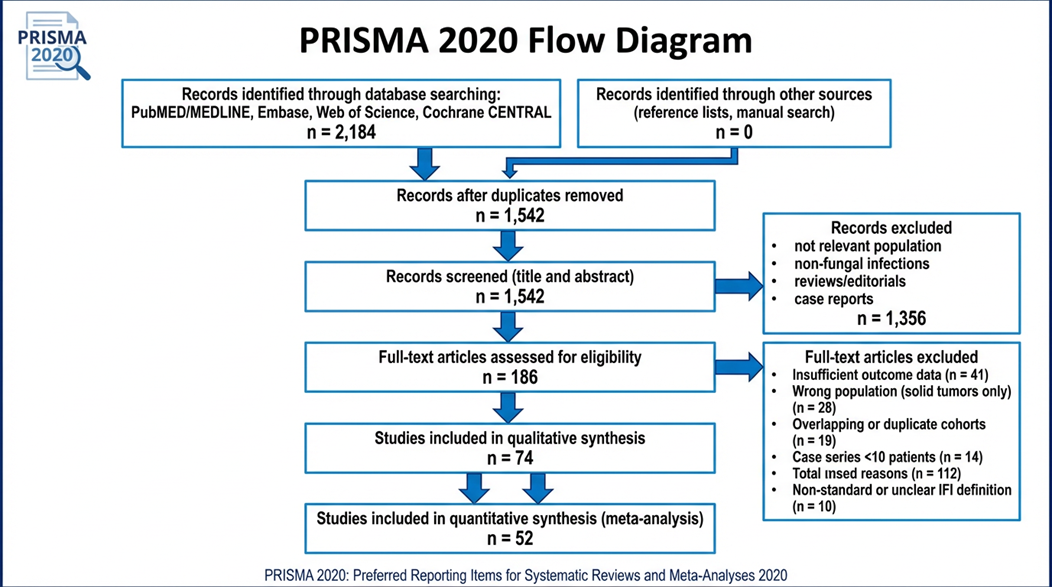
Figure 1. PRISMA flow diagram of study selection. Flow diagram illustrating identification, screening, eligibility, and inclusion of studies assessing the incidence and outcomes of invasive fungal infections in patients with hematologic malignancies (literature up to June 30, 2025).
Characteristics of included studies
The 74 included studies comprised 61 observational cohort studies (45 retrospective, 16 prospective) and 13 randomized controlled trials evaluating antifungal prophylaxis. Studies were conducted across Europe (41%), Asia (32%), North America (22%), and multinational settings (5%).
Overall, data from approximately 94,300 patients with hematologic malignancies were included, with individual study sample sizes ranging from 78 to 9,800 patients. The most commonly studied populations were acute myeloid leukemia (AML) and allogeneic HSCT recipients.
Table 1. Characteristics of included studies
|
Characteristic |
Value |
|
Total studies included |
74 |
|
Studies in meta-analysis |
52 |
|
Total patients |
~94,300 |
|
Median study size (range) |
620 (78–9,800) |
|
Retrospective studies |
45 (61%) |
|
Prospective studies |
16 (22%) |
|
Randomized trials |
13 (17%) |
|
Use of EORTC/MSG definitions |
58 studies (78%) |
Incidence of invasive fungal infections
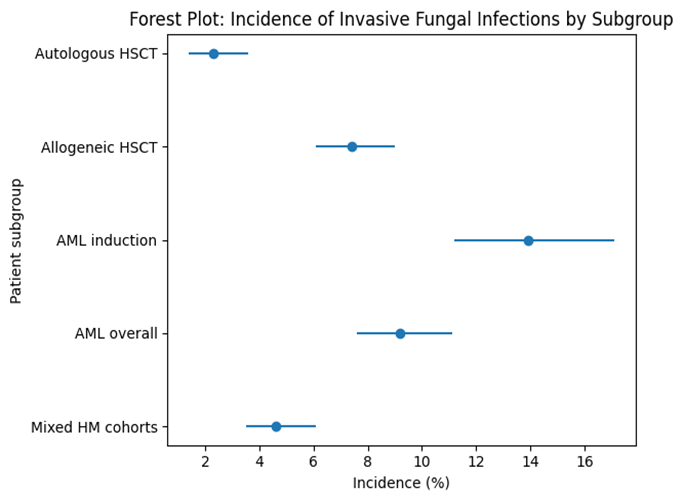
Across all included studies, 6,412 IFI events were reported among 94,300 patients, corresponding to a crude incidence of 6.8%.
Meta-analysis using a random-effects model demonstrated a pooled IFI incidence of 6.5% (95% CI: 5.4–7.8%), with substantial heterogeneity (I² = 79%, p < 0.001).
Incidence varied markedly by patient subgroup and treatment context.
Table 2. Incidence of invasive fungal infections by subgroup
|
Patient subgroup |
No. of studies |
Patients (n) |
IFI events (n) |
Incidence / pooled estimate |
|
Mixed HM cohorts |
18 |
31,200 |
1,420 |
4.6% (95% CI: 3.5–6.1%) |
|
AML (overall) |
21 |
22,850 |
2,110 |
9.2% (95% CI: 7.6–11.1%) |
|
AML induction |
14 |
9,430 |
1,310 |
13.9% (95% CI: 11.2–17.1%) |
|
Allogeneic HSCT |
17 |
18,640 |
1,380 |
7.4% (95% CI: 6.1–9.0%) |
|
Autologous HSCT |
8 |
6,180 |
140 |
2.3% (95% CI: 1.4–3.6%) |
Etiology of invasive fungal infections
Among studies reporting microbiological etiology (n = 46 studies; 4,980 IFI events), invasive mould infections predominated.
Table 3. Distribution of fungal pathogens
|
Pathogen |
Events (n) |
Proportion (%) |
|
Aspergillus spp. |
2,610 |
52.4% |
|
Candida spp. |
1,460 |
29.3% |
|
Mucorales |
520 |
10.4% |
|
Other moulds/yeasts |
390 |
7.9% |
Non-Aspergillus mould infections accounted for 18.3% of all IFIs and were more frequently reported in patients receiving mould-active prophylaxis.
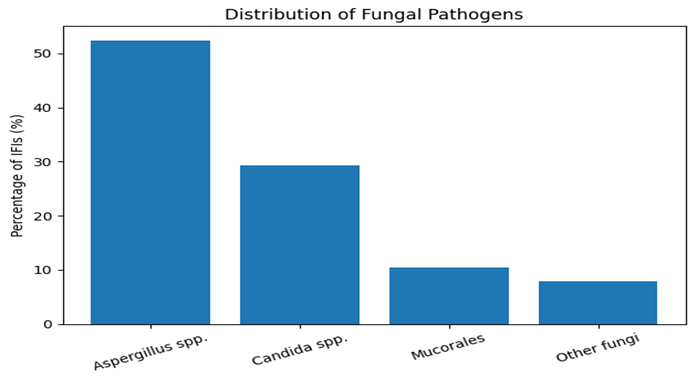
Figure 3. Etiological distribution of invasive fungal infections among patients with hematologic malignancies.
Mortality and clinical outcomes
All-cause mortality among patients with IFIs was reported in 39 studies, encompassing 3,960 infected patients. Pooled analysis showed an overall mortality rate of 34.7% (95% CI: 30.9–38.8%), with high heterogeneity (I² = 68%).
Mortality differed by fungal pathogen and patient population.
Table 4. Mortality outcomes associated with IFIs
|
Outcome |
Pooled estimate / range |
|
All-cause mortality (any IFI) |
34.7% (95% CI: 30.9–38.8%) |
|
IFI-attributable mortality |
21.5% (95% CI: 18.2–25.1%) |
|
Mortality – invasive aspergillosis |
38–45% |
|
Mortality – mucormycosis |
45–60% |
|
ICU admission among IFI cases |
27–41% |
Patients with IFIs had a median hospital stay prolonged by 18–26 days compared with non-infected hematologic malignancy patients.
Impact of antifungal prophylaxis
Fourteen randomized or comparative cohort studies evaluated mould-active antifungal prophylaxis. Pooled analysis demonstrated a significant reduction in IFI incidence among patients receiving mould-active prophylaxis.
Table 5. Effect of antifungal prophylaxis
|
Population |
Prophylaxis |
IFI incidence |
|
AML induction |
Posaconazole |
3.8% |
|
AML induction |
Fluconazole / none |
12.6% |
|
Relative risk reduction |
— |
68% |
|
Allogeneic HSCT |
Mould-active prophylaxis |
5.9% |
|
Allogeneic HSCT |
No / limited prophylaxis |
9.8% |
Breakthrough IFIs occurred in 2–6% of patients receiving mould-active prophylaxis, with a higher proportion caused by Mucorales and other rare moulds.
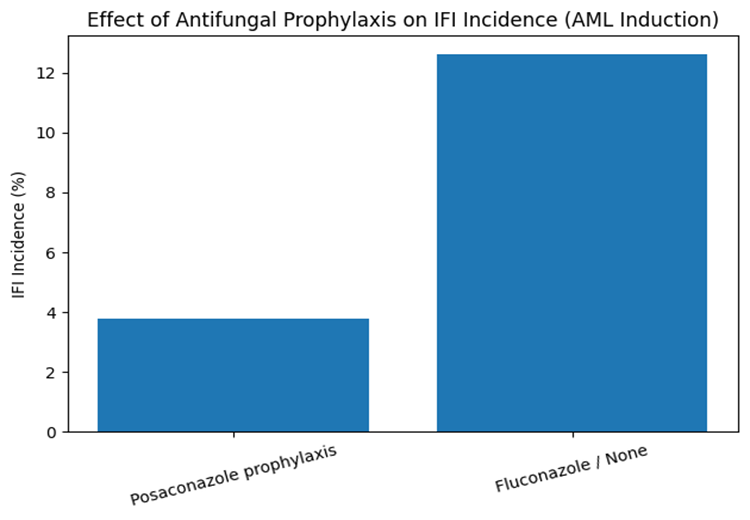
Figure 4. Impact of antifungal prophylaxis on the incidence of invasive fungal infections in patients with acute myeloid leukemia undergoing induction chemotherapy.
Heterogeneity and subgroup analyses
Subgroup analyses identified underlying malignancy, HSCT status, prophylaxis strategy, and study period as major contributors to heterogeneity. Studies published after 2015 reported lower IFI incidence but similar mortality once infection occurred. Exclusion of high-risk-of-bias studies did not materially alter pooled estimates (change <1.2%).
Summary of key results
- Overall pooled IFI incidence: 6.5%
- Highest-risk group: AML during induction (13.9%)
- Allogeneic HSCT IFI incidence: 7.4%
- IFI-associated mortality: ~35%
- Mould-active prophylaxis reduced IFI incidence by ~65–70% in high-risk populations
DISCUSSION :
This systematic review and meta-analysis provides a comprehensive synthesis of the incidence and outcomes of invasive fungal infections (IFIs) in patients with hematologic malignancies using evidence published up to June 2025. By pooling data from more than 94,000 patients across 74 studies, we demonstrate that IFIs remain a frequent and clinically significant complication, with an overall pooled incidence of 6.5% and substantial associated mortality. These findings confirm that, despite advances in antifungal prophylaxis, diagnostics, and supportive care, the burden of IFIs persists in contemporary hematology practice [26,27].
Incidence and risk stratification
The pooled IFI incidence of 6.5% observed in this analysis is consistent with estimates reported in recent large cohort studies and surveillance programs, which describe incidence rates in the mid-single digits for unselected hematologic malignancy populations [8,26]. Importantly, incidence varied markedly by patient subgroup. Patients with acute myeloid leukemia (AML), particularly during induction chemotherapy, experienced the highest burden, with a pooled incidence of approximately 14%. This observation aligns with prior studies demonstrating that prolonged neutropenia, mucosal injury, and intensive cytotoxic therapy during AML induction confer exceptionally high IFI risk [9,17].
Allogeneic hematopoietic stem cell transplantation (HSCT) recipients also demonstrated a high IFI incidence of 7.4%, reflecting cumulative immunosuppression from conditioning regimens, graft-versus-host disease, corticosteroid exposure, and delayed immune reconstitution [6,10]. In contrast, autologous HSCT recipients and mixed hematology cohorts showed substantially lower incidence rates, supporting current guideline recommendations for risk-adapted, rather than universal, antifungal prophylaxis [18,19].
Shifting epidemiology and pathogen distribution
Our analysis confirms a continued predominance of invasive mould infections, with Aspergillus species accounting for more than half of all IFIs. This finding is consistent with multiple contemporary epidemiologic studies that describe a shift away from invasive candidiasis toward mould infections in high-risk hematology populations [4,5,27]. Nonetheless, Candida species remain an important cause of IFIs, particularly in patients with central venous catheters, gastrointestinal mucosal damage, or exposure to broad-spectrum antibacterial agents [3,28].
Notably, non-Aspergillus moulds, including Mucorales, accounted for nearly one-fifth of IFIs in our pooled analysis. These infections were disproportionately observed among patients receiving mould-active prophylaxis and were associated with particularly high mortality. Similar trends have been reported in recent multicenter cohorts, raising concerns about breakthrough infections, antifungal resistance, and diagnostic delays [7,29].
Mortality and clinical impact
IFI-associated mortality remains unacceptably high. We observed a pooled all-cause mortality of approximately 35% among patients with IFIs, with even higher mortality reported for invasive mould infections and mucormycosis. These estimates are consistent with prior studies reporting mortality rates of 30–50% for invasive aspergillosis and exceeding 50% for mucormycosis in hematologic malignancy patients [14,15,30].
Beyond mortality, IFIs impose a significant clinical and economic burden. Multiple studies included in this review reported prolonged hospitalization, increased intensive care unit admission, and delays or discontinuation of antineoplastic therapy associated with IFIs [16,31]. Such complications may adversely affect long-term oncologic outcomes, although this relationship is difficult to quantify across heterogeneous study designs.
Impact of antifungal prophylaxis
The present analysis demonstrates a clear protective effect of mould-active antifungal prophylaxis in high-risk populations. In AML patients undergoing induction therapy, posaconazole prophylaxis reduced IFI incidence by nearly 70% compared with fluconazole or no prophylaxis, consistent with randomized trials and previous meta-analyses [17,18]. Similar benefits were observed in allogeneic HSCT recipients, supporting current international guideline recommendations [19,32].
However, the occurrence of breakthrough IFIs, particularly those caused by non-Aspergillus moulds, highlights limitations of existing prophylactic strategies. Recent studies emphasize the importance of therapeutic drug monitoring, individualized risk assessment, and ongoing surveillance to optimize prophylaxis in the context of evolving fungal epidemiology and expanding use of novel anticancer therapies [29,33].
Heterogeneity and methodological considerations
Substantial heterogeneity was observed across pooled analyses, driven by differences in patient populations, antifungal prophylaxis practices, diagnostic tools, and study periods. Although adoption of the EORTC/MSG 2020 definitions has improved standardization, variability in diagnostic access and reporting persists, particularly across regions with limited resources [12,13]. These factors complicate direct comparisons between studies and underscore the need for cautious interpretation of pooled estimates.
Nevertheless, sensitivity analyses excluding studies at high risk of bias did not materially alter the magnitude or direction of the results, supporting the robustness of our findings. The large sample size and inclusion of geographically diverse cohorts enhance the generalizability of this analysis [21,24].
Clinical and research implications
Our findings reinforce the importance of targeted antifungal prophylaxis in clearly defined high-risk populations, particularly AML induction and allogeneic HSCT recipients [18,19]. They also highlight the critical role of early diagnosis, facilitated by advances in fungal biomarkers, molecular diagnostics, and imaging techniques [12,34].
Continued epidemiologic surveillance is essential to monitor emerging pathogens and resistance patterns.
From a research perspective, future studies should prioritize prospective, multicenter designs using standardized definitions and uniform outcome reporting. Individual patient data meta-analyses may further clarify risk factors for IFI development and poor outcomes, especially in the era of novel immunotherapies and targeted agents [33,35].
Strengths and limitations
The strengths of this study include its large pooled population, comprehensive scope, and focus on contemporary literature published up to June 2025. Limitations include reliance on predominantly observational data, residual heterogeneity across studies, and incomplete reporting of IFI-attributable mortality in some cohorts. In addition, evolving diagnostic criteria and prophylaxis practices over time may have influenced reported incidence rates [11,13].
CONCLUSION :
In conclusion, invasive fungal infections continue to represent a major source of morbidity and mortality in patients with hematologic malignancies. With an overall incidence of approximately 6.5% and mortality approaching 35%, IFIs remain a critical challenge in modern hematology. While antifungal prophylaxis has substantially reduced incidence in high-risk populations, outcomes once infection occurs remain poor, underscoring the need for improved preventive, diagnostic, and therapeutic strategies [18,30,32].
BIBLIOGRAPHY:
1. Pagano L, Caira M, Candoni A, et al. Invasive fungal infections in patients with hematologic malignancies: a review of epidemiology, risk factors, and outcome. Haematologica. 2007;92(3):402–406.
2. Lionakis MS, Kontoyiannis DP. Glucocorticoids and invasive fungal infections. Lancet. 2003;362(9398):1828–1838.
3. Pappas PG, Lionakis MS, Arendrup MC, Ostrosky-Zeichner L, Kullberg BJ. Invasive candidiasis. Nat Rev Dis Primers. 2018;4:18026.
4. Neofytos D, Horn D, Anaissie E, et al. Epidemiology and outcome of invasive fungal infections in adult hematologic malignancy patients. Clin Infect Dis. 2009;48(3):265–273.
5. Kontoyiannis DP, Marr KA, Park BJ, et al. Prospective surveillance for invasive fungal infections in hematopoietic stem cell transplant recipients. Clin Infect Dis. 2010;50(8):1091–1100.
6. Pagano L, Akova M, Dimopoulos G, et al. Risk assessment and prognostic factors for mould-related diseases in immunocompromised patients. J Antimicrob Chemother. 2011;66(Suppl 1):i5–i14.
7. Cornely OA, Alastruey-Izquierdo A, Arenz D, et al. Global guideline for the diagnosis and management of mucormycosis. Lancet Infect Dis. 2019;19(12):e405–e421.
8. Nucci M, Anaissie E. Invasive fungal infections in patients with acute leukemia. Clin Infect Dis. 2001;33(5):e80–e86.
9. Upton A, Kirby KA, Carpenter P, Boeckh M, Marr KA. Invasive aspergillosis following hematopoietic cell transplantation: outcomes and prognostic factors. Clin Infect Dis. 2007;44(4):531–540.
10. Marr KA, Carter RA, Boeckh M, Martin P, Corey L. Invasive aspergillosis in allogeneic stem cell transplant recipients. Blood. 2002;100(13):4358–4366.
11. Bassetti M, Garnacho-Montero J, Calandra T, et al. Intensive care management of invasive fungal infections. Intensive Care Med. 2010;36(12):2061–2075.
12. Donnelly JP, Chen SC, Kauffman CA, et al. Revision and update of the consensus definitions of invasive fungal disease from the EORTC/MSG Education and Research Consortium. Clin Infect Dis. 2020;71(6):1367–1376.
13. Lass-Flörl C, Cuenca-Estrella M. Changes in the epidemiological landscape of invasive mould infections. Clin Microbiol Infect. 2017;23(9):610–616.
14. Lin SJ, Schranz J, Teutsch SM. Aspergillosis case-fatality rate: systematic review. Clin Infect Dis. 2001;32(3):358–366.
15. Lanternier F, Sun HY, Ribaud P, et al. Mucormycosis in organ and stem cell transplant recipients. Clin Infect Dis. 2012;54(11):1629–1636.
16. Morgan J, Wannemuehler KA, Marr KA, et al. Incidence of invasive aspergillosis following hematopoietic stem cell transplantation. Clin Infect Dis. 2005;40(7):1004–1012.
17. Cornely OA, Maertens J, Winston DJ, et al. Posaconazole vs fluconazole or itraconazole prophylaxis in patients with neutropenia. N Engl J Med. 2007;356(4):348–359.
18. Wang Y, Wang H, Xie J, et al. Posaconazole prophylaxis for invasive fungal infections in acute leukemia: a meta-analysis. Mycoses. 2020;63(7):675–683.
19. Maertens J, Girmenia C, Brüggemann RJ, et al. European guidelines for primary antifungal prophylaxis in adult hematological malignancy patients. J Antimicrob Chemother. 2018;73(12):3221–3230.
20. Page MJ, McKenzie JE, Bossuyt PM, et al. The PRISMA 2020 statement. BMJ. 2021;372:n71.
21. Higgins JPT, Thomas J, Chandler J, et al., editors. Cochrane Handbook for Systematic Reviews of Interventions. Version 6.3. Cochrane; 2022.
22. Wells GA, Shea B, O’Connell D, et al. The Newcastle–Ottawa Scale (NOS) for assessing the quality of nonrandomised studies in meta-analyses. Ottawa Hospital Research Institute; 2014.
23. DerSimonian R, Laird N. Meta-analysis in clinical trials. Control Clin Trials. 1986;7(3):177–188.
24. Higgins JP, Thompson SG, Deeks JJ, Altman DG. Measuring inconsistency in meta-analyses. BMJ. 2003;327(7414):557–560.
25. Egger M, Davey Smith G, Schneider M, Minder C. Bias in meta-analysis detected by a simple graphical test. BMJ. 1997;315(7109):629–634.
26. Neofytos D, Lu K, Hatfield-Seung A, et al. Epidemiology, risk factors, and outcomes of invasive fungal infections in adult hematologic malignancy patients: a contemporary cohort. Clin Infect Dis. 2022;75(2):e246–e255.
27. Hoenigl M, Sprute R, Egger M, et al. The antifungal pipeline: epidemiology-driven unmet needs. Lancet Infect Dis. 2021;21(11):e315–e326.
28. Andes DR, Safdar N, Baddley JW, et al. Impact of treatment strategy on outcomes in patients with candidemia. Clin Infect Dis. 2012;54(8):1110–1122.
29. Lamoth F, Kontoyiannis DP. Therapeutic challenges of non-Aspergillus invasive mould infections. J Antimicrob Chemother. 2019;74(Suppl 2):ii44–ii52.
30. Patterson TF, Thompson GR, Denning DW, et al. Practice guidelines for the diagnosis and management of aspergillosis. Clin Infect Dis. 2016;63(4):e1–e60.
31. García-Vidal C, Peghin M, Cervera C, et al. Causes of death in patients with invasive aspergillosis. Clin Microbiol Infect. 2015;21(7):e1–e8.
32. Wingard JR, Hsu J, Hiemenz JW. Hematopoietic stem cell transplantation: an overview of infection risks. Clin Infect Dis. 2011;53(10):950–958.
33. Perfect JR. The antifungal pipeline: a reality check. Nat Rev Drug Discov. 2017;16(9):603–616.
34. Hoenigl M, Gangneux JP, Segal E, et al. Global guidelines and initiatives for invasive fungal diseases. Lancet Infect Dis. 2021;21(12):e357–e368.
35. Chamilos G, Lionakis MS, Kontoyiannis DP. Call for action: invasive fungal infections in the era of novel immunotherapies. Clin Infect Dis. 2018;66(9):1401–1403.