Formulation and Evaluation of Herbal Emulgel Containing Witch Hazel Extract for Anti-Inflammatory Activity
- Upade Mayur Sanjay , Department of Pharmaceutics, Channabasweshwar Pharmacy College (Degree), Latu
- Khadkutkar Vijayananda K , Department of Pharmaceutics, Channabasweshwar Pharmacy College (Degree), Latur
- Mali Mahesh Manohar , Dr. D Y Patil College of Pharamacy, Akurdi , Pune.
- Kamble Maithili Sahebrao , Department of Pharmaceutics Channabasweshwar Pharmacy College (Degree) ,Latur
Article Information:
Abstract:
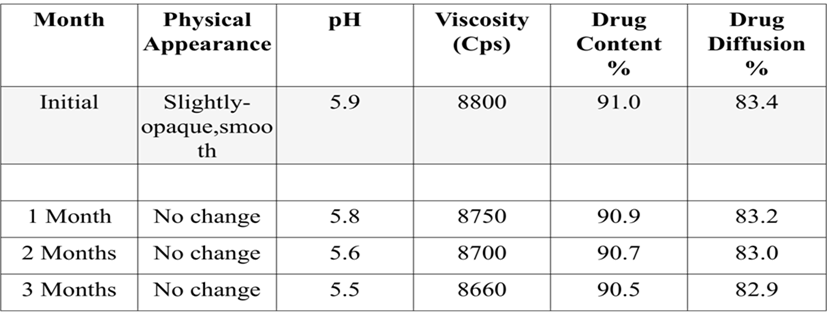
Background: Inflammatory skin disorders often require long-term topical therapy, where safety, efficacy, and patient compliance are major concerns. Herbal medicines provide a promising alternative to synthetic agents. Witch Hazel (Hamamelis virginiana) is known for its anti-inflammatory, antioxidant, and astringent activities. The present study aimed to formulate and evaluate a herbal emulgel containing Witch Hazel extract for anti-inflammatory activity. The bark extract was obtained using hydroalcoholic maceration and incorporated into six different emulgel batches using Carbopol 940, HPMC, and Xanthan gum as gelling agents. Formulations were evaluated for organoleptic properties, pH, viscosity, spreadability, drug content, in vitro diffusion, anti-inflammatory activity by HRBC membrane stabilization, and stability studies. Among the six batches, F5 showed optimal performance with pH 5.9 viscosity 8800 cP, drug content 91%, sustained release up to 83.4% over 13 hours, and 73.78% inhibition in anti-inflammatory assay compared to 93.45% by aspirin. Stability studies revealed no significant changes in physicochemical parameters over 3 months. The findings suggest that Witch Hazel emulgel is a stable, effective, and patient-friendly formulation with potential use for inflammatory skin disorders.
Keywords:
Article :
INTRODUCTION:
Skin is the largest organ of the body and a primary barrier against microbial invasion, injury, and environmental exposure1. Inflammatory skin disorders such as atopic dermatitis, psoriasis, and seborrheic dermatitis significantly impair quality of life due to chronic itching, scaling, redness, and swelling2. Current therapies include corticosteroids, immunosuppressants, and topical creams, but they are often associated with side effects, irritation, and poor compliance.
Emulgels, a hybrid of emulsion and gel systems, combine the advantages of both dosage forms, providing better stability, cosmetic acceptability, non-greasy texture, and sustained drug release3. They are suitable for localized drug delivery, bypass first-pass metabolism, and improve patient compliance. Herbal drugs, when incorporated in emulgels, offer enhanced therapeutic efficacy with reduced risk of side effects4.
Witch Hazel (Hamamelis virginiana) is a well-known medicinal plant with phytoconstituents such as tannins, flavonoids, and gallic acid, responsible for its anti-inflammatory, antimicrobial, and antioxidant activities5. It has been traditionally used in treating skin irritations, wounds, eczema, and hemorrhoids6. However, conventional formulations face limitations like poor penetration and instability. Thus, developing a Witch Hazel-based herbal emulgel provides a modern, stable, and effective topical delivery system7.
The present study focuses on the formulation and evaluation of herbal emulgel containing Witch Hazel extract for anti-inflammatory activity.
MATERIALS AND METHODS:
Materials
Witch hazel bark extract, Carbopol 940, HPMC, Xanthan gum, Span 20, Tween 80, Light liquid paraffin, Methyl paragon, propylene glycol, triethanolamine, distilled water.
Mathods
Extraction of Witch Hazel
1. Bark was shade-dried and coarsely powdered.
2. Macerated with hydroalcoholic solvent (70:30 ethanol-water) for 72 hours at room temperature with occasional shaking.
3. Filtrate was concentrated under reduced pressure at <40°C using a rotary evaporator.
4. Extract was stored in amber-colored bottles for further use.
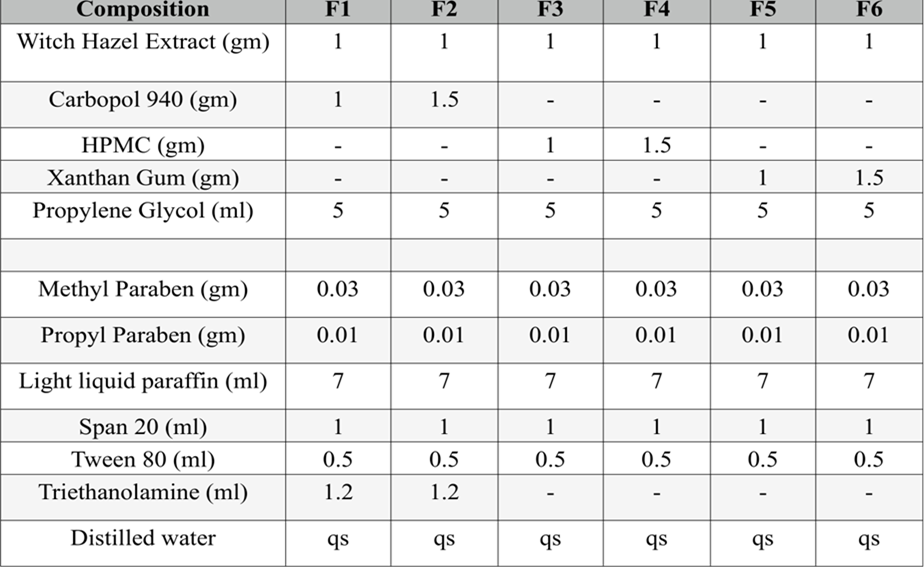
Method of Preparation of Emulgel
Step 1: Oil-in-water emulsion prepared by heating oil phase and aqueous phase separately at 60–70°C, then combining with continuous stirring.
Step 2: Gel bases prepared individually with Carbopol 940, HPMC, and Xanthan gum.
Step 3: Emulsion incorporated into gel base in 1:1 ratio with gentle stirring to avoid air entrapment.
Evaluation of Witch Hazel Emulgel
1. Physical Appearance:
The formulated emulgel was examined visually to assess its colour, uniformity, consistency, and any sign of phase separation. The colour contrast was checked against both white and black backgrounds. To evaluate consistency, a small amount was applied to the skin and observed.
2. pH Measurement:
Measuring the pH is essential for ensuring the emulgel is suitable for topical application. An ideal pH range between 5.5 and 6.0 is preferred to match the skin’s natural pH and avoid irritation. The pH was determined using a calibrated digital pH meter by immersing the glass electrode into the sample. Each formulation was tested three times, and the mean value was recorded.
3. Viscosity:
Viscosity was determined using a Brookfield Viscometer. A measured quantity of the emulgel was placed in a beaker and allowed to settle for 30 minutes at room temperature (25–30°C). The spindle (spindle no.6) was carefully positioned to avoid contact with the bottom of the container and rotated at 100 RPM for 10 minutes. The viscosity reading was then recorded.
4. Spreadability:
Spreadability was tested using a setup involving two glass slides and a wooden block with a pulley mechanism. A fixed amount (1 g) of emulgel was placed between two slides, with one slide mounted on a block. A standard weight (50 g) was applied, and the time taken for the upper slide to move was noted. The spreadability was calculated using the formula:
S=ML/T
Where:
S = Spreadability
M = Weight attached to the upper slide (g)
L = Distance moved by the slide (cm)
T = Time taken to separate the slides (sec)
5. Drug Content Estimation:
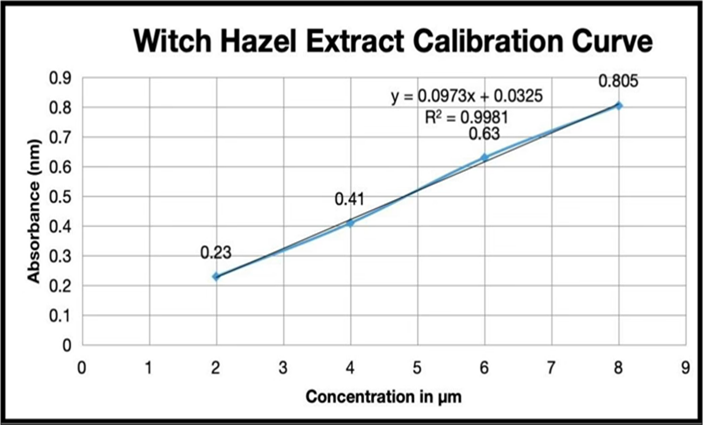
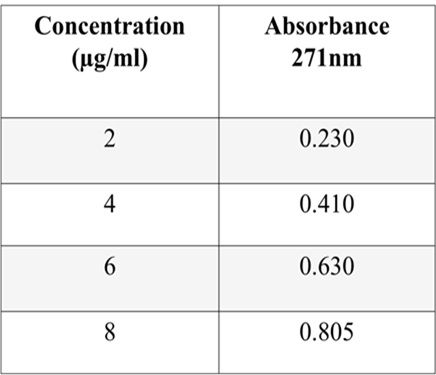
To determine the active ingredient concentration, 1 g of emulgel was dissolved in 100 ml of methanol. After proper dilution and filtration through a 0.45 µm membrane, the solution’s absorbance was measured at 271 nm using a UV-Visible spectrophotometer.
6. In Vitro Drug Diffusion Studies:
The diffusion study was performed using a modified dissolution basket-type apparatus with a two- sided open glass cylinder. A dialysis membrane (HiMedia, MW 12–14 kDa) was fixed at one end, and 1 g of the formulation was placed inside. The setup was immersed in 200 mL of phosphate buffer (pH 7.2) maintained at 37±1°C. At predetermined intervals (1to 13 hours), 0.5 mL samples were withdrawn and replaced with fresh buffer (pH 6.8) to maintain sink conditions. Samples were analyzed at 271 nm using a UV-visible spectrophotometer, and % cumulative drug release (%CDR) was calculated.
7. Evaluation of Anti-Inflammatory Activity –Human Membrane Stabilization Assay (HRBC Method) To assess the anti-inflammatory activity of the prepared witch hazel emulgel, the human red blood cell (HRBC) membrane stabilization method was employed. Blood samples were obtained from a healthy volunteer who had not consumed any non-steroidal anti-inflammatory drugs (NSAIDs) for at least two weeks prior to collection. The blood was collected into sterile centrifuge tubes and centrifuged at 3000 rpm for 10 minutes to separate the red blood cells. The sedimented RBCs were washed three times with an equal volume of normal saline (0.9% NaCl) to remove any plasma and other components. After the final wash, the packed cell volume was noted, and the erythrocytes were re-suspended in normal saline to prepare a 10% v/v RBC suspension. This suspension was then used in further steps to evaluate the membrane stabilizing effect of the test emulgel, which indirectly reflects its potential Anti -inflammatory properties.
RESULT AND DISCUSSION:
Organoleptic properties
The drug was studied for their organoleptic properties like colour, odour, taste, crystallinity and Ph observation was recorded in table 1.
Table no 2: organoleptic Properties of Witch Hazel
|
Parameters |
Result |
|
Colour |
Light Brown |
|
Odour |
Mild |
|
Appearance |
Fine to Moderate Coarse powder |
Solubility Study
The solubility of witch hazel is found to be as per following table
Table no 3: Solubility of Witch Hazel
|
Sr. No |
Solvent System |
Result |
|
1 |
Ethanol |
Soluble |
|
2 |
Methanol |
Soluble |
|
3 |
Water |
Soluble |
|
4 |
Glycerine |
Partially soluble |
|
5 |
Propylene glycol |
Soluble |
Phytochemical Screening
Preliminary qualitative phytochemical screening revealed the presence of the following :
Table No 4: Phytochemical tests
|
Phytoconstituent |
Test Performed |
Observation |
Inference |
|
Tannins |
Ferric Chloride test-Lead Acetate test |
Blue black or green colour |
Present |
|
Flavonoids |
Shinoda Test Alkaline Reagent Test |
Magenta Colour |
Present |
|
Phenolic compounds |
Ferric Chloride test |
Deep Blue black or green colour |
Present |
|
Saponins |
Foam Test |
Persistent froth formation |
Present |
|
Terpenoids |
Salkowski Test |
Raddish brown |
Present |
FTIR Spectrum Interpretation
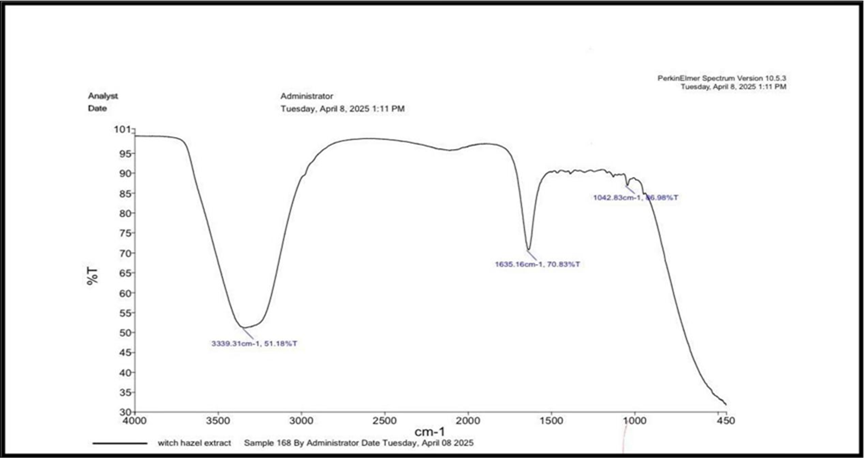
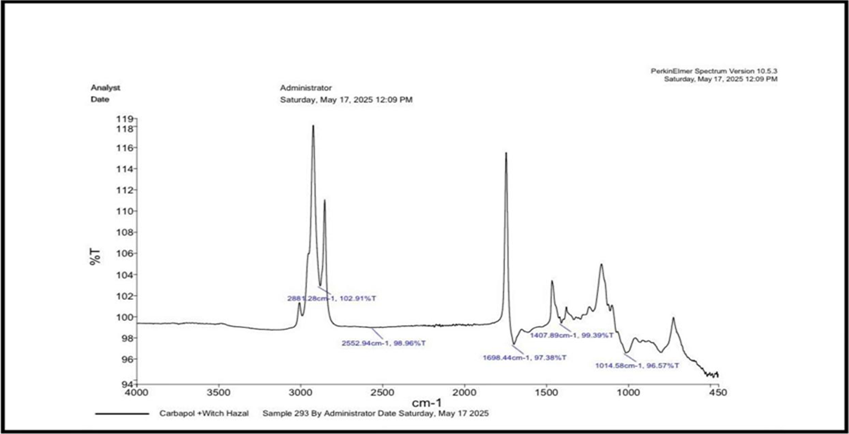
Fig No. 2: FTIR of Witch hazel extract
Fig No. 2: FTIR of Witch hazel extract + Carbopol 940
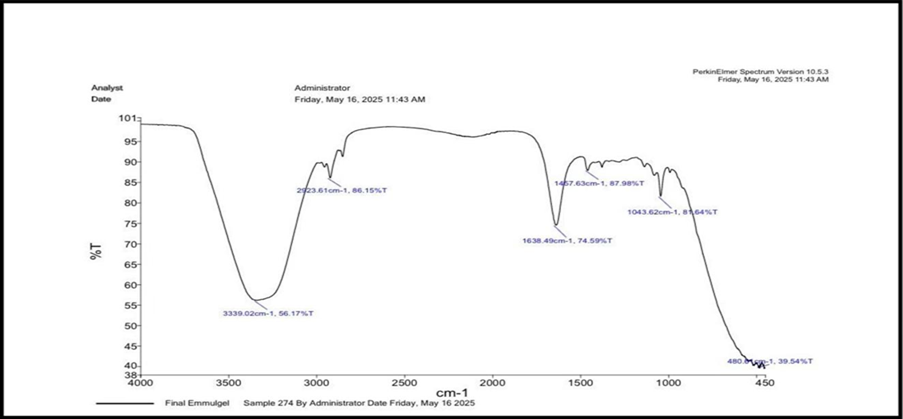
Fig No. 3: FTIR of Witch hazel extract Emulgel Formulation
Evaluation of Emulgel
Table No 5: Evaluation parameters of emulgel
|
Formulation code |
Appearance |
Viscosity (CPS) |
pH |
Spreadability (gm/sec) |
|
F1 |
Semi-transparent, brownish |
5800 |
5.9 |
9.7 |
|
F2 |
Semi-transparent, brownish |
7200 |
5.8 |
8.3 |
|
F3 |
Semi transparent, brownish |
4300 |
5.5 |
9.7 |
|
F4 |
Semi transparent, brownish |
6200 |
5.7 |
9.2 |
|
F5 |
Semi transparent, brownish |
8800 |
5.9 |
7.7 |
|
F6 |
Semi transparent, brownish |
8300 |
6.0 |
7.9 |
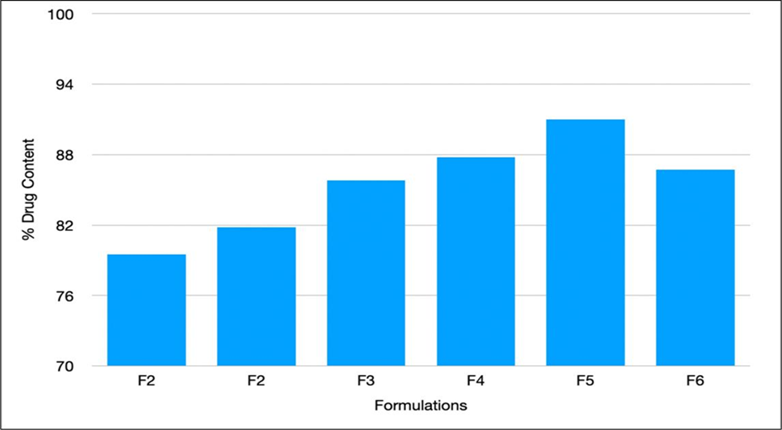
Drug Content
Table No 6: Drug Content
|
Batches |
F1 |
F2 |
F3 |
F4 |
F5 |
F6 |
|
% Drug Content |
79.5 |
81.8 |
85.8 |
87.8 |
91.0 |
86.7 |
In Vitro Drug Diffusion Study
Table No 7: In vitro drug diffusion study
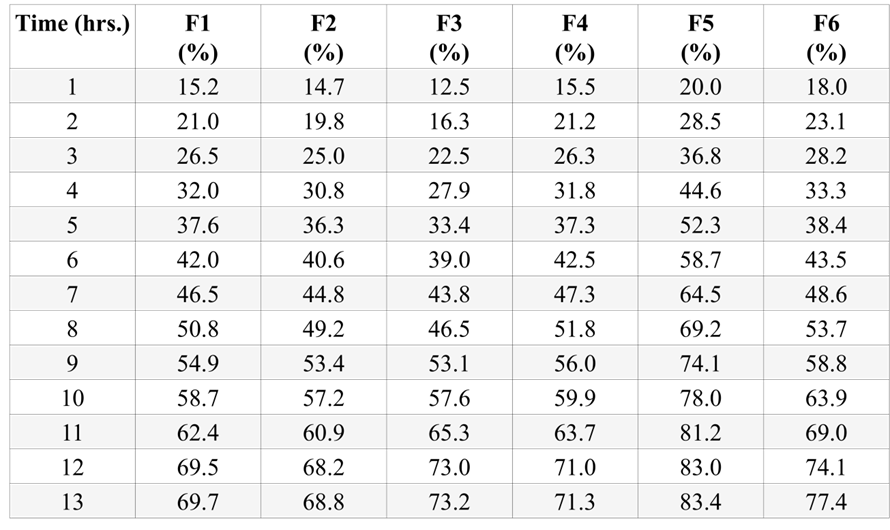
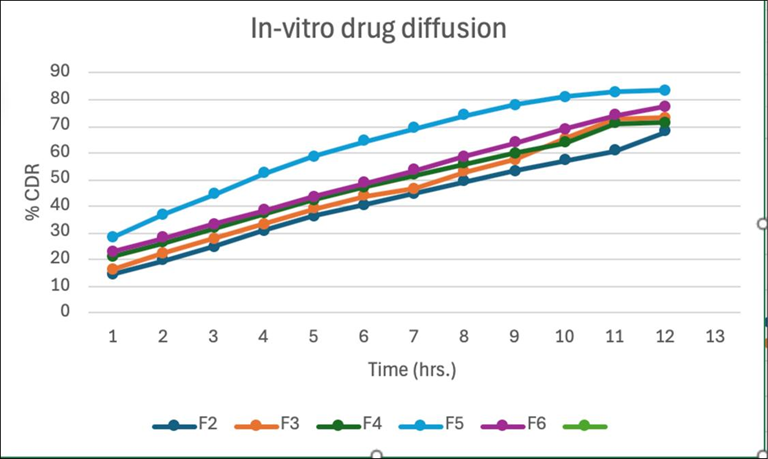
Table No 7: In vitro Anti-Inflammatory Assay by HRBC
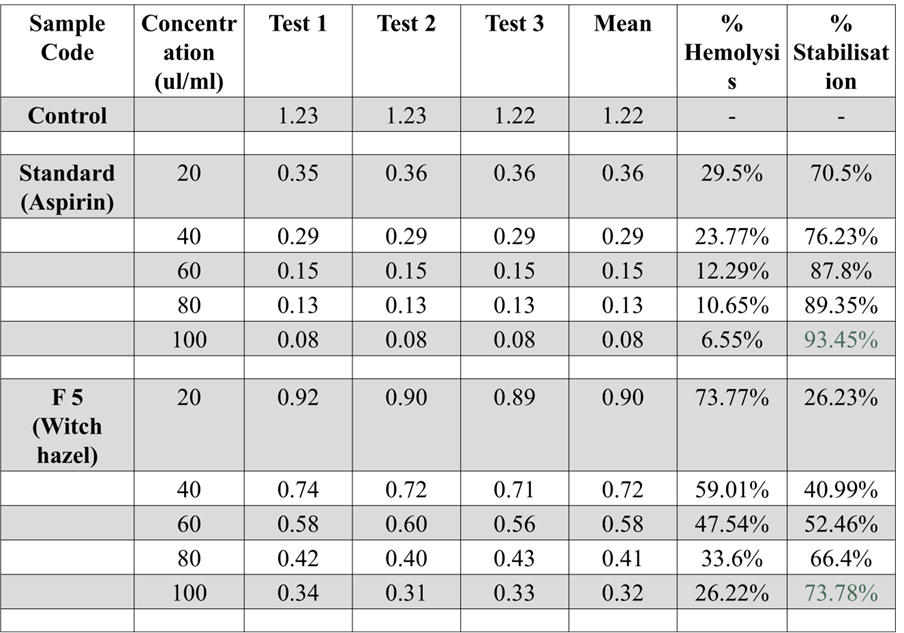
The F5 at concentration range 20µg/mL to 100 µg/mL may protects the human erythrocyte membranes against lysis induced by hypotonic solution. At concentration of 100µg/mL, F5 inhibited of 73.78 % RBC haemolysis as compared with 93.45% produced by Aspirin at 100µg/mL. Since human red blood cell membranes are similar to lysosomal membrane components, the prevention of hypotonicity induced HRBC membrane lysis was taken as a measure of anti-inflammatory activity of drugs.
Stability Study
The formulated emulgel was filled into 5 g aluminum collapsible tubes and subjected to accelerated stability testing under controlled conditions of 40 ± 2°C temperature and 75 ± 5% relative humidity for a period of three month as per (ICHQ1A(R2) guideline.
Table No 7: Stability study
REFERENCES:
1. Kolarsick PAJ, Kolarsick MA, Goodwin C. Anatomy and Physiology of the Skin. Journal of the Dermatology Nurses’ Association [Internet]. 2011 Jul;3(4):203–Vokhidovich MM
2. Guttman-Yassky E, Nograles KE, Krueger JG. Contrasting pathogenesis of atopic dermatitis and psoriasis - Part I: Clinical and pathologic concepts. Journal of Allergy and Clinical Immunology. 2011;127(5):1110–8
3. Parihar N, Saini M, Soni SL, Sharma V. Emulgel: A Topical Preparation. Asian Journal of Pharmaceutical Research and Development. 2020 Jun 15;8(3):196–201.
4. Sheetal S. Samant, Vijay A. Jagtap, Prajakt Kalangutkar, Akshaya Gadekar, Riddhi Rane, Raghunath Morye, et al. Formulation and Evaluation of Herbal Emulgel Containing Syzigium Cumini Extract. AYUSHDHARA. 2024 Jan 5;33–7.
5. Pawłowska , Obrębski M, Piwowarski JP, Żyżyńska-Granica B, Granica S. Chemical composition, skin microbiota metabolism, antimicrobial potential and 2 anti-inflammatory properties of witch hazel bark (Hamamelis virginiana L.) 3 4 Weronika SKOWROŃSKA [Internet].
6. Liu X, Hage T, Chen L, Wang EHC, Liao I, Goldberg J, et al. Revealing the Therapeutic Potential: Investigating the Impact of a Novel Witch Hazel Formula on Anti‐Inflammation and Antioxidation. Journal of Cosmetic Dermatology [Internet].
7. Amêndola I, Viegas DDJ, Freitas ET, de Oliveira JR, dos Santos JG, de oliveira FE, et al. Hamamelis virginiana L. extract presents antimicrobial and antibiofilm effects, absence of cytotoxicity, anti-inflammatory action, and potential to fight infections through the nitric oxide production by macrophages. Anais da Academia Brasileira de Ciencias. 2024;96(1).,