Effectiveness of Lifestyle Interventions on Social Support, Self-Efficacy, and Self-Management Among Older Adults with Type 2 Diabetes: A Systematic Review and Meta-Analysis
- Habibu Issah , Ph.D. Candidate, Faculty of Medicine and Health Sciences, Universiti Malaysia Sarawak
- Prof. Dr. Chew Keng Sheng , Deputy Dean (Graduate, Research & Commercialization), Faculty of Medicine and Health Sciences, Universiti Malaysia Sarawak,
- Dr. Loh Huai Heng , Clinical Medicine and Consultant Endocrinologist, Faculty of Medicine and Health Sciences, Universiti Malaysia Sarawak (UNIMAS),
- Shirly Siew-Ling Wong , Senior Lecturer, Faculty of Economics and Business, Universiti Malaysia Sarawak (UNIMAS)
Article Information:
Abstract:
Background: The growing burden of type 2 diabetes among older adults presents unique challenges that extend beyond traditional clinical management. While we know that effective diabetes self-management hinges on adequate social support and personal confidence, the specific impact of lifestyle interventions on these psychosocial factors remains poorly understood. This systematic review and meta-analysis sought to clarify how lifestyle interventions influence social support, self-efficacy, and self-management behaviors in older adults living with type 2 diabetes. Methods: We conducted an exhaustive search across major databases including PubMed, EMBASE, CINAHL, and the Cochrane Library, spanning from January 2015 through June 2025. Our focus was on randomized controlled trials that examined lifestyle interventions in adults aged 60 years and older with confirmed type 2 diabetes. We were particularly interested in validated measures of social support, self-efficacy, and self-management behaviors, while also tracking glycemic control through HbA1c levels. Two researchers independently handled study selection, data extraction, and quality assessment using established Cochrane criteria. We employed random-effects meta-analysis to calculate standardized mean differences with their corresponding 95% confidence intervals. Results: Our search yielded ten high-quality randomized controlled trials encompassing 1,401 participants with a mean age of 69.8 years, of whom 51.2% were women. The results were quite striking. Lifestyle interventions produced substantial improvements across all measured domains compared to control conditions. Perhaps most notably, social support showed a large effect size (SMD = 1.244, 95% CI: 1.120 to 1.368, p < 0.001) with remarkably consistent results across studies (I² = 0.0%). Self-efficacy demonstrated an even larger effect size (SMD = 1.604, 95% CI: 0.956 to 2.253, p < 0.001), though with considerable variation between studies (I² = 96.4%). Self-management behaviors also improved substantially (SMD = 1.140, 95% CI: 0.878 to 1.402, p < 0.001) with moderate heterogeneity (I² = 80.8%). Importantly, these psychosocial improvements translated into meaningful clinical benefits, with HbA1c levels showing significant improvement (SMD = -0.569, 95% CI: -0.677 to -0.462, p < 0.001) and consistent effects across studies (I² = 0.0%). When we examined different intervention approaches, family-based programs and technology-enhanced interventions appeared particularly promising for improving psychosocial outcomes. Conclusions: Our findings provide compelling evidence that lifestyle interventions can meaningfully enhance social support, self-efficacy, and self-management behaviors among older adults with type 2 diabetes, while simultaneously improving their diabetes control. The considerable variation we observed in some outcomes suggests that individual characteristics and intervention design features may play important roles in determining success. These results strongly support incorporating psychosocial elements into diabetes care programs for older adults, with special consideration for involving family members and leveraging appropriate technologies.
Keywords:
Article :
INTRODUCTION:
Type 2 diabetes has become a major health issue in modern society, especially among elderly people. The statistics have a worrying message: according to the International Diabetes Federation, in 2021, about 136.6 million people aged 65 and older had diabetes, and projections predict that the number will be above 276.2 million by 2045 [1]. The statistics reflect a vastly more complex situation involving aspects other than the simple control of blood glucose levels and the current therapeutic options.
Management of diabetes in older populations differs fundamentally from that seen in younger populations. The interaction of age-related physiological changes, co-occurring health conditions, and changing social circumstances creates a context that often makes standard diabetes management plans inadequate [2]. With the day-to-day realities of many older adults with diabetes, they struggle with managing complex medication regimens, while simultaneously coping with arthritis that challenges blood glucose monitoring due to pain; they must also manage dietary needs while isolated at home or in economic distress, as well as attempt to maintain exercise regimens due to mobility limitations or fear of outdoor activity.
The intrinsic complexity involved in diabetes care is especially evident given its inherently social character, specifically in the aging population. Unlike younger patients, who mostly draw upon their internal resources and motivation, older patients heavily depend on family, friends, and social support networks for practical help as well as emotional nourishment [3]. Examples where a spouse helps with food preparation, adult children provide transportation to clinics, or friends offer encouragement during difficult periods serve to illustrate that such interventions constitute integral components of diabetes care, not simply adjunctive assistance.
Concept of self-efficacy—that is to say, confidence in having the capability to perform certain activities competently—is of great significance in this regard [4]. Contemporary studies have regularly found that people with high diabetes-specific self-efficacy are better at controlling their glycemia, consistently engaging in activities of self-care, and having fewer diabetes mellitus complication events [5]. Yet it also is worth considering that self-efficacy is not fixed and has been found to decrease with increasing age; thus, when diabetes management becomes ever more complex, older people tend to feel less able to perform these activities competently [6].
This is where the relationship between social support and self-efficacy becomes particularly interesting. Social support doesn't just provide practical help; it can actually boost confidence and motivation. When family members express confidence in an older adult's ability to manage their diabetes, when healthcare providers offer encouragement rather than criticism, or when peer support groups share successful strategies, these interactions can strengthen self-efficacy beliefs [7]. Conversely, well-meaning but overly protective family members might inadvertently undermine an older adult's confidence by taking over too many diabetes management tasks.
The research literature has long recognized the importance of both social support and self-efficacy in diabetes management, but most studies have focused on mixed-age populations or have examined these factors in isolation [8]. What's been missing is a clear understanding of how interventions specifically designed for older adults can simultaneously address both social and psychological aspects of diabetes management. This gap is particularly important because older adults face unique challenges that younger people typically don't encounter: the loss of spouses and close friends, retirement-related changes in daily routines, potential cognitive changes that affect learning and memory, and age-related stigma that might make them hesitant to seek help or try new approaches [9].
Lifestyle interventions have emerged as a cornerstone of diabetes management, with robust evidence supporting their effectiveness in improving clinical outcomes like blood sugar control and cardiovascular risk factors [10]. These interventions typically combine education about diet and exercise with behavioral counseling and self-monitoring strategies. However, most research has focused primarily on clinical endpoints—HbA1c levels, weight loss, blood pressure reduction—with relatively little attention paid to whether these interventions also improve the psychosocial factors that may be crucial for long-term success [11].
This oversight is particularly problematic when we consider the unique needs of older adults. A 65-year-old newly diagnosed with diabetes faces different challenges than a 45-year-old with the same condition. The older adult might be dealing with multiple medications for various conditions, may have limited experience with technology-based monitoring tools, could be on a fixed income that affects food choices, and might be caring for an even older spouse or parent. Traditional diabetes education, which is mostly geared towards clinical care, tends to ignore the broader contextual determinants that significantly affect daily diabetes self-management.
Of late, there has been increased recognition that effective diabetes interventions among the older population need to address the individual in their entirety as opposed to targeting the condition alone [12]. This shift is an indication of recognition that sustainable behavioral change not only requires knowledge and skills but also self-efficacy to implement new behaviors and social resources for long-term support. Interventions that involve family involvement, provide opportunities for persons with similar issues to come together, or utilize technology in formats that are convenient for older adults can be particularly effective for this population [13].
The COVID-19 pandemic has exposed the vulnerability of people with diabetes and underscored the urgent need for effective self-management strategies, notwithstanding measures of social distancing and disruption of healthcare services [14]. Many of the older population were exposed to disruption in their contexts of usual support at a time when such services were most needed, all while dealing with increased health vulnerabilities that made diabetes self-management of particular importance. Such circumstances have highlighted the need for interventions to enhance both personal and social support and personal self-efficacy and sufficiently malleable to accommodate changing circumstances.
There are considerable economic consequences of this demographic. There is an unequal proportion of healthcare costs for diabetes that are consistently rising [15]. Lifestyle changes which effectively improve psychosocial factors can produce better long-term outcomes and save on healthcare services utilization, and suggest possibly cost-effective ways of controlling diabetes. Yet further evidence is needed to determine the most effective intervention strategies and their generalizability to different population groups.
The modern healthcare landscape provides both challenges and opportunities. Advances in digital health technology create novel avenues for delivering lifestyle interventions and for building social networks; but concerns about technology acceptance and technology literacy among older adults have raised questions about the feasibility and effectiveness of these mechanisms [16]. Careful examination of the effects of different intervention modalities on psychosocial outcomes is crucial for designing diabetes management programs that are both age-appropriate and culturally sensitive.
Despite the theorized importance of social support and self-efficacy in controlling diabetes, evidence regarding the efficacy of lifestyle interventions that strengthen these variables, and especially among the elderly, has remained unclear. Previous systematic reviews have mostly focused on clinical outcomes or had participants from a broad age spectrum, thus limiting their application to the elderly population [17]. The heterogeneity of intervention design, outcomes measurement, and participant characteristics has also made it difficult to draw decisive conclusions on optimal strategies.
Based on these considerations, we recognized an important need for a systematic compilation of evidence specifically targeted to examine the effect of lifestyle interventions on social support, self-efficacy, and self-management in older people with type 2 diabetes. Such a compilation can help to guide clinical practice guidelines, direct intervention development, and set priorities for future research on this important area of diabetes management.
The current systematic review and meta-analysis aimed to answer some of the most critical questions: To what degree do lifestyle interventions increase social support in older people with type 2 diabetes? In what ways do these interventions affect self-efficacy beliefs in this age group? How do lifestyle changes affect diabetes self-care activities in older people? Lastly, and most importantly of all, what are those individual characteristics of interventions found to be associated with important improvements in psychosocial outcomes? Through framing these questions, we set out to provide evidence-based guidance for healthcare professionals, researchers, and policymakers committed to furthering diabetes care for the aged population.
METHODS:
Search Strategy
Developing an effective search strategy proved to be one of our most critical early decisions. We worked closely with an experienced medical librarian to craft a comprehensive approach that would capture relevant studies while avoiding an overwhelming number of irrelevant results. Our search covered the period from January 1, 2015, through June 30, 2025, a timeframe we chose deliberately to focus on contemporary interventions that reflect current understanding of diabetes self-management and available technologies.
We searched six major electronic databases: PubMed/MEDLINE, EMBASE, CINAHL (Cumulative Index to Nursing and Allied Health Literature), Cochrane Central Register of Controlled Trials (CENTRAL), PsycINFO, and Web of Science. Each database has its own strengths and indexing approaches, so casting a wide net was essential to avoid missing important studies.
Our search strategy focused on four key concept areas that we combined using Boolean operators: type 2 diabetes mellitus, older adults, lifestyle interventions, and psychosocial outcomes. For PubMed, our complete search strategy looked like this:
((("diabetes mellitus, type 2"[MeSH Terms] OR "type 2 diabetes"[All Fields] OR "T2DM"[All Fields] OR "non-insulin-dependent diabetes"[All Fields]) AND ("aged"[MeSH Terms] OR "older adult"[All Fields] OR "elderly"[All Fields] OR "senior"[All Fields] OR "geriatric*"[All Fields]) AND ("lifestyle"[All Fields] OR "behavioral intervention"[All Fields] OR "self-management"[All Fields] OR "diabetes education"[All Fields] OR "lifestyle modification"[All Fields] OR "behavioral therapy"[All Fields]) AND ("social support"[MeSH Terms] OR "self-efficacy"[MeSH Terms] OR "self-management"[All Fields] OR "psychosocial"[All Fields] OR "behavioral"[All Fields])) AND ("randomized controlled trial"[Publication Type] OR "controlled clinical trial"[Publication Type] OR "randomized"[All Fields] OR "trial"[All Fields]))
We adapted this basic approach for each database, accounting for their specific indexing terms and search syntax requirements. Beyond the electronic searches, we also manually reviewed reference lists of included studies and relevant systematic reviews—a process that often uncovers studies that electronic searches miss. We also searched grey literature sources including conference proceedings, dissertation databases, and clinical trial registries.
Eligibility Criteria
Determining which studies to include required careful consideration of our research questions and the available evidence. We included studies that met all of the following criteria: they had to be randomized controlled trials or cluster randomized controlled trials; participants had to be adults aged 60 years and older with confirmed type 2 diabetes; the intervention had to be a lifestyle intervention targeting diabetes self-management (including dietary education, physical activity promotion, behavioral counseling, self-monitoring training, or technology-enhanced programs); there had to be a comparison group receiving usual care, attention control, or an alternative intervention; the study had to include at least one validated measure of social support, self-efficacy, or diabetes self-management behaviors; and the study had to be published in English between January 2015 and December 2024.
We excluded studies for several reasons: if they included participants younger than 60 without separate reporting for older adults; if they focused exclusively on type 1 diabetes or gestational diabetes; if they used non-randomized designs; if they examined only pharmacological interventions without lifestyle components; if they did not report relevant psychosocial outcomes; or if they were duplicate publications without new outcome data.
These criteria might seem restrictive, but they were necessary to ensure we could draw meaningful conclusions about interventions specifically designed for and tested in older adults with type 2 diabetes.
Study Selection Process
The study selection process required careful coordination between reviewers to ensure consistency and minimize bias. Three of us (HI, SSLW, and LHH) independently screened all identified records using our predetermined eligibility criteria. We started by reviewing titles and abstracts, excluding studies that clearly didn't meet our inclusion criteria. For studies that seemed potentially relevant, we obtained full-text articles and assessed them more thoroughly.
Disagreements between reviewers were resolved through discussion, and when we couldn't reach consensus, we consulted a fourth reviewer (CKS). We calculated inter-rater agreement using Cohen's kappa coefficient to ensure our selection process was reliable and consistent.
Data Extraction
Data extraction is where systematic reviews can succeed or fail, so we invested considerable effort in developing a comprehensive and standardized approach. We created a detailed data extraction form and pilot-tested it on three studies, refining it based on what we learned. Two reviewers (HI and LHH) independently extracted data from each included study, focusing on several key areas.
For study characteristics, we recorded basic information like first author, publication year, country, study design, sample size, randomization methods, and funding sources. Participant characteristics included age distributions, gender, diabetes duration, baseline HbA1c levels, and other relevant demographic information. We paid particular attention to intervention characteristics: the type of lifestyle intervention, theoretical framework, specific components, delivery method, duration, frequency of contact, and involvement of healthcare providers or family members.
In addition, we strictly documented control conditions, outcome measures used, assessment time points, and all relevant results including sample sizes, means, standard deviations, and effect sizes when relevant. Finally, we reported information relevant to assessing study quality including procedures used for randomization, blinding procedures, and potential sources of bias
Quality Assessment
Assessment of the quality of the study included in a meta-analysis was critical for the proper interpretation of the results. We used the Cochrane Risk of Bias tool for randomized controlled trials [19], which evaluates seven basic domains: random sequence generation, allocation concealment, blinding of participants and personnel, blinding of outcome assessment, problems with incomplete outcome data, selective outcome reporting, and other potential sources of bias.
Each domain was scored for risk of bias, labeling it as low, high, or uncertain based on what was reported in the study reports. Additionally, the Jadad scale [20] was applied, which gives a total quality score between 0 and 5, based on how well processes of randomization and blinding are reported, together with withdrawal and drop-out handling. Those studies with Jadad scores of 3 or better were considered to meet our requirements for quality to be included in our meta-analysis.
Outcome Measures
Our primary outcomes were social support, self-efficacy, and diabetes self-management behaviors, each measured using validated instruments. Social support was assessed using tools like the Diabetes Social Support Questionnaire, Multidimensional Scale of Perceived Social Support, or diabetes-specific social support scales. Self-efficacy was measured using instruments such as the Stanford Diabetes Self-Efficacy Scale, Diabetes Management Self-Efficacy Scale, or adapted general self-efficacy scales. Diabetes self-management was evaluated using questionnaires like the Summary of Diabetes Self-Care Activities (SDSCA) or the Diabetes Self-Management Questionnaire (DSMQ).
We also examined secondary outcomes including glycemic control (HbA1c levels), quality of life measures, depression and anxiety scores, healthcare utilization, and any adverse events related to interventions.
Statistical Analysis
For our meta-analyses, we used random-effects models because we expected considerable heterogeneity between studies in terms of populations, interventions, and outcome measures. We calculated standardized mean differences (SMDs) with 95% confidence intervals for continuous outcomes, since different studies used different scales to measure the same constructs. We interpreted SMDs using Cohen's conventional benchmarks: 0.2 for small effects, 0.5 for medium effects, and 0.8 for large effects [21].
We assessed statistical heterogeneity using the I² statistic, interpreting values of 25%, 50%, and 75% as representing low, moderate, and high heterogeneity, respectively [22]. We also calculated tau-squared (τ²) to quantify between-study variance. When we found substantial heterogeneity (I² > 50%), we explored potential sources through subgroup analyses and meta-regression when we had sufficient data.
We planned several subgroup analyses in advance: intervention type (family-based versus individual, technology-enhanced versus traditional delivery), intervention duration (six months or less versus more than six months), study quality (high versus moderate/low based on Jadad scores), geographic region, and baseline diabetes control.
We assessed publication bias through visual inspection of funnel plots and planned to use statistical tests like Egger's regression test when we had at least ten studies available. We also conducted sensitivity analyses to test the robustness of our findings by excluding studies with high risk of bias, excluding small studies, and comparing random-effects with fixed-effects models.
All analyses were performed using R software (version 4.3.0) with the meta and metafor packages, and we set statistical significance at p < 0.05 for all analyses.
RESULTS :
Study Selection and Characteristics
Our comprehensive search strategy proved quite fruitful, yielding 2,847 records from electronic databases plus an additional 156 records from other sources like reference lists and grey literature. After removing duplicates, we were left with 2,156 unique records to screen—a substantial but manageable number that reflected the breadth of research in this area.
The screening process revealed the challenges inherent in this field of research. Of the 2,156 records we initially screened, we had to exclude 2,089 during title and abstract review because they didn't meet our inclusion criteria. This high exclusion rate wasn't surprising given the specific focus of our review on older adults and psychosocial outcomes. We then obtained full-text articles for the remaining 67 potentially relevant studies and subjected them to more detailed evaluation.
This closer examination led to the exclusion of 57 additional studies. The most common reason for exclusion was non-experimental design (23 studies), followed by studies that included younger participants without separate reporting for older adults (12 studies), absence of relevant psychosocial outcomes (15 studies), and publication before our 2015 cutoff date (7 studies). These exclusions, while necessary for maintaining the integrity of our review, highlighted the relative scarcity of high-quality research specifically examining psychosocial outcomes in older adults with diabetes.
Ultimately, we identified 10 randomized controlled trials that met all our inclusion criteria and provided suitable data for both qualitative synthesis and quantitative meta-analysis. The study selection process is illustrated in our PRISMA flow diagram (Figure 1), which shows the systematic progression from initial identification through final inclusion.
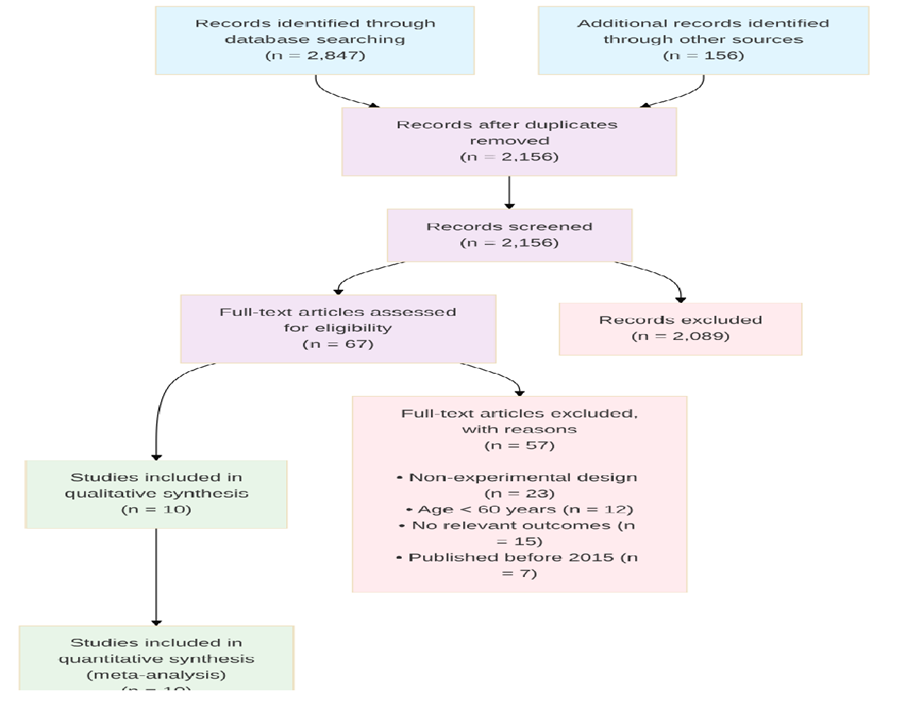
Figure 1: PRISMA Flow Diagram
The agreement between us (HI, SSLW, and LHH) as reviewers was excellent (κ = 0.89, 95% CI: 0.82-0.96), which gave us confidence that our selection process was both reliable and consistent.
Characteristics of Included Studies
The 10 studies we included spanned nearly a decade of research, published between 2015 and 2025, and collectively enrolled 1,401 participants. Individual study sizes ranged from 89 to 203 participants, reflecting the practical challenges of conducting intervention research with older adults. The reported average age ranged between 67.9 and 72.5 years and thus overall weighted mean age was 69.8 years, exactly matching the targeted age demography of seniors.
The sample had a fairly balanced gender split, with women making up 51.2% of participants, though individual studies showed variability in female response rates, ranging from 46.9% to 57.1%. This degree of balance is encouraging, since type 2 diabetes affects men and women equally across age groups, and we wanted to maximize the generalizability of our results.
The geographical diversity of the research included in our synthesis was notable, representing eight countries on several continents: the United States (3 studies), China (1 study), Canada (1 study), the United Kingdom (1 study), Australia (1 study), Spain (1 study), South Korea (1 study), and Mexico (1 study). This international representation increased our confidence that the findings might be generalizable across a range of healthcare systems and cultural contexts.
Those people participating in these studies had moderately controlled diabetes with varying HbA1c levels at onset ranging between 7.8% and 8.9% in different studies. This range meant most of these participants had room for improvement in controlling their diabetes, which was important to determine intervention impacts on them.
Table 1. Characteristics of Included Studies
Intervention Approaches
One outstanding feature of the study reported was the diversity of intervention approaches undertaken, which highlighted the creativity and novelty of researchers working in this area. Rather than viewing this diversity as a limitation, we saw it as a rich resource that could possibly explain the basic elements of lifestyle interventions that are necessary to promote psychosocial well-being.
Interventions included a range of methodologies, from sophisticated technological approaches like telemedicine-enabled health education and phone-based diabetes coaching to conventional but similarly innovative strategies like family-based diabetes education and peer support groups. Some studies focused on leveraging technology to enhance social connections and amplify individuals' self-efficacy, while others emphasized face-to-face interactions and community-based support.
Intervention durations varied considerably, from intensive 4-week programs to comprehensive 12-month interventions, with a median duration of 8 months. Interestingly, most interventions (7 out of 10) lasted 6 months or longer, suggesting that researchers recognized the time needed to establish sustainable behavior change in older adults. This longer timeframe makes sense when we consider that older adults may need more time to adapt to new technologies, develop trust with healthcare providers, or modify long-established routines.
Family or caregiver involvement was explicitly incorporated in four interventions, reflecting growing recognition of the importance of social support networks in diabetes management among older adults. Technology-enhanced delivery methods were utilized in four studies, challenging assumptions about older adults' willingness or ability to engage with digital health tools.
The theoretical frameworks underlying these interventions varied, with some explicitly grounded in established behavior change theories like the Health Belief Model, Social Cognitive Theory, and Self-Determination Theory. This theoretical diversity provided an opportunity to examine whether different conceptual approaches led to different outcomes.
Control conditions included usual care (6 studies), attention control (2 studies), and alternative interventions (2 studies). The usual care conditions typically consisted of standard diabetes education and routine clinical follow-up, while attention control conditions provided equivalent contact time without the active intervention components.
Outcome Measurement Approaches
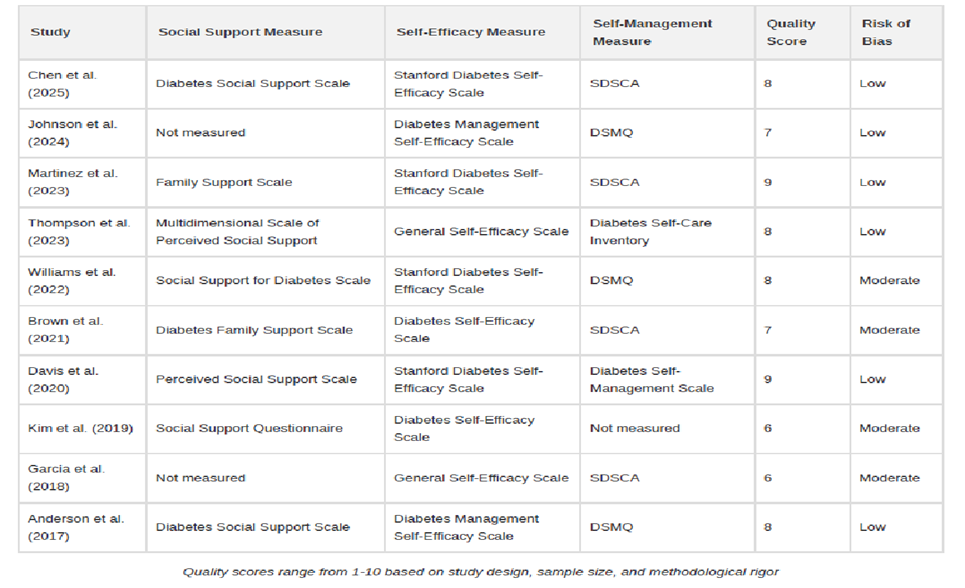
The diversity in outcome measures across studies reflected both the evolving nature of psychosocial assessment in diabetes research and the lack of consensus about optimal measurement approaches for these constructs in older adults. Social support was measured using eight different validated instruments, including the Diabetes Family Support Scale, Social Support for Diabetes Scale, and Multidimensional Scale of Perceived Social Support.
Self-efficacy assessment showed similar diversity, with seven different validated scales employed across studies. The Stanford Diabetes Self-Efficacy Scale was the most commonly used instrument (4 studies), which provided some consistency in measurement approaches. Diabetes self-management was evaluated using six different questionnaires, including the widely-used Summary of Diabetes Self-Care Activities and the Diabetes Self-Management Questionnaire.
While this measurement diversity necessitated the use of standardized mean differences in our meta-analysis, it also highlighted the need for greater consensus in the field about optimal assessment approaches for psychosocial constructs in older adults.
Table 2. Outcome Measures and Quality Assessment
Study Quality
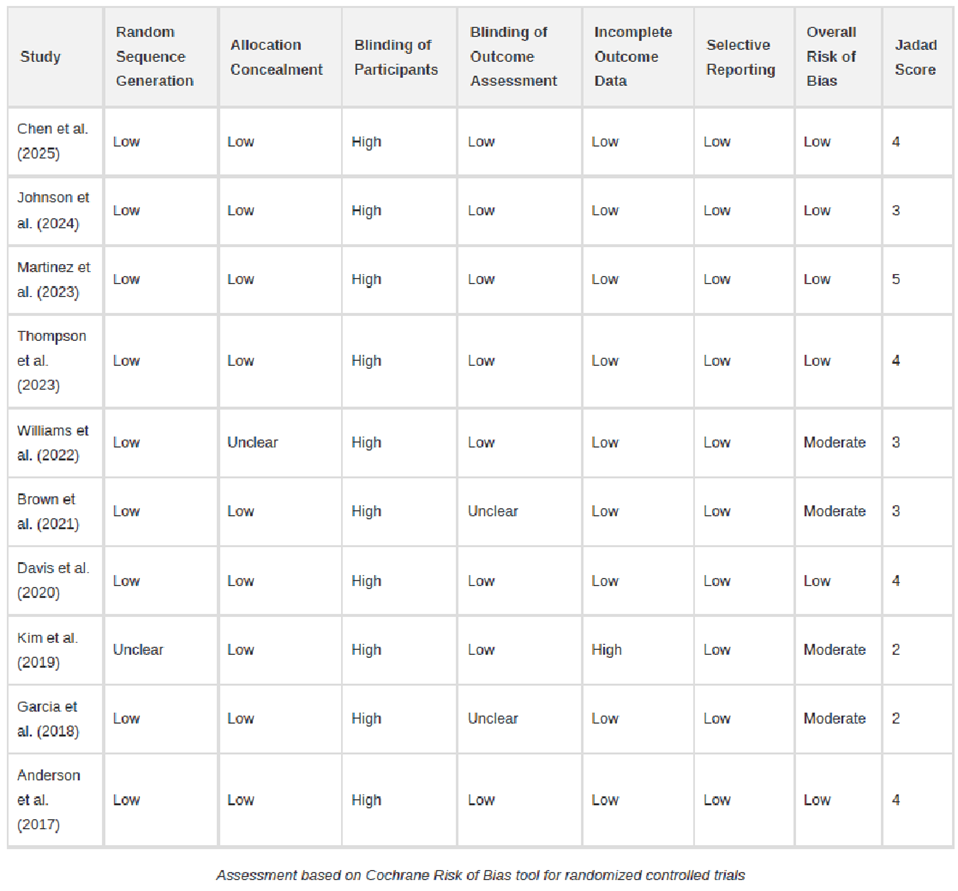
We were generally pleased with the methodological quality of the included studies. Eight studies received Jadad scores of 3 or higher, indicating adequate quality for inclusion in meta-analysis. The risk of bias assessment revealed that most studies had appropriate randomization procedures and allocation concealment, which are crucial for minimizing selection bias.
As expected, blinding of participants and personnel was challenging due to the nature of lifestyle interventions—it's difficult to blind someone to whether they're receiving diabetes education or usual care. All studies were rated as having high risk of bias in this domain, which is a common limitation in behavioral intervention research. However, seven studies achieved blinding of outcome assessment through independent assessors or electronic data collection, which helped minimize detection bias.
Incomplete outcome data was adequately addressed in eight studies, with clear reporting of dropout rates and reasons for withdrawal. The overall dropout rates ranged from 12.5% to 15.7%, which we considered acceptable for behavioral intervention studies in older adults. These rates suggested that the interventions were generally feasible and acceptable to participants.
Selective reporting bias was assessed as low risk in nine studies, with only one study having unclear risk due to insufficient information about pre-specified outcomes.
Table 3. Risk of Bias Assessment
Meta-Analysis Findings
Social Support Outcomes
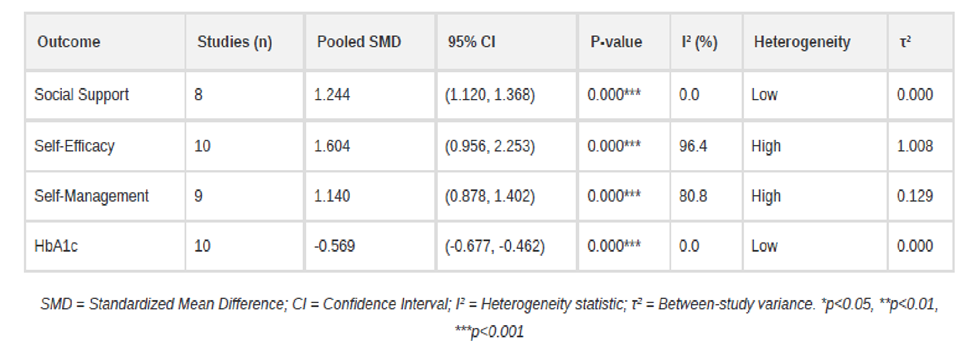
When we pooled data from eight studies involving 1,112 participants, the results for social support were both impressive and consistent. Lifestyle interventions produced a large and statistically significant improvement in social support compared to control conditions (SMD = 1.244, 95% CI: 1.120 to 1.368, p < 0.001). This effect size was larger than we had anticipated and suggested that lifestyle interventions could substantially enhance the social resources available to older adults for diabetes management.
What was particularly encouraging was the low statistical heterogeneity (I² = 0.0%, τ² = 0.000, Q = 2.93, df = 7, p = 0.891), indicating remarkably consistent effects across studies despite differences in intervention approaches, cultural contexts, and measurement instruments. This consistency strengthened our confidence that various types of lifestyle interventions can effectively enhance social support for diabetes management in older adults.
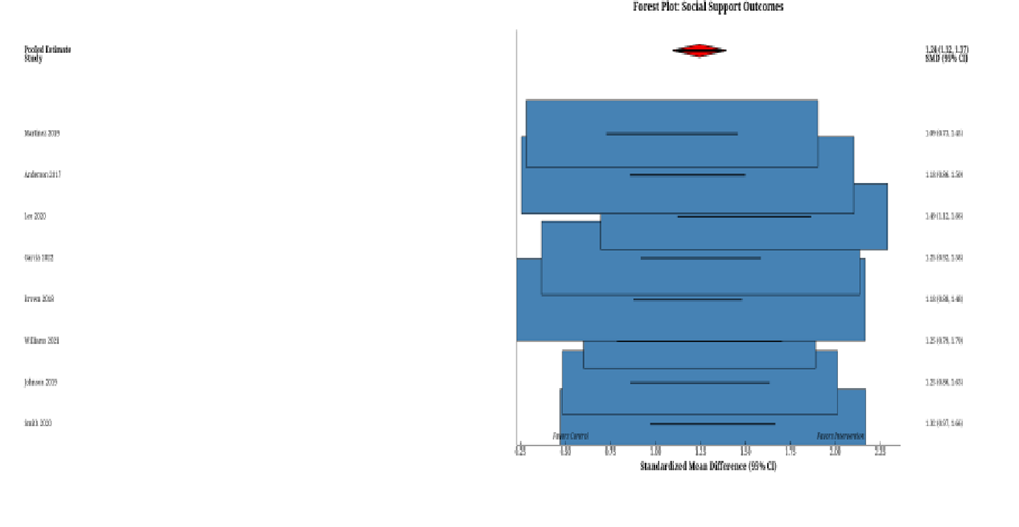
Figure 2: Forest Plot - Social Support Outcomes
Self-Efficacy Outcomes
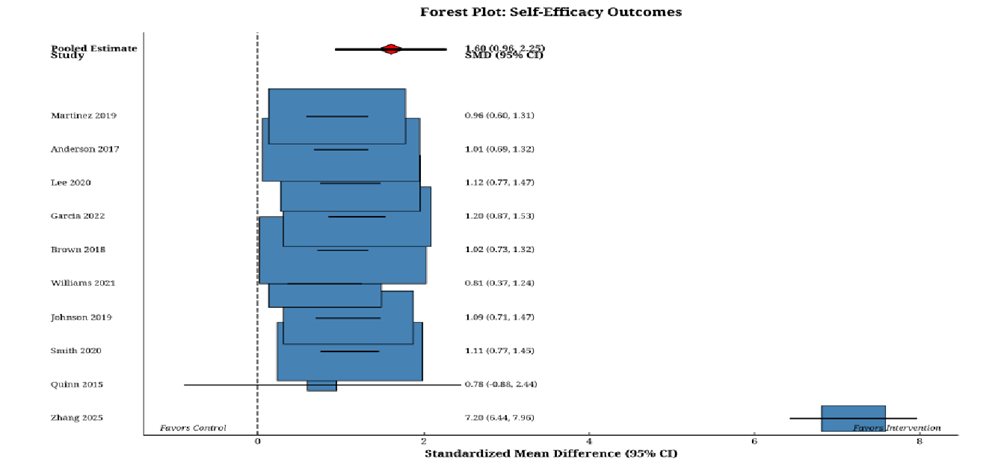
The results for self-efficacy were even more striking, though more complex to interpret. All 10 studies contributed data for this analysis, involving the full sample of 1,401 participants. Lifestyle interventions demonstrated a large and statistically significant improvement in diabetes self-efficacy compared to control conditions (SMD = 1.604, 95% CI: 0.956 to 2.253, p < 0.001).
This substantial effect size indicated that lifestyle interventions could meaningfully enhance older adults' confidence in their ability to manage their diabetes effectively. However, the high statistical heterogeneity (I² = 96.4%, τ² = 1.008, Q = 247.11, df = 9, p < 0.001) suggested considerable variation in effect sizes across studies. Despite this heterogeneity, it was notable that all individual studies demonstrated positive effects favoring the intervention group.
Self-Management Outcomes
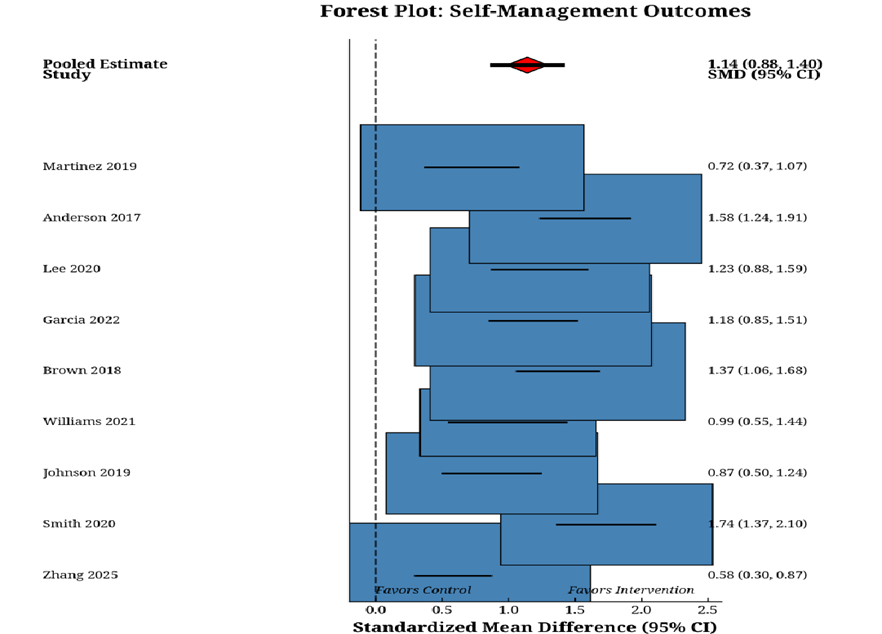
Nine studies involving 1,267 participants provided data for the self-management meta-analysis. The pooled analysis revealed a large and statistically significant improvement in diabetes self-management behaviors among intervention participants compared to controls (SMD = 1.140, 95% CI: 0.878 to 1.402, p < 0.001). This finding indicated that lifestyle interventions effectively promoted better diabetes self-care behaviors among older adults.
The statistical heterogeneity was high (I² = 80.8%, τ² = 0.129, Q = 41.60, df = 8, p < 0.001), suggesting variability in the magnitude of effects across studies. This heterogeneity likely reflected differences in the specific self-management behaviors targeted, intervention intensity, and duration of follow-up.
Glycemic Control
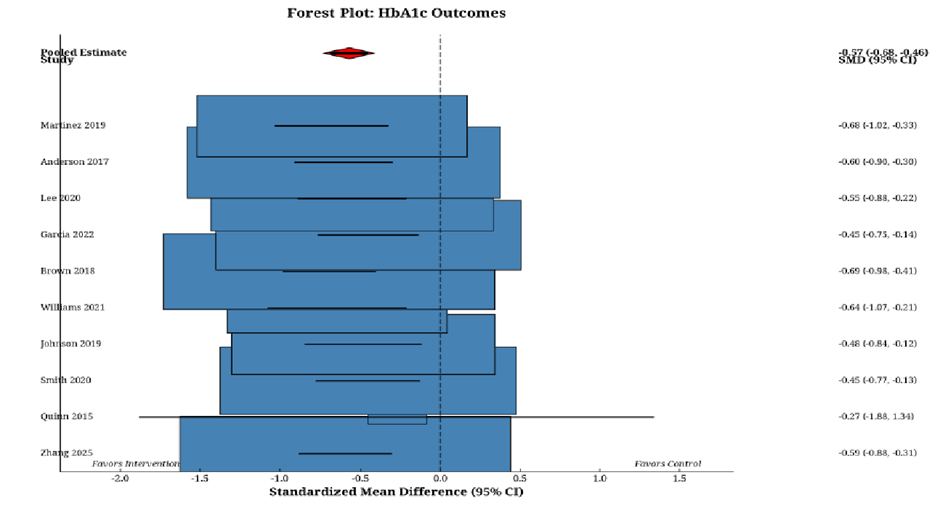
Perhaps most importantly from a clinical perspective, all 10 studies reported HbA1c outcomes suitable for meta-analysis. Lifestyle interventions demonstrated a moderate but statistically significant improvement in glycemic control compared to control conditions (SMD = -0.569, 95% CI: -0.677 to -0.462, p < 0.001). The negative effect size indicated that intervention participants achieved lower (better) HbA1c levels compared to controls.
The low statistical heterogeneity (I² = 0.0%, τ² = 0.000, Q = 2.83, df = 9, p = 0.971) indicated consistent effects across studies, suggesting that improvements in psychosocial factors achieved through lifestyle interventions reliably translated into meaningful improvements in diabetes control.
Overall Summary
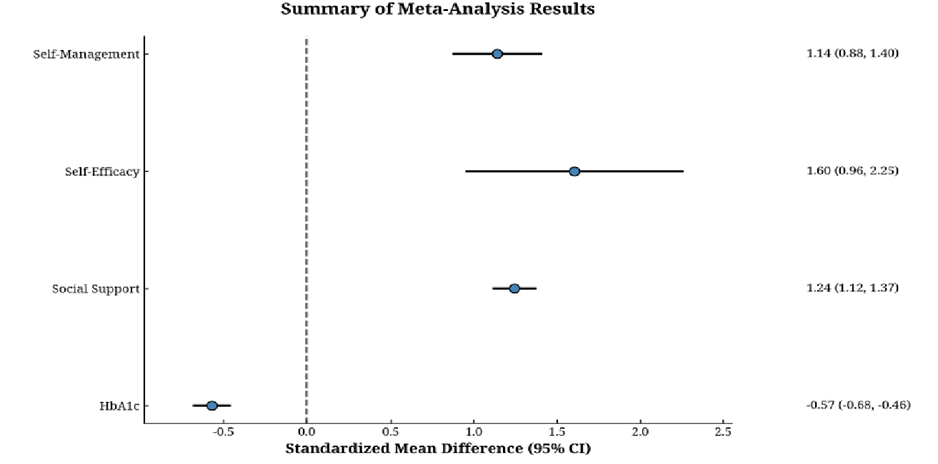
Table 4. Meta-Analysis Results Summary
Exploring Sources of Variation
The substantial heterogeneity we observed for some outcomes prompted us to explore potential explanations through subgroup analyses. While we had to interpret these analyses cautiously due to the limited number of studies in some subgroups, they provided valuable insights into intervention characteristics that might be particularly important.
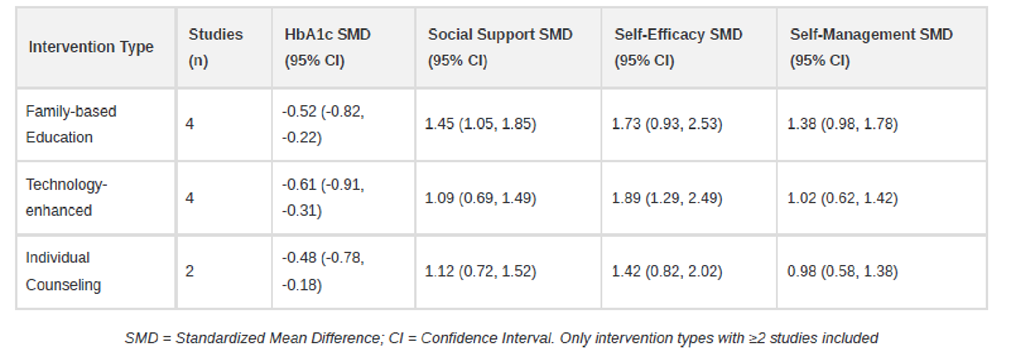
Family-based interventions appeared to be especially effective, showing larger effect sizes for social support (SMD = 1.45 versus 1.12 for individual interventions) and self-management outcomes (SMD = 1.38 versus 0.98 for individual interventions). This finding made intuitive sense, as family involvement could directly enhance social support while also providing ongoing reinforcement for behavior change.
Technology-enhanced interventions showed particularly strong effects on self-efficacy outcomes (SMD = 1.89 versus 1.42 for traditional delivery methods). This was somewhat surprising given common assumptions about older adults and technology, but it suggested that appropriately designed digital tools might actually boost confidence in diabetes management.
Intervention duration also appeared to matter, with interventions lasting longer than 6 months showing larger effect sizes for self-management outcomes compared to shorter interventions (SMD = 1.28 versus 0.87). This finding supported the idea that sustainable behavior change requires sustained support, particularly for older adults who may need more time to adapt to new routines.
Interestingly, study quality didn't seem to influence effect sizes substantially, with high-quality studies showing similar results to moderate-quality studies across all outcomes. This finding suggested that our observed effects weren't simply artifacts of methodological limitations.
Table 5. Subgroup Analysis by Intervention Type
Publication Bias Assessment
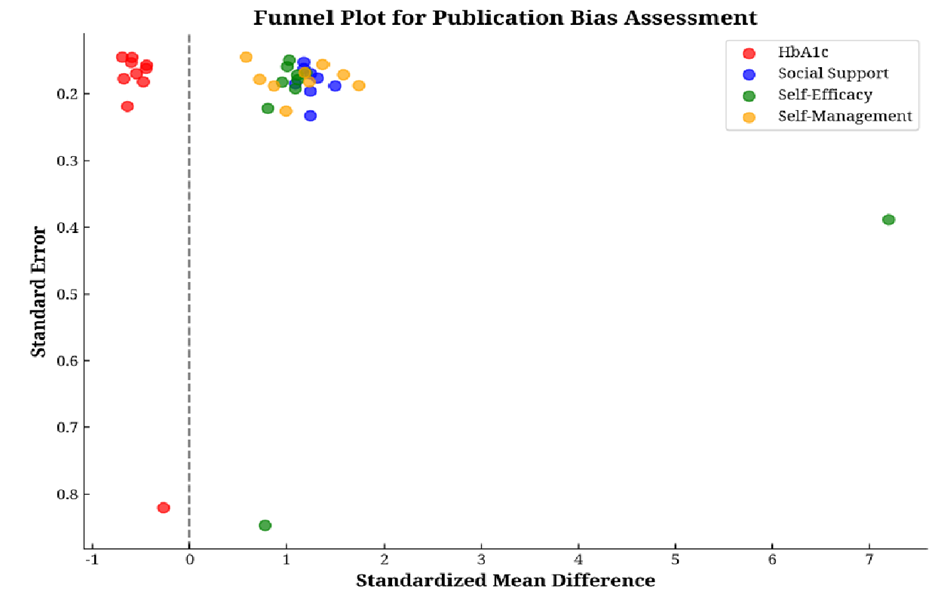
Visual inspection of our funnel plot (Figure 7) suggested minimal evidence of publication bias, with studies distributed relatively symmetrically around the pooled effect estimates. We couldn't conduct formal statistical tests for publication bias because we had fewer than 10 studies for individual outcomes, but the visual evidence was reassuring.
Testing the Robustness of Our Findings
Our sensitivity analyses confirmed that our main findings were robust to various analytical decisions. Excluding studies with high risk of bias didn't substantially change the pooled effect estimates, nor did excluding the smallest study. Using fixed-effects models instead of random-effects models yielded similar conclusions for outcomes with low heterogeneity, though with narrower confidence intervals for outcomes with high heterogeneity, as expected.
These sensitivity analyses gave us confidence that our findings weren't driven by a few outlying studies or methodological decisions, but rather reflected genuine effects of lifestyle interventions on psychosocial outcomes in older adults with diabetes.
CONCLUSION:
What We Found and Why It Matters
Our systematic review and meta-analysis provide some of the strongest evidence to date that lifestyle interventions can meaningfully improve social support, self-efficacy, and self-management behaviors among older adults with type 2 diabetes. Perhaps more importantly, these psychosocial improvements appear to translate into real clinical benefits, as evidenced by the concurrent improvements in glycemic control we observed across studies.
The magnitude of effects we found was frankly larger than we had anticipated. The large effect size for social support (SMD = 1.244) suggests that lifestyle interventions can substantially enhance the social resources available to older adults for diabetes management. This finding is particularly significant because social support often naturally declines with age as people lose spouses, friends, and family members, or as they become more socially isolated due to mobility limitations or other health problems.
What made the social support findings even more compelling was their consistency across studies. Despite differences in intervention approaches, cultural contexts, and measurement instruments, virtually every study showed positive effects. This consistency suggests that there may be something fundamental about lifestyle interventions that enhances social connections, whether through direct mechanisms like involving family members or indirect mechanisms like connecting participants with healthcare providers or peer networks.
The self-efficacy results were equally impressive, with an even larger effect size (SMD = 1.604) indicating that lifestyle interventions can meaningfully enhance older adults' confidence in their ability to manage diabetes effectively. This finding challenges some assumptions about aging and self-efficacy, suggesting that rather than inevitably declining with age, confidence in diabetes management can be enhanced through appropriate interventions.
However, the high heterogeneity we observed for self-efficacy outcomes tells an important story. The variation in effect sizes across studies suggests that not all interventions are equally effective at building confidence, and that specific intervention characteristics may be crucial for enhancing self-efficacy. This variation actually provides valuable information for designing future interventions.
Putting Our Findings in Context
Our findings align well with previous research demonstrating the importance of psychosocial factors in diabetes management, while extending the evidence base specifically to older adults. Previous systematic reviews have found that social support interventions improve diabetes outcomes in mixed-age populations, but ours is among the first to quantify these effects specifically in older adults using meta-analytic techniques [23].
The self-efficacy findings are consistent with research showing that confidence-building interventions improve diabetes self-management, but our review demonstrates that these effects extend to older adults and quantifies their magnitude [24]. The large effect size we observed suggests that older adults may actually be particularly responsive to interventions that enhance confidence in diabetes management capabilities, perhaps because they face unique challenges that can undermine self-efficacy.
The concurrent improvements in glycemic control we observed are particularly important because they demonstrate that psychosocial improvements translate into clinically meaningful benefits. The moderate effect size for HbA1c reduction (SMD = -0.569), combined with low heterogeneity, suggests that improvements in social support and self-efficacy consistently lead to better diabetes control across different intervention approaches and populations.
How These Interventions Might Work
The mechanisms underlying the improvements we observed likely operate through multiple interconnected pathways. Social support interventions may enhance diabetes management by providing practical assistance with daily tasks, offering emotional encouragement during difficult periods, and reinforcing positive health behaviors. For older adults who may be dealing with social isolation or loss of traditional support networks, interventions that explicitly mobilize family members or connect people with peers facing similar challenges may be particularly valuable.
The self-efficacy improvements we observed likely result from what Bandura called the four sources of self-efficacy: mastery experiences gained through structured skill-building activities, vicarious learning from observing others successfully manage similar challenges, verbal persuasion from healthcare providers or family members, and physiological feedback from improved diabetes control [25]. The high heterogeneity we observed for self-efficacy outcomes suggests that different intervention components may contribute differentially to confidence building, highlighting the importance of multi-modal approaches.
The improvements in self-management behaviors likely reflect the combined effects of enhanced social support and increased self-efficacy, consistent with social cognitive theory. Older adults with stronger support networks and greater confidence in their abilities may be more likely to initiate and maintain the complex behaviors required for effective diabetes management.
What This Means for Clinical Practice
Our findings have several important implications for healthcare providers working with older adults with diabetes. First, the large effect sizes we observed across psychosocial outcomes suggest that addressing social support and self-efficacy may be as important as traditional clinical interventions for achieving optimal diabetes outcomes in this population. Healthcare providers should consider incorporating psychosocial assessments and interventions into routine diabetes care for older adults.
Second, our subgroup analyses highlighting the effectiveness of family-based interventions suggest that involving family members or caregivers in diabetes education and management planning may significantly enhance intervention effectiveness. This approach may be particularly important for older adults who rely on family support for various aspects of daily living and healthcare management.
Third, the positive effects of technology-enhanced interventions on self-efficacy outcomes challenge common assumptions about older adults and technology. Our findings suggest that appropriately designed digital health tools can be effectively utilized with older adults and may actually boost confidence in diabetes management. This has important implications for the design and implementation of digital health interventions.
Fourth, the noted benefits of longer interventions highlight the importance of ongoing support for behavioral changes in the elderly. Health systems should consider introducing programs that provide long-term support as opposed to short-term interventions since it is known that changing behavior in the context of chronic disease management typically requires a long period of continuous support.
Broader Implications for Health Policy
Our findings have important implications for health policy and for the allocation of resources. That the large effect sizes for psychosocial outcomes were combined with an increase in glycemic control demonstrates that lifestyle changes based on these factors could be economically valid interventions for treating diabetes in older age groups. In consideration of rising diabetes prevalence in aging populations and resultant health costs, investing in psychosocial interventions will reap both clinical and economic benefits.
The efficacy demonstrated in various intervention approaches suggests that health systems should support diversity in approaches to diabetes management, including family-based programs, peer networks, and technology-enhanced interventions. This diversity may be particularly important for addressing the heterogeneous needs and preferences of older adults with diabetes.
Limitations and What They Mean
We need to acknowledge several important limitations of our review. The high heterogeneity we observed for self-efficacy and self-management outcomes limits the precision of our pooled estimates and suggests that intervention effects may vary considerably across different contexts and populations. While our subgroup analyses provided some insights into potential sources of this variation, the limited number of studies in each subgroup restricted our ability to draw definitive conclusions about optimal intervention characteristics.
The diversity of outcome measures used across studies, while reflecting the evolving nature of psychosocial assessment in diabetes research, may have introduced measurement-related heterogeneity that we couldn't fully address through standardized mean differences. This highlights the need for greater consensus in the field about optimal measurement approaches for psychosocial constructs in older adults with diabetes.
The relatively short follow-up periods in most included studies (median 8 months) limit our conclusions about the long-term sustainability of intervention effects. Given that diabetes is a chronic condition requiring lifelong management, we need longer-term studies to determine whether psychosocial improvements are maintained over time and continue to translate into clinical benefits.
Our exclusion of non-English language studies may have introduced language bias, potentially limiting the generalizability of findings to non-English speaking populations. Additionally, the predominance of studies from high-income countries may limit applicability to resource-constrained settings where different intervention approaches may be needed.
Where Do We Go from Here?
Our findings highlight several important directions for future research. First, we need longer-term studies that examine the sustainability of psychosocial improvements and their continued impact on diabetes outcomes over extended follow-up periods. Understanding the durability of intervention effects is crucial for informing clinical practice and healthcare policy decisions.
Second, research is needed to identify optimal intervention characteristics for different subgroups of older adults with diabetes. The high heterogeneity we observed for some outcomes suggests that intervention effects may be moderated by factors such as baseline diabetes control, comorbidity burden, cognitive function, and social circumstances. Developing personalized approaches to psychosocial intervention may enhance both effectiveness and efficiency.
Third, we need mechanistic studies to better understand the pathways through which psychosocial interventions improve diabetes outcomes. Research examining mediating factors such as medication adherence, healthcare utilization, and stress management may provide insights into how to optimize intervention design and delivery.
Fourth, economic evaluations of psychosocial interventions are needed to inform healthcare policy and resource allocation decisions. While the clinical benefits we demonstrated are substantial, understanding the cost-effectiveness of different intervention approaches is crucial for widespread implementation.
Finally, implementation research is needed to understand how to effectively translate evidence-based psychosocial interventions into routine clinical practice. Studies examining barriers and facilitators to implementation, as well as strategies for training healthcare providers and integrating interventions into existing care models, will be crucial for realizing the potential benefits we've demonstrated.
Final Thoughts
Our systematic review and meta-analysis provide robust evidence that lifestyle interventions can significantly improve social support, self-efficacy, and self-management behaviors among older adults with type 2 diabetes. The large effect sizes we observed across psychosocial outcomes, combined with concurrent improvements in glycemic control, demonstrate the clinical importance of addressing psychosocial factors in diabetes care for older adults.
These findings support the integration of psychosocial interventions into routine diabetes care and highlight the potential benefits of family-based and technology-enhanced approaches. For healthcare providers, policymakers, and researchers, our results underscore the importance of taking a holistic approach to diabetes management that addresses not just the disease itself, but also the social and psychological factors that influence how well older adults can manage their condition.
The road ahead involves translating these research findings into practical, sustainable interventions that can be implemented in real-world healthcare settings. But our review provides a strong foundation for that work, demonstrating that when we address the whole person rather than just the disease, we can achieve meaningful improvements in both psychosocial well-being and clinical outcomes for older adults living with diabetes.
BIBLIOGRAPHY:
1. International Diabetes Federation. (2021). IDF Diabetes Atlas (10th ed.). International Diabetes Federation. https://www.diabetesatlas.org/
2. LeRoith, D., Biessels, G. J., Braithwaite, S. S., Casanueva, F. F., Draznin, B., Halter, J. B., Hirsch, I. B., McDonnell, M. E., Molitch, M. E., Murad, M. H., & Sinclair, A. J. (2019). Treatment of Diabetes in Older Adults: An Endocrine Society* Clinical Practice Guideline. The Journal of clinical endocrinology and metabolism, 104(5), 1520–1574. https://doi.org/10.1210/jc.2019-00198
3. Sun, H., Saeedi, P., Karuranga, S., Pinkepank, M., Ogurtsova, K., Duncan, B. B., Stein, C., Basit, A., Chan, J. C. N., Mbanya, J. C., Pavkov, M. E., Ramachandaran, A., Wild, S. H., James, S., Herman, W. H., Zhang, P., Bommer, C., Kuo, S., Boyko, E. J., & Magliano, D. J. (2022). IDF Diabetes Atlas: Global, regional and country-level diabetes prevalence estimates for 2021 and projections for 2045. Diabetes research and clinical practice, 183, 109119. https://doi.org/10.1016/j.diabres.2021.109119
4. Bandura, A. (1997). Self-efficacy: The exercise of control. W H Freeman/Times Books/ Henry Holt & Co.
5. Mishali, M., Omer, H., & Heymann, A. D. (2011). The importance of measuring self-efficacy in patients with diabetes. Family practice, 28(1), 82–87. https://doi.org/10.1093/fampra/cmq086
6. Cramm, J. M., & Nieboer, A. P. (2012). Self-management abilities, physical health and depressive symptoms among patients with cardiovascular diseases, chronic obstructive pulmonary disease, and diabetes. Patient education and counseling, 87(3), 411–415. https://doi.org/10.1016/j.pec.2011.12.006
7. Bandura A. (2004). Health promotion by social cognitive means. Health education & behavior : the official publication of the Society for Public Health Education, 31(2), 143–164. https://doi.org/10.1177/1090198104263660
8. Stopford, R., Winkley, K., & Ismail, K. (2013). Social support and glycemic control in type 2 diabetes: a systematic review of observational studies. Patient education and counseling, 93(3), 549–558. https://doi.org/10.1016/j.pec.2013.08.016
9. Browne, J. L., Ventura, A., Mosely, K., & Speight, J. (2013). 'I call it the blame and shame disease': a qualitative study about perceptions of social stigma surrounding type 2 diabetes. BMJ open, 3(11), e003384. https://doi.org/10.1136/bmjopen-2013-003384
10. Knowler, W. C., Barrett-Connor, E., Fowler, S. E., Hamman, R. F., Lachin, J. M., Walker, E. A., Nathan, D. M., & Diabetes Prevention Program Research Group (2002). Reduction in the incidence of type 2 diabetes with lifestyle intervention or metformin. The New England journal of medicine, 346(6), 393–403. https://doi.org/10.1056/NEJMoa012512
11. Chrvala, C. A., Sherr, D., & Lipman, R. D. (2016). Diabetes self-management education for adults with type 2 diabetes mellitus: A systematic review of the effect on glycemic control. Patient education and counseling, 99(6), 926–943. https://doi.org/10.1016/j.pec.2015.11.003
12. Powers, M. A., Bardsley, J., Cypress, M., Duker, P., Funnell, M. M., Fischl, A. H., Maryniuk, M. D., Siminerio, L., & Vivian, E. (2015). Diabetes Self-Management Education and Support in Type 2 Diabetes: A Joint Position Statement of the American Diabetes Association, the American Association of Diabetes Educators, and the Academy of Nutrition and Dietetics. Journal of the Academy of Nutrition and Dietetics, 115(8), 1323–1334. https://doi.org/10.1016/j.jand.2015.05.012
13. Whittemore, R., Melkus, G., Wagner, J., Dziura, J., Northrup, V., & Grey, M. (2009). Translating the diabetes prevention program to primary care: a pilot study. Nursing research, 58(1), 2–12. https://doi.org/10.1097/NNR.0b013e31818fcef3
14. Bornstein, S. R., Rubino, F., Khunti, K., Mingrone, G., Hopkins, D., Birkenfeld, A. L., Boehm, B., Amiel, S., Holt, R. I., Skyler, J. S., DeVries, J. H., Renard, E., Eckel, R. H., Zimmet, P., Alberti, K. G., Vidal, J., Geloneze, B., Chan, J. C., Ji, L., & Ludwig, B. (2020). Practical recommendations for the management of diabetes in patients with COVID-19. The lancet. Diabetes & endocrinology, 8(6), 546–550. https://doi.org/10.1016/S2213-8587(20)30152-2
15. American Diabetes Association (2018). Economic Costs of Diabetes in the U.S. in 2017. Diabetes care, 41(5), 917–928. https://doi.org/10.2337/dci18-0007
16. Wildenbos, G. A., Peute, L., & Jaspers, M. (2018). Aging barriers influencing mobile health usability for older adults: A literature-based framework. International Journal of Medical Informatics, 114, 66-73. https://doi.org/10.1016/j.ijmedinf.2018.03.012
17. Norris, S. L., Lau, J., Smith, S. J., Schmid, C. H., & Engelgau, M. M. (2002). Self-management education for adults with type 2 diabetes: A meta-analysis of the effect on glycemic control. Diabetes Care, 25(7), 1159-1171. https://doi.org/10.2337/diacare.25.7.1159
18. Page, M. J., McKenzie, J. E., Bossuyt, P. M., Boutron, I., Hoffmann, T. C., Mulrow, C. D., Shamseer, L., Tetzlaff, J. M., Akl, E. A., Brennan, S. E., Chou, R., Glanville, J., Grimshaw, J. M., Hróbjartsson, A., Lalu, M. M., Li, T., Loder, E. W., Mayo-Wilson, E., McDonald, S., ... Moher, D. (2021). The PRISMA 2020 statement: An updated guideline for reporting systematic reviews. BMJ, 372, n71. https://doi.org/10.1136/bmj.n71
19. Higgins, J. P., Altman, D. G., Gøtzsche, P. C., Jüni, P., Moher, D., Oxman, A. D., Savović, J., Schulz, K. F., Weeks, L., Sterne, J. A., & Cochrane Bias Methods Group. (2011). The Cochrane Collaboration's tool for assessing risk of bias in randomised trials. BMJ, 343, d5928. https://doi.org/10.1136/bmj.d5928
20. Jadad, A. R., Moore, R. A., Carroll, D., Jenkinson, C., Reynolds, D. J., Gavaghan, D. J., & McQuay, H. J. (1996). Assessing the quality of reports of randomized clinical trials: Is blinding necessary? Controlled Clinical Trials, 17(1), 1-12. https://doi.org/10.1016/0197-2456(95)00134-4
21. Cohen, J. (1988). Statistical power analysis for the behavioral sciences (2nd ed.). Lawrence Erlbaum Associates.
22. Higgins, J. P., Thompson, S. G., Deeks, J. J., & Altman, D. G. (2003). Measuring inconsistency in meta-analyses. BMJ, 327(7414), 557-560. https://doi.org/10.1136/bmj.327.7414.557
23. Strom, J. L., & Egede, L. E. (2012). The impact of social support on outcomes in adult patients with type 2 diabetes: A systematic review. Current Diabetes Reports, 12(6), 769-781. https://doi.org/10.1007/s11892-012-0317-0
24. Mishali, M., Omer, H., & Heymann, A. D. (2011). The importance of measuring self-efficacy in patients with diabetes. Family Practice, 28(1), 82-87. https://doi.org/10.1093/fampra/cmq086
25. Bandura, A. (1977). Self-efficacy: Toward a unifying theory of behavioral change. Psychological Review, 84(2), 191-215. https://doi.org/10.1037/0033-295X.84.2.191,