Strontium Sparks in Oral Regeneration: A Systematic Review on the Role of Strontium Nanoparticles in Alveolar Bone Healing
- Lakshmi Ramachandran , Faculty, Department of Periodontics and Implantology, SRM Dental college, Ramapuram, Bharathi Salai, Chennai, Tamil Nadu, India
- Sreenu Basva , Undergraduate student, Department of Periodontics and Implantology, SRM Dental college, Ramapuram, Bharathi Salai, Chennai, Tamil Nadu, India
- Poorani Elango , Consultant Periodontist, Fathima Dental Clinic, Kodungaiyar, Chennai 600118
- Mohammed Harris , Consultant Periodontist, Fathima Dental Clinic, Kodungaiyar, Chennai 600118
- Pranitha P , Undergraduate student, Department of Periodontics and Implantology, SRM Dental college, Ramapuram, Bharathi Salai, Chennai, Tamil Nadu, India
- Priyanka Cholan , Faculty, Department of Periodontics and Implantology, SRM Dental college, Ramapuram, Bharathi Salai, Chennai, Tamil Nadu, India
Article Information:
Abstract:
Introduction: Alveolar bone loss caused by trauma, periodontitis, tooth extraction, or osteoporosis remains a critical concern to clinicians. Conventional bone grafts and scaffolds often lack the bioactivity to stimulate inherent bone regeneration. Strontium (Sr), a trace element with potent dual function, promoting osteoblast activity and inhibiting osteoclast is emerging as a potential enhancer of bone regeneration. The integration of Sr into nanoparticles or nanostructured materials have shown promising results in promoting bone repair in the oral and maxillofacial regions. This systematic review explores the role of strontium-containing nanoparticles and their application in alveolar bone and oral tissue regeneration. Materials and Methods: A systematic literature search was performed using PubMed, Google scholar, Cochrane databases until June 2025. Search terms included "strontium nanoparticles," "alveolar bone regeneration," "oral regeneration," and "periodontal scaffolds." Inclusion criteria comprised original in vitro, in vivo, or preclinical studies using Sr-based nanomaterials in oral/maxillofacial applications. Clinical trials were scarce and thus noted separately. Exclusion criteria included non-nanoparticle formulations, non-oral bone sites, and review articles. Data extraction focused on nanoparticle type, Sr concentration, scaffold materials, biological outcomes (e.g., bone volume, mineralization, osseointegration), and reported limitations. Results: Strontium-based nanoparticles have emerged as promising agents for enhancing alveolar bone repair and periodontal regeneration. Materials infused with strontium, such as doped hydroxyapatite and bioactive glass, have been reported to stimulate osteoblast function, promote new bone formation, and improve integration at implant sites especially in osteoporotic conditions. However, several challenges need to be addressed before these materials can be widely adopted. Additionally, there is considerable variability across studies in terms of nanoparticle composition, strontium concentration, and evaluation methods, which makes it difficult to standardize findings and draw direct comparisons. Conclusion: Strontium containing nanoparticles represent a promising frontier for alveolar bone and oral tissue regeneration. Across in vitro and in vivo animal studies, they enhance osteogenesis, improve implant osseointegration, and can support regeneration even under challenging conditions such as osteoporosis. However, future research should standardize materials, thoroughly characterize release kinetics and mechanical stability, evaluate long-term safety and efficacy in larger animal models, and ultimately in controlled human clinical trials.
Keywords:
Article :
INTRODUCTION:
Alveolar bone, the part of the jawbone that holds teeth in place, is essential for oral health and function. Its loss due to periodontal disease, trauma, or tooth extraction can lead to significant complications including impaired chewing, speech difficulties, and aesthetic concerns (Kinane, Stathopoulou, & Papapanou, 2017)[1]. Consequently, effective regeneration of alveolar bone serves a key focus in dentistry, driving research into innovative biomaterials and regenerative techniques.Strontium, a naturally occurring trace element in bone has attracted attention for its ability to simultaneously stimulate bone formation and reduce bone resorption [2]. This dual effect helps in boosting alveolar bone healing, where the balance between osteoblasts (bone-building cells) and osteoclasts (bone-resorbing cells) determines successful regeneration. Research has shown that strontium ions encourage osteoblast activity while inhibiting osteoclast differentiation, thus promoting net bone gain.[3].
When strontium is engineered at the nanoscale, it gains enhanced properties that make it even more promising for oral regeneration. Nanoparticles possess a high surface area, allowing for better interaction with cells and biological molecules involved in bone healing (Zhang et al., 2020)[3]. Strontium nanoparticles can be incorporated into scaffolds or delivery systems that mimic the natural bone environment and provide controlled release of therapeutic ions, improving both the speed and quality of bone regeneration (Li et al., 2018)[3].Despite encouraging preclinical results, the clinical application of strontium nanoparticles in alveolar bone healing faces arduous challenges. The oral environment is complex, with mechanical forces, microbial presence, and immune responses that can potentially influence biomaterial performance[4]. Additionally, nanoparticle safety concerns related to potential toxicity and systemic effects require thorough investigation before widespread clinical use.
This systematic review aims to critically examine current evidence on the role of strontium nanoparticles in alveolar bone regeneration. By synthesizing data from laboratory studies, animal models, and clinical trials, this review will assess the efficacy, mechanisms, and safety of strontium nanoparticles, highlighting their potential and limitations. This review further seeks to provide a comprehensive overview of their role in oral regeneration, guiding future research and clinical translation to improve patient care.
MATERIALS AND METHODS:
This section outlines the detailed methodology employed in conducting the systematic review titled "Strontium Sparks in Oral Regeneration: A Systematic Review on the Role of Strontium Nanoparticles in Alveolar Bone Healing." This methodology is designed to ensure a comprehensive and rigorous approach to evidence synthesis, following established guidelines for systematic reviews.
A. Search Strategy
A comprehensive and multi-database search strategy was developed to identify all relevant studies. The search combined a mix of Medical Subject Headings (MeSH) and free-text keywords related to the PICO framework. The search was performed across PubMed,Cochrane and Google Scholar. The search terms included various synonyms and related concepts to maximize sensitivity.The primary search string combined keywords for the intervention (strontium, Sr, strontium nanoparticle, SrNP), the problem/population (alveolar bone, oral regeneration, bone healing, osteogenesis, osseointegration), and the material/form (nanoparticle, nanostructured, nanosized, doped, composite, scaffold).The following is an example search string for PubMed: (("strontium"[MeSH] OR "strontium"[tiab] OR "Sr"[tiab]) AND ("nanoparticle"[MeSH] OR "nanomaterials"[tiab] OR "nanosized"[tiab] OR "doped"[tiab] OR "composite"[tiab])) AND ("alveolar bone"[MeSH] OR "bone regeneration"[tiab] OR "oral regeneration"[tiab] OR "osseointegration"[tiab] OR "osteogenesis"[tiab]).Reference lists of included articles and relevant review papers were also manually screened to identify additional studies not captured by the initial database searches.
B. Inclusion Criteria
Studies were included in this systematic review if they met the following criteria:
Study Type: Original research articles, including both in vivo animal studies and in vitro cellular studies. Systematic reviews and meta-analyses were used as information sources but were not included as primary studies.
Intervention: The study must involve the use of strontium nanoparticles or nanoscale materials incorporating strontium (e.g., strontium-doped hydroxyapatite nanoparticles, strontium-coated titanium implants).
Problem/Population: The study must investigate the effect of the strontium-based material on oral or alveolar bone regeneration and healing. This includes studies on periodontal regeneration, dental implant osseointegration, and alveolar bone defect repair.
Outcome Measures: The study should report on quantitative or qualitative measures of bone healing. This includes, but is not limited to, histological analysis of new bone formation, micro-CT analysis of bone volume/density, osteogenic marker expression (e.g., ALP, Runx2, OCN), or mechanical strength testing.
Language: Only studies published in the English language were considered to ensure accurate data extraction and synthesis.
C. Exclusion Criteria
The following types of research were excluded to maintain the focus and quality of the review :
Study Type: Case reports, editorials, letters to the editor, and conference abstracts without a corresponding full-text article.
Intervention: Studies using strontium in a non-nanoparticle or macro-scale form, such as bulk strontium ranelate as a systemic drug. Studies where the strontium content was not specified or was not the primary intervention were also excluded.
Focus: Studies that investigated strontium for applications other than oral/alveolar bone regeneration (e.g., long bone fracture healing, spinal fusion) were not included.
Inadequate Data: Studies that did not provide sufficient data or a clear control group for comparison were excluded.
D. Information Sources
The following electronic databases were used as primary information sources:
PubMed/MEDLINE: A robust database for biomedical literature.
Cochrane: A comprehensive, interdisciplinary database that provides a wide range of scientific literature.
Google Scholar: Used for identifying gray literature and to supplement the formal database searches, helping to find articles that may not be indexed in other databases.
Additionally, a manual search of the reference lists of all included articles was conducted to identify any other potentially relevant studies that may have been missed during the initial search.
PICO
This systematic review explored the following PICO question:
In patients or animal models with alveolar bone defects (Population), how does the application of strontium nanoparticles (Intervention) compared to a control or non-strontium material (Comparison) affect the promotion of alveolar bone healing and regeneration (Outcome)?
(Population): Alveolar bone defects created as a result of tooth loss, periodontitis, physical trauma, requiring regenerative intervention.
(Intervention): Application of strontium incorporated biomaterial in nanoscale.
(Comparison): Other types of biomaterials (e.g., collagen, hydroxyapatite)
(Outcome): Alveolar bone regeneration evaluated by bone changes, radiographic bone fill, mineralization or osseointegration.
E. Research Questions
The systematic review was guided by the following research questions:
1. What is the efficacy of strontium nanoparticles in promoting alveolar bone healing and regeneration? This question aims to quantify the positive effects of strontium nanomaterials on new bone formation, mineralization, and overall healing outcomes based on both in vitro and in vivo evidence.
2. What are the primary mechanisms by which strontium nanoparticles influence bone regeneration? This question delves into the biological processes involved, such as the induction of osteogenic differentiation, the modulation of signaling pathways (e.g., MAPK), and the potential for angiogenesis.
3. How do strontium nanoparticles compare to other standard regenerative materials in terms of performance? This question seeks to evaluate the relative effectiveness of strontium-based materials against conventional bone substitutes to assess their potential for clinical translation.
F. Quality Assessment
The quality and risk of bias of the included studies were assessed independently by two reviewers. Discrepancies were resolved through discussion or consultation with a third reviewer.
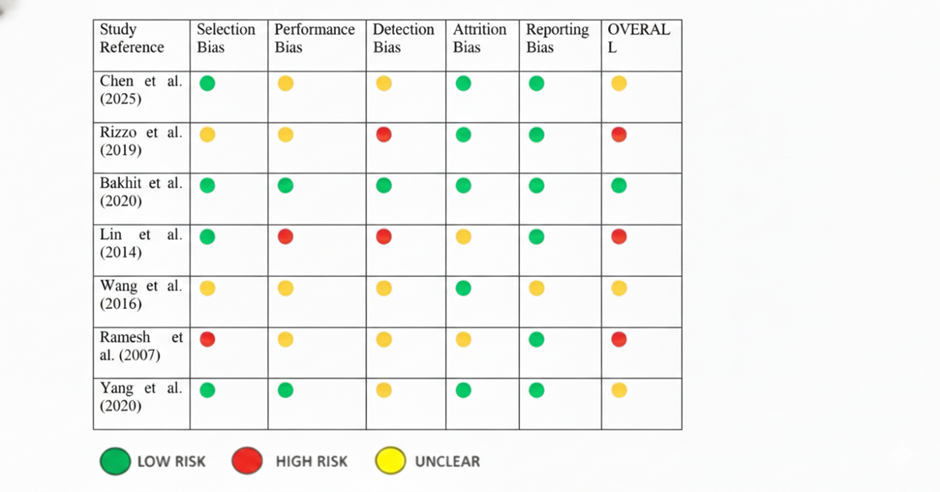
· For animal studies (in vivo), the Systematic Review Centre for Laboratory Animal Experimentation (SYRCLE) Risk of Bias tool was used. This tool assesses key domains such as selection bias (randomization, baseline characteristics), performance bias (blinding of personnel), detection bias (blinding of outcome assessors), attrition bias (incomplete outcome data), and reporting bias.
· For cellular studies (in vitro), a modified quality assessment tool based on reproducibility and adherence to scientific best practices was used. This included evaluating the use of appropriate controls, clear methods, cell line authentication, and adequate sample sizes.
· The findings of the quality assessment were synthesized and presented in a table. The overall strength of evidence was evaluated, and potential sources of bias were discussed to contextualize the findings.
G. Data Analysis and Synthesis
Data from the selected studies were extracted into a pre-designed form. This included details on study design, sample size, type of strontium nanoparticle, application method, and key outcome measures.Data from the selected studies were systematically extracted, focusing on scaffold used to incorporate Strontium, experimental models, and outcome measures like bone regeneration, osteogenesis, and scaffold integration. Studies were analysed using descriptive statistics for qualitative data and pooled effect sizes for quantitative data.
RESULTS :
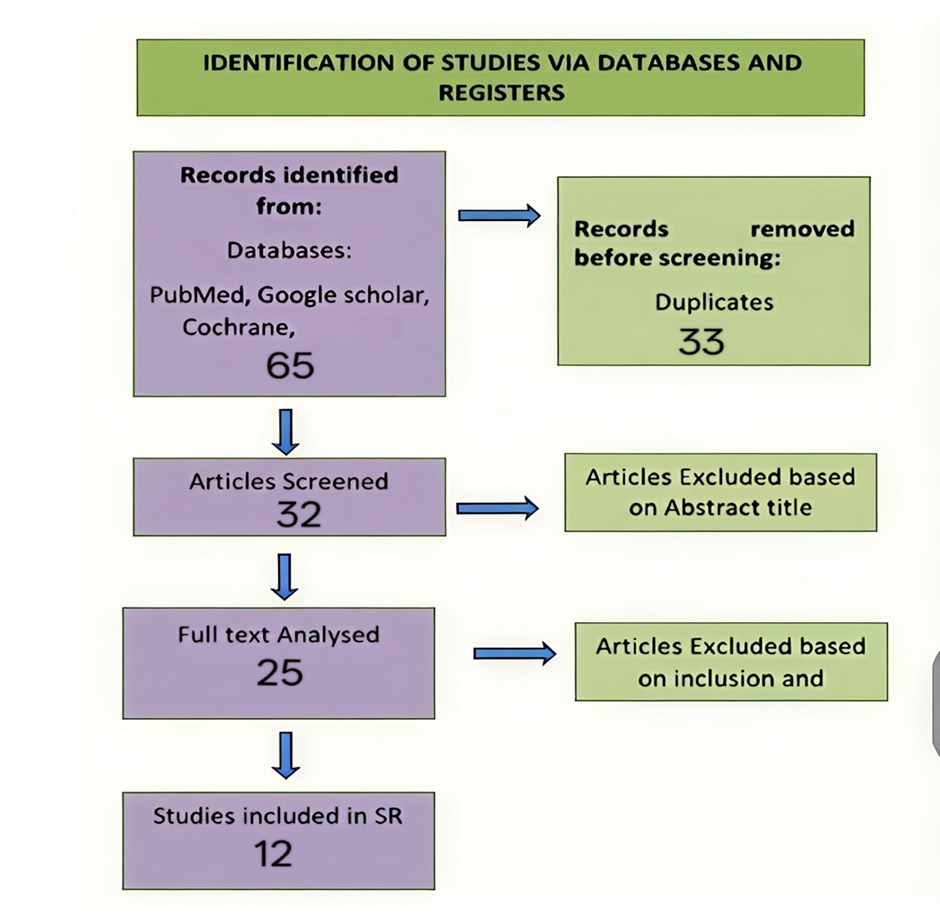
A Total of 65 records were identified across PubMed, Google Scholar, and Cochrane databases. After removing 33 duplicates, 32 articles remained for screening. Based on title and abstract evaluation, 7 records were excluded, and 25 articles proceeded to full-text analysis. Thirteen of these were excluded based on specific inclusion and exclusion criteria. Finally, 12 studies fulfilled all eligibility criteria and were incorporated into the systematic review. Quality assessment of the selected studies was conducted, revealing a distribution of low, moderate, and high risk of bias, ensuring robust data for analysis. These steps are illustrated in the PRISMA flow diagram (Fig 1).
The included studies consisted of 7 primary research articles (in vitro and in vivo) and 5 reviews. The in vivo studies primarily utilized rodent models, including osteoporotic rats, to investigate alveolar bone regeneration and periodontal tissue restoration. Various parameters related to bone healing were analyzed, including bone volume, mineralization, and the expression of osteogenic markers such as alkaline phosphatase (ALP) and Runx2. Evaluation techniques included histological analysis and micro-CT to assess the efficacy of strontium-incorporated scaffolds, such as hydroxyapatite and bioactive glass, in promoting osteogenesis and osseointegration. Table 1-3 depict the study characteristics of the included articles.
Table 1: Summary of Study Characteristics
|
Author (Year) |
Study Type |
Strontium Material Used |
Model/System |
Main Focus |
|
Chen et al. (2025)[8] |
In vivo + in vitro |
Sr-incorporated HA nanoparticles |
Bone tissue (rodent model) |
Bone regeneration, angiogenesis, macrophage modulation |
|
Rizzo et al. (2019)[9] |
In vivo |
Sr-enriched HA nanoparticles |
Animal bone model |
Bone remodeling analysis |
|
Tregubov et al. (2018)[10] |
Review |
Sr nanoparticles (various forms) |
General biomedical |
Biomedical applications in bone |
|
Kargozar et al. (2019)[11] |
Review |
Sr-containing glasses/ceramics |
Bone tissue |
Bioactive biomaterials for bone tissue engineering |
|
Yang et al. (2020)[12] |
In vitro + in vivo |
Sr-mesoporous bioactive glass (Sr-MBG) |
Bone tissue models |
Sr-MBG for bone tissue engineering |
|
Pacheco-López et al. (2024)[13] |
Systematic Review |
Sr-doped titanium |
Osseointegration studies |
Effects on implant osseointegration |
|
Bakhit et al. (2020)[14] |
In vitro + in vivo |
Sr ranelate |
Dental papilla cells/pulp |
Odonto-/osteogenic differentiation |
|
Lin et al. (2014)[15] |
In vivo |
Sr-doped Ca silicate |
Periodontal tissues (osteoporotic rats) |
Periodontal regeneration |
|
Wang Y et al. (2016)[16] |
In vitro |
Sr ions |
Human dental pulp stem cells (hDPSCs) |
Odontogenic differentiation via MAPK pathway |
|
Ramesh et al. (2007)[17] |
Experimental |
Sr-substituted HA |
Material synthesis |
Synthesis and characterization of Sr-HA |
|
Wang X et al. (2022)[4] |
Meta-analysis |
Sr in calcium phosphate |
Preclinical/clinical |
Sr effect on bone repair |
|
Zhang H et al. (2023)[18] |
Review |
Sr-functionalized biomaterials |
General bone tissues |
Advances in Sr-biomaterials for bone |
Table 2: Key Findings on Alveolar Bone Healing and Oral Regeneration
|
Study |
Strontium's Role |
Effect on Bone/Oral Tissue |
Mechanisms/Pathways Highlighted |
|
Chen et al. (2025)[8] |
Enhances osteogenesis and angiogenesis |
Promoted alveolar bone regeneration |
M2 macrophage polarization, immune modulation |
|
Rizzo et al. (2019)[9] |
Modulates bone turnover |
Improved trabecular structure and remodeling |
Strontium effect on resorption/formation balance |
|
Tregubov et al. (2018)[10] |
Overview of biomedical potential |
Broad regenerative potential across bone applications |
Descriptive mechanisms across studies |
|
Kargozar et al. (2019)[11] |
Bioactivity enhancer |
Supported osteoconduction and bioresorption |
Sr substitution in glass and ceramic networks |
|
Yang et al. (2020)[12] |
Sustained ion release for regeneration |
Increased bone formation and vascularization |
Sr ion delivery via mesoporous glass |
|
Pacheco-López et al. (2024)[13] |
Enhances osseointegration |
Increased bone-implant interface strength |
Sr surface doping on titanium implants |
|
Bakhit et al. (2020)[14] |
Stimulates pulp tissue mineralization |
Promoted hard tissue formation in dental pulp |
Odonto-/osteogenic gene expression, in vivo evidence |
|
Lin et al. (2014)[15] |
Regenerates periodontium in bone loss |
Bone and periodontal ligament restoration in osteoporosis |
Sr-mediated osteoblast stimulation |
|
Wang Y et al. (2016)[16] |
Promotes dental pulp stem cell (DPSC) differentiation |
Induced odontogenic lineage commitment |
MAPK pathway activation (ERK, JNK) |
|
Ramesh et al. (2007)[17] |
Improves material bioactivity |
Enhanced crystallinity and biofunction of HA |
Sr substitution into HA lattice |
|
Wang X et al. (2022)[4] |
Overall improvement in bone repair |
Higher bone volume, density, and implant integration |
Meta-analysis of preclinical and clinical outcomes |
|
Zhang H et al. (2023)[18] |
Broad regenerative enhancer |
Accelerates angiogenesis and osteoinduction |
Sr-dependent signaling and controlled ion release |
Table 3: Materials and Delivery Forms of Strontium in Oral/Bone Applications
|
Material/Carrier |
Strontium Form Used |
Relevant Studies |
Delivery/Application Context |
|
Hydroxyapatite (HA) |
Sr-incorporated or Sr-substituted HA |
Chen (2025), Rizzo (2019), Ramesh (2007) |
Scaffolds, injectable ceramics for bone/periodontal tissue |
|
Bioactive Glass (BG/MBG) |
Sr-containing mesoporous bioactive glass |
Yang (2020), Kargozar (2019), Zhang H (2023) |
Bone fillers, scaffolds, regenerative granules |
|
Calcium Silicate |
Sr-doped Ca-silicate |
Lin (2014) |
Periodontal bone regeneration (especially in osteoporosis) |
|
Titanium (Ti) Implants |
Sr-doped titanium coatings |
Pacheco-López (2024) |
Implant osseointegration and stability enhancement |
|
Strontium Ranelate |
Organic Sr salt (SrR) |
Bakhit (2020) |
Dental pulp regeneration, injectable formulations |
|
Sr Ions in Solution |
SrCl₂ or similar Sr salts |
Wang Y (2016) |
Induction media for stem cell differentiation |
|
Composite Systems / Multifunctional Scaffolds |
Sr-functionalized multi-materials |
Zhang H (2023), Tregubov (2018) |
Smart biomaterials, tissue-specific applications |
|
Various Nanoparticles (NPs) |
Sr-based or Sr-loaded NPs |
Tregubov (2018), Chen (2025), Yang (2020) |
Targeted bone regeneration, immune modulation |
Risk of Bias Assessment
For this type of figure, only primary research studies are assessed. Systematic reviews, narrative reviews, and meta-analyses are excluded because they summarize other studies rather than presenting new primary data.
● Studies Included in this Figure (Primary Research):
○ Chen et al. (2025)
○ Rizzo et al. (2019)
○ Bakhit et al. (2020)
○ Lin et al. (2014)
○ Wang et al. (2016)
○ Ramesh et al. (2007)
○ Yang et al. (2020)
● Studies Excluded (Reviews/Meta-Analyses):
○ Tregubov et al. (2018)
○ Kargozar et al. (2019)
○ Pacheco-López et al. (2024)
○ Wang et al. (2022)
○ Zhang et al. (2023)
DISCUSSION:
This systematic review critically assessed the impact of strontium nanoparticles and strontium-incorporated nanomaterials in alveolar bone regeneration, drawing on information from in vitro research, animal models, systematic reviews, and meta-analyses[19].The data suggest that strontium, especially when given at the nanoscale, has considerable osteogenic, angiogenic, and immunomodulatory properties, making it a promising adjuvant in oral and alveolar bone regenerating techniques[20].
Strontium-mediated osteogenesis and bone remodeling
A frequent finding throughout the research is strontium's consistent capacity to affect bone remodeling by increasing osteoblast activity while inhibiting osteoclast-mediated bone resorption. This dual mechanism, which is well documented in fundamental cellular research (Bonnelye et al., 2008; Marie, 2010), was supported by nanoscale delivery methods that allowed sustained and localized strontium ion release [21,22]. Experimental studies using calcium silicate scaffolds, bioactive glass, and hydroxyapatite with strontium incorporation showed improvements in trabecular architecture and bone volume as well as increased expression of osteogenic markers like osteocalcin, Runx2, and alkaline phosphatase (ALP) [23.24].The nanoscale dimension of these materials appears to play a critical role by increasing surface area, enhancing protein adsorption, and facilitating closer cell–material interactions[25].This promotes osteogenic differentiation and accelerates early bone healing responses, consistent with broader literature on nanostructured biomaterials for bone regeneration.
Angiogenesis and immune regulation
Beyond direct osteogenesis, emerging evidence highlights the ability of strontium nanoparticles to influence the bone microenvironment through angiogenic and immunomodulatory pathways. Chen et al. (2025) demonstrated that strontium-containing nanoparticles promoted M2 macrophage polarization, creating a pro-regenerative immune milieu conducive to bone formation [8]. This immunomodulatory effect is particularly relevant in the oral cavity, where inflammatory challenges from microbial biofilms and mechanical stress can compromise regenerative outcomes. Additionally, increased vascularization observed in several in vivo studies suggests that strontium-enhanced angiogenesis may support nutrient delivery and long-term scaffold integration, thereby improving the quality of regenerated alveolar bone[26].
Clinical Relevance and Translational Potential
Strontium-functionalized nanomaterials have demonstrated promising applications in periodontal regeneration and implant dentistry[15].Strontium-doped titanium implants showed improved osseointegration and bone–implant contact, as supported by recent systematic reviews and meta-analyses[13, 16]. These findings are clinically significant, particularly for patients with compromised bone healing capacity, such as those with osteoporosis or advanced periodontal disease[14,15,19].
However, despite encouraging preclinical outcomes, translation to routine clinical practice remains limited.(16) The oral environment presents unique challenges, including continuous microbial exposure, saliva-mediated material degradation, and cyclic mechanical loading, which may alter nanoparticle stability and ion release kinetics[27, 28] Furthermore, concerns regarding nanoparticle toxicity, systemic strontium accumulation, and long-term biosafety necessitate rigorous dose optimization and standardized safety assessments before clinical adoption.
Limitations of the Evidence
Several limitations were identified across the included studies. Most evidence is derived from in vitro experiments and animal models, with a relative paucity of well-designed human clinical trials specifically focused on alveolar bone regeneration. Variability in nanoparticle synthesis methods, strontium concentrations, scaffold compositions, and outcome measures further complicates direct comparison between studies. Additionally, risk of bias assessments revealed moderate methodological limitations, particularly in blinding and randomization procedures in animal studies, which may influence outcome interpretation.
CONCLUSION:
This systematic review demonstrates that strontium nanoparticles and strontium-incorporated nanomaterials hold substantial promise for alveolar bone regeneration by simultaneously enhancing osteogenesis, reducing bone resorption, and favorably modulating the immune and vascular microenvironment. Nanostructured delivery systems enable controlled and localized strontium ion release, resulting in improved bone quality, scaffold integration, and regenerative outcomes in preclinical models.
Despite these encouraging findings, the clinical translation of strontium nanoparticles remains in its early stages. Future research should prioritize standardized material formulations, long-term biosafety evaluations, and well-designed randomized clinical trials to establish optimal dosing, delivery strategies, and clinical efficacy in oral regenerative applications. With continued interdisciplinary research bridging materials science and clinical dentistry, strontium-based nanomaterials may emerge as a valuable tool for enhancing patient outcomes in alveolar bone healing and oral rehabilitation.
BIBLIOGRAPHY:
1. Kinane D, Stathopoulou P, Papapanou P. Periodontal diseases. Nat Rev Dis Primers. 2017;3:17038. Doi:10.1038/nrdp.2017.38
2. Do Carmo ABX, Sartoretto SC, Alves ATNN, Granjeiro JM, Miguel FB, Calasans-Maia JC, et al. Alveolar bone repair with strontium-containing nanostructured carbonated hydroxyapatite. J Appl Oral Sci. 2018;26:e20170084.
3. Li Y, Zhang J, Wang Y, Li J, Du Y, Yang D, et al. Strontium-doped mesoporous silica nanoparticles promote osteogenesis and angiogenesis by activating the Wnt/β-catenin signaling pathway. Biomaterials. 2021;276:121037. Doi:10.1016/j.biomaterials.2021.121037
4. Wang X, Yan Y, Zhang R, Chen F, Zhao Y. Does the incorporation of strontium into calcium phosphate improve bone repair? A meta-analysis. BMC Oral Health. 2022;22(1):62. Doi:10.1186/s12903-022-02092-7
5. Werny JG, Sagheb K, Diaz L, Kämmerer PW, Al-Nawas B, Schiegnitz E. Efficacy of strontium supplementation on implant osseointegration under osteoporotic conditions: A systematic review. J Prosthet Dent. 2021.
6. Alves Côrtes J, Dornelas J, Duarte F, Messora MR, Mourão CF, Alves G. The Effects of the Addition of Strontium on the Biological Response to Calcium Phosphate Biomaterials: A Systematic Review. Applied Sciences. 2024;14(17):7566.
7. Luo L, Chen X, Cheng Y. Alveolar bone regeneration using alginate scaffolds: A comprehensive review. J Biomater Appl. 2020;35(4):473-486. Doi:10.1177/0885328220901499
8. Chen Q, Zhou Y, Yang B, et al. Strontium-incorporated hydroxyapatite nanoparticles promoting bone formation and angiogenesis by modulating M2 macrophage polarization in the bone microenvironment. Regenerative Biomaterials. 2025;Advance online publication.
9. Rizzo AM, Gigliotti M, Carbone V, et al. Bone remodelling study using strontium enriched hydroxyapatite nanoparticles. Front Physiol. 2019;10:1449. Doi:10.3389/fphys.2019.01449
10. Tregubov A, Al-Shami RS, Al-Jazaeri S. Biomedical Applications of Strontium Nanoparticles for Bone Regeneration. J Nanomed Nanotechnol. 2018;9(6):1000511. Doi:10.4172/2157-7439.1000511
11. Kargozar S, Mozafari M, Bahrami A, et al. Strontium-containing bioactive glasses and ceramics for bone tissue engineering: A review. Materials Science and Engineering: C. 2019;104:109968. Doi:10.1016/j.msec.2019.109968
12. Yang F, Gao X, Yang M, et al. Strontium-containing mesoporous bioactive glass nanoparticles for bone tissue engineering. Acta Biomaterialia. 2020;113:302-315. Doi:10.1016/j.actbio.2020.06.024
13. Pacheco-López JJ, Olivas-Cavazos D, Treviño-Carrillo I, et al. Effect of strontium-doped titanium implants on the osseointegration – a systematic review. Int J Implant Dent. 2024;10(1):17. Doi:10.1186/s40729-024-00465-3
14. Bakhit A, Kawashima N, Hashimoto K, Noda S, Nara K, Kuramoto M, et al. Strontium ranelate promotes odonto-/osteogenic differentiation/mineralization of dental papillae cells in vitro and mineralized tissue formation of the dental pulp in vivo. Sci Rep. 2020;10(1):8375. Doi:10.1038/s41598-020-65314-2
15. Lin K, Xia L, Li H, Jiang X, Pan H, Xu Y, et al. Periodontal regeneration by strontium-doped calcium silicate biomaterials in osteoporotic rats. Biomaterials. 2014;35(22):5078-5088. Doi:10.1016/j.biomaterials.2014.03.051
16. Wang Y, Cui J, Sun X, Zhang L, Zhang Y, Guo W. Strontium induces odontogenic differentiation of human dental pulp stem cells via activation of MAPK signaling pathways. Stem Cell Res Ther. 2016;7(1):111. Doi:10.1186/s13287-016-0373-3
17. Ramesh S, Tan CY, Bhaduri SB, Teng WD, Chew CK, Sopyan I. Synthesis and characterization of strontium-substituted hydroxyapatite for bone tissue engineering. Ceram Int. 2007;33(7):1363-1367. Doi:10.1016/j.ceramint.2006.04.040
18. Zhang H, Xu L, Chen Y, Wang J, Zhao Y, Xie Y, et al. Recent advance of strontium functionalized biomaterials in bone regeneration. Front Bioeng Biotechnol. 2023;11:1176560. Doi:10.3389/fbioe.2023.1176560
19. Zhu Y, Zhang Y, Liu S, Lin K. Strontium ion-functionalized nano-hydroxyapatite/chitosan microspheres for enhanced bone regeneration. ACS Appl Mater Interfaces. 2023;15(14):17225-17237. Doi:10.1021/acsami.3c00655
20. Huang Z, Cao Y, Wu W, Wang X, Chen F, Zeng Y, et al. ECM-mimicking strontium-doped nanofibrous microspheres for periodontal tissue regeneration in osteoporosis. ACS Appl Mater Interfaces. 2024;16(2):2057-2072. Doi:10.1021/acsami.4c06286
21. Da Silva FL, Dos Santos Rodrigues CF, Pereira NAF, Da Silva GDC, De Menezes WLC, De Lima JRL. In vivo effects of nanotechnologically synthesized fluoridated strontium apatite nanoparticles in surgical treatment of endodontic bone lesions. Crystals. 2022;12(9):1192. Doi:10.3390/cryst12091192
22. Oliveira LAM, Lima HL, Silva AF, Santos RLM, Alves APNN, Lima PHC. Strontium-containing hydroxyapatite microspheres: Synthesis, characterization and potential for bone regeneration. Res Soc Dev. 2023;12(8):e47312833771. Doi:10.33448/rsd-v12i8.33771
23. Li Y, Zeng D, Jiang T, Cao Z, Zhao Y, Zhou L. Effects of low-concentration strontium on human periodontal ligament stem cells via Wnt/β-catenin signaling pathway. J Int Med Res. 2025;53(9):03000605251315024. Doi:10.1177/03000605251315024
24. Zheng Y, Li Z, Wang C, et al. Exploring the role of strontium-based nanoparticles in modulating bone regeneration and antimicrobial resistance: a public health perspective. .2025;In press.
25. Velez A, Restrepo A, Pineda S, et al. Nanotechnology Scaffolds for Alveolar Bone Regeneration. ResearchGate [Preprint]. 2025.
26. Bakhshaei A, Yusefi M, Farokhi M. Recent Advance of Strontium Functionalized in Biomaterials for Bone Regeneration. Materials (Basel). 2024;16(5):2249. Doi:10.3390/ma16052249
27. Al-Shami RS, Abdul-Hamid R, Al-Jazaeri S, et al. Antimicrobial Properties of Strontium Functionalized Titanium Surfaces for Oral Applications, A Systematic Review. J Clin Med. 2023;12(11):3812. Doi:10.3390/jcm12113812
28. Wu C, Mao J, Guo X, et al. Advanced applications of strontium-containing biomaterials in bone tissue engineering. Biomaterials. 2022;287:121606. Doi:10.1016/j.biomaterials.2022.121606,