Physiological Impact of Micro plastic Exposure on Human Health: A Comprehensive Review with Indian Contextual Insights
- Rohit Saroha , MD (Physiology) Assistant Professor, Department of Physiology Santosh Deemed to be University , Ghaziabad ,Uttar Pradesh, India
- Soni Singh , MD (Physiology) Assistant Professor, Department of Physiology Santosh Deemed to be University , Ghaziabad Uttar Pradesh, India
- Muneeb kosvi , MD (Physiology) Assistant Professor, Department of Physiology Teerthanker Mahaveer University, Moradabad, Uttar Pradesh, India
- Chetna Chhabra , MD Physiology Santosh Deemed to be University , Ghaziabad , Uttar Pradesh, India
Article Information:
Abstract:
Background: Microplastics (MPs), synthetic polymer particles smaller than 5 mm, have emerged as pervasive environmental contaminants with increasing evidence of human bioaccumulation. Recent studies have detected MPs in the blood, lungs, placental tissue, and arterial plaques, raising urgent concerns regarding their physiological effects. Experimental models implicate MPs in a cascade of adverse outcomes, including systemic inflammation, oxidative stress, endocrine disruption, and cellular damage, all of which are associated with major non-communicable diseases. India, as one of the world’s largest plastic consumers, faces the dual burden of high environmental plastic loads and socio-economic vulnerabilities that amplify exposure. Drinking water contamination, dietary intake of seafood and salt, and airborne MPs in indoor settings are now recognized as key exposure routes. This review critically synthesizes over a decade of global and Indian research, highlighting the mechanisms of toxicity, routes of exposure, and detection methods, while identifying significant gaps in long-term health monitoring and regulatory oversight. Mechanistic insights revealed that MPs may translocate across biological barriers, interfere with redox pathways, and act as carriers for endocrine-disrupting chemicals. Indian data on bottled water, table salt, and seafood indicate alarmingly high MP loads, often exceeding the global averages. Despite this, India lacks enforceable safety limits and surveillance systems to assess MP-related health risks. This review underscores the urgent need for nationwide biomonitoring, risk-based regulations, and interdisciplinary research. Policy frameworks must move beyond the bans on macroplastics to address the invisible but potent threats posed by microplastics. India’s unique context provides an essential lens through which global mitigation strategies can evolve.
Keywords:
Article :
INTRODUCTION :
Initially considered as a problem limited to ocean waste, microplastics (MPs) have emerged as a significant public health issue. Microplastics (MPs), defined as synthetic polymer particles smaller than 5 mm, originate from various sources such as the degradation of larger plastic objects, microbeads found in personal care items, and fibers from synthetic textiles. [1] Their small size allows them to spread extensively through air, water, and soil, and recent findings have sparked concern owing to their increasing detection in the human body. [2–4]
Worldwide, the rapid increase in plastic production, surpassing 400 million metric tons each year, has outstripped progress in developing efficient waste management and recycling systems. [5] In India, this gap is even more evident. Annually, approximately 3.5 million metric tons of plastic waste is produced, yet only a small portion is successfully recycled. This environmental challenge is further intensified by socioeconomic disparities that lead to varying levels of exposure. [5] In both urban informal settlements and rural areas, practices such as open dumping, burning of plastic waste, and the use of non-certified bottled water are prevalent. These actions enable MPs to infiltrate drinking water supplies, food chains, and indoor air, thereby presenting a potential health risk that is often overlooked.
Although the toxicological characteristics of MPs in humans are not yet fully understood, both in vitro and in vivo studies have indicated that long-term exposure could interfere with immune regulation, redox balance, endocrine signaling, and cellular homeostasis. [6, 7] The discovery of MPs in human feces, placental tissue, lung biopsies, and even cardiovascular plaques highlights the urgency of this discussion. [3, 4]
Although new evidence is emerging, India has not yet established strong national guidelines or surveillance systems to track MP exposure and its health impacts. The existing regulatory systems predominantly target visible plastic debris and impose bans on single-use items. Although these measures are essential, they fall short of tackling the less obvious but equally hazardous issue of microplastics. Moreover, research in India has largely focused on environmental pollution, with limited investigation into its health effects at the clinical or population level. [5]
This review aims to close this gap by thoroughly analyzing current research on the physiological effects of MP exposure and situating it within the specific demographic, environmental, and infrastructural context of India. Our goal is to lay the groundwork for scientific research and policy making based on evidence.
3. Routes of Human Exposure
3.1 Ingestion
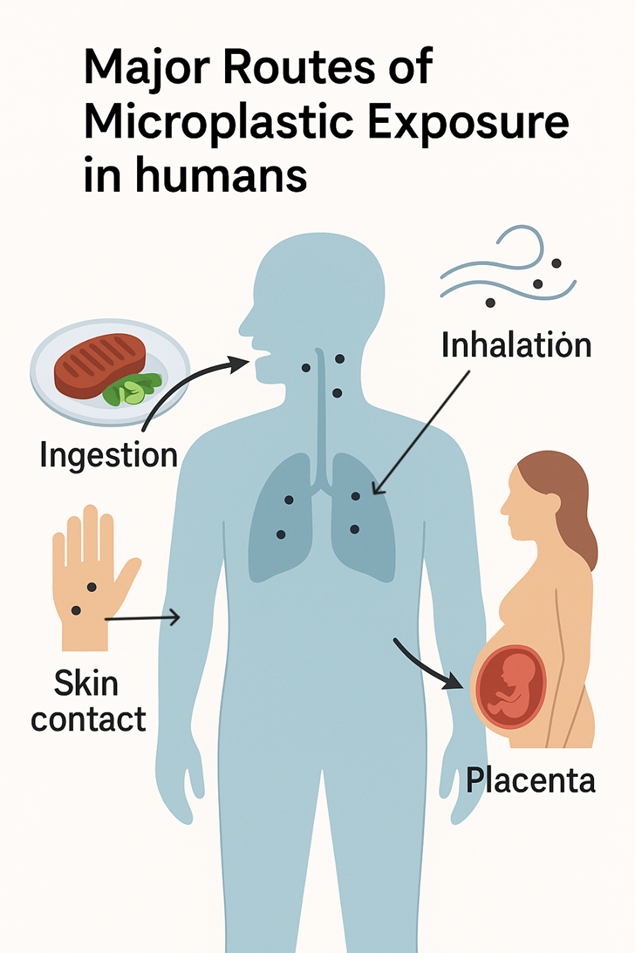
It is widely acknowledged that ingestion is the main way humans are exposed to microplastics (MPs). These particles have been found in various consumables such as drinking water and table salts. [8, 9] The research conducted by Cox et al. suggested that humans might consume between 39,000 and 52,000 MP particles each year solely from food sources. [10] Seafood, especially bivalves and fish, plays a significant role in the process of bioaccumulation in aquatic ecosystems. [11] Moreover, over time, plastic packaging and storage materials can release MPs, resulting in the additional consumption of everyday foods and beverages. [12]
3.2 Inhalation
Inhalation has become a major route of exposure to microplastics (MPs). These airborne MPs are commonly found in both indoor and outdoor settings and stem from sources such as synthetic fabrics, vehicle tire abrasion, urban dust, and the breakdown of plastic materials. [13] Airborne MPs are often found at higher concentrations in indoor settings, especially in homes or workplaces with inadequate ventilation. [14] Breathing in particles is particularly worrisome because they can settle in the lower parts of the respiratory system, potentially causing oxidative stress, inflammation, and tissue damage. [4]
3.3 Dermal Contact
Although dermal exposure is often seen as a less significant pathway, it still holds importance, particularly through the use of personal care items with microbeads and contact with polluted water. [3] Recent research indicates that nanoplastics and the additives they release might infiltrate damaged skin barriers or enter through sweat glands. [3] This is especially pertinent to jobs that involve handling plastic or working in informal recycling sectors. Figure 3 depicts the primary human exposure routes to microplastics, including ingestion, inhalation, dermal contact, and transplacental transfer.
4. Clinical Evidence of Microplastic Presence in Humans
4.1 Microplastics in Blood and Circulation
Leslie et al. first verified the presence of microplastics (MPs) in human blood, discovering plastic particles in 77% of healthy adult donors using pyrolysis-GC/MS. [4] Polyethylene terephthalate (PET), polyethylene (PE), and polystyrene (PS) are the polymers most commonly found in packaging materials. This research revealed that MPs have the ability to move through epithelial barriers and enter systemic circulation, which raises concerns about potential vascular inflammation and endothelial dysfunction. [4]
4.2 Detection in Human Placental Tissue
Ragusa et al. were the first to demonstrate the presence of MPs in human placental tissues using Raman microspectroscopy. [3] Particles were detected on both the maternal and fetal sides, indicating the possibility of transplacental transfer. The identified polymers included colored substances found in cosmetics and packaging. While fetal outcomes were not directly evaluated, potential theoretical risks involve the disruption of nutrient transport and immune system activation during crucial developmental periods. [3]
4.3 Microplastics in Lung Tissue
In a study by Amato-Lourenço et al., microplastics were found in 13 of 20 human lung tissue samples obtained during surgical procedures, with PET, PP, and PS fibers and fragments being the most common types identified. [15] These results reflect the patterns of environmental exposure, especially in heavily polluted urban areas. Inhaled microplastics can remain in the lung tissue, possibly causing localized inflammation, granulomatous reactions, and impairments in alveolar function. [16]
4.4 Gastrointestinal Elimination and Fecal Detection
Schwabl et al. conducted a multicentric study that utilized μFTIR spectroscopy to detect MPs in stool samples from participants in eight countries, including India. [17] Every sample contained MPs, with a median count of 20 particles per 10 g of feces. The most commonly identified polymers were PP and PS. The findings revealed not only extensive ingestion but also partial absorption in the gastrointestinal tract and movement through the system. [17, 18]
Zehua et al. conducted further research on the fecal matter of individuals with inflammatory bowel disease, discovering elevated levels of MP compared to those in healthy individuals. This suggests a possible link between MP exposure and gastrointestinal disorders. [19]
While data on fecal MPs in India are still limited, a recent pilot study conducted in Mumbai confirmed Schwabl’s results by identifying MPs in every sample tested, highlighting the urgent need for nationwide monitoring. [20] Table 2 summarizes the current findings on microplastic detection in various human tissues.
METHODOLOGY:
A comprehensive literature search was systematically conducted across three prominent scientific databases, PubMed, Scopus, and Web of Science, covering the period from January 2010 to May 2025. The search strategy employed Boolean operators and incorporated the following keywords: “microplastics,” “human health,” “India,” “exposure,” “toxicity,” “physiological effects,” and “biomonitoring.”
The inclusion criteria were as follows: (1) peer-reviewed original research articles and systematic reviews; (2) studies reporting human or animal exposure and physiological or toxicological mechanisms; and (3) articles containing epidemiological or biomonitoring data relevant to Indian or comparable low- and middle-income country (LMIC) settings.
The exclusion criteria were as follows: (1) editorials, opinion pieces, and grey literature lacking primary data; (2) studies exclusively addressing aquatic ecology or macroplastic degradation; and (3) articles for which full-text access was unavailable.
Three independent reviewers, Dr. Rohit Saroha, Dr. Muneeb Kosvi, and Dr. Soni Singh, conducted the initial screening, full-text eligibility assessment, and thematic coding to ensure inter-reviewer reliability and minimize selection bias. AI tools such as ChatGPT-4.5 and Consensus AI were employed for certain aspects of thematic analysis or language enhancement. The outputs generated by these tools were manually reviewed, verified against the original text, and revised for accuracy and clarity before being incorporated into the manuscript. Discrepancies in study inclusion and thematic categorization were addressed and resolved through consensus discussions.
This methodology aims to balance global evidence synthesis with contextual relevance in Indian populations. Following a comprehensive full-text screening, a total of 84 articles were selected for inclusion. The study selection process adhered to the PRISMA guidelines, and a PRISMA flow diagram detailing the inclusion process is presented in Figure 1.
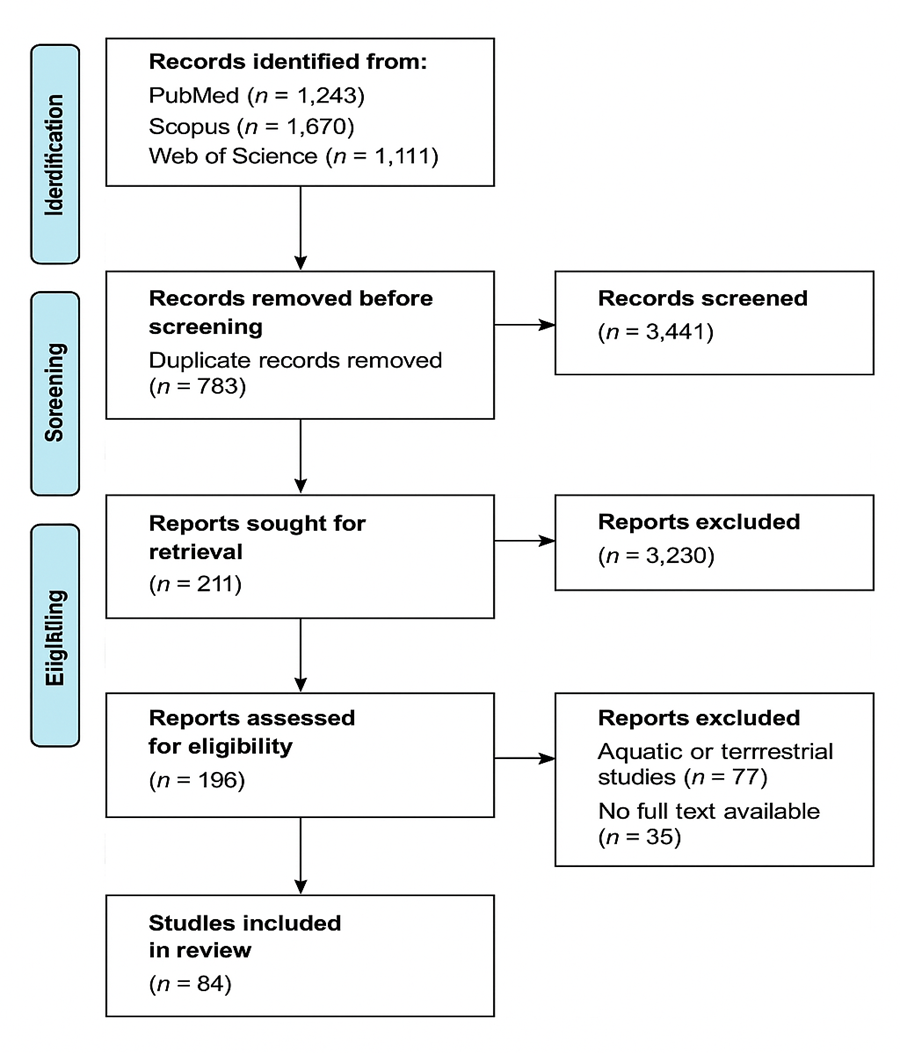
Figure 1: Flow diagram illustrating the study identification, screening, eligibility, and inclusion process based on PRISMA 2020 guidelines
The eligibility framework was guided using a modified PECO approach. The operational definitions for the population, exposure, comparator, and outcomes are detailed in Table 1. Figure 2 provides a schematic overview of the PECO framework used to structure data extraction in this review.
Table 1: Modified PECO Framework
|
Component |
Details |
|
Population (P) |
Humans and laboratory animals exposed to microplastics; Indian populations where available |
|
Exposure (E) |
Ingestion, inhalation, dermal exposure to microplastics from water, food, air, and consumer products |
|
Comparator (C) |
Unexposed controls or populations with low MP exposure |
|
Outcomes (O) |
Physiological effects including oxidative stress, inflammation, endocrine disruption, and organ-level damage |
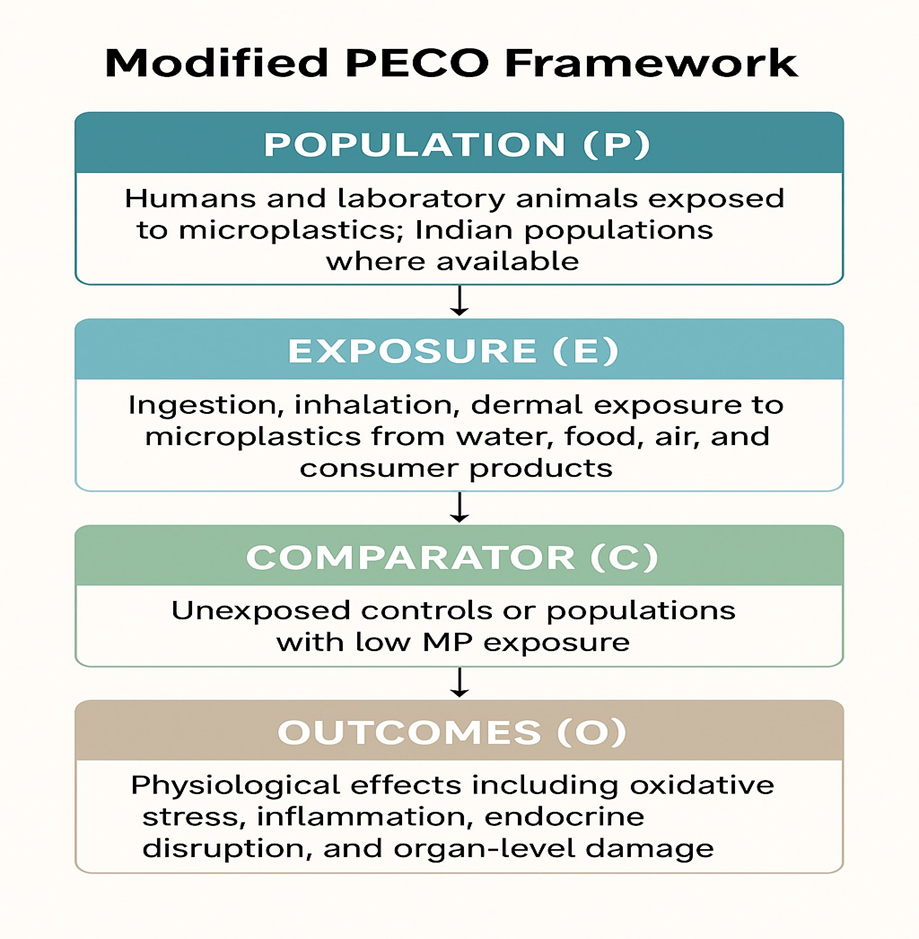
Figure 2: PECO Framework Diagram
CONCLUSION :
Initially regarded as an environmental inconvenience, microplastic (MP) pollution has become a significant public health concern with increasing evidence of human exposure to water, air, and food. Although toxicological and mechanistic evidence from in vitro and animal studies strongly suggests that MPs are involved in inflammation, oxidative stress, endocrine disruption, and organ damage, establishing direct clinical connections in humans remains limited and intricate. [71]
Nonetheless, the precautionary principle should steer international and domestic initiatives. India's distinct demographic, infrastructural, and environmental characteristics make its population particularly susceptible to risks associated with MPs. Existing mitigation efforts, which primarily focus on banning visible plastics, do not effectively address the subtle dangers of micro- and nanoplastics. [72]
The moment has arrived at a significant change in this approach. It is crucial to incorporate MP surveillance into monitoring systems for food, water, and air, as part of public health planning. To truly understand the physiological impact of microplastic exposure, interdisciplinary research involving fields such as environmental science, clinical toxicology, molecular biology, and behavioral health is necessary. [73]
To address this new environmental health factor in the 21st century, we must rely on integrated regulatory systems, community-level education, and scientific research.
11. Supplementary Insights and Policy Addendum
11.1 Biomarker Frameworks for Human Exposure Assessment
A significant drawback in the field of MP toxicology is the lack of validated human biomarkers for both exposure and effects. Experimental investigations have consistently demonstrated increased levels of oxidative stress markers, including reactive oxygen species (ROS) and malondialdehyde (MDA), as well as a reduction in antioxidant enzymes, such as glutathione and catalase, following MP exposure in animal models and cell lines. [74] Pro-inflammatory cytokines, such as IL-6, TNF-α, and CRP, are significantly upregulated in both serum and bronchoalveolar lavage samples. [75] Endocrine disruption is evidenced by altered concentrations of T3, T4, estradiol, and luteinizing hormone, particularly in females exposed to leached plastic additives. [76] Genotoxic endpoints, such as 8-hydroxy-2'-deoxyguanosine (8-OHdG) and micronucleus formation in lymphocytes, serve as early indicators of DNA-level damage. [77] These markers, when correlated with quantifiable MP loads in feces, blood, or placenta [4], could serve as the basis for a prospective clinical screening toolkit. Table 6 outlines the key domain-specific research gaps in India and suggests institutionally actionable priorities to guide future investigations and policy efforts.
Table 6: Research Gaps and Priorities for India on Microplastic Exposure
|
Domain |
Current Gaps |
Proposed Solutions |
Lead Institutions |
|
Biomonitoring |
Lack of data from Indian populations |
Initiate tissue/stool-based MP studies |
ICMR, AIIMS, JIPMER |
|
Detection Technology |
High-cost, lab-only methods |
Develop low-cost field kits |
CSIR-NCL, IITs |
|
Food Chain Exposure |
No data on MPs in milk, rice, spices |
Conduct MP residue testing in staples |
FSSAI, NIN Hyderabad |
|
Health Linkages |
No causal link between MP exposure and NCDs |
Design case-control or cohort studies |
ICMR-NCDIR, PGIMER |
|
Public Behavior |
No data on rural plastic use patterns |
Conduct surveys in tribal and rural areas |
NIRDPR, Ministry of Rural Development |
11.2 Divergent Global Policy Responses and Regulatory Gaps
Globally, regulatory approaches to microplastics (MPs) remain inconsistent. In 2020, the European Chemicals Agency (ECHA) proposed comprehensive restrictions on the intentional addition of microplastics, specifically targeting cosmetics, detergents, and agricultural formulations. [78] Concurrently, the World Health Organization has recognized the presence of MPs in drinking water, but has abstained from establishing safety thresholds due to a lack of sufficient toxicological data. [55] The ongoing negotiations for the United Nations-led Global Plastics Treaty seek to incorporate provisions specific to microplastics, focusing on aspects such as labeling, traceability, and permissible limits. [79] France has taken a pioneering step in national legislation by prohibiting synthetic microfibers in textiles by 2025, thereby establishing a precedent for polymer-specific risk management. [80] In contrast, the majority of low- and middle-income countries, including India, do not possess enforceable standards for MPs in food, water, or consumer goods.
11.3 Methodological Harmonization and Detection Protocols
A significant area of focus is the standardization of methods for detecting microplastics (MPs). The SAPEA consortium has advocated the implementation of unified protocols for the sampling, extraction, and polymer identification of particles across both environmental and biological matrices. [69] The International Organization for Standardization (ISO) has formalized these methodologies through ISO 22766:2020, which concentrates on the degradation and field detection of microplastics (MPs) in marine environments. [81] Moreover, the European Commission’s Joint Research Centre (JRC) is at the forefront of conducting inter-laboratory comparisons to enhance the detection accuracy and establish validated reference materials. [82] These initiatives are essential for reducing analytical discrepancies that impede data comparability and risk assessment.
11.4 Emerging Technological Innovations for Surveillance
Recent advancements have effectively bridged the gap between environmental monitoring and real-time microplastic (MP) detection. Hyperspectral imaging platforms, when integrated with artificial intelligence (AI), have shown significant potential for accurately distinguishing microplastic polymers from natural particles in remote sensing applications. [83] In the field of biomedical research, the EU-funded RIBOSOME project is advancing the development of wearable exposure sensors designed to capture inhaled microplastics (MPs). This initiative seeks to quantify urban exposure burdens using portable biosensing units. [84] These technologies have the potential to transform public health surveillance by facilitating individualized exposure profiling, especially in regions with high population density or occupational vulnerability.
BIBLIOGRAPHY:
1. Galloway TS, Cole M, Lewis C. Interactions of microplastic debris throughout the marine ecosystem. Nature Ecology & Evolution [Internet]. 2017;1(5). Available from: http://dx.doi.org/10.1038/s41559-017-0116
2. Wright SL, Kelly FJ. Plastic and Human Health: A Micro Issue? Environmental Science & Technology [Internet]. 2017;51(12):6634–47. Available from: http://dx.doi.org/10.1021/acs.est.7b00423
3. Ragusa A, Svelato A, Santacroce C, Catalano P, Notarstefano V, Carnevali O, et al. Plasticenta: First evidence of microplastics in human placenta. Environment International [Internet]. 2021;146:106274. Available from: http://dx.doi.org/10.1016/j.envint.2020.106274
4. Leslie HA, van Velzen MJM, Brandsma SH, Vethaak AD, Garcia-Vallejo JJ, Lamoree MH. Discovery and quantification of plastic particle pollution in human blood. Environment International [Internet]. 2022;163:107199. Available from: http://dx.doi.org/10.1016/j.envint.2022.107199
5. Central Pollution Control Board (CPCB). Annual Report 2022–23 on Plastic Waste Management. Ministry of Environment, Forest and Climate Change, Government of India.
6. Prata JC, da Costa JP, Lopes I, Duarte AC, Rocha-Santos T. Environmental exposure to microplastics: An overview on possible human health effects. Science of The Total Environment [Internet]. 2020;702:134455. Available from: http://dx.doi.org/10.1016/j.scitotenv.2019.134455
7. Vethaak AD, Legler J. Microplastics and human health. Science [Internet]. 2021;371(6530):672–4. Available from: http://dx.doi.org/10.1126/science.abe5041
8. Mintenig SM, Löder MGJ, Primpke S, Gerdts G. Low numbers of microplastics detected in drinking water from ground water sources. Science of The Total Environment [Internet]. 2019;648:631–5. Available from: http://dx.doi.org/10.1016/j.scitotenv.2018.08.178
9. Yang D, Shi H, Li L, Li J, Jabeen K, Kolandhasamy P. Microplastic Pollution in Table Salts from China. Environmental Science & Technology [Internet]. 2015;49(22):13622–7. Available from: http://dx.doi.org/10.1021/acs.est.5b03163
10. Cox KD, Covernton GA, Davies HL, Dower JF, Juanes F, Dudas SE. Human Consumption of Microplastics. Environmental Science & Technology [Internet]. 2019;53(12):7068–74. Available from: http://dx.doi.org/10.1021/acs.est.9b01517
11. Catarino AI, Macchia V, Sanderson WG, Thompson RC, Henry TB. Low levels of microplastics (MP) in wild mussels indicate that MP ingestion by humans is minimal compared to exposure via household fibres fallout during a meal. Environmental Pollution [Internet]. 2018;237:675–84. Available from: http://dx.doi.org/10.1016/j.envpol.2018.02.069
12. Enyoh CE, Verla AW, Verla EN, Ibe FC, Amaobi CE. Airborne microplastics: a review study on method for analysis, occurrence, movement and risks. Environmental Monitoring and Assessment [Internet]. 2019;191(11). Available from: http://dx.doi.org/10.1007/s10661-019-7842-0
13. Wright SL, Ulke J, Font A, Chan KLA, Kelly FJ. Atmospheric microplastic deposition in an urban environment and an evaluation of transport. Environment international [Internet]. 2019/12/27 ed. 2020 Mar;136:105411. Available from: https://pubmed.ncbi.nlm.nih.gov/31889555
14. Prata JC. Airborne microplastics: Consequences to human health? Environmental Pollution [Internet]. 2018;234:115–26. Available from: http://dx.doi.org/10.1016/j.envpol.2017.11.043
15. Amato-Lourenço LF, Carvalho-Oliveira R, Júnior GR, dos Santos Galvão L, Ando RA, Mauad T. Presence of airborne microplastics in human lung tissue. Journal of Hazardous Materials [Internet]. 2021;416:126124. Available from: http://dx.doi.org/10.1016/j.jhazmat.2021.126124
16. Prata JC, da Costa JP, Lopes I, Duarte AC, Rocha-Santos T. Effects of microplastics on microalgae populations: A critical review. Science of The Total Environment [Internet]. 2019;665:400–5. Available from: http://dx.doi.org/10.1016/j.scitotenv.2019.02.132
17. Schwabl P, Köppel S, Königshofer P, Bucsics T, Trauner M, Reiberger T, et al. Detection of Various Microplastics in Human Stool. Annals of Internal Medicine [Internet]. 2019;171(7):453–7. Available from: http://dx.doi.org/10.7326/m19-0618
18. Jenner LC, Rotchell JM, Bennett RT, Cowen M, Tentzeris V, Sadofsky LR. Detection of microplastics in human lung tissue using μFTIR spectroscopy. Science of The Total Environment [Internet]. 2022;831:154907. Available from: http://dx.doi.org/10.1016/j.scitotenv.2022.154907
19. Yan Z, Liu Y, Zhang T, Zhang F, Ren H, Zhang Y. Analysis of Microplastics in Human Feces Reveals a Correlation between Fecal Microplastics and Inflammatory Bowel Disease Status. Environmental Science & Technology. 2022 Jan 4;56(1):414–21.
20. Gurjar UR, Xavier KAM, Shukla SP, Jaiswar AK, Deshmukhe G, Nayak BB. Microplastic pollution in coastal ecosystem off Mumbai coast, India. Chemosphere [Internet]. 2022;288:132484. Available from: http://dx.doi.org/10.1016/j.chemosphere.2021.132484
21. Prata JC. Microplastics in wastewater: State of the knowledge on sources, fate and solutions. Marine Pollution Bulletin [Internet]. 2018;129(1):262–5. Available from: http://dx.doi.org/10.1016/j.marpolbul.2018.02.046
22. Li B, Ding Y, Cheng X, Sheng D, Xu Z, Rong Q, et al. Polyethylene microplastics affect the distribution of gut microbiota and inflammation development in mice. Chemosphere [Internet]. 2020;244:125492. Available from: http://dx.doi.org/10.1016/j.chemosphere.2019.125492
23. Kosuth M, Mason SA, Wattenberg E v. Anthropogenic contamination of tap water, beer, and sea salt. PloS one [Internet]. 2018 Apr 11;13(4):e0194970–e0194970. Available from: https://pubmed.ncbi.nlm.nih.gov/29641556
24. Mason SA, Welch VG, Neratko J. Synthetic Polymer Contamination in Bottled Water. Frontiers in chemistry [Internet]. 2018 Sep 11;6:407. Available from: https://pubmed.ncbi.nlm.nih.gov/30255015
25. Oßmann BE, Sarau G, Holtmannspötter H, Pischetsrieder M, Christiansen SH, Dicke W. Small-sized microplastics and pigmented particles in bottled mineral water. Water Research [Internet]. 2018;141:307–16. Available from: http://dx.doi.org/10.1016/j.watres.2018.05.027
26. Singh A, Talpade MB. Presence of Microplastic in Bottled Water from Mumbai Market. UTTAR PRADESH JOURNAL OF ZOOLOGY [Internet]. 2024;45(14):340–8. Available from: http://dx.doi.org/10.56557/upjoz/2024/v45i144211
27. Wu B, Wu X, Liu S, Wang Z, Chen L. Size-dependent effects of polystyrene microplastics on cytotoxicity and efflux pump inhibition in human Caco-2 cells. Chemosphere [Internet]. 2019;221:333–41. Available from: http://dx.doi.org/10.1016/j.chemosphere.2019.01.056
28. Fackelmann G, Sommer S. Microplastics and the gut microbiome: How chronically exposed species may suffer from gut dysbiosis. Marine Pollution Bulletin [Internet]. 2019;143:193–203. Available from: http://dx.doi.org/10.1016/j.marpolbul.2019.04.030
29. Qiang L, Cheng J. Exposure to polystyrene microplastics impairs gonads of zebrafish (Danio rerio). Chemosphere [Internet]. 2021;263:128161. Available from: http://dx.doi.org/10.1016/j.chemosphere.2020.128161
30. Deng Y, Zhang Y, Lemos B, Ren H. Tissue accumulation of microplastics in mice and biomarker responses suggest widespread health risks of exposure. Scientific reports [Internet]. 2017 Apr 24;7:46687. Available from: https://pubmed.ncbi.nlm.nih.gov/28436478
31. Plastindia Foundation. Plastics Industry Status Report 2021. Available at: https://www.plastindia.org/
32. CPCB. Annual Report on Plastic Waste Management 2020–21. Central Pollution Control Board, Ministry of Environment, Forest & Climate Change, India.
33. Ministry of Environment, Forest and Climate Change (MoEFCC). Plastic Waste Management (Amendment) Rules, 2021. Government of India.
34. Shruti VC, Pérez-Guevara F, Roy PD, Kutralam-Muniasamy G. Analyzing microplastics in bottled water from Mumbai and Nagpur: A comparative study. Chemosphere. 2022;287:132281.
35. Karami A, Golieskardi A, Keong Choo C, Larat V, Galloway TS, Salamatinia B. The presence of microplastics in commercial salts from different countries. Scientific reports [Internet]. 2017 Apr 6;7:46173. Available from: https://pubmed.ncbi.nlm.nih.gov/28383020
36. Rukmangada R, Naidu BC, Nayak BB, Balange A, Chouksey MK, Xavier KAM. Microplastic contamination in salted and sun dried fish and implications for food security – A study on the effect of location, style and constituents of dried fish on microplastics load. Marine Pollution Bulletin [Internet]. 2023;191:114909. Available from: http://dx.doi.org/10.1016/j.marpolbul.2023.114909
37. Pathak G, Nichter M, Hardon A, Moyer E, Latkar A, Simbaya J, et al. Plastic pollution and the open burning of plastic wastes. Global Environmental Change [Internet]. 2023;80:102648. Available from: http://dx.doi.org/10.1016/j.gloenvcha.2023.102648
38. Mishra V, Retherford RD, Smith KR. Cooking smoke and tobacco smoke as risk factors for stillbirth. International Journal of Environmental Health Research [Internet]. 2005;15(6):397–410. Available from: http://dx.doi.org/10.1080/09603120500288913
39. FSSAI. Guidelines on Food Packaging Regulations 2021. Food Safety and Standards Authority of India.
40. Lu Y, Zhang Y, Deng Y, Jiang W, Zhao Y, Geng J, et al. Uptake and Accumulation of Polystyrene Microplastics in Zebrafish (Danio rerio) and Toxic Effects in Liver. Environmental Science & Technology [Internet]. 2016 Apr 5;50(7):4054–60. Available from: https://doi.org/10.1021/acs.est.6b00183
41. Zeng G, Li J, Wang Y, Su J, Lu Z, Zhang F, et al. Polystyrene microplastic-induced oxidative stress triggers intestinal barrier dysfunction via the NF-κB/NLRP3/IL-1β/MCLK pathway. Environmental Pollution [Internet]. 2024;345:123473. Available from: http://dx.doi.org/10.1016/j.envpol.2024.123473
42. Hwang J, Choi D, Han S, Choi J, Hong J. An assessment of the toxicity of polypropylene microplastics in human derived cells. Science of The Total Environment [Internet]. 2019;684:657–69. Available from: http://dx.doi.org/10.1016/j.scitotenv.2019.05.071
43. Qian X, Jin P, Fan K, Pei H, He Z, Du R, et al. Polystyrene microplastics exposure aggravates acute liver injury by promoting Kupffer cell pyroptosis. International Immunopharmacology [Internet]. 2024;126:111307. Available from: http://dx.doi.org/10.1016/j.intimp.2023.111307
44. Wu B, Wu X, Liu S, Wang Z, Chen L. Size-dependent effects of polystyrene microplastics on cytotoxicity and efflux pump inhibition in human Caco-2 cells. Chemosphere [Internet]. 2019;221:333–41. Available from: http://dx.doi.org/10.1016/j.chemosphere.2019.01.056
45. Fournier SB, D’Errico JN, Adler DS, Kollontzi S, Goedken MJ, Fabris L, et al. Nanopolystyrene translocation and fetal deposition after acute lung exposure during late-stage pregnancy. Particle and Fibre Toxicology. 2020 Dec 24;17(1):55.
46. Gore AC, Chappell VA, Fenton SE, Flaws JA, Nadal A, Prins GS, et al. EDC-2: The Endocrine Society’s Second Scientific Statement on Endocrine-Disrupting Chemicals. Endocrine reviews [Internet]. 2015/11/06 ed. 2015 Dec;36(6):E1–150. Available from: https://pubmed.ncbi.nlm.nih.gov/26544531
47. Vandenberg LN, Colborn T, Hayes TB, Heindel JJ, Jacobs DR, Lee DH, et al. Hormones and Endocrine-Disrupting Chemicals: Low-Dose Effects and Nonmonotonic Dose Responses. Endocrine Reviews. 2012 Jun 1;33(3):378–455.
48. Talsness CE, Andrade AJM, Kuriyama SN, Taylor JA, vom Saal FS. Components of plastic: experimental studies in animals and relevance for human health. Philosophical transactions of the Royal Society of London Series B, Biological sciences [Internet]. 2009 Jul 27;364(1526):2079–96. Available from: https://pubmed.ncbi.nlm.nih.gov/19528057
49. Jin W, Zhang W, Tang H, Wang P, Zhang Y, Liu S, et al. Microplastics exposure causes the senescence of human lung epithelial cells and mouse lungs by inducing ROS signaling. Environment International [Internet]. 2024;185:108489. Available from: http://dx.doi.org/10.1016/j.envint.2024.108489
50. Lee Y, Sung M, Sung SE, Choi JH, Kang KK, Park JW, et al. The histopathological and functional consequences of microplastic exposure. Discover Applied Sciences [Internet]. 2025;7(1). Available from: http://dx.doi.org/10.1007/s42452-025-06470-y
51. Prata JC, da Costa JP, Duarte AC, Rocha-Santos T. Methods for sampling and detection of microplastics in water and sediment: A critical review. TrAC Trends in Analytical Chemistry [Internet]. 2019;110:150–9. Available from: http://dx.doi.org/10.1016/j.trac.2018.10.029
52. Hermsen E, Pompe R, Besseling E, Koelmans AA. Detection of low numbers of microplastics in North Sea fish using strict quality assurance criteria. Marine Pollution Bulletin [Internet]. 2017;122(1–2):253–8. Available from: http://dx.doi.org/10.1016/j.marpolbul.2017.06.051
53. Cowger W, Booth AM, Hamilton BM, Thaysen C, Primpke S, Munno K, et al. Reporting Guidelines to Increase the Reproducibility and Comparability of Research on Microplastics. Applied spectroscopy [Internet]. 2020/06/12 ed. 2020 Sep;74(9):1066–77. Available from: https://pubmed.ncbi.nlm.nih.gov/32394727
54. Smith M, Love DC, Rochman CM, Neff RA. Microplastics in Seafood and the Implications for Human Health. Current environmental health reports [Internet]. 2018 Sep;5(3):375–86. Available from: https://pubmed.ncbi.nlm.nih.gov/30116998
55. World Health Organization. Microplastics in drinking water. WHO Technical Report. Geneva: 2019.
56. Carr SA, Liu J, Tesoro AG. Transport and fate of microplastic particles in wastewater treatment plants. Water Research [Internet]. 2016;91:174–82. Available from: http://dx.doi.org/10.1016/j.watres.2016.01.002
57. CPCB. Performance Evaluation of Sewage Treatment Plants under NRCD. Central Pollution Control Board, 2021.
58. Sahu V, Varma VG. Comparative Performance Evaluation of Sewage Treatment Plants in Gurgaon. Asian Journal of Water, Environment and Pollution [Internet]. 2013;10(4):89–97. Available from: http://dx.doi.org/10.3233/ajw-2013-10_4_10
59. Pivokonsky M, Cermakova L, Novotna K, Peer P, Cajthaml T, Janda V. Occurrence of microplastics in raw and treated drinking water. Science of The Total Environment [Internet]. 2018;643:1644–51. Available from: http://dx.doi.org/10.1016/j.scitotenv.2018.08.102
60. Bhunia K, Sablani SS, Tang J, Rasco B. Migration of Chemical Compounds from Packaging Polymers during Microwave, Conventional Heat Treatment, and Storage. Comprehensive Reviews in Food Science and Food Safety [Internet]. 2013;12(5):523–45. Available from: http://dx.doi.org/10.1111/1541-4337.12028
61. Hale RC, Seeley ME, la Guardia MJ, Mai L, Zeng EY. A Global Perspective on Microplastics. Journal of Geophysical Research: Oceans [Internet]. 2020;125(1). Available from: http://dx.doi.org/10.1029/2018jc014719
62. Woh PY, Shiu HY, Fang JKH. Microplastics in seafood: Navigating the silent health threat and intestinal implications through a One Health food safety lens. Journal of Hazardous Materials [Internet]. 2024;480:136350. Available from: http://dx.doi.org/10.1016/j.jhazmat.2024.136350
63. FSSAI. Manual of Methods for Food Safety Testing – Water. Food Safety and Standards Authority of India, 2021.
64. MoEFCC. National Air Quality Monitoring Programme Annual Report 2020–21. Ministry of Environment, Forest and Climate Change, Government of India.
65. Basel Convention. Amendments on plastic waste under the Basel Convention. UNEP, 2019.
66. UNEP. Beat Plastic Pollution Campaign Toolkit. United Nations Environment Programme, 2021.
67. National Health Mission. ASHA Training Modules. Ministry of Health and Family Welfare, Government of India.
68. NCERT. Environmental Science Curriculum for Classes 6–10. National Council of Educational Research and Training, 2022.
69. SAPEA. A scientific perspective on microplastics in nature and society. Science Advice for Policy by European Academies, 2019.
70. ICMR Policy Brief. Research priorities in environmental health with focus on plastic pollution. Indian Council of Medical Research, 2023.
71. Sharma S, Chatterjee S. Microplastic pollution, a threat to marine ecosystem and human health: a short review. Environmental Science and Pollution Research [Internet]. 2017;24(27):21530–47. Available from: http://dx.doi.org/10.1007/s11356-017-9910-8
72. Lee JY, Chia RW, Veerasingam S, Uddin S, Jeon WH, Moon HS, et al. A comprehensive review of urban microplastic pollution sources, environment and human health impacts, and regulatory efforts. Science of The Total Environment [Internet]. 2024;946:174297. Available from: http://dx.doi.org/10.1016/j.scitotenv.2024.174297
73. Rochman CM, Hoellein T. The global odyssey of plastic pollution. Science [Internet]. 2020;368(6496):1184–5. Available from: http://dx.doi.org/10.1126/science.abc4428
74. Jin Y, Xia J, Pan Z, Yang J, Wang W, Fu Z. Polystyrene microplastics induce microbiota dysbiosis and inflammation in the gut of adult zebrafish. Environmental Pollution [Internet]. 2018;235:322–9. Available from: http://dx.doi.org/10.1016/j.envpol.2017.12.088
75. Lu L, Wan Z, Luo T, Fu Z, Jin Y. Polystyrene microplastics induce gut microbiota dysbiosis and hepatic lipid metabolism disorder in mice. Science of The Total Environment [Internet]. 2018;631–632:449–58. Available from: http://dx.doi.org/10.1016/j.scitotenv.2018.03.051
76. Holloway AC, Kellenberger LD, Petrik JJ. Fetal and Neonatal Exposure to Nicotine Disrupts Ovarian Function and Fertility in Adult Female Rats. Endocrine [Internet]. 2006;30(2):213–6. Available from: http://dx.doi.org/10.1385/endo:30:2:213
77. Çobanoğlu H, Belivermiş M, Sıkdokur E, Kılıç Ö, Çayır A. Genotoxic and cytotoxic effects of polyethylene microplastics on human peripheral blood lymphocytes. Chemosphere. 2021 Jun;272:129805.
78. European Chemicals Agency (ECHA). Annex XV Restriction Report on Intentionally Added Microplastics. ECHA; 2020.
79. United Nations Environment Programme. Global Plastics Treaty Briefing Document. UNEP, 2023.
80. French Ministry for the Ecological Transition. Anti-Waste Law for a Circular Economy. 2021.
81. International Organization for Standardization. ISO 22766:2020 – Plastics — Determination of the degree of disintegration of plastic materials in marine habitats under real field conditions.
82. European Commission Joint Research Centre. Interlaboratory comparisons and harmonization of microplastics detection. 2022.
83. Cowger W, Gray A, Christiansen SH, DeFrond H, Deshpande AD, Hemabessiere L, et al. Critical Review of Processing and Classification Techniques for Images and Spectra in Microplastic Research. Applied Spectroscopy [Internet]. 2020;74(9):989–1010. Available from: http://dx.doi.org/10.1177/0003702820929064
84. Bora SS, Gogoi R, Sharma MR, Anshu, Borah MP, Deka P, et al. Microplastics and human health: unveiling the gut microbiome disruption and chronic disease risks. Frontiers in Cellular and Infection Microbiology. 2024 Nov 25;14.