Effects of Coenzyme Q10 Supplementation on Hepatic Steatosis and Systemic Inflammatory Biomarkers in Metabolic Dysfunction–Associated Steatotic Liver Disease: A Randomized Placebo-Controlled Trial
- Maria Arshad , Postgraduate Resident, Department of Community Medicine, Allama Iqbal Medical College / Jinnah Hospital, Lahore.
- Samiya Khalil , Medical Officer, South Punjab Hospital, Multan.
- Arhama Muhammed Shoaib , A-level Student, Lahore Grammar School, 1A1, Lahore.
- Syeda Qurat Ul Ain , Senior Demonstrator, Allama Iqbal Medical College / Jinnah Hospital, Lahore.
- Muhammad Umar , Senior Registrar, Mayo Hospital, Lahore.
- Muhammad Arslan Tariq , Postgraduate Resident, Department of Community Medicine, Allama Iqbal Medical College / Jinnah Hospital, Lahore.
Article Information:
Abstract:
Coenzyme Q10 (CoQ10) has antioxidant and mitochondrial functions, but its effects on hepatic steatosis and systemic inflammation in metabolic dysfunction–associated steatotic liver disease (MASLD) remain uncertain. Objective: To estimate the effect of CoQ10 supplementation, compared with placebo, on hepatic steatosis (controlled attenuation parameter, CAP) and systemic inflammatory biomarkers in adults with MASLD. Methods: A 24-week, 1:1 randomized, double-blind, placebo-controlled trial was conducted at Allama Iqbal Medical College / Jinnah Hospital, Lahore, after approval from the institutional ethics review board, in 116 participants (58 per group). The primary endpoint was CAP at week 24, analyzed by baseline-adjusted linear regression (ANCOVA) with diabetes as a prespecified covariate and HC3 robust standard errors. hs-CRP, IL-6 and TNF-α were analyzed on the log scale with Benjamini–Hochberg false-discovery-rate (FDR) adjustment. Weight trajectory was examined with a random-intercept linear mixed model. All analyses were complete-case and exploratory. Results: Week-24 CAP was observed for 97/116 participants (47 CoQ10, 50 placebo). The adjusted CoQ10-minus-placebo CAP difference was −6.53 dB/m (95% CI −18.66 to 5.61; p=0.292). Unadjusted CAP change was −15.09 ± 26.31 dB/m with CoQ10 and −8.30 ± 33.00 dB/m with placebo (Welch p=0.264). Exploratory adjusted geometric-mean ratios favored CoQ10 for hs-CRP (0.77, 95% CI 0.67–0.89; FDR q=0.0009), IL-6 (0.88, 0.78–0.98; q=0.025) and TNF-α (0.87, 0.80–0.95; q=0.0016). The week-24 weight interaction was −0.20 kg (p=0.580). Adverse-event rates were similar. Conclusions: The primary CAP result was imprecise and not statistically significant, so these data do not support a steatosis effect of CoQ10. The favorable inflammatory-marker pattern is hypothesis-generating only and requires confirmation in larger, adequately powered trials.
Keywords:
Article :
INTRODUCTION:
Metabolic dysfunction–associated steatotic liver disease (MASLD), formerly known as non-alcoholic fatty liver disease (NAFLD) [1], is now the most common chronic liver condition worldwide. Pooled estimates place its prevalence at roughly 30% to more than one-third of adults [2,3], and modelling studies suggest that the burden will keep rising with the global epidemics of obesity and type 2 diabetes, from about 39% of adults in 2020 to a forecast 56% by 2040 [4]. The disease spans a spectrum from simple steatosis to steatohepatitis, fibrosis, cirrhosis and hepatocellular carcinoma, and it is therefore a growing driver of liver-related morbidity, transplantation and healthcare cost [2–4].
The change in nomenclature was made through a multisociety Delphi consensus that replaced the exclusionary term “non-alcoholic” and potentially stigmatizing language with a positive diagnosis: hepatic steatosis accompanied by at least one of five cardiometabolic risk factors [1]. This built on the earlier proposal for metabolic dysfunction–associated fatty liver disease (MAFLD), which similarly defined the condition by steatosis together with overweight or obesity, type 2 diabetes or evidence of metabolic dysregulation [5]. Both frameworks reflect the same underlying idea, that fatty liver in most patients is a hepatic expression of systemic metabolic disease rather than an isolated hepatic disorder.
This systemic view has clinical consequences. MASLD is associated with cardiovascular disease, chronic kidney disease, type 2 diabetes and several extrahepatic malignancies, and cardiovascular events are a leading cause of death in affected patients [6,7]. Its pathogenesis is best described by a multiple parallel-hits model in which insulin resistance, adipose tissue dysfunction, lipotoxicity, gut–liver axis perturbation, mitochondrial dysfunction and oxidative stress converge to activate innate immune responses and low-grade systemic inflammation [8,9]. These mechanisms are not confined to the liver, which is why circulating inflammatory mediators such as C-reactive protein, interleukin-6 and tumor necrosis factor-α are commonly studied as accessible markers of the inflammatory burden in this population [8,9].
Persistent low-grade inflammation links hepatic fat accumulation with insulin resistance, atherogenesis and progression from steatosis to steatohepatitis, and has therefore been proposed as a modifiable intermediate pathway [8,9]. If an inexpensive supplement could dampen this process, it might reduce cardiometabolic risk even when its effect on liver fat itself is modest. Conversely, circulating markers might change without any change in steatosis. Such discordance between outcomes is plausible given the multi-organ origin of systemic inflammation [6–9], and trials must be able to detect and report it transparently rather than emphasize whichever result is favorable.
Treatment options have expanded in recent years but remain limited. Resmetirom, a liver-directed thyroid hormone receptor-β agonist, improved histological endpoints in a phase 3 trial of patients with steatohepatitis and fibrosis [10], and the glucagon-like peptide-1 receptor agonist semaglutide improved steatohepatitis resolution in a phase 2 trial [11] and, more recently, in the phase 3 ESSENCE trial [12]. These advances are important, but they have been established in biopsy-defined steatohepatitis with fibrosis, are expensive, and are not available to many patients, particularly in low- and middle-income settings. Current guidelines therefore continue to prioritize lifestyle modification, weight reduction and optimal management of cardiometabolic comorbidities for the large majority of patients [13–15]. Safe, inexpensive adjunctive agents that target the shared mechanisms of oxidative stress and inflammation remain of considerable interest. Weight loss is the best-established driver of histological improvement, so any adjunct must also be evaluated alongside changes in body weight [11–15].
Coenzyme Q10 (CoQ10, ubiquinone) is a lipid-soluble molecule that is synthesized endogenously and also obtained from the diet and supplements. It functions as an electron carrier in the mitochondrial respiratory chain and, in its reduced form, as a membrane antioxidant [16,17]. Because mitochondrial dysfunction and oxidative injury are central to the pathogenesis of MASLD, supplementation has been proposed as a way to improve hepatocellular bioenergetics and reduce inflammatory signalling [16,17]. A meta-analysis of randomized controlled trials in individuals with metabolic syndrome reported that CoQ10 supplementation lowered inflammatory markers and lipid peroxidation relative to placebo, with signals of improved glucose control and liver function [18]. However, the trials included in that analysis were small and heterogeneous, they were not designed around hepatic steatosis as the primary outcome, and objective imaging-based measures of liver fat were rarely reported.
The inherited and acquired disorders of CoQ10 biosynthesis described in the literature illustrate how dependent mitochondrial function and cellular redox balance are on adequate tissue levels of this molecule [16,17]. Whether oral supplementation in a common, multifactorial condition such as MASLD can reproduce a physiological benefit is a separate and unresolved question, because absorption of this highly lipophilic compound is variable and tissue uptake in the liver has not been well characterized in humans.
Hepatic steatosis can be quantified non-invasively by the controlled attenuation parameter (CAP) obtained during vibration-controlled transient elastography. CAP is widely available, inexpensive and suitable for repeated measurement, which makes it attractive for trials in resource-limited settings, although it is less precise than magnetic resonance imaging proton density fat fraction (MRI-PDFF) and shows appreciable measurement variability [19]. These properties mean that results for CAP must be interpreted with caution and with attention to the width of confidence intervals, rather than to statistical significance alone.
Regulatory trials of steatohepatitis therapies rely on histology as the principal endpoint [10–12], but liver biopsy is invasive, costly and impractical for the small, pragmatic studies in which supplements such as CoQ10 are most likely to be tested. Non-invasive endpoints therefore play a central role in early-phase evidence, with the understanding that their results are hypothesis-generating and must be confirmed in larger, adequately powered studies using more definitive measures.
To our knowledge, evidence from randomized trials that addresses both CAP-assessed steatosis and a panel of systemic inflammatory markers in patients with MASLD is scarce, particularly from South Asia, where the burden of metabolic disease is high. We therefore conducted a 24-week, randomized, double-blind, placebo-controlled trial in adults with MASLD. The primary aim was to estimate the effect of CoQ10 supplementation, compared with placebo, on CAP at week 24. Secondary and exploratory aims were to estimate its effects on hs-CRP, interleukin-6 and tumor necrosis factor-α, and to describe changes in body weight, laboratory variables and adverse events. The trial is reported in accordance with the CONSORT 2025 statement [20].
MATERIALS AND METHODS:
This was a 24-week, 1:1 parallel-group, placebo-controlled randomized trial of 116 participants (58 per arm), conducted in the Department of Internal Medicine, Jinnah Hospital, Lahore, between December 2024 and August 2025. The study was conducted after approval from the Ethics Review Board of Allama Iqbal Medical College / Jinnah Hospital, and written informed consent was obtained from all participants. The trial was not registered in a public trial registry; it received institutional ethics approval only. Participants were randomly allocated 1:1 to CoQ10 or placebo using a computer-generated random number sequence. The trial was double-blind and allocation was concealed using sequentially numbered, opaque, sealed envelopes (SNOSE). Participants and outcome assessors were blinded to allocation.
Adults (≥18 years) attending the Department of Internal Medicine were eligible if they had MASLD, defined as hepatic steatosis on transient elastography (CAP ≥248 dB/m) with at least one cardiometabolic risk factor [1]. Exclusion criteria were significant alcohol intake (above 140 g/week in women or 210 g/week in men), viral hepatitis or other chronic liver disease, decompensated cirrhosis, pregnancy or lactation, current use of CoQ10 or other antioxidant supplements, anticoagulant therapy, severe renal impairment, malignancy, and known hypersensitivity to the study product. Participants received ubiquinone (CoQ10) 200 mg once daily or a placebo pill identical in appearance for 24 weeks. Adherence was recorded as a percentage.
The primary outcome was CAP (dB/m) at week 24. Exploratory outcomes were log-transformed hs-CRP, IL-6 and TNF-α at week 24, and descriptive liver-enzyme, glycemic, lipid and liver-stiffness (LSM) measures. Body weight was recorded at baseline, week 12 and week 24. Adverse events were self-reported by participants and were not clinically adjudicated.
The primary analysis was ANCOVA of week-24 CAP on treatment, baseline CAP and diabetes status (prespecified), with HC3 heteroskedasticity-robust standard errors; an unadjusted Welch t-test of change was secondary. Inflammatory markers were analyzed by log-ANCOVA with baseline adjustment and HC3 errors, reported as CoQ10/placebo geometric-mean ratios; p-values were corrected across the three markers by Benjamini–Hochberg FDR (q<0.05 considered supportive). Weight was analyzed with a random-intercept linear mixed model with treatment-by-visit interaction. All analyses were complete-case, without imputation, and two-sided. No formal testing was applied to descriptive laboratory variables. The sample of 116 participants (58 per group) was a sample of convenience and was not powered to detect small effects; all analyses are therefore exploratory. Analyses were performed in IBM SPSS Statistics, version 27 (IBM Corp., Armonk, NY, USA).
RESULT:
All 116 participants carried allocation labels (58 per arm). Week-12 assessments were recorded for 55 CoQ10 and 56 placebo participants, and week-24 observations were available for 47 and 50 (Figure 1). These are availability counts, not verified dropout or adherence. Groups were broadly similar at baseline, with modest numerical differences in age, CAP and diabetes prevalence (Table 1).
Table 1. Baseline characteristics (mean ± SD unless stated).
|
Characteristic |
CoQ10 (n=58) |
Placebo (n=58) |
|
Age, years |
43.9 ± 10.1 |
46.1 ± 12.1 |
|
Sex, male / female |
34 / 24 |
29 / 29 |
|
Weight, kg |
85.2 ± 14.8 |
86.1 ± 12.0 |
|
BMI, kg/m² |
31.3 ± 4.2 |
31.8 ± 3.6 |
|
Waist circumference, cm |
100.5 ± 12.2 |
101.9 ± 9.7 |
|
Diabetes, n (%) |
27 (46.6%) |
24 (41.4%) |
|
Hypertension, n (%) |
19 (32.8%) |
21 (36.2%) |
|
Dyslipidemia, n (%) |
35 (60.3%) |
37 (63.8%) |
|
CAP, dB/m |
323.6 ± 35.4 |
314.9 ± 30.5 |
|
LSM, kPa |
7.7 ± 1.9 |
7.6 ± 1.8 |
|
ALT, U/L |
51.3 ± 18.2 |
49.5 ± 16.9 |
|
AST, U/L |
41.6 ± 15.9 |
36.5 ± 14.9 |
|
GGT, U/L |
54.7 ± 21.0 |
56.0 ± 17.7 |
|
Glucose, mg/dL |
119.7 ± 23.5 |
115.2 ± 19.6 |
|
HbA1c, % |
6.2 ± 1.0 |
6.2 ± 1.0 |
|
Total cholesterol, mg/dL |
200.5 ± 39.7 |
203.9 ± 33.3 |
|
LDL-C, mg/dL |
127.8 ± 27.5 |
128.0 ± 26.3 |
|
HDL-C, mg/dL |
47.6 ± 8.4 |
47.7 ± 8.4 |
|
Triglycerides, mg/dL |
194.8 ± 80.1 |
185.9 ± 71.7 |
|
hs-CRP, mg/L |
3.4 ± 1.9 |
3.2 ± 1.6 |
|
IL-6, pg/mL |
4.5 ± 1.5 |
4.6 ± 1.4 |
|
TNF-α, pg/mL |
11.9 ± 2.9 |
11.6 ± 3.2 |
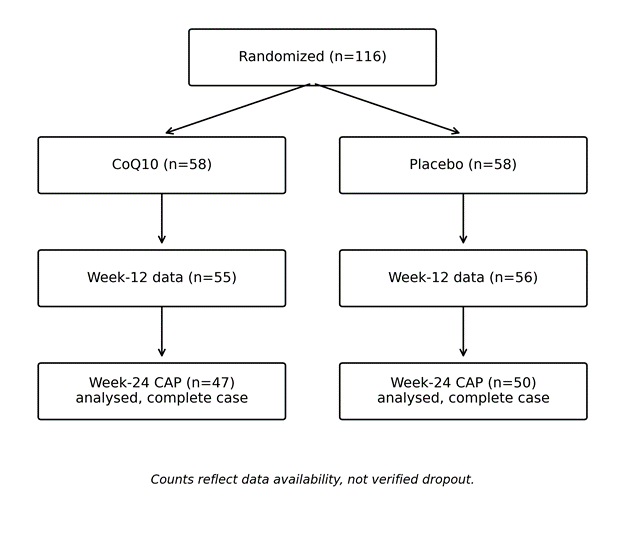
Figure 1. Participant flow (116 randomized; 111 with week-12 data; 97 with week-24 CAP).
The baseline-adjusted treatment coefficient was −6.53 dB/m (95% CI −18.66 to 5.61; p=0.292), indicating no statistically significant between-arm difference (Table 2). The interval is compatible with both a potentially relevant improvement and a small adverse difference. Observed CAP change was −15.09 ± 26.31 dB/m among 47 CoQ10 participants and −8.30 ± 33.00 dB/m among 50 placebo participants (Welch p=0.264; Figure 2).
Table 2. CAP (dB/m) and unadjusted change among participants with observed week-24 outcomes. Baseline is calculated over all 58 participants per arm; week-24 CAP and change describe complete cases. The main effect comes from adjusted ANCOVA, not within-arm comparisons.
|
Group |
Week-24 n |
Baseline CAP (all n=58) |
Week-24 CAP |
Observed change |
|
CoQ10 |
47 |
323.6 ± 35.4 |
309.0 ± 44.9 |
−15.09 ± 26.31 |
|
Placebo |
50 |
314.9 ± 30.5 |
306.7 ± 42.5 |
−8.30 ± 33.00 |
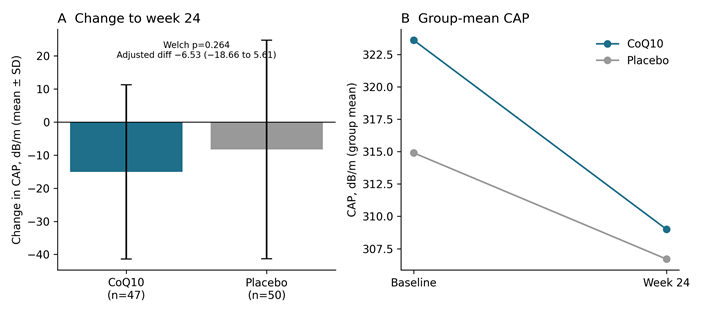
Figure 2. CAP outcomes. (A) Mean change from baseline to week 24 (± SD). (B) Group-mean CAP at baseline and week 24.
All three markers showed smaller adjusted week-24 values with CoQ10, with FDR q<0.05 (Table 3; Figure 3). These are relative differences in systemic markers; they do not establish hepatic inflammation or clinical benefit and cannot override the non-significant primary endpoint.
Table 3. Inflammatory biomarker models (n=97 complete cases; mean ± SD). Adjusted ratios are CoQ10/placebo geometric-mean ratios from log-ANCOVA with baseline adjustment and HC3 robust SEs; FDR q by Benjamini–Hochberg across three tests.
|
Marker |
CoQ10 wk 0 |
CoQ10 wk 24 |
Placebo wk 0 |
Placebo wk 24 |
Adj. ratio (95% CI) |
p |
FDR q |
|
hs-CRP, mg/L |
3.48 ± 2.05 |
3.02 ± 2.98 |
3.24 ± 1.57 |
3.32 ± 1.85 |
0.768 (0.665–0.886) |
0.0003 |
0.0009 |
|
IL-6, pg/mL |
4.40 ± 1.39 |
3.80 ± 1.81 |
4.67 ± 1.41 |
4.68 ± 2.26 |
0.875 (0.779–0.983) |
0.0247 |
0.0247 |
|
TNF-α, pg/mL |
11.97 ± 2.87 |
10.65 ± 3.36 |
11.96 ± 3.19 |
12.26 ± 4.67 |
0.872 (0.804–0.947) |
0.0011 |
0.0016 |
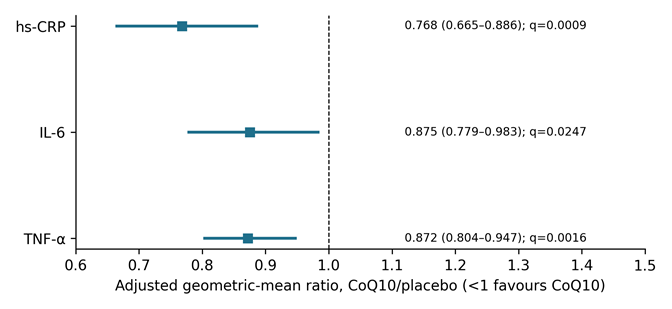
Figure 3. Forest plot of adjusted geometric-mean ratios (values below 1 favor CoQ10).
Table 4 gives descriptive complete-case trajectories. No formal between-group testing or multiplicity adjustment was applied, so the patterns are descriptive only.
Table 4. Approximate group means among complete cases.
|
Variable |
CoQ10 (baseline → week 24) |
Placebo (baseline → week 24) |
|
ALT, U/L |
51.3 → ~39.6 |
49.5 → ~42.8 |
|
AST, U/L |
41.6 → ~34.2 |
36.5 → ~32.1 |
|
GGT, U/L |
54.7 → ~48.5 |
56.0 → ~50.2 |
|
Glucose, mg/dL |
119.7 → ~112.4 |
115.2 → ~109.8 |
|
HbA1c, % |
6.2 → ~6.1 |
6.2 → ~6.1 |
|
Total cholesterol, mg/dL |
200.5 → ~188.7 |
203.9 → ~200.1 |
|
LDL-C, mg/dL |
127.8 → ~122.4 |
128.0 → ~124.5 |
|
HDL-C, mg/dL |
47.6 → ~48.9 |
47.7 → ~48.5 |
|
Triglycerides, mg/dL |
194.8 → ~168.3 |
185.9 → ~175.2 |
|
LSM, kPa |
7.7 → ~7.4 |
7.6 → ~7.3 |
The mixed model included 324 weight observations from 116 participants. The CoQ10-by-week-24 interaction was −0.20 kg (p=0.580) and the week-12 interaction was not significant (p=0.829), giving no evidence of a differential weight trajectory. Mean adherence was high and similar (CoQ10 89.3%, placebo 89.0%). Adverse events are summarized in Table 5.
Table 5. Adverse events, adherence and follow-up completeness.
|
Event / variable |
CoQ10 (n=58) |
Placebo (n=58) |
|
Any adverse event |
6 (10.3%) |
6 (10.3%) |
|
Serious adverse event |
0 (0.0%) |
1 (1.7%) |
|
Medication change |
5 (8.6%) |
3 (5.2%) |
|
Mean adherence, % |
89.3 |
89.0 |
|
Week-12 observed, n |
55 |
56 |
|
Week-24 observed, n |
47 |
50 |
DISCUSSION :
In this trial, CoQ10 did not produce a statistically significant change in CAP at week 24. The adjusted difference of −6.53 dB/m had a wide interval (−18.66 to 5.61) that includes both no effect and a modest benefit, so the data are inconclusive rather than evidence of absence. In contrast, hs-CRP, IL-6 and TNF-α were 13–23% lower with CoQ10 after FDR correction, a pattern consistent with prior meta-analytic findings in metabolic syndrome [18].
Lower systemic inflammatory markers without a clear steatosis change are biologically plausible, since inflammation is shaped by adipose tissue, the gut and other organs as well as the liver [6,8,9]. They are also compatible with chance, outcome selection or imbalance after complete-case attrition. Markers are surrogates; they do not demonstrate histological or clinical benefit, a distinction highlighted by phase 3 trials that rely on biopsy-defined endpoints [10–12]. The primary result governs the conclusion, and the biomarker findings are hypothesis-generating.
CAP is reproducible but has appreciable within-patient variability and is less accurate than MRI-PDFF for detecting change [19]. The observed change SDs (26–33 dB/m) mean a trial of this size had limited power for modest effects. Future work could use MRI-PDFF or histology [13,14].
No differential weight trajectory was seen, arguing against weight loss as an explanation for any effect. Adverse-event rates were similar, but they were self-reported and the trial was not designed to assess safety.
Strengths include a prespecified primary model, robust standard errors, multiplicity control and transparent reporting. Limitations: (i) a modest sample size, so estimates are imprecise; (ii) complete-case analysis with 16% missing week-24 CAP (19/116) risks bias if missingness is informative; (iii) the sample of 116 was one of convenience and was not powered to detect small effects on CAP; (iv) exploratory inflammatory outcomes and descriptive labs carry no confirmatory weight; (v) adverse events were self-reported and not clinically adjudicated; (vi) single-centre design with a short 24-week follow-up; (vii) the trial was not prospectively registered, so selective-reporting bias cannot be excluded.
CONCLUSION:
The primary CAP result was imprecise and non-significant, so these data do not support a steatosis effect of CoQ10. The favorable inflammatory pattern is hypothesis-generating only. Larger, adequately powered trials with MRI-PDFF or histological endpoints are needed before any clinical recommendation.
Declarations
Ethics: Conducted after approval from the Ethics Review Board, Allama Iqbal Medical College / Jinnah Hospital, Lahore.
Author contributions: Maria Arshad: study concept and design. Samiya Khalil and Arhama Muhammed Shoaib: data collection. Syeda Qurat Ul Ain and Muhammad Umar Sheikh: manuscript drafting and data analysis. Muhammad Arslan Tariq: proofreading and correspondence. All authors reviewed and approved the final manuscript and agree to be accountable for all aspects of the work.
Trial registration: The trial was not registered in a public trial registry.
Funding: This study received no external funding.
Conflicts of interest: The authors declare no conflicts of interest.
Data availability: The data are available from the corresponding author on reasonable request.
BIBLIOGRAPHY:
1. Rinella ME, Lazarus JV, Ratziu V, Francque SM, Sanyal AJ, Kanwal F, et al. A multisociety Delphi consensus statement on new fatty liver disease nomenclature. Hepatology. 2023;78(6):1966-86. doi:10.1097/HEP.0000000000000520
2. Younossi ZM, Golabi P, Paik JM, Henry A, Van Dongen C, Henry L. The global epidemiology of nonalcoholic fatty liver disease (NAFLD) and nonalcoholic steatohepatitis (NASH): a systematic review. Hepatology. 2023;77(4):1335-47. doi:10.1097/HEP.0000000000000004
3. Wong VW-S, Ekstedt M, Wong GL-H, Hagström H. Changing epidemiology, global trends and implications for outcomes of NAFLD. J Hepatol. 2023;79(3):842-52. doi:10.1016/j.jhep.2023.04.036
4. Le MH, Yeo YH, Zou B, Barnet S, Henry L, Cheung R, et al. Forecasted 2040 global prevalence of nonalcoholic fatty liver disease using hierarchical Bayesian approach. Clin Mol Hepatol. 2022;28(4):841-50. doi:10.3350/cmh.2022.0239
5. Eslam M, Newsome PN, Sarin SK, Anstee QM, Targher G, Romero-Gomez M, et al. A new definition for metabolic dysfunction-associated fatty liver disease: an international expert consensus statement. J Hepatol. 2020;73(1):202-9. doi:10.1016/j.jhep.2020.03.039
6. Targher G, Byrne CD, Tilg H. MASLD: a systemic metabolic disorder with cardiovascular and malignant complications. Gut. 2024;73(4):691-702. doi:10.1136/gutjnl-2023-330595
7. Powell EE, Wong VW-S, Rinella M. Non-alcoholic fatty liver disease. Lancet. 2021;397(10290):2212-24. doi:10.1016/S0140-6736(20)32511-3
8. Tilg H, Adolph TE, Dudek M, Knolle P. Non-alcoholic fatty liver disease: the interplay between metabolism, microbes and immunity. Nat Metab. 2021;3(12):1596-607. doi:10.1038/s42255-021-00501-9
9. Loomba R, Friedman SL, Shulman GI. Mechanisms and disease consequences of nonalcoholic fatty liver disease. Cell. 2021;184(10):2537-64. doi:10.1016/j.cell.2021.04.015
10. Harrison SA, Bedossa P, Guy CD, Schattenberg JM, Loomba R, Taub R, et al. A phase 3, randomized, controlled trial of resmetirom in NASH with liver fibrosis. N Engl J Med. 2024;390(6):497-509. doi:10.1056/NEJMoa2309000
11. Newsome PN, Buchholtz K, Cusi K, Linder M, Okanoue T, Ratziu V, et al. A placebo-controlled trial of subcutaneous semaglutide in nonalcoholic steatohepatitis. N Engl J Med. 2021;384(12):1113-24. doi:10.1056/NEJMoa2028395
12. Sanyal AJ, Newsome PN, Kliers I, Østergaard LH, Long MT, Kjær MS, et al. Phase 3 trial of semaglutide in metabolic dysfunction-associated steatohepatitis. N Engl J Med. 2025;392(21):2089-99. doi:10.1056/NEJMoa2413258
13. Rinella ME, Neuschwander-Tetri BA, Siddiqui MS, Abdelmalek MF, Caldwell S, Barb D, et al. AASLD practice guidance on the clinical assessment and management of nonalcoholic fatty liver disease. Hepatology. 2023;77(5):1797-835. doi:10.1097/HEP.0000000000000323
14. European Association for the Study of the Liver (EASL); European Association for the Study of Diabetes (EASD); European Association for the Study of Obesity (EASO). EASL-EASD-EASO clinical practice guidelines on the management of metabolic dysfunction-associated steatotic liver disease (MASLD). J Hepatol. 2024;81(3):492-542. doi:10.1016/j.jhep.2024.04.031
15. Cusi K, Isaacs S, Barb D, Basu R, Caprio S, Garvey WT, et al. American Association of Clinical Endocrinology clinical practice guideline for the diagnosis and management of nonalcoholic fatty liver disease in primary care and endocrinology clinical settings. Endocr Pract. 2022;28(5):528-62. doi:10.1016/j.eprac.2022.03.010
16. Hargreaves I, Heaton RA, Mantle D. Disorders of human coenzyme Q10 metabolism: an overview. Int J Mol Sci. 2020;21(18):6695. doi:10.3390/ijms21186695
17. Mantle D, Millichap L, Castro-Marrero J, Hargreaves IP. Primary coenzyme Q10 deficiency: an update. Antioxidants (Basel). 2023;12(7):1652. doi:10.3390/antiox12071652
18. Dludla PV, Orlando P, Silvestri S, Marcheggiani F, Cirilli I, Nyambuya TM, et al. Coenzyme Q10 supplementation improves adipokine levels and alleviates inflammation and lipid peroxidation in conditions of metabolic syndrome: a meta-analysis of randomized controlled trials. Int J Mol Sci. 2020;21(9):3247. doi:10.3390/ijms21093247
19. Petroff D, Blank V, Newsome PN, Shalimar, Voican CS, Thiele M, et al. Assessment of hepatic steatosis by controlled attenuation parameter using the M and XL probes: an individual patient data meta-analysis. Lancet Gastroenterol Hepatol. 2021;6(3):185-98. doi:10.1016/S2468-1253(20)30357-5
20. Hopewell S, Chan AW, Collins GS, Hróbjartsson A, Moher D, Schulz KF, et al. CONSORT 2025 statement: updated guideline for reporting randomised trials. BMJ. 2025;389:e081123. doi:10.1136/bmj-2024-081123