Study of Quality of Life of Women Suffering from Heavy Menstrual Bleeding of Age Group 24 to 50 Years
- Mehak Adil , Gynaecology and Obstetrics, Amina Inayet Medical College, Kishwar Fazal Teaching Hospital, Lahore.
- Aalia Tayyaba , Accociate Professor, Gynaecology and Obstetrics, Amina Inayet Medical College, Kishwar Fazal Teaching Hospital, Lahore.
Article Information:
Abstract:
Objective: To determine the effect of heavy menstrual bleeding (HMB) on the quality of life of women aged 24 to 50 years. Study Design and Setting: A cross-sectional study conducted in the Obstetrics and Gynaecology Department of Amina Inayat Medical College, Kishwar Fazal Teaching Hospital. Duration: The study was carried out over six months, from 03 May 2025 to 04 November 2025 over 3 months. Methodology: A total of 363 women aged 24 to 50 years, presenting with menstrual blood loss of 80 mL or more per cycle as assessed through a pictorial blood loss chart, were enrolled through non-probability purposive sampling. Socio-demographic and menstrual characteristics were recorded on a predesigned proforma, and quality of life was assessed using the SF-36 questionnaire, with norm-based domain scores above 50 classified as high quality of life and scores below 50 classified as low quality of life. Results: The mean age of the participants was 34.6 ± 7.2 years. Low quality of life was identified in 231 women (63.6%), while the remaining 132 (36.4%) fell into the high quality of life category. The lowest mean domain scores were recorded for bodily pain (38.5 ± 14.2) and vitality (39.7 ± 13.5). A longer duration of heavy menstrual bleeding and a greater number of pads used per day were both significantly associated with low quality of life (p = 0.002 and p = 0.001, respectively), whereas marital status showed no such association (p = 0.782). Conclusion: Heavy menstrual bleeding appears to exert a considerable, largely negative influence on the quality of life of affected women, with the physical and vitality domains being the most severely compromised. This suggests that clinical attention to HMB should extend well beyond bleeding control alone and give due weight to its broader functional and emotional toll.
Keywords:
Article :
INTRODUCTION:
Heavy menstrual bleeding, traditionally termed menorrhagia, extends far beyond a routine gynaecological issue. It profoundly impacts a woman’s daily life—spanning physical, social, emotional, and practical dimensions—thereby altering what the World Health Organization defines as quality of life: an individual's perception of their position in life relative to their personal goals, expectations, and cultural environment [1,2,3]. Clinically, the condition is defined as bleeding that exceeds seven days within a regular cycle, traditionally benchmarked against a blood loss volume of roughly 80 millilitres per cycle. However, this clinical metric often bears little resemblance to a patient's actual lived experience, as perceived severity and measured volume frequently diverge. Consequently, the 80 mL threshold is primarily utilized in research contexts rather than as a strict diagnostic rule at the bedside [4,5].
Such gynaecological complaints are remarkably common in clinical practice. Kocaoz et al., in their study of women of reproductive age, reported a prevalence approaching 38%, observing that both ferritin levels and physical functioning declined as bleeding duration increased [6]. Data from Pakistan reflect a parallel pattern: a case-control study conducted at a Lahore teaching hospital revealed that 11% of affected women had endured menorrhagia for over four years, while another 22% had suffered for one to two years. This indicates that for many, the condition is not a transient inconvenience, but rather a persistent, unaddressed burden [7].
A major barrier to timely care is that heavy bleeding often remains an unspoken struggle. Many women lack a definitive baseline for what constitutes "heavy" bleeding, which tends to delay recognition and obscures the secondary toll on occupational productivity, interpersonal relationships, and psychological well-being [8]. Targeted investigations consistently highlight these widespread detriments. Using the SF-36 instrument, comparative assessments demonstrate significantly lower quality of life among women with menorrhagia relative to control groups; nearly 75% of affected participants reported severe bleeding and a consequent necessity to restrict daily activities [9]. On a broader scale, a survey involving nearly 43,000 women indicated that 38% were unable to perform routine work during menstruation, with nearly half failing to disclose menstrual symptoms when adjusting responsibilities at home [10].
Furthermore, a large cohort study from Beijing involving over 2,000 women documented an 18.2% prevalence of heavy menstrual bleeding, noting elevated risk among younger demographics and regular alcohol consumers, which suggests regional variations in epidemiological patterns [11].
Despite these insights, a distinct gap remains within the Pakistani context regarding quantitative evaluations of how heavy menstrual bleeding translates into measurable quality-of-life deficits using validated, multidimensional tools. Existing local research has largely approached the subject qualitatively or concentrated narrowly on clinical severity rather than broader functional consequences. For instance, Singh and Juneja examined menorrhagia primarily from a therapeutic standpoint, touching only briefly on patients' lived experiences, while much of the remaining literature originates from healthcare environments vastly different from a typical tertiary care setting in Pakistan [4]. Given that resource constraints and limited access to timely gynaecological care in such regions may amplify the disruptive impact of heavy menstrual bleeding, this study was designed to evaluate the precise impact of the condition on the quality of life among women aged 24 to 50 years, utilizing the SF-36 questionnaire as the primary outcome measure.
MATERIALS AND METHODS:
Study Design and Setting
This was a cross-sectional study conducted in the Department of Obstetrics and Gynaecology at Amina Inayat Medical College, Kishwar Fazal Teaching Hospital, over a period of six months, from 03 May 2025 to 4 November 2025 over 3 months.
Ethical Approval
Approval was obtained from the Institutional Review Board and Ethics Review Committee of Amina Inayat Medical College, Kishwar Fazal Teaching Hospital prior to the start of recruitment, and the study conformed to the ethical principles set out in the Declaration of Helsinki. Written informed consent, available in both English and Urdu, was obtained from every participant before enrolment.
Sample Size
Using the formula N = Z²P(1-P)/d², and taking a 95 percent confidence level, an expected prevalence of 37.9 percent based on the figures reported by Kocaoz et al. [6], and a precision of 5 percent, a sample size of 363 women was calculated as adequate for this study.
Sampling Technique
Participants were recruited through non-probability purposive sampling from among women attending the Obstetrics and Gynaecology outpatient department during the study period.
Inclusion Criteria
● Women between 24 and 50 years of age attending the obstetrics and gynaecology department of the hospital.
● Menstrual blood loss of 80 mL or more per month, as gauged against a standardised pictorial blood loss chart.
● Negative pregnancy test.
● Uterine volume not exceeding 200 cc.
Exclusion Criteria
● Women who had already reached menopause.
● Women who had undergone an endometrial biopsy.
● Women who declined to provide consent.
Data Collection Procedure
Once informed consent had been secured, each participant's socio-demographic profile, namely age, educational qualification, financial status, marital status, and occupation, was recorded alongside her menstrual and gynaecological history on a predesigned proforma. The degree of menstrual blood loss was estimated using a pictorial blood loss assessment chart, as validated by Magnay and colleagues [12], which allows a semi-quantitative volume estimate to be derived from the pattern of sanitary towel staining rather than relying on the patient's subjective impression alone. Quality of life was then assessed using the SF-36 questionnaire, a self-administered instrument covering eight domains, physical functioning, role-physical, bodily pain, general health, vitality, social functioning, role-emotional, and mental health, each scored from 0 to 100. Raw scores were converted to norm-based values, referenced against a population mean of 50 and a standard deviation of 10; a score at or above 50 was taken to indicate high quality of life, and a score below 50, low quality of life. To limit measurement bias, the same standardised, pre-tested questionnaire was administered to every participant, either self-completed or, where literacy was limited, read aloud by the attending physician.
Statistical Analysis
Data were entered and analysed in SPSS version 25.0. Quantitative variables, including age, parity, body mass index, and the number of pads used per day, were expressed as mean ± standard deviation and compared using the independent samples t-test or the Mann-Whitney U test, depending on the distribution of the data. Categorical variables, such as marital status, working status, and the overall quality-of-life classification, were expressed as frequencies and percentages, and associations between these variables were tested using the Chi-square test. Potential effect modifiers were addressed at the analysis stage through stratification. A p-value below 0.05 was considered statistically significant throughout.
RESULT:
Three hundred and sixty-three women fulfilling the inclusion criteria were enrolled over the six-month study period. Their mean age was 34.6 ± 7.2 years, and the sample was fairly evenly distributed across the three predefined age bands, with the 31-40-year group contributing the largest share. The majority of participants, 294 women (81.0%), were married, and most, 189 (52.1%), described themselves as housewives. Mean body mass index was 26.8 ± 4.1 kg/m2, and mean parity was 2.4 ± 1.6. When asked about the duration of their bleeding symptoms, 156 women (43.0%) reported having experienced heavy menstrual bleeding for more than two years, a proportion that, it could be argued, points to considerable diagnostic and therapeutic delay within this population (Table 1).
Table 1: Socio-demographic and clinical characteristics of participants (N = 363)
|
Variable |
Frequency (%) / Mean ± SD |
|
Age group: 24-30 years |
134 (36.9%) |
|
Age group: 31-40 years |
142 (39.1%) |
|
Age group: 41-50 years |
87 (24.0%) |
|
Marital status: Married |
294 (81.0%) |
|
Marital status: Single |
69 (19.0%) |
|
Working status: Housewife |
189 (52.1%) |
|
Working status: Job holder |
100 (27.5%) |
|
Working status: No job |
45 (12.4%) |
|
Working status: Student |
29 (8.0%) |
|
Body mass index (kg/m2) |
26.8 ± 4.1 |
|
Parity |
2.4 ± 1.6 |
|
Duration of HMB: ≤1 year |
81 (22.3%) |
|
Duration of HMB: 1-2 years |
126 (34.7%) |
|
Duration of HMB: 2-4 years |
102 (28.1%) |
|
Duration of HMB: >4 years |
54 (14.9%) |
|
Pads used per day: 1-2 |
35 (9.6%) |
|
Pads used per day: 3-4 |
140 (38.6%) |
|
Pads used per day: 4-5 |
114 (31.4%) |
|
Pads used per day: >5 |
74 (20.4%) |
|
Overall quality of life: Low (<50) |
231 (63.6%) |
|
Overall quality of life: High (≥50) |
132 (36.4%) |
On the SF-36 instrument, every one of the eight domains produced a mean score below the population norm of 50, though the shortfall was not uniform. Bodily pain (38.5 ± 14.2) and vitality (39.7 ± 13.5) registered the lowest scores, followed closely by role-emotional (40.6 ± 16.8) and role-physical (41.8 ± 15.7). Social functioning, mental health, physical functioning, and general health were comparatively less affected, though none reached the norm-based midpoint (Figure 1). Taken together, these domain scores translated into an overall classification of low quality of life for 231 women (63.6%), against 132 women (36.4%) who fell into the high quality of life category (Figure 2).
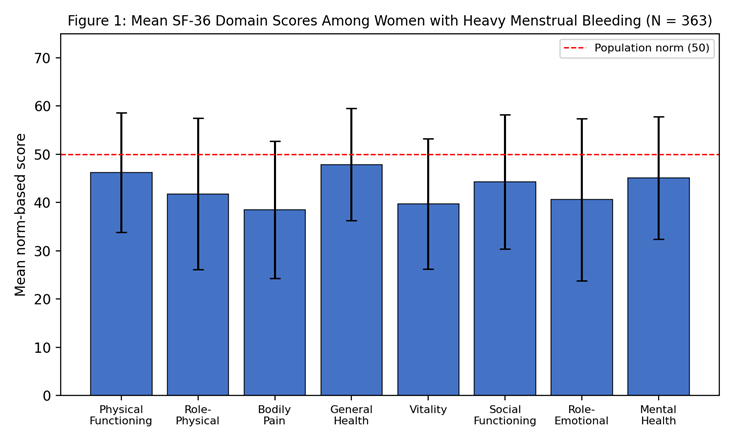
Figure 1: Mean SF-36 domain scores among women with heavy menstrual bleeding (N = 363). The dashed line marks the population norm-based score of 50.
Table 2 sets out how selected clinical characteristics related to this overall classification. Women who had lived with heavy bleeding for more than two years were significantly more likely to fall into the low quality of life group than those with a shorter history (72.4% versus 57.0%; p = 0.002). A similar pattern emerged for pad usage: women changing more than three pads a day were more often classified as having low quality of life than those using three or fewer (71.8% versus 54.9%; p = 0.001). Women who reported that HMB interfered with their daily chores were also disproportionately represented in the low quality of life group (76.7% versus 51.8%; p < 0.001). Marital status, by contrast, showed no meaningful association with quality of life category (65.2% of single women versus 63.3% of married women reporting low quality of life; p = 0.782), which suggests that the burden of HMB on daily functioning is not confined to, or substantially shaped by, marital circumstance in this cohort.
Table 2: Association between selected clinical characteristics and overall quality of life classification (N = 363)
|
Variable |
Low QoL n (%) |
High QoL n (%) |
p-value |
|
Duration of HMB ≤2 years (n=207) |
118 (57.0%) |
89 (43.0%) |
0.002 |
|
Duration of HMB >2 years (n=156) |
113 (72.4%) |
43 (27.6%) |
|
|
Pads/day ≤3 (n=175) |
96 (54.9%) |
79 (45.1%) |
0.001 |
|
Pads/day >3 (n=188) |
135 (71.8%) |
53 (28.2%) |
|
|
Chores hindered: No/Sometimes (n=191) |
99 (51.8%) |
92 (48.2%) |
<0.001 |
|
Chores hindered: Yes (n=172) |
132 (76.7%) |
40 (23.3%) |
|
|
Marital status: Married (n=294) |
186 (63.3%) |
108 (36.7%) |
0.782 |
|
Marital status: Single (n=69) |
45 (65.2%) |
24 (34.8%) |
|
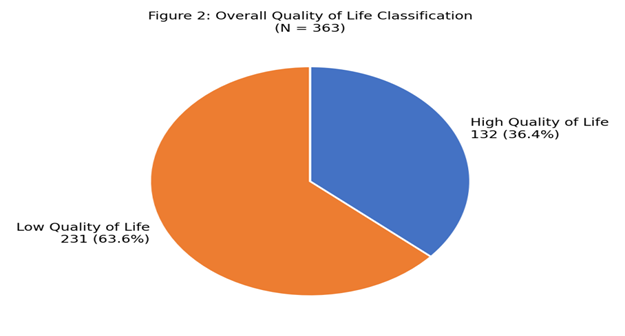
Figure 2: Overall quality of life classification among the 363 participants.
DISCUSSION :
The results of this study reinforce the well-established premise that heavy menstrual bleeding is not merely an isolated gynaecological symptom, but a systemic condition capable of impairing a woman’s functioning across multiple interconnected domains. Nearly two-thirds of the participants in this cohort fell into the low quality of life category—a proportion slightly higher than, yet conceptually aligned with, the observations of Gokyildiz et al., who reported significantly lower SF-36 scores and a similar tendency among menorrhagia patients to restrict planned activities relative to control groups [9]. This consistency across diverse healthcare environments indicates that the functional toll of heavy menstrual bleeding translates well beyond single-population studies, despite variations in absolute prevalence.
Bodily pain and vitality emerged as the most severely compromised domains in our sample. Clinically, this aligns with the physiological reality of chronic, cyclical blood loss; persistent pain and fatigue are predictable consequences of excessive bleeding, particularly when iron deficiency remains unmanaged. Kim and colleagues, investigating premenopausal women with concurrent iron deficiency anaemia and menorrhagia, similarly highlighted the interplay between chronic blood loss and diminished physical well-being, albeit with a primarily haematological focus [5]. Furthermore, Kocaoz et al. documented a direct association between bleeding duration and declining ferritin levels and physical functioning, a finding mirrored in our results, which revealed a significant correlation between prolonged heavy bleeding and reduced quality of life [6].
The observed correlation between higher pad usage and diminished quality of life is intuitive, serving as a practical proxy for bleeding severity. Notably, this relationship persisted despite the inherent limitations of pad count as a subjective and imperfect metric influenced by product absorbency, personal habits, and resource access—suggesting that the true correlation between objective blood loss and lived experience may be even stronger than a behavioral proxy implies. Bakr et al. cautioned that uninvestigated menorrhagia can mask underlying haemostatic disorders, emphasizing that while behavioral markers like pad counts are clinically useful, they cannot replace a comprehensive haematological evaluation [1]. Additionally, the finding that heavy menstrual bleeding significantly interfered with daily chores echoes Schoep and colleagues' survey, wherein a substantial number of women reported being unable to perform routine work during menstruation, frequently concealing the underlying cause when adjusting domestic responsibilities [10]. Taken together, these results highlight a pervasive pattern: the practical day-to-day cost of heavy menstrual bleeding is profound yet frequently suppressed both within households and clinical encounters.
Interestingly, the analysis revealed no significant association between marital status and quality of life categories. While one might hypothesize that married women, facing heavier domestic and caregiving duties, would experience worse outcomes, the absence of this effect suggests that the functional impact of heavy menstrual bleeding is driven primarily by the severity and chronicity of the symptoms rather than domestic roles. This aligns with broader literature, indicating that impairment tracks clinical bleeding characteristics more closely than demographic variables [8,11].
Several limitations of this study warrant consideration. The cross-sectional design allows for the identification of associations but precludes definitive causal inferences. Furthermore, reliance on a single tertiary care facility may restrict the generalizability of these findings to rural or community-based populations, where care-seeking behaviors and reporting norms might differ. While a validated pictorial blood loss chart was utilized to minimize inaccuracies, potential recall bias regarding symptom duration and pad usage cannot be entirely ruled out. Additionally, the study design did not account for coexisting conditions such as uterine fibroids or thyroid disorders, which can independently influence both bleeding patterns and quality of life—presenting a valuable opportunity for future investigation. Subsequent research utilizing multi-center prospective designs, ideally incorporating objective menstrual blood loss measurements, would help clarify causal pathways and determine whether targeted medical, surgical, or educational interventions can effectively restore quality of life in affected individuals.
CONCLUSION :
Heavy menstrual bleeding was associated with markedly reduced quality of life in this cohort of women aged 24 to 50 years, with bodily pain and vitality emerging as the domains most severely affected and with longer symptom duration and heavier pad usage both linked to poorer outcomes. These findings suggest that the clinical management of HMB ought to look beyond bleeding control in isolation and give more deliberate consideration to its wider functional and emotional consequences, and that routine, structured quality-of-life assessment could usefully complement standard gynaecological evaluation in women presenting with this complaint.
REFERENCES:
1. Bakr S, Almutairi AA, Dawalibi A, Owaidah M, Almughiyri AA, Owaidah T. Screening hemostatic defects in Saudi University students with unexplained menorrhagia: a diagnosis, which could be missed. Blood Coagul Fibrinolysis. 2021 Jun 1;32(4):278-84.
2. Kamaludin SA, Zhang XR, Shorey S. Perspectives of women experiencing menorrhagia: a descriptive qualitative study. J Clin Nurs. 2019 Jul;28(13-14):2659-68.
3. World Health Organization. WHOQOL: Measuring quality of life. Psychol Med. 1998;28(3):551-8. Available from: http://www.who.int/mental_health/media/68.pdf
4. Singh P, Juneja R. Understanding the scope of homoeopathy in puberty menorrhagia.
5. Kim JH, Lee JY, Lee BL, Kim KH, Lee JE, Park JK. Significance of evaluation for von Willebrand disease in premenopausal women with iron deficiency anemia and menorrhagia. Clin Pediatr Hematol Oncol. 2021 Apr 30;28(1):39-45.
6. Kocaoz S, Cirpan R, Degirmencioglu AZ. The prevalence of menstrual bleeding on anemia, fatigue and impacts quality of life in women of reproductive age. Pak J Med Sci. 2019 Mar;35(2):365.
7. Yusuf L. Menorrhagia's impact on quality of life: a case control study from a teaching hospital in Lahore. Pak J Med Sci. 2018 Nov;34(6):1435.
8. Kamaludin SA, Zhang XR, Shorey S. Perspectives of women experiencing menorrhagia: a descriptive qualitative study. J Clin Nurs. 2019 Jul;28(13-14):2659-68.
9. Gokyildiz S, Aslan E, Beji NK, Mecdi M. The effects of menorrhagia on women's quality of life: a case-control study. Int Scholarly Res Notices. 2013;2013.
10. Schoep ME, Nieboer TE, van der Zanden M, Braat DD, Nap AW. The impact of menstrual symptoms on everyday life: a survey among 42,879 women. Am J Obstet Gynecol. 2019 Jun 1;220(6):569-e1.
11. Ding C, Wang J, Cao Y, Pan Y, Lu X, Wang W, Zhuo L, Tian Q, Zhan S. Heavy menstrual bleeding among women aged 18-50 years living in Beijing, China: prevalence, risk factors, and impact on daily life. BMC Womens Health. 2019 Dec;19(1):1-9.
12. Magnay JL, Nevatte TM, O'Brien S, Gerlinger C, Seitz C. Validation of a new menstrual pictogram (superabsorbent polymer-c version) for use with ultraslim towels that contain superabsorbent polymers. Fertil Steril. 2014 Feb 1;101(2):515-22.