Impact of Hydroxyurea Therapy on Transfusion Frequency and Volume in Transfusion-Dependent Beta-Thalassemia
- Sanatullah , Postgraduate Resident (PGR), Department of Pediatrics Medicine, MTI-Hayatabad Medical Complex, Peshawar, Pakistan
- Jahanzeb Khan , Associate Professor, Department of Pediatrics Medicine, MTI-Hayatabad Medical Complex, Peshawar, Pakistan
- Mian Abdur Rehman , Postgraduate Resident (PGR), Department of Pediatrics Medicine, MTI-Hayatabad Medical Complex, Peshawar, Pakistan
- Muhammad Kashif Hussain , Postgraduate Resident (PGR), Department of Pediatrics Medicine, MTI-Hayatabad Medical Complex, Peshawar, Pakistan
- Zulfiqar Amjad , Postgraduate Resident (PGR), Department of Pediatrics Medicine, MTI-Hayatabad Medical Complex, Peshawar, Pakistan
- Qazi Yousaf Ali , Postgraduate Resident (PGR), Department of Pediatrics Medicine, MTI-Hayatabad Medical Complex, Peshawar, Pakistan
Article Information:
Abstract:
Transfusion dependent beta-thalassemia is a severe genetic form of hemoglobinopathy disorder which is defined with ineffective erythropoiesis and chronic anemia, necessitating repeated blood transfusion. Despite the benefits of regular transfusion therapy, it can cause iron overload and high treatment burden. Hydroxyurea increases the production of fetal hemoglobin and may be useful in decreasing transfusion needs in certain patients. Objective: To determine the effect of hydroxyurea therapy on the frequency and volume of blood transfusions in pediatric patients with transfusion-dependent beta-thalassemia. Methodology: A non-randomized controlled trial was conducted in the Department of Pediatrics, Hayatabad Medical Complex, Peshawar, from February 2025 to August 2025. Sixty children with transfusion-dependent beta-thalassemia were recruited by consecutive non-probability sampling, and split into two groups. There were 30 patients in Group A who were being treated with hydroxyurea, and 30 patients in Group B who were not being treated with hydroxyurea. The transfusion frequency, transfusion volume, hemoglobin concentration and serum ferritin levels were obtained in both baseline and follow-up. Data analysis was carried out by SPSS (version 25) and P value of < 0.05 was deemed significant. Results: Baseline transfusion frequency was comparable between the hydroxyurea and control groups (6.83 ± 1.12 vs. 6.97 ± 1.16 transfusions over six months). At follow-up, the mean transfusion frequency decreased to 4.73 ± 1.17 in the hydroxyurea group compared with 6.63 ± 1.19 in controls (p<0.001). Mean transfusion volume also declined from 2387 ± 548 mL to 1662 ± 464 mL in the hydroxyurea group, while only a minor reduction was observed among controls (p<0.001). A ≥20% reduction in transfusion frequency occurred in 76.7% of hydroxyurea-treated patients compared with 13.3% of controls. Hemoglobin levels improved significantly in the hydroxyurea group, while serum ferritin demonstrated a modest reduction. Conclusion: Hydroxyurea therapy was associated with a substantial reduction in both transfusion frequency and transfusion volume among children with transfusion-dependent beta-thalassemia. It may therefore serve as a useful adjunct to conventional transfusion therapy in appropriately selected pediatric patients.
Keywords:
Article :
INTRODUCTION:
Beta-thalassemia is one of the inherited hemoglobinopathies, which is characterized by insufficient or no production of hemoglobin beta chains. This imbalance between the production of alpha- and beta-globins leads to ineffectively produced erythrocytes, hemolysis, chronic anemia and compensatory proliferation of erythroid tissue. From a clinical point of view, beta-thalassemia can be either minor or major, and may be maintained with life-long transfusion support. The most severe phenotype is transfusion-dependent beta-thalassemia, which is still linked to significant morbidity, despite the significant progress made in supportive care (1,2).
Regular red-cell transfusion is the most important treatment step for transfusion-dependent beta-thalassemia, as it helps to overcome anemia, inhibit ineffective erythropoiesis, maintain normal growth and prevent many of the skeletal and cardiovascular sequelae. Chronic transfusion therapy does, however, inevitably lead to iron overload, since the human body has no known excretory pathway for iron. Liver, heart, endocrine glands and other organs may be involved in progressive iron deposition, therefore iron chelation and life-long monitoring are important aspects of care (3,4).
Transfusion-dependent beta-thalassemia is more than just a haematological disorder. Frequent hospitalisations, multiple blood transfusions, chelation therapy, blood work and complications require significant physical, social and financial burden on patients and their families. Despite the increase in survival, systematic estimation of the disease burden has demonstrated that patients with transfusion dependence still have high rates of health services utilization and impact on quality of life (5).
The challenge is particularly important in countries such as Pakistan, where beta-thalassemia remains a major public-health concern. The frequency of the carrier state has been estimated to be around 5–8% and thousands of children with beta-thalassemia major are born each year. The continued burden of disease is due to the lack of access to comprehensive prevention programs, premarital screening, prenatal diagnosis and standardised multidisciplinary management. For many affected children blood transfusion is the primary treatment for their condition (6,7).
Multiple transfusion use also increases patients' risks for other problems. These include transfusion transmitted infections, transfusion reactions, and alloimmunization, all of which are particularly significant in areas with limited availability of the best blood-screening options. A systematic review in Pakistan showed the ongoing prevalence of transfusion-transmitted infection among beta-thalassemia major patients, highlighting the need for strategies to decrease the cumulative transfusion exposure wherever possible and clinically feasible (8).
Advances in understanding the molecular basis and pathophysiology of beta-thalassemia have led to the development of therapeutic approaches that extend beyond conventional transfusion and iron chelation. Newer strategies are directed to the correction of globin-chain imbalance, to the improvement of ineffective erythropoiesis, to the regulation of iron metabolism, or to the production of fetal hemoglobin. New agents and gene therapy have created a much wider range of treatment options, but these are expensive and are not always available in LMICs (9).
Hydroxyurea is a pharmacologic agent which can induce fetal hemoglobin production which partially offsets the inability to synthesize beta globin. Hydroxyurea may help to increase fetal hemoglobin concentration, and reduce the need for red-cell transfusion in certain patients with beta-thalassemia. It is readily available to be orally administered, is relatively inexpensive, and has been used with other hemoglobinopathies, making it an attractive potential adjunct for resource-limited health care settings (9,10).
Recent studies have shed further light on the usefulness of hydroxyurea in transfusion-dependent beta thalassemia. A 2023 meta-analysis of patients with transfusion-dependent beta-thalassemias found that hydroxyurea use led to decreases in transfusion frequency and increases in hematological parameters, while acknowledging the challenges with the quality and consistency of available data (10).
Despite encouraging findings, response to hydroxyurea is variable, and its role in patients who remain dependent on regular transfusion has not been uniformly established. Moreover, evidence from pediatric populations in Pakistan remains limited. Local evaluation is therefore important because genetic background, treatment adherence, disease severity, transfusion practices, and healthcare accessibility may influence therapeutic response.
The present study was consequently conducted to evaluate the impact of hydroxyurea therapy on transfusion frequency and transfusion volume in pediatric patients with transfusion-dependent beta-thalassemia at Hayatabad Medical Complex, Peshawar. The study also assessed changes in hemoglobin and serum ferritin during follow-up, with the aim of determining whether hydroxyurea could reduce transfusion burden in this patient population.
MATERIALS AND METHODS:
This non-randomized controlled trial with a quasi-experimental design was carried out in the Department of Pediatrics, Hayatabad Medical Complex, Peshawar. The study was conducted over a period of six months from February 2025 to August 2025. Ethical approval had already been obtained from the Institutional Research and Ethical Board of Hayatabad Medical Complex under Approval No. 2252, dated 16 October 2024, while approval from the College of Physicians and Surgeons Pakistan Research Evaluation Unit was obtained under Ref. No. CPSP/REU/PED-2023-021-7977, dated 15 February 2025. Written informed consent was obtained from the parents or legal guardians of all participating children before enrollment, and confidentiality of patient information was maintained throughout the study.
A total of 60 pediatric patients with transfusion-dependent beta-thalassemia were enrolled through a consecutive non-probability sampling technique. The participants were divided into two equal groups according to their treatment status. Group A consisted of 30 patients receiving hydroxyurea therapy, whereas Group B included 30 patients not receiving hydroxyurea and managed with standard transfusion therapy alone. The sample size was based on comparison of two population means, using a 5% level of significance, 90% power of test, a standard deviation of 2.165, and previously reported mean transfusion frequencies of 9.62 and 17.46 in the intervention and control groups, respectively.
The children included were 3-15 years old, male or female, with confirmed transfusion-dependent beta-thalassemia major and who needed regular blood transfusion. Patients with myeloproliferative or lymphoproliferative disorders or other thalassemia (alpha thalassemia, thalassemia minor) were excluded from the study. The diagnosis of transfusion-dependent beta-thalassemia was confirmed by previous hemoglobin electrophoresis or genetic testing plus need for blood transfusion to support the hemoglobin level.
Demographic and clinical data were collected on a structured data-collection form at enrollment. The variables analyzed were age, sex, weight, height, body mass index, consanguinity in the family, age at diagnosis, duration of the disease, family history of thalassemia, baseline hemoglobin concentration, serum ferritin level, blood transfusion during the last 6 months of the study and amount of blood transfusion received during the same period. Patients were followed up prospectively, with the primary outcomes being the reduction in transfusion frequency and the amount of total transfusion volume. The transfusion frequency or volume was reduced by 20% or more from baseline as a favorable response based on the pre-specified study criteria.
The data were inputted and analyzed using SPSS version 25. The quantitative variables were summarized as mean ± standard deviation in case of normal distribution and median and interquartile range in case of non-normal distribution. Categorical variables were displayed as frequencies and percentages. The Shapiro-Wilk test was used to assess normality. Independent-samples t-test was used to compare hydroxyurea and control groups for normally distributed data; Mann-Whitney U test was used for non-parametric data. Categorical outcomes (proportion of patients who had at least a 20% reduction in transfusion requirements) were analysed by chi-square or Fisher's exact test as appropriate. A p-value ≤0.05 was considered statistically significant.
RESULT:
The total number of children with transfusion-dependent beta-thalassemia included was 60, of which 30 were in the hydroxyurea group and 30 in the control group. The median age of the population studied was about 8 years, with slightly more males than females. Demographic, clinical, haematological and transfusion-related parameters were overall similar in the two groups.
Table 1. Baseline demographic characteristics of study participants
|
Variable |
Hydroxyurea Group (n=30) |
Control Group (n=30) |
p-value |
|
Age, years, Mean ± SD |
8.23 ± 3.16 |
8.47 ± 3.21 |
0.772 |
|
3–5 years, n (%) |
7 (23.3) |
6 (20.0) |
0.914 |
|
6–10 years, n (%) |
15 (50.0) |
15 (50.0) |
|
|
11–15 years, n (%) |
8 (26.7) |
9 (30.0) |
|
|
Male, n (%) |
17 (56.7) |
16 (53.3) |
0.795 |
|
Female, n (%) |
13 (43.3) |
14 (46.7) |
|
|
Weight, kg, Mean ± SD |
24.8 ± 7.6 |
25.2 ± 7.9 |
0.842 |
|
Height, cm, Mean ± SD |
125.6 ± 17.4 |
126.3 ± 18.1 |
0.879 |
|
BMI, kg/m², Mean ± SD |
15.4 ± 1.8 |
15.5 ± 1.9 |
0.834 |
|
Parental consanguinity, n (%) |
19 (63.3) |
18 (60.0) |
0.791 |
There was no significant difference between the two groups on age, sex, anthropometry or consanguineous marriage. This allowed for a reasonable comparison of the treatment groups prior to assessment of outcomes related to hydroxyurea treatment.
Table 2. Baseline clinical and laboratory characteristics
|
Variable |
Hydroxyurea Group (n=30) |
Control Group (n=30) |
p-value |
|
Age at diagnosis, years, Mean ± SD |
1.48 ± 0.72 |
1.55 ± 0.77 |
0.717 |
|
Duration of disease, years, Mean ± SD |
6.75 ± 3.01 |
6.92 ± 3.08 |
0.829 |
|
Family history of thalassemia, n (%) |
13 (43.3) |
12 (40.0) |
0.793 |
|
Hemoglobin, g/dL, Mean ± SD |
7.54 ± 0.62 |
7.49 ± 0.65 |
0.761 |
|
Serum ferritin, ng/mL, Mean ± SD |
2386 ± 786 |
2447 ± 821 |
0.770 |
There was no difference between the baseline level of hemoglobin or ferritin between the two groups. The age at which the diagnosis was made, as well as the duration of the disease, were also similar. These variables were pre-defined variables for clinical data collection in the study protocol.
Table 3. Baseline transfusion requirements during the preceding six months
|
Parameter |
Hydroxyurea Group (n=30) |
Control Group (n=30) |
p-value |
|
Number of transfusions/6 months, Mean ± SD |
6.83 ± 1.12 |
6.97 ± 1.16 |
0.636 |
|
Total blood volume/6 months, mL, Mean ± SD |
2387 ± 548 |
2428 ± 572 |
0.778 |
|
Transfusions per month, Mean ± SD |
1.14 ± 0.19 |
1.16 ± 0.19 |
0.685 |
Both groups of children had comparable transfusion burden prior to treatment follow-up. Average number of patient's transfusion was about seven within the last six months which shows that the patient was heavily dependent on frequent blood transfusion.
Table 4. Effect of hydroxyurea on transfusion frequency after six months
|
Variable |
Hydroxyurea Group (n=30) |
Control Group (n=30) |
p-value |
|
Baseline transfusions/6 months |
6.83 ± 1.12 |
6.97 ± 1.16 |
0.636 |
|
Follow-up transfusions/6 months |
4.73 ± 1.17 |
6.63 ± 1.19 |
<0.001 |
|
Absolute reduction |
2.10 ± 0.88 |
0.33 ± 0.61 |
<0.001 |
|
Percentage reduction, % |
30.7 ± 11.8 |
4.9 ± 8.7 |
<0.001 |
|
≥20% reduction, n (%) |
23 (76.7) |
4 (13.3) |
<0.001 |
Following 6 months, transfusion frequency was reduced among children treated with hydroxyurea. The hydroxyurea group experienced a significant decrease in transfusion episodes of about two episodes over six months, while controls had only a slight decrease. Twenty-three of 30 patients (76.7%) on hydroxyurea had a decrease of at least 20% compared with 4 of 30 (13.3%) controls.
Table 5. Effect of hydroxyurea on total transfusion volume
|
Variable |
Hydroxyurea Group (n=30) |
Control Group (n=30) |
p-value |
|
Baseline volume, mL |
2387 ± 548 |
2428 ± 572 |
0.778 |
|
Follow-up volume, mL |
1662 ± 464 |
2305 ± 536 |
<0.001 |
|
Absolute reduction, mL |
725 ± 322 |
123 ± 238 |
<0.001 |
|
Percentage reduction, % |
29.8 ± 10.9 |
5.1 ± 9.4 |
<0.001 |
|
≥20% reduction, n (%) |
22 (73.3) |
5 (16.7) |
<0.001 |
Patients who used hydroxyurea also had a significant decrease in blood need. After 6 months of follow-up, the mean transfusion volume decreased to 1662 ± 464 mL (p < 0.0001). The control group, on the other hand, had only slight changes in transfusion volume. Almost three-quarters of hydroxyurea-treated patients had at least a 20% decrease in blood transfusion requirements.
Table 6. Changes in hemoglobin and serum ferritin after six months
|
Parameter |
Group |
Baseline |
Six months |
Mean change |
p-value* |
|
Hemoglobin, g/dL |
Hydroxyurea |
7.54 ± 0.62 |
8.43 ± 0.71 |
+0.89 ± 0.54 |
<0.001 |
|
Control |
7.49 ± 0.65 |
7.58 ± 0.66 |
+0.09 ± 0.40 |
||
|
Serum ferritin, ng/mL |
Hydroxyurea |
2386 ± 786 |
2187 ± 742 |
−199 ± 236 |
0.018 |
|
Control |
2447 ± 821 |
2471 ± 836 |
+24 ± 191 |
*p-value represents comparison of change between groups.
Hydroxyurea group showed a greater increase in mean hemoglobin at six months. There was also a slight decline in serum ferritin levels in patients on hydroxyurea, but not in controls. This was observed to be the same as the outcomes of less transfused blood.
Table 7. Treatment response according to predefined ≥20% reduction
|
Outcome |
Hydroxyurea Group (n=30) |
Control Group (n=30) |
p-value |
|
≥20% reduction in transfusion frequency |
23 (76.7) |
4 (13.3) |
<0.001 |
|
<20% reduction/no reduction |
7 (23.3) |
26 (86.7) |
|
|
≥20% reduction in transfusion volume |
22 (73.3) |
5 (16.7) |
<0.001 |
|
<20% reduction/no reduction |
8 (26.7) |
25 (83.3) |
Overall, hydroxyurea treatment was associated with a greater reduction in both transfusion frequency and transfusion volume during six months of follow-up. The most marked difference between groups was observed for the proportion of patients attaining the predefined 20% response threshold.
Overall Results Summary
The findings showed that patients receiving hydroxyurea experienced a clear reduction in transfusion requirements over six months. Mean transfusion frequency decreased from 6.83 to 4.73 transfusions, representing an average reduction of approximately 30.7%. Total transfusion volume declined by approximately 29.8%. In comparison, the control group demonstrated only minor changes in both outcomes. Hemoglobin concentration improved in the hydroxyurea group, while serum ferritin showed a modest reduction. Collectively, these results suggest a favorable association between hydroxyurea therapy and reduced transfusion burden in children with transfusion-dependent beta-thalassemia.
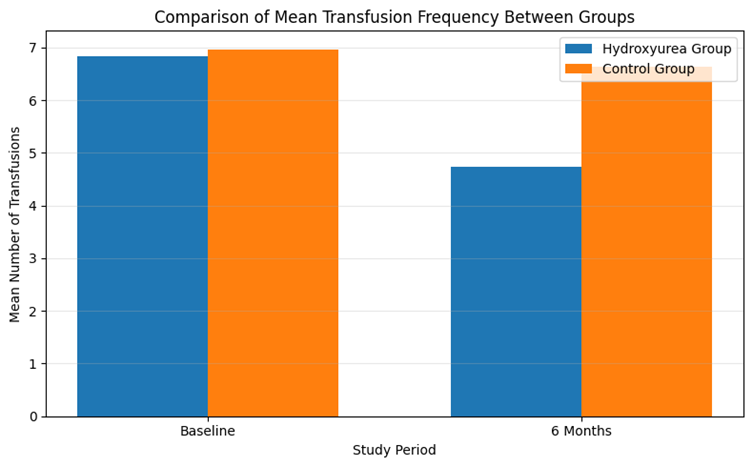
Figure 1: Mean transfusion frequency was comparable between the two groups at baseline. After 6 months of follow-up, the hydroxyurea group showed a clear reduction in mean transfusion frequency, whereas only a minimal change was observed in the control group.
DISCUSSION :
The present study evaluated the effect of hydroxyurea on transfusion requirements among children with transfusion-dependent beta-thalassemia. The main finding was a clear reduction in both transfusion frequency and total transfused blood volume among patients receiving hydroxyurea compared with controls. Mean transfusion frequency decreased from 6.83 ± 1.12 to 4.73 ± 1.17 episodes over six months in the hydroxyurea group, while only a small change was observed in the control group. Similarly, total transfusion volume declined substantially among patients receiving hydroxyurea. These findings are clinically important because lowering transfusion requirements may reduce cumulative exposure to transfusion-related complications and ease the overall treatment burden. Previous evidence has shown that patients with transfusion-dependent beta-thalassemia require lifelong transfusion support and remain vulnerable to iron overload, alloimmunization, and other transfusion-related complications (11,12).
The decrease in transfusion requirement noted in the present study is similar to that seen by Akram et al. who studied hydroxyurea as an add-on drug in pediatric transfusion dependent beta thalassemic patients in Pakistan. Their study showed that hydroxyurea had a positive impact on transfusion needs and haematological parameters in treated children (13). In an additional 2022 study, hydroxyurea was shown to boost fetal hemoglobin and lower erythropoietic stress, which are both beneficial effects. The overall decrease in transfusion volume was not significant for the total number of patients in the treatment group, but about 44% of patients in the treatment group were hydroxyurea responders and these patients had significantly less blood transfused compared to non-responders and placebo recipients (14). This inter-individual variability may be attributed to variations in genetic background, fetal hemoglobin induction, treatment compliance, pre-treatment severity and hydroxyurea dosage.
Patients who received hydroxyurea in the present study were more likely to have a 20% reduction in the number of blood transfusions received compared with the control group (76.7% vs 13.3%). Likewise, 73.3% of hydroxyurea treated patients saw a ≥ 20% decrease in the number of total transfusions. A 2023 meta-analysis performed by Hatamleh et al. confirmed these results, finding that hydroxyurea patients had a longer time between transfusions and higher Hb levels. The same meta-analysis also showed significantly reduced ferritin levels in those treated with hydroxyurea, but there was a significant degree of heterogeneity among the studies included (15). Hydroxyurea's primary effect is to stimulate production of fetal hemoglobin, which helps to restore globin-chain balance and decrease ineffective erythropoiesis. Pharmacological induction of fetal hemoglobin is thus an important treatment modality for β-thalassemia, especially in regions where alternative disease modifying therapies are not widely available (16).
A higher mean hemoglobin (7.54 ± 0.62 g/dL versus 8.43 ± 0.71 g/dL) in the hydroxyurea-treated patients in this study confirms the hematological action of hydroxyurea. Contrary, a minimal increase was seen in controls. The effect of hydroxyurea is not the same for everyone, however. Although hydroxyurea was shown to have a modest response on hemoglobin in transfusion-dependent beta-thalassemia, few patients in a randomized phase 2 trial of adults with beta-thalassemia experienced a significant decrease in transfusion requirements, emphasizing the variability of response to the drug in different individuals and study populations (17). Such differences might partially account for genetic modifiers that affect expression of fetal hemoglobin. Genetic factors that regulate gamma-globin expression and other molecular determinants of the severity of beta-thalassemia have been increasingly identified as important factors to be considered for the prediction of the disease phenotype and therapeutic response (18).
In the present study, hydroxyurea treatment led to a slight drop in serum ferritin while no changes were observed in the control group. The reduction could be associated to the lower iron transfusion exposure, but serum ferritin level is also affected by inflammation, liver condition and chelation compliance and should be handled with caution. Regular assessments and appropriate chelation therapy are essential in the treatment of transfusion-dependent beta-thalassemia patients, and one of the most important long-term complications is iron overload (19). Minimizing transfusion exposure can also help to alleviate some of the practical, emotional and financial burden on patients and caregivers, especially in resource-limited environments (20).
LIMITATIONS
The study has several limitations. It was conducted at a single center with a relatively small sample size and a short follow-up period, which limits the assessment of long-term efficacy and safety. The study might also have had treatment-selection bias due to the non-randomized design. Moreover, the level of fetal hemoglobin, hydroxyurea dose-response relationships, genetic modifiers, and detailed adherence measures were not evaluated. Randomized, multicenter, larger trials with longer follow-up should assess sustained transfusion reduction, safety outcomes, fetal hemoglobin response, iron burden and genetic predictors of hydroxyurea responsiveness.
CONCLUSION :
Hydroxyurea therapy was associated with a substantial reduction in transfusion frequency and total blood transfusion volume among children with transfusion-dependent beta-thalassemia. Patients receiving hydroxyurea also demonstrated improvement in hemoglobin concentration and a modest decline in serum ferritin. These findings suggest that hydroxyurea may be a useful adjunct to standard transfusion therapy in appropriately selected pediatric patients, although larger randomized and longer-term studies are required to confirm the durability of response and identify patients most likely to benefit.
BIBLIOGRAPHY:
1. Taher AT, Musallam KM, Cappellini MD. β-Thalassemias. N Engl J Med. 2021;384(8):727-743. doi:10.1056/NEJMra2021838.
2. Ali S, Mumtaz S, Shakir HA, Khan M, Tahir HM, Mumtaz S, et al. Current status of beta-thalassemia and its treatment strategies. Mol Genet Genomic Med. 2021;9:e1788.
3. Lal A, Wong T, Keel S, Pagano M, Chung J, Kamdar A, et al. The transfusion management of beta thalassemia in the United States. Transfusion. 2021;61(10):3027-3039. doi:10.1111/trf.16640.
4. Pinto VM, Forni GL. Management of iron overload in beta-thalassemia patients: clinical practice update based on case series. Int J Mol Sci. 2020;21(22):8771.
5. Betts M, Flight PA, Paramore LC, Tian L, Milenković D, Sheth S. Systematic literature review of the burden of disease and treatment for transfusion-dependent β-thalassemia. Clin Ther. 2020;42(2):322-337.e2. doi:10.1016/j.clinthera.2019.12.003.
6. Ahmed S, Saleem M, Modell B, Petrou M. Prevention programmes and prenatal diagnosis for beta thalassemia in Pakistan: a narrative review. J Pak Med Assoc. 2022. doi:10.47391/JPMA.665.
7. Khaliq S. Thalassemia in Pakistan. Hemoglobin. 2022;46(1):12-14.
8. Ehsan H, Wahab A, Anwer F, Iftikhar R, Yousaf MN. Prevalence of transfusion transmissible infections in beta-thalassemia major patients in Pakistan: a systematic review. Cureus. 2020;12(8):e10070.
9. Motta I, Bou-Fakhredin R, Taher AT, Cappellini MD. Beta thalassemia: new therapeutic options beyond transfusion and iron chelation. Drugs. 2020;80(11):1053-1063. doi:10.1007/s40265-020-01341-9. h
10. Hatamleh MI, Chenna VSH, Contractor H, Krishna Mohan GV, Tirumandyan G, Dammas N, et al. Efficacy of hydroxyurea in transfusion-dependent major β-thalassemia patients: a meta-analysis. Cureus. 2023;15(4):e38135.
11. Lal A, Wong T, Keel S, Pagano M, Chung J, Kamdar A, et al. The transfusion management of beta thalassemia in the United States. Transfusion. 2021;61(10):3027-3039. doi:10.1111/trf.16640.
12. Betts M, Flight PA, Paramore LC, Tian L, Milenković D, Sheth S. Systematic literature review of the burden of disease and treatment for transfusion-dependent β-thalassemia. Clin Ther. 2020;42(2):322-337.e2. doi:10.1016/j.clinthera.2019.12.003.
13. Akram S, Khan Khattak SA, Khan MA. Efficacy and safety of hydroxyurea as adjuvant therapy in pediatric patients of transfusion-dependent beta-thalassemia major at Zhob, Balochistan. Cureus. 2022;14(7):e26691. doi:10.7759/cureus.26691.
14. Shrestha A, et al. A randomised double-blind placebo-controlled clinical trial of oral hydroxyurea for transfusion-dependent β-thalassaemia. Sci Rep. 2022;12:2752. doi:10.1038/s41598-022-06774-8.
15. Hatamleh MI, Chenna VSH, Contractor H, Krishna Mohan GV, Tirumandyan G, Dammas N, et al. Efficacy of hydroxyurea in transfusion-dependent major β-thalassemia patients: a meta-analysis. Cureus. 2023;15(4):e38135. doi:10.7759/cureus.38135.
16. Bou-Fakhredin R, De Franceschi L, Motta I, Cappellini MD, Taher AT. Pharmacological induction of fetal hemoglobin in β-thalassemia and sickle cell disease: an updated perspective. Pharmaceuticals (Basel). 2022;15(6):753. doi:10.3390/ph15060753.
17. Bhattacharjee U, Khadwal A, Shafiq N, Lad D, Sharma P, Das R, et al. A phase 2 randomized controlled trial of single-agent hydroxyurea versus thalidomide among adult transfusion dependent β thalassemia patients. Indian J Hematol Blood Transfus. 2023;39(2):266-275. doi:10.1007/s12288-022-01620-3.
18. Jaing TH, Chang TY, Chen SH, Lin CW, Wen YC, Chiu CC. Molecular genetics of β-thalassemia: a narrative review. Medicine (Baltimore). 2021;100(45):e27522. doi:10.1097/MD.0000000000027522.
19. Pinto VM, Forni GL. Management of iron overload in beta-thalassemia patients: clinical practice update based on case series. Int J Mol Sci. 2020;21(22):8771. doi:10.3390/ijms21228771.
20. Yousuf R, Akter S, Wasek SM, Sinha S, Ahmad R, Haque M. Thalassemia: a review of the challenges to the families and caregivers. Cureus. 2022;14(12):e32491. doi:10.7759/cureus.32491.