Quitting smoking and the health, psychological and economic impact of that And medications that help in that
- Ikhlef Djame Eddine , University of Continuing Education (Algeria)
- Maamoun Abdelkarim , University Kasdi Merbah Ouargla (Algeria)
- Ikhlef Asma , University of Batna 2 (Algeria).
Article Information:
Abstract:
Over the course of its existence, smoking caused serious health, psychological and economic damages, as its harms became more than its benefits. And when the world became aware of this, it began to fight its presence in various ways in order to improve the health and mental health of individuals and improve the general economy. Objective: This article aims to explain the importance of quitting smoking and its impact on health, mental health and the general economy. Methods: In our research, we used various reliable international articles and research. Conclusions: Tobacco smoking is the cause of many preventable diseases and premature deaths around the world. It poses enormous health- and non-health-related costs to the affected individuals, employers, and the society at large. The World Health Organization (WHO) estimates that, globally, smoking causes over US$500 billion in economic damage each year. Therefore, quitting smoking has become an indispensable necessity, and it must be pursued by all countries of the world in order to obtain its various benefits on the health, psychological and economic side of the countries.
Keywords:
Article :
INTRODUCTION:
Smoking remains a public health threat though it can be prevented. The World Health Organisation (WHO) reported around 8 million people a year succumbed to death due to smoking, with current estimated numbers of 1.3 billion smoker worldwide. In addition, almost 80% of them live in low-and-middle income countries (1).
The harmful health effects of smoking is well known and have been documented in numerous epidemiological studies. The devastating negative impacts are not only seen among smokers, but in non-smoker due to second hand smoke exposure. The mechanism by which smoking causes diseases involves multiple complex pathways such as exposure to free radicals from the components of tobacco smoke that subsequently lead to increased oxidative stress, inflammation, and DNA damage (1) .
Nonetheless, other chemical toxins that are present in cigarettes can be transported to nearly every part of the body, thus exerting carcinogenic effects (2).
The causal relation between smoking and cancers of the head, neck, liver, bladder, cervix, oesophagus, colon, and rectum has been well documented in the literature. In addition, smoking is also associated with the development of chronic pulmonary diseases such as chronic obstructive pulmonary disease and is known to exacerbate asthma (3).
In research on smoking cessation For instance, we do not know which types of psychosocial interventions work best together, and which work best with pharmacotherapies. While new types of cessation medications have been introduced, we know little about how to use these optimally and how they exert their effects. Therefore, despite the introduction of multiple new cessation medications over the past 20 years, these medications have had only a modest impact on population-wide tobacco use ; we know relatively little about the optimal timing of interventions. When should counseling or pharmacotherapy start, and end?
Smoking cessation is associated with reduced depression, anxiety, and stress and improved positive mood and quality of life compared with continuing to smoke. The effect size seems as large for those with psychiatric disorders as those without. The effect sizes are equal or larger than those of antidepressant treatment for mood and anxiety disorders (4).
1 .Quit Smoking
Many smokers believe that smoking helps them to cope with stress, and that stopping smoking would deprive them of an effective stress management tool (5).
Most smokers want to quit but find it very difficult to do so. Approximately 70% of smokers report wanting to quit, and more than 50% of them make a quit attempt each year, but most attempts are notsuccessful . Nonetheless, millions of people have succeeded in quitting, usually after multiple attempts (6).
Some smokers make quit attempts in an apparently spontaneous manner. They do not select a quit day nor formally state an intention to quit (7) .
The authors then present a phase-based cessation framework that partitions the cessation process into four discrete phases based on current theories of cessation and empirical data. These phases include: _1) Motivation.
_ 2) Precessation.
_ 3) Cessation.
_ 4) Maintenance.(7)
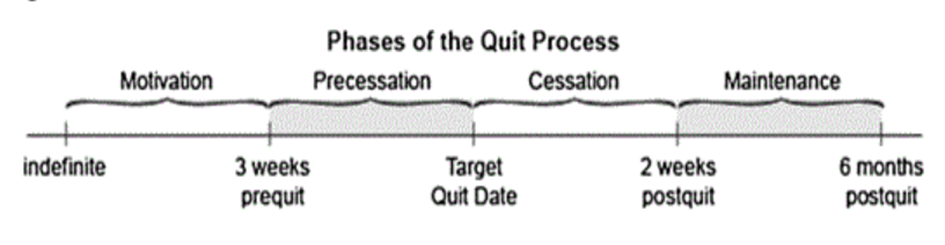
Fig. 1 Longitudinal phase-based model of cessation (7).
Most studies of smoking cessation treatments, and grant proposals, focus on the ability of treatments to increase long-term cessation rates (e.g., 6- or 12-month point-prevalence abstinence; some studies do report short-term outcomes as well (8, 9) .
Long-standing theories of health behavior, including health beliefs, reasoned action and social learning theories, indicate five elements that are likely to be precursors of smoking cessation. These elements are motivation to quit smoking, situational self-efficacy, confidence in one's ability to quit, recent actions taken toward quitting and plans to quit (10) .
‘Motivation’ reflects the desire and determination to change and is assumed to be essential for movement forward in the change process . ‘Situational self-efficacy’ reflects a smoker's awareness of specific situations that trigger her smoking and her perceived ability to abstain from smoking in such situations. ‘Confidence’ reflects a more general self-assessment of readiness to quit and having sufficient skills to make quitting a realistic goal . ‘Action’ toward quitting may involve setting and achieving small goals, such as cutting down one's daily cigarette consumption or being able to abstain in given situations . For some smokers, engaging in these intermediary actions may be due to reasons unrelated to any thoughts about quitting smoking (e.g. cut down daily consumption because of financial cost). Regardless of their reasons, these intermediate actions may have an important function in building the skills and confidence necessary to eventually quit. ‘Plans to quit smoking’ are whether a smoker seriously plans to quit and how soon (10).
2.The health effect of quitting smoking
Smoking is a major public health significant and a leading preventable cause of premature mortality. Assisting smoking cessation is important due to potential positive health impacts (1).
Smoking cessation does not appear to have a negative effect, and often has a positive effect on substance use outcomes. Smoking cessation advice should be offered, without hesitation (11) .
Quitting brings about profound changes in a smoker's physiology and behaviour, even during the first day (12).
Although prevention of smoking initiation is of paramount importance, quitting from current smoking status is equally crucial. The need for smoking cessation stems from its potential benefit gained. Besides enjoying better quality of life, the cardiocirculatory function will improve immediately, injured lungs start to heal within 1 year, and the risk of developing coronary diseases and cerebral accidents halves (13).
Smokers generally gain weight when they quit smoking; this weight gain can lessen some of the health benefits of quitting smoking (14).
Patients with TB who quit smoking tobacco at the time of diagnosis and remained abstinent during and after their course of TB treatment fared clinically better than those who continued to smoke. A lower TB relapse rate among those who quit smoking means reduced retreatment case burden for TB programmes. In addition to offering standard TB treatment, health professionals should also assist patients with TB to quit smoking by integrating effective smoking cessation support within routine TB care (15).
3.The psychological effect of quitting smoking
Stopping smoking will not harm mental health. Evidence to date suggests that there may be a causal effect of smoking on mental illness, such that starting smoking increases risk of depression, schizophrenia and bipolar disorder (16) .
Individuals with mental health disorders smoke at greater rates and are more nicotine-dependent than individuals in the general population. It is believed traditionally that these individuals are unmotivated to quit smoking (17).
Traditional programmes for smoking cessation may not always be suitable for psychiatric patients due to their neuropsychological profile. Preliminary evidence suggests that more flexible, open-ended, combination approaches of pharmacotherapy and counselling may be more successful. In addition, identification and treatment of nicotine addiction remains very low in patients with mental health conditions and far more needs to be done to raise the awareness and ability of psychiatrists to diagnose and treat patients with nicotine problems (18).
Nicotine has some positive effects on symptoms of psychiatric disorders and it has been proposed that patients with mental health conditions may smoke as a form of self-medication. Further, several studies have shown that some symptoms of psychiatric disorders may be exacerbated by nicotine withdrawal. Therefore, attempts to quit smoking pose additional problems to patients with mental health problems (18).
There is a close relationship between tobacco smoking and psychiatric disorders, and a higher proportion of individuals with mental health conditions smoke compared with the general population. Due to the increased smoking prevalence in this population, patients with psychiatric conditions are at greater risk of smoking-related morbidity and mortality and experience detrimental effects on their quality of life. However, while the majority of individuals with a history of mental health conditions appreciate that smoking is detrimental to their health, they are less likely to quit smoking and have a lower success rate during quit attempts compared with the general population (18).
A positive relationship was found between the age of onset of smoking and the onset of schizophrenia. Subjects reported they smoked primarily for sedative effects and control of negative symptoms of schizophrenia. Subjects also reported smoking related to addiction. Most indicated they would like to quit smoking or at least cut down on the number of cigarettes. Among people with schizophrenia, the motivation to smoke is related to their schizophrenia (19).
A systematic review and metaanalysis of 26 longitudinal studies found that stopping smoking was also associated with long-term improvements in mental health similar in effect size to taking antidepressants, and the benefit was at least as large in people with psychiatric conditions (16) .
Another study found no consistent evidence that varenicline, an effective medicine for smoking cessation, was associated with greater odds of depression, neurotic disorder, antidepressant or hypnotic/anxiolytic prescription in people with or without mental disorders (16).
Whether or not smoking cessation directly causes the observed improvement in mental health, there are direct clinical implications. Smokers can be reassured that stopping smoking is associated with mental health benefits (4).
Compared with people who continued to smoke, people who stopped smoking showed greater improvements in:
‐ symptoms of stress
‐ positive feelings
‐ mental well‐being
There was also evidence that people who stopped smoking did not have a reduction in their social well‐being, and their social well‐being may have increased slightly (20) .
People who smoke can be reassured that stopping smoking will not worsen and may improve their mood, by reducing anxiety, depression, and stress, and boosting positive mood. It is also unlikely to worsen their social relationships. Clinicians treating people who smoke should be reassured that encouraging and supporting smoking cessation in their patients will not worsen and may improve mood. In particular, there is no reason to fear that people with psychological disorders will have their condition worsened by smoking cessation (20).
4.The economic impact of quitting smoking
the economic cost of smoking globally amounts to nearly 2 trillion US dollars (in terms of 2016 purchasing power parity) each year, equivalent to almost 2% of the total global economic output (21).
The estimates were obtained by combining age- and sex-specific estimates of the incidence-based costs of three smoking related diseases (lung cancer, coronary heart disease, and emphysema) with estimates of smokers' increased likelihood of developing these illnesses in each remaining year of life relative to nonsmokers. Estimates of the economic consequences of quitting based on these disease cost estimates and on estimates of exsmokers' probability of future disease relative to continuing smokers are also reported. Both the estimates of the economic costs of smoking and the benefits of quitting were calculated separately for men and women between the ages of 35 and 79 who were light, moderate, or heavy cigarette smokers. While the economic costs of smoking varied considerably by sex, age, and amount smoked, they were significant for all groups of smokers. Costs for a 40-year-old man, for example, ranged from $20,000 for a smoker of less than one pack of cigarettes per day to over $56,000 for a smoker of more than two packs of cigarettes per day. The economic benefits of quitting also were found to be sizable for all groups of smokers (22).
The costs of smoking can be classified into direct, indirect, and intangible costs. About 15% of the aggregate health care expenditure in high-income countries can be attributed to smoking. In the US, the proportion of health care expenditure attributable to smoking ranges between 6% and 18% across different states. In the UK, the direct costs of smoking to the NHS have been estimated at between £2.7 billion and £5.2 billion, which is equivalent to around 5% of the total NHS budget each year. The economic burden of smoking estimated in terms of GDP reveals that smoking accounts for approximately 0.7% of China’s GDP and approximately 1% of US GDP. As part of the indirect (non-health-related) costs of smoking, the total productivity losses caused by smoking each year in the US have been estimated at US$151 billion (23) .
The costs of smoking notwithstanding, it produces some potential economic benefits. The economic activities generated from the production and consumption of tobacco provides economic stimulus. It also produces huge tax revenues for most governments, especially in high-income countries, as well as employment in the tobacco industry. Income from the tobacco industry accounts for up to 7.4% of centrally collected government revenue in China. Smoking also yields cost savings in pension payments from the premature death of smokers (23).
Smoking cessation measures could range from pharmacological treatment interventions to policy-based measures, community-based interventions, telecoms, media, and technology (TMT)-based interventions, school-based interventions, and workplace interventions.
The cost per life year saved from the use of pharmacological treatment interventions ranged between US$128 and US$1,450 and up to US$4,400 per quality-adjusted life years (QALYs) saved. The use of pharmacotherapies such as varenicline, NRT, and Bupropion, when combined with GP counseling or other behavioral treatment interventions (such as proactive telephone counseling and Web-based delivery), is both clinically effective and cost effective to primary health care providers.
Price-based policy measures such as increase in tobacco taxes are unarguably the most effective means of reducing the consumption of tobacco. A 10% tax-induced cigarette price increase anywhere in the world reduces smoking prevalence by between 4% and 8%. Net public benefits from tobacco tax, however, remain positive only when tax rates are between 42.9% and 91.1%. The cost effectiveness ratio of implementing non-price-based smoking cessation legislations (such as smoking restrictions in work places, public places, bans on tobacco advertisement, and raising the legal age of smokers) range from US$2 to US$112 per life year gained (LYG) while reducing smoking prevalence by up to 30%–82% in the long term (over a 50-year period).
Smoking cessation classes are known to be most effective among community-based measures, as they could lead to a quit rate of up to 35%, but they usually incur higher costs than other measures such as self-help quit-smoking kits. On average, community pharmacist-based smoking cessation programs yield cost savings to the health system of between US$500 and US$614 per LYG
. Workplace-based interventions could represent a sound economic investment to both employers and the society at large, achieving a benefit–cost ratio of up to 8.75 and generating 12-month employer cost savings of between $150 and $540 per nonsmoking employee. Implementing smoke-free workplaces would also produce myriads of new quitters and reduce the amount of cigarette consumption, leading to cost savings in direct medical costs to primary health care providers. Workplace interventions are, however, likely to yield far greater economic benefits over the long term, as reduced prevalence will lead to a healthier and more productive workforce (23).
- Medications to help you quit smoking
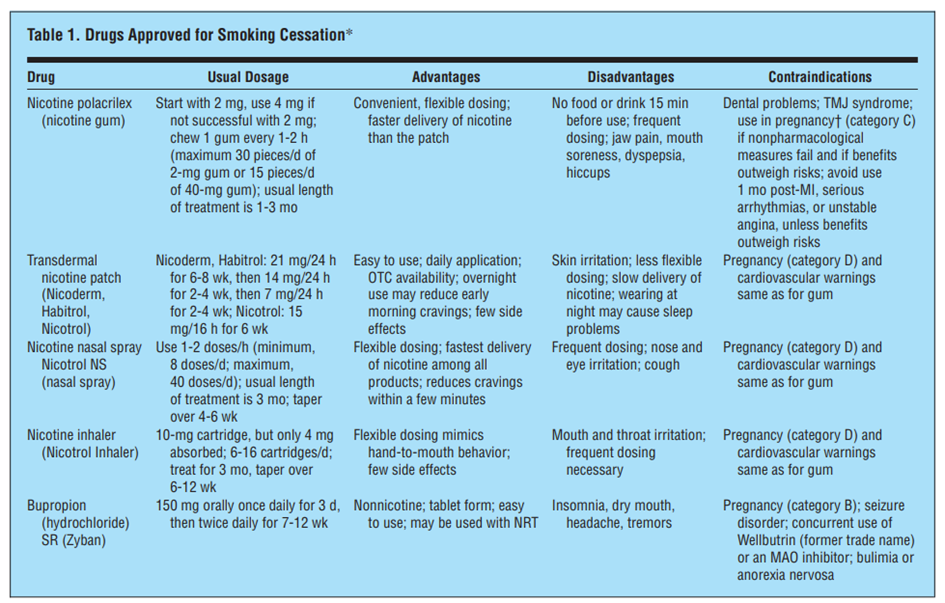
Recent advances in the pharmacotherapy of nicotine addiction, including nicotine nasal spray, nicotine inhaler, bupropion hydrochloride, and over-the-counter transdermal nicotine patches, have increased the treatment options patients can offer to smokers. Physicians, especially those in primary care specialties, should familiarize themselves with these products to improve efforts to help their patients stop smoking (25) .
CONCLUSION :
Tobacco is the leading global cause of preventable death, estimated to cause more than five million deaths a year, and this is predicted to rise. The worldwide cost of healthcare from tobacco use has been estimated within the billion dollar range. Smoking is a major risk factor for the development of cancers and cardiovascular and respiratory diseases; stopping smoking substantially reduces these health risks. The association between smoking and mental health, however, is less clear cut (4).
Stopping smoking is one of the greatest changes that people can make to improve their health. However, smoking cessation can be a difficult topic to raise, especially when a person’s main reason for consulting is their mental health or another health concern. Evidence suggests that smoking may cause some mental health problems and that the tobacco withdrawal cycle partly contributes to worse mental health. By stopping smoking, a person’s mental health may improve, and the size of this improvement might be equal to that of taking antidepressants (16).
In addition to reducing addiction to cigarettes, policies designed to encourage smokers to quit may need to take into account factors related to household support and employment relations, in order to encourage smokers from all socio-demographic groups to quit (24).
BIBLIOGRAPHY:
1. Zamzuri MAIA, Kamarudin SAA, Ariffin AH, Ibrahim AA, Othman MH, Johari A, et al. Rate of smoking cessation and factors associated with successful quit smoking in Seremban District of Malaysia. Clinical Epidemiology and Global Health. 2021;12:100862.
2. Singhavi H, Ahluwalia JS, Stepanov I, Gupta PC, Gota V, Chaturvedi P, et al. Tobacco carcinogen research to aid understanding of cancer risk and influence policy. Laryngoscope investigative otolaryngology. 2018;3(5):372-6.
3. Rakel RE, Rakel RE. Textbook of family practice: Wb Saunders; 1984.
4. Taylor G, McNeill A, Girling A, Farley A, Lindson-Hawley N, Aveyard P. Change in mental health after smoking cessation: systematic review and meta-analysis. Bmj. 2014;348.
5. Hajek P, Taylor T, McRobbie H. The effect of stopping smoking on perceived stress levels. Addiction. 2010;105(8):1466-71.
6. Warner DO. Helping surgical patients quit smoking: why, when, and how. Anesthesia & Analgesia. 2005;101(2):481-7.
7. Baker TB, Mermelstein R, Collins LM, Piper ME, Jorenby DE, Smith SS, et al. New methods for tobacco dependence treatment research. Annals of Behavioral Medicine. 2011;41(2):192-207.
8. Hashemian F, Khoshnood K, Desai MM, Falahati F, Kasl S, Southwick S. Anxiety, depression, and posttraumatic stress in Iranian survivors of chemical warfare. Jama. 2006;296(5):560-6.
9. Jorenby DE, Hays JT, Rigotti NA, Azoulay S, Watsky EJ, Williams KE, et al. Efficacy of varenicline, an α4β2 nicotinic acetylcholine receptor partial agonist, vs placebo or sustained-release bupropion for smoking cessation: a randomized controlled trial. Jama. 2006;296(1):56-63.
10. Manfredi C, Cho YI, Crittenden KS, Dolecek TA. A path model of smoking cessation in women smokers of low socio-economic status. Health Education Research. 2007;22(5):747-56.
11. McKelvey K, Thrul J, Ramo D. Impact of quitting smoking and smoking cessation treatment on substance use outcomes: An updated and narrative review. Addictive behaviors. 2017;65:161-70.
12. Gilbert RM, Pope MA. Early effects of quitting smoking. Psychopharmacology. 1982;78:121-7.
13. Wu J, Sin DD. Improved patient outcome with smoking cessation: when is it too late? International journal of chronic obstructive pulmonary disease. 2011:259-67.
14. Audrain‐McGovern J, Benowitz N. Cigarette smoking, nicotine, and body weight. Clinical Pharmacology & Therapeutics. 2011;90(1):164-8.
15. Siddiqi K, Keding A, Marshall A-M, Dogar O, Li J, Huque R, et al. Effect of quitting smoking on health outcomes during treatment for tuberculosis: secondary analysis of the TB & Tobacco Trial. Thorax. 2022;77(1):74-8.
16. Taylor GM, Baker AL, Fox N, Kessler DS, Aveyard P, Munafò MR. Addressing concerns about smoking cessation and mental health: theoretical review and practical guide for healthcare professionals. BJPsych advances. 2021;27(2):85-95.
17. Siru R, Hulse GK, Tait RJ. Assessing motivation to quit smoking in people with mental illness: a review. Addiction. 2009;104(5):719-33.
18. Fagerström K, Aubin H-J. Management of smoking cessation in patients with psychiatric disorders. Current medical research and opinion. 2009;25(2):511-8.
19. Forchuk C, Norman R, Malla A, Martin ML, McLean T, Cheng S, et al. Schizophrenia and the motivation for smoking. Perspectives in Psychiatric Care. 2002;38(2):41-9.
20. Taylor GM, Lindson N, Farley A, Leinberger-Jabari A, Sawyer K, te Water Naudé R, et al. Smoking cessation for improving mental health. Cochrane Database of Systematic Reviews. 2021(3).
21. Lee CM. The impact of heated tobacco products on smoking cessation, tobacco use, and tobacco sales in South Korea. Korean journal of family medicine. 2020;41(5):273.
22. Oster G, Colditz GA, Kelly NL. The economic costs of smoking and benefits of quitting for individual smokers. Preventive medicine. 1984;13(4):377-89.
23. Ekpu VU, Brown AK. The economic impact of smoking and of reducing smoking prevalence: review of evidence. Tobacco use insights. 2015;8:TUI. S15628.
24. Chandola T, Head J, Bartley M. Socio‐demographic predictors of quitting smoking: how important are household factors? Addiction. 2004;99(6):770-7.
https://scholarworks.umt.edu/pchs_pubs/29/