Comparative Effects of ACBT and MET for Chronic Neck Pain and Associated Postural Dysfunctions
- NOOR UL AIN , Lecturer University of Lahore
- Umaima Zainab , University of Lahore
- Rabia Basri , (Uni)Zversity of Lahore
- Muneeza Hamid , UOL
- Anum Saleem , lecturer university of Lahore
- Mubashra Ibrahim , former lecturer at AL shifa institute of health sciences
- Fizza Ali Syed , University of Lahore
- Saira Shabbir , physiotherapist
Article Information:
Abstract:
Background: Neck pain is a common musculoskeletal condition that can significantly affect physical functioning and quality of life. Recent evidence indicates that altered breathing patterns and respiratory dysfunction may be associated with chronic neck pain and forward head posture (FHP). This study aimed to investigate the effects of breathing pattern retraining on chronic neck pain, FHP, and functional disability and to compare its effects with muscle energy techniques (METs). A quasi-experimental study was conducted on 42 participants aged 18–50 years with chronic neck pain of more than 3 months and FHP. Participants were conveniently allocated into two groups. Group 1 received neck muscle stretching combined with METs, whereas Group 2 received neck muscle stretching combined with Active Cycle of Breathing Techniques (ACBT). Both groups received 10–12 treatment sessions over 3–4 weeks. Pre- and post-intervention outcomes were assessed using the Visual Analog Scale (VAS) for pain, Neck Disability Index (NDI) for functional disability, Standardized Evaluation of Breathing Questionnaire (SEBQ) for breathing-related symptoms, and craniovertebral angle (CVA) for FHP. Both groups showed improvement in neck pain, functional disability, and postural alignment following treatment. However, the ACBT group demonstrated greater overall improvement compared with the MET group. These findings suggest that both METs and ACBT combined with stretching can be beneficial in the management of chronic neck pain and FHP, while ACBT may offer additional benefits by addressing altered breathing patterns. Breathing pattern retraining may therefore be considered a valuable adjunct to conventional physiotherapy for improving pain, function, and postural alignment in individuals with chronic neck pain.
Keywords:
Article :
INTRODUCTION:
INTRODUCTION
Neck pain is one of the most prevalent musculoskeletal (MSK) disorders and is considered a complex, multifactorial condition affecting quality of life and functional ability (Kazeminasab et al., 2022). It is particularly common among students and office workers due to prolonged sitting and poor posture (Chan et al., 2020). Globally, approximately 203 million people experienced neck pain in 2020, with a higher prevalence among females, and its burden is expected to increase substantially by 2050 (Al-Shalalfeh et al., 2026).
Prolonged smartphone use and poor posture are important contributing factors to neck pain. Forward head posture (FHP), characterized by the head positioned anteriorly relative to the shoulders, increases mechanical stress on the cervical spine and alters muscle balance (Nejati et al., 2014; Çobanoğlu et al., 2024; Raoofi et al., 2019). Neck pain and FHP are also associated with altered breathing patterns and increased reliance on accessory respiratory muscles, such as the sternocleidomastoid and scalene muscles, which may further increase cervical muscle tension and disability (Nair et al., 2022).
Breathing-pattern retraining, particularly diaphragmatic breathing, may improve postural stability, reduce accessory muscle overactivity, and alleviate neck pain (Heo & Shin, 2025). Although conventional physiotherapy and manual therapy are commonly used for chronic neck pain, evidence regarding the role of breathing retraining remains limited.
This study therefore compares Active Cycle of Breathing Techniques (ACBT) combined with stretching and Muscle Energy Techniques (METs) combined with stretching in individuals with chronic neck pain, altered breathing patterns, and postural dysfunction. While previous research has examined diaphragmatic breathing and manual therapy separately, limited evidence directly compares these two active approaches. This study aims to address this gap by evaluating their relative effects on neck pain, posture, and functional disability.
Objectives:
The objectives of this study are to determine the effectiveness of breathing pattern retraining on chronic neck pain, to evaluate changes in posture following breathing retraining and to assess the improvement in functional difficulty in patients with CNP.
Hypotheses
Alternative hypothesis (H₁): There is a significant difference between the effects of Active Cycle of Breathing Techniques (ACBT) combined with stretching and Muscle Energy Techniques (METs) combined with stretching on pain, functional disability, breathing pattern, and forward head posture in individuals with chronic neck pain.
Null hypothesis (H₀): There is no significant difference between the effects of ACBT combined with stretching and METs combined with stretching on pain, functional disability, breathing pattern, and forward head posture in individuals with chronic neck pain.
Material And Methods:
Study Design and Setting: A quasi-experimental study was conducted in outpatient physiotherapy departments of selected hospitals/clinics and university settings.
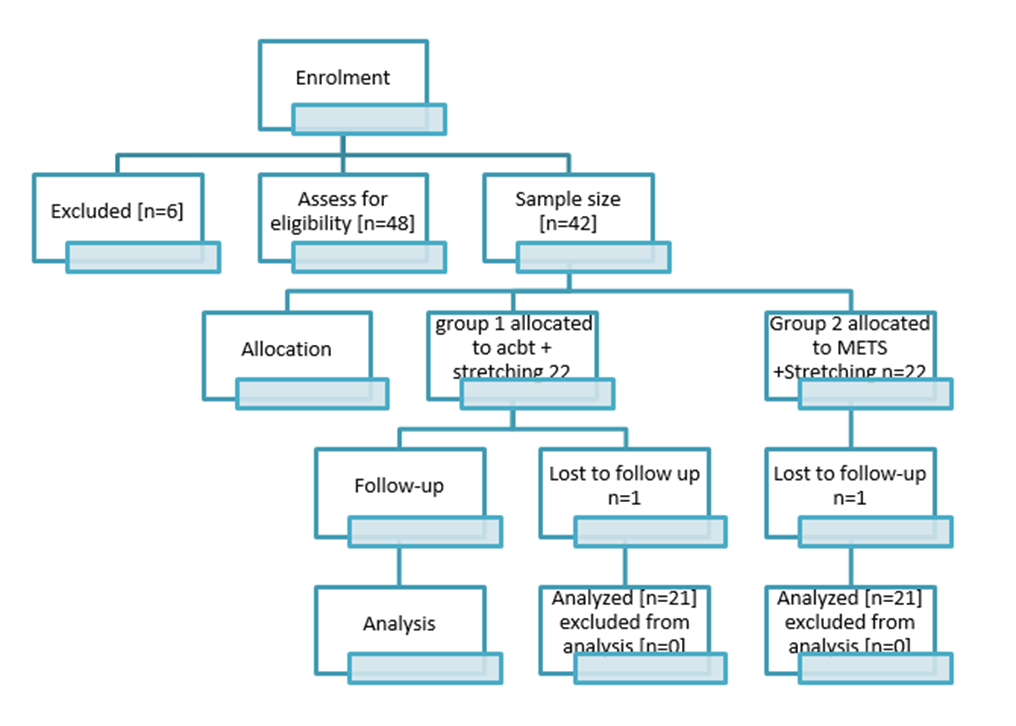
Sample Size and Sampling: A total of 42 participants were recruited using convenient sampling and allocated into two groups: ACBT with stretching and METs with stretching. The sample size was calculated using G*Power.
Study Duration: The intervention was conducted over 3–4 weeks, with 3–4 treatment sessions per week, resulting in a total of 10–12 sessions per participant.
Participants: Participants of both sexes aged 18–50 years with chronic neck pain lasting more than 3 months and the presence of forward head posture were included. Forward head posture was assessed using the craniovertebral angle (CVA).
Exclusion Criteria: Participants were excluded if they had a history of cervical trauma or fracture, neurological disorders, respiratory diseases such as asthma or COPD, or previous cervical spine surgery.
Outcome Measures: Pain intensity was assessed using the Visual Analog Scale (VAS), functional disability using the Neck Disability Index (NDI), and breathing-related symptoms using the Standardized Evaluation of Breathing Questionnaire (SEBQ). Forward head posture was assessed by measuring the craniovertebral angle (CVA) using a goniometer. All outcomes were recorded before and after the intervention.
Intervention Protocol
ACBT with Stretching: Participants in the ACBT group performed breathing control, thoracic expansion exercises, and the forced expiratory technique. Breathing control consisted of relaxed tidal breathing with minimal upper-chest and shoulder activity. Thoracic expansion exercises involved slow, deep nasal inspiration followed by a brief breath hold and relaxed expiration, repeated for 3–4 cycles. These techniques were combined with stretching of the pectoralis, scalene, sternocleidomastoid, intercostal, and diaphragmatic muscles. Each stretch was held for 15–30 seconds and repeated 3–5 times.
METs with Stretching: Participants in the MET group received METs targeting the relevant cervical and respiratory muscles, including the scalene, sternocleidomastoid, pectoralis, intercostal, and diaphragmatic muscles. The restricted muscle was positioned at a comfortable barrier, followed by a gentle isometric contraction against resistance for 5–10 seconds. After relaxation, the muscle was gently lengthened to the new barrier. The technique was repeated 3–5 times and followed by the same stretching protocol used in the ACBT group.
Both groups received their respective interventions for 10–12 sessions over 3–4 weeks, with pre- and post-treatment assessments performed using the specified outcome measures.
Data collection procedure
Flow diagram according to CONSORT guidelines.
Statistical analysis
· Data was analyzed using spss statistics 27.
· Baseline measures of demographic characteristics of patient were determined to check whether data was comparable
· Normality of before and after the treatment data was checked by Shapiro-wilk scale
· Both before and after treatment data appeared normal
· Paired t test was applied for within group comparison while independent t test was used for between groups comparison
Ethical considerations
· Informed consent was taken from all patients before the start of treatment
· Patients had the choice to leave or quit the study any time they wanted.
RESULT:
48 participants were selected based on the inclusion and exclusion criteria. Out of 48 subjects 42 subjects were selected and distributed into two groups ( Group 1:ACBT + Stretching & Group 2: METs + Stretching) based on convenient sampling technique.Both groups socio-demographic information was similar at baseline.Participants in ACBT group were presented with mean age of 29.48±7.587 Years and in METs group with 32.29±8.198 years.
Normality of both groups was checked through Shapiro Wilk test.Both the groups appeared normal. Independent t test was performed for between group comparison of SEBQ,NDI,VAS and CVA individually.
Table 1 showing between group comparison of SEBQ scores.
|
|
Group 1 or 2 |
N |
Mean±Std.deviation |
p |
|
SEBQ score before treatment |
Stretching + ACBT |
21 |
41.02±9.974 |
.284 |
|
STRETCHING + METs |
21 |
44.43±10.385 |
.284 |
|
|
SEBQ score after treatment |
Stretching + ACBT |
21 |
58.77±7.302 |
.006 |
|
STRETCHING + METs |
21 |
65.99±8.828 |
.006 |
After treatment p value is <0.05 which tells us that significant improvement was seen after treatment in SEBQ score in both the groups.However group 2 (METS + stretching) slightly more improvement.
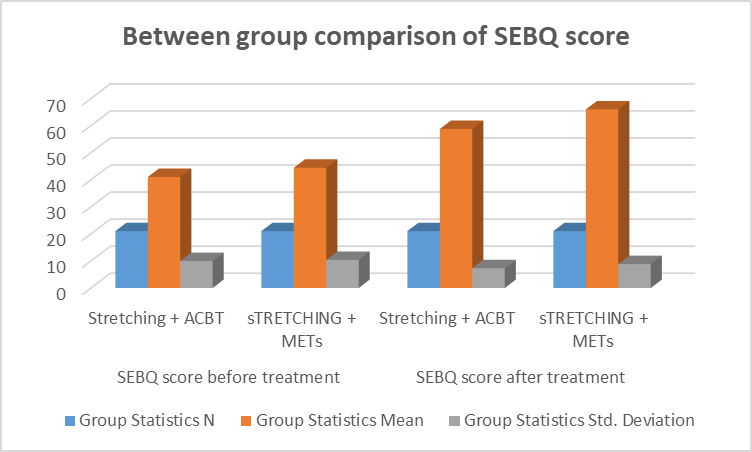
Figure 1 showing between group comparison of SEBQ
Between group comparison of NDI scores was also done by independent t test and the results were as following:
Table 2 showing between groups comparison of NDI score.
|
|
Group 1 or 2 |
N |
Mean±Std.deviation |
p |
|
NDI score before treatment |
Stretching + ACBT |
21 |
23.53±4.762 |
.430 |
|
STRETCHING + METs |
21 |
24.65±4.279 |
.430 |
|
|
NDI score after treatment |
Stretching + ACBT |
21 |
14.84±3.369 |
<.001 |
|
STRETCHING + METs |
21 |
10.95±2.650 |
<.001 |
As the after treatment values of p are <0.05 it means significant reduction in neck disability was seen post treatment.However METs group showed slightly better results than ACBT group.
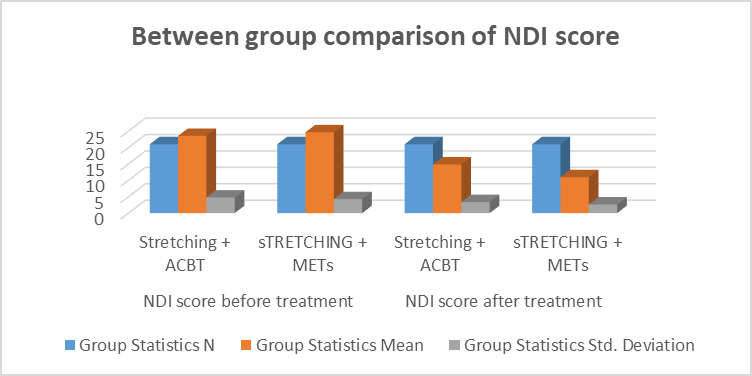
Figure 2 showing between group comparison of NDI scores.
Between group comparison of group 1 and group 2 VAS scores was done by independent t test.After treatment the values of p were seen to be < 0.05 which suggests that significant reduction was seen in pain in both groups. However, group 2 showed slight better improvement than group 1.
Table 3 showing between group comparison of VAS score.
|
|
Group 1 or 2 |
N |
Mean±Std.deviation |
p |
|
VAS score before treatment |
Stretching + ACBT |
21 |
6.62±1.221 |
.735 |
|
STRETCHING + METs |
21 |
6.75±1.219 |
.735 |
|
|
VAS score after treatment |
Stretching + ACBT |
21 |
3.00±.997 |
.033 |
|
STRETCHING + METs |
21 |
2.38±.815 |
.034 |
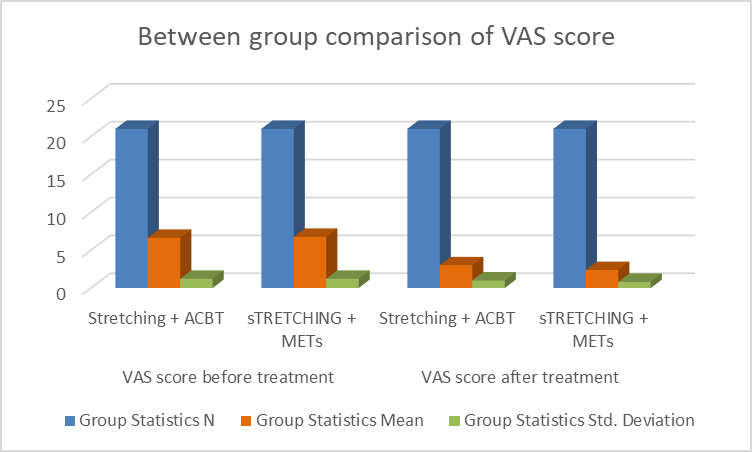
Figure 3 showing between group comparison of VAS scores.
Between group comparison of CVA scores was also done by independent t test that showd before and after treatment p values to help us determine the effectiveness of both groups.
Table 4 showing between group comparison of CVA scores.
|
|
Group 1 or 2 |
N |
Mean±Std.Deviation |
p |
|
CVA score before treatment |
Stretching + ACBT |
21 |
43.54±2.623 |
.530 |
|
STRETCHING + METs |
21 |
44.02±2.285 |
.530 |
|
|
CVA score after treatment |
Stretching + ACBT |
21 |
47.26±2.025 |
<.001 |
|
STRETCHING + METs |
21 |
51.59±2.117 |
<.001 |
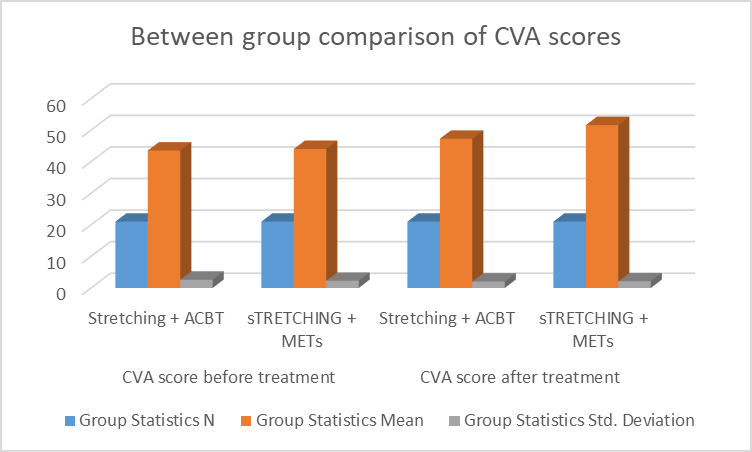
Figure 4 showing between group comparison of CVA scores
Hence from the above findings we can say that both ACBT + Stretching and METs + Stretching were effective in improving neck pain, posture, and functional disability. METs + Stretching demonstrated greater improvement across the outcome measures than ACBT + Stretching. Breathing pattern can be considered a valuable adjunct to conventional physiotherapy for managing chronic neck pain.
DISCUSSION :
The present quasi-experimental study compared the effects of neck muscle stretching combined with Active Cycle of Breathing Techniques (ACBT) and stretching combined with Muscle Energy Techniques (METs) in patients with chronic neck pain and forward head posture (FHP). Pain, functional disability, breathing dysfunction, and postural alignment were assessed using the VAS, NDI, SEBQ, and craniovertebral angle (CVA), respectively. Both groups demonstrated significant improvements following 10–12 treatment sessions over 3–4 weeks. However, the METs + stretching group showed significantly greater improvements in breathing dysfunction (SEBQ, p < 0.001), pain (VAS, p = 0.004), functional disability (NDI, p = 0.030), and forward head posture (CVA, p = 0.008). These findings suggest that although both interventions were effective, METs combined with stretching may provide greater short-term benefits in patients with chronic neck pain and postural dysfunction.
The findings are consistent with previous research supporting exercise, breathing re-education, and manual therapy for chronic neck pain. Heo and Shin (2025) reported improvements in pain, disability, and cervical function following breathing and neck exercise interventions, although no significant between-group differences were observed. Similarly, Jeong and Lee (2024) reported beneficial effects of breathing re-education and shoulder stabilization exercises in individuals with upper crossed syndrome, supporting the relationship between respiratory function and postural dysfunction. In contrast, Dareh-Deh et al. (2022) found that adding respiratory exercises to routine therapy improved respiratory parameters but did not provide significant additional benefits for pain or FHP. Differences between these findings and the present study may be related to differences in intervention protocols and study designs, as the current study directly compared two active treatment approaches rather than comparing respiratory exercise with routine therapy alone.
The greater improvement observed in the METs + stretching group may be explained by the direct effects of METs on muscular tightness and cervical biomechanics. METs involve controlled isometric contractions followed by relaxation and stretching, which may improve muscle extensibility, reduce muscle hypertonicity, and enhance joint mobility. These effects may be particularly relevant in FHP, where altered muscle length and increased activity of cervical and shoulder musculature can contribute to abnormal cervical loading and pain. When combined with stretching, METs may further improve flexibility and postural alignment, thereby reducing mechanical stress and functional limitations.
The improvements observed in the ACBT group may be related to improved breathing control and reduced reliance on accessory respiratory muscles. Individuals with chronic neck pain and FHP may demonstrate altered breathing patterns and increased activity of muscles such as the sternocleidomastoid and scalene. Breathing retraining may help improve respiratory coordination and reduce unnecessary cervical muscle activity. However, the greater response to METs in the present study suggests that directly addressing muscular restrictions may have a stronger short-term influence on pain, disability, and postural alignment in this population.
From a clinical perspective, both interventions may be incorporated into physiotherapy management according to the patient's presentation. However, METs combined with stretching may be particularly useful for patients with prominent muscle tightness, postural dysfunction, pain, and functional limitation. The findings also indicate that clinically meaningful improvements may occur within a relatively short treatment period of 3–4 weeks. Nevertheless, these results should be interpreted as evidence of short-term effects, as the study did not include long-term follow-up.
The study has several strengths, including the use of multiple outcome measures addressing pain, disability, breathing dysfunction, and posture, as well as the comparison of two active physiotherapy interventions. However, the small sample size, convenient sampling, quasi-experimental design, and short intervention period limit the generalizability of the findings and reduce the ability to establish definitive causal relationships. The absence of long-term follow-up also prevents conclusions regarding the sustainability of treatment effects. Future research should employ larger randomized controlled trials with longer follow-up periods and include additional objective measures such as cervical range of motion, respiratory parameters, muscle activity, and quality of life.
Overall, both ACBT + stretching and METs + stretching were effective in improving clinical outcomes in patients with chronic neck pain and FHP. However, METs + stretching produced significantly greater improvements in pain, functional disability, breathing dysfunction, and forward head posture. These findings suggest that METs combined with stretching may be a more effective short-term approach for patients with chronic neck pain accompanied by muscular and postural dysfunction, while ACBT may remain a useful adjunct when altered breathing patterns are a prominent clinical feature.
BIBLIOGRAPHY:
1. Al-Shalalfeh, M. A., Zayat, Y., Abu Al Haj, M., Nached, O., Suleiman, M., Alaudat, A., & Salman, A. (2026). The prevalence of neck pain and its association with studying device usage and posture among students at the University of Jordan: A cross-sectional study. PloS one, 21(5), e0326478.
2. Anwar, S., Arsalan, A., Zafar, H., Ahmad, A., & Hanif, A. (2022). Effects of breathing reeducation on cervical and pulmonary outcomes in patients with non specific chronic neck pain: A double blind randomized controlled trial. PloS one, 17(8), e0273471.
3. Anwar, S., Arsalan, S. A., Zafar, H., Ahmed, A., Gillani, S. A., & Hanif, A. (2022). Effects of breathing re-education on endurance, strength of deep neck flexors and pulmonary function in patients with chronic neck pain: A randomised controlled trial. South African Journal of Physiotherapy, 78(1), 1611.
4. Anwar, S., Arsalan, S. A., Zafar, H., Ahmed, A., Gillani, S. A., & Hanif, A. (2022). Effects of breathing re-education on endurance, strength of deep neck flexors and pulmonary function in patients with chronic neck pain: A randomised controlled trial. S Afr J Physiother, 78(1), 1611. https://doi.org/10.4102/sajp.v78i1.1611
5. Cefalì, A., Santini, D., Lopez, G., Maselli, F., Rossettini, G., Crestani, M., Lullo, G., Young, I., Dunning, J., & de Abreu, R. M. (2025). Effects of breathing exercises on neck pain management: a systematic review with meta-analysis. Journal of Clinical Medicine, 14(3), 709.
6. Chan, L. L. Y., Wong, A. Y. L., Wang, M. H., Cheung, K., & Samartzis, D. (2020). The prevalence of neck pain and associated risk factors among undergraduate students: A large-scale cross-sectional study. International Journal of Industrial Ergonomics, 76, 102934.
7. Çobanoğlu, G., Demirkan, M. Y., Ecemiş, Z. B., & Güzel, N. A. (2024). Forward head posture and its effect on muscle activation. Gazi Sağlık Bilimleri Dergisi, 9(1), 85-93.
8. Dareh-Deh, H. R., Hadadnezhad, M., Letafatkar, A., & Peolsson, A. (2022). Therapeutic routine with respiratory exercises improves posture, muscle activity, and respiratory pattern of patients with neck pain: A randomized controlled trial. Scientific reports, 12(1), 4149.
9. Gillani, S. A., & Hanif, A. (2020). Effects of breathing re-education on clinical outcomes in patients with 3 nonspecific chronic neck pain 4. Systematic Reviews in Pharmacy, 11(11), 3-8.
10. Heo, H., & Shin, D. (2025). The impact of a breathing exercise program on pain, disability, and breathing patterns in patients with non-specific neck pain: A randomized controlled trial. Complementary Therapies in Medicine, 103244.
11. Jeong, G. H., & Lee, B. H. (2024). Effects of Telerehabilitation Combining Diaphragmatic Breathing Re-Education and Shoulder Stabilization Exercises on Neck Pain, Posture, and Function in Young Adult Men with Upper Crossed Syndrome: A Randomized Controlled Trial. J Clin Med, 13(6). https://doi.org/10.3390/jcm13061612
12. Kazeminasab, S., Nejadghaderi, S. A., Amiri, P., Pourfathi, H., Araj-Khodaei, M., Sullman, M. J., Kolahi, A.-A., & Safiri, S. (2022). Neck pain: global epidemiology, trends and risk factors. BMC musculoskeletal disorders, 23(1), 26.
13. Mendes-Fernandes, T., Puente-González, A. S., Márquez-Vera, M. A., Vila-Chã, C., & Méndez-Sánchez, R. (2021). Effects of global postural reeducation versus specific therapeutic neck exercises on pain, disability, postural control, and neuromuscular efficiency in women with chronic nonspecific neck pain: study protocol for a randomized, parallel, clinical trial. International Journal of Environmental Research and Public Health, 18(20), 10704.
14. Mitchell, A., Bacon, C., & Moran, R. (2016). Reliability and determinants of self-evaluation of breathing questionnaire (SEBQ) score: a symptoms-based measure of dysfunctional breathing. Applied psychophysiology and biofeedback, 41(1), 111-120.
15. Nair, S. P., Panchabhai, C. S., & Panhale, V. (2022). Chronic neck pain and respiratory dysfunction: a review paper. Bulletin of Faculty of Physical Therapy, 27(1), 21.
16. Nejati, P., Lotfian, S., Moezy, A., & Nejati, M. (2014). The relationship of forward head posture and rounded shoulders with neck pain in Iranian office workers. Medical journal of the Islamic Republic of Iran, 28, 26.
17. Park, S., Kim, K., & Kang, M. (2025). The Effects of Rehabilitation Programs Incorporating Breathing Interventions on Chronic Neck Pain Among Patients with Forward Head Posture: A Systematic Review and Meta-Analysis. Bioengineering, 12(9), 947.
18. Raoofi, Z., Sarrafzadeh, J., Emrani, A., & Ghorbanpour, A. (2019). Relationship between forward head posture and neck pain as well as disability. J Clin Physiother Res, 4(1), e5.
19. Sbardella, S., La Russa, C., Bernetti, A., Mangone, M., Guarnera, A., Pezzi, L., Paoloni, M., Agostini, F., Santilli, V., & Saggini, R. (2021). Muscle energy technique in the rehabilitative treatment for acute and chronic non-specific neck pain: a systematic review. Healthcare,
20. Tatsios, P. I., Grammatopoulou, E., Dimitriadis, Z., & Koumantakis, G. A. (2022). The effectiveness of manual therapy in the cervical spine and diaphragm, in combination with breathing reeducation exercises, in patients with non-specific chronic neck pain: protocol for development of outcome measures and a randomized controlled trial. Diagnostics, 12(11), 2690.
21. Tatsios, P. I., Grammatopoulou, E., Dimitriadis, Z., & Koumantakis, G. A. (2022). The Effectiveness of Manual Therapy in the Cervical Spine and Diaphragm, in Combination with Breathing Reeducation Exercises, in Patients with Non-Specific Chronic Neck Pain: Protocol for Development of Outcome Measures and a Randomized Controlled Trial. Diagnostics (Basel), 12(11). https://doi.org/10.3390/diagnostics12112690
22. Titcomb, D. A., Melton, B. F., Bland, H. W., & Miyashita, T. (2024). Evaluation of the craniovertebral angle in standing versus sitting positions in young adults with and without severe forward head posture. International journal of exercise science, 17(1), 73.
23. Zeqiri, E., Qorri, E., Todri, J., & Lena, O. (2025). Establishing the neck disability index as a valid tool for assessing persistent neck pain in the Albanian population. Medicina, 61(6), 955.