Frequency of Elevated Serum Total Bile Acids in Pregnant Females and their Effects on Perinatal Outcomes
- Kaynat Sarwar , Postgraduate Trainee, Department of Obstetrics and Gynaecology, Pakistan Atomic Energy Commission (PAEC), Islamabad, Pakistan
- Zaiba Sher , Associate Professor, Department of Obstetrics and Gynaecology, National University of Sciences and Technology (NUST), Nust School of Health Sciences (NSHS)/ Pakistan Atomic Energy Commission (PAEC), Islamabad, Pakistan
- Mussarat Ashraf , Head of Department, Department of Obstetrics and Gynaecology, Pakistan Atomic Energy Commission (PAEC), Islamabad, Pakistan
- Maria Amin , Postgraduate Trainee, Department of Obstetrics and Gynaecology, Pakistan Atomic Energy Commission (PAEC), Islamabad, Pakistan
- Najma Ahmad , Postgraduate Trainee, Department of Obstetrics and Gynaecology, Pakistan Atomic Energy Commission (PAEC), Islamabad, Pakistan
- Mehtab Aslam , Postgraduate Trainee, Department of Obstetrics and Gynaecology, Pakistan Atomic Energy Commission (PAEC), Islamabad, Pakistan
Article Information:
Abstract:
Objective: To determine the frequency of elevated serum bile acid levels among pregnant women presenting in the late second and third trimesters and evaluate their association with adverse perinatal outcomes. Materials and Methods: This cross-sectional observational study was conducted at the Department of Obstetrics and Gynaecology, Pakistan Atomic Energy Commission General Hospital, Islamabad, over three months, from 16 August 2025 to 15 November 2025. A total of 90 pregnant women presenting with symptoms suggestive of intrahepatic cholestasis of pregnancy (ICP) were enrolled through non-probability consecutive sampling. Non-fasting serum total bile acid levels were measured using the Architect ci8200 analyzer by isoenzymatic cycling colorimetric method. Participants were categorized into mild (19–39 µmol/L), moderate (40–99 µmol/L), and severe (≥100 µmol/L) bile acid groups. Perinatal outcomes including preterm birth, meconium-stained amniotic fluid, neonatal intensive care unit (NICU) admission, low Apgar score, low birth weight, fetal distress, and stillbirth were assessed. Results: Increasing bile acid severity was significantly associated with adverse perinatal outcomes. Preterm birth increased from 7.4% in the mild group to 55.5% in the severe group (p<0.001). Similarly, NICU admission and meconium-stained liquor were significantly more frequent among women with severe disease. Logistic regression analysis demonstrated substantially increased odds of preterm birth and NICU admission in women with serum bile acid levels ≥100 µmol/L. Conclusion: Elevated maternal serum bile acid levels were significantly associated with adverse perinatal outcomes, particularly in severe disease. Monitoring bile acid levels in symptomatic pregnant women may assist in identifying high-risk pregnancies requiring closer antenatal surveillance and timely obstetric intervention.
Keywords:
Article :
INTRODUCTION:
Intrahepatic cholestasis of pregnancy (ICP) is a pregnancy-associated liver disorder characterized by maternal pruritus and elevated serum bile acid levels, predominantly developing during the late second and third trimesters.1 The frequency of ICP varies globally, ranging from 0.5% to 25%, with higher prevalence reported in Scandinavian countries and South America, while studies from China have reported a prevalence of approximately 3.8%.1,2 Elevated serum bile acids are considered cytotoxic and may adversely affect multiple organ systems including the placenta, fetal heart, and maternal liver.2
Bile acids are synthesized from cholesterol in the liver and play an essential role in digestion and absorption of dietary fats. Because elevated bile acid concentrations can become toxic, their metabolism is tightly regulated through bile acid homeostasis and nuclear receptor pathways such as the farnesoid X receptor (FXR), whose activity physiologically declines during pregnancy.2 Fetal bile acid production begins around 12 weeks of gestation; however, fetal clearance depends primarily on placental transport into the maternal circulation. In ICP, this physiological transfer mechanism becomes impaired, leading to accumulation of bile acids in the fetal circulation and subsequent placental dysfunction, increased uterine contractility, fetal arrhythmias, and intrauterine hypoxia.2,3
The severity of maternal and fetal complications has been shown to correlate with increasing maternal serum bile acid concentrations.3 Dysregulated bile acid metabolism has also been associated with antenatal complications such as gestational diabetes mellitus, dyslipidemia, and pre-eclampsia.4,5 Elevated maternal bile acid levels have further been linked with low birth weight and intrauterine fetal growth restriction.6 In recent years, serum bile acid elevation has increasingly been recognized as an important predictor of adverse perinatal outcomes including spontaneous and iatrogenic preterm birth, meconium-stained amniotic fluid, neonatal intensive care unit (NICU) admission, low Apgar scores, fetal distress, and stillbirth.7–9 Proposed mechanisms include placental vasoconstriction, arrhythmogenic effects on the fetal heart, and inhibition of pulmonary surfactant activity.7,8
Several international studies and meta-analyses have demonstrated a strong association between severe ICP and adverse fetal outcomes, particularly when serum bile acid levels exceed 100 µmol/L.9–11 However, substantial regional variation exists regarding disease prevalence, diagnostic thresholds, clinical management, and perinatal outcomes. Furthermore, there is limited local evidence from Pakistan regarding the frequency and clinical implications of elevated serum bile acid levels during pregnancy. In many healthcare settings within the country, serum bile acid testing is not routinely performed in symptomatic pregnant women, resulting in delayed diagnosis and inadequate risk stratification.
Available Pakistani studies have reported an association between ICP and adverse fetal outcomes such as preterm birth, fetal distress, meconium-stained liquor, and neonatal complications; however, local data remain scarce and are based on relatively small cohorts.15,16 Therefore, further region-specific evidence is needed to better understand the relationship between bile acid severity and perinatal outcomes in the Pakistani population.
The findings of this study may help support the incorporation of serum bile acid assessment into routine evaluation of symptomatic pregnant women in tertiary care settings. Early identification of high-risk pregnancies could facilitate timely referral, enhanced fetal surveillance, and appropriate planning of delivery, thereby potentially reducing preventable neonatal morbidity and mortality.
The aim of this study was to determine the frequency of elevated serum bile acid levels in pregnant women during the late second and third trimesters and to compare adverse perinatal outcomes among different bile acid severity groups in our local setting.
METHODS:
Study Design: Cross-sectional observational study.
Study Setting: Department of Obstetrics and Gynaecology, Pakistan Atomic Energy Commission General Hospital, Islamabad
Study Duration: Three months after the approval of the synopsis, from 16 August 2025 to 15 November 2025.
Ethical Approval: Ethical approval for this study was obtained from the Institutional Review Board/Ethics Committee of Pakistan Atomic Energy Commission General Hospital, Islamabad. Written informed consent was obtained from all participants prior to enrollment.
Sample Size: The sample size was calculated using the OpenEpi sample size calculator for estimation of proportion. The anticipated prevalence of intrahepatic cholestasis of pregnancy was taken as 3.81%, based on the study by Wu et al.¹ Using a 95% confidence level and 4% absolute precision, the calculated sample size was 88 participants. To improve adequacy and account for possible incomplete data, the final sample size was rounded to 90 pregnant women.
Sampling Technique: Non-Probability consecutive sampling
Inclusion Criteria:
· Patients presenting in the late second or third trimester of pregnancy.
· Presence of pruritus, jaundice, or dark urine
· Gestational Age: >24 weeks
· Aged 20 to 40 years
Exclusion Criteria:
· Patients with cholelithiasis.
· Patients with acute or chronic viral hepatitis.
· Patients with primary biliary cirrhosis.
· Patients with pre-eclampsia.
· Patients with multiple pregnancies.
· Patients with allergic skin diseases.
· Patients with acute fatty liver during pregnancy.
Participants were categorized according to severity of elevated serum bile acid levels into mild, moderate, and severe groups. As the study included only women with elevated bile acid levels suggestive of intrahepatic cholestasis of pregnancy (ICP), comparisons were performed across severity categories rather than against a separate healthy control group.
Data Collection Procedure
Following approval from the hospital ethical committee, informed consent was obtained from all participants. Baseline demographic and clinical data including maternal age, gestational age, parity, gravidity, and duration of symptoms were recorded using a pre-designed proforma.
Non-fasting serum bile acid levels were measured at the time of presentation, as recommended in routine obstetric clinical practice. A 2–3 mL venous blood sample was collected by a trained phlebotomist and sent to the hospital laboratory for serum total bile acid estimation. Samples were analyzed using the Architect ci8200 analyzer through the isoenzymatic cycling colorimetric method.
Participants were monitored throughout pregnancy until delivery by a single obstetrical team under the supervision of two consultant obstetricians with more than five years of clinical experience. Perinatal outcomes assessed included fetal growth restriction (FGR), preterm birth, mode of delivery, birth weight, Apgar scores at one and five minutes, neonatal intensive care unit (NICU) admission, meconium aspiration syndrome (MAS), meconium-stained amniotic fluid, fetal distress, and perinatal mortality. All findings were systematically recorded using a structured data collection proforma.
Statistical data analysis
Data were analyzed using IBM SPSS Statistics version 27.0. Descriptive statistics were used to summarize study variables. Continuous variables including maternal age, gestational age, and birth weight were expressed as Mean ± Standard Deviation (SD), while categorical variables were presented as frequencies and percentages.
Normality of continuous variables was assessed using the Shapiro–Wilk test, while homogeneity of variance was evaluated using Levene’s test before application of ANOVA.
One-way Analysis of Variance (ANOVA) followed by Tukey’s post-hoc test was used for comparison of continuous variables among severity groups. Categorical outcomes including preterm birth, NICU admission, meconium-stained liquor, low Apgar score, and stillbirth were analyzed using Chi-square test or Fisher’s Exact test where appropriate.
Binary logistic regression analysis was performed to calculate Odds Ratios (OR) and 95% Confidence Intervals (CI) for adverse perinatal outcomes using the mild group as the reference category. A p-value of <0.05 was considered statistically significant.
RESULTS:
A total of 90 pregnant women diagnosed with intrahepatic cholestasis of pregnancy (ICP) were categorized into mild (n=54), moderate (n=27), and severe (n=9) groups based on peak TSBA levels. No statistically significant differences were observed among the three groups with respect to maternal age (p=0.342), body mass index (BMI) (p=0.156), or parity (p=0.781). The mean maternal age was 27.4 ± 4.2 years in the mild group, 28.1 ± 3.8 years in the moderate group, and 29.5 ± 5.1 years in the severe group.
Gestational age at diagnosis differed significantly among the groups (p=0.012). Women in the severe group were diagnosed at an earlier gestational age (29.1 ± 3.4 weeks) compared with those in the moderate (31.5 ± 2.8 weeks) and mild groups (33.2 ± 2.1 weeks).
Peak alanine aminotransferase (ALT) levels increased significantly with increasing bile acid severity (p<0.001). Mean ALT levels were 68.4 ± 24.5 U/L in the mild group, 112.1 ± 45.3 U/L in the moderate group, and 245.8 ± 88.2 U/L in the severe group. Primigravida women constituted 59.2% of the mild group, 55.5% of the moderate group, and 66.6% of the severe group, with no statistically significant difference observed among groups (p=0.781).
|
Table 1: Demographic and Clinical Characteristics of Study Participants (N=90) |
||||
|
Variables |
Mild (19–39 µmol/L) (n=54) |
Moderate (40–99 µmol/L) (n=27) |
Severe (≥100 µmol/L) (n=9) |
P- value |
|
Maternal Age (Years) |
27.4 ± 4.2 |
28.1 ± 3.8 |
29.5 ± 5.1 |
0.342 |
|
Gestational Age at Diagnosis (Weeks) |
33.2 ± 2.1 |
31.5 ± 2.8 |
29.1 ± 3.4 |
0.012 |
|
Body Mass Index (kg/m²) |
26.5 ± 3.1 |
27.8 ± 4.2 |
29.2 ± 3.5 |
0.156 |
|
Peak ALT (U/L) |
68.4 ± 24.5 |
112.1 ± 45.3 |
245.8 ± 88.2 |
<0.001 |
|
Primigravida, n (%) |
32 (59.2%) |
15 (55.5%) |
6 (66.6%) |
0.781 |
ALT: Alanine Aminotransferase; BMI: Body Mass Index; ICP: Intrahepatic Cholestasis of Pregnancy; TSBA: Total Serum Bile Acids.
As shown in Table 2, the frequency of preterm birth increased significantly with increasing bile acid severity (p<0.001). Preterm birth occurred in 4 women (7.4%) in the mild group, 6 women (22.2%) in the moderate group, and 5 women (55.5%) in the severe group, with the highest frequency observed among women with severe disease.
|
Table 2: Association of Bile Acid Severity with Preterm Birth |
||
|
Severity |
Preterm Birth n (%) |
p-value |
|
Mild |
4 (7.4) |
<0.001 |
|
Moderate |
6 (22.2) |
|
|
Severe |
5 (55.5) |
|
Table 3 demonstrates a significant association between bile acid severity and adverse neonatal outcomes. Meconium-stained liquor was observed in 5 women (9.2%) in the mild group, 5 women (18.5%) in the moderate group, and 4 women (44.4%) in the severe group (p=0.018).
Similarly, neonatal intensive care unit (NICU) admission increased significantly with worsening bile acid severity (p=0.003). NICU admission occurred in 3 neonates (5.5%) in the mild group, 4 neonates (14.8%) in the moderate group, and 4 neonates (44.4%) in the severe group.
|
Table 3: Association with Meconium-Stained Liquor and NICU Admission - n (%) |
||||
|
Outcome |
Mild |
Moderate |
Severe |
p-value |
|
Meconium-stained liquor |
5 (9.2) |
5 (18.5) |
4 (44.4) |
0.018 |
|
NICU admission |
3 (5.5) |
4 (14.8) |
4 (44.4) |
0.003 |
Table 4 shows the association between bile acid severity and neonatal outcomes. Low Apgar scores (<7 at 5 minutes) were observed in 1 neonate (1.8%) in the mild group, 2 neonates (7.4%) in the moderate group, and 2 neonates (22.2%) in the severe group. The association between increasing bile acid severity and low Apgar scores was statistically significant (p=0.039).
Stillbirth was reported only in the severe group [1 case (11.1%)], whereas no cases were observed in the mild or moderate groups. However, the association did not reach statistical significance (p=0.082).
|
Table 4: Association with Neonatal Outcomes |
||||
|
Outcome |
Mild n (%) |
Moderate n (%) |
Severe n (%) |
p-value |
|
Apgar <7 at 5 min |
1 (1.8) |
2 (7.4) |
2 (22.2) |
0.039 |
|
Stillbirth |
0 (0) |
0 (0) |
1 (11.1) |
0.082 |
Binary logistic regression analysis was performed using the mild group as the reference category to determine the association between bile acid severity and adverse perinatal outcomes.
Women in the severe group had significantly increased odds of preterm birth (OR: 15.6; 95% CI: 3.14–77.5; p<0.001), NICU admission (OR: 13.8; 95% CI: 2.41–79.2; p=0.003), meconium-stained liquor (OR: 8.24; 95% CI: 1.56–43.4; p=0.013), and low Apgar score at 5 minutes (OR: 15.1; 95% CI: 1.21–189.2; p=0.035).
Although increased odds ratios were also observed in the moderate group for preterm birth, NICU admission, meconium-stained liquor, and low Apgar score, these associations were not statistically significant (p>0.05).
|
Table 5: Risk Association (Odds Ratios) for Perinatal Outcomes (N=90) |
||||
|
Outcome |
Moderate |
Severe |
||
|
|
OR (95% CI) |
p-value |
OR (95% CI) |
p-value |
|
Preterm Birth |
3.57 (0.91–14.1) |
0.068 |
15.6 (3.14–77.5) |
<0.001 |
|
NICU Admission |
3.01 (0.61–14.7) |
0.174 |
13.8 (2.41–79.2) |
0.003 |
|
Meconium Liquor |
2.22 (0.59–8.34) |
0.238 |
8.24 (1.56–43.4) |
0.013 |
|
APGAR <7 |
4.24 (0.36–49.5) |
0.245 |
15.1 (1.21–189.2) |
0.035 |
Preterm birth was observed in 7.4% of women in the mild group, 22.2% in the moderate group, and 55.5% in the severe group. Similarly, NICU admission increased from 5.5% in the mild group to 14.8% in the moderate group and 44.4% in the severe group as shown in Fig. 1.
The highest frequencies of both adverse outcomes were observed among women with severe bile acid elevation.
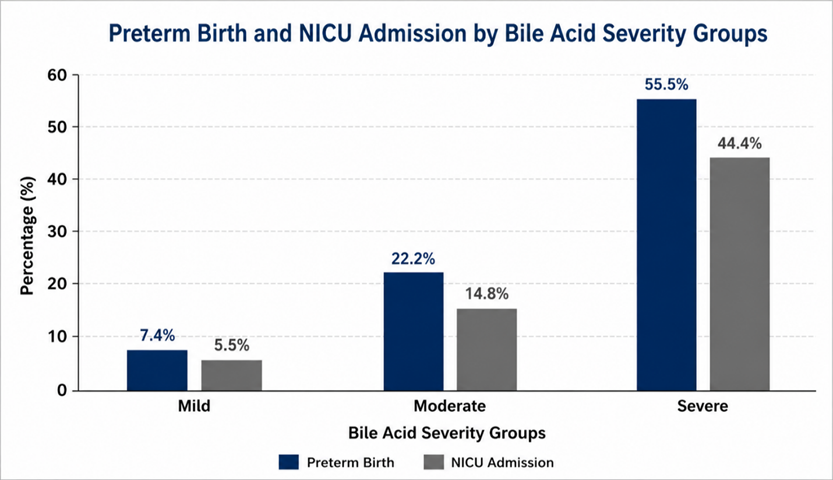
Fig. I: Bar chart showing percentage of preterm birth and NICU admission across bile acid severity groups.
DISCUSSION :
This study evaluated the association between elevated maternal serum bile acid levels and adverse perinatal outcomes among pregnant women diagnosed with intrahepatic cholestasis of pregnancy (ICP). A clear dose-dependent relationship was observed, with worsening neonatal outcomes across increasing bile acid severity groups. Women with severe disease demonstrated the highest frequencies of preterm birth, meconium-stained liquor, NICU admission, and low Apgar scores. These findings are consistent with existing evidence suggesting that maternal serum bile acid concentration is an important marker of fetal risk in pregnancies complicated by ICP.9,11
One of the major findings of the present study was the significant increase in preterm birth with increasing bile acid severity. The frequency of preterm birth increased from 7.4% in the mild group to 55.5% in the severe group, with women in the severe category demonstrating substantially higher odds of preterm delivery. Similar findings have been reported in international studies, where severe ICP has been associated with both spontaneous and iatrogenic preterm birth.9,11 Elevated bile acid levels are believed to increase uterine contractility, impair placental perfusion, and contribute to fetal compromise, thereby increasing the likelihood of early delivery.10
NICU admission also increased significantly with worsening disease severity in the current study, reaching 44.4% in the severe group. This finding may be attributable to the combined effects of prematurity, fetal distress, and neonatal respiratory complications. Comparable observations have been reported previously, where pregnancies complicated by severe ICP demonstrated higher rates of neonatal intensive care requirement and respiratory morbidity.12˒14
Another important finding was the significant association between increasing bile acid levels and meconium-stained liquor. The frequency increased progressively from mild to severe disease categories. Previous studies have proposed that elevated bile acids may stimulate fetal bowel motility or reflect intrauterine fetal stress, thereby contributing to meconium passage before delivery.13˒14 Similarly, low Apgar scores were more frequently observed among neonates born to women with severe disease, supporting the association between elevated maternal bile acid levels and impaired early neonatal adaptation.12
Although stillbirth occurred only in the severe group, the association did not achieve statistical significance. This may be related to the relatively small sample size, particularly within the severe disease category. Nevertheless, the finding remains clinically important, as large international meta-analyses have demonstrated a marked increase in stillbirth risk when maternal serum bile acid levels reach or exceed 100 µmol/L.9 Therefore, the absence of statistical significance in the present study should not be interpreted as absence of clinical risk.
In addition to adverse neonatal outcomes, severe disease was associated with earlier gestational age at diagnosis and significantly elevated alanine aminotransferase (ALT) levels. Earlier presentations may indicate a more aggressive disease course, while markedly elevated ALT levels may reflect greater hepatic involvement. Similar associations between biochemical severity and adverse pregnancy outcomes have been reported previously.10 These findings highlight the importance of close antenatal surveillance in women presenting with early-onset symptoms or markedly deranged liver function parameters.
The findings of the present study are also consistent with available Pakistani literature. Local studies have similarly reported increased risks of preterm birth, fetal distress, meconium-stained liquor, and neonatal complications among women with ICP.15,16 The consistency between local and international evidence strengthens the clinical relevance of serum bile acid monitoring in the Pakistani population and emphasizes the need for improved recognition and timely diagnosis of ICP in routine obstetric practice.
A major strength of this study was the use of objective biochemical classification of disease severity and follow-up of participants until delivery, allowing assessment of multiple clinically relevant perinatal outcomes in a local tertiary care setting where published evidence remains limited. However, several limitations should be acknowledged. This was a single-center study with a relatively small sample size, particularly in the severe disease group, which may have limited the statistical power for less frequent outcomes such as stillbirth. In addition, the absence of a healthy control group restricted comparisons to severity-based categories only.
Overall, elevated maternal serum bile acid levels were significantly associated with adverse perinatal outcomes, with the greatest risk observed in severe disease. Measurement of serum bile acids in symptomatic pregnant women may help identify high-risk pregnancies requiring closer surveillance, appropriate timing of delivery, and enhanced neonatal monitoring. Larger multicenter studies from Pakistan are recommended to further define local risk thresholds and optimize evidence-based management strategies for ICP.
CONCLUSION :
Elevated maternal serum bile acid levels were significantly associated with adverse perinatal outcomes in pregnancies complicated by intrahepatic cholestasis of pregnancy. Increasing bile acid severity was associated with higher frequencies of preterm birth, meconium-stained liquor, NICU admission, and low Apgar scores, with the greatest risk observed among women with severe disease. These findings support the clinical value of serum bile acid measurement in symptomatic pregnant women, particularly during the late second and third trimesters, for identification of high-risk pregnancies requiring closer antenatal surveillance and individualized obstetric management. Further large-scale multicenter studies are recommended to strengthen local evidence and assist in the development of standardized management protocols in our setting.
BIBLIOGRAPHY:
1. Wu K, Yin B, Li S, Zhu X, Zhu B. Prevalence, risk factors and adverse perinatal outcomes for Chinese women with intrahepatic cholestasis of pregnancy: a large cross-sectional retrospective study. Ann Med. 2022;54(1):2966-2974. doi:10.1080/07853890.2022.2136400. PMID:36271887; PMCID: PMC9624205.
2. Fan HM, Mitchell AL, Williamson C. Endocrinology in pregnancy: metabolic impact of bile acids in gestation. Eur J Endocrinol. 2021;184(3): R69-R83. doi:10.1530/EJE-20-1101. PMID:33434155.
3. Vasavan T, Williamson C, et al. Fetal cardiac dysfunction in intrahepatic cholestasis of pregnancy is associated with elevated serum bile acid concentrations. J Hepatol. 2021;74(5):1087-1096. doi: 10.1016/j.jhep.2020.11.038.
4. Kong M, Lu Z, Zhong C, et al. A higher level of total bile acid in early mid-pregnancy is associated with an increased risk of gestational diabetes mellitus: a prospective cohort study in Wuhan, China. J Endocrinol Invest. 2020; 43:1097-1103. doi:10.1007/s40618-020-01196-7.
5. Liu C, Gao J, Liu J, Wang X, He J, Sun J, Liu X, Liao S. Intrahepatic cholestasis of pregnancy is associated with an increased risk of gestational diabetes and preeclampsia. Ann Transl Med. 2020;8(23):1574. doi:10.21037/atm-20-4879.
6. Song F, Chen Y, Chen L, Li H, Cheng X, Wu W. Association of elevated maternal serum total bile acids with low birth weight and intrauterine fetal growth restriction. JAMA Netw Open. 2021;4(7):e2117409. doi:10.1001/jamanetworkopen.2021.17409. PMID:34279647; PMCID: PMC8290304.
7. Yao L, Zhou J, Tan Z, Li C, He T, Yin Y, Zhang P. Total bile acid concentrations and adverse perinatal outcomes in Chinese intrahepatic cholestasis of pregnancy including asymptomatic hypercholanemia of pregnancy: a retrospective cohort study. BMC Pregnancy Childbirth. 2025;25(1):1103. doi:10.1186/s12884-025-08085-y. PMID:41102717; PMCID: PMC12532476.
8. Gregorc P, Verdenik I, Pečlin P. Evaluating the effect of bile acid levels on maternal and perinatal outcomes in intrahepatic cholestasis of pregnancy: a retrospective study. Diagnostics (Basel). 2025;15(17):2185. doi:10.3390/diagnostics15172185. PMID:40941672; PMCID: PMC12427973.
9. Ovadia C, Seed PT, Sklavounos A, Geenes V, Di Ilio C, Chambers J, et al. Association of adverse perinatal outcomes of intrahepatic cholestasis of pregnancy with biochemical markers: individual patient data meta-analysis. Lancet. 2019;393(10174):899–909.
10. Royal College of Obstetricians and Gynaecologists. Intrahepatic cholestasis of pregnancy: Green-top Guideline No. 43. London: RCOG; 2022.
11. Geenes V, Chappell LC, Seed PT, Steer PJ, Knight M, Williamson C. Association of severe intrahepatic cholestasis of pregnancy with adverse pregnancy outcomes: a prospective population-based case-control study. Hepatology. 2014;59(4):1482–1491.
12. Brouwers L, Koster MP, Page-Christiaens GC, Kemperman H, Boon J, Evers IM, et al. Intrahepatic cholestasis of pregnancy: maternal and fetal outcomes associated with elevated bile acid levels. Am J Obstet Gynecol. 2015;212(1): 100.e1–7.
13. Kenyon AP, Piercy CN, Girling J, Williamson C, Tribe RM, Shennan AH. Obstetric cholestasis, outcome with active management: a series of 70 cases. BJOG. 2002;109(3):282–288.
14. Rook M, Vargas J, Caughey A, Bacchetti P, Rosenthal P, Bull L, et al. Fetal outcomes in pregnancies complicated by intrahepatic cholestasis of pregnancy. PLoS One. 2012;7(3): e28343.
15. Bibi S, Memon A, Sheikh JM, Qureshi AH. Obstetric cholestasis and fetal outcome in Pakistani population. J Liaquat Univ Med Health Sci. 2015;14(2):78–82.
16. Ali A, Khan R, Fatima N, et al. Fetomaternal outcome in intrahepatic cholestasis of pregnancy: experience from a tertiary care hospital in Pakistan. Pak J Med Sci. 2020;36(5):1021–1026.