COMPREHENSIVE MEDICAL NUTRITION THERAPY IN A PATIENT WITH ADVANCED-STAGE CERVICAL CANCER COMPLICATED BY SEVERE MALNUTRITION, PARTIAL OBSTRUCTIVE ILEUS, AND ACUTE KIDNEY INJURY: A CASE REPORT
- Pretty Grace Zalukhu , Department of Clinical Nutrition, Ngoerah Hospital/Faculty of Medicine, Udayana University, Denpasar, Indonesia
- Ni Ketut Sumartini , Department of Clinical Nutrition, Ngoerah Hospital/Faculty of Medicine, Udayana University, Denpasar, Indonesia
- Syuma Adhy Awan , Department of Clinical Nutrition, Ngoerah Hospital/Faculty of Medicine, Udayana University, Denpasar, Indonesia
- I Wayan Weta , Department of Clinical Nutrition, Ngoerah Hospital/Faculty of Medicine, Udayana University, Denpasar, Indonesia
Article Information:
Abstract:
Cervical cancer is among the malignancies with the highest incidence and mortality in Indonesia. The condition is frequently complicated by severe malnutrition and cachexia, a complex metabolic syndrome that significantly worsens prognosis, reduces tolerance to therapy, and diminishes the patient's quality of life. Case Illustration: We report the case of a 51-year-old woman with progressive stage IIB cervical cancer who presented with markedly reduced oral intake, nausea, and vomiting. Evaluation revealed a complex clinical picture comprising 20% body weight loss, partial obstructive ileus, and stage II acute kidney injury (AKI) with life-threatening hyperkalaemia. A diagnosis of severe malnutrition (stage 2) was established according to the criteria of the Global Leadership Initiative on Malnutrition (GLIM). Discussion: This report provides an in-depth analysis of the pathophysiology of cancer cachexia mediated by systemic inflammation as the principal driver of catabolism in this patient. It also examines the therapeutic dilemma in nutritional management, particularly the need to balance the high protein requirements of cancer cachexia against the recommendation for protein restriction in non-dialysed AKI. The rationale for parenteral nutrition (PN) as a life-saving intervention in the setting of intestinal failure is based on the guidelines of the European Society for Clinical Nutrition and Metabolism (ESPEN). Modification of the PN formulation, in particular the elimination of potassium during the initial phase, proved central to the management of the hyperkalaemic metabolic crisis. Conclusion: This case underscores the importance of an individualised, dynamic, and guideline-based approach to medical nutrition therapy in stabilising the critically ill oncology patient with multiorgan failure. Multidisciplinary team collaboration and stringent metabolic monitoring are prerequisites for therapeutic success.
Keywords:
Article :
INTRODUCTION:
Cervical cancer is a global health problem and one of the malignancies carrying a substantial disease burden among women, particularly in developing countries such as Indonesia (Kemenkes RI, 2015; Sung et al., 2021). Data from the Global Cancer Observatory (GLOBOCAN) consistently rank cervical cancer second only to breast cancer in terms of incidence and mortality among women in Indonesia, with tens of thousands of new cases detected annually (GLOBOCAN, 2020; Kemenkes RI, 2022). This high incidence, compounded by the frequency with which patients present at an advanced stage, creates a complex clinical challenge (Sari et al., 2023).
One of the most common and clinically significant complications in patients with advanced cancer is malnutrition and cachexia (Arends et al., 2017). Cancer cachexia is not simply weight loss resulting from inadequate intake, but rather a complex, multifactorial metabolic syndrome. It is characterised by progressive loss of skeletal muscle mass, with or without loss of fat mass, that cannot be fully reversed by conventional nutritional support alone (Fearon et al., 2011; Muscaritoli et al., 2021). The underlying pathophysiology is chronic systemic inflammation. The tumour and host immune cells release pro-inflammatory cytokines such as Tumour Necrosis Factor-alpha (TNF-α), Interleukin-1 (IL-1), and Interleukin-6 (IL-6) (Argilés et al., 2014; Nishikawa et al., 2021). This cytokine storm triggers a cascade of deleterious metabolic alterations, including an increased basal metabolic rate, accelerated breakdown of muscle protein (proteolysis), and mobilisation of fat stores (lipolysis), which collectively drive the body into a persistent catabolic state (Fearon et al., 2011; Penacos et al., 2022). The presence of malnutrition and cachexia in patients with cancer has a direct adverse impact on clinical outcomes, including increased chemotherapy toxicity, reduced treatment response, impaired quality of life, and shortened life expectancy (Arends et al., 2017; Hidayati & Arifah, 2020).
Objective
The objective of this case report is to present and critically analyse the medical nutrition therapy (MNT) approach in a patient with stage IIB cervical cancer presenting with simultaneous severe complications, namely severe malnutrition, partial obstructive ileus, and acute kidney injury (AKI).
Significance
This case report is intended to provide evidence-based insight and practical guidance for clinicians, including clinical nutrition specialists, oncologists, and internists, in managing the multidimensional nutritional challenges faced by critically ill oncology patients. It emphasises the integration of international clinical guidelines, such as the GLIM criteria and the ESPEN guidelines, into routine clinical practice in order to optimise patient outcomes (Cederholm et al., 2019; Muscaritoli et al., 2021).
Hypothesis, Research Gap, and Novelty
Hypothesis: Individualised and dynamic nutritional management, prioritising acute metabolic stabilisation (correction of fluid and electrolyte disturbances) before the cautious and tailored initiation of parenteral nutrition, is a crucial strategy for preventing further clinical deterioration in oncology patients with multiorgan failure.
Research Gap: There is a paucity of literature and clinical guidance addressing the simultaneous nutritional management of three conditions whose therapeutic recommendations are frequently in conflict: (1) cancer cachexia, which requires aggressive nutritional support with a high protein target; (2) obstructive ileus, which constitutes a contraindication to enteral nutrition; and (3) non-dialysed AKI, which traditionally requires fluid and protein restriction to control azotaemia (Muscaritoli et al., 2021; Fiaccadori et al., 2021).
Novelty: The novelty of this case report lies in its detailed analysis of the clinical decision-making process involved in navigating these therapeutic dilemmas. It specifically addresses the justification for the chosen protein target as a clinical compromise between two divergent guidelines, and the strategy for modifying the parenteral nutrition formulation in the face of a metabolic emergency such as severe hyperkalaemia.
CASE ILLUSTRATION:
Patient Identity and History
A 51-year-old female patient, Mrs NJ, was admitted to hospital with a primary diagnosis of stage IIB cervical cancer. She had a history of significantly reduced oral intake over the preceding 3 months, following the first cycle of chemotherapy (Paxus–Carboplatin), attributed to severe nausea and vomiting. This deteriorated over the final week, culminating in complete anorexia.
The presenting complaints on admission were progressive abdominal distension over 2 weeks with a palpable mass, difficulty in defaecation (last bowel movement 4 days previously, of liquid consistency), and bilious (greenish) vomiting more than five times per day. The patient also reported profound weakness interfering with all activities, intermittent vaginal spotting, and vaginal discharge. Her weight history demonstrated a marked decline from 70 kg (when well) to 56 kg on admission, representing a loss of approximately 20% of her baseline body weight. Oral intake over the preceding 24 hours, based on dietary recall, amounted to only approximately 260 kcal, derived from porridge, Nutrican milk, and biscuits. Her comorbidities included controlled hypertension, sinusitis, and osteoarthritis. At the time of assessment, the patient was fasting and had a nasogastric tube (NGT) in situ for decompression.
Physical Examination and Anthropometry
On physical examination, the patient appeared generally weak and was confined to bed (bedridden), with a compos mentis level of consciousness. Vital signs were blood pressure 100/65 mmHg, pulse rate 94 beats/min, respiratory rate 20 breaths/min, and temperature 36.5°C.
Nutritional status by Subjective Global Assessment (SGA) was SGA C, indicating severe malnutrition. Clear clinical signs of malnutrition were present, including muscle wasting in the temporal, clavicular, and extremity regions, together with generalised loss of subcutaneous fat, as documented in Figures 6, 8, and 9. Minimal pretibial oedema was also noted. Abdominal examination revealed distension (Figures 5 and 7), a palpable firm mass of approximately 15 x 15 cm with tenderness, and hyperactive bowel sounds.
Anthropometric measurements were as follows: mid-upper arm circumference (MUAC) 24 cm, ulna length 26 cm, and calf circumference 29 cm. Hand Grip Strength (HGS) was markedly reduced at 19 kg. Based on an estimated height of 167 cm and an actual body weight of 56 kg, the patient's body mass index (BMI) was 20 kg/m².
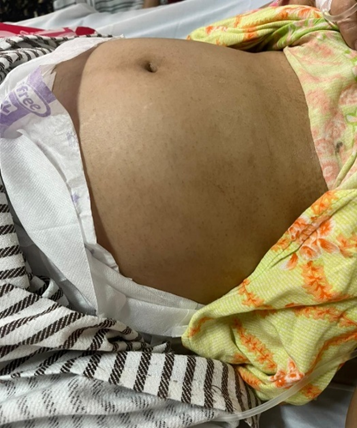
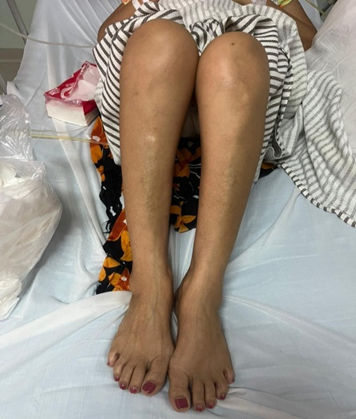
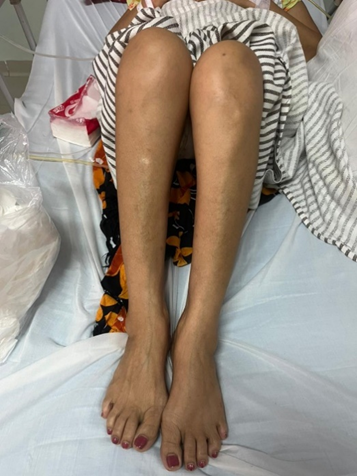
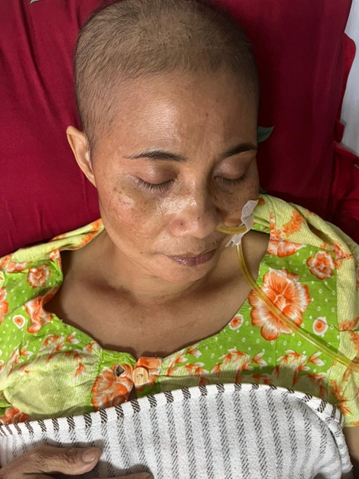
Figure 1. Clinical Presentation of the Patient
Investigations
Laboratory and imaging results on admission confirmed the presence of multiorgan dysfunction and a severe systemic inflammatory state.
Table 1. Key Laboratory Findings on Admission
|
Parameter |
Result |
Reference Range |
Clinical Interpretation |
|
Haematology |
|
|
|
|
White Blood Cell (WBC) |
13.92 x/µL |
4.1 - 11.0 |
Leukocytosis; indicator of systemic inflammation/infection |
|
Neutrophils % (NE%) |
89.00 % |
47 - 80 |
Marked neutrophilia; acute inflammatory response |
|
Platelets (PLT) |
555.00 x/µL |
140 - 440 |
Reactive thrombocytosis, frequently associated with chronic inflammation/malignancy |
|
Haemoglobin (HGB) |
12.80 g/dL |
12.0 - 16.0 |
Mild anaemia (normocytic, normochromic) |
|
Neutrophil-Lymphocyte Ratio (NLR) |
22.82 |
< 3.13 |
Markedly elevated ratio; strong marker of systemic inflammation and poor prognosis |
|
Clinical Chemistry |
|
|
|
|
Creatinine |
2.39 mg/dL |
0.57 - 1.11 |
Significantly elevated, indicating acute kidney injury |
|
estimated Glomerular Filtration Rate (eGFR) |
22.73 ml/min/1.73m² |
>= 90 |
Severe reduction in GFR, consistent with AKI Stage 4 (by eGFR) or Stage 2 (by the AKIN creatinine criteria) |
|
Blood Urea Nitrogen (BUN) |
67.0 mg/dL |
9.8 - 20.1 |
Severe azotaemia, consistent with AKI and a highly catabolic state |
|
Sodium (Na) - Serum |
124 mmol/L |
136 - 145 |
Hyponatraemia, probably hypovolaemic secondary to gastrointestinal fluid losses |
|
Potassium (K) - Serum |
5.85 mmol/L |
3.50 - 5.10 |
Severe hyperkalaemia; a life-threatening medical emergency |
|
Chloride (Cl) - Serum |
84.4 mmol/L |
94 - 110 |
Hypochloraemia, consistent with fluid loss from vomiting |
|
Albumin |
3.70 g/dL |
3.40 - 4.80 |
Within normal limits; not a reliable indicator of acute nutritional status |
Imaging provided additional crucial information:
● Abdominal Ultrasound: Confirmed a malignant solid mass of the cervix extending into the uterine corpus and upper vagina. Complex ascites was also identified. No structural abnormality was seen in the liver, pancreas, or kidneys.
● Renal Ultrasound: Demonstrated normal size and cortical echogenicity of both kidneys. The pelvicalyceal system was not dilated (no hydronephrosis). These findings exclude a post-renal cause of the AKI and point instead towards a pre-renal (dehydration) or intrinsic aetiology.
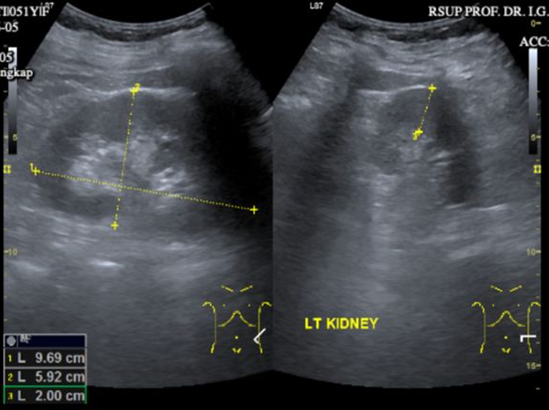
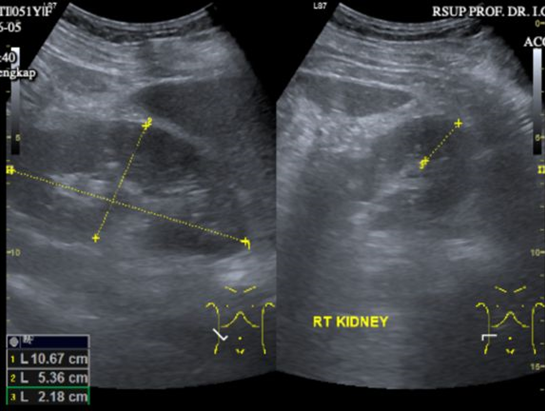
Figure 2. Abdominal Ultrasound
Diagnosis
On the basis of the comprehensive clinical data, a multidimensional diagnosis was established:
1. Nutritional Diagnosis: Severe Malnutrition (Stage 2) according to the GLIM criteria, with the phenotypic criteria of weight loss >10% within 6 months and severe loss of muscle mass, and the aetiologic criteria of reduced intake and cancer-related inflammation (Cederholm et al., 2019).
2. Medical Diagnosis:
○ Stage IIB Cervical Cancer, on external radiotherapy (7th fraction), progressive
○ Partial Obstructive Ileus
○ Stage II Acute Kidney Injury (AKI) of pre-renal aetiology
○ Moderate-to-severe dehydration
○ Severe hyperkalaemia
○ Chronic hypovolaemic hyponatraemia
○ Anaemia
○ Cancer Pain
Initial Management and Nutritional Intervention
Initial management focused on haemodynamic stabilisation and correction of life-threatening metabolic derangements. The patient was kept nil by mouth (Nil Per Os – NPO) and an NGT was placed for gastric decompression. Aggressive intravenous therapy was commenced with fluid resuscitation using 0.9% sodium chloride to address dehydration and hypovolaemia.
Nutritional intervention was planned in a stepwise and cautious manner:
● Calculation of Nutritional Requirements:
○ Energy requirements were calculated according to the ESPEN guidelines for patients with cancer, namely 25–30 kcal/kg body weight/day (Muscaritoli et al., 2021). The initial target was set conservatively at 25 kcal/kg body weight/day in order to minimise the risk of refeeding syndrome.
■ Energy requirement = 25 kcal x 56 kg = 1400 kcal/day.
○ Protein requirements posed a clinical dilemma. The ESPEN guidelines for cancer cachexia recommend a high intake of >1.0 g/kg, ideally up to 1.5 g/kg (Muscaritoli et al., 2021). Conversely, guidelines for non-dialysed AKI suggest restricting protein to between 0.8 and 1.0 g/kg in order to reduce the uraemic burden (Fiaccadori et al., 2021; Doig et al., 2013). As a clinical compromise, a moderate protein target was set at 1.2 g/kg body weight/day.
■ Protein requirement = 1.2 g x 56 kg = ~67 g/day.
○ Fluid requirements were adjusted dynamically according to hydration status, urine output, and insensible water loss.
● Nutritional Intervention Plan:
The principal priority was haemodynamic stabilisation and correction of hyperkalaemia. In view of the obstructive ileus, enteral nutrition was contraindicated. Parenteral Nutrition (PN) was therefore selected as the route of nutritional delivery. However, the presence of severe hyperkalaemia constituted an absolute contraindication to standard potassium-containing PN formulations (Krenitsky, 2012).
○ Initial PN Prescription: Total Parenteral Nutrition (TPN) via central venous access was planned once the metabolic condition had become more stable.
■ Initial Formulation: Specifically compounded to contain no potassium (potassium-free).
■ Caloric Target: Commenced gradually, for example at 10–15 kcal/kg on the first day, in order to prevent refeeding syndrome, and increased slowly towards the target of 1400 kcal (Siregar & Mauliza, 2025).
■ Composition: A balanced mixture of dextrose and lipid emulsion as energy sources, together with 67 g of amino acids.
■ Micronutrients: Prophylactic high-dose thiamine before the initiation of nutrition, followed by vitamins and trace elements as required. Other electrolytes (sodium, magnesium, phosphate, calcium) were administered according to the results of daily laboratory monitoring.
DISCUSSION :
Cancer Cachexia and the Central Role of Systemic Inflammation
This patient's condition represents a dramatic clinical manifestation of cancer cachexia, a metabolic syndrome fundamentally distinct from simple starvation (Fearon et al., 2011; Nishikawa et al., 2021). The massive 20% weight loss accompanied by overt loss of muscle mass (evident from generalised wasting, SGA C, and low HGS) is characteristic of this catabolic syndrome, which cannot be corrected by nutritional supplementation alone (Nishikawa et al., 2021). Its principal pathophysiology is chronic systemic inflammation mediated by pro-inflammatory cytokines such as TNF-α and IL-6, released by the tumour and host immune cells (Argilés et al., 2014; Penacos et al., 2022). These cytokines not only produce central anorexia but also directly induce catabolic pathways in peripheral tissues, resulting in accelerated breakdown of muscle protein and mobilisation of fat stores (Fearon et al., 2011; Argilés et al., 2014).
The patient's laboratory data objectively confirmed a severe systemic inflammatory state. Leukocytosis (13.92 x/µL), neutrophilia (89%), reactive thrombocytosis (555 x/µL), and in particular a markedly elevated Neutrophil-Lymphocyte Ratio (NLR) of 22.82 constitute biochemical evidence of an exaggerated inflammatory response. A markedly elevated NLR serves not only as a marker of inflammation but has also been validated as an independent adverse prognostic factor across a range of malignancies, including cervical cancer (Feng et al., 2017; Lee et al., 2012). A meta-analysis has demonstrated that a high NLR is significantly associated with poorer overall survival and progression-free survival, and correlates with larger tumour size and more advanced disease stage (Feng et al., 2017). The patient's NLR of 22.82, far above the prognostic thresholds usually reported (generally between 1.9 and 2.86), indicates an extreme inflammatory burden and a very poor prognosis (Lee et al., 2012; Vida et al., 2025).
Rationale for Parenteral Nutrition in Intestinal Failure
The diagnosis of partial obstructive ileus, supported by the clinical features of bilious vomiting, abdominal distension, and hyperactive bowel sounds, constitutes an absolute contraindication to the delivery of nutrition via the gastrointestinal tract (enteral nutrition) (Weimann et al., 2009). Attempts to administer food or fluid by this route would aggravate distension, increase the risk of aspiration, and fail to be absorbed effectively. In accordance with the ESPEN guidelines, in the setting of intestinal failure such as mechanical or functional obstruction, parenteral nutrition (PN) becomes a life-saving intervention (Pironi et al., 2020; Weimann et al., 2009). PN allows energy, protein, and micronutrient requirements to be met while bypassing the non-functioning gastrointestinal tract, thereby preventing further deterioration of nutritional status and supporting the function of other organs. The decision to commence PN in this patient was based on the impossibility of using the gut and on an estimated prognosis exceeding 2–3 months, a time frame within which the benefits of aggressive nutritional support are considered to outweigh the potential risks, such as catheter-related infection (Muscaritoli et al., 2021).
Therapeutic Challenge: Balancing Protein Requirements in Cancer and Acute Kidney Injury
Protein management in this patient lay at the heart of the nutritional dilemma. Two evidence-based clinical guidelines offer apparently conflicting recommendations. On the one hand, the patient had cancer cachexia, a hypercatabolic state in which muscle protein is actively degraded. To counteract this process and support protein synthesis, the ESPEN guidelines recommend a high protein intake, ideally reaching 1.5 g/kg/day (Muscaritoli et al., 2021). On the other hand, the patient also had stage II AKI with severe azotaemia (BUN 67 mg/dL) and had not undergone renal replacement therapy (dialysis). Traditional nutritional guidelines for non-dialysed AKI frequently recommend restricting protein intake (0.8–1.0 g/kg/day) in order to reduce the production of nitrogenous metabolic waste (urea) and lessen renal workload, potentially deferring the need for dialysis (Fiaccadori et al., 2021; Doig et al., 2013).
Providing too little protein would accelerate sarcopenia, weakness, and immune dysfunction. Conversely, providing excessive protein risks aggravating azotaemia, metabolic acidosis, and electrolyte disturbance. The clinical decision was therefore to select a moderate target of 1.2 g/kg/day as a starting point. This represents a reasoned clinical compromise, aiming to provide sufficient substrate for anabolism without unduly burdening the injured kidney. The approach demands stringent daily monitoring of renal function (BUN, creatinine), acid-base status, and fluid balance to permit dynamic adjustment of the protein target (Krenitsky, 2012).
Management of the Metabolic Crisis: PN Strategy in Severe Hyperkalaemia
Hyperkalaemia at a level of 5.85 mmol/L, particularly when accompanied by electrocardiographic changes, constitutes a medical emergency requiring immediate intervention (Einhorn et al., 2009). In this patient the cause was multifactorial, comprising reduced potassium excretion due to AKI, a shift of potassium from the intracellular to the extracellular compartment as a result of massive catabolism and potential metabolic acidosis, and haemoconcentration due to dehydration (Gennari, 2002; Palmer & Clegg, 2017). In this context, administration of a standard PN formulation, which generally contains 20–40 mEq of potassium per litre, could be fatal (Pfizer, 2019).
The appropriate and safe medical nutrition therapy strategy is to modify the PN prescription radically. The first and most crucial step is to withhold exogenous potassium entirely. The initial PN solution must be specifically ordered as a "potassium-free" formulation (Krenitsky, 2012; TPN RX, n.d.). While providing basic nutritional support (calories and protein), the medical team simultaneously undertakes measures to lower the serum potassium concentration (for example, through hydration, diuretics where urine output is preserved, and potassium-shifting agents such as insulin-glucose) (Einhorn et al., 2009). Once the serum potassium has been successfully reduced to a safe level (for example, <5.0 mmol/L) and has stabilised, potassium may be gradually and cautiously reintroduced into the PN formulation, with very close daily laboratory monitoring (Krenitsky, 2012).
Application of the GLIM Criteria for the Diagnosis of Severe Malnutrition
In order to establish the diagnosis of malnutrition objectively and in a standardised manner, the GLIM framework was applied, representing a consensus of the global clinical nutrition community (Cederholm et al., 2019; Jensen et al., 2024). This approach requires the fulfilment of at least one phenotypic and one aetiologic criterion.
Table 2. Assessment of the Patient's Nutritional Status Using the GLIM Framework
|
GLIM Criterion |
Patient Data |
Result |
|
Phenotypic Criteria (At Least 1) |
|
|
|
1. Weight Loss |
Loss of ~20% within < 6 months (70 kg → 56 kg) |
(+) Positive, Severe (fulfils the criterion of >10% within 6 months) |
|
2. Low BMI |
20 kg/m² (age 51 years) |
(-) Negative (does not fulfil the criterion of <20 kg/m²) |
|
3. Reduced Muscle Mass |
Generalised muscle wasting, MUAC 24 cm, Calf Circumference 29 cm, HGS 19 kg (consistent with SGA C) |
(+) Positive, Severe (based on clinical and functional assessment) |
|
Aetiologic Criteria (At Least 1) |
|
|
|
1. Reduced Intake/Assimilation |
Intake <50% of requirements for >1 week (recall 260 kcal), nausea, vomiting, ileus |
(+) Positive |
|
2. Disease Burden/Inflammation |
Advanced, progressive cervical cancer. Signs of systemic inflammation: leukocytosis, NLR 22.82 |
(+) Positive |
|
Final Diagnosis |
Fulfils 2 phenotypic criteria (both severe) and 2 aetiologic criteria |
SEVERE MALNUTRITION (STAGE 2) |
Source: Adapted from Cederholm et al. (2019).
Systematic application of the GLIM criteria in this case clearly confirms a diagnosis of Severe Malnutrition (Stage 2). The use of a structured diagnostic instrument such as GLIM is important for standardising diagnosis, facilitating interprofessional communication, and providing the basis for justifying appropriate nutritional intervention (Jensen et al., 2024).
CONCLUSION :
This case report underscores the extraordinary complexity of medical nutrition therapy in patients with advanced cancer complicated by multiorgan failure. Successful management in this patient rested on several key pillars: (1) rapid identification and prioritised treatment of life-threatening metabolic problems such as hyperkalaemia; (2) selection of the appropriate nutritional route (PN) on the basis of intestinal failure; and (3) careful adjustment of macronutrient composition (particularly protein) in order to navigate the clinical dilemma between the anabolic requirements of cachexia and the potential uraemic burden in acute kidney injury. The application of evidence-based clinical guidelines, such as the GLIM diagnostic criteria and the ESPEN therapeutic recommendations, proved essential in guiding accurate diagnosis and rational, safe therapeutic intervention (Cederholm et al., 2019; Muscaritoli et al., 2021).
Recommendations
On the basis of the analysis of this case, several practical recommendations may be formulated to improve the quality of nutritional care in oncology patients:
1. Implementation of Routine Nutritional Screening: Nutritional screening and assessment using validated instruments, such as the GLIM framework, should be integrated as standard care for all patients with cancer from the time of initial diagnosis, to permit early detection and intervention for malnutrition (Cederholm et al., 2019).
2. Multidisciplinary Team Approach: Nutritional management of critically ill patients with multiple complications requires close collaboration within a multidisciplinary team comprising clinical nutrition specialists, oncologists, internists/nephrologists, pharmacists, and nurses, in order to ensure a holistic and coordinated approach.
3. Dynamic Parenteral Nutrition Prescribing: PN prescribing in the unstable patient must always be dynamic. Daily laboratory monitoring during the acute phase is mandatory to permit real-time adjustment of the PN formulation in accordance with changes in the patient's metabolic status, particularly renal function and electrolyte concentrations (Krenitsky, 2012).
BIBLIOGRAPHY:
1. Arends, J., Bachmann, P., Baracos, V., Barthelemy, N., Bertz, H., Bozzetti, F., Fearon, K., Hütterer, E., Isenring, E., Kaasa, S., Krznaric, Z., Laird, B., Larsson, M., Laviano, A., Mühlebach, S., Muscaritoli, M., Oldervoll, L., Ravasco, P., Solheim, T., Strasser, F., de van der Schueren, M. and Preiser, J.C. (2017). ESPEN guidelines on nutrition in cancer patients. Clinical Nutrition, 36(1), pp.11-48.
2. Argilés, J.M., Busquets, S., Stemmler, B. and López-Soriano, F.J. (2014). Cancer cachexia: understanding the molecular basis. Nature Reviews Cancer, 14(11), pp.754-762.
3. Bambace, C. and Te-Velde, A. (2015). The role of inflammation in cancer. Current Opinion in Oncology, 27(1), pp.1-7.
4. Bozzetti, F., Arends, J., Lundholm, K., Micklewright, A., Zurcher, G. and Muscaritoli, M. (2009). ESPEN Guidelines on Parenteral Nutrition: non-surgical oncology. Clinical Nutrition, 28(4), pp.445-454.
5. Cederholm, T., Jensen, G.L., Correia, M.I.T.D., Gonzalez, M.C., Fukushima, R., Higashiguchi, T., Baptista, G., Barazzoni, R., Blaauw, R., Coats, A.J.S., Crivelli, A., Evans, D.C., Gramlich, L., Fuchs-Tarlovsky, V., Keller, H., Llido, L., Malone, A., Mogensen, K.M., Morley, J.E., Muscaritoli, M., Pirlich, M., Rosell, A., Singer, P., Van Gossum, A., de van der Schueren, M.A.E., Visser, M., Yu, J. and Compher, C. (2019). GLIM criteria for the diagnosis of malnutrition – A consensus report from the global clinical nutrition community. Clinical Nutrition, 38(1), pp.1-9.
6. Doig, G.S., Simpson, F., Sweetman, E.A., Finfer, S.R., Cooper, D.J., Heighes, P.T., Davies, A.R., O'Leary, M., Solano, T. and Peake, S. (2013). Early parenteral nutrition in critically ill patients with short-term relative contraindications to early enteral nutrition: a randomized controlled trial. JAMA, 309(20), pp.2130-2138.
7. Einhorn, L.M., Zhan, M., Hsu, V.D., Walker, L.D., Moen, M.F., Seliger, S.L., Weir, M.R. and Fink, J.C. (2009). The frequency of hyperkalemia and its significance in chronic kidney disease. Archives of Internal Medicine, 169(12), pp.1156-1162.
8. Fearon, K., Strasser, F., Anker, S.D., Bosaeus, I., Bruera, E., Fainsinger, R.L., Jatoi, A., Loprinzi, C., MacDonald, N., Mantovani, G., Davis, M., Muscaritoli, M., Ottery, F., Radbruch, L., Ravasco, P., Walsh, D., Wilcock, A., Kaasa, S. and Baracos, V.E. (2011). Definition and classification of cancer cachexia: an international consensus. The Lancet Oncology, 12(5), pp.489-495.
9. Feng, Y., Wang, T., Deng, T., Yang, L., Chen, M. and Li, N. (2017). Pretreatment neutrophil-to-lymphocyte ratio in cervical cancer: a meta-analysis. Oncotarget, 8(31), pp.51833-51842.
10. Fiaccadori, E., Sabatino, A., Barazzoni, R., Carrero, J.J., Cupisti, A., De Waele, E., Jonckheer, J., Singer, P. and Cuerda, C. (2021). ESPEN practical guideline on clinical nutrition in hospitalized patients with acute or chronic kidney disease. Clinical Nutrition, 40(4), pp.1644-1668.
11. Gennari, F.J. (2002). Disorders of potassium homeostasis. Hypokalemia and hyperkalemia. Critical Care Clinics, 18(2), pp.273-288.
12. GLOBOCAN. (2020). Indonesia Source: Globocan 2020. [online] International Agency for Research on Cancer. Available at: https://gco.iarc.fr/today/data/factsheets/populations/360-indonesia-fact-sheets.pdf.
13. Hidayati, A.O. and Arifah, S. (2020). Faktor Kejadian Anemia pada Pasien Kanker yang Mendapat Radioterapi dan atau Kemoterapi. Jurnal Ilmiah Permas: Jurnal Ilmiah STIKES Kendal, 10(3), pp.323-330.
14. Jensen, G.L., Cederholm, T., Correia, M.I.T.D., Gonzalez, M.C., Ito, H., Muscaritoli, M., Pirlich, M., Singer, P. and Compher, C. (2024). GLIM consensus approach to diagnosis of malnutrition: A 5-year update. Journal of Parenteral and Enteral Nutrition, 48(4), pp.414-423.
15. Kemenkes RI. (2015). Situasi Penyakit Kanker. Jakarta: Pusat Data dan Informasi Kementerian Kesehatan RI.
16. Kemenkes RI. (2022). Kemenkes Tegaskan Komitmen Eliminasi Kanker Serviks, 36 Ribu Kasus Baru Terdeteksi Setiap Tahun. [online] Available at: https://kemkes.go.id/id/kemenkes-tegaskan-komitmen-eliminasi-kanker-serviks-36-ribu-kasus-baru-terdeteksi-setiap-tahun.
17. Krenitsky, J. (2012). Nutrition in Acute and Chronic Renal Failure. Practical Gastroenterology, (June), pp.35-46.
18. Lee, Y.Y., Choi, C.H., Kim, H.J., Kim, T.J., Lee, J.W., Lee, J.H., Bae, D.S. and Kim, B.G. (2012). Pretreatment neutrophil:lymphocyte ratio as a prognostic factor in cervical carcinoma. Anticancer Research, 32(4), pp.1555-1561.
19. Muscaritoli, M., Arends, J., Bachmann, P., Baracos, V., Barthelemy, N., Bertz, H., Bozzetti, F., Hütterer, E., Isenring, E., Kaasa, S., Krznaric, Z., Laird, B., Larsson, M., Laviano, A., Mühlebach, S., Oldervoll, L., Ravasco, P., Solheim, T.S., Strasser, F., de van der Schueren, M., Preiser, J.C. and Bischoff, S.C. (2021). ESPEN practical guideline: Clinical Nutrition in cancer. Clinical Nutrition, 40(5), pp.2898-2913.
20. Nishikawa, H., Goto, M., Fukunishi, S., Asai, A., Nishiguchi, S. and Higuchi, K. (2021). Cancer Cachexia: Its Mechanism and Clinical Significance. International Journal of Molecular Sciences, 22(16), p.8491.
21. Palmer, B.F. and Clegg, D.J. (2017). Physiology and pathophysiology of potassium homeostasis. Advances in Physiology Education, 41(4), pp.480-490.
22. Penacos, A., Tsoli, M., Gkizarioti, Z., Papa, V., Lambrou, G.I. and Koutsilieris, M. (2022). Pathophysiology of Cancer Cachexia: Focus on the Crosstalk between Muscle and Adipose Tissue. Cancers, 14(15), p.3728.
23. Pfizer. (2019). TPN Electrolytes (multiple electrolyte additive) injection, solution, concentrate. [online] Available at:(https://labeling.pfizer.com/ShowLabeling.aspx?id=7375).
24. Pironi, L., Arends, J., Bozzetti, F., Cuerda, C., Gillanders, L., Jeppesen, P.B., Joly, F., Kelly, D., Lal, S., Staun, M., Szczepanek, K., Van Gossum, A., Wanten, G., Schneider, S.M. and Home Artificial Nutrition & Chronic Intestinal Failure, and Acute Intestinal Failure Special Interest Groups of ESPEN. (2020). ESPEN guidelines on home parenteral nutrition. Clinical Nutrition, 39(6), pp.1645-1666.
25. Sari, D.P., Wulandari, A. and Supriyati, S. (2023). Hubungan Tingkat Pengetahuan WUS terhadap Sikap Melakukan Deteksi Dini Kanker Leher Rahim di Wilayah Kerja Puskesmas Pare. Sinar Jurnal Kebidanan, 5(1), pp.1-8.
26. Siregar, M.R. and Mauliza, M. (2025). Sindrom Refeeding. GALENICAL: Jurnal Kedokteran dan Kesehatan Mahasiswa Malikussaleh, 4(1), pp.1-14.
27. Sung, H., Ferlay, J., Siegel, R.L., Laversanne, M., Soerjomataram, I., Jemal, A. and Bray, F. (2021). Global Cancer Statistics 2020: GLOBOCAN Estimates of Incidence and Mortality Worldwide for 36 Cancers in 185 Countries. CA: A Cancer Journal for Clinicians, 71(3), pp.209-249.
28. TPN RX. (n.d.). Potassium. [online] Available at: https://www.rxkinetics.com/tpn_help/potassium.htm.
29. Vida, B., Lőczi, L., Tóth, Z., Merkely, P., Sebők, B., Bánhidy, F., Ács, N., Lintner, B. and Keszthelyi, A. (2025). The Neutrophil-to-Lymphocyte Ratio (NLR) as a Potential Predictor in Conization Outcomes for Cervical Cancer. Cancers, 17(11), p.1856.
30. Weimann, A., Braga, M., Harsanyi, L., Laviano, A., Ljungqvist, O., Soeters, P. and DGEM (German Society for Nutritional Medicine), ESPEN (European Society for Parenteral and Enteral Nutrition). (2009). ESPEN Guidelines on Parenteral Nutrition: surgery. Clinical Nutrition, 28(4), pp.387-400.