Comparison of Outcome of Sublingual vs Intramuscular B12 for the Treatment of Patients with Vitamin B12 Deficiency at Tertiary Care Hospital
- Memoona Azam , Post Graduate Trainee, Department of General Medicine, Pakistan Institute of Medical Sciences (PIMS), Islamabad, Pakistan.
- Shifaat Khatoon , HOD General Medicine Team 1, Department of General Medicine, Pakistan Institute of Medical Sciences (PIMS), Islamabad, Pakistan.
- Rabia Azam , Medical Officer, Maryam Memorial Hospital in Rawalpindi, Pakistan.
- Summon Basharat , Post Graduate Trainee, Department of General Medicine, Pakistan Institute of Medical Sciences (PIMS), Islamabad, Pakistan.
- Maliha Azam , Medical Officer, Department of General Medicine, Pakistan Institute of Medical Sciences (PIMS), Islamabad, Pakistan.
- Moazma Khan , Medical Officer, Department of Family Medicine, Fatima Memorial Hospital, Lahore, Pakistan.
Article Information:
Abstract:
Vitamin B12 deficiency is linked with a number of hematological and neurological complications. Intramuscular (IM) vitamin B12 has traditionally been used as standard treatment, however, sublingual (SL) administration of vitamin B-12 has become a non-invasive alternative. Aim of this study is to compare the mean difference in serum vitamin B12 concentrations after sublingual and intramuscular supplementation in patients with vitamin B12 deficiency. Methods: This randomized control trial was conducted at the Department of General Medicine, PIMS Islamabad. A total of 120 patients with confirmed vitamin B12 deficiency aged 18-75 years were included and randomly assigned into two groups, Group A (sublingual) and B (intramuscular) with 60 patients in each group. Group A was given 1000 mcg sublingual vitamin B12 and Group B was given 1000 mcg intramuscular injections as standard protocol. Serum vitamin B12 levels were measured at baseline and after 4 weeks of treatment. Data were analyzed with the use of the statistical package (SPSS version 25). Independent sample t-test was used for comparative analysis and p-value of ≤ 0.05 considered as significant. Results: The mean baseline vitamin B12 levels were comparable between the two groups. After 4 weeks, both groups demonstrated significant improvement in serum vitamin B12 levels; however, the increase was significantly greater in the intramuscular group compared to the sublingual group (987.22 ± 188.87 pg/mL vs 498.80 ± 75.96 pg/mL; p < 0.001). Stratified analysis revealed that this difference remained statistically significant across all subgroups, including age, gender, BMI, residence, smoking status, dietary habits, occupational status, and income levels. Conclusion: Intramuscular vitamin B12 is better than sublingual in promoting rapid biochemical response to vitamin B12 deficiency. However, sublingual therapy is a viable and patient-friendly alternative especially for long-term therapy and in resource-constrained settings.
Keywords:
Article :
INTRODUCTION:
Vitamin B12 (cobalamin) is an essential water-soluble vitamin that is important in the synthesis of DNA, erythropoiesis and neurological functions [1]. Deficiency of vitamin B12 can lead to important clinical consequences including megaloblastic anaemia, neurocognitive impairment and peripheral neuropathy especially in vulnerable groups such as the elderly, vegetarians and patients with malabsorption disorders [2]. Intramuscular (IM) administration of cyanocobalamin has been regarded as the standard treatment for vitamin B12 deficiency because of its capacity to restore serum vitamin B12 levels quickly. However, the need for repeat injections, discomfort, and the need for healthcare visits is often the reason for poor adherence by patients [3]. These limitations have led to growing interest in alternative routes of administration, specifically sublingual (SL) therapy, since it provides a means for absorption via the oral mucosa and provides a non-invasive and convenient route of administration [4]. Despite the increasing use, there is still a lack of good comparative evidence on the effectiveness of sublingual and intramuscular vitamin B12 therapy. Existing studies have mostly been focused on biochemical results (serum vitamin B12 level) relatively less emphasis has been placed on clinical improvement, patient satisfaction and quality of life [5]. Although both routes have shown efficacy in raising serum vitamin B12 concentrations, the clinical significance of a change in vitamin B12 levels in relation to resolution of symptoms and overall patient well-being is poorly investigated. Furthermore, patient preference is an important aspect of long-term management with many preferring sublingual because of ease of use and potential for self-administration [6]. In addition, sublingual therapy may have economic advantages associated with hospital visits and healthcare costs. Therefore, a thorough comparison of these treatment modalities is necessary in order to make evidence based clinical decisions and maximize patient outcomes [7]. A study conducted by Bensky MJ et al. reported that the mean change in serum vitamin B12 levels following sublingual administration in patients with vitamin B12 deficiency was 252±223 pg/mL [8], while the mean change for the intramuscular administration group was 1277±544 pg/mL [9].
By comparing these two methods, this study aims to provide data on their effectiveness in raising serum vitamin B12 levels and improving symptoms. The findings could help in devising clinical guidelines and improve management of vitamin B12 deficiency, particularly for populations such as the elderly and those with absorption issues. Ultimately, the goal is to enhance treatment options and improve the quality of life for affected individuals.
METHODOLOGY:
This randomized controlled trial was carried out at the Department of General Medicine, Pakistan Institute of Medical Sciences (PIMS), Islamabad from 10th June 2025 to 10th November 2025 after approval of the study protocol by the College of Physicians and Surgeons Pakistan (CPSP) and the institutional ethical review committee.
A sample size of 120 patients (60 in each group) was calculated based on the WHO sample size calculator with a level of significance of 5% and a power of 80%, based on previously reported mean changes in serum vitamin B12 levels for sublingual (252 ± 233 pg/mL) and intramuscular (1277 ± 544 pg/mL) therapies [8,9].
Participants were recruited using the non-consecutive probability sampling technique. Eligible patients were males and females aged 18-75 years years who met the operational definition for vitamin B12 deficiency (i.e. <200 pg/ml) with no known history of allergy to vitamin B12. Patients were excluded if they were pregnant or breastfeeding, if they had known malignancies or severe chronic illnesses, if they had neurological diseases that influence absorption such as pernicious anemia, if they had received vitamin B12 supplementation in the past three months, if they had gastrointestinal diseases that impair absorption such as Crohn's disease or celiac disease, and if they had a history of recent major surgery. These exclusion criteria were used to minimize the effect of potential confounding factors and minimize bias in study outcomes.
After getting informed written consent, baseline demographic and clinical data were recorded. Participants were then randomized into two groups in an envelope-based method of randomization to ensure equal allocation. Group A received sublingual vitamin B12 in the form of 1000 mcg cyanocobalamin three times per day for the first 7 days, followed by alternate day dosing for the next 3 weeks, either in the form of Solgar sublingual tablets or Ocean Methyl B12 spray. Group B received intramuscular vitamin B12 (cyanocobalamin 1000 mcg/1mL, Dodex ampoule) given on alternate days for the first week followed by weekly intramuscular injections for the next 3 weeks. Laboratory investigations such as serum vitamin B12 level, hemoglobin and mean corpuscular volume (MCV) were done at baseline and repeated after four weeks of treatment to assess the efficacy of therapy.
All data were entered and analyzed in the software package, SPSS version 25.0. The quantitative variables were presented as the mean and standard deviation. Qualitative variables were reported as frequencies and percentages. Normality of data distribution was checked by the Shapiro-Wilk test. Independent sample t-tests were used to compare the mean B-12 level following treatment in both study arms. Additionally, stratification was conducted for potential confounders such as age, BMI, gender, residence, smoking habits, dietary habits and occupational status and post-stratification independent sample t-tests were carried out to assess their effect on outcomes. A p-value ≤ 0.05 was regarded as statistically significant.
RESULTS:
The baseline quantitative profile of the study population was broadly similar in the two groups. The overall mean age was 48.36 (±17.48) years, the mean body mass index (BMI) was 25.99 (±5.82) kg/m2, and the mean baseline serum vitamin B12 level was 137.67 (±33.02) pg/mL. Detailed analysis of all the quantitative variables is shown in table 1.
Table 1. Baseline quantitative characteristics of the study participants
|
Variable |
Group A (Sublingual) n=60 |
Group B (IM) n=60 |
Total n=120 |
|
Age (years) |
45.28±17.59 |
51.43±16.96 |
48.36±17.48 |
|
Weight (kg) |
75.40±14.73 |
73.16±14.69 |
74.28±14.69 |
|
Height (cm) |
167.57±10.30 |
166.81±10.19 |
167.19±10.21 |
|
BMI (kg/m²) |
26.53±5.95 |
25.46±5.69 |
25.99±5.82 |
|
Family monthly income (PKR) |
171,950±79,822 |
178,183±81,028 |
175,067±80,150 |
|
Baseline vitamin B12 (pg/mL) |
133.11±34.60 |
142.22±30.98 |
137.67±33.02 |
Among all the study participants, 55.0% were males and 56.7% were urban residents. More than half participants (52.5%) in the study were categorized at overweight/obese, and 43.3% were smokers. The most common dietary pattern was predominantly meat-based (42.5%) and a fair distribution of demographic and clinical characteristics between the two study groups was apparent (table 2). Patients were further categorized in different sub-groups on the basis of age, BMI and family income groups which are graphically presented in figure 1, figure 2 and figure 3.
Table 2. Baseline categorical characteristics of the study participants
|
Variable |
Category |
Group A (Sublingual) n=60 |
Group B (IM) n=60 |
Total n=120 |
|
Gender |
Male |
35 (58.3%) |
31 (51.7%) |
66 (55.0%) |
|
Female |
25 (41.7%) |
29 (48.3%) |
54 (45.0%) |
|
|
Residential Status |
Urban |
33 (55.0%) |
35 (58.3%) |
68 (56.7%) |
|
Rural |
27 (45.0%) |
25 (41.7%) |
52 (43.3%) |
|
|
Smoker |
Yes |
26 (43.3%) |
26 (43.3%) |
52 (43.3%) |
|
No |
34 (56.7%) |
34 (56.7%) |
68 (56.7%) |
|
|
Dietary Pattern |
Mainly meat |
22 (36.7%) |
29 (48.3%) |
51 (42.5%) |
|
Mainly vegetables |
17 (28.3%) |
14 (23.3%) |
31 (25.8%) |
|
|
Balanced/both |
21 (35.0%) |
17 (28.3%) |
38 (31.7%) |
|
|
Occupational status |
Employed |
33 (55.0%) |
28 (46.7%) |
61 (50.8%) |
|
Unemployed |
27 (45.0%) |
32 (53.3%) |
59 (49.2%) |
Figure 1. Distribution of patients in various age groups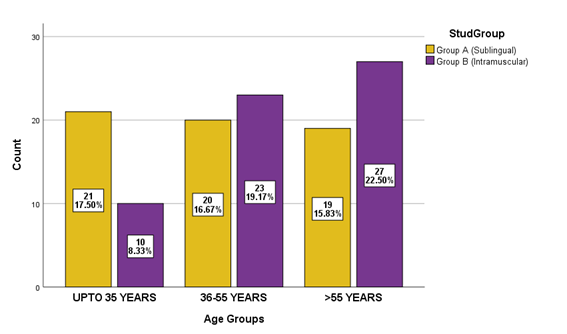
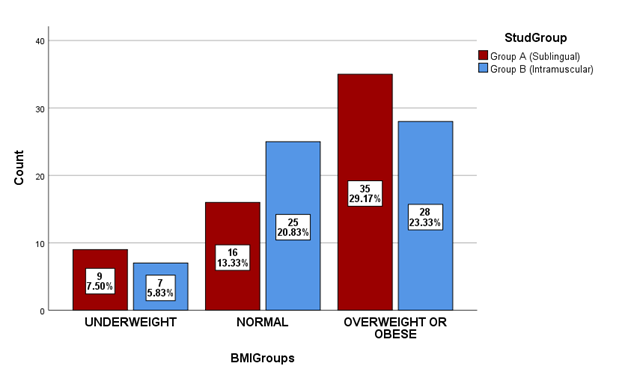
Figure 2. Distribution of patients in various BMI categories
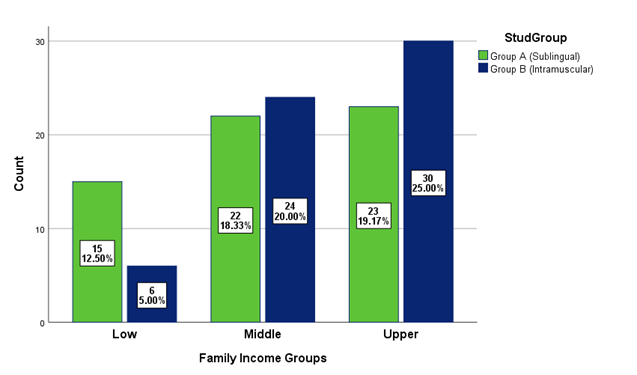
Figure 3. Distribution of patients in various family income categories
Regarding the primary outcome of the present study, we observed that the post-treatment serum vitamin B12 concentrations were significantly higher in the intramuscular group than in the sublingual group. The mean post-treatment B-12 was 498.80±75.96 pg/mL Group A and 987.22±188.87 pg/mL Group B, which shows a highly statistically significant difference between the both study arms (p < 0.001). Stratified analysis showed that the intramuscular group had consistently higher post-treatment serum vitamin B12 levels than the sublingual group in all the studied subgroups, including gender, age, body mass index (BMI) category, residential status, smoking status, dietary habits, occupational status and family income. The difference was also statistically significant across all the strata with p-value < 0.05 across all the study confounders. Detailed analysis of stratification is enlightened in table 3.
Table 3. Stratified analysis of post-treatment vitamin B12 levels by study covariates
|
Stratification variable |
Group A (Sublingual) Mean ± SD |
Group B (Intramuscular) Mean ± SD |
p-value |
|
|
Gender |
Male |
492.06±73.09 |
989.02±178.63 |
<0.001 |
|
Female |
480.04±63.65 |
983.88±180.83 |
<0.001 |
|
|
Age group |
Up to 35 years |
480.76±78.91 |
1003.58±168.61 |
<0.001 |
|
36–55 years |
484.40±65.37 |
990.55±170.99 |
<0.001 |
|
|
>55 years |
496.79±63.45 |
976.80±192.98 |
<0.001 |
|
|
BMI group |
Underweight |
506.14±41.82 |
984.66±119.43 |
<0.001 |
|
Normal weight |
479.86±77.05 |
972.18±154.92 |
<0.001 |
|
|
Overweight/obese |
485.43±71.48 |
999.82±210.95 |
<0.001 |
|
|
Residential status |
Urban |
486.79±61.19 |
961.93±170.25 |
<0.001 |
|
Rural |
487.37±78.73 |
1020.98±186.73 |
<0.001 |
|
|
Smoking status |
Smoker |
488.39±65.82 |
972.18±204.10 |
<0.001 |
|
Non-smoker |
486.03±72.32 |
997.51±157.86 |
<0.001 |
|
|
Dietary habits |
Mainly meat |
494.60±76.47 |
999.97±158.88 |
<0.001 |
|
Mainly vegetables |
495.68±48.66 |
932.66±220.72 |
<0.001 |
|
|
Balanced/mixed |
472.17±75.20 |
1007.99±173.10 |
<0.001 |
|
|
Occupational status |
Employed |
500.00±76.28 |
972.46±159.40 |
<0.001 |
|
Unemployed |
471.22±56.33 |
998.85±194.83 |
<0.001 |
|
|
Family income group |
Low |
486.26±59.86 |
943.47±235.78 |
0.005 |
|
Middle |
473.83±65.44 |
1004.82±156.42 |
<0.001 |
|
|
Upper |
500.21±77.77 |
980.52±186.83 |
<0.001 |
|
DISCUSSION:
In this study both sublingual and intramuscular administration of vitamin B12 supplementation improved biochemical status; however, the intramuscular route resulted in a significantly greater post-treatment rise in serum vitamin B12 following 4 weeks of treatment. These findings are biologically plausible in our study setting, as the symptomatic adults with definite biochemical deficiency at baseline predominantly made up the enrolled population and the primary endpoint was evaluated relatively early in the course of therapy when the pharmacokinetic superiority of parenteral therapy would be expected to be most apparent. Intramuscular administration avoids possible variability in gastrointestinal absorption, mucosal absorption, treatment technique and day-to-day adherence, which yield a more rapid and predictable replenishment of circulating cobalamin [10]. In addition, our cohort represents a real-life data from local population with a wide range of variation in age, BMI, diet, smoking status and socioeconomic background. In such heterogeneous populations, there may be an advantage in the supervised intramuscular treatment for short-term biochemical repletion, particularly where there may be underlying nutritional deprivation, delayed presentation or mixed aetiologies of deficiency. The homogeneity of our stratified analysis also adds weight to our finding that the better biochemical response with intramuscular treatment was not limited to a particular demographic or lifestyle subgroup.
Our results are consistent with several interventional studies showing an increase in serum cobalamin concentration with parenteral vitamin B12. Tandon et al. in their study, showed significantly higher increase in serum vitamin B12 and hemoglobin with parenteral therapy than oral therapy, suggesting that the route of administration of vitamin B12 can materially affect the early hematologic and biochemical recovery [11]. Likewise, Sezer et al. found that post-treatment serum vitamin B12 levels were numerically higher in the parenteral arm [12]. Metaxas et al. in a randomized primary care trial also collected data on a more pronounced initial biomarker response with intramuscular therapy although metabolic markers normalized in both arms and patient preference favoured the oral route [13]. These studies reinforce the interpretation that intramuscular treatment may be particularly beneficial when the goal is rapid biochemical correction over a short follow-up period as was done in our study.
At the same time, our results are different from some influential studies. Kuzminski et al. demonstrated that high-dose oral doses of cyanocobalamin were as effective as intramuscular therapy for 4 months [14]. Similarly, the OB12 trial by Sanz-Cuesta et al found that oral therapy was not inferior to intramuscular therapy for normalisation of vitamin B12 levels at 8 [15]. In postoperative bariatric populations, Schijns et. al. and Ramos et. al. both reported no significant difference in vitamin B12 status using oral supplementation as compared to intramuscular replacement and achieved results that were comparable [16,17]. Collectively, these reports suggest that non-parenteral therapy can be effective, especially high daily doses, longer treatment duration, and normalization as opposed to magnitude of short-term increase. Our study therefore does not negate the value of non-invasive therapy; rather it does suggest that within a 4-week time-frame, intramuscular administration is more likely to elicit a more pronounced biochemical response in symptomatic deficient adults. Bensky et al. in a large retrospective analysis reported that sublingual therapy was sufficient and even seemed superior than intramuscular therapy in restoration of vitamin B12 level [18]. Parry-Strong et al in metformin-treated patients with type 2 diabetes, both sublingual and intramuscular administration of treatment corrected low vitamin B12 concentrations with higher 3-month levels in the sublingual group and no significant difference by 6-months [19]. In the pediatric studies, Tughba-Kartal and Orhan Kilic reported that sublingual therapy was efficacious and similar to intramuscular replacement in the correction of deficiency and hematologic abnormalities [20,21]. A recent systematic review and network meta-analysis by Abdelwahab et al. concluded that intramuscular, oral and sublingual routes all have significant effects on increasing vitamin B12 levels with intramuscular therapy being the highest statistically but without clear clinical superiority [22]. Similarly, the 2025 systematic review and meta-analysis by Mazur et al. found no significant difference in overall effect between the sublingual/oral and intramuscular routes, whilst also stressing that there are large amounts of heterogeneity between the included studies [23]. This heterogeneity is very important in interpreting our results. Studies vary in the age groups, clinical setting, etiology of deficiency, vitamin formulation, dosing intensity, treatment duration and the definitions of outcome. Many "equivalent efficacy" studies had longer follow-up, were high dose daily oral regimens, used pediatric populations, postoperative populations with close follow-up, or looked at outcome based on normalization of serum levels or metabolic biomarkers rather than absolute early increment. Incontrast, our trial was performed in adult patients with overt deficiency in a tertiary-care setting, had a 4-week endpoint, and compared a sublingual therapy with intramuscular therapy in particular. Under these conditions, the post-treatment concentration that was achieved in intramuscular replacement is clinically and methodologically consistent.
The clinical implications of these findings are important for our local population as these patients with clear evidence of biochemical deficiency and symptomatic disease, intramuscular administration of vitamin B12 would seem to be the more efficient option to use if rapid repletion is desired, especially in the early phase of treatment. This may be especially important in patients who are at risk of hematologic compromise, poor follow-up, uncertain adherence or possible malabsorption. However, superiority of intramuscular therapy in short-term biochemical response should not be translated into superiority in all clinical situations. Sublingual therapy is still attractive, because it is non-invasive, more convenient, potential resource-intensive and most likely preferred by a large proportion of patients. Therefore, initial correction with intramuscular therapy may be preferred for the more severe or symptomatic patients, while sublingual therapy may be an alternate choice for the needle averse patients or where access to healthcare is limited.
This study has a number of strengths. First, it addresses a clinically relevant question in adult tertiary care population where comparative evidence on sublingual versus intramuscular vitamin B12 is limited. The randomised design, equal group allocation, clearly defined threshold of vitamin B12 deficiency and consistent superiority of intramuscular therapy in stratified subsets improve the internal consistency of the results. On the other hand, several limitations should be recognized. First, the follow-up period was short and it focused mainly on biochemical response; therefore, no conclusions can be made about the maintenance over time, symptom relief, relapse, and quality of life. Second, metabolic markers such as methylmalonic acid and homocysteine were not measured. Third, the study was done at one center, which may limit generalizability. Fourth, potential etiologic heterogeneity of deficiency was not fully characterized and blinding was not possible because of the nature of the interventions. Despite these limitations, the present study is important due to contributions of important regional evidence and support of intramuscular vitamin B12 as the more potent short-term strategy for biochemical correction, with an important role left open for sublingual therapy for individualized and longer-term treatment pathways.
CONCLUSION:
In conclusion, both sublingual and intramuscular vitamin B12 treatments were effective in improving vitamin B12 status in deficient patients; however, intramuscular administration had a significantly higher biochemical response after 4 weeks of treatment. This superiority was consistent in stratified analyses of age, gender, BMI, residence, smoking, dietary habits, occupational status and income groups. These findings suggest that intramuscular vitamin B12 may be the choice of correction, when one is more interested in a rapid correction, especially in symptomatic adults. Our study provides important regional evidence in support of individualization of route selection based upon the urgency of the clinical problem, patient preference, and feasibility.
REFERENCES:
1. Halczuk K, Kaźmierczak-Barańska J, Karwowski BT, Karmańska A, Cieślak M. Vitamin B12—multifaceted in vivo functions and in vitro applications. Nutrients. 2023;15(12):2734.
2. Mouchaileh N. Vitamin B12 deficiency in older people: a practical approach to recognition and management. J Pharm Pract Res. 2023;53(6):350-8.
3.Gharibzahedi SMT, Moghadam M, Amft J, Tolun A, Hasabnis G, Altintas Z. Recent advances in dietary sources, health benefits, emerging encapsulation methods, food fortification, and new sensor-based monitoring of vitamin B12: a critical review. Molecules. 2023;28(22):7469.
4. Ma’ali A, Naseef H, Qurt M, Abukhalil AD, Rabba AK, Sabri I. The preparation and evaluation of cyanocobalamin mucoadhesive sublingual tablets. Pharmaceuticals. 2023;16(10):1412.
5. Tuğba-Kartal A, Çağla-Mutlu Z. Comparison of sublingual and intramuscular administration of vitamin B12 for the treatment of vitamin B12 deficiency in children. Rev invest clin. 2020;72(6):380-5.
6. Abdelwahab OA, Abdelaziz A, Diab S, Khazragy A, Elboraay T, Fayad T, et al. Efficacy of different routes of vitamin B12 supplementation for the treatment of patients with vitamin B12 deficiency: a systematic review and network meta-analysis. Ir J Med Sci. 2024;193(3):1621-39.
7. Obeid R, Andrès E, Češka R, Hooshmand B, Guéant-Rodriguez R-M, Prada GI, et al. Diagnosis, treatment and long-term management of vitamin B12 deficiency in adults: a delphi expert consensus. J Clin Med. 2024;13(8):2176.
8. Bensky MJ, Ayalon-Dangur I, Ayalon-Dangur R, Naamany E, Gafter-Gvili A, Koren G, et al. Comparison of sublingual vs. intramuscular administration of vitamin B12 for the treatment of patients with vitamin B12 deficiency. Drug Deliv Transl Res. 2019;9(3):625-30.
9. Panda P, Kumar A, Shivaram G, Singh R. Management of vitamin B12 Deficiency: A comparative analysis of intramuscular injections vs oral medication. J Mar Med Soc 2024;26:208-11.
10. Wang H, Li L, Qin LL, Song Y, Vidal-Alaball J, Liu TH. Oral vitamin B12 versus intramuscular vitamin B12 for vitamin B12 deficiency. Cochrane Database Syst Rev. 2018 Mar 15;3(3):CD004655. doi: 10.1002/14651858.CD004655.pub3. PMID: 29543316; PMCID: PMC6494183.
11. Tandon R, Thacker J, Pandya U, Patel M, Tandon K. Parenteral vs oral vitamin B12 in children with nutritional macrocytic anemia: a randomized controlled trial. Indian Pediatr. 2022;59(9):683-7.
12. Sezer RG, Akoğlu HA, Bozaykut A, Özdemir GN. Comparison of the efficacy of parenteral and oral treatment for nutritional vitamin B12 deficiency in children. Hematology. 2018;23(9):653-7.
13. Metaxas C, Mathis D, Jeger C, Hersberger KE, Arnet I, Walter P. Early biomarker response and patient preferences to oral and intramuscular vitamin B12 substitution in primary care: a randomised parallel-group trial. Swiss Med Wkly. 2017;147:w14421.
14. Kuzminski AM, Del Giacco EJ, Allen RH, Stabler SP, Lindenbaum J. Effective treatment of cobalamin deficiency with oral cobalamin. Blood. 1998;92(4):1191-8.
15. Sanz-Cuesta T, Escortell-Mayor E, Cura-Gonzalez I, Martin-Fernandez J, Riesgo-Fuertes R, Garrido-Elustondo S, et al. Oral versus intramuscular administration of vitamin B12 for vitamin B12 deficiency in primary care: a pragmatic, randomised, non-inferiority clinical trial (OB12). BMJ Open. 2020;10(8):e033687.
16. Schijns W, Homan J, van der Meer L, Janssen IM, van Laarhoven CJ, Berends FJ, et al. Efficacy of oral compared with intramuscular vitamin B-12 supplementation after Roux-en-Y gastric bypass: a randomized controlled trial. Am J Clin Nutr. 2018;108(1):6-12.
17. Ramos RJ, Mottin CC, Alves LB, Mulazzani CM, Padoin AV. Vitamin B12 supplementation orally and intramuscularly in people with obesity undergoing gastric bypass. Obes Res Clin Pract. 2021;15(2):177-9.
18. Bensky MJ, Ayalon-Dangur I, Ayalon-Dangur R, Naamany E, Gafter-Gvili A, Koren G, et al. Comparison of sublingual vs. intramuscular administration of vitamin B12 for the treatment of patients with vitamin B12 deficiency. Drug Deliv Transl Res. 2019;9(3):625-30.
19. Parry-Strong A, Langdana F, Haeusler S, Weatherall M, Krebs J. Sublingual vitamin B12 compared to intramuscular injection in patients with type 2 diabetes treated with metformin: a randomised trial. N Z Med J. 2016;129(1436):67-75.
20. Tuğba-Kartal A, Çağla-Mutlu Z. Comparison of sublingual and intramuscular administration of vitamin B12 for the treatment of vitamin B12 deficiency in children. Rev Invest Clin. 2020;72(6):380-5.
21. Orhan Kiliç B, Kiliç S, Şahin Eroğlu E, Gül E, Belen Apak FB. Sublingual methylcobalamin treatment is as effective as intramuscular and peroral cyanocobalamin in children age 0-3 years. Hematology. 2021;26(1):1013-7.
22. Abdelwahab OA, Abdelaziz A, Diab S, Khazragy A, Elboraay T, Fayad T, et al. Efficacy of different routes of vitamin B12 supplementation for the treatment of patients with vitamin B12 deficiency: a systematic review and network meta-analysis. Ir J Med Sci. 2024;193(3):1621-39.
23. Mazur M, Ndokaj A, Salerno C, Vallone J, Ardan R, Bietolini S, et al. Efficacy of sublingual and oral vitamin B12 versus intramuscular administration: insights from a systematic review and meta-analysis. Front Pharmacol. 2025;16:1602976.