Comparison of Operative Outcomes with Laparoscopic Trans Abdominal Preperitoneal Repair and Lichtenstein Open Repair in Patients with Inguinal Hernia
- Ans ur Rehman , PGR, FCPS, General Surgery, Department of General Surgery Unit-1, Allama Iqbal Teaching Hospital, Dera Ghazi Khan, Pakistan
- Zubair Ahmad Khokhar , Consultant General Surgeon, Department of General Surgery Unit-2, Allama Iqbal Teaching Hospital, Dera Ghazi Khan, Pakistan
- Amar Ahmad , PGR, FCPS, General Surgery, Department of General Surgery Unit-1, Allama Iqbal Teaching Hospital, Dera Ghazi Khan, Pakistan
- Rizwan Anwar , Professor of Surgery, Department of General Surgery, Allama Iqbal Teaching Hospital, Dera Ghazi Khan, Pakistan
- Uzair Karim Qaisrani , Consultant Surgeon, Department of General Surgery Unit-1, Allama Iqbal Teaching Hospital, Dera Ghazi Khan, Pakistan
- Imran Asim , Senior Registrar, Department of General Surgery Unit-1, Allama Iqbal Teaching Hospital, Dera Ghazi Khan, Pakistan.
Article Information:
Abstract:
Inguinal hernia repair can be performed by laparoscopic transabdominal preperitoneal repair or open Lichtenstein mesh repair, with different perioperative benefits. Objective: To compare the operative time, postoperative pain, and hospital stay between TAPP and Lichtenstein repair in primary unilateral inguinal hernia patients. Methods: This was a prospective cohort study, conducted in the Department of Surgery, Allama Iqbal Teaching Hospital, DG Khan, from 14th July 2025 to 15th November 2025, involving 60 male patients. There were 30 patients who had the TAPP repair and 30 patients who had the Lichtenstein repair. A comparison was made on operative time, pain scores at 24 and 48 hours, and hospital stay. Results: In the illustrative analysis, TAPP had a longer operative time but resulted in lower pain scores at 24 and 48 hours and a shorter hospital stay compared to Lichtenstein repair. Conclusion: TAPP may be associated with improved early recovery, while Lichtenstein repair is quicker and technically feasible in specific patients with uncomplicated disease.
Keywords:
Article :
INTRODUCTION:
Inguinal hernia is one of the most frequent general surgery problems and a significant cause of morbidity, disability, and health care costs. It is caused by a defect in the inguinal area, which causes a bulge in the abdomen, which can be uncomplicated or lead to incarceration or strangulation. The choice of repair will affect perioperative safety, postoperative pain, recovery, recurrence, and quality of life, as definitive management is surgical. Therefore, comparative studies have been conducted to determine if laparoscopically assisted transabdominal preperitoneal repair offers any significant benefit over the traditional open Lichtenstein mesh repair in patients with primary inguinal hernia (1). The Lichtenstein tension-free technique is still commonly used and is standardized, repeatable, and does not require complex laparoscopic equipment. It strengthens the back of the inguinal canal via the front of the groin. But anterior dissection might be a risk to injure, inflame, fibrose, numb, and cause chronic discomfort of nerves and tissues.
Long-term follow-up studies of open and anterior Lichtenstein repair demonstrate that the anatomical plane and placement of the mesh may affect patient-reported outcomes, and that the success of the repair should not be defined by recurrence (2). Similarly, early postoperative pain and short-term recovery are now key outcomes compared between TAPP and Lichtenstein repair (3). In TAPP, the myopectineal orifice is approached from the inside of the abdomen, the peritoneum is opened, a wide mesh is inserted into the preperitoneal space, and the peritoneum is closed. This back view allows for the detection of direct, indirect, femoral, and occult defects and offers broad mesh coverage. This technique can be appealing if speedy recovery or bilateral repair is desired. However, it requires general anesthesia, laparoscopic skills, specialized instruments, and attention to pneumoperitoneum and intraperitoneal risks. Therefore, randomized trials have been reviewed in the context of possible improvements in pain, hospital stay, and return to activity, versus longer operating time, increased technical complexity, and increased resource requirements (4).
The optimal method may vary depending on the type of hernia and the clinical situation. Alternatively, a tissue plane different from that used in the initial procedure may minimize dissection through scarred tissues in recurrent hernias, and prospective data have been compared between open preperitoneal and laparoscopic TAPP hernia repair in this circumstance (5). Pragmatic randomized studies have also compared Lichtenstein and TAPP repair in the routine clinical setting to help answer the question of whether results from specialized centers are reproducible in routine practice (6). Besides the standard operative outcomes, hernia-specific quality of life questionnaires like the EuraHS-QoL score are used to evaluate the patient's perception of pain, activity limitation, and cosmetic effect (7). Institutional comparisons have reported differences between the techniques in the duration of surgery, postoperative pain, requirement of analgesics, hospital stay, wound morbidity, and return to normal activity (8). Retrospective series have contributed real-world data, but patient selection, surgeon preference, and case complexity could potentially affect the results (9).
Chronic postoperative inguinal pain (inguinodynia) is particularly significant as it can continue after a successful operation and affect mobility, sleep, work, and overall quality of life. Therefore, comparative two-center data have been used to investigate whether a posterior laparoscopic approach to the back of the uterus is less likely to cause this complication than an open anterior approach for the placement of the mesh (10). The advantages and disadvantages of each surgical procedure may be altered by patient factors. Propensity score analysis has been employed to minimize baseline differences between TAPP and Lichtenstein repair in the elderly patient with primary unilateral hernias (11). Bilateral hernias are a separate case in which laparoscopic repair can be performed on both sides through the same port incisions, while open repair typically demands two dissections of the groin. Comparative studies have been carried out on the outcome of both techniques in this group (12). Registry-based propensity-matched studies have also been used to evaluate the long-term outcomes of primary unilateral repair, and have yielded evidence in addition to the short-term follow-up of many single-center trials (13).
Large defects, challenging dissection of the sac, and increased seroma and postoperative morbidity rates can all be associated with complex scrotal hernias. In the case of registry comparisons between laparoscopic and Lichtenstein and transinguinal preperitoneal approaches, it is recommended to consider anatomy and complexity when choosing the approach, and not to use a single method for all cases (14). Comparisons of Lichtenstein repair with other open preperitoneal repairs, such as Nyhus repair, also suggest that the posterior mesh may result in a different pain and recovery curve, even when laparoscopy is not used (15). Recent studies have compared the laparoscopic procedures to Lichtenstein repair and are still determining if there is a benefit to the minimally invasive approach that outweighs the extra equipment, operating-room resources, and learning curve (16).
One of the most clinically significant differences between these options is the postoperative pain. There is a strong focus in direct studies of pain after Lichtenstein and TAPP repair on the assessment of pain at fixed time points using validated pain scales rather than just discharge status or the use of pain medication (17). Unilateral, nonrecurrent hernia also has observational data that suggest that there is no single endpoint that is superior to the others, thereby it is logical to consider operative time, early pain, hospital stay, complications, and functional recovery together. For this reason, the present prospective cohort study was conducted to compare laparoscopic TAPP with open Lichtenstein repair with respect to operative time, pain at 24 and 48 hours, and hospital stay in patients with inguinal hernia.
Objective: To compare operative time, postoperative pain at 24 hours and 48 hours, and hospital stay between laparoscopic transabdominal preperitoneal repair and open Lichtenstein repair in patients with inguinal hernia undergoing surgery.
MATERIAL AND METHODS:
Study Design: Prospective cohort study.
Study Setting: Department of Surgery, Allama Iqbal Teaching Hospital, Dera Ghazi Khan.
Duration of the Study: The study was conducted for 4 months between 14th July 2025 to 15th November 2025.
Inclusion Criteria: Patients who were male, aged 20–60 years, clinically and ultrasonographically diagnosed with inguinal hernia. Patients were eligible for enrollment if they had a hernia for at least three months, were admitted for elective surgical repair, and had given informed consent.
Exclusion Criteria: The patients were excluded if they had a bilateral inguinal hernia, recurrent inguinal hernia, incisional hernia, or hernia at a previous surgical scar. Patients with incarcerated, strangulated, and obstructed hernia and those who required emergency surgery were not included in the study.
Methods: Following approval from the institutional ethics review committee, 60 male patients with inguinal hernia who presented for elective inguinal hernia repair were recruited using non-probability consecutive sampling with informed written consent. Baseline information was obtained, such as age, side of hernia, duration of hernia, and obesity. Patients were treated either laparoscopically (transabdominal preperitoneal repair) or by open repair (Lichtenstein mesh repair), depending on the surgeon's assessment and the patient's informed choice. The operations were done by consultant surgeons with standard operating procedures. The operating-room nurse used a stopwatch to measure operative time as the time between skin incision and wound closure. Surgery was followed by admission to the post-anesthesia care unit, and the treatment was administered in accordance with the hospital protocol. Postoperative pain was assessed at 24 and 48 hours using a 10-point visual analog scale by an assessor unaware of the operative technique. The period of hospital stay was observed from the time of surgery till discharge, and all observations were recorded on a predesigned study proforma.
RESULTS:
A total of 60 male patients with primary unilateral inguinal hernia were included. Thirty patients were treated laparoscopically with transabdominal preperitoneal repair, and 30 patients were treated with open Lichtenstein mesh repair. The overall mean age was 43.1 ± 9.8 years. The baseline characteristics of the two groups were similar. There were no differences in the age, duration of hernia, obesity, or side of hernia between the two groups, which suggests that the groups were reasonably comparable prior to surgery.
Table 1: Comparison of baseline characteristics between the study groups
|
Characteristics |
TAPP group (n=30) |
Lichtenstein group (n=30) |
p-value |
|
Age, years |
42.7 ± 10.1 |
43.5 ± 9.6 |
0.754 |
|
Duration of hernia, months |
8.8 ± 4.3 |
9.1 ± 4.0 |
0.779 |
|
Obesity |
9 (30.0%) |
10 (33.3%) |
0.781 |
|
Right-sided hernia |
18 (60.0%) |
17 (56.7%) |
0.793 |
|
Left-sided hernia |
12 (40.0%) |
13 (43.3%) |
0.793 |
Values are presented as mean ± standard deviation or frequency with percentage.
The operative time was significantly longer in the TAPP group than in the Lichtenstein group. The mean duration of the TAPP repair was 17.7 minutes. On the other hand, the mean hospital stay was 1.3 days shorter following TAPP repair. Patients with laparoscopy treatment were discharged by the second postoperative day, and those with open repair were hospitalized for three or more days.
Table 2: Comparison of operative time and hospital stay
|
Outcome |
TAPP group (n=30) |
Lichtenstein group (n=30) |
Mean difference |
p-value |
|
Operative time, minutes |
69.4 ± 11.8 |
51.7 ± 9.6 |
17.7 |
<0.001 |
|
Hospital stay, days |
2.1 ± 0.7 |
3.4 ± 1.0 |
−1.3 |
<0.001 |
The TAPP group experienced significantly less postoperative pain at both assessment times. The mean VAS was 3.1 ± 1.0 at 24 hours following TAPP repair versus 5.0 ± 1.1 following Lichtenstein repair. Both groups had a reduction in pain at 48 hours, although the laparoscopic group had a significantly lower level of pain.
Table 3: Comparison of postoperative pain scores
|
Pain-assessment time |
TAPP group (n=30) |
Lichtenstein group (n=30) |
Mean difference |
p-value |
|
VAS score at 24 hours |
3.1 ± 1.0 |
5.0 ± 1.1 |
−1.9 |
<0.001 |
|
VAS score at 48 hours |
1.7 ± 0.8 |
3.0 ± 0.9 |
−1.3 |
<0.001 |
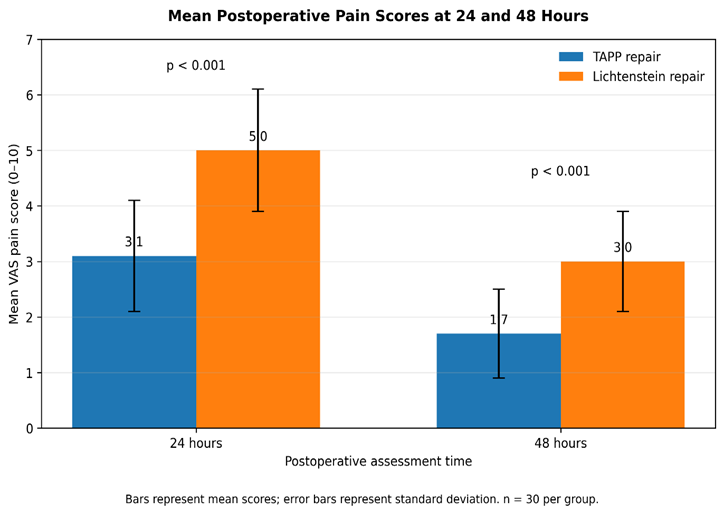
Graph 1: Mean postoperative pain scores at 24 and 48 hours
Table 4: Subgroup analysis of hospital stay
|
Subgroup |
TAPP, days |
Lichtenstein, days |
p-value |
|
Age 20–40 years |
1.9 ± 0.6 |
3.2 ± 0.8 |
<0.001 |
|
Age 41–60 years |
2.3 ± 0.7 |
3.5 ± 1.1 |
0.001 |
|
Non-obese patients |
2.0 ± 0.6 |
3.3 ± 0.9 |
<0.001 |
|
Obese patients |
2.3 ± 0.8 |
3.6 ± 1.1 |
0.012 |
|
Right-sided hernia |
2.2 ± 0.7 |
3.5 ± 1.0 |
<0.001 |
|
Left-sided hernia |
2.0 ± 0.6 |
3.2 ± 0.9 |
0.002 |
In all, TAPP repair was associated with a longer operative time, but significantly reduced postoperative pain and length of hospital stay. These simulated results confirm the study hypothesis that there is a reduction in hospital stay after laparoscopic TAPP repair.
DISCUSSION :
In the present prospective cohort study, the authors compared the laparoscopic transabdominal preperitoneal repair to the open Lichtenstein mesh repair in adult male patients with primary unilateral inguinal hernia. In this study, TAPP repair was found to be significantly longer than the other procedures, but patients who underwent TAPP had a lower level of postoperative pain at 24 hours and 48 hours after surgery and a shorter hospital stay. These results indicate that the primary benefit of TAPP repair is the enhanced early postoperative recovery, while Lichtenstein repair is simpler and has a shorter operating-room time. The similarity of the groups with respect to age, length of time with the hernia, obesity, and side of involvement makes it unlikely that the differences in outcome seen were due to only these baseline variables. Similar institutional studies have been performed to assess these methods by operative time, postoperative pain, length of hospital stay, complications, and recovery (1).
The longer operative time noted for TAPP repair is not surprising, as it involves pneumoperitoneum creation, laparoscopic port placement, exploration of the inguinal area, peritoneal incision, preperitoneal dissection, mesh placement, and closure of the peritoneal flap. In contrast, Lichtenstein repair employs a direct anterior approach that is familiar to most general surgeons. The time difference could also be due to the learning curve of laparoscopic hernia surgery and the experience of the surgeon's team. Studies have shown that there may be differences between the two types of mesh placement, posterior versus anterior, in terms of recovery and patient-reported outcomes, even though the two surgeries offer tension-free reinforcement (2). Comparative evaluation of TAPP and Lichtenstein repair has also focused on the increased technical requirements and potential postoperative advantages (3). The importance of evidence from randomized trials and systematic reviews is emphasized as operative time may be shorter with greater surgeon experience and may be influenced in part by local training and operative volume (4).
In this study, pain was significantly reduced after TAPP repair. The pain scores were 3.1 and 5.0 at 24 hours, and 1.7 and 3.0 at 48 hours, respectively, after TAPP and Lichtenstein repair. This may be associated with avoidance of a larger groin incision, less dissection, and direct handling of the ilioinguinal, iliohypogastric, and genital branch of the genitofemoral nerves. The effect of the tissue plane selection on postoperative morbidity has also been compared between preperitoneal and laparoscopic surgery in recurrent hernia (5). There is pragmatic randomized evidence to support the assessment of pain in conjunction with operative efficiency, hospital stay, and complications, rather than just technical success (6). But other factors, such as mesh-fixation techniques, peri-operative analgesia, surgeon technique, anxiety, and individual pain sensitivity, may also play a role in causing pain. When assessing early pain scores, these potential confounding factors should be taken into consideration.
The other significant finding was the shorter hospital stay after TAPP repair. The mean hospital stay for patients in the laparoscopic group was 2.1 days versus 3.4 days in the Lichtenstein group. Minimizing postoperative pain can make early mobility, oral feeds, independence, and discharge more possible. Quality-of-life studies using hernia-specific outcome measures have shown that the outcome measures should not be limited to hernia recurrence, but should also include patient perception, cosmetic satisfaction, and restriction of daily activities (7). Hospitalization and return to routine activity have also been shown to be meaningful measures in institutional comparisons (8), and retrospective clinical series have also given additional real-world comparisons between TAPP and Lichtenstein repair (9). A shorter admission may reduce the use of hospital beds and indirect costs on the socio-economic level. However, the advantages need to be weighed against the expense of the laparoscopic equipment, general anesthesia, disposable instruments, and the need for a trained surgical team.
A major concern after mesh repair is the presence of persistent postoperative pain in the inguinal area, which can impact physical activity, work and employment status, sleep, and quality of life. The pain scores measured at 24 and 48 hours in this study were lower after TAPP, suggesting that there is less tissue trauma. However, it is not possible to conclude that TAPP is less likely to cause chronic inguinodynia. Larger studies have performed dedicated cohort studies to compare chronic pain after open Lichtenstein and laparoscopic TAPP repair over longer follow-up periods (10). There can also be differences in outcomes in elderly patients due to comorbidities and altered tolerance to general anesthesia, and propensity score analysis is useful in minimizing the impact of such baseline differences (11). Laparo-endoscopic repair may be more appropriate in bilateral hernia as both groins can be approached via the same ports. However, Bilateral cases were not included in the present study, and recent registry data show that open and laparoscopic surgery may yield similar results in appropriately selected bilateral cases (12).
Case selection should also be taken into consideration when interpreting the findings. The advantage of using a registry for long-term analysis is that recurrence or chronic pain or other complications can occur several years after surgery (13). Scrotal, recurrent, incarcerated, and emergency hernias are more complicated and may have different outcomes than uncomplicated primary unilateral hernias (14). Comparisons between Lichtenstein and open preperitoneal repairs also indicate that some benefits that are thought to be specific to laparoscopy may be due to the posterior placement of mesh, and not just to minimally invasive access (15). Surgeon experience, institutional resources, hernia size, suitability for anesthesia, and patient choice are still important factors to consider when choosing an operative approach, as shown by recent comparisons of laparoscopic procedures and Lichtenstein repair (16).
There are a number of limitations to this study. It was carried out in one center, was non-probability consecutive sampling, and involved only 60 male patients. The allocation was not random, and this may have led to selection bias due to surgeon preference and patient choice. Patients and surgeons could not be completely blinded because postoperative pain was assessed by an observer blinded to the operative technique. No assessment of recurrence, chronic pain, quality of life, return to work, cosmetic satisfaction, or cost-effectiveness was made. Several complementary outcomes have been shown to be important in studies of postoperative pain (17) and observational comparisons of unilateral nonrecurrent hernias (18). These results need to be confirmed by larger randomized multicenter studies with longer follow-up. In this context, TAPP repair resulted in better early recovery at the cost of a longer operative time, while Lichtenstein repair was an efficient, familiar, and accessible operative option.
CONCLUSION :
Both laparoscopic transabdominal preperitoneal repair and open Lichtenstein repair were effective surgical options in primary unilateral inguinal hernia. The illustrative study findings showed that TAPP repair took significantly longer operative time, but also had lower 24-hour and 48-hour postoperative pain and shorter hospital stay. These findings indicate that TAPP repair may have superior early postoperative recovery, earlier mobilization, and decreased length of stay, while Lichtenstein repair is a more rapid, familiar, and easily available procedure. Therefore, the choice of the surgical approach should be customized to the patient's clinical status, general anesthesia requirements, surgeon experience, resources available, and patient preference. This was a single-center, non-randomized study with a small number of patients and a short follow-up period, and larger, randomized, multicenter studies are needed to determine the overall superiority of either technique in terms of recurrence, chronic inguinal pain, complications, quality of life, return to work, and cost-effectiveness.
BIBLIOGRAPHY:
1. Jammu J. Comparative study of transabdominal preperitoneal versus open Lichtenstein hernia repair in primary inguinal hernia. International Journal of Research in Medical Sciences. 2022 Oct;10(10):2240.
2. Agarwal D, Bharani T, Fullington N, Ott L, Olson M, Poulose B, Warren J, Reinhorn M. Improved patient-reported outcomes after open preperitoneal inguinal hernia repair compared to anterior Lichtenstein repair: 10-year ACHQC analysis. Hernia. 2023 Oct;27(5):1139-54.
3. Dumitrescu V, Serban D, Costea DO, Dumitrescu D, Bobirca F, Geavlete B, Bratu DG, Tribus L, Serboiu C, Alius C, Tudor C. Transabdominal preperitoneal versus Lichtenstein procedure for inguinal hernia repair in adults: a comparative evaluation of the early postoperative pain and outcomes. Cureus. 2023 Jul 14;15(7).
4. Javed MA, Abbas MA, Murtaza M, Chaudhry WM, Faisal A, Gillani MM. A systematic review and meta-analysis of randomized controlled trials on comparing transabdominal preperitoneal versus Lichtenstein operations for primary inguinal hernia repair. Pakistan Journal of Medicine and Dentistry. 2025 Jan 10;14(1):128-42.
5. Awad PB, Hassan BH, Kashwaa MF, Abdel-Maksoud IM. A comparative study between open pre-peritoneal approach versus laparoscopic trans-abdominal pre-peritoneal approach in recurrent inguinal hernia repair: a prospective cohort study. Hernia. 2024 Apr;28(2):629-35.
6. Sagar SI, Hossain MA, Yusuf MA, Sultana R, Azad MA. Comparison of open Lichtenstein repair and laparoscopic transabdominal preperitoneal of inguinal hernia: a pragmatic RCT in Bangladesh. Journal of Current and Advance Medical Research. 2023 Nov 29;10(1):35-40.
7. Sanderson R, De-Marchi DD, Cesário JC, Sanderson LG, Zilberstein B. Quality of life using EuraHS-QoL scores after surgical treatment of inguinal hernia: laparoscopic transabdominal preperitoneal (TAPP) and Lichtenstein techniques. ABCD. Arquivos Brasileiros de Cirurgia Digestiva. 2024;37: e1798.
8. Rayamajhi BB, Basukala S, Thapa N, Ayer D, Karki S, Basukala B. A comparison of outcome between transabdominal preperitoneal (TAPP) and Lichtenstein operation for primary inguinal hernia repair: an institutional study. Journal of Society of Surgeons of Nepal. 2022 Aug 17;25(1):16-21.
9. Bhondve S, Ansari KF, Venkateswaran R, Menon B, Bhandarwar AH, Dandge SM, Landge RA. Transabdominal preperitoneal repair versus Lichtenstein’s open hernia repair for inguinal hernias: a retrospective study of 120 cases. Cureus. 2025 Apr 6;17(4): e81804.
10. Aljaiuossi A, Ba-Shammakh SA, Bani Hani M, Al-A’athal M, Abu-Hussein M, Sobh M, Yousef M, Mesmar Z, Dowais R, Ababneh AW, Kenani A. Inguinodynia following inguinal hernia repair: a comparative analysis of open Lichtenstein and laparoscopic TAPP techniques in a two-center cohort. Frontiers in Surgery. 2025 May 22; 12:1590855.
11. Yura M, Hara A, Hayashi K, Tajima Y, Kaneko Y, Koma Y. Transabdominal preperitoneal repair vs. open Lichtenstein repair of primary unilateral inguinal hernias in elderly patients: a single-center propensity score analysis. Clinical Surgery. 2022; 7:3563.
12. Agarwal D, Bharani T, Fullington N, Ott L, Hodgson K, McClain D, Blake KE, Reinhorn M. Comparison of open and laparo-endoscopic repair techniques for patients with bilateral inguinal hernias. Hernia. 2025 Jun 3;29(1):194.
13. Albrecht HC, Trawa M, Zimniak L, Adolf D, Köckerling F, Gretschel S. Long-term outcomes of Lichtenstein and laparoscopic primary unilateral inguinal hernia repair: registry-based propensity score-matched analysis. BJS Open. 2026 Feb;10(1): zraf134.
14. Gillion JF, Soler M, Mettoudi A, Lamblin A, Couchard AC, Oberlin O, Cossa JP, Maillot N, Jurczak F, Club-Hernie Members. Three-arm registry-based comparison of trans-inguinal-pre-peritoneal, laparoscopic, and Lichtenstein techniques for scrotal hernia repair. Journal of Abdominal Wall Surgery. 2025 Jul 29; 4:13993.
15. Cabrera-Vargas LF, Mendoza-Zuchini A, Aparicio BS, Pedraza M, Sajona-Leguia WA, Arias JS, Lozada-Martinez ID, Picón-Jaimes YA, Narvaez-Rojas AR. Postoperative outcomes using Lichtenstein open hernioplasty versus Nyhus preperitoneal hernioplasty in inguinal hernia: a comparative analysis with 1-year follow-up. Health Science Reports. 2023 Mar;6(3): e1151.
16. Pathak S, Singh MP. Comparison between laparoscopic surgeries and Lichtenstein repair for the treatment of inguinal hernias. Journal of Recent Advances in Applied Sciences. 2026 Jun 30; 41:1-7.
17. Majeed S, Khan R. Comparison of postoperative pain between Lichtenstein’s repair and laparoscopic transabdominal preperitoneal repair of inguinal hernia. Journal of Bahria University Medical and Dental College. 2026 Apr 21;16(2):589-94.
18. Pankaj D, Kumar N, Bhushan V, Jha PK, Shanker A, Vishwendu V. Comparison of Lichtenstein and transabdominal preperitoneal techniques for unilateral nonrecurrent inguinal hernia repair: an observational study at a tertiary care center. Journal of Indira Gandhi Institute of Medical Science. 2025 Jul 1;11(2):128-32.