Association Between Polypharmacy and Health-Related Quality of Life in Patients with Liver Cirrhosis
- Muhammad Masood Khoso , Senior Registrar Department of Gastroenterology Jinnah Postgraduate Medical Centre (JPMC), Karachi
- Kartik Kumar Rathi , MBBS Student Jinnah Sindh Medical University, Karachi, Pakistan
- Shaheer Zafar , MBBS Student
Article Information:
Abstract:
Objective: To determine the association between polypharmacy and health-related quality of life (HRQoL) among adults with liver cirrhosis presenting to tertiary care hospitals in Pakistan. Material & Methods: A descriptive cross-sectional study was conducted in the Departments of Gastroenterology of tertiary care hospitals in Pakistan after obtaining institutional ethical approval. Between November 2020 and May 2021, 384 adults with confirmed liver cirrhosis were enrolled using a non-probability consecutive sampling technique. Demographic, clinical, and medication-related data were collected using a structured proforma. Polypharmacy was defined as the concurrent use of five or more medications, while HRQoL was assessed using the Chronic Liver Disease Questionnaire (CLDQ). Multivariable logistic regression analysis was performed to identify independent predictors of poor HRQoL. Results: The mean age was 54.8 ± 12.6 years, and 238 (62.0%) participants were male. Polypharmacy was identified in 221 (57.6%) participants, while 163 (42.4%) had poor HRQoL. Poor HRQoL was significantly more common among participants with polypharmacy than those without (54.8% vs. 25.8%; p<0.001). On multivariable analysis, polypharmacy (aOR=3.18, 95% CI: 1.96–5.16), Child–Pugh class C (aOR=2.74, 95% CI: 1.63–4.61), diabetes mellitus (aOR=2.09, 95% CI: 1.29–3.39), and hepatic encephalopathy (aOR=2.47, 95% CI: 1.40–4.36) were independent predictors of poor HRQoL. Conclusion: Polypharmacy was independently associated with impaired health-related quality of life among adults with liver cirrhosis. Regular medication review and multidisciplinary care may reduce medication burden and improve patient-reported outcomes.
Keywords:
Article :
INTRODUCTION:
Liver cirrhosis is the end stage of chronic liver disease and continues to be an important cause of morbidity and mortality worldwide. Portal hypertension, hepatic insufficiency, and multiple systemic complications requiring complex pharmacological management develop as a result of progressive hepatic fibrosis (1). As a consequence, the availability of new drugs has resulted in patients with cirrhosis often taking multiple medications to treat not only complications due to this disease (e.g., ascites, hepatic encephalopathy, variceal bleeding and spontaneous bacterial peritonitis) but also other comorbidities. While these medications are critical in controlling the disease, multiple medications may put patients at increased risk for adverse drug reactions (ADRs), drug–drug interactions (DDIs), medication non-adherence and treatment burden, all of which could adversely affect a patient's health-related quality of life (HRQoL) (2, 3).
Cirrhosis of the liver is responsible for over a million deaths worldwide each year and is one of the top-ranking etiologies for premature death around the globe. Polypharmacy—defined as the concomitant use of 5 or more medications—is present in almost 40–70% of patients with chronic liver disease (4), and is an even greater problem for those who have advanced cirrhosis. Polypharmacy has been linked to a higher risk of hospital admission; medication-related complications and frailty; as well as lower HRQoL in international studies. These challenges are more pronounced in patients with decompensated cirrhosis who frequently require long-term, multidrug therapy (5).
Pakistan has one of the highest disease burdens for chronic liver disease, largely due to chronic hepatitis B and C virus infection. With one of the highest hepatitis C endemicities worldwide, leading to more patients presenting with liver cirrhosis and its complications (6). While the use of polypharmacy in this population is very common, there is little relevant local data assessing polypharmacy's impact on HRQoL, and those conducted have often focused more on clinical outcomes than patient-reported health status.
Given that the relationship between polypharmacy and HRQoL is not established, the current research contributes to optimizing pharmacotherapy, reducing medication-related harm, and improving patient-centered care. Availability of data from Pakistan in this regard is limited, especially for patients presenting to tertiary care hospitals. Thus, the current study was performed to identify the relationship between polypharmacy and health-related quality of life among cirrhosis patients in order to provide locally relevant evidence that informs potential rational prescribing practices and multidisciplinary intervention-based strategies which could aid in silencing barriers for optimizing clinical and quality-of-life outcomes.
METHODOLOGY:
This was a descriptive cross-sectional study conducted in the Department of Gastroenterology of tertiary care hospitals from Karachi and Hyderabad, Pakistan, over a period of 06 months after approval by the Institutional Ethical Review Committee from 1st November 2020 to 31st May 2021. This study aimed to establish the association between polypharmacy and health-related quality of life (HRQoL) in patients with liver cirrhosis.
The sample size for the study was calculated using the WHO Sample Size Calculator based on assumptions of a 95% confidence level, 5% margin of error, and activity prevalence of polypharmacy in patients with chronic liver disease to be either 50%, based on existing literature (7). Based on the calculations, the minimal sample size needed was 384 subjects. Patients were consecutively recruited through a non-probability consecutive sampling method until number of patients had fulfilled the required sample size was fulfilled, accounting for incomplete questionnaires, missing clinical records, and participant opt-out.
Inclusion Criteria
Patients of both sexes, aged 18 years and older with a diagnosis of liver cirrhosis were included. Cirrhosis was diagnosed by consultant gastroenterologists, based on compatible clinical findings where possible in conjunction with radiological (abdominal ultrasonography and/or transient elastography, if available), laboratory and/or histopathological evidence where necessary. We also included patients who were on one or more regularly prescribed medicines and also gave written informed consent.
Exclusion Criteria
Eight patients were younger than 18 years, one had acute liver failure, three suffered from hepatocellular carcinoma, two were post-liver transplantation, nine had severe hepatic encephalopathy not allowing filling in of questionnaires due to the patient's condition, two had active gastrointestinal bleeding requiring emergency intervention, and one was pregnant (Figure 1). Patients with advanced chronic kidney disease requiring dialysis (n = 54), severe psychiatric illness (n = 7), terminal malignancy (n = 60), or cognitive impairment preventing reliable interview (n = 21) were also excluded.
Data Collection
Appropriate data were collected by making use of a predesigned proforma by the principal investigator and trained research assistants with the written informed consent from all participants. Demographic details like age, sex, marital status, education level, occupation and occupational exposure (high–low risk), socioeconomic status, urban/rural residence, smoking habits and alcohol history were also collected along with family history of chronic liver disease.
Clinical data included etiology of liver cirrhosis (hepatitis C virus, hepatitis B virus, non-alcoholic fatty liver disease, alcohol-related liver disease, autoimmune liver disease or other cause); duration of liver disease; Child–Pugh class; Model for End-stage Liver Disease (MELD) score if available; history of hepatic encephalopathy, ascites, spontaneous bacterial peritonitis (SBP), esophageal varices and variceal bleeding; hepatorenal syndrome; diabetes mellitus; hypertension chronic kidney disease; cardiovascular diseases and other relevant comorbidities.
Medication history was obtained by interviewing the patients directly as well as from prescription records and hospital medical files. Regular medications were recorded (including diuretics, non-selective beta-blockers, lactulose, rifaximin, proton pump inhibitors, antibiotics, antiviral agents, absorption supplements such as vitamin E and B), antidiabetic medication, antihypertensive drug dosage, concurrent therapy, and ferritin levels at baseline.
Health-related quality of life was measured with the validated Chronic Liver Disease Questionnaire (CLDQ) (8). The CLDQ assesses 6 domains: abdominal symptoms, fatigue, systemic symptoms, activity, emotional function, and worry. It was given to participants under the guidance of trained research staff to ensure completeness and accuracy in filling it out. Standardized scoring guidelines were used based on the criteria outlined in the CLDQ manual for calculating domain scores and overall HRQoL scores.
Statistical Analysis
We used the Statistical Package for the Social Sciences (SPSS) version 26.0 (IBM Corp., Armonk, NY, USA) software to enter and analyze the data. Normality of continuous variables was evaluated using the Shapiro–Wilk test, and data were expressed as mean ± standard deviation (SD) or median (interquartile range [IQR]) where appropriate. For categorical variables, frequencies and percentages were summarised. The independent samples t-test or Mann–Whitney U test for continuous variables and the Chi-square test or Fisher's exact test for categorical variables were used to compare participants with and without polypharmacy. The Chronic Liver Disease Questionnaire (CLDQ), a validated HRQoL measure,35 was analyzed both as continuous domain scores and dichotomized into poor versus good HRQoL with the study-defined cutoff. A multivariable binary logistic regression model was calculated to identify independent predictors of poor HRQoL: variables with a p-value <0.20 on univariate analysis, along with clinically relevant covariates. Results were presented as aOR with 95% CI. The final model goodness-of-fit was tested using the Hosmer–Lemeshow test. All analyses were 2-tailed, with a p-value <0.05 denoting statistical significance.
RESULTS:
A descriptive cross-sectional study was conducted among 384 adults with liver cirrhosis. The median age was 54.8 ± 12.6 years, and the majority were aged 51–65 years (171, 44.5%). Among them, 238 (62.0%) were male and 146 (38.0%) females. Polypharmacy (≥5 prescribed medications) was present in 221 (57.6%) participants. A total of 163 (42.4%) subjects demonstrated a poor health-related quality of life (HRQoL) based on the Chronic Liver Disease Questionnaire (CLDQ). The leading aetiology was hepatitis C virus infection (182, 47.4%), followed by hepatitis B virus infection (89, 23.2%) and others (113, 29.4%). Of these participants, 147 (38.3%) and 92 (24.0%) had Child–Pugh class B and C disease, respectively. Diabetes mellitus and hypertension were reported in 149 (38.8%) and 137 (35.7%) participants, respectively. Table 1
Table 1. Baseline demographic and clinical characteristics of study participants (n = 384)
|
Variable |
Frequency (%) |
|
Age Group (Years) |
|
|
18–35 |
46 (12.0) |
|
36–50 |
75 (19.5) |
|
51–65 |
171 (44.5) |
|
>65 |
92 (24.0) |
|
Gender |
|
|
Male |
238 (62.0) |
|
Female |
146 (38.0) |
|
Polypharmacy (≥5 medications) |
221 (57.6) |
|
Poor HRQoL (CLDQ) |
163 (42.4) |
|
Etiology of Cirrhosis |
|
|
Hepatitis C virus |
182 (47.4) |
|
Hepatitis B virus |
89 (23.2) |
|
Other causes |
113 (29.4) |
|
Child–Pugh Class B |
147 (38.3) |
|
Child–Pugh Class C |
92 (24.0) |
|
Diabetes Mellitus |
149 (38.8) |
|
Hypertension |
137 (35.7) |
Participants with polypharmacy demonstrated significantly poorer health-related quality of life than those without polypharmacy. Poor HRQoL was observed in 121 (54.8%) participants with polypharmacy compared with 42 (25.8%)participants without polypharmacy (p < 0.001). Polypharmacy was also significantly associated with Child–Pugh class C disease, diabetes mellitus, hypertension, and hepatic encephalopathy. Detailed associations are presented in Table 2.
Table 2. Association between polypharmacy and clinical characteristics
|
Variable |
Polypharmacy n (%) |
No Polypharmacy n (%) |
p-value |
|
Poor HRQoL (CLDQ) |
121 (54.8) |
42 (25.8) |
<0.001 |
|
Child–Pugh Class C |
67 (30.3) |
25 (15.3) |
0.001 |
|
Diabetes Mellitus |
101 (45.7) |
48 (29.4) |
0.002 |
|
Hypertension |
93 (42.1) |
44 (27.0) |
0.003 |
|
Hepatic Encephalopathy |
58 (26.2) |
24 (14.7) |
0.009 |
|
Ascites |
96 (43.4) |
51 (31.3) |
0.018 |
Figure 1 demonstrates that participants receiving polypharmacy had a substantially higher prevalence of poor health-related quality of life than those without polypharmacy (54.8% vs. 25.8%; p<0.001), highlighting the significant negative impact of medication burden on patient-reported outcomes.
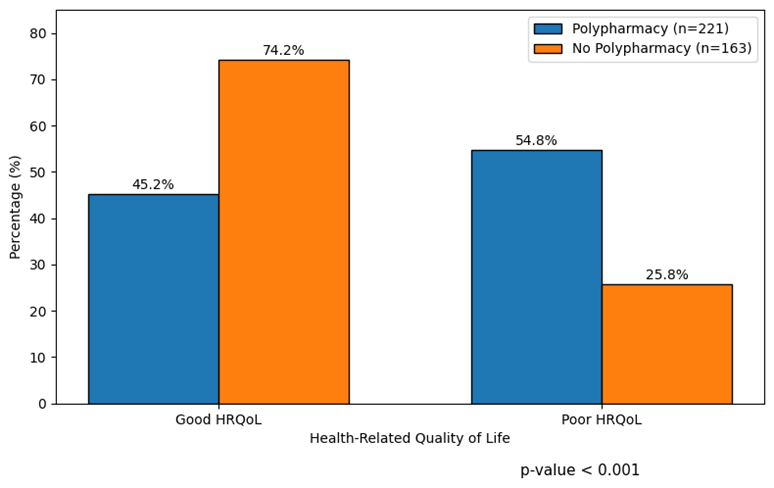
Figure 1. Distribution of health-related quality of life according to polypharmacy status
Multivariable logistic regression analysis demonstrated that polypharmacy remained an independent predictor of poor HRQoL after adjustment for age, sex, Child–Pugh class, diabetes mellitus, hypertension, and hepatic encephalopathy. Participants with polypharmacy had 3.18-fold greater odds of poor HRQoL (AOR: 3.18; 95% CI: 1.96–5.16; p < 0.001). Child–Pugh class C, diabetes mellitus, and hepatic encephalopathy were also independently associated with poor HRQoL, whereas hypertension showed borderline significance.
Table 3. Multivariable logistic regression analysis for predictors of poor health-related quality of life
|
Variable |
Reference Category |
Adjusted Odds Ratio (aOR) |
95% Confidence Interval |
p-value |
|
Polypharmacy (≥5 medications) |
<5 medications |
3.18 |
1.96–5.16 |
<0.001 |
|
Child–Pugh Class C |
Class A/B |
2.74 |
1.63–4.61 |
<0.001 |
|
Age ≥65 years |
<65 years |
1.58 |
0.94–2.67 |
0.084 |
|
Male sex |
Female |
1.12 |
0.70–1.79 |
0.632 |
|
Diabetes Mellitus |
No |
2.09 |
1.29–3.39 |
0.003 |
|
Hypertension |
No |
1.54 |
0.96–2.47 |
0.072 |
|
Hepatic Encephalopathy |
No |
2.47 |
1.40–4.36 |
0.002 |
Dependent variable: Poor health-related quality of life (CLDQ score below the study-defined cutoff).
Abbreviations: aOR, adjusted odds ratio; CI, confidence interval; HRQoL, health-related quality of life; CLDQ, Chronic Liver Disease Questionnaire; BMI, body mass index.
DISCUSSION :
The current study examined the relationship between polypharmacy and health-related quality of life (HRQoL) in adults with liver cirrhosis. Polypharmacy was ascertained in 57.6% of the participants, and poor HRQoL was observed in 42.4% of the participants. Polypharmacy was strongly associated with both poor HRQoL (54.8% vs. 25.8%, p<0.001), and, following multivariable adjustment, polypharmacy was the strongest independent predictor of poor HRQoL (aOR=3.18, 95% CI: 1.96–5.16). Our findings highlight the significant burden of medication-associated complexity among patients with chronic liver disease.
The high level of polypharmacy seen in this study is in line with European, North American, and Asian data reporting that 40–70% of cirrhotic patients were on ≥5 medications (9-11). This high prevalence is not surprising because cirrhotic patients often need multiple therapies for portal hypertension, ascites, hepatic encephalopathy, variceal bleeding prophylaxis, diabetes, hypertension, and other comorbidities. Robust studies indicate that increased medication burden is associated with reduced treatment adherence, adverse drug reactions, drug-drug interactions, and increased healthcare utilization, all hurting quality of life.
Polypharmacy had a strong association with HRQoL, which was a key finding of the current study. Only 25.8% of patients in the non-polypharmacy cohort exhibited poor HRQoL, while among the patients receiving polypharmacy, the prevalence of poor HRQoL was 54.8%. This result is consistent with previous studies showing significant associations between medication burden and health-related quality of life among patients with chronic liver disease, particularly physical functioning, emotional role, fatigue, and social functioning. Having to potentially take multiple prescribed medications each day has the potential to exacerbate treatment fatigue, financial burden, pill burden, and worry of side effects, and, ultimately, lower a patient's perceived health-related quality of life (12-14).
Moreover, polypharmacy retained statistical significance as an independent predictor of poor HRQoL after adjusting for potential confounders.
Odds of poor HRQoL were more than three times higher among participants receiving five or more medications. The biological relevance and clinical plausibility of this observation are further supported by the fact that advanced liver dysfunction can both profoundly change drug metabolism and render patients more susceptible to adverse drug reactions and medication-related complications (15). These findings confirm previous evidence highlighting the importance of performing regular reviews of medications and undertaking deprescribing whenever clinically appropriate.
Disease severity also influenced HRQoL. Poor HRQoL was significantly associated with Child–Pugh class C cirrhosis, with an almost 2.7-fold increased odds of poor HRQoL in patients with Child–Pugh class C cirrhosis compared with patients with less severe disease. As progressive hepatic dysfunction correlates with recurrent hospitalizations, ascites, muscle wasting, hepatic encephalopathy and functional impairment, this is to be expected. Likewise, diabetes mellitus and hepatic encephalopathy were independently associated with poor HRQoL, highlighting the extended physical and psychological burden posed by these comorbidities (14, 16, 17). Hypertension was associated with poor HRQoL in univariate analysis but did not retain statistical significance in the adjusted model.
This study has important clinical implications. Routine medication reconciliation, appropriateness assessment, and deprescribing of unnecessary medications, and collaborative care involving hepatologists, clinical pharmacists, and primary care physicians may help reduce medication burden and improve patient-reported outcomes. Assessing HRQoL as part of usual care for the cirrhotic cohort may also assist with early identification of patients who would benefit from targeted interventions.
The strengths of this study include the validated Liver Disease Quality of Life instrument and the evaluation of multiple clinical variables associated with both HRQoL. However, because of its cross-sectional design, it cannot be used to infer causation, and being based in a hospital will limit its generalisability. Moreover, factors such as medication adherence, socioeconomic status and medication appropriateness were not included and might have an impact on HRQoL. Future multicenter studies are required to investigate whether individualized medication optimization strategies can enhance health-related quality of life among patients with liver cirrhosis.
CONCLUSION :
Polypharmacy was common among adults living with liver cirrhosis and was independently associated with reduced health-related quality of life. Advanced liver disease, diabetes mellitus and hepatic encephalopathy were all significant and independent predictors of impaired HRQoL. Medication burden may be reduced and quality of life improved by a regular medication review and a multidisciplinary approach that takes account of frailty, nutrition and the patients' functional status.
Conflict of Interest: The authors declare no conflict of interest.
Funding: This research received no specific grant from any funding agency in the public, commercial, or not-for-profit sectors.
BIBLIOGRAPHY:
1. Figueiredo A, Romero-Bermejo F, Perdigoto R, Marcelino P. The End-Organ Impairment in Liver Cirrhosis: Appointments for Critical Care. Critical Care Research and Practice. 2012;2012(1):539412.
2. Thomson MJ, Lok AS, Tapper EB. Optimizing medication management for patients with cirrhosis: Evidence-based strategies and their outcomes. Liver Int. 2018;38(11):1882-90.
3. Weersink RA, Burger DM, Hayward KL, Taxis K, Drenth JPH, Borgsteede SD. Safe use of medication in patients with cirrhosis: pharmacokinetic and pharmacodynamic considerations. Expert Opinion on Drug Metabolism & Toxicology. 2020;16(1):45-57.
4. Tonon M, Piano S. Alcohol-related cirrhosis: The most challenging etiology of cirrhosis is more burdensome than ever. Clin Mol Hepatol. 2021;27(1):94-6.
5. Elzouki A, Zahid M, Akbar RA, Alfitori G, Cherichi Purayil S, Imanullah R, et al. Polypharmacy and drug interactions amongst cirrhotic patients discharged from a tertiary center: Results from a national quality improvement audit. Arab journal of gastroenterology the official publication of the Pan-Arab Association of Gastroenterology. 2020.
6. Memon MS, Arain ZI, Naz F, Zaki M, Kumar S, Burney AA. Prevalence of type 2 diabetes mellitus in hepatitis C virus infected population: a Southeast Asian study. J Diabetes Res. 2013;2013:539361.
7. Elzouki A-N, Zahid M, Akbar RA, Alfitori GB, Cherichi Purayil S, Imanullah R, et al. Polypharmacy and drug interactions amongst cirrhotic patients discharged from a tertiary center: Results from a national quality improvement audit. Arab Journal of Gastroenterology. 2020;21(4):216-8.
8. Chang PE, Tan HK, Lee Y, Fook-Chong S, Chia PY, Shaik-Hussain N, et al. Clinical validation of the chronic liver disease questionnaire for the Chinese population in Singapore. JGH Open. 2020;4(2):191-7.
9. Elzouki AN, Zahid M, Akbar RA, Alfitori GB, Cherichi Purayil S, Imanullah R, et al. Polypharmacy and drug interactions amongst cirrhotic patients discharged from a tertiary center: Results from a national quality improvement audit. Arab J Gastroenterol. 2020;21(4):216-8.
10. Nascimento Y, Cruz L, dos Santos T, Silva L, Velanes Neto E, Teixeira R, et al. Understanding and managing polypharmacy in patients with chronic hepatitis B (CHB) or C (CHC): 1939. Hepatology. 2012;56:1094A-5A.
11. Powell E, Russell A, Irvine K, Valery P, Stuart K, Clouston A, et al. Multimorbidity and polypharmacy in diabetic patients with NAFLD: Implications for disease severity and management. Medicine. 2017;96(26):e6761.
12. Hayward KL, Weersink RA. Improving Medication-Related Outcomes in Chronic Liver Disease. Hepatol Commun. 2020;4(11):1562-77.
13. Schenker Y, Park SY, Jeong K, Pruskowski J, Kavalieratos D, Resick J, et al. Associations Between Polypharmacy, Symptom Burden, and Quality of Life in Patients with Advanced, Life-Limiting Illness. J Gen Intern Med. 2019;34(4):559-66.
14. Orr JG, Homer T, Ternent L, Newton J, McNeil CJ, Hudson M, et al. Health related quality of life in people with advanced chronic liver disease. Journal of Hepatology. 2014;61(5):1158-65.
15. 강현진. The Effects of Polypharmacy on Liver Disease and Kidney Dysfunction in Older Adults: 서울대학교 대학원; 2020.
16. Thiele M, Askgaard G, Timm HB, Hamberg O, Gluud LL. Predictors of health-related quality of life in outpatients with cirrhosis: results from a prospective cohort. Hepat Res Treat. 2013;2013:479639.
Häuser W, Holtmann G, Grandt D. Determinants of health-related quality of life in patients with chronic liver diseases. Clinical Gastroenterology and Hepatology. 2004;2(2):157-63.