Statins and Lipid Management after PCI: Are We Meeting LDL Targets per Guidelines
- Anwar Hussain , Fellow Interventional Cardiology, Armed Forces Institute of Cardiology & National Institute of Heart Diseases, Rawalpindi, Pakistan
- Shabbir Ahmad , Fellow Interventional Cardiology, Armed Forces Institute of Cardiology & National Institute of Heart Diseases, Rawalpindi, Pakistan
- Muhammad Sohaib , Armed Forces Institute of Cardiology & National Institute of Heart Diseases, Rawalpindi, Pakistan
- Mohammad Omer Rehman Rana , Senior Registrar, Department of Interventional Cardiology, Faisalabad Institute of Cardiology, Faisalabad, Pakistan Pakistan
- Masood Khan , Fellow Interventional Cardiology, Armed Forces Institute of Cardiology & National Institute of Heart Diseases, Rawalpindi, Pakistan
- Jasia Bukhari , EP Fellow, Armed Forces Institute of Cardiology & National Institute of Heart Diseases, Rawalpindi, Pakistan
Article Information:
Abstract:
Percutaneous coronary intervention (PCI) patients have a very high risk of recurrent cardiovascular events and need aggressive lipid-lowering therapy. Targeting LDL-C values within the guidelines, however, is not always achieved in the clinical setting. Objective: To assess statin use, changes in lipid profile and achievement of recommended LDL-C targets among patients following PCI. Methods: The present study is an observational prospective study that involved 82 patients who underwent elective or emergency PCI at Armed Forces Institute of Cardiology & National Institute of Heart Diseases (AFIC-NIHD), Rawalpindi from 17 July 2025 to 17 October 2025. Demographic data, cardiovascular risk profiles, clinical presentation, procedural data, lipid-lowering therapy, adherence to medication and baseline and follow-up lipid profiles were documented. Achievement of LDL-C <55 mg/dL, in addition to a reduction of at least 50% from baseline, was the primary outcome. Paired comparisons, group comparisons and binary logistic regression were used for statistical analysis. Results: The mean age was 58.7 ± 10.4 years, and 57 (69.5%) participants were male. Mean LDL-C decreased significantly from 118.6 ± 29.4 mg/dL at baseline to 64.8 ± 20.7 mg/dL at follow-up (p<0.001). High-intensity statins were prescribed to 68 (82.9%) patients, while 18 (22.0%) received ezetimibe. LDL-C <70 mg/dL was achieved by 55 (67.1%) patients, LDL-C <55 mg/dL by 39 (47.6%), and the combined target by 34 (41.5%). High-intensity statin therapy, ezetimibe use and good medication adherence independently predicted target achievement. Conclusion: Although lipid levels improved significantly after PCI, fewer than half of the patients achieved the combined recommended LDL-C target. Greater use of intensive and combination lipid-lowering therapy, regular lipid monitoring and adherence support are required.
Keywords:
Article :
INTRODUCTION:
Coronary artery disease is a significant contributor to morbidity and mortality globally and is still regarded as a large contributor to adverse cardiovascular events. Percutaneous coronary intervention is the common treatment to restore coronary blood flow in patients with acute coronary syndrome or symptomatic chronic coronary syndrome. PCI restores blood flow and alleviates ischaemic symptoms, but does not stop the atherosclerotic process. Even after the procedure, patients continue to be at risk of recurrent myocardial infarction, stent-related complications, stroke and cardiovascular death, highlighting the importance of aggressive secondary prevention [1-3].
Low-density lipoprotein cholesterol is a key component in the development and course of atherosclerosis. Lowering LDL-C reduces the progression of plaques, stabilisation of plaques and decreases risk of recurrent cardiovascular events. Hence, lipid-lowering therapy is a pivotal part of post-PCI care. Statins are usually prescribed at the higher dosage in people who have already had a heart attack or stroke and in those who have cardiovascular conditions to achieve a bigger reduction in LDL-C and offer more cardiovascular protection than the lower intensity statins [4-6].
The cardiovascular risk of patients undergoing PCI is very high. In modern lipid-management guidelines, therefore, absolute LDL-C target levels are coupled with a substantial percentage decrease from baseline levels. In very high-risk patients LDL-C is often lowered to <55 mg/dL and lowered by at least 50% from baseline. This is a challenging goal in statin monotherapy however, especially for subjects who may have high levels of LDL-C and diabetes mellitus, obesity, chronic kidney disease, or poor medication adherence [6-8].
Several factors within the patient and/or healthcare setting can cause failure to achieve the recommended LDL-C target. These include inadequate dose, poor tolerance, concerns about side effects, missed doses, failure to conduct follow-up lipid monitoring, inadequate treatment intensification and underuse of non-statin therapy. Ezetimibe may be used in addition to a statin to reduce LDL-C and in some cases more powerful therapies may be necessary if LDL-C levels remain high. Therefore, it is important to do the lipid test at the appropriate time to check the response to the treatment and to identify patients who may need escalation or combination therapy [9-11].
Despite clear recommendations, a gap often exists between the prescription of lipid-lowering medication and actual attainment of LDL-C goals in clinical practice. Patients often get statins following PCI but fail to reach the recommended level due to inadequate monitoring and/or intensification of therapy. Similarly, local data on statin intensity, the use of combination therapy, adherence and LDL-C goal attainment are limited.
The present study was therefore conducted to evaluate lipid-lowering therapy and changes in lipid profile among patients following PCI. It also aimed to determine the proportion of patients achieving recommended LDL-C targets and to identify factors associated with successful target attainment.
METHODOLOGY:
This prospective observational study was conducted at the Department of Cardiology, Armed Forces Institute of Cardiology & National Institute of Heart Diseases (AFIC-NIHD), Rawalpindi, from 17 July 2025 to 17 October 2025. The study assessed the pattern of lipid-lowering therapy and achievement of recommended low-density lipoprotein cholesterol targets among patients undergoing percutaneous coronary intervention. Research approval was obtained from the Research Evaluation Unit, College of Physicians and Surgeons Pakistan, under reference number CPSP/REU/IVC-2023-250-340, dated 17 July 2025. Written informed consent was obtained from all participants after explaining the study objectives, procedures, potential benefits and confidentiality measures.
This included a total of 82 patients. The sample size was determined with the World Health Organization sample-size calculator for a single population proportion assuming an anticipated proportion of post-PCI patients achieving the recommended level of LDL-C, a 95% confidence level and an acceptable margin of error. Patients were selected using a consecutive non-probability sampling method until there was a sufficient number of patients. Patients who presented during the study period were screened and enrolled prospectively, with no restriction based on diagnosis.No restrictions were imposed on screening and enrollment of all eligible patients during the study period.
Eligible patients included adult (18 years or older) who underwent elective or emergency PCI for either emergency PCI for acute coronary syndrome or elective/emergency PCI for chronic coronary syndrome (CCS). Patients were eligible for inclusion if lipid lowering therapy was initiated after PCI and if they were available for follow-up lipid assessment. Complete baseline and follow-up information was required for both patients with first time PCI and patients with prior PCI. Patients who refused to consent, did not have a lipid-profile record, were unable to complete follow-up, had active liver disease, had severe hepatic dysfunction, were taking long-term drugs known to significantly affect lipid metabolism, or had documented contraindications to statin therapy were excluded. Those with terminal disease or factors that would make it unlikely to complete the follow-up were also excluded.
Demographic and clinical data was collected at enrolment using a structured data collection form. Age, sex, BMI, smoking status, family history of premature cardiovascular disease, hypertension, diabetes mellitus, chronic kidney disease, previous myocardial infarction, previous PCI, previous coronary artery bypass grafting, cerebrovascular disease and peripheral arterial disease. The body mass index was determined as weight (kg) divided by the square of height (metres). Hypertension and diabetes mellitus were documented, whether treated or not, or from medical records.
The clinical indication for PCI was classified as ST-elevation myocardial infarction, non-ST-elevation myocardial infarction, unstable angina or chronic coronary syndrome. Procedural data comprised elective or emergency PCI, number of diseased coronary vessels, coronary artery treated, number of stents and completeness of revascularisation. Echocardiographic records were used to get left ventricular ejection fraction. The immediate review of the cath lab report after the procedure gave details of the angiographic and procedural.
A lipid profile was taken at baseline, ideally prior to PCI or within 24 hours of admission and before significant changes to lipid-lowering therapy. The lipid profile included total cholesterol, LDL-C, high-density lipoprotein cholesterol and triglycerides. Total cholesterol – HDL-C was used to calculate non-HDL cholesterol. Repeat fasting lipid profile was performed during follow-up, ideally within 6-12 weeks of PCI and starting or adjusting lipid-lowering therapy. If more than one follow up lipid profile was obtained, the lipid profile as close to the predefined follow up visit was picked for analysis.
The absolute reduction in LDL-C was calculated by subtracting the follow-up LDL-C value from the baseline LDL-C value. The percentage reduction was calculated using the following formula:
Percentage LDL-C reduction = [(Baseline LDL-C − Follow-up LDL-C) ÷ Baseline LDL-C] × 100
The main outcome was the target for LDL-C after PCI. An absolute LDL-C target and the proportional reduction from baseline were both evaluated for target achievement. The combined endpoint was the follow-up LDL-C level of less than 55 mg/dL and a reduction of 50% or more from baseline. Other outcomes were LDL-C below 70 mg/dL, LDL-C below 55 mg/dL alone, and a decrease of >50% from baseline. These criteria were used to divide the patients into two groups: the target achievers and the non-achievers.
Information on lipid-lowering therapy was obtained at discharge and at follow-up. These encompassed type of statin, dose of statin, intensity of statin use, use of ezetimibe or another non-statin lipid-lowering drug, modification or discontinuation of the statin. High-intensity statin therapy was considered to be atorvastatin 40-80 mg/day or rosuvastatin 20-40 mg/day. Prescribed doses were classified as moderate- or low-intensity therapy based on the expected LDL-C-lowering effect. Combination therapy was defined as the use of statin plus ezetimibe or other lipid-lowering agent.
Follow-up evaluation of adherence to medication was performed by direct patient interview, review of prescriptions and by self-reported adherence. Good adherence was defined as taking at least 80% of the prescribed doses during the follow-up period. Those with less than 80% adherence to the prescription were classified as partially or poorly adherent. Missed dose, treatment interruption and reasons for non-adherence were also explored. Relevant side effects such as muscle pain, muscle weakness, gastrointestinal symptoms and increase of liver enzymes were documented. If statin therapy was discontinued and not resumed during follow-up, it was deemed to be permanently discontinued.
Follow-up monitoring involved the time to repeat lipid testing, attendance at cardiology clinic and lipid lowering therapy changes. Treatment intensification was characterized as up-titration of statins, switch from moderate to high intensity statin therapy, or initiation of ezetimibe or other non-statin therapy after suboptimal LDL-C. Patients were also identified who did not change their therapy, but who were still above target.
Data were inputted and analysed using Statistical Package for the Social Sciences, version 26. The Shapiro–Wilk test was used to determine normality of continuous variables, and the histograms were inspected. Continuous variables that were normally distributed were given as mean ± standard deviation, and those that were not normally distributed were given as median and interquartile range. Categorical variables were described in terms of frequencies and percentages. The paired-samples t-test for normally distributed variables was used to compare baseline and follow-up lipid levels. When paired differences were not normally distributed, Wilcoxon signed-rank test was used. The independent-samples t-test or Mann–Whitney U test was used to compare patients who did and did not meet the combined LDL-C target, respectively, for continuous variables. Categorical variables were evaluated using a chi-square test; Fisher's exact test was used for those with expected frequencies <5. Factors independently associated with the achievement of the combined LDL-C target were determined by binary logistic regression analysis. The dependent variable was dichotomously coded (0 = target not achieved, 1 = target achieved). In multivariable analysis, the following variables were clinically relevant and considered for inclusion: variables with a p-value < 0.20 in the univariable analysis, age, sex, diabetes mellitus, baseline LDL-C, statin intensity, use of ezetimibe, medication adherence, timely lipid testing, and timely intensification of lipid treatment. Odds ratio and 95% confidence interval values were reported for the results. The degree of multicollinearity among the independent variables was first checked prior to model building. The goodness-of-fit test of Hosmer–Lemeshow was used to assess model fitness. Statistically significant two-sided p-value was < 0.05.
RESULTS:
A total of 82 patients who received PCI were included. The mean age was 58.7 ± 10.4 years, and most patients (66%) were aged 50 to 69 years. There were 57 (69.5%) men and 25 (30.5%) women. The most common cardiovascular risk factors were hypertension (55 (67.1%) patients), diabetes mellitus (38 (46.3%) patients) and current smoking (28 (34.1%) patients). The mean body mass index was 27.4 ± 4.1 kg/m². In addition, 18 (22.0%) had a history of prior myocardial infarction, and 11 (13.4%) had a history of prior PCI.
Table 1. Baseline demographic and clinical characteristics of the study participants (n = 82)
|
Variable |
Frequency (%) or Mean ± SD |
|
Age, years |
58.7 ± 10.4 |
|
<50 years |
15 (18.3) |
|
50–59 years |
27 (32.9) |
|
60–69 years |
28 (34.1) |
|
≥70 years |
12 (14.6) |
|
Male |
57 (69.5) |
|
Female |
25 (30.5) |
|
Body mass index, kg/m² |
27.4 ± 4.1 |
|
Hypertension |
55 (67.1) |
|
Diabetes mellitus |
38 (46.3) |
|
Current smoker |
28 (34.1) |
|
Family history of cardiovascular disease |
21 (25.6) |
|
Chronic kidney disease |
9 (11.0) |
|
Previous myocardial infarction |
18 (22.0) |
|
Previous PCI |
11 (13.4) |
|
Previous stroke or TIA |
5 (6.1) |
|
Left ventricular ejection fraction, % |
48.9 ± 8.7 |
Acute coronary syndrome was the indication for PCI in 61 (74.4%) patients. The most frequent presentation was ST-elevation myocardial infarction (30, 36.6%) followed by non-ST-elevation myocardial infarction (21, 25.6%). 47 (57.3%) patients had an emergency PCI. The most frequently treated vessel was the left anterior descending artery. Forty-five (54.9%) participants had multivessel coronary artery disease, and 58 (70.7%) had undergone complete revascularisation.
Table 2. Clinical presentation and procedural characteristics
|
Variable |
n (%) |
|
ST-elevation myocardial infarction |
30 (36.6) |
|
Non-ST-elevation myocardial infarction |
21 (25.6) |
|
Unstable angina |
10 (12.2) |
|
Chronic coronary syndrome |
21 (25.6) |
|
Emergency PCI |
47 (57.3) |
|
Elective PCI |
35 (42.7) |
|
Single-vessel disease |
37 (45.1) |
|
Double-vessel disease |
27 (32.9) |
|
Triple-vessel disease |
18 (22.0) |
|
Left anterior descending artery treated |
43 (52.4) |
|
Right coronary artery treated |
23 (28.0) |
|
Left circumflex artery treated |
14 (17.1) |
|
Left main coronary artery treated |
2 (2.4) |
|
One stent inserted |
48 (58.5) |
|
Two or more stents inserted |
34 (41.5) |
|
Complete revascularisation |
58 (70.7) |
There was a marked improvement in the lipid profile at follow-up. The mean absolute reduction in LDL-C was 53.8 ± 24.6 mg/dL, with the mean LDL-C level at baseline being 118.6 ± 29.4 mg/dL and after treatment being 64.8 ± 20.7 mg/dL. The average percent decrease in LDL-C was 45.4 ± 16.8%. There was also significant reductions in total cholesterol and triglycerides with a modest but statistically significant increase in HDL-C.
Table 3. Comparison of baseline and follow-up lipid profile
|
Lipid parameter |
Baseline Mean ± SD |
Follow-up Mean ± SD |
Mean change |
p-value |
|
Total cholesterol, mg/dL |
196.3 ± 38.5 |
137.9 ± 29.8 |
−58.4 |
<0.001 |
|
LDL-C, mg/dL |
118.6 ± 29.4 |
64.8 ± 20.7 |
−53.8 |
<0.001 |
|
HDL-C, mg/dL |
39.7 ± 8.6 |
42.1 ± 8.4 |
+2.4 |
0.008 |
|
Triglycerides, mg/dL |
181.5 ± 74.2 |
149.6 ± 58.7 |
−31.9 |
<0.001 |
|
Non-HDL cholesterol, mg/dL |
156.6 ± 37.9 |
95.8 ± 28.5 |
−60.8 |
<0.001 |
Paired-samples t-test was used for normally distributed variables.
Sixty-eight (82.9%) patients received high-intensity statin therapy at discharge. 60 (73.2%) patients were receiving atorvastatin and 22 (26.8%) rosuvastatin. 18 (22.0%) patients received ezetimibe plus statin therapy. At follow up, 23 (28.0%) patients whose LDL-C was still above the target were intensively treated with lipids. Seven (8.5%) participants reported statin-associated muscle symptoms, but only in 2 (2.4%) did statins have to be discontinued permanently.
Table 4. Lipid-lowering treatment and follow-up management
|
Treatment characteristic |
n (%) |
|
Atorvastatin |
60 (73.2) |
|
Rosuvastatin |
22 (26.8) |
|
High-intensity statin therapy |
68 (82.9) |
|
Moderate-intensity statin therapy |
14 (17.1) |
|
Ezetimibe plus statin |
18 (22.0) |
|
Treatment intensified during follow-up |
23 (28.0) |
|
Repeat lipid profile performed within 12 weeks |
61 (74.4) |
|
Good medication adherence |
65 (79.3) |
|
Partial or poor medication adherence |
17 (20.7) |
|
Statin-associated muscle symptoms |
7 (8.5) |
|
Elevated liver enzymes |
3 (3.7) |
|
Permanent statin discontinuation |
2 (2.4) |
Of the 55 (67.1%) who were able to reach an LDL-C of less than 70 mg/dL at follow-up, 10 (18%) had a concentration of 50-69 mg/dL, 30 (55%) were 20-50 mg/dL, and 15 (28%) were less than 20 mg/dL. However, only 39 (47.6%) achieved LDL-C below 55 mg/dL. Forty (48.8%) patients had a decrease of 50% or more from baseline. Thirty-four (41.5%) participants had a combined contemporary target of LDL-C < 55 mg/dL and at least a 50% reduction from their baseline. Thus, the 48 (58.5%) of patients failed to reach the combined recommended target.
Table 5. Achievement of guideline-recommended LDL-C targets
|
LDL-C outcome |
n (%) |
|
Follow-up LDL-C <70 mg/dL |
55 (67.1) |
|
Follow-up LDL-C ≥70 mg/dL |
27 (32.9) |
|
Follow-up LDL-C <55 mg/dL |
39 (47.6) |
|
Follow-up LDL-C ≥55 mg/dL |
43 (52.4) |
|
≥50% reduction from baseline LDL-C |
40 (48.8) |
|
<50% reduction from baseline LDL-C |
42 (51.2) |
|
LDL-C <55 mg/dL and ≥50% reduction |
34 (41.5) |
|
Combined target not achieved |
48 (58.5) |
The high-intensity statins were more often used in patients who met the combined LDL-C target than in those who failed to meet the target (94.1% vs 75.0%, p = 0.024). Other factors that were significantly associated with target achievement included the use of ezetimibe, good adherence to ezetimibe and/or statins, and regular lipid testing. However, there were no significant differences between the two groups for diabetes mellitus or baseline LDL-C.
Table 6. Comparison according to achievement of the combined LDL-C target
|
Variable |
Target achieved n = 34 |
Target not achieved n = 48 |
p-value |
|
Age, years |
57.6 ± 9.8 |
59.5 ± 10.8 |
0.418 |
|
Male sex |
25 (73.5) |
32 (66.7) |
0.507 |
|
Diabetes mellitus |
14 (41.2) |
24 (50.0) |
0.431 |
|
Hypertension |
21 (61.8) |
34 (70.8) |
0.390 |
|
Current smoking |
10 (29.4) |
18 (37.5) |
0.447 |
|
Baseline LDL-C, mg/dL |
121.2 ± 28.8 |
116.8 ± 29.9 |
0.508 |
|
High-intensity statin |
32 (94.1) |
36 (75.0) |
0.024 |
|
Ezetimibe use |
12 (35.3) |
6 (12.5) |
0.014 |
|
Good medication adherence |
32 (94.1) |
33 (68.8) |
0.005 |
|
Lipid testing within 12 weeks |
30 (88.2) |
31 (64.6) |
0.016 |
|
Treatment intensification |
14 (41.2) |
9 (18.8) |
0.026 |
Clinical and statistical significant variables that were analyzed in the univariate analysis were included in a binary logistic regression model. Good medication adherence and high intensity statin therapy and addition of ezetimibe remained independent predictors of meeting the combined LDL-C goal after adjustment. Achievement of the target was significantly related to timely lipid testing, but this relationship disappeared after adjustment.
Table 7. Multivariable logistic regression for achievement of LDL-C <55 mg/dL with ≥50% reduction
|
Predictor |
Adjusted OR |
95% CI |
p-value |
|
High-intensity statin therapy |
3.72 |
1.01–13.70 |
0.048 |
|
Ezetimibe use |
3.41 |
1.05–11.07 |
0.041 |
|
Good medication adherence |
5.16 |
1.35–19.70 |
0.016 |
|
Lipid testing within 12 weeks |
2.31 |
0.74–7.22 |
0.151 |
|
Treatment intensification |
2.18 |
0.76–6.28 |
0.149 |
|
Diabetes mellitus |
0.73 |
0.27–1.97 |
0.536 |
|
Age, per one-year increase |
0.98 |
0.93–1.03 |
0.412 |
Most of the patients were treated to high intensity statin therapy post-PCI, but less than half of them actually achieved the combined guideline recommended targets of LDL-C < 55 mg/dL and at least 50% reduction from baseline. Achievement was more likely among patients receiving high-intensity statins, combination therapy with ezetimibe and those demonstrating good medication adherence. The results highlight an unmet need between the initiation of lipid lowering therapy and achievement of recommended LDL-C goals after PCI.
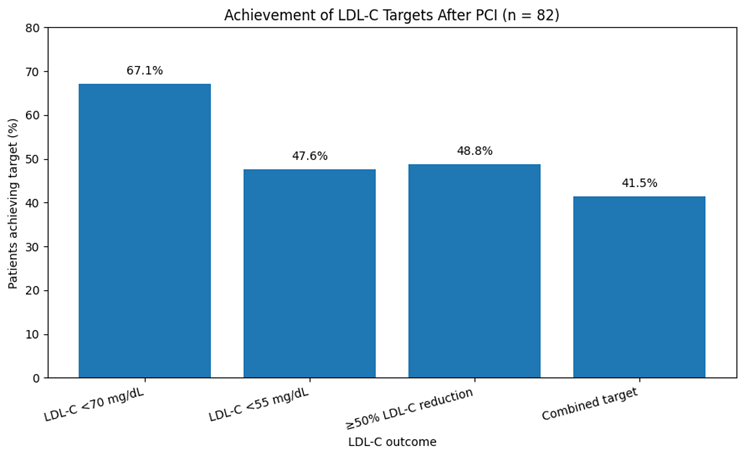
Figure 1. Achievement of guideline-recommended LDL-C targets among patients following percutaneous coronary intervention (n = 82). The highest proportion of patients achieved LDL-C <70 mg/dL (67.1%), while only 41.5% achieved the combined target of LDL-C <55 mg/dL together with a ≥50% reduction from baseline.
DISCUSSION :
The present study evaluated lipid-lowering therapy and attainment of recommended LDL-C targets among 82 patients following percutaneous coronary intervention. A substantial reduction in lipid levels was observed, with mean LDL-C declining from 118.6 ± 29.4 mg/dL at baseline to 64.8 ± 20.7 mg/dL during follow-up. Although 67.1% of patients achieved an LDL-C level below 70 mg/dL, only 47.6% reached LDL-C below 55 mg/dL, and 41.5% achieved the combined target of LDL-C below 55 mg/dL together with at least a 50% reduction from baseline. These findings indicate that prescribing lipid-lowering treatment after PCI produced a meaningful biochemical response, but achievement of the more intensive secondary-prevention target remained inadequate. This is clinically important because patients undergoing PCI have established atherosclerotic cardiovascular disease and are considered at very high risk of recurrent cardiovascular events. Contemporary European recommendations advise lowering LDL-C to below 55 mg/dL and achieving a reduction of at least 50% from baseline in such patients [12-14].
With 82.9% on high intensity statins, few patients achieved the combined LDL-C target in this study. This is in line with international evidence that demonstrates a continuing disconnect between the guidelines and the actual practice of doctors. Despite the high uptake of lipid-lowering drugs, lipid management was suboptimal in a substantial proportion of patients with CHD as reported in the EUROASPIRE V survey [15]. The higher use of high intensity statins and less achievement of target compared to the present study can be attributed to inter-study differences in baseline LDL-C levels, biological response, follow up duration, suboptimal dose escalation, adherence, and lack of use of non-statin therapy. In addition, many very-high-risk patients may not get to an LDL-C level below 55 mg/dL with high-intensity statin therapy alone, especially if LDL-C is initially very high [16-18].
Target achievement was independently correlated with high-intensity statin therapy in the present analysis. High-intensity treatment was associated with an odds ratio of ~3.7 for reaching the combined target compared with lower-intensity treatment. The finding is consistent with immediate, after PCI, starting or continuation of the maximum tolerated statin dose. However, around 25% of those who were not achieving the target were not being treated with high-intensity therapy, indicating there was therapeutic inertia (concerns about adverse effects or patient-related limitations). Thus, the intensity of statins should be considered early in a structured post-PCI lipid management pathway, as well as confirming statin tolerability and escalating statin doses if necessary. Repeat lipid testing is also necessary as treatment cannot be optimally stepped up if a follow-up LDL-C is not available. The observed relationship of timed biochemical monitoring with target achievement also indicates that biochemical monitoring is beneficial for timely treatment adjustment [19].
Other independent predictors of achieving LDL-C targets included use of ezetimibe. Patients taking ezetimibe as well as statins were more than three times more likely to achieve the combined target than were patients taking statins alone. More than half of the study population were above the stringent LDL-C target, however only 22.0% received ezetimibe. This is a significant area for improvement in the use of combination therapy. Results from recent clinical practice suggest that ezetimibe combined with high intensity statins has the potential to significantly improve the number of people achieving intensive LDL-C targets compared with high intensity statins alone [20]. If a patient has not reached target despite maximally tolerated statins and ezetimibe, then they may be treated with a PCSK9 inhibitor on a risk/benefit/availability basis and local protocols. Combination therapy might be even more important after ACS, where the risk of subsequent cardiovascular events is highest. Medication adherence was the most powerful independent predictor of target achievement, such that patients who were adherent were about 5 times more likely to reach the recommended LDL-C target.
This study highlights that treatment is not only effective when the drug used and the prescribed dosage, but also when the patient continues to use the drug. Adverse effects of treatment, polypharmacy, lack of adequate counselling, cost of treatment, lack of symptoms of high cholesterol, and fear of adverse effects are some of the factors leading to poor adherence. Very few people had statin-associated muscle symptoms and a few were unable to continue statins. Therefore, adherent should be actively checked, misconceptions should be addressed and suspected side effects managed, and the long-term benefits of lipid lowering treatment reinforced. Study limitations included being conducted in a single centre, small sample size, limited follow-up time and self-report of adherence. The design of the observation also does not allow conclusions on causality and the cardiovascular endpoints were not sufficiently evaluable. More and larger multicentre studies with longer-term follow-up are needed to assess the durability of LDL-C levels and their association with further cardiovascular outcomes.
CONCLUSION:
Lipid-lowering therapy after PCI produced a significant reduction in LDL-C; however, fewer than half of the patients achieved the combined guideline-recommended target of LDL-C below 55 mg/dL with at least a 50% reduction from baseline. High-intensity statin therapy, ezetimibe use and good medication adherence were independently associated with successful target attainment. The findings highlight the need for systematic follow-up lipid testing, early treatment intensification, greater use of combination therapy and improved adherence counselling. A structured post-PCI lipid-management programme may help reduce the gap between prescribed therapy and recommended LDL-C goals.
BIBLIOGRAPHY:
1. Koskinas, K., F. Mach, and L.J.E. Räber, Lipid-lowering therapy and percutaneous coronary interventions: Lipid-lowering therapy and PCI. 2021. 16(17): p. 1389.
2. Lee, Z.-V. and H.J.A. Lam, Aggressive lipid-lowering therapy after percutaneous coronary intervention–for whom and how? Aggressive lipid-lowering therapy after PCI. 2022. 8(1): p. 24.
3. Harris, D.E., et al., Achievement of European guideline-recommended lipid levels post-percutaneous coronary intervention: a population-level observational cohort study. 2021. 28(8): p. 854-861.
4. Gencer, B. and R.P.J.C.C. Giugliano, Management of LDL‐cholesterol after an acute coronary syndrome: Key comparisons of the American and European clinical guidelines to the attention of the healthcare providers. 2020. 43(7): p. 684-690.
5. Wang, Q. and C.J.J.o.C.P. Liang, Role of lipid-lowering therapy in low-density lipoprotein cholesterol goal attainment: focus on patients with acute coronary syndrome. 2020. 76(6): p. 658-670.
6. Rosenson, R.S., L.D. Colantonio, and S.N.J.J.o.t.A.C.o.C. Goonewardena, Optimizing cholesterol management improves the benefits of percutaneous coronary intervention. 2020, American College of Cardiology Foundation Washington DC. p. 1451-1454.
7. Banach, M., et al., Optimal use of lipid-lowering therapy after acute coronary syndromes: A Position Paper endorsed by the International Lipid Expert Panel (ILEP). 2021. 166: p. 105499.
8. Mootoo, C., et al., 81 Achieving target LDL-cholesterol levels post acs with lipid lowering therapy & the impact of a nurse-led post-PCI clinic. 2023, BMJ Publishing Group Ltd and British Cardiovascular Society.
9. Lee, S.-J., et al., Combination lipid-lowering therapy in patients undergoing percutaneous coronary intervention. 2023. 82(5): p. 401-410.
10. Claessen, B.E., et al., Lipid management in patients presenting with acute coronary syndromes: a review. 2020. 9(24): p. e018897.
11. Mazhar, F., et al., Lipid-lowering treatment intensity, persistence, adherence and goal attainment in patients with coronary heart disease. 2022. 251: p. 78-90.
12. Tomlinson, B., et al., Pharmacokinetics of current and emerging treatments for hypercholesterolemia. 2020. 16(5): p. 371-385.
13. Gu, J., et al., Lipid treatment status and goal attainment among patients with atherosclerotic cardiovascular disease in the United States: a 2019 update. 2022. 10: p. 100336.
14. Landmesser, U., et al., Achievement of ESC/EAS LDL-C treatment goals after an acute coronary syndrome with statin and alirocumab. 2022. 29(14): p. 1842-1851.
15. De Backer, G., et al., Management of dyslipidaemia in patients with coronary heart disease: Results from the ESC-EORP EUROASPIRE V survey in 27 countries. Atherosclerosis, 2019. 285: p. 135-146 DOI: 10.1016/j.atherosclerosis.2019.03.014.
16. Atar, D., et al., New cardiovascular prevention guidelines: How to optimally manage dyslipidaemia and cardiovascular risk in 2021 in patients needing secondary prevention? 2021. 319: p. 51-61.
17. Committee, W., et al., 2022 ACC expert consensus decision pathway on the role of nonstatin therapies for LDL-cholesterol lowering in the management of atherosclerotic cardiovascular disease risk: a report of the American College of Cardiology Solution Set Oversight Committee. 2022. 80(14): p. 1366-1418.
18. Mackinnon, E.S., et al., Guideline LDL-C threshold achievement in acute myocardial infarction patients: a real-world evidence study demonstrating the impact of treatment intensification with PCSK9i. 2023. 12(2): p. 327-338.
19. Hess, C.N., et al., Effectiveness of blood lipid management in patients with peripheral artery disease. 2021. 77(24): p. 3016-3027.
20. Schwartz Gregory, G., et al., Lipoprotein(a) and Benefit of PCSK9 Inhibition in Patients With Nominally Controlled LDL Cholesterol. JACC, 2021. 78(5): p. 421-433 DOI: 10.1016/j.jacc.2021.04.102.