Role of holistic treatment approach in the management of Metastatic HER2-Positivity
- Muhammad Ghufran , fellow medical oncology SKMCH Peshawar
- Junaid Khan , Resident medical oncology SKMCH Peshawar
- Furqan Ijaz , Resident medical oncology SKMCH Peshawar
- Yousra Johar , Resident medical oncology SKMCH Peshawar
- Anamta , Nowshera medical college
- Shehnoor Mushtaq , KGMC Peshawar
- Maria Qubtia , consultant medical oncology SKMCH Peshawar
- Hamd E Yazdaan , Resident medical oncology SKMCH Peshawar
Article Information:
Abstract:
HER2-positive breast carcinoma is an aggressive molecular subtype with a high metastatic potential. In patients with metastatic HER2-neu–positive disease, targeted anti-HER2 therapies have substantially improved survival. In addition, psychosocial barriers can have a significant impact on treatment adherence and, consequently, on clinical outcomes. Case presentation: We report the case of a 35-year-old woman initially diagnosed in November 2020 with Stage I right-sided invasive ductal carcinoma with high-grade ductal carcinoma in situ. The tumor was estrogen receptor–positive, progesterone receptor–negative, and HER2-negative. She underwent right mastectomy with sentinel lymph node biopsy and was started on adjuvant tamoxifen. Within one year, she developed aggressive disease progression with widespread osseous metastases. Repeat biopsy demonstrated a marked change in tumor biology, with loss of hormone receptor expression and conversion to HER2-neu positivity. The rapid transition from an apparently curable early-stage cancer to advanced metastatic disease had a profound psychological impact. Psychosocial challenges, including poor acceptance of the diagnosis, complex social circumstances, and lack of spousal support, resulted in inconsistent treatment adherence during the early metastatic phase. Subsequently, increased support from her extended family was associated with improved adherence, fewer treatment-related complications, and better quality of life. She received multiple lines of systemic therapy, including trastuzumab, paclitaxel, lapatinib, and capecitabine. Despite metastatic disease, she survived for more than four years. Conclusion: This case highlights the clinical significance of tumor receptor conversion and underscores the critical role of psychosocial support in influencing treatment adherence, quality of life, and outcomes in patients with metastatic breast cancer.
Keywords:
Article :
INTRODUCTION :
Breast cancer (BC) is a biologically heterogeneous disease, with human epidermal growth factor receptor 2 (HER2)–positive tumors accounting for approximately 15–20% of cases and historically associated with aggressive behavior and poor prognosis[1]., and despite advances in treatment, approximately 15–24% will develop metastatic disease after completion of curative-intent treatment, and 3–10% present with de novo metastatic disease [2,3. The advent of HER2-targeted therapies has dramatically altered the natural history of this subtype, transforming it from one of the most lethal forms of breast cancer into a chronic disease for many patients. However, the survival benefits observed in clinical trials are not uniformly realized across the world, particularly in low- and middle-income countries (LMICs), where limited access to targeted agents, delayed diagnosis, and competing comorbidities remain major challenges.
BC is typically classified by the histologic and molecular characteristics of the tumor, with important implications for therapy. Human epidermal growth factor receptor 2 (HER2) is a transmembrane tyrosine kinase receptor that influences cell growth, division, and repair; with increased expression, it can promote tumorigenesis.[4].
HER2-positive (HER2 +) BC is associated with an aggressive clinical phenotype and has been linked to a poor prognosis without therapy. Over the last 20 years, advances in HER2-targeting treatments have prolonged survival, but with advances have arisen questions about optimal sequencing and HER2 targeting beyond progression on modern therapy. [5,6].
Another important clinical consideration in breast cancer management is receptor discordance between the primary tumor and recurrent or metastatic disease. Conversion of hormone receptor or HER2 status at relapse reflects tumor evolution and clonal selection under therapeutic pressure, and it has direct implications for treatment decisions. Despite international guideline recommendations, re-biopsy at progression is not consistently performed in resource-constrained settings, potentially depriving patients of effective targeted therapies.
Holistic treatment approaches in managing metastatic HER2-positive breast cancer involve a multifaceted approach that includes, genetic testing i.e. identifying the presence of the HER2 gene and its mutations to guide treatment decisions.These holistic approaches are crucial in the management of metastatic HER2-positive breast cancer, as they aim to provide a more comprehensive and effective treatment plan that considers the entire patient's condition and response to treatment.[7].
In addition to biological and therapeutic factors, psychosocial support, family involvement, and management of comorbid illnesses play a critical role in determining outcomes in patients with advanced cancer. These elements are especially relevant in younger patients with metastatic disease, in whom treatment adherence, quality of life, and functional independence are key goals of care.
Here, we report the case of a young woman initially diagnosed with early-stage, HER2-negative breast cancer who experienced rapid disease progression with receptor conversion to HER2-positive disease. This case highlights the aggressive biology of HER2-driven tumors, the clinical importance of repeat biopsy at relapse, and the profound impact of delayed yet sustained access to HER2-targeted therapy combined with psychosocial and family support in a resource-limited setting.
CASE PRESENTATION:
A 35-year-old woman with insulin-dependent diabetes mellitus presented in November 2020 with a right breast lump. Imaging revealed a 5-cm lesion with extensive pleomorphic calcifications and borderline axillary lymph nodes, with no evidence of distant metastasis. She underwent a right mastectomy with sentinel lymph node biopsy. Histopathology confirmed grade II invasive ductal carcinoma with associated high-grade ductal carcinoma in situ (pT1a pN0[sn]), with immunohistochemistry showing ER positivity of 10–20%, PR negativity, and HER2 negativity. She was commenced on adjuvant tamoxifen; chemotherapy and radiotherapy were not indicated. Surveillance with annual mammography was planned.
In April 2021, she developed persistent lumbosacral pain. MRI of the whole spine demonstrated multilevel osseous metastases, bone scan ( Figure.1 ) and CT imaging revealed diffuse skeletal involvement with necrotic retropectoral and right supraclavicular lymphadenopathy. An iliac bone biopsy confirmed metastatic breast carcinoma that was ER/PR-negative and HER2-positive, indicating receptor conversion.
Owing to financial constraints, trastuzumab was initially unavailable. She was therefore treated with six cycles of doxorubicin and cyclophosphamide (AC) with G-CSF support, along with three-monthly zoledronic acid, completing treatment in October 2021. Her clinical course was complicated by diabetic ketoacidosis, febrile neutropenia, abscess formation, and acute kidney injury. These complications were exacerbated by psychosocial stress, poor self-care, and suboptimal medication adherence. A holistic management approach, including psychosocial support, was instituted. Recurrent psychosocial issues during chemotherapy necessitated multiple dose reductions. With combined medical and psychosocial interventions, she demonstrated significant clinical improvement, achieving an ECOG performance status of 0 and stable disease on imaging.
However, imaging in August 2021 demonstrated progressive osseous metastases, prompting initiation of capecitabine with a 20% dose reduction due to gastrointestinal toxicity. Subsequently, improved financial and psychosocial support from her siblings and extended family enhanced treatment adherence. From October 2021 to May 2022, she received capecitabine in combination with trastuzumab, with dose modifications for hand–foot syndrome and gastrointestinal side effects.
In May 2022, CT scans showed disease progression with lymphangitis carcinomatosis. Although trastuzumab emtansine (T-DM1) was recommended, it was initially inaccessible due to cost. She was therefore treated with paclitaxel plus trastuzumab; after two cycles, she was able to access T-DM1, which she received from July 2022 to January 2023. Follow-up CT imaging in January 2023 demonstrated worsening bilateral lymphangitis carcinomatosis with new and enlarging mediastinal, hilar, supraclavicular, and axillary lymphadenopathy, while osseous disease remained stable. She was subsequently treated with paclitaxel plus trastuzumab from February 2023 to March 2024. Serial imaging showed an initial good response; however, PET imaging in March 2024 confirmed disease progression.
She was then commenced on dual HER2 blockade with lapatinib and trastuzumab from March 2024 to February 2025. A PET scan in January 2025 demonstrated overall stable disease, with subtle progression in the form of interlobular septal thickening and patchy ground-glass opacities in both lungs, raising suspicion for lymphangitis carcinomatosis versus infection.
Throughout her disease course, she experienced multiple hospital admissions for lower respiratory tract infections, particularly during winter months, managed through a multidisciplinary approach. She also developed diabetic foot complications and peripheral vascular disease, which were addressed collaboratively.
In the final week of February 2025, she presented with worsening dyspnea and hypoxia. Despite supportive management, her condition deteriorated, with progressive respiratory distress, bilateral pedal edema, diffuse lung crepitations, uncontrolled hyperglycemia, and decline in performance status to ECOG 2–3. She developed respiratory failure, was admitted, and passed away on March 3, 2025. Notably, she maintained a good performance status and continued her teaching profession until approximately two weeks prior to her death.
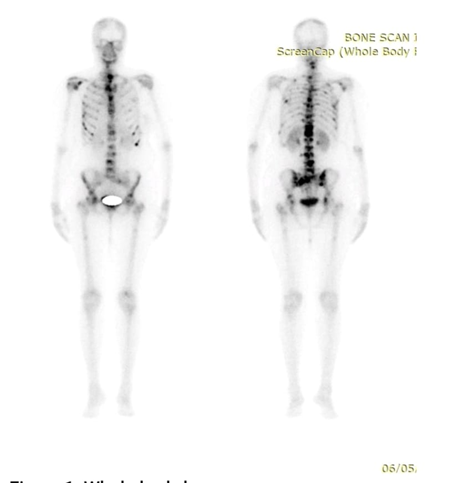
Figure 1. Whole-body bone scan.
Planar images demonstrate multiple focal areas of abnormal increased radiotracer uptake involving the entire spine, sternum, bilateral ribs, scapulae, right proximal humerus, bony pelvis, and both proximal femoral shafts, consistent with widespread skeletal involvement.
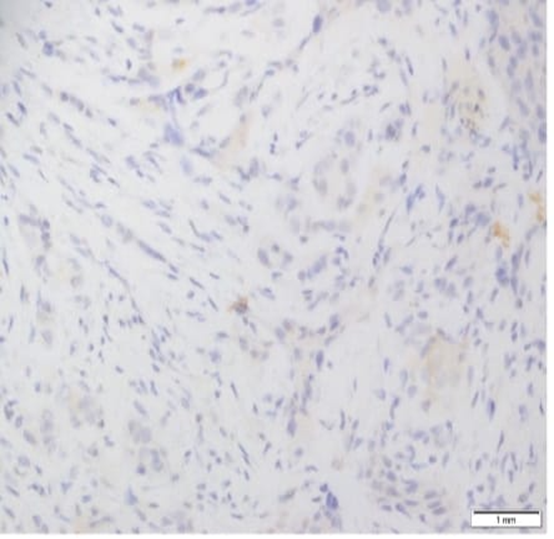 Figure 2: Immunohistochemistry demonstrating estrogen receptor (ER) positivity in tumor cells, with nuclear staining observed.
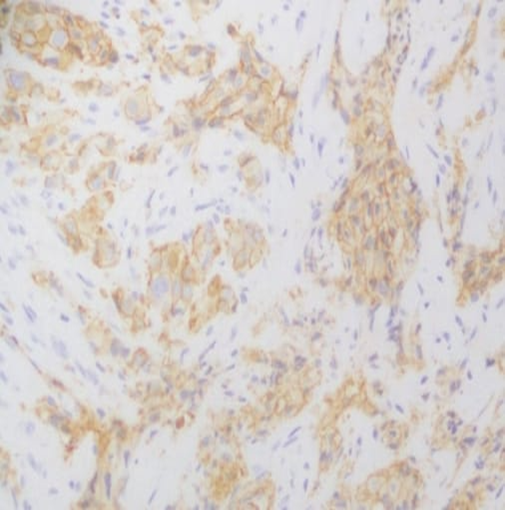 Figure 3: Immunohistochemistry demonstrating progesterone receptor (PR) positivity in tumor cells, with nuclear staining evident.
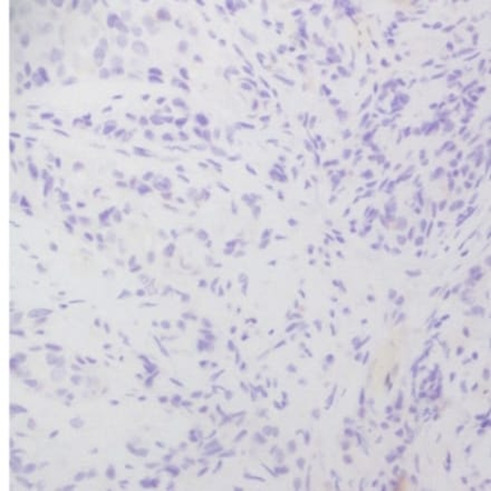
Figure 4: Immunohistochemistry demonstrating HER2/neu positivity, with strong membranous staining in tumor cells.
DISCUSSION :
HER2-positive breast cancer is recognized as one of the most aggressive molecular subtypes, associated with rapid disease progression and poor survival when left untreated or undertreated. While the introduction of anti-HER2 therapies has significantly transformed the natural history of the disease, access to these agents remains a major barrier in low- and middle-income countries. In our region, financial limitations often restrict patients to conventional chemotherapy alone, thereby compromising both disease control and quality of life.
This case is unique in highlighting the interplay of biological aggressiveness, resource availability, and patient-centered care. The patient demonstrated awareness about her disease biology and prognosis. The availability of consistent family support further strengthened her ability to pursue and adhere to treatment despite the high financial burden. Importantly, the extended family demonstrated motivation to the medical recommendations, which is often a critical determinant of outcomes in chronic oncologic care.
Another noteworthy aspect is the receptor conversion observed in this case—from HER2-negative at initial diagnosis to HER2-positive at relapse. Such conversion underscores the dynamic biology of breast cancer and the necessity of re-biopsy at progression to ensure accurate therapeutic targeting. In many resource-constrained settings, repeat biopsies and advanced immunohistochemical testing are not routinely performed, which may result in missed opportunities for introducing life-prolonging therapies.
In this case, despite initial delays due to cost and logistical challenges, the timely initiation of HER2-directed therapies—including trastuzumab, trastuzumab emtansine, and lapatinib—alongside chemotherapy, contributed to meaningful prolongation of survival with acceptable quality of life. Beyond pharmacologic intervention, holistic management was crucial. Attention to psychosocial support, comorbidity care, and strong family involvement played a pivotal role in ensuring adherence and minimizing treatment discontinuation.
Similarly T-DXd was evaluated in 184 confirmed HER2-positive metastatic breast cancer patients who were heavily pretreated in the DESTINY-Breast01 clinical trial, a single-arm phase II study [8]. The median of prior treatment lines was 6. In this trial, ORR was 60.9 median response duration was 14.8 months and median PFS was 16.4 months [8]. While these results were reported after a median follow-up of only 11.1 months, the frequency and duration of response are striking. Based on these encouraging results, T-DXd has received approval [9]
Lapatinib with capecitabine was compared to capecitabine alone in 399 women and demonstrated improvement in median time to progression (8.4 months with combination therapy vs 4.4 months with monotherapy; HR 0.57 [95% CI, 0.43–0.77]) and a non-significant trend toward improvement in OS. These improvements were achieved without increased risk of serious toxicity or cardiotoxicity [10]. Follow-up analysis also showed that combination therapy reduced the risk of CNS involvement at the time of progression, and that benefits were seen across all patient subgroups had similar results to our study. [11].
This case thus illustrates that even in resource-limited settings, favorable outcomes can be achieved when targeted therapy is eventually accessible and integrated into care. It also emphasizes the importance of patient education, psychosocial support, and family engagement in optimizing outcomes for aggressive breast cancer subtypes.
CONCLUSION :
This case underscores how access to HER2-targeted therapy and psychosocial support can significantly improve outcomes and quality of life in aggressive HER2-positive metastatic breast cancer. Oncologists, together with their patients, can incorporate efficacy, side effects, mechanism of action, and factors like site of metastases and tumor biology into a personalized decision making.
BIBLIOGRAPHY:
1. Guo L, Kong D, Liu J, et al. Breast cancer heterogeneity and its implication in personalized precision therapy. Exp Hematol Oncol. 2023;12:3.
2. Bredin P, Walshe JM, Denduluri N. Systemic therapy for metastatic HER2-positive breast cancer. Semin Oncol. 2020;47(5):259–269.
3. Zhang L, Li Z, Zhang J, Wu Y, Zhu Y, Tong Z. De novo metastatic breast cancer: subgroup analysis of molecular subtype and prognosis. Oncol Lett. 2020;19(4):2884–2894.
4. Harbeck N, Penault-Llorca F, Cortes J, et al. Breast cancer. Nat Rev Dis Primers. 2019;5:66. doi:10.1038/s41572-019-0111-2.
5. National Comprehensive Cancer Network. Breast cancer (version 4.2023) [Internet]. Plymouth Meeting (PA): NCCN; 2023
6. US Food and Drug Administration. FDA approves neratinib for metastatic HER2-positive breast cancer [Internet]. Silver Spring (MD): FDA; 2020 [cited 2023 Mar 29].
7. Pandey P, Chaudhary R, Tripathi D, et al. Personalized treatment approach for HER2-positive metastatic breast cancer. Med Oncol. 2024;41:252.
8. Modi S, Saura C, Yamashita T, Park YH, Kim SB, Tamura K, et al. Trastuzumab deruxtecan in previously treated HER2-positive breast cancer. N Engl J Med. 2020;382(7):610–621.
9. Canadian Breast Cancer Network. Trastuzumab deruxtecan [Internet]. Toronto: CBCN; 2021
10. Geyer CE, Forster J, Lindquist D, Chan S, Romieu CG, Pienkowski T, et al. Lapatinib plus capecitabine for HER2-positive advanced breast cancer. N Engl J Med. 2006;355(26):2733–2743.
11. Cameron D, Casey M, Press M, Lindquist D, Pienkowski T, Romieu CG, et al. A phase III randomized comparison of lapatinib plus capecitabine versus capecitabine alone in women with advanced breast cancer that has progressed on trastuzumab: updated efficacy and biomarker analyses. Breast Cancer Res Treat. 2008;112(3):533–543.