Frequency of Anxiety Experienced by Patients Undergoing Magnetic Resonance Imaging at a Tertiary Care Hospital
- Hamayun Khan , MBBS, FCPS Running, FRCR Part 1, Trainee Medical Officer (Radiology), Department of Radiology, Mardan Medical Complex, Mardan, Pakistan
- Zubair Janan , Associate Professor, Department of Radiology, Bacha Khan Medical College, Mardan, Pakistan
- Tabassum Begum , Assistant Professor, Radiology, Mardan Medical Complex, Mardan, Pakistan
- Syed Jahangir Ali Shah , MBBS, FCPS Running, Trainee Medical Officer (Radiology), Department of Radiology, Mardan Medical Complex, Mardan, Pakistan
- Laila Khan , HOD /Assistant Professor, Department of Radiology, Mardan Medical Complex, Mardan, Pakistan
- Nageen Zulqarnain , MBBS, House Officer; Women and Children Hospital, MTI, Bannu, Pakistan.
Article Information:
Abstract:
A magnetic resonance imaging (MRI) machine is an important diagnostic tool used to assess a variety of medical conditions. While MRI is a non-invasive and safe imaging technique, many patients may feel anxious before or during the MRI scan because of the enclosed space of the scanner, the sound of the equipment, the unknown, and the requirement to lie in one position for an extended period of time. Anxiety related to MRI may be a problem with patient cooperation, image quality and completion of the exam.Objective: To determine the frequency of anxiety experienced by patients undergoing magnetic resonance imaging at a tertiary care hospital.Methods: The present study was a cross sectional study conducted in Department of Diagnostic Radiology, Mardan Medical Complex, Mardan. Patients were selected using non-probability consecutive sampling technique, and 103 patients aged 18–75 years who underwent MRI were included. Those who had a prior MRI scan history or had known generalized anxiety disorder or metal implants were excluded. The State Trait Anxiety Inventory was used to assess the anxiety. A score of ≥40 was considered as anxiety, and the score 40-60 as moderate anxiety, and the score >60 as severe anxiety. The data were analyzed with SPSS version 20.Results: Among 103 patients, the mean age was 42.8 ± 14.6 years, and 57 patients were male. Anxiety was present in 42 patients (40.8%), while 61 patients (59.2%) had no anxiety. Moderate anxiety was observed in 30 patients (29.1%), whereas severe anxiety was found in 12 patients (11.7%). Anxiety was significantly more common among female patients and those with lower educational status.Conclusion: Anxiety was present in a considerable proportion of patients undergoing MRI. Moderate anxiety was more frequent than severe anxiety. Female gender and lower educational status were significantly associated with MRI-related anxiety. Proper pre-procedure counselling and patient education may help reduce anxiety and improve patient cooperation during MRI.
Keywords:
Article :
INTRODUCTION:
Magnetic Resonance Imaging is among the most significant diagnostic tests of today's medicine. It offers high-resolution images of soft tissues, joints, brain, spine, abdomen and other parts of the body without using ionizing radiation. Because of the high diagnostic value, MRI is becoming a vital imaging tool for many clinical specialties, such as neurology, orthopedics, oncology, cardiology, and abdominal imaging. However, for some patients the MRI procedure can be stressful, since the MRI is conducted within a small scanner chamber, and often the patient has to stay still for several minutes [1-3].
A frequent problem encountered by patients is anxiety during the MRI. Psychological discomfort may result from the restricted space in the MRI scanner, noises of the machine, unknown hospital setting, anxiety about the outcome and ignorance of the protocol. Additionally, a few patients may be feeling claustrophobic while undergoing scanning. This anxiety is significant, as it can have a negative impact on completion of the MRI examination. Anxious patient may move during the scan and generate artifacts that will affect the quality of the scan. In more severe cases, the patient may be reluctant or fail to complete the procedure, potentially delaying diagnosis and treatment [4-6].
Anxiety surrounding MRI is not just a psychological problem, but one that impacts radiology departments as well. Failure to co-operate by the patient can result in repeat sequences, lengthened scan times, resource wastage and delayed reporting. Of particular concern is the interruption or repeated MRI scans, which can impact workflow and patient care in busy tertiary care hospitals where many patients need imaging. Thus, it is crucial to recognize the anxiety experienced by MRI patients in order to enhance the comfort of the patient and the quality of the radiological service [7-9].
There are several factors that can affect anxiety prior to MRI exam. These include awareness about the procedure, previous hospital experiences, residence, socioeconomic status, education level, and age and gender. Patients with a lower education level may be more fearful because they may not understand the safety and benefits of MRI. Likewise, rural residents and those with lower socioeconomic status might not be as familiar with the more sophisticated diagnostic tools, making them more likely to be apprehensive. In certain clinical settings, female patients may also experience greater anxiety. Evaluation of these factors can be used to help radiology personnel determine who may need extra reassurance prior to the scan [10-12].
The State Trait Anxiety Inventory is an instrument that can be helpful in assessing anxiety for clinical and research purposes. It is a useful way to measure how anxious a patient is and to classify patients as to severity of anxiety. The present study employed the STAI as a measure of anxiety, with a score of ≥40 regarded as a score of anxiety, 40–60 a score of moderate anxiety, and >60 a score of severe anxiety [13].
Although MRI-related anxiety has been studied internationally, local data from tertiary care hospitals in Pakistan remain limited. Cultural factors, patient education, awareness of medical procedures, and healthcare communication patterns may influence anxiety levels in local populations. Therefore, this study was conducted to determine the frequency of anxiety among patients undergoing MRI at a tertiary care hospital. The findings may help in developing simple pre-procedure counselling strategies to reduce anxiety, improve patient cooperation, and enhance the quality of MRI services.
METHODOLOGY:
This cross-sectional study was conducted in the Department of Diagnostic Radiology, Mardan Medical Complex, Mardan, to determine the frequency of anxiety among patients undergoing magnetic resonance imaging. The study was carried out after approval of the synopsis from the College of Physicians and Surgeons Pakistan. Ethical approval was obtained from CPSP Research Evaluation Unit with Ref No. CPSP/REU/RAD-2022-028-3821, dated June 22, 2025. The study duration was three months June 2025 to September 2025.
Calculated sample size was 103 patients. The sample size was determined with the WHO sample size calculator, assuming a 95% confidence level, 7.5% absolute precision, and an expected frequency of anxiety in patients that have undergone MRI of 18.5%. A non-probability consecutive sampling technique was used for patient recruitment. After informed written consent, all eligible patients who presented to the radiology department for MRI during the study period were enrolled.
Study subjects included patients of either sex aged 18-75 years who were scheduled for MRI examination. Patients with a history of metallic dental implant or metallic bone implant, diagnosed generalized anxiety disorder and taking medication, and a previous history of MRI scan were excluded. These exclusion criteria were chosen to minimize the influence of confounding factors which may independently affect anxiety or which would make the MRI procedure unsafe.
Baseline demographic and clinical data was obtained on a preformatted proforma following enrollment. The variables recorded were age, gender, BMI, education level, area of residence and income per month. The level of education was divided into illiterate and school education and above. Residence was classified as rural or urban and monthly income as less than 80,000 PKR per month and 80,000 PKR or more per month.
State Trait Anxiety Inventory (STAI) was used to measure anxiety. The operational definition in synopsis indicated that total STAI score was 80 with the cutoff of STAI score ≥ 40 considered as anxiety. STAI scores between 40 and 60 were considered moderate anxiety and those scores >60 were considered severe anxiety. Those whose STAI scores were < 40 were not considered to be anxious.
Pre-procedure anxiety data were gathered prior to MRI to ensure that the anxiety assessment was measuring pre-procedure anxiety. Following assessment, all patients were counselled on the procedure of MRI and all the information provided kept confidential throughout the study. No personal information on the final data sheet and data collected for the purposes of research.
The data was entered and analyzed by SPSS version 20. After checking data distribution, quantitative variables age, BMI and STAI score were presented as mean ± SD. The categorical variables like gender, educational status, residence, monthly income, anxious status, and anxious level were described in terms of frequencies and percentages. The stratification of anxiety was done based on age group, sex, BMI, educational level, place of residence and monthly income. Where appropriate, post-stratification chi-square test or Fisher's exact test was used. A p value of ≤0.05 was deemed statistically significant.
RESULTS:
A total of 103 patients who were having an MRI scan were included in the study. The mean age of patients was 42.8 years ± 14.6 years with majority of patients from 31 to 45-year age group. There were 57 male patients (55.3%) and 46 female patients (44.7%). The mean BMI was 25.4 ± 3.8 kg/m². The majority of patients had educational background of school education or above, came from urban areas and had less than 80,000 PKR per month income. State Trait Anxiety Inventory (STAI) was used to assess anxiety, with the cut-off score of ≥40 defined as anxiety, 40-60 was considered as moderate anxiety and >60 was considered severe anxiety.
Table 1. Baseline characteristics of patients undergoing MRI
|
Variable |
Frequency / Mean |
Percentage |
|
Age, years |
42.8 ± 14.6 |
— |
|
Age group |
|
|
|
18–30 years |
23 |
22.3% |
|
31–45 years |
34 |
33.0% |
|
46–60 years |
29 |
28.2% |
|
>60 years |
17 |
16.5% |
|
Gender |
|
|
|
Male |
57 |
55.3% |
|
Female |
46 |
44.7% |
|
BMI, kg/m² |
25.4 ± 3.8 |
— |
|
BMI category |
|
|
|
Normal BMI |
38 |
36.9% |
|
Overweight |
45 |
43.7% |
|
Obese |
20 |
19.4% |
|
Education status |
|
|
|
Illiterate |
39 |
37.9% |
|
School education or above |
64 |
62.1% |
|
Area of residence |
|
|
|
Rural |
44 |
42.7% |
|
Urban |
59 |
57.3% |
|
Monthly income |
|
|
|
<80,000 PKR/month |
66 |
64.1% |
|
≥80,000 PKR/month |
37 |
35.9% |
There were 103 patients, with 42 (40.8%) being anxious prior to MRI, and 61 (59.2%) who were not anxious. Of the patients who were anxious, 30 (29.1%) were moderately anxious and 12 (11.7%) were severely anxious. The mean score of the study population was 37.6 ± 12.4 on the STAI.
Table 2. Frequency and severity of anxiety among patients undergoing MRI
|
Anxiety variable |
Frequency / Mean |
Percentage |
|
Mean STAI score |
37.6 ± 12.4 |
— |
|
Anxiety status |
|
|
|
Anxiety present |
42 |
40.8% |
|
Anxiety absent |
61 |
59.2% |
|
Severity of anxiety |
|
|
|
No anxiety |
61 |
59.2% |
|
Moderate anxiety |
30 |
29.1% |
|
Severe anxiety |
12 |
11.7% |
The frequency of anxiety was higher when stratified by baseline characteristics, and females, patients with low monthly income, illiterate patients and rural patients were found to have a higher frequency of anxiety. The gender (female) and lower education level was significantly associated with anxiety. The trends for age group, BMI category, area of residence and monthly income were higher but non-statistically significant.
Table 3. Association of anxiety with baseline characteristics
|
Variable |
Total |
Anxiety present n (%) |
Anxiety absent n (%) |
p-value |
|
Age group |
|
|
|
0.214 |
|
18–30 years |
23 |
7 (30.4%) |
16 (69.6%) |
|
|
31–45 years |
34 |
13 (38.2%) |
21 (61.8%) |
|
|
46–60 years |
29 |
14 (48.3%) |
15 (51.7%) |
|
|
>60 years |
17 |
8 (47.1%) |
9 (52.9%) |
|
|
Gender |
|
|
|
0.018 |
|
Male |
57 |
17 (29.8%) |
40 (70.2%) |
|
|
Female |
46 |
25 (54.3%) |
21 (45.7%) |
|
|
BMI category |
|
|
|
0.392 |
|
Normal BMI |
38 |
13 (34.2%) |
25 (65.8%) |
|
|
Overweight |
45 |
20 (44.4%) |
25 (55.6%) |
|
|
Obese |
20 |
9 (45.0%) |
11 (55.0%) |
|
|
Education status |
|
|
|
0.032 |
|
Illiterate |
39 |
21 (53.8%) |
18 (46.2%) |
|
|
School education or above |
64 |
21 (32.8%) |
43 (67.2%) |
|
|
Area of residence |
|
|
|
0.081 |
|
Rural |
44 |
23 (52.3%) |
21 (47.7%) |
|
|
Urban |
59 |
19 (32.2%) |
40 (67.8%) |
|
|
Monthly income |
|
|
|
0.074 |
|
<80,000 PKR/month |
66 |
32 (48.5%) |
34 (51.5%) |
|
|
≥80,000 PKR/month |
37 |
10 (27.0%) |
27 (73.0%) |
|
Overall, the study showed that anxiety was present in approximately two-fifths of patients undergoing MRI. There were more cases of moderate anxiety than in severe anxiety. The level of anxiety prior to MRI examination was higher in female patients and patients with lower educational status, indicating the need for specific counselling and better explanation prior to the examination to reduce anxiety in these patients.
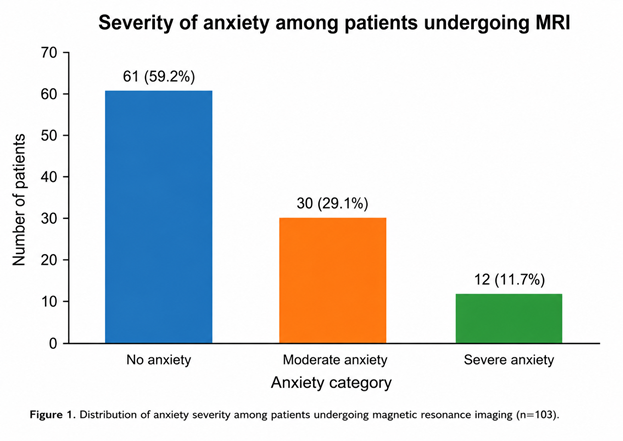
Figure 1. Distribution of anxiety severity among patients undergoing magnetic resonance imaging.
he bar chart shows that among 103 patients, 61 (59.2%) had no anxiety, 30 (29.1%) had moderate anxiety, and 12 (11.7%) had severe anxiety before MRI examination.
DISCUSSION :
The present study found that anxiety was a common problem among patients undergoing magnetic resonance imaging, with 42 out of 103 patients (40.8%) showing anxiety before the procedure. Among these, 30 patients (29.1%) had moderate anxiety and 12 patients (11.7%) had severe anxiety. These findings show that a considerable proportion of patients experience psychological discomfort before MRI, even when the procedure is non-invasive. The enclosed and noisy environment of the MRI scanner, fear of remaining still, uncertainty about the result, and lack of familiarity with the procedure may contribute to this anxiety [14].
Moderate anxiety was more common than severe anxiety in this study. This suggests that although the procedure was well tolerated in most patients, there was still a significant psychological stress observed. Anxiety related to MRI is clinically relevant since anxious patients can move during the scan, causing artefacts and compromising the image. In very rare instances, marked anxiety can result in interruptions, delays and/or cancellation of an MRI examination. So anxiety, even if mild, should not be neglected, especially in a busy radiology environment where repeated scans might lead to increased workload and delay of patient care [15, 16].
Women patients had a higher frequency of anxiety than men patients. There was an association between anxiety and females (25, 54.3%) compared with males (17, 29.8%) and this relationship was statistically significant. This finding indicates that patients undergoing MRI may be more susceptible to pre-procedure anxiety if they are a female patient. Some of the possible explanations are increased sensitivity to closed space, anxiety about the unknown, or reduced tolerance for the strange protocol in the hospital. This finding should be taken with a pinch of salt, however, as anxiety has a number of social, psychological and cultural determinants [17].
Education status was also significantly related with the MRI related anxiety. Patients with low literacy rate were more likely to have anxiety than school education or higher. This could be because educated patients are more likely to be aware of the nature, safety, and purpose of MRI. Patients who have less education may be more fearful because they may not be knowledgeable about the procedure. This emphasises the need for good pre-scan counselling, particularly for patients with low literacy levels, at the simplest level [18].
While there were more rural residents and individuals with lower monthly income who experienced anxiety, this was not statistically significant. Patients in rural areas and of lower socio-economic status may be less exposed to advanced diagnostic procedures and thus be more afraid of MRI. Similarly, slightly more anxiety was found in older age groups and overweight/obese patients which did not differ significantly. These results indicate that anxiety is not confined to any particular group and that all patients undergoing MRI should be evaluated and reassured prior to the MRI [19].
The results of this study provide support for the need for patient-centered approaches in radiology. Anxiety can be lessened by simple procedures, such as explaining the MRI procedure before the scan, giving patients a chance to ask questions, reassuring patients, enhancing communication by the radiology staff, and using relaxation techniques. Music, visual explanation or brief educational information can also be beneficial in selected cases. Anxiety can be detected prior to the procedure, which may enhance patient cooperation, minimize patient motion during the scan, and enhance imaging quality [20].
There are some limitations of this study. The study was done in a single tertiary care hospital and results may not be applicable in other healthcare settings. The study adopted cross sectional design which precludes the determination of causal relationships. Patient satisfaction or post procedure anxiety was not evaluated and anxiety was measured prior to MRI. Furthermore, there was no detailed study of such factors as type of MRI scan, length of scan, sensitivity to sound within MRI, and history of claustrophobia. These should be incorporated into future multicenter studies with larger number of patients and tested to determine the efficacy of counselling or relaxation-based interventions for reducing MRI-related anxiety.
CONCLUSION :
This study concluded that anxiety was present in a substantial proportion of patients undergoing MRI, affecting 40.8% of the study population. Moderate anxiety was more common than severe anxiety. Female gender and lower educational status were significantly associated with anxiety before MRI examination. These findings emphasize the need for proper pre-procedure counselling, simple explanation of the MRI process, and supportive communication by radiology staff. Routine identification and management of MRI-related anxiety may improve patient comfort, reduce scan interruption, and enhance the overall quality of radiological services.
REFERENCES:
1. Nguyen, X.V., et al., Prevalence and financial impact of claustrophobia, anxiety, patient motion, and other patient events in magnetic resonance imaging. 2020. 29(3): p. 125-130.
2. Ahlander, B.-M., J. Engvall, and E.J.R. Ericsson, Anxiety during magnetic resonance imaging of the spine in relation to scanner design and size. 2020. 26(2): p. 110-116.
3. Hudson, D.M., R.E. MBE, and C.J.J.o.R.N. Heales, Journey to the center of the bore: a service evaluation of the patient experience in magnetic resonance imaging. 2023. 42(3): p. 296-304.
4. Madl, J.E., et al., Preparing patients according to their individual coping style improves patient experience of magnetic resonance imaging. 2022. 45(6): p. 841-854.
5. Stogiannos, N., et al., Toward autism-friendly magnetic resonance imaging: exploring autistic individuals' experiences of magnetic resonance imaging scans in the United Kingdom, a cross-sectional survey. 2023. 5(3): p. 248-262.
6. Hamd, Z.Y., et al., How different preparation techniques affect MRI-induced anxiety of MRI patients: a preliminary study. 2023. 13(3): p. 416.
7. Fatukasi, J., et al., Assessment of Anxiety Related to Radiological Investigations in a Teaching Hospital: The Physiologic and Cognitive Responses as well as Cofounders. 2022. 3(2): p. 29-41.
8. Asante, S. and F.J.R. Acheampong, Patients’ knowledge, perception, and experience during magnetic resonance imaging in Ghana: A single centre study. 2021. 27(2): p. 622-626.
9. Turkoglu, O. and O.J.E.J.M.I. Maden, Evaluation of anxiety and depression status of patients before non‑invasive radiology. 2020. 4: p. 513.
10. Pomsuwan, K., M. Silarat, and P. Surit, Effects of Preparatory Information via Line Application on Anxiety and Adherence in Patients Undergoing Magnetic Resonance Imaging (MRI): A Pilot Study Findings from Thailand.
11. Madl, J., et al., MRI as a stressor: the psychological and physiological response of patients to MRI, influencing factors, and consequences. 2022. 19(3): p. 423-432.
12. Bolejko, A. and P.J.R. Hagell, Effects of an information booklet on patient anxiety and satisfaction with information in magnetic resonance imaging: A randomized, single-blind, placebo-controlled trial. 2021. 27(1): p. 162-167.
13. Hudson, D., C. Heales, and R.J.R. Meertens, Review of claustrophobia incidence in MRI: a service evaluation of current rates across a multi-centre service. 2022. 28(3): p. 780-787.
14. Chadderdon, A.L., et al., Underlying mechanisms of psychological interventions in magnetic resonance imaging and image-guided radiology procedures. 2020. 29(3): p. 157-163.
15. Al-Shemmari, A., et al., Radiographer's confidence in managing patients with claustrophobia during magnetic resonance imaging. 2022. 28(1): p. 148-153.
16. Hansson, B., et al., Subjectively Reported Effects Experienced in an Actively Shielded 7T MRI: A Large-Scale Study. Journal of Magnetic Resonance Imaging, 2020. 52(4): p. 1265-1276 DOI: https://doi.org/10.1002/jmri.27139.
17. Dütemeyer, V., et al., Prevalence of and risk factors for failure of fetal magnetic resonance imaging due to maternal claustrophobia or malaise. Ultrasound in Obstetrics & Gynecology, 2023. 61(3): p. 392-398 DOI: https://doi.org/10.1002/uog.26045.
18. Hancock, P.A., Patient-centered magnetic-resonance imaging (MRI) procedures: HF/E design recommendations for experiential improvements. Human Factors in Healthcare, 2022. 2: p. 100022 DOI: https://doi.org/10.1016/j.hfh.2022.100022.
19. Hudson, D.M., C. Heales, and S.J. Vine, Scoping review: How is virtual reality being used as a tool to support the experience of undergoing Magnetic resonance imaging? Radiography, 2022. 28(1): p. 199-207 DOI: https://doi.org/10.1016/j.radi.2021.07.008.
20. Loth, A.G., et al., Magnetic Resonance Imaging in Patients With Hearing Implants – Follow-up on Prevalence and Complications. Otology & Neurotology, 2021. 42(9).