Comparison of Postoperative Complications of Open Versus Laparoscopic Cholecystectomy According to the Modified Clavien-Dindo Classification System.
- Talha Akhtar , Post Graduate Resident, General Surgery (FCPS), Benazir Bhutto Hospital, Rawalpindi, Pakistan
- Usman Qureshi , Head of Department, Surgical Unit-II, Benazir Bhutto Hospital, Rawalpindi, Pakistan.
- Ghanan Bin Akhtar , Master's, Department of Biochemistry and Medical Genetics, University of Manitoba, Winnipeg, Canada.
- Waqas Akhtar , M.Phil Chemistry, Lecturer, Allama Iqbal Open University, Islamabad, Pakistan.
- Farhan Ahmad , Post Graduate Resident, General Surgery (FCPS), Benazir Bhutto Hospital, Rawalpindi, Pakistan.
- Komal Basharat , Graduated from Rawalpindi Medical College/University, Rawalpindi, Pakistan; Ex-House Officer, Surgical Unit-I, Benazir Bhutto Hospital, Rawalpindi, Pakistan.
- Urwa Hanif , Final Year MBBS Student, King Edward Medical University, Lahore, Pakistan.
- Naeem Shahzad , Post Graduate Resident, Radiology, Benazir Bhutto Hospital, Rawalpindi, Pakistan.
- Sidra Nureen , Post Graduate Resident, Neurology, Fauji Foundation Hospital, Rawalpindi, Pakistan.
- Usama Hanif , Post Graduate Resident, Urology, Benazir Bhutto Hospital, Rawalpindi, Pakistan.
- Muqaddas Fatima , Fatima Jinnah Medical University, Lahore, Pakistan.
Article Information:
Abstract:
Objective: Cholecystectomy is the standard surgical treatment for gallbladder disease, and it may be performed by either laparoscopic or open technique. This study was conducted to compare the clinical profile and postoperative outcomes of patients undergoing laparoscopic cholecystectomy and open cholecystectomy. Study Design: A comparative study. Place and Duration of Study: The study was conducted in the Department of Surgery (Unit-II), Benazir Bhutto Hospital, Rawalpindi from 28 August 2025 to 28 November 2025. Methodology: This study was carried out on 490 patients, with 245 patients in the laparoscopic group and 245 patients in the open group. Baseline characteristics including body mass index (BMI), indications for surgery, and comorbid conditions were recorded. Postoperative outcomes were assessed in terms of complications using the Modified Clavien-Dindo Classification System and length of hospital stay. Results: The mean BMI was comparable between the laparoscopic and open groups (27.1 ± 3.4 kg/m² vs 26.6 ± 3.7 kg/m²; p = 0.27). In both groups, most patients were overweight. The most common indication for surgery was symptomatic gallstones, followed by chronic cholecystitis and acute cholecystitis. Diabetes mellitus and hypertension were the most frequent comorbidities in both groups. Postoperative complications occurred in 18 (7.3%) patients in the laparoscopic group and 42 (17.1%) patients in the open group, with a significantly higher complication rate in the open group (p = 0.002). The mean hospital stay was significantly shorter in the laparoscopic group than in the open group (2.1 ± 1.2 days vs 5.4 ± 2.3 days; p < 0.001). Conclusion: Laparoscopic cholecystectomy was associated with fewer postoperative complications and a shorter hospital stay compared with open cholecystectomy. These findings suggest that laparoscopic cholecystectomy offers better short-term postoperative outcomes and faster recovery.
Keywords:
Article :
INTRODUCTION:
Cholelithiasis, commonly known as gallstone disease, is one of the most prevalent gastrointestinal disorders worldwide and represents a significant cause of morbidity [1]. Epidemiological studies estimate that gallstones affect approximately 10–15% of the adult population globally, with prevalence varying across geographic regions and dietary patterns [2]. In South Asian countries, including Pakistan, the prevalence is reported to be around 8–12%, and it continues to increase due to changes in lifestyle, obesity, and dietary habits. Gallstones are more common in females than males, with a female-to-male ratio of approximately 2:1, and the incidence increases with age, particularly after the age of 40 years [3]. Although many patients with gallstones remain asymptomatic, nearly 20–30% of affected individuals develop symptoms during their lifetime [4].
These symptoms include biliary colic, nausea, vomiting, and complications such as acute cholecystitis, chronic cholecystitis, gallstone pancreatitis, and obstructive jaundice [5]. When symptomatic gallstone disease occurs, cholecystectomy, the surgical removal of the gallbladder, remains the definitive treatment. Worldwide, more than 2 million cholecystectomies are performed annually, making it one of the most commonly performed abdominal surgical procedures [6]. Traditionally, cholecystectomy was performed through an open surgical approach. Open cholecystectomy (OC) involves a right subcostal incision and direct removal of the gallbladder [7]. While it is an effective procedure, it is associated with several disadvantages such as increased postoperative pain, longer hospital stay, delayed recovery, and higher risk of wound complications [8].
With the advancement of minimally invasive surgery, laparoscopic cholecystectomy (LC) was introduced in the late 1980s and has since become the gold standard treatment for symptomatic gallstone disease. Studies have shown that laparoscopic cholecystectomy offers several advantages, including smaller incisions, less postoperative pain, reduced hospital stay, and quicker return to normal activities [9]. Current evidence suggests that laparoscopic cholecystectomy accounts for over 90% of all cholecystectomy procedures performed worldwide. The average hospital stay after laparoscopic surgery is approximately 1–3 days, compared with 5–7 days for open cholecystectomy [10]. Furthermore, postoperative infection rates are significantly lower in laparoscopic procedures, with reported rates of 2–4%, compared to 8–12% in open surgery. Mortality rates are also lower for laparoscopic procedures, estimated at around 0.1–0.5%, while open cholecystectomy has reported mortality rates of approximately 1–4%, particularly in high-risk patients [10].
Despite these advantages, laparoscopic cholecystectomy is not free from complications. Intraoperative and postoperative complications may include bile duct injury, hemorrhage, bile leakage, retained stones, and surgical site infection [11]. Bile duct injury, although rare, remains one of the most serious complications and occurs in approximately 0.3–0.7% of laparoscopic cases. In certain complex situations such as severe inflammation, distorted anatomy, gallbladder carcinoma, or lack of surgical expertise, conversion to open cholecystectomy may be necessary to ensure patient safety [12].
Assessment of postoperative complications is an important aspect of evaluating surgical outcomes and improving patient safety. The Clavien–Dindo Classification System has become a widely accepted method for grading surgical complications based on the type of intervention required for management [13,14]. The Modified Clavien–Dindo Classification System (mCDCS) further refines this grading system, allowing surgeons to categorize complications into standardized grades ranging from minor deviations in recovery to life-threatening complications and mortality.
This system provides an objective framework for comparing surgical procedures and evaluating their safety profiles [15,16]. Given the increasing adoption of laparoscopic techniques and the continued relevance of open surgery in selected cases, it is important to evaluate and compare the postoperative outcomes associated with these two approaches. Therefore, this study aims to compare the frequency and severity of postoperative complications following laparoscopic and open cholecystectomy using the Modified Clavien-Dindo Classification System, thereby providing valuable data to guide surgical decision-making and improve patient outcomes.
METHODOLOGY:
Study Design
This study was designed as a comparative cross-sectional study to evaluate and compare the postoperative complications associated with laparoscopic cholecystectomy and open cholecystectomy. The study aimed to assess the frequency and severity of complications using the Modified Clavien–Dindo Classification System, which provides a standardized method for grading postoperative surgical complications.
Study Setting and Duration
The study was conducted in the Department of Surgery (Unit-II), Benazir Bhutto Hospital, Rawalpindi from 28 August 2025 to 28 November 2025, which is a tertiary care teaching hospital that receives a large number of patients with gallbladder disease.
Sample Size
The sample size for this study was calculated using the OpenEpi sample size calculator based on previously published data. A study by Khalid et al. reported that approximately 2.5% of patients undergoing open cholecystectomy developed high-grade complications, while no high-grade complications were observed in laparoscopic cholecystectomy cases. Using a confidence level of 99.9%, population size of 1,000,000, margin of error of 5%, and design effect of 1, the calculated sample size was 490 patients. These patients were equally divided into two groups, with 245 patients undergoing laparoscopic cholecystectomy and 245 patients undergoing open cholecystectomy.
Sampling Technique
Patients were selected using a non-probability consecutive sampling technique. All patients presenting to the surgical department with gallbladder disease during the study period who met the inclusion criteria were recruited consecutively until the required sample size was achieved.
Inclusion Criteria and Exclusion Criteria
Patients aged 18 to 60 years, regardless of gender, who had a confirmed diagnosis of acute cholecystitis, chronic cholecystitis, or symptomatic cholelithiasis and were scheduled for elective cholecystectomy were included in the study. Only patients undergoing either laparoscopic or open cholecystectomy as a planned surgical procedure were considered eligible.
Patients diagnosed with choledocholithiasis, gallbladder carcinoma, or cholangiocarcinoma were excluded from the study. In addition, patients undergoing emergency surgery or those with severe systemic illnesses that could significantly influence postoperative outcomes were not included in order to maintain uniformity in the study population.
Data Collection Procedure
After obtaining approval from the ethical review committee and the College of Physicians and Surgeons Pakistan (CPSP), eligible patients were enrolled in the study after obtaining informed consent. Preoperative demographic information including age, gender, body mass index (BMI),
comorbid conditions such as diabetes mellitus, hypertension, ischemic heart disease, chronic kidney disease, and history of previous abdominal surgery was recorded using a structured data collection proforma. All surgical procedures were performed under general anesthesia following standard surgical protocols. To maintain uniformity and reduce operator bias, surgeries were performed by a consultant surgeon with at least five years of experience in laparoscopic surgery. Patients underwent either laparoscopic cholecystectomy or open cholecystectomy depending on the clinical indication and surgeon’s decision.
Postoperative Assessment and Follow-Up
Postoperative complications were monitored and recorded according to the Modified Clavien–Dindo Classification System. Patients were assessed during their hospital stay immediately after surgery to identify early complications such as postoperative fever, wound infection, nausea, vomiting, bleeding, or bile leakage. A follow-up evaluation was conducted one month after surgery, during which patients underwent clinical examination and ultrasound imaging when required to detect complications such as retained stones, biliary leakage, intra-abdominal collections, or surgical site infections.
Data Analysis
All collected data were entered and analyzed using Statistical Package for Social Sciences (SPSS) version 22.0. Quantitative variables such as age, BMI, and duration of hospital stay were expressed as mean and standard deviation. Qualitative variables including gender, type of surgery, and postoperative complications were presented as frequencies and percentages. The independent sample t-test was used to compare continuous variables between the two groups, while the chi-square test was applied to assess the association between the type of surgery and postoperative complications. Post-stratification analysis was also performed to control potential confounding variables such as age, BMI, comorbidities, and previous surgical history. A p-value of ≤0.05 was considered statistically significant.
RESULTS:
Demographic Characteristics of Patients
A total of 490 patients were included in the study and were equally divided into two groups, with 245 patients undergoing laparoscopic cholecystectomy and 245 patients undergoing open cholecystectomy. The demographic characteristics of patients in both groups were analyzed and compared. The mean age of patients in the laparoscopic group was 41.2 ± 10.3 years, whereas the mean age in the open cholecystectomy group was 42.7 ± 11.1 years. Statistical analysis showed no significant difference in age distribution between the two groups (p = 0.18), indicating that the groups were comparable in terms of age. Regarding gender distribution, gallstone disease was observed to be more common among females. Out of the total study population, 310 patients (63.3%) were females, while 180 patients (36.7%) were males. In the laparoscopic cholecystectomy group, 155 (63.3%) patients were female and 90 (36.7%) were male, while a similar distribution was observed in the open cholecystectomy group. This finding reflects the known higher prevalence of gallstone disease among females. Overall, both groups were demographically comparable, minimizing potential bias in the comparison of postoperative outcomes (Table 1).
Table 1. Baseline demographic and clinical characteristics of patients in the laparoscopic and open cholecystectomy groups.
|
Variable |
Laparoscopic Cholecystectomy (n = 245) |
Open Cholecystectomy (n = 245) |
p-value |
|
Mean Age |
41.2 ± 10.3 |
42.7 ± 11.1 |
0.18 |
|
Male |
90 (36.7%) |
90 (36.7%) |
0.99 |
|
Female |
155 (63.3%) |
155 (63.3%) |
|
|
Total patient |
245 |
245 |
_ |
Body Mass Index (BMI) Distribution
Body Mass Index (BMI) of patients in both groups was recorded and analyzed to evaluate its possible association with postoperative outcomes. The mean BMI of patients undergoing laparoscopic cholecystectomy was 27.1 ± 3.4 kg/m², whereas the mean BMI in the open cholecystectomy group was 26.6 ± 3.7 kg/m². Statistical analysis using the independent sample t-test showed no significant difference between the two groups (p = 0.27), indicating that both groups were comparable in terms of BMI distribution. For further analysis, patients were also categorized into BMI groups. In the laparoscopic group, 70 patients (28.6%) had normal BMI (18.5–24.9 kg/m²), 120 patients (49.0%) were overweight (25–29.9 kg/m²), and 55 patients (22.4%) were classified as obese (≥30 kg/m²). In the open cholecystectomy group, 75 patients (30.6%) had normal BMI, 110 patients (44.9%) were overweight, and 60 patients (24.5%) were obese. The majority of patients in both groups fell into the overweight category, which is a known risk factor for gallstone disease (Figure 1).
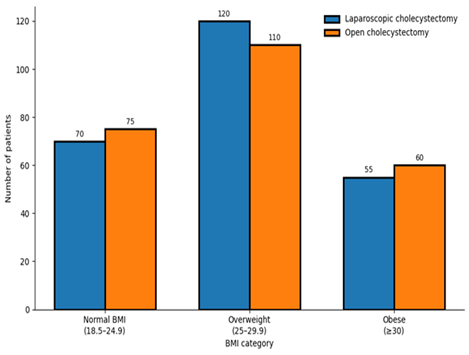
Figure 1: BMI category distribution in the laparoscopic and open cholecystectomy groups. Most patients in both groups were overweight, with a similar overall pattern between groups.
Indications for Surgery
The indications for surgery were assessed in both the laparoscopic and open cholecystectomy groups. The most common indication in both groups was symptomatic gallstones. In the laparoscopic group, 140 patients (57.1%) underwent surgery for symptomatic gallstones, while in the open group, 132 patients (53.9%) had the same indication. The second most common indication was chronic cholecystitis, seen in 70 patients (28.6%) in the laparoscopic group and 74 patients (30.2%) in the open group. Acute cholecystitis was the least common indication in both groups. It was reported in 35 patients (14.3%) undergoing laparoscopic surgery and in 39 patients (15.9%) in the open group. Overall, the pattern of surgical indications was similar in both groups. This suggests that the baseline clinical presentation was comparable between the two groups (Figure 2).
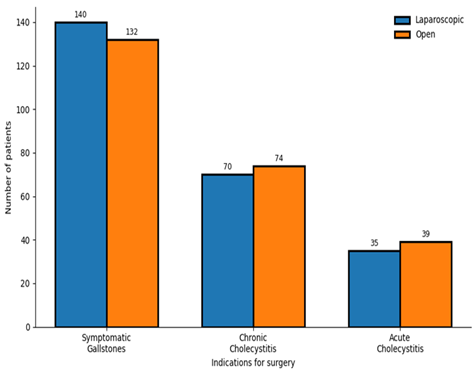
Figure 2: Indications for surgery in the laparoscopic and open cholecystectomy groups. Symptomatic gallstones were the most common indication in both groups, followed by chronic and acute cholecystitis.
Distribution of Comorbidities
Several patients in both groups had associated comorbid conditions. The most commonly observed comorbidities were diabetes mellitus and hypertension. Diabetes mellitus was present in 48 patients (19.6%) in the laparoscopic group and 52 patients (21.2%) in the open group. Hypertension was reported in 40 patients (16.3%) undergoing laparoscopic cholecystectomy and in 45 patients (18.4%) in the open group. Ischemic heart disease was less common, affecting 12 patients (4.9%) in the laparoscopic group and 15 patients (6.1%) in the open group. A large proportion of patients had no associated comorbidity, with 145 patients (59.2%) in the laparoscopic group and 133 patients (54.3%) in the open group. Overall, the distribution of comorbid conditions was fairly similar between the two groups (Figure 3).
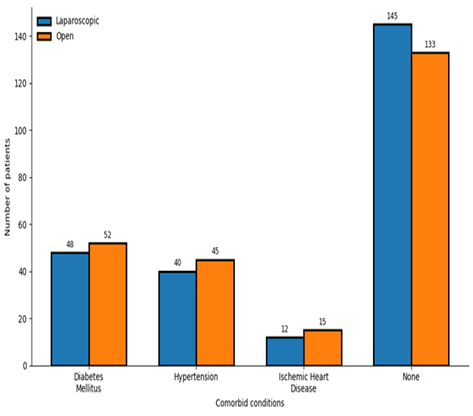
Figure 3: Comorbid conditions in the laparoscopic and open cholecystectomy groups. Diabetes mellitus and hypertension were the most common comorbidities, while many patients had no associated comorbidity.
Postoperative Complications According to Modified Clavien-Dindo Classification
Postoperative complications were assessed using the Modified Clavien-Dindo Classification System. Overall, complications were observed in 18 patients (7.3%) in the laparoscopic group compared with 42 patients (17.1%) in the open cholecystectomy group, indicating a significantly higher complication rate in the open surgery group (p = 0.002). Minor complications such as postoperative fever, nausea, vomiting, and superficial wound infection were more frequent after open surgery. Fever was reported in 8 patients (3.3%) in the laparoscopic group and 15 patients (6.1%) in the open group, while wound infection occurred in 5 patients (2.0%) and 14 patients (5.7%), respectively. Nausea and vomiting were noted in 6 patients (2.4%) undergoing laparoscopic surgery and 9 patients (3.7%) in the open group. Major complications were also more common in the open group, including bile leak in 2 patients (0.8%) versus 6 patients (2.4%), and hemorrhage in 1 patient (0.4%) versus 4 patients (1.6%). Intra-abdominal abscess was uncommon but still higher in the open group, affecting 1 patient (0.4%) in the laparoscopic group and 3 patients (1.2%) in the open group. Overall, postoperative complications were significantly less frequent in the laparoscopic group, suggesting better short-term postoperative outcomes (Figure 4).
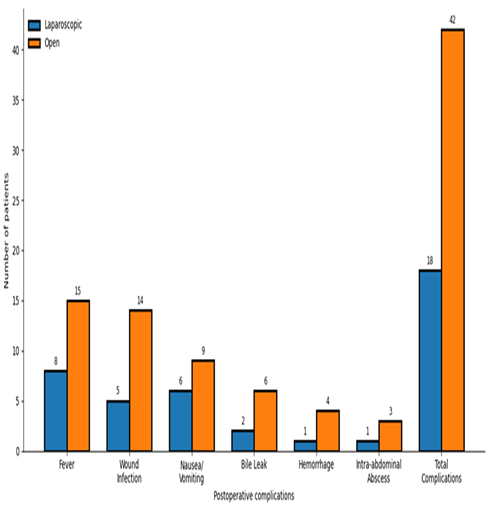
Figure 4: Postoperative complications in the laparoscopic and open cholecystectomy groups. Complications were more frequent in the open group, with a higher total complication rate than in the laparoscopic group.
Length of Hospital Stay
The duration of hospital stay was compared between the laparoscopic and open cholecystectomy groups. Patients in the laparoscopic group had a shorter hospital stay than those in the open surgery group. The mean hospital stay for laparoscopic cholecystectomy was 2.1 ± 1.2 days. In contrast, the mean hospital stay for open cholecystectomy was 5.4 ± 2.3 days. This shows a clear difference between the two groups. Statistical analysis demonstrated that the difference was highly significant. The p-value was less than 0.001. These findings suggest that laparoscopic cholecystectomy allows faster postoperative recovery. It also supports earlier discharge from the hospital compared with open surgery (Figure 5).
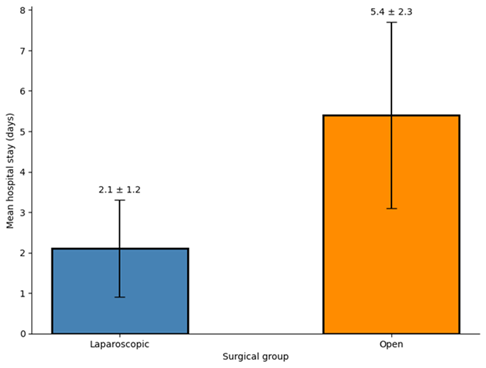
Figure 5: Mean hospital stays in the laparoscopic and open cholecystectomy groups. Hospital stay was shorter in the laparoscopic group, and the difference was statistically significant.
DISCUSSION:
In the present study, laparoscopic and open cholecystectomy groups were comparable in baseline clinical profile (BMI distribution, indications for surgery, and comorbidities), which strengthens interpretation of postoperative outcome differences as being related mainly to operative approach rather than preoperative imbalance. Symptomatic cholelithiasis was the leading indication in both groups, consistent with standard epidemiology of gallstone disease and the usual indications for cholecystectomy [17]. A major finding was the significantly lower overall postoperative complication rate in the laparoscopic group (7.3%) compared with the open group (17.1%), with open surgery showing higher rates of minor complications (fever, nausea/vomiting, superficial wound infection) as well as higher frequencies of major complications (bile leak and hemorrhage) [18]. This aligns with evidence that minimally invasive surgery reduces tissue trauma and surgical site contamination, thereby lowering wound-related morbidity [19]. Meta-analytic data in acute cholecystitis have shown reduced postoperative morbidity and shorter hospitalization with laparoscopic surgery, with particularly lower pneumonia and wound infection rates compared with open surgery, supporting the pattern observed in our results [20]. The difference in length of hospital stay in our study was pronounced (2.1 ± 1.2 days laparoscopic vs 5.4 ± 2.3 days open; p < 0.001). This closely mirrors the findings from major systematic reviews, including the Cochrane review by Keus et al., which reported a mean reduction of about 3 days in hospital stay with laparoscopic cholecystectomy compared with open procedures—very similar to the ~3.3-day reduction seen here [21]. Earlier randomized evidence also demonstrated shorter hospital stay and faster convalescence after laparoscopic surgery versus open surgery, reinforcing that reduced postoperative pain and earlier mobilization likely drive earlier
discharge [22]. While many modern studies show lower morbidity with laparoscopic surgery, some older reviews and trials did not consistently demonstrate statistically significant differences in overall complication rates, despite clear benefits in recovery time [23]. This may reflect heterogeneity in study design, case selection, perioperative protocols, and the laparoscopic learning curve in early eras of adoption. The Cochrane analysis noted high risk of bias in several trials, which could dilute detectable differences in complications even when recovery advantages are consistent [24]. Recent reviews continue to emphasize faster recovery and reduced hospital stay with laparoscopy, and some also report improved morbidity outcomes in current practice settings [25]. Regarding biliary complications, our study showed higher bile leak and hemorrhage in the open group [26]. Contemporary safety guidance highlights that bile duct injury and bile leakage remain critical adverse outcomes around cholecystectomy, and emphasizes structured strategies to improve safety (e.g., achieving the critical view of safety and standardized “safe cholecystectomy” principles). In addition, international guidance documents discuss the clinical impact of bile duct injury and the importance of timely recognition and appropriate management pathways [27,28].
CONCLUSION:
Finally, it is worth noting that in acute cholecystitis, modern guideline-based practice supports early laparoscopic cholecystectomy when feasible, and clinical studies evaluating Tokyo Guidelines–based approaches report acceptable outcomes with early laparoscopy in appropriate settings—consistent with the broader direction favoring laparoscopic-first strategies. Overall, the present findings agree with the prevailing literature: laparoscopic cholecystectomy is associated with fewer postoperative complications and markedly shorter hospitalization compared with open cholecystectomy.
REFERENCES:
Khalid, A.; Khalil, K.; Qadri, H.M.; Ahmad, C.Z.; Fatima, W.; Raza, A.; Asif, M.A.; Luqman, M.S.; Nizami, M.F.K. Comparison of postoperative complications of open versus laparoscopic cholecystectomy according to the modified Clavien-Dindo Classification system. Cureus 2023, 15.
2. Shakil, F.; Jalil, M.; Umer, W.; Faiz, M.S. Frequency of various factors that lead to conversion of laparoscopic cholecystectomy to open cholecystectomy. Pakistan Armed Forces Medical Journal 2025, 75, 491.
3. Rehman, H.U.; Asif, M.; Patujo, Y.H.; Amjad, M.; Khan, H.; Safiullah, T.; Wakeel, M.I.; Ahmad, I. Trends and Outcomes in Reporting and Grading Complications of Urological Surgery: A Retrospective Analysis. Indus Journal of Bioscience Research 2024, 2, 711-718.
4. Iqbal, N.; Ali, S.I.; Farooq, A.; Zafar, N. Outcomes of initial 100 cases of laparoscopic nephrectomy at tertiary care center (PKLI). Pakistan Journal of Medical Sciences 2024, 40, 31.
5. Serban, D.; Stoica, P.L.; Dascalu, A.M.; Bratu, D.G.; Cristea, B.M.; Alius, C.; Motofei, I.; Tudor, C.; Tribus, L.C.; Serboiu, C. The significance of preoperative neutrophil-to-lymphocyte ratio (NLR), platelet-to-lymphocyte ratio (PLR), and systemic inflammatory index (SII) in predicting severity and adverse outcomes in acute calculous cholecystitis. Journal of clinical medicine 2023, 12, 6946.
6. Hussein, A.A.; Mohsin, R.; Qureshi, H.; Leghari, R.; Jing, Z.; Ramahi, Y.O.; Rizvi, I.; Guru, K.A.; Rizvi, A. Transition from da Vinci to Versius robotic surgical system: initial experience and outcomes of over 100 consecutive procedures. Journal of Robotic Surgery 2023, 17, 419-426.
7. Becerra-Bolaños, Á.; Hernández-Aguiar, Y.; Rodríguez-Pérez, A. Preoperative frailty and postoperative complications after non-cardiac surgery: A systematic review. Journal of International Medical Research 2024, 52, 03000605241274553.
8. Esparham, A.; Calabrese, E.C.; Ganescu, O.; Choksi, S.; Park, K.; Kumar, K.; Huo, B.; Shehata, D.; Abou-Setta, A.; Florez, I.D. SAGES–AHPBA 2025: a systematic review and meta-analysis on the surgical management of bile duct injury following cholecystectomy. Surgical Endoscopy 2025, 1-21.
9. Keele, T.; Hashemzadeh, M.; Movahed, M.R. Lower myocardial infarction and all-cause mortality with laparoscopic cholecystectomy compared with open cholecystectomy. Future Cardiology 2023, 19, 759-765.
10. Azizoğlu, M.; Aydogdu, B.; Kamci, T.O.; Arslan, S.; Basuguy, E.; Bilici, S.; Okur, M.H. Analysis of complications of a neglected disease: 13 years of experience with liver hydatid cysts in a high-volume hospital. Medicina 2024, 60, 1696.
11. Jia, Z.; Cao, S.; Wang, D.; Tang, C.; Tan, X.; Liu, S.; Liu, X.; Li, Z.; Tian, Y.; Niu, Z. Identification and categorization of technical errors and hazard zones of robotic versus laparoscopic total gastrectomy for gastric cancer: a single-center prospective randomized controlled study. 2025.
12. Komar, M.H.; Larasati, V.; Yasmin, A.H. HUBUNGAN USIA DAN JENIS KELAMIN DENGAN LUARAN PASIEN KOLELITIASIS PASCAKOLESISTEKTOMI LAPAROSKOPI DI RSMH PALEMBANG PERIODE 2021—2023. Medic Nutricia: Journal Ilmu Kesehatan 2025, 15, 41-50.
13. Ozdemir, G.; Olmez, T.; Dilek, O.; Eyi, B.; Sozutek, A.; Seker, A. CT angiography assessment of dorsal pancreatic artery and intrapancreatic arcade anatomy: Impact on Whipple surgery outcomes. Tomography 2025, 11, 9.
14. Evrard, R.; Miri, O.; Lacroix, V.; Docquier, P.-L.; Schubert, T. Case Report: Winkelmann hip rotationplasty as a last-resort solution. Frontiers in Surgery 2025, 11, 1433291.
15. Bulbul, E.; Ilki, F.Y.; Yitgin, Y.; Ustun, F.; Sezer, A.; Erten, E.; Yitgin, E.; Bedir, S.; Sarica, K. Spinal anesthesia versus general anesthesia in the endoscopic management of proximal ureteral stones: A critical evaluation focusing on the total anesthesia time. Urologia Internationalis 2025, 109, 189-196.
16. Fix, S.M. Robot-Assisted laparoscopic prostate and kidney surgical techniques using versius surgical robotic system. Vilniaus universitetas., 2025.
17. Pedrazzoli, S. Surgical treatment of pancreatic cancer: currently debated topics on vascular resection. Cancer Control 2023, 30, 10732748231153094.
18. Coman, R.A.; Tzelves, L.; Juliebø-Jones, P.; Talyshinskii, A.; Nedbal, C.; Ventimiglia, E.; Davis, N.; Somani, B.K. Pre-and post-operative safety considerations for patients undergoing percutaneous nephrolithotomy. Expert Opinion on Drug Safety 2025, 24, 1367-1381.
19. Alberici, L.; Ricci, C.; D’Ambra, V.; Ingaldi, C.; Minghetti, M.; Mazzucchelli, C.; Casadei, R. Surgical and oncological implications of the presence of hepatic artery anatomical variations in patients undergoing pancreaticoduodenectomy: a single center experience. Updates in Surgery 2025, 77, 511-521.
20. Mahmood, A.S.; Alshadood, N.s.; Alobaidi, M.A.; Saleh, S.A.; Ismail, M. Cholangiocarcinoma. In MCQs in General Surgical Oncology; Springer: 2024; pp. 133-149.
21. Mastronardi, M.; Fracon, S.; Sandano, M.; Germani, P.; Troian, M.; Cosola, D.; Artusi, N.; Bogoni, S.; Nicolò De Manzini, M.; Biloslavo, A. Colon and Rectal Surgery.
22. Lee, K.-y.; Lee, S.Y.; Choi, M.; Kim, M.; Kim, J.H.; Song, J.M.; Yang, S.Y.; Yang, I.J.; Choi, M.S.; Han, S.R. The 2024 Korean enhanced recovery after surgery guidelines for colorectal cancer. Annals of Clinical nutrition and Metabolism 2024, 16, 22-42.
23. Jesuyajolu, D.; Moti, T.; Abdullahi, Z.; Alnaser, A.; Zanaty, A.; Grundy, T.; Evans, J. e-Posters. Ann R Coll Surg Engl 2023, 105, S3-S71.
24. Chakravorty, T. BAPIO Young Doctors Forum National MERIT Conference, 2025. The Physician 2025, 9, 1.
25. Clelia, D.; Sgardello, S.; Fournier, I. Clinical Presentation and Risk Factors of Acalculous Cholecystitis in Outpatients: Retrospective Study. International Journal of Clinical Case Reports and Reviews 2024, 18.
26. Páez Cortés, J.M.; Barrera Regalado, A.M.; Arroyo Malaver, L.F.; Suso Palau, D.; Serrano, S.E.; Fernandez de Castro, C.A.; Clavijo, R.A.; de la Hoz Valle, J.A. Complicaciones en nefrolitotomía percutánea: datos del mundo real de 8 años de experiencia en un hospital público en Colombia. 2024.
27. Balík, M. Inovace minimálně invazívních postupů v urologii. 2023.
28. Bauer, C.-J.H. Klinisch-experimentelle Untersuchung der Effekte eines präoperativen Trainings auf die Mobilisation endothelialer Progenitorzellen und körperliche Leistungsfähigkeit bei Patienten vor großen chirurgischen Eingriffen-eine prospektive, randomisiert-kontrollierte Pilotstudie. Universität zu Köln, 2023.