Maternal and Fetal Outcome in Premature Rupture of Membranes.
- Syed Pashmina Dolly , Department of Obstetrics and Gynecology, PNS SHIFA Hospital, Karachi, Pakistan.
- Shehla Baqai , Classified Gynecologist, Supervisor, Department of Obstetrics and Gynecology, PNS SHIFA Hospital, Karachi, Pakistan.
- Sidra Tul Muntaha , Department of Obstetrics and Gynecology, PNS SHIFA Hospital, Karachi, Pakistan.
- Shahida Karamat , Department of Obstetrics and Gynecology, PNS SHIFA Hospital, Karachi, Pakistan.
- Meeran Shahzad , Department of Obstetrics and Gynecology, PNS SHIFA Hospital, Karachi, Pakistan.
- Hiba Noor , Department of Obstetrics and Gynecology, PUMHS, Nawabshah, Pakistan.
Article Information:
Abstract:
Objective: To determine the maternal & foetal outcome in a patient presenting with PROM. Background: Premature rupture of membranes (PROM) is one of the most serious obstetric conditions, causing a substantial amount of morbidity both through chorioamnionitis, postpartum haemorrhage and sepsis, and mortality through stillbirth, preterm birth and neonatal death. Low level maternal and perinatal services and resources like limited coverage of ANC and NICU means that Pakistan is faced with a heavy burden of PROM in maternal and perinatal outcomes. Place and Duration of Study: Department of Obstetrics and Gynaecology, PNS SHIFA Hospital, Karachi, Pakistan. from January 2025 to June 2025. Methodology: A total of 150 pregnant women were recruited after getting their written informed consent using non-probability consecutive sampling from the total women who had confirmed their PROM at or after 28 weeks of gestation. Maternal complications were documented, such as chorioamnionitis, postpartum haemorrhage, wound infection, sepsis and placental abruption. Fetal outcomes (Livebirth with good condition, NICU admission, stillbirth and early neonatal death) were recorded. The analysis of the data was carried out with SPSS version 25.0. Results: The mean age of participants was 27.8 ± 5.1 years and mean GA of 35.4 ± 3.2 weeks at the time of rupture. The most common maternal complications were chorioamnionitis (22.0%), postpartum haemorrhage (18.7%), wound infection (14.0%), sepsis (9.3%) and placental abruption (6.7%). Of the fetal outcome, 52.7% was found to be live birth with good condition, 30.0% NICU admission, 10.0% stillbirth and 7.3% early neonatal death. Conclusion: PROM is associated with a large maternal morbidity, mostly chorioamnionitis and postpartum haemorrhage, and with high foetal loss and morbidity. Prevention of adverse outcomes can be achieved with timely diagnosis, antibiotic prophylaxis, if needed, antenatal steroids in women at risk of preterm delivery, and active multidisciplinary management.
Keywords:
Article :
INTRODUCTION:
The medical definition of premature rupture of membranes (PROM) is when the fetal membrane ruptures before the onset of labor. If this happens before 37 completed weeks it is called Preterm PROM or PPROM and has much greater maternal and neonatal morbidity [1]. Although PROM complicates only about 8-10% of all term pregnancies, PPROM complicates about 2-3% of all pregnancies, and being the cause of about one-third of all preterm births worldwide [2]. PROM has multifactorial causes including ascending genital tract infection, incompetence of the cervix, nutritional deficiencies, uterine overdistension and previous surgery of the uterus [3].
The maternal complications of PROM include chorioamnionitis, postpartum haemorrhage, endometritis, sepsis, wound infection and placental abruption [4]. In the whole population of PPROM cases managed expectantly, the risk of clinical chorioamnionitis has been estimated to be between 13% and 60% and the length of the latency period has been one of the most important associated factors of infectious morbidity [5]. Fetal and neonatal complications include stillbirth, cord prolapse, fetal distress, respiratory distress syndrome, intraventricular haemorrhage, necrotizing enterocolitis and neonatal sepsis with rates being significantly higher in the preterm population [6].
Premature rupture of membranes PROM continues to be a common reason for poor perinatal outcome in the under-resourced health care system of Pakistan with limited access to antenatal care and facilities for conservative management of preterm at birth are often absent [7]. The rates of maternal and neonatal morbidity observed from the various studies in tertiary care centres in Pakistan have ranged different, due to the different population in each centre with variable distribution of gestational period and local microbial flora and practices [8]. There is especially scarce local information for Hyderabad and the area of Sindh. This study, therefore, was aimed at finding out outcome of the mother and fetus among cases of PROM attending a tertiary care obstetric centre in order to provide locally relevant data to assist in management of these cases of PROM.
MATERIALS AND METHODS :
Study Design and Setting
The study was descriptive cross-sectional in nature, which was conducted in the Department of Obstetrics and Gynaecology, PNS SHIFA Hospital, Karachi, Pakistan. from January 2025 to June 2025. After obtaining written informed consent, all patients with premature rupture of membranes (PROM) who met the inclusion criteria were enrolled.
ETHICAL APPROVAL
The study protocol was reviewed and approved by the Institutional Review Board and Ethics Committee of PNS SHIFA Hospital, Karachi, Pakistan, for the study duration spanning from January 2025 to June 2025. All subjects provided informed written consent before entering the study and all patient data was kept confidential throughout.
The sample size and sampling technique
Sample size n=150 was calculated by using WHO sample size calculation for proportions [9] with 22% prevalence of chorioamnionitis in PROM from previous local literature [8] at 95% confidence interval with 7% absolute precision with 5% level of significance. Non-probability consecutive sampling was used.
Inclusion Criteria
● Women aged between 18-45 years.
● Singleton pregnancy at 28 weeks' gestation or greater.
● spontaneous rupture of amniotic membranes prior to onset of labour.
● Gestational Age based on LMP (1st and 2nd trimester ultrasound if used).
● Willingness to provide written informed consent.
Exclusion Criteria
● Multiple gestations.
● Antenatal ultrasound showing fetally recognizable congenital anomaly.
● Placenta previa.
● Previous classical incision or cervical cerclage.
● Incomplete clinical records.
Data Collection Procedure
Clinical diagnosis of PROM was made when there was leakage of fluid per vaginum and a combination of both the pooling test and nitrazine paper test and ferning on microscopy [10]. On a predesigned proforma, baseline demographic information—e.g., age, parity, gravidity, gestational age and residence—were gathered. Patients underwent follow-up at the time of delivery and postpartum. Maternal complications documented were chorioamnionitis, postpartum haemorrhage, sepsis, wound infection and placental abruption. Fetal outcome consisted of live birth, good clinical condition, NICU admission, stillbirth and early neonatal death (within the first seven days) after birth. Principal investigator documented all the data from a standardised proforma and patient confidentiality was maintained.
Statistical Analysis
SPSS version 25.0 was used for data entry and analysis. Quantitative variables such as age, weeks of gestation, parity were presented as mean and standard deviation (SD). The categorical data such as maternal complications and fetal outcomes were presented as frequencies and percentages.
RESULTS:
Overall, 150 patients with a diagnosis of premature rupture of membranes participated. The mean age was 27.8 ± 5.1 years and mean gestational age at rupture was 35.4 ± 3.2 weeks. Most patients were multiparous (62.0) and living in urban areas (58.7%). There were 39.3% of patients who had preterm PROM (28 to 36+6 weeks) and 60.7% who had term PROM (37 to 42 weeks).
Table 1: Baseline Demographic and Clinical Characteristics of Study Participants (n=150).
|
Variable |
Frequency / Mean ± SD |
Percentage |
|
Mean age (years) |
27.8 ± 5.1 |
— |
|
Mean gestational age at PROM (weeks) |
35.4 ± 3.2 |
— |
|
Nulliparous |
42 |
28.0% |
|
Primiparous |
15 |
10.0% |
|
Multiparous |
93 |
62.0% |
|
Urban residence |
88 |
58.7% |
|
Rural residence |
62 |
41.3% |
|
Term PROM (≥37 weeks) |
91 |
60.7% |
|
Preterm PROM (28–36+6 weeks) |
59 |
39.3% |
The maternal complications are compiled in table 2 and figure 1. Chorioamnionitis was the common complication followed by postpartum haemorrhage, wound infection, sepsis and placental abruption. The prolongation of time from rupture of membranes to delivery increased the risks of complications in the preterm PROM group.
Table 2: Maternal complications in Pre-term Rupture of Membrane (n=150).
|
Maternal Complication |
Frequency |
Percentage |
|
Chorioamnionitis |
33 |
22.0% |
|
Postpartum Haemorrhage |
28 |
18.7% |
|
Wound Infection |
21 |
14.0% |
|
Sepsis |
14 |
9.3% |
|
Placental Abruption |
10 |
6.7% |
|
No Complication |
44 |
29.3% |
Figure 1. Maternal complications associated with PROM (150 pregnant women).
Results for the fetuses are shown in Table 3 and Figure 2. In 52.7% of cases (79/150) a live birth with good clinical condition was recorded. Thirty (30.0%) neonates were admitted to the NICU, mostly in the PROM preterm subclass. The prevalence of stillbirths was 10.0 % (15/150) and early neonatal deaths in the first 7 days of birth were recorded as 7.3 % (11/150).
Table 3: Fetal Outcomes in Premature Rupture of Membranes (n=150)
|
Fetal Outcome |
Frequency |
Percentage |
|
Live Birth — Good Condition |
79 |
52.7% |
|
NICU Admission |
45 |
30.0% |
|
Stillbirth |
15 |
10.0% |
|
Early Neonatal Death (within 7 days) |
11 |
7.3% |
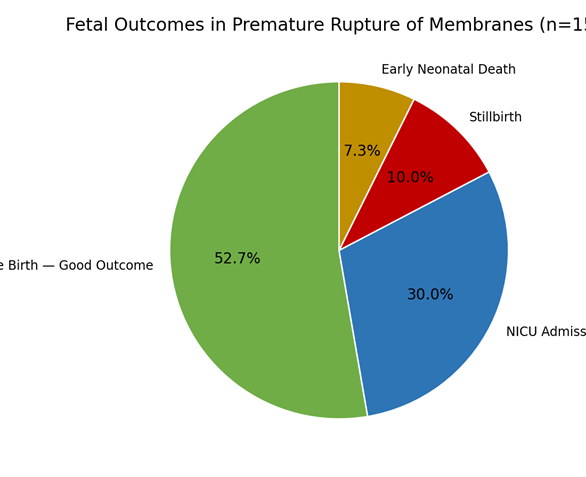
Figure 2. Distribution of foetal outcomes for Subject Group: Premature Rupture of Membranes (n=150).
DISCUSSION :
In order to assess maternal and fetal outcome in patients with PROM, a total of 150 patients of PROM were seen at a major tertiary care centre in Sindh. Chorioamnionitis (22.0%) and postpartum haemorrhage (18.7%) were the most common maternal complications of PROM and a large proportion of neonates (47.3%) had adverse fetal outcomes such as admission to the NICU, still birth or early neonatal death. The results are generally similar to previous publication from similar LMIC obstetric population, and clearly highlight that the problem of PROM is still relevant in today's obstetrics practice.
Clinical chorioamnionitis proved to be the major maternal risk in our study and was present in almost one-fifth. This is consistent with the findings of Mercer BM, who reported that the clinical attack rates are widely variable according to whether the presentation is term or preterm and are significantly increased with prolonged latency in attacks of PPROM [1]. A premature rupture of the amniotic sac results in a loss of the natural barrier to bacterial invasion and therefore can lead to ascending genital tract infection. This morbidity of infection was observed by Tchirikov et al. to be directly proportional to the duration of ruptured membranes [2]. This is another reason why antibiotic prophylaxis is strongly advocated for in international guidelines as a routine part of management to delay onset and the use of antibiotics to decrease the risk of chorioamnionitis and the possible development of neonatal sepsis [2].
In this study, 18.7% PPH was noted which is a relatively high figure and is close to the findings of Tahir et al. where the PPH rate was 17.5% in a similar setting of a tertiary care hospital in Pakistan [7]. Among those who develop PROM, there are often prolonged, ineffective labor and/or subclinical chorioamnionitis both of which are important factors associated with uterine atony [7]. Additionally, in our study, 14.0% of all patients had a wound infection and 9.3% suffered from maternal sepsis. These figures highlight the extra burden on infectious diseases due to late presentation as a result of late patient presentation, as well as the possible structural limitations of setting up necessary periprosthetic precautions in the public health-care infrastructure.
On the subject of fetal and neonatal outcomes, our data provide a concerning pattern of adverse outcomes as to the chances of survival and morbidity associated with PROM. With a still birth rate of 10.0%, and an early neonatal death rate of 7.3%, the overall combined perinatal mortality rate is one that deserves careful examination. Effective preterm PROM has been noted to be associated with significantly poor maternal and neonatal outcomes as compared to term PROM in a tertiary care hospital in Lahore by Khadijah et al. [5]. The number of premature infants who have PROM is the main reason, because these infants who develop PROM are at compounded risk because of the infectious environment of PROM and also because of the state of immaturity in which their body is functioning. Our study's NICU admission rate of 30.0% is comparable with NICU admission rates of other LMIC cohorts and the leading indication for intensive neonatal care in LMICs is neonatal respiratory distress syndrome (RDS), birth asphyxia and neonatal sepsis [6]. Maternal chorioamnionitis has been documented to be associated with a greater risk of neonatal morbidity, particularly intraventricular haemorrhage (IVH) and respiratory complications [6].
However, in order to prevent these negative consequences, the most modifiable clinical factors should be the focus of obstetric management. According to Ahmad et al, the three major factors that predict neonatal survival and outcome in PPROM are latency period, timely administration of antenatal steroids and GA at rupture [11]. This biological vulnerability is further explained by Muglia and Katz, who noted that both systems have common inflammatory processes with pro-inflammatory cytokines causing reduction of fetal membrane strength in both systems, leading to spontaneous preterm birth and PPROM [12]. As a result, the balance dictates the management of PPROM: either delivery versus expectant management for the treatment of established severe intra-amniotic infection.
Kayiga et al. conducted a descriptive audit of perinatal deaths over 10 years and found PPROM to be one of the top avoidable causes of perinatal death, stating that delay in seeking care, and/or failure to escalate timely within the tertiary facility were significant systemic factors [13]. This emphasises the importance of structured universal clinical pathways. ACOG Practice Bulletin on prelabour rupture of membranes gives clear indications: term (after 34 weeks) cases are fully immediately and preterm cases are conservatively managed with antibiotic cover and steroids to accelerate fetal lung maturation [10].
Lastly, our data should be interpreted in the context of the wider global context on maternal and child health. As one of the most common causes of preterm birth around the world, the birth of the baby too early before the rupturing of the membranes has been extensively described in recent epidemiological research by Vogel et al., who also identified it as one of the most important contributors to neonatal mortality rates associated with preterm birth in low-resource countries [15].
Limitations of the Study
This study has valuable information local to Sindh region, but there are some limitations which need to be recognized. It is a single-centre cross-sectional study that prevents the determination of cause and effect, and comparison of various protocols of active management. Also, as a hospital study, our sample is likely to be overrepresented with severe cases, cases referred from the community, or cases that present late; this may artificially cause an overestimate of complications rates relative to studies in the community. Further prospective cohort studies with specific antibiotic prescriptions and precise latency periods are strongly suggested to develop the optimal local guidelines.
CONCLUSION :
Premature rupture of membranes can also cause considerable maternal morbidity, mainly in the form of chorioamnionitis and postpartum haemorrhage, but also in terms of fetal death and morbidity in the form of stillbirth, early neonatal deaths and NICU admissions. The risk of adverse outcomes is especially high when PROM occurs in preterm pregnancies. To minimize preventable morbidity and mortality in this high-risk obstetric situation, timely diagnosis, prompt antibiotic prophylaxis, and active multidisciplinary management is critical, especially in preterm cases who should also receive antenatal corticosteroid therapy.
CONFLICT OF INTEREST
None.
FUNDING
None.
ETHICAL APPROVAL
The study protocol was reviewed and approved by the Institutional Review Board and Ethics Committee of PNS SHIFA Hospital, Karachi, Pakistan, for the study duration spanning from January 2025 to June 2025. All subjects provided informed written consent before entering the study and all patient data was kept confidential throughout.
REFERENCES:
1. Mercer BM. Premature rupture of the membranes. Obstet Gynecol. 2003;101(1):178-93.
2. Tchirikov M, Schlabritz-Loutsevitch N, Maher J, Buchmann J, Naberezhnev Y, Winarno AS, et al. Mid-trimester preterm premature rupture of membranes (PPROM): etiology, diagnosis, classification, international recommendations of treatment options and outcome. J Perinat Med. 2018;46(5):465-88.
3. Aabidha PM, Cherian AG, Paul E, Helan J. Maternal and fetal outcome in preterm premature rupture of membranes in a secondary care hospital in South India. J Family Med Prim Care. 2015;4(2):246-9.
4. Medina TM, Hill DA. Preterm premature rupture of membranes: diagnosis and management. Am Fam Physician. 2006;73(4):659-64.
5. Khadijah S, Majeed M, Naz S. Fetal and maternal outcome in premature rupture of membranes. Rawal Med J. 2016;41(1):12-5.
6. Ramsey PS, Lieman JM, Brumfield CG, Carlo W. Chorioamnionitis increases neonatal morbidity in pregnancies complicated by preterm premature rupture of membranes. Am J Obstet Gynecol. 2005;192(4):1162-6.
7. Tahir S, Iqbal T, Ashfaq S. Premature rupture of membranes: maternal and fetal outcome. Ann Pak Inst Med Sci. 2012;8(4):231-4.
8. Maqsood S, Mehboob F, Saba K. Maternal and perinatal outcome in premature rupture of membranes at term. Ann King Edward Med Univ. 2014;20(4):362-5.
9. World Health Organization. WHO Sample Size Determination in Health Studies: A Practical Manual. Geneva: WHO; 1991.
10. ACOG Practice Bulletin No. 188: Prelabor rupture of membranes. Obstet Gynecol. 2018;131(1):e1-e14.
11. Ahmad S, Kausar S, Raees M. Preterm premature rupture of membranes: fetomaternal outcome and role of latency period. Pak J Med Health Sci. 2017;11(3):922-5.
12. Muglia LJ, Katz M. The enigma of spontaneous preterm birth. N Engl J Med. 2010;362(6):529-35.
13. Kayiga H, Ajeani J, Kiondo P, Kaye DK. Improving obstetric care in the national referral hospital in Uganda: lessons learnt from auditing perinatal deaths over a decade. BMC Pregnancy Childbirth. 2016;16(1):102.
14. Yudin MH, van Schalkwyk J, Van Eyk N. Antibiotic therapy in preterm premature rupture of the membranes. J Obstet Gynaecol Can. 2009;31(9):863-74.
15. Vogel JP, Chawanpaiboon S, Moller AB, Watananirun K, Bonet M, Lumbiganon P. The global epidemiology of preterm birth. Best Pract Res Clin Obstet Gynaecol. 2018;52:3-12.