The Unconscious Dimensions of Second Language Acquisition: A Psychoanalytic Exploration of Memory, Affect and Linguistic Transformation
- A. Mutharasi , Ph. D Research Scholar, Department of English, St. John’s College, Palayamkottai, Affiliated to Manonmaniam Sundaranar University, Tirunelveli
- D. Wilfin John , Research Supervisor, Assistant Professor of English, Thiruvalluvar College, Papanasam, Affiliated to Manonmaniam Sundaranar University, Tirunelveli
Article Information:
Abstract:
Second language acquisition has traditionally been examined through cognitive, linguistic and sociocultural perspectives, while psychoanalytically informed psychological and affective processes shaping learners’ engagement with a second language remain comparatively underexplored. This study examines the unconscious dimensions of second language acquisition among postgraduate learners through a Freudian psychoanalytic framework, focusing on the interconnected roles of memory, affect, anxiety and linguistic transformation. Using a descriptive-correlational mixed-method design, the study was conducted among postgraduate students (N=50) at Manonmaniam Sundaranar University, Tirunelveli, Tamil Nadu. Quantitative data were collected through a structured Likert-scale questionnaire measuring observable affective and experiential indicators (memory, affect, anxiety and linguistic transformation), which were interpreted through a Freudian psychoanalytic framework rather than considered direct measures of unconscious processes. Qualitative data were obtained through semi-structured interviews and analyzed thematically through a psychoanalytic lens. The findings reveal statistically significant associations among affective experience, anxiety and perceived linguistic transformation. Affective security was positively associated with linguistic transformation, whereas language anxiety was negatively associated with learners’ perceptions of linguistic growth. Qualitative findings further revealed patterns related to early linguistic experiences, symbolic investment in English, emotional attachment to the mother tongue and the repetition of past classroom experiences in present language performance. Interpreted through Freudian concepts of repression, repetition compulsion and the return of the repressed, the study argues that second language acquisition is not merely a process of linguistic competence development but also a psychological negotiation involving memory, emotion and subject formation. The study contributes a psychoanalytic perspective to SLA research by foregrounding the affective, symbolic and subjective dimensions of language learning and suggesting the need for affect-sensitive approaches in multilingual educational contexts.
Keywords:
Article :
INTRODUCTION:
Second language acquisition research has traditionally emphasized cognitive, linguistic and sociocultural explanations of learning outcomes, focusing on processes such as input processing, working memory, motivation, identity and classroom interaction (Ellis, 2008; Norton, 2000; Swain, 2005). However, comparatively limited attention has been given to psychoanalytically informed interpretations of the subjective and affective processes through which learners encounter and experience a second language. Freud’s psychoanalytic theory provides a framework for examining how human experience may be shaped by repression, displacement and the persistence of unresolved experiences. Freud (1915/1957) argued that repression involves turning something away and keeping it at a distance from consciousness. Applied to language learning, this perspective suggests that learners’ relationships with a second language may extend beyond present aptitude or effort and may be influenced by accumulated emotional experiences, including early encounters with correction, comparison, encouragement, or insecurity.
In multilingual Indian contexts such as Tamil Nadu, where the mother tongue often functions as the primary language of familial and emotional communication while English occupies significant academic and institutional roles, these affective dimensions become especially relevant. English frequently carries symbolic associations with educational advancement, social mobility and professional opportunity, whereas the mother tongue remains closely connected with identity, belonging and early emotional experience (Canagarajah, 1999; Pennycook, 1998; Ramanathan, 2005). This complex linguistic positioning may create tensions between aspiration and attachment, transformation and continuity and academic language use and emotional belonging (Bhabha, 1994).
This study examines these dynamics among postgraduate learners whose prolonged engagement with English throughout formal education provides a useful context for exploring evolving relationships with a second language. Drawing on Freudian concepts such as repression, repetition compulsion and the return of the repressed (Freud, 1920/1955), the study investigates how affective experiences associated with earlier language learning may relate to memory, anxiety and self-perceived linguistic transformation. A mixed-method approach combining quantitative analysis with qualitative thematic interpretation was adopted to explore these dimensions (Creswell & Creswell, 2023). This paper addresses an empirical gap at the intersection of psychoanalysis and applied linguistics by examining how early language memories and affective structures correlate with present language anxiety and perceived linguistic transformation among postgraduate students in Tamil Nadu.
Research Questions
1. How are memory, affect, anxiety and perceived linguistic transformation related among postgraduate L2 learners?
2. How do learners’ narratives reveal affective and symbolic dimensions of second language learning?
Objectives of the Study
The present study aims to:
1. To examine the relationship between memory, affect, anxiety and perceived linguistic transformation among postgraduate second language learners.
2. To investigate the association between learners’ affective experiences and their perceptions of linguistic transformation in English language learning.
3. To analyse the relationship between language anxiety and learners’ perceived development and engagement in second language acquisition.
4. To explore learners’ narratives of second language learning through a psychoanalytic interpretation of memory, emotion and symbolic attachment.
Literature Review
The unconscious and repression
Freud conceptualized the unconscious as a major dimension of human experience, suggesting that thoughts, emotions and memories excluded from consciousness may continue to influence behavior through repression and displacement (Freud, 1915/1957).
Freud emphasized the continuing influence of unconscious processes by arguing that repression does not eliminate experiences but rather preserves them outside conscious awareness. He states that “the essence of repression lies simply in turning something away and keeping it at a distance, from the conscious” (Freud, 1957, p. 147). In the context of second language acquisition, this suggests that emotionally significant linguistic experiences may remain psychologically active even when learners are not consciously aware of their influence. Freud (1920/1955) introduced the concept of repetition compulsion, describing how individuals may unconsciously repeat unresolved experiences rather than remember them simply as past events. He stated that the patient does not remember what has been forgotten and repressed, but acts it out. Within language learning, this concept offers a framework for interpreting how earlier emotionally significant linguistic experiences may continue to shape learners’ present responses to a second language.
Language and subject formation
Lacan’s reinterpretation of Freud through structural linguistics emphasizes the relationship between language and subject formation. Lacan argued that the unconscious is structured like a language (Lacan, 1977), suggesting that language is deeply connected with identity formation and symbolic meaning. Lacan’s psychoanalytic theory places language at the centre of subject formation. He famously argues that “the unconscious is structured like a language” (Lacan, 1977, p. 147). From this perspective, second language acquisition is not merely the mastery of linguistic structures but an encounter with a new symbolic system through which learners negotiate identity, recognition and belonging. Learning an L2 may therefore be understood as a negotiation with an alternate symbolic order, accompanied by desire for recognition and fear of failure.
Affect, anxiety and memory in SLA
Within applied linguistics, emotional factors have long been recognized as influential in second language learning. Krashen highlights the role of emotional variables in language acquisition through the affective filter hypothesis. He argues that “a number of affective variables play a facilitative, but non-causal, role in second language acquisition” (Krashen, 1982, p. 31). This perspective supports the present study’s examination of anxiety and affect as conditions shaping learners’ experiences of linguistic transformation. Krashen’s affective filter hypothesis proposed that emotional states such as anxiety may influence learners’ ability to process and acquire input (Krashen, 1982). Horwitz et al. (1986) identified foreign language classroom anxiety as a significant factor affecting learners’ participation and performance. Horwitz et al. conceptualized foreign language anxiety as a specific form of anxiety related to language learning situations. They describe it as “a distinct complex of self-perceptions, beliefs, feelings and behaviors related to classroom language learning arising from the uniqueness of the language learning process” (Horwitz et al., 1986, p. 128). This framework provides the psychological foundation for examining learners’ emotional responses toward English communication. However, these approaches generally examine anxiety as a measurable variable rather than exploring its historical and affective origins. Dewaele emphasizes that multilingual speakers experience different emotional relationships with different languages. He argues that “languages are associated with different emotional values and memories” (Dewaele, 2010, p. 5). This supports the present study’s focus on mother tongue attachment and emotional experiences in L2 learning. Research on multilingual emotions has further shown that previous linguistic experiences influence learners’ emotional relationships with languages (Dewaele, 2010). Pavlenko highlights the relationship between language and emotional experience, suggesting that “languages provide different ways of interpreting and expressing emotions” (Pavlenko, 2005, p. 163). This supports the argument that movement between Tamil and English may involve changes in emotional expression and self-perception. MacIntyre and Gregersen (2012) argued that emotions play a central role in shaping language engagement, indicating that affective life is integral to language learning.
Identity, mother tongue and symbolic investment
Research on identity in SLA demonstrates that language learning is closely connected with selfhood, belonging and social positioning. Norton argues that language learning involves identity negotiation rather than simple acquisition of linguistic knowledge. She states that “investment in the target language is also an investment in a learner’s own identity” (Norton, 2000, p. 10). Therefore, English learning among multilingual learners may involve aspirations for social mobility while simultaneously producing tensions regarding cultural belonging. Norton (2000) introduced the concept of investment to explain that learners engage with languages not only for communication but also in relation to imagined identities and future possibilities. In postcolonial multilingual contexts, English often occupies an ambivalent position, representing both opportunity and cultural tension. Pennycook (1998) and Canagarajah (1999) examined how English is connected with power, identity and linguistic inequality. Canagarajah emphasizes that learners negotiate English within unequal linguistic environments rather than passively acquire it. He argues that “language users creatively appropriate English to serve their own social and cultural purposes” (Canagarajah, 1999, p. 12). This perspective complements the psychoanalytic interpretation of English as a symbolic space of negotiation. Ramanathan (2005) highlighted the relationship between English and local linguistic practices in postcolonial educational contexts. Kristeva (1980) described foreign-language experience as involving psychological and symbolic negotiation, while Bhabha (1994) emphasized hybridity as a condition of negotiating multiple cultural and linguistic identities. Bhabha explains cultural identity as a process of negotiation rather than a fixed category. He argues that “cultures are never unitary in themselves, nor simply dualistic in the relation of Self to Other” (Bhabha, 1994, p. 54). This concept helps interpret multilingual learners’ experiences of English as both a source of empowerment and a site of psychological tension.
The Empirical and Conceptual Synthesis
The existing literature exhibits a clear bifurcation: mainstream SLA relies heavily on quantitative metrics to assess anxiety and performance as isolated variables, while psychoanalytic and postcolonial theories offer rich qualitative concepts that are rarely tested through systematic, field-based empirical data. This study directly bridges this gap. It provides an empirical anchor for psychoanalytic concepts within a specific geographic and academic sub-population, exploring how memory, affect and anxiety dynamically interact to shape the perceived self-transformation of Tamil-English bilingual postgraduates.
|
Theoretical Domain |
Key Frameworks |
Foundational Authors |
Epistemological Function in This Study |
|
Classical Psychoanalysis |
Repression, Repetition Compulsion |
Freud (1915, 1920) |
Examines how emotionally significant early pedagogical experiences may recur as contemporary L2 hesitation. |
|
Structural Psychoanalysis |
The Unconscious as Language, The Symbolic |
Lacan (1977) |
Positions the $L2$ as an alien sign-system requiring new subject formation. |
|
Cognitive/Applied SLA |
Affective Filter, Classroom Anxiety |
Krashen (1982), Horwitz et al. (1986) |
Provides the psychometric baseline variables to be structurally re-evaluated. |
Research gap
The existing literature reveals a clear divide between mainstream SLA, which often relies on measurable variables such as anxiety and motivation and psychoanalytic or postcolonial approaches, which offer rich interpretive concepts but are rarely tested through systematic empirical inquiry. This study bridges that gap by providing an empirical examination of memory, affect, anxiety and linguistic transformation and by interpreting learner narratives through Freudian concepts. It therefore aims to situate psychoanalytic ideas within a field-based study of multilingual postgraduate learners.
Theoretical Framework
This study is anchored in four interrelated theoretical domains:
1. Classical psychoanalysis. Freud’s concepts of repression and repetition compulsion are used to interpret how early educational experiences may reappear in present language performance.
2. Structural psychoanalysis. Lacan’s account of the unconscious as language informs the interpretation of L2 learning as subject formation within a symbolic order.
3. Applied SLA. Krashen’s affective filter and Horwitz et al.’s language anxiety framework provide the measurable psychological context for the study.
4. Postcolonial sociolinguistics. Norton, Canagarajah, Pennycook and Bhabha help situate English learning within the multilingual and postcolonial context of Tamil Nadu. Pennycook highlights the ideological dimensions of English by arguing that English is not simply a neutral communication system but is historically connected with structures of power. He states that “language teaching is deeply implicated in relations of power” (Pennycook, 1998, p. 19). This supports the interpretation of English learning as involving symbolic and social meanings beyond linguistic competence.
Together, these frameworks support an interpretation of second language acquisition as both a cognitive-linguistic and psychological process.
Methodology:
The qualitative data were analysed using thematic analysis because it provides a systematic method for identifying meaningful patterns within qualitative material. Braun and Clarke define thematic analysis as “a method for identifying, analyzing and reporting patterns (themes) within data” (Braun & Clarke, 2006, p. 79).
Research design
The study adopted an exploratory descriptive-correlational mixed-method design. The quantitative component examined participants’ reported experiences of memory, affect, anxiety and perceived linguistic transformation. These observable indicators were interpreted through a psychoanalytic framework to explore possible unconscious influences underlying language learning experiences. The qualitative component explored learners’ subjective experiences through semi-structured interviews and interpretive thematic analysis. A mixed-method approach was selected because it allows integration of numerical trends with participants’ subjective experiences. Creswell and Creswell explain that mixed methods research involves “collecting, analyzing and mixing both quantitative and qualitative data in a single study” (Creswell & Creswell, 2023, p. 5).
Participants and setting
The study involved 50 postgraduate learners selected through purposive sampling. Given the exploratory nature of the research, the sample was considered appropriate for identifying preliminary relationships among affective, experiential and linguistic variables and for generating psychoanalytically informed interpretations of learner experiences. Since the study aims at theoretical exploration rather than population-level generalization, the findings are interpreted within the specific Tamil-English bilingual postgraduate context.
Instruments
Two instruments were used for data collection.
1. Psychometric questionnaire. A 20-item Likert-scale instrument was developed, with five items for each construct: memory, affect, anxiety and linguistic transformation. The questionnaire was developed through a theory-driven approach. The constructs were identified from existing research in second language acquisition, particularly studies on foreign language anxiety, affective factors, learner identity and language experience. Psychoanalytic concepts such as emotional traces, repetition, symbolic attachment and subjective transformation were not treated as measurable psychological variables; rather, they informed the interpretation of learners’ reported experiences. Therefore, the instrument measures conscious perceptions and experiences associated with second language learning, while psychoanalytic theory provides the interpretive framework.
2. Semi-structured interview schedule. The interview guide focused on early memories of learning English, bodily sensations during public speaking, emotional reactions to correction and perceived shifts in internal speech and thinking.
Since existing SLA instruments primarily measure individual constructs such as foreign language anxiety (Horwitz et al., 1986), motivation, or identity investment separately, the present study developed an integrated instrument to examine the relationship among memory, affect, anxiety and perceived linguistic transformation from a psychoanalytic perspective. The items were constructed based on established SLA research and psychoanalytic concepts related to emotional experience, repetition, symbolic attachment and subjective transformation (Freud, 1915/1957; Freud, 1920/1955; Krashen, 1982; Norton, 2000). The instrument was designed to measure learners’ conscious perceptions and reported experiences rather than directly measure unconscious processes. Therefore, psychoanalytic concepts were employed as interpretive frameworks rather than as psychometric variables.
· Memory: "Previous experiences of learning English influence my present confidence in using English."
· Affect: "My emotional experiences with English influence my willingness to use the language."
· Anxiety: "I experience hesitation or fear when speaking English in academic situations."
· Linguistic Transformation: "Learning English has changed the way I express myself."
Methodological Sequencing Flow
The execution of the research was strictly structured across four distinct phases to ensure methodological transparency and replicability:
[Phase 1: Psychometric Validation]
│
▼
[Phase 2: Survey Administration]
│
▼
[Phase 3: Purposive Qualitative Sampling]
│
▼
[Phase 4: Psychoanalytic Analysis]
A purposive sampling strategy was used to select interview participants who provided rich reflections on their emotional experiences, memories and challenges in English language learning.
Validation and Reliability
To ensure psychometric rigor, the questionnaire underwent external expert validation by a panel comprising three scholars across applied linguistics, educational psychology and psychoanalytic studies, supporting content validity and conceptual relevance of the items. Internal consistency reliability was assessed using Cronbach’s alpha coefficient. Cronbach’s alpha values were as follows: memory, 0.89; affect, 0.88; anxiety, 0.88; and linguistic transformation, 0.89. These values indicate strong internal consistency.
Data Collection and Analysis
The questionnaire was administered in hard-copy form after informed consent was obtained. Descriptive statistics were used to summarize central tendencies and variation. Pearson’s correlation analysis was used to examine relationships among the constructs. Quantitative analysis was conducted using Python-based statistical libraries. The interview data were analysed thematically to identify recurring patterns in learners’ narratives. These qualitative patterns were then interpreted psychoanalytically to deepen the understanding of the quantitative findings. The interview excerpts presented in this study are derived from participants’ narratives. To maintain readability, minor grammatical corrections were made while preserving the original meaning and emotional expression of participants. Participant identities were anonymized using numerical labels.
Ethical Considerations
Participation in the study was voluntary and informed consent was obtained from all participants. The confidentiality and anonymity of participants were maintained throughout the research process. The study followed ethical principles applicable to educational and social research.
Findings and Discussion
Descriptive Statistics for Each Construct
Table 1 presents the descriptive statistics for the four constructs examined in the study.
Table 1: Descriptive Statistics of Constructs (N = 50)
|
Construct |
N |
Mean |
SD |
Min |
Max |
|
Memory |
50 |
3.04 |
0.89 |
1.4 |
4.8 |
|
Affect |
50 |
3.06 |
0.85 |
1.2 |
4.8 |
|
Anxiety |
50 |
3.08 |
0.79 |
1.4 |
4.6 |
|
.Linguistic Transformation |
50 |
3.52 |
0.90 |
1.8 |
5.0 |
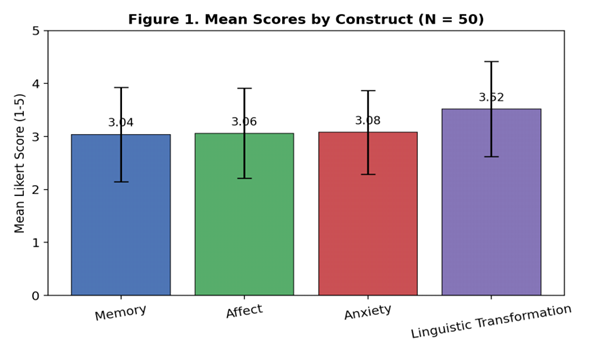
Figure 1. Mean Scores of Constructs with Standard Deviation Error Bars (N = 50)
The descriptive findings indicate that Memory (M = 3.04, SD = 0.89), Affect (M = 3.06, SD = 0.85) and Anxiety (M = 3.08, SD = 0.79) were positioned around the midpoint of the scale, reflecting variations in learners’ emotional experiences and psychological associations with English. Linguistic Transformation recorded the highest mean score (M = 3.52, SD = 0.90), indicating that participants reported a stronger sense of change in language engagement, self-expression and their relationship with English at the postgraduate level. From a psychoanalytic perspective, this pattern suggests that second language acquisition involves not only linguistic development but also the negotiation of emotional experiences, memories and subjective meanings attached to language learning.
Correlational Findings
Pearson’s correlation coefficients were calculated to examine the relationships among Memory, Affect, Anxiety and Linguistic Transformation.
Table 2:Pearson Correlation Matrix Among Constructs (N = 50)
|
Construct |
Memory |
Affect |
Anxiety |
Linguistic Transformation |
|
Memory |
1.00 |
-0.40 |
0.30 |
-0.35 |
|
Affect |
-0.40 |
1.00 |
-0.51 |
0.70 |
|
Anxiety |
0.30 |
-0.51 |
1.00 |
-0.59 |
|
Linguistic Transformation |
-0.35 |
0.70 |
-0.59 |
1.00 |
Interpretation
These results indicate that positive affect was strongly associated with greater perceived linguistic transformation, while anxiety was strongly associated with lower perceived transformation. Memory showed a moderate positive relationship with anxiety, suggesting that remembered earlier experiences may continue to shape present emotional responses to English.
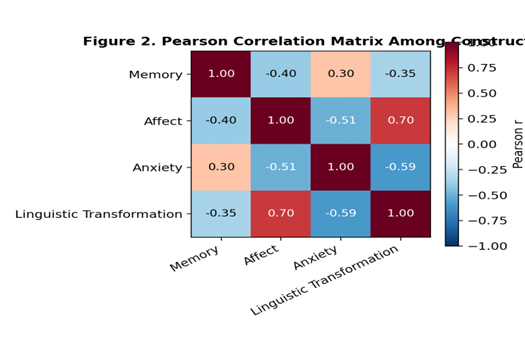
Figure 2. Pearson Correlation Heatmap Among Memory, Affect, Anxiety and Linguistic Transformation (N = 50)
Interpretation
The correlation heatmap illustrates the strength and direction of relationships among the four constructs. The strongest positive relationship was observed between Affect and Linguistic Transformation (r = .70), indicating that positive emotional experiences are associated with stronger perceptions of linguistic change. In contrast, Anxiety and Linguistic Transformation showed a strong negative relationship (r = -.59), suggesting that increased language-related anxiety corresponds with reduced perceptions of linguistic transformation. The negative association between Affect and Anxiety (r = -.51) indicates that stronger affective engagement is related to lower levels of language anxiety. From a psychoanalytic perspective, these patterns suggest that emotional experiences and remembered linguistic encounters may shape learners’ relationship with a second language.
|
Construct Pair |
r |
p-value |
Interpretation |
|
Affect – Linguistic Transformation |
0.70 |
< .001 |
Strong positive(Highly Significant) |
|
Anxiety – Linguistic Transformation |
-0.59 |
< .001 |
Strong negative(Highly Significant) |
|
Affect – Anxiety |
-0.51 |
< .001 |
Moderate negative(Highly Significant) |
|
Memory – Anxiety |
0.30 |
.034 |
Moderate positive(Statistically Significant) |
Table 3. Key Pairwise Pearson Correlations with Significance Levels
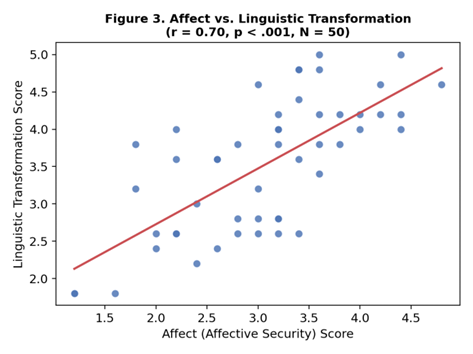
Figure 3. Scatterplot of Affect and Linguistic Transformation Scores
The correlation analysis revealed a strong positive relationship between Affect and Linguistic Transformation (r = .70, p < .001). This indicates that participants with more positive affective experiences related to English tended to report a stronger sense of linguistic transformation. From a psychoanalytic perspective, this relationship suggests that emotional engagement with language may be associated with learners’ changing relationship with the second language.
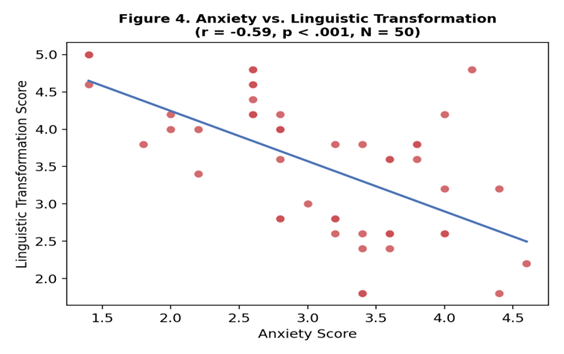
Figure 4. Scatterplot of Anxiety and Linguistic Transformation Scores
A strong negative correlation was observed between Anxiety and Linguistic Transformation (r = -.59, p < .001), indicating that higher levels of language-related anxiety were associated with lower perceptions of linguistic transformation among participants. This finding suggests that affective barriers may influence learners’ subjective experiences of change and engagement with English. Additionally, the moderate positive relationship between Memory and Anxiety (r = .30, p = .034) indicates that remembered linguistic experiences, such as earlier correction or embarrassment, may be associated with present language anxiety. From a Freudian perspective, this relationship can be interpreted through the concept of repetition, where emotionally significant past experiences may continue to shape present responses to language learning (Freud, 1920/1955).
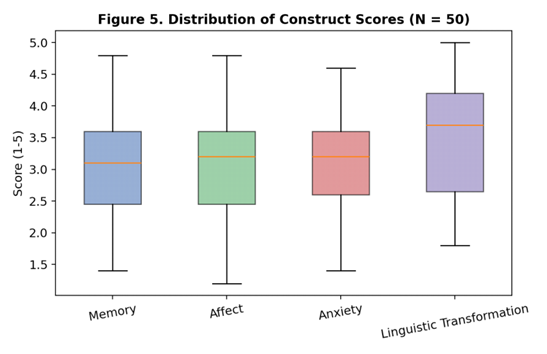
Figure 5. Distribution of Construct Scores Across Participants (N = 50)
The boxplot illustrates the distribution and variability of scores across the four constructs. Linguistic Transformation demonstrates a relatively higher median score and wider range compared with the other constructs, indicating greater variation in participants’ perceptions of linguistic change. Anxiety shows a comparatively narrower distribution, suggesting that language-related anxiety levels were more consistently experienced across the sample. These patterns highlight the role of affective and experiential factors in shaping learners’ relationships with second language acquisition.
Qualitative Themes
Qualitative Thematic Deconstruction: Psychoanalytic Interpretation of Learner Narratives
To contextualize these statistical behaviors, the qualitative narratives were interrogated. Thematic analysis yielded three core psychical themes that illuminate the quantitative axes.
Table 4: Thematic Summary with Freudian Interpretive Frames
|
Empirical Theme |
Narrative Description |
Illustrative Participant Excerpt |
Freudian Interpretive Frame |
|
Symbolic Investment and Ambivalence |
English is pursued as a vital tool for social mobility, yet this pursuit triggers deep-seated guilt and a sense of fracturing away from the primary identity. |
"When I speak English well in the department, I feel proud, like I am achieving something big. But immediately inside, I feel a coldness... like I am leaving my family, my village and my true self behind." (Participant 10) |
Psychical Ambivalence: The simultaneous investment in and defensive resistance toward a highly valued but threatening symbolic object ($L2$). |
|
Repetition of Early Classroom Affect |
Present adult performance blocks, hesitation and physical freezing are directly tied to childhood pedagogical shaming. |
"I know the grammar rules perfectly now as a postgraduate, but the moment I stand up to answer the professor, my throat tightens. I am suddenly 10 years old again, hearing my school teacher mock my pronunciation while the whole class laughs." (Participant 8) |
Repetition Compulsion: Interpreted as the recurrence of emotionally significant past classroom experiences in present language situations. |
|
The Mother Tongue as Psychic Refuge |
Mother Tongue is structured as an untranslatable emotional sanctuary, turning the inner shift toward English into an alienating experience. |
"Mother tongue is where I feel free. Now I notice I think and draft in English... it feels strange." (Participant 29) |
The Return of the Repressed: Interpreted as the persistence of emotionally significant attachments to earlier linguistic identities. |
Symbolic investment and ambivalence
Participants described English as a valuable tool for academic and social mobility, yet this investment was often accompanied by emotional unease. One participant noted pride in speaking English well but also felt as though they were leaving behind family, village and a more authentic self. This reflects an ambivalent relationship in which English is both desired and experienced as potentially alienating.
Repetition of early classroom affect
Several participants described present-day hesitation, freezing, or fear of speaking English as connected to earlier experiences of humiliation in school classrooms. One learner reported feeling like a younger self again when asked to answer in class, recalling teacher mockery and peer laughter. This pattern can be interpreted through Freud’s concept of repetition compulsion, suggesting that emotionally significant earlier language-learning experiences may continue to influence present responses.
Mother tongue as psychic refuge
For some participants, the mother tongue was represented as emotionally safe and intimate, whereas English was experienced as psychologically distancing. One participant described thinking and drafting in English as feeling strange, as though an outsider had entered internal thought. This theme suggests that language shift may involve emotional displacement as well as academic development.
DISCUSSION :
The findings suggest that second language acquisition among these postgraduate learners is shaped by both measurable affective conditions and deeper subjective histories. The strong positive association between affect and linguistic transformation indicates that emotional security is associated with learners’ sense of development in English. This aligns with SLA research showing that positive emotional states facilitate engagement and participation. However, the psychoanalytic reading adds that positive affect is not merely a facilitator of cognition; it is tied to earlier symbolic experiences and self-relations.
The strong negative association between anxiety and linguistic transformation supports established SLA work on the inhibiting effects of language anxiety. Yet the interview data suggest that anxiety may also be historically rooted in earlier classroom humiliations and repeated experiences of exposure. From a Freudian perspective, this is consistent with repetition compulsion: the learner does not simply remember the earlier painful event, but re-enacts its emotional structure in current speaking situations. MacIntyre and Gregersen emphasize that positive emotions support language engagement by expanding learners’ willingness to participate. They argue that positive emotions “broaden learners’ thought-action repertoires” (MacIntyre & Gregersen, 2012, p. 201). This supports the finding that affective security is associated with perceived linguistic transformation.
The relationship between memory and anxiety further suggests that early linguistic experiences continue to influence later engagement with English. Participants’ narratives showed that memories of correction, embarrassment and comparison remain active in present performance. In psychoanalytic terms, these memories may function as emotionally significant experiences associated with learners’ present perceptions and responses toward English. The mother tongue, in contrast, appears as a site of belonging and emotional continuity, while English represents both opportunity and possible estrangement.
Taken together, the results indicate that the process of learning English in this context is not merely a matter of acquiring linguistic competence. It is also a negotiation of desire, memory, guilt, aspiration and identity. The study therefore extends SLA research by showing that emotional and symbolic investments are not peripheral but central to learners’ experiences of transformation.
Theoretical Contribution
This study contributes to SLA research by introducing a psychoanalytic interpretation of language learning as a process involving memory, affect and subject formation. It demonstrates that anxiety and linguistic growth are not only classroom variables but also shaped by personal histories and symbolic attachments. By integrating Freudian and postcolonial perspectives with empirical data, the study offers a more layered account of multilingual language learning in the Indian context.
Limitations
The study has several limitations. First, the sample size was small and drawn from a single institution, which limits generalizability. Second, the design was cross-sectional, so it cannot capture changes in affect or identity over time. Third, the psychoanalytic interpretation of qualitative narratives involves researcher judgment and may support alternative readings. Fourth, the findings are context-specific and may not transfer directly to other linguistic or cultural settings. Additionally, since the questionnaire was developed specifically for this study, further validation with larger samples and different multilingual contexts is required.
Future Directions
Future research should use longitudinal designs to track how affective and psychical patterns develop over time. Larger samples from multiple institutions would strengthen the generalizability of findings. Comparative studies across different mother-tongue backgrounds could reveal whether similar psychoanalytic patterns appear in other multilingual environments. Future work could also investigate whether affect-sensitive pedagogies reduce anxiety and support more positive linguistic transformation.
CONCLUSION :
This study examined the affective and experiential dimensions of second language acquisition among postgraduate learners through a Freudian psychoanalytic framework. The findings showed a strong positive relationship between affective engagement and self-perceived linguistic transformation and a strong negative relationship between language anxiety and perceived transformation. The qualitative narratives revealed recurring patterns of ambivalence, repetition and emotional attachment that can be interpreted through Freudian concepts such as repression and repetition compulsion. The study suggests that second language acquisition in multilingual contexts such as Tamil Nadu involves psychological and emotional negotiations beyond cognitive and instrumental aspects of language learning. Pedagogical approaches that recognize learners’ affective histories may provide a more comprehensive understanding of language development.
BIBLIOGRAPHY:
1. Benesch, S. (2012). Considering emotions in critical English language teaching. The Journal of Language, Identity & Education, 11(6), 399–412. https://doi.org/10.1080/15348458.2012.723473
2. Bhabha, H. K. (1994). The location of culture. Routledge.
3. https://www.routledge.com/The-Location-of-Culture/Bhabha/p/book/9780415336390
4. Braun, V., & Clarke, V. (2006). Using thematic analysis in psychology. Qualitative Research in Psychology, 3(2), 77–101. https://doi.org/10.1191/1478088706qp063oa
5. Canagarajah, A. S. (1999). Resisting linguistic imperialism in English teaching. Oxford University Press.https://global.oup.com/academic/product/resisting-linguistic-imperialism-in-english-teaching-9780194421540
6. Creswell, J. W., & Creswell, J. D. (2023). Research design: Qualitative, quantitative and mixed methods approaches (6th ed.). SAGE Publications.
7. https://us.sagepub.com/en-us/nam/research-design/book270550
8. Dewaele, J.-M. (2010). Emotions in multiple languages. Palgrave Macmillan.
9. https://link.springer.com/book/10.1057/9780230289505
10. Ellis, R. (2008). The study of second language acquisition (2nd ed.). Oxford University Press.
11. https://global.oup.com/academic/product/the-study-of-second-language-acquisition-9780194422574
12. Freud, S. (1955). Beyond the pleasure principle. In J. Strachey (Ed. & Trans.), The standard edition of the complete psychological works of Sigmund Freud (Vol. 18, pp. 1–64). Hogarth Press. (Original work published 1920).https://www.sas.upenn.edu/~cavitch/pdf-library/Freud_Beyond.pdf
13. Freud, S. (1957). Repression. In J. Strachey (Ed. & Trans.), The standard edition of the complete psychological works of Sigmund Freud (Vol. 14, pp. 141–158). Hogarth Press. (Original work published 1915).https://www.sas.upenn.edu/~cavitch/pdf-library/Freud_Repression.pdf
14. Horwitz, E. K., Horwitz, M. B., & Cope, J. (1986). Foreign language classroom anxiety. The Modern Language Journal, 70(2), 125–132.https://doi.org/10.2307/327317
15. Krashen, S. D. (1982). Principles and practice in second language acquisition. Pergamon Press.https://www.sdkrashen.com/content/books/principles_and_practice.pdf
16. Kristeva, J. (1980). Desire in language: A semiotic approach to literature and art. Columbia University Press.https://cup.columbia.edu/book/desire-in-language/9780231048071
17. Lacan, J. (1977). Écrits: A selection (A. Sheridan, Trans.). W. W. Norton.
18. https://wwnorton.com/books/Ecrits/
19. MacIntyre, P. D., & Gregersen, T. (2012). Emotions that facilitate language learning: The positive-broadening power of the imagination. Studies in Second Language Learning and Teaching, 2(2), 193–213.https://doi.org/10.14746/ssllt.2012.2.2.4
20. Norton, B. (2000). Identity and language learning: Gender, ethnicity and educational change. Longman. https://www.routledge.com/Identity-and-Language-Learning/Norton/p/book/9780582368864
21. Norton, B. (2013). Identity and language learning: Extending the conversation (2nd ed.). Multilingual Matters.
22. Nunnally, J. C., & Bernstein, I. H. (1994). Psychometric theory (3rd ed.). McGraw-Hill.
23. Pavlenko, A. (2005). Emotions and multilingualism. Cambridge University Press.
24. https://doi.org/10.1017/CBO9780511584461
25. Pennycook, A. (1998). English and the discourses of colonialism. Routledge.
26. https://www.routledge.com/English-and-the-Discourses-of-Colonialism/Pennycook/p/book/9780415162029
27. Ramanathan, V. (2005). The English-vernacular divide: Postcolonial language politics and practice. Multilingual Matters. https://www.multilingual-matters.com/page/detail/The-English-Vernacular-Divide/?k=9781853598142
28. Swain, M. (2005). The output hypothesis: Theory and research. In E. Hinkel (Ed.), Handbook of research in second language teaching and learning (pp. 471–483). Lawrence Erlbaum Associates. https://doi.org/10.4324/9781410612700