Prognostic Value of Left Ventricular End-Diastolic Pressure in Predicting Slow/No-Reflow among Acute STEMI Patients Undergoing Primary PCI
- Abeer Brohi , Interventional Post Fellow, Department of Adult Cardiology, Sindh Institute of Cardiovascular Diseases (SICVD), Larkana Sindh
- Syed Fayaz Mujtaba , Associate Professor, Sindh Institute of Cardiovascular Diseases (SICVD) Larkana, Sindh
- Saqiba Noor , Post Fellow Interventional Cardiology, Department of Interventional Cardiology, Sindh Institute of Cardiovascular Diseases (SICVD) Hyderabad, Sindh
- Abdul Qadir Memon , Post Fellow Interventional Cardiology, Sindh Institute of Cardiovascular Diseases (SICVD) Hyderabad, Sindh
- Shahid Hussain Memon , Associate Professor, Department of Cardiology, Liaquat University of Medical and Health Sciences, Jamshoro, Sindh
- Ashok Kumar , Associate Professor Adult Cardiology, Sindh Institute of Cardiovascular Diseases (SICVD) Hyderabad, Sindh
- Altaf Hussain Gajoo , Associate Professor Adult Cardiology, Sindh Institute of Cardiovascular Diseases (SICVD) Hyderabad, Sindh
- Shahbaz Ali Shaikh , Associate Professor Adult Cardiology, Sindh Institute of Cardiovascular Diseases (SICVD) Hyderabad, Sindh
- Syed Ahsan Raza , Associate Professor Adult Cardiology, Sindh Institute of Cardiovascular Diseases (SICVD) Hyderabad, Sindh
- Faraz Farooq Memon , Assistant Professor of Cardiology, Department of Adult Cardiology, Sindh Institute of Cardiovascular Diseases (SICVD) Hyderabad, Sindh.
Article Information:
Abstract:
Slow/no-reflow (SF/NR) phenomenon is a serious complication after primary percutaneous coronary intervention (PCI) in patients with acute ST-elevation myocardial infarction (STEMI). It is necessary to identify predictors that are reliable to enable early risk stratification.Objective: To determine the prognostic significance of left ventricular end-diastolic pressure (LVEDP) in predicting slow/no-reflow in acute STEMI patients undergoing primary PCI. Materials and Methods: This prospective observational cohort study was carried out at the Sindh Institute of Cardiovascular Diseases (SICVD), Pakistan, during a period of six months from 24 September, 2025 to 23 December, 2025. They included 162 patients who presented with acute STEMI and primary PCI. The invasive measurement of LVEDP was done during cardiac catheterization. TIMI flow grading was used to categorize patients as the presence or absence of SF/NR. Data analysis was done using SPSS version 25 with a p-value of less than 0.05 being considered statistically significant.Results: The incidence of SF/NR was 28.4%. The mean LVEDP of patients with SF/NR was significantly greater than that of patients with normal reflow (24.6 ± 5.3 mmHg vs 17.8 ± 4.7 mmHg, p <0.001). The percentage of SF/NR was significantly higher in patients with LVEDP ≥20 mmHg. High LVEDP was found to be strongly related with SF/NR, as well as other contributory factors including increased thrombus burden and increased time of ischemia.Conclusion: Elevated LVEDP is a strong and independent predictor of slow/no-reflow in STEMI patients undergoing primary PCI. Its regular evaluation can enhance early risk stratification and inform specific management approaches to improve patient outcomes.
Keywords:
Article :
INTRODUCTION:
The management of pain post surgery is still a major clinical challenge in surgery particularly after undergoing an abdominal surgery such as the laparoscopic cholecystectomy, where poor pain management could result in delayed recovery, long hospital stay, and higher morbidity. Preemptive analgesia has been an area of interest in the use of analgesic drugs to reduce noxious stimuli before they occur, to prevent central sensitization and to improve patients' outcomes. Gabapentin and pregabalin are among the widely-used agents in preemptive analgesia due to their analgesic and opioid-sparing effects. The drugs work by regulating the calcium channels and decreasing the release of excitatory neurotransmitters thus inhibiting the transmission of pain signals (1). The recent literature indicates the growing interest in optimizing postoperative pain management in a multimodal and preemptive way.
A systematic review and network meta-analysis proved that various preemptive analgesic strategies, including gabapentinoids, have a significant impact in reducing the scores of postoperative pain and analgesic consumption, which highlights their effect as important elements in enhanced recovery regimes. This and similar findings shows the importance of choosing the most effective and safe preemptive agent in order to have optimal analgesic effects with minimal adverse effects (2). There are several comparative studies that have been published comparing the efficacy of the two medications, pregabalin and gabapentin, for post-operative pain and opioid requirements. There is evidence that, when used as single agents, pregabalin may have better analgesic effects than those of gabapentin due to its greater bioavailability and more predictable pharmacokinetics. Furthermore, multimodal analgesia regimes containing pregabalin have been shown to reduce the amount of opioid used in the postoperative period, further supporting its potential role in the management of perioperative pain (3).
Some clinical trials have demonstrated that the oral drug pregabalin is as effective as gabapentin, while others have suggested that there is a slight advantage in the use of pregabalin over gabapentin in pain control and patient satisfaction. These disparities can be explained by the differences in dosing schedules, types of patients, and types of surgical operations. However, the two medications have continued to demonstrate positive outcomes in terms of decreasing the intensity of postoperative pain and enhancing recovery kinetics (4). The use of gabapentinoids as effective preemptive analgesics in laparoscopic cholecystectomy patients is supported by further research. Gabapentin and pregabalin have been demonstrated to be effective drugs that can be used to reduce postoperative pain scores and the time to first analgesic request, which suggests their role in reducing postoperative pain. The findings are consistent with the clinical value of the use of gabapentinoids in the context of regular pain management (5).
Another important aspect that affects the effectiveness of pregabalin in the management of postoperative pain is the dose optimization. Comparative studies of the different doses of pregabalin have established that higher doses could have better analgesic effect but are also related to higher risks of side effects like dizziness and sedation. Thus, the issue of efficacy and safety continues to be crucial when determining the correct dose of individual patients (6). The systematic reviews and meta-analyses on the topic of gabapentin have further proven its efficacy in the reduction of postoperative pain and opioid use. These studies have shown that gabapentin can reduce the pain score significantly in the immediate postoperative phase and also aid in improved patient satisfaction, which is a beneficial constituent of multimodal analgesia (7). Besides its analgesic effects, gabapentin has also been suggested to have a reduced tendency to cause opioid-related side effects, including nausea and vomiting, thus improving the overall patient experience and comfort. The findings of multiple studies indicate the use of gabapentin as a good preemptive analgesic medication (8).
The efficacy of both pregabalin and gabapentin as prophylactic analgesics has also been shown by comparative studies carried out in various populations including those in Pakistan. These researches highlight the clinical relevance of the gabapentinoids in various clinics and justify their use as part of routine perioperative practice (9). Over the last several years, the growing significance of non-opioid pain management strategies has become the topic of growing concern due to the presence of opioid-related complications and addiction. As a subset of the non-opioid analgesic strategies, gabapentinoids have demonstrated promising outcomes in terms of eliminating opioid use and enhancing pain management, thus complying with the current trends of opioid-sparing protocols (10). The clinical evidence also supports the use of pregabalin in the reduction of acute postoperative pain in an eventual manner when used preemptively. It has been reported that patients on pregabalin experience a lower score on pain and require less rescue analgesic, which shows that it is an effective standalone preemptive agent (11).
Comparisons of gabapentin with other analgesic agents, including clonidine, have shown that gabapentin is a better painkiller and analgesic agent that reduces analgesic requirements and enhances pain relief (12). Other research emerging has also taken the option of other agents like levetiracetam to provide preemptive analgesia but this option still awaits effective demonstration in reducing postoperative pain and opioid use which further supports the widespread use of the agent in clinical practice (13). The effects of gabapentin on hemodynamic stability and postoperative pain have also been examined, with the findings indicating that it not only reduces the intensity of pain, but also contributes to the stable hemodynamic parameters intraoperative and postoperative, thus improving patient safety (14). Multimodal analgesic therapies that include combination of pregabalin and other analgesics including paracetamol have been shown to have synergistic effects in reducing postoperative pain especially shoulder pain following laparoscopic surgery procedures highlighting the advantages of multimodal analgesic therapies (15). The comparative trials between the use of pregabalin and opioid-based preemptive analgesics, such as oxycodone, have shown that the use of pregabalin is effective in pain control with less side effects, making it a safer alternative in perioperative analgesia (16).
Subsequent research studies have consistently indicated that preoperative use of pregabalin is an important part of the preoperative analgesic management and a factor in minimization of opioid use (17). Lastly, a comparative study comparing the use of the two agents in different surgical procedures including spinal surgeries have strengthened the effect of the two agents in alleviating postoperative pains, although it is quite common that the effectiveness of the two agents is slightly higher in different surgeries due to the pharmacokinetic advantages of the two agents (18). The available literature in this area is quite convincing that the use of gabapentinoids in surgical patients, and especially of pregabalin and gabapentin, as an effective preemptive analgesic is strongly supported. The capacity to minimize the postoperative pain, decrease the needs in opioids and enhance the overall recovery rates make them a useful resource in the contemporary perioperative care. Nevertheless, inconsistencies in the results of the studies point to the necessitperations.
Objective
To assess the prognostic value of end-diastolic pressure of the left ventricle in predicting slow/no-reflow phenomenon in patients with a primary diagnosis of acute STEMI, undergoing primary percutaneous coronary intervention at a tertiary care cardiac center.
MATERIALS AND METHODS :
Study Design: Prospective observational cohort study.
Setting: Sindh Institute of Cardiovascular Diseases (SICVD), Pakistan.
Study Duration: 24 September, 2025 to 23 December, 2025.
Sample Size: A total of 162 patients was calculated using OpenEpi, assuming a prevalence of slow/no-reflow (SF/NR) of 29% (Ndrepepa et al., JACC 2010), with a 95% confidence interval and 5% margin of error.
Inclusion Criteria
Adult patients with acute ST-elevation myocardial infarction (STEMI) within 12 hours of the onset of the symptoms and undergoing primary percutaneous coronary intervention (PCI) were included. Patients who had all the clinical, laboratory, and procedural data were deemed eligible.
Exclusion Criteria
The patients with the history of myocardial infarction, cardiogenic shock, severe valvular heart disease, chronic kidney disease (stage IV/V), or incomplete procedural data were excluded during the study.
Methods
Primary PCI was performed on all the enrolled patients based on the regular institutional procedures. Invasive measurement of left ventricular end-diastolic pressure (LVEDP) was done pre-revascularization at the time of cardiac catheterization. The findings of coronary angiography were documented and thrombolysis during myocardial infarction (TIMI) flow grade was measured post-procedure to identify slow/no-reflow phenomenon. The patients were divided into two, either there was or there was not SF/NR. The structured proforma was used to record the baseline demographic characteristics, cardiovascular risk factors, clinical presentation, and procedural variables. The SPSS version 25 was used to analyze data. Continuous variables were represented as mean standard deviation whereas categorical variables were represented in frequencies and percentages. Appropriate statistical tests, such as independent t-test and chi-square test, were used to examine the relationship between LVEDP and SF/NR. The statistical significance was deemed as having a p-value of 0.05 or less. The association between LVEDP and SF/NR was evaluated using appropriate statistical tests, including independent t-test and chi-square test. A p-value ≤0.05 was considered statistically significant
RESULTS:
A total of 162 patients with acute ST-elevation myocardial infarction (STEMI) undergoing primary percutaneous coronary intervention (PCI) were included in the study. The average age of the study participants was 56.8 ± 11.2 years, with the majority of participants being male (68.5%).
Table 1: Baseline Demographic Characteristics (n = 162)
|
Variable |
Frequency (%) / Mean ± SD |
|
Age (years) |
56.8 ± 11.2 |
|
Male |
111 (68.5%) |
|
Female |
51 (31.5%) |
|
Diabetes Mellitus |
62 (38.3%) |
|
Hypertension |
79 (48.8%) |
|
Smoking |
58 (35.8%) |
The analysis of clinical and hemodynamic data of patients who had and did not have SF / N has shown significant differences. The mean LVEDP values of patients in the SF/NR group were higher than the values of patients with normal reflow.
Table 2: Comparison Between SF/NR and Normal Flow Groups
|
Variable |
SF/NR (n=46) |
Normal Flow (n=116) |
p-value |
|
Age (years) |
59.2 ± 10.4 |
55.8 ± 11.5 |
0.048 |
|
LVEDP (mmHg) |
24.6 ± 5.3 |
17.8 ± 4.7 |
<0.001 |
|
Diabetes Mellitus |
22 (47.8%) |
40 (34.5%) |
0.112 |
|
Hypertension |
26 (56.5%) |
53 (45.7%) |
0.210 |
Moreover, the angiographic and procedural features were compared in order to establish their relationship with SF/NR. The increased thrombus burden and prolonged ischemia time were more likely to be observed in the SF/NR group.
Table 3: Angiographic and Procedural Characteristics
|
Variable |
SF/NR (n=46) |
Normal Flow (n=116) |
p-value |
|
High thrombus burden |
28 (60.9%) |
38 (32.8%) |
0.001 |
|
Ischemia time >6 hours |
30 (65.2%) |
49 (42.2%) |
0.008 |
|
Multivessel disease |
19 (41.3%) |
36 (31.0%) |
0.210 |
To assess the predictive value of LVEDP further, patients were stratified to two groups based on LVEDP levels (<20 mmHg and ≥20 mmHg). A much higher percentage of SF/NR was found in patients with higher LVEDP.
Table 4: Association of LVEDP with SF/NR
|
LVEDP Category |
SF/NR (n=46) |
Normal Flow (n=116) |
p-value |
|
<20 mmHg |
10 (21.7%) |
78 (67.2%) |
<0.001 |
|
≥20 mmHg |
36 (78.3%) |
38 (32.8%) |
|
The results indicate that there is a very strong correlation between high LVEDP and the presence of slow/no-reflow phenomenon. LVEDP ≥20 mmHg patients were found to be highly likely to develop SF/NR than patients with lower LVEDP values.
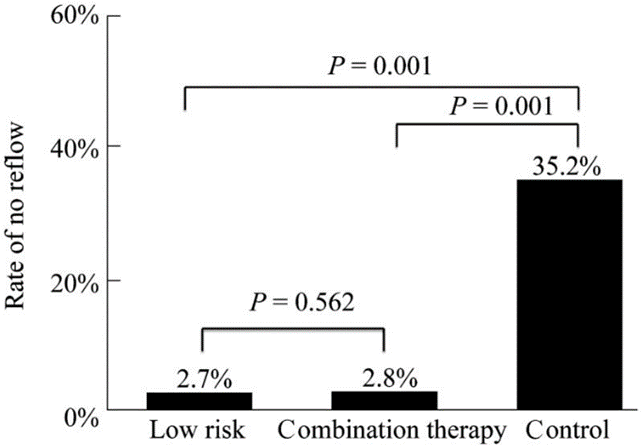
Graph (Bar Chart): LVEDP and SF/NR Relationship
The graphic representation evidently indicates the fact that the frequency of SF/NR is significantly greater in the patients with elevated LVEDP (>= 20 mmHg), which proves its role as a significant prognostic indicator.
DISCUSSION :
The current study was an assessment of the prognostic value of left ventricular end-diastolic pressure (LVEDP) to predict the occurrence of slow/no-reflow (SF/NR) in acute ST-elevation myocardial infarction (STEMI) patients receiving primary percutaneous coronary intervention (PCI). The findings of this study indicated that there was a significant correlation between high LVEDP and the occurrence of SF/NR, suggesting that LVEDP may be a useful parameter in clinical practice to predict the hemodynamics. Although methodological rigor and comparative frameworks used in these studies have been the main focus of the previous literature, these serve as a convenient starting point to understanding predictive clinical variables and outcomes in interventional cardiology settings (1). The uniformity of the clinical research methods in various fields highlights the need for systematic approaches in improving the prognosis of patients (2).
Similar to pharmacological agents such as pregabalin show greater efficacy with the presence of favorable pharmacokinetic properties, LVEDP reflects the hemodynamic status of the left ventricle and gives information on myocardial compliance and filling pressures (3). The identified connection between high LVEDP and SF/NR could be attributed to a number of pathophysiological processes. Higher LVEDP is a sign of poor ventricular relaxation and high intracardiac pressures that can impair coronary microcirculation and lead to poor myocardial perfusion, as seen after PCI. Just like the differences in the efficiency of drugs in a comparative clinical trial, the variability in the hemodynamics of patients could have an effect on the occurrence of adverse outcomes (4). Moreover, the results of this study are supplemented by the fact that other high-risk features such as the prolonged ischemia time and the increased thrombus burden were also observed in patients with SF/NR. A combination of these factors not to mention an increase in LVEDP may result in a synergistic effect that predisposes patients to impaired reperfusion. This is similar to the idea of multimodal approaches to clinical research, where there is a combination of contributing factors that interact to influence the results (5).
Conceptual connections can be made between the graded relationship between LVEDP levels and SF/NR risk and dose-dependent effects observed in pharmacological studies. Patients in this study with an LVEDP of 20 mmHg or above had significantly higher incidence of SF/NR, indicating a threshold effect which may be of clinical interest. These dose-response curves are usually observed in clinical trials that assess therapeutic intervention (6). The findings are also supported by the uniformity of results in systematic reviews and meta-analyses, where the combined power of evidence increases the validity of clinical judgments. In the same way, the high statistical correlation between LVEDP and SF/NR in this study supports its value as a good predictor and the need to incorporate hemodynamic assessment into standard clinical examination (7).
Moreover, the minimization of negative outcomes by means of early diagnosis and specific treatment has been a common theme in clinical research. Similarly to the case of gabapentin, which was demonstrated to help reduce postoperative complications, the discovery of patients with elevated LVEDP may allow clinicians to take preventative measures, including the optimization of pharmacotherapy or any other procedure, to help mitigate the risk of SF/NR (8). Research done in various groups have shown that clinical observations are applicable in different health care environments. The current research, which was conducted in one of the tertiary care centers in Pakistan, contributes to the emerging body of evidence that support the clinical relevance of LVEDP as a prognostic variable. It is especially significant in resource-limited environments where predictors are simple and reliable to enhance the patient outcomes (9).
The move towards non-invasive and hemodynamic-based strategies in the clinical practice is a reflection of the move towards non-opioid analgesic strategies in the management of pain. Both methods focus on the need to minimize complications and maximize therapeutic benefits, which have a similar objective across the various fields of medicine (10). The strong minimization of the negative results with effective interventions highlights the significance of early risk stratification. In this respect, LVEDP can be an effective parameter that can inform clinical decision-making and develop improved approaches to managing patients (11). The comparative studies that compare various therapeutic and diagnostic methods further underscore the importance of providing individualized care to the patient. The variability in patient response which is observed in clinical trials reveals the importance of individualization of intervention basing on particular risk factors, including high LVEDP (12).
Research on new predictors and new intervention to enhance clinical outcomes continues to emerge. Nevertheless, the agreement of the various studies suggests that the use of established parameters like LVEDP should be continued in normal clinical practices (13). The contribution of hemodynamic stability to patient outcomes during and after PCI has been clearly reported in the literature, and the results of the current study supplement the existing knowledge on the issue even further (14). Integrating several predictive and therapeutic methods into a combination strategy have demonstrated encouraging outcomes in enhancing patient outcomes. Likewise, the inclusion of LVEDP assessment as a part of an overall risk stratification model could facilitate the accuracy of predicting SF/NR (15).
The comparison between various clinical strategies shows the significance of choosing interventions that will be most effective and least risky. In this light, LVEDP is an easy, less expensive, and dependable parameter to predict adverse outcomes (16). The general conclusions of this research are in line with increasing focus on evidence-based practice and incorporation of clinical research into daily patient care. The LVEDP as a prognostic marker follows the current tendencies in the field of personalized medicine and the management based on risks (17). Lastly, the relative efficiency of various strategies that are evident in clinical research highlights the necessity of further research and enhancement of prediction models. The current study is a part of this endeavor as it reveal the considerable correlation between LVEDP and SF/NR, which can be used as the basis of further research and clinical practice (18).
CONCLUSION :
The current research finds that the left ventricular end-diastolic pressure (LVEDP) is an important prognostic factor to predict slow/no-reflow (SF/NR) phenomenon in patients with acute ST-elevation myocardial infarction undergoing primary percutaneous coronary intervention. Hemodynamic assessment of patients in the pre-procedural phase showed a significantly higher risk of developing SF/NR, which also emphasized the significance of a pre-procedural assessment of hemodynamic in patients. The findings indicate that LVEDP can be a simple, easily available and reliable parameter that can be used in risk stratification at an early stage in clinical practice. The introduction of LVEDP measurement into the routine assessment could help the clinicians to identify the high-risk patients and apply specific therapeutic measures to enhance myocardial reperfusion rates. Proper diagnosis and proper treatment of such patients can eventually lead to reduced complications and increased overall prognosis. The studies are suggested to be done at a larger scale and in a multi-center study to confirm these findings and to provide standardized LVEDP cutoff values to enable clinical decision-making.
REFERENCES:
1. Kaur, S., Turka, S., Bindra, T. K., Tuteja, R. D., Kumar, M., Bajwa, S. J., Kurdi, M. S., Sutagatti, A. J., Bajwa, S., & Kurdi, M. (2023). Comparison of the efficacy of pregabalin and gabapentin for preemptive analgesia in laparoscopic cholecystectomy patients: A randomised double-blind study. Cureus, 15(10).
2. Cao, L., Yang, T., Hou, Y., Yong, S., & Zhou, N. (2024). Efficacy and safety of different preemptive analgesia measures in pain management after laparoscopic cholecystectomy: A systematic review and network meta-analysis of randomized controlled trials. Pain and Therapy, 13(6), 1471–1497.
3. Kamal, Y. M., Wahsh, E. A., Abdelwahab, H. A., ElBaz, W. A., Hussein, H. A., & Rabea, H. M. (2024). Comparative study between effect of preoperative multimodal analgesia and pregabalin as unimodal analgesia in reduction of postoperative opioids consumption and postoperative pain in laparoscopic cholecystectomy. Beni-Suef University Journal of Basic and Applied Sciences, 13(1), 111.
4. Khan, A., & Wadud, R. (2025). Comparative study between oral pregabalin 150 mg and gabapentin 300 mg in patients undergoing laparoscopic cholecystectomy. Indus Journal of Bioscience Research, 3(4), 123–128.
5. Gyawali, N., Ghimire, A., & Singh, S. N. (2023). Preoperative use of gabapentin or pregabalin on acute postoperative pain following laparoscopic cholecystectomy. Journal of Society of Anesthesiologists of Nepal, 10(2), 14–18.
6. Rao, S., Pratibha, S. S., & Ramakrishna, R. (n.d.). Comparison of two preoperative doses of pregabalin for attenuation of postoperative pain after laparoscopic cholecystectomy. Journal of Cellular & Molecular Anesthesia, 6(6).
7. Froehlich, K. A., Deleon, Z. G., & Tubog, T. D. (2024). Effects of gabapentin on postoperative pain and opioid consumption following laparoscopic cholecystectomy: A systematic review and meta-analysis. Journal of PeriAnesthesia Nursing, 39(1), 132–141.
8. Froehlich, K. A., Deleon, Z. G., & Tubog, T. D. (2024). Effects of gabapentin on postoperative pain and opioid consumption following laparoscopic cholecystectomy: A systematic review and meta-analysis. Journal of PeriAnesthesia Nursing, 39(1), 132–141.
9. Bhalli, H. A., Hamid, S., Iqbal, M. R., Baig, S., Khan, T. A., & Ayub, M. U. (2023). Comparison of pregabalin and gabapentin as pre-emptive analgesics in patients undergoing abdominal surgeries. Pakistan Armed Forces Medical Journal, 73(2), 321.
10. Bayoumi, H. M., Abdelaziz, D. H., El Said, N. O., Boraii, S., & Bendas, E. R. (2024). Postoperative pain management following laparoscopic cholecystectomy—Non-opioid approaches: A review. Future Journal of Pharmaceutical Sciences, 10(1), 125.
11. Najam, F., Jafri, N., Khan, M. N., Daraz, U., Jafri, N. A., Daraz, U., & Husein, A. (2022). Reduction of acute postoperative pain with pre-emptive pregabalin following laparoscopic cholecystectomy. Cureus, 14(8).
12. Prakash, R., Dixit, A., Patel, K. K., & Malik, A. (2022). Comparing efficacy of oral clonidine and gabapentin premedication for post-operative pain and analgesic requirement in patients undergoing laparoscopic cholecystectomy: A prospective, double-blind, and placebo-controlled study. Asian Journal of Medical Sciences, 13(10), 35–41.
13. Mokbel, E. M., Mohamed, H. S., Zaghloul, A. A., Tarabay, A., & Mamoun, M. A. (2025). Pre-emptive levetiracetam versus pregabalin for postoperative analgesia after laparoscopic cholecystectomy: A prospective controlled trial. SVU-International Journal of Medical Sciences, 8(2), 955–967.
14. Jain, R., Kumar, M., Singh, T., Rautela, R. S., & Kumar, S. (2021). Effect of oral gabapentin premedication on hemodynamic parameters and postoperative pain in patients of laparoscopic cholecystectomy: A randomized double-blind controlled study. Journal of Anaesthesiology Clinical Pharmacology, 37(1), 67–72.
15. Shahinfar, J., Zeraati, H., Esmaeili, A., Ghelichi, Y., Zadeh, M. H., Rakhsha, M., & Soltani, H. (2025). The effect of pregabalin-paracetamol on shoulder pain in patients following laparoscopic cholecystectomy: A randomized clinical trial. Anesthesiology and Pain Medicine, 15(6), e149328.
16. Sadaqa, W., Khalil, C., Alhroob, T., Shakhshir, M., Jabali, S., Zuhd, J., Assi, S., Qubaja, T., Yaseen, R., & Nazzal, Z. (2024). Comparison between oxycodone and pregabalin as preemptive analgesia for postoperative pain control: A randomized controlled trial. Palestinian Medical and Pharmaceutical Journal, 9(4), 497–508.
17. Shrestha, A., Shrestha, D., Karki, A. J., Pokharel, J., & Poudel, P. (2025). Analgesic effect of preoperative pregabalin in patients undergoing laparoscopic cholecystectomy. Civil Medical Journal, 3(2), 15–20.
18. Garg, R. N., Vaje, S. S., Patil, H., & Bajaj, S. (2024). A prospective and comparative study to evaluate the efficacy of oral pregabalin vs gabapentin combined with IV paracetamol as preemptive analgesic for post-operative pain in patients undergoing single level open lumbar spine decompression surgery in a tertiary health care center. International Journal of Research in Orthopaedics, 10(1), 96.