Role of Tranexamic Acid for Seroma Prevention in Patients Undergoing Ventral Hernia Repair
- Saira Mahmood , Assistant Professor, Surgery Rawal Institute of Health Sciences, Islamabad, Pakistan
- Muhammad Usman Aslam , MBBS, FCPS, Consultant Surgeon, THQ Hospital, Minchinabad, Pakistan
- Noshaba Akram , MBBS, FCPS (General Surgery), Consultant General and Laparoscopic Surgeon, Al-Khidmat Raazi Hospital, Rawalpindi, Pakistan
- Shazma Begum , Assistant Professor of Surgery, Frontier Medical College, Abbottabad, Pakistan
- Muhammad Faheem Anwer , Professor, Rashid Lateef Medical College, Lahore, Pakistan
- Aroosa Rubab , General Surgeon, Mohtarma Shaheed Benazir Bhutto General Hospital, Quetta, Pakistan
Article Information:
Abstract:
Seroma formation is a common postoperative complication after ventral hernia repair, especially following extensive tissue dissection and mesh placement. Tranexamic acid is an antifibrinolytic agent that may reduce postoperative fluid collection by limiting fibrinolysis, microvascular bleeding, and inflammatory exudation. Objective: To evaluate the role of tranexamic acid in preventing postoperative seroma formation in patients undergoing elective ventral hernia repair with mesh. Methods: This prospective comparative study included 165 patients undergoing elective open ventral hernia repair with mesh. Patients were divided into two groups. Group A included 83 patients who received tranexamic acid, while Group B included 82 patients who received standard care without tranexamic acid. The primary outcome was postoperative seroma formation within 30 days. Secondary outcomes included total drain output, drain removal time, hemoglobin drop, hematoma, surgical site infection, length of hospital stay, readmission, and thromboembolic events. Data were analyzed using SPSS version 26. A p-value <0.05 was considered statistically significant. Results: The mean age was 44.8 +/- 10.6 years in the tranexamic acid group and 45.2 +/- 11.1 years in the control group. Baseline characteristics were comparable between both groups. Seroma formation was significantly lower in Group A compared with Group B, occurring in 10 patients (12.0%) versus 25 patients (30.5%), respectively (p=0.004). Mean total drain output was significantly lower in the tranexamic acid group than in the control group (178 +/- 64 ml vs. 268 +/- 91 ml; p<0.001). Drain removal time was also shorter in Group A (3.1 +/- 1.0 days vs. 4.7 +/- 1.5 days; p<0.001). No thromboembolic event was reported in the tranexamic acid group. Conclusion: Tranexamic acid significantly reduced postoperative seroma formation, drain output, drain duration, hemoglobin drop, and hospital stay in patients undergoing ventral hernia repair with mesh. It appears to be a safe and effective adjunct in selected patients without thromboembolic risk factors.
Keywords:
Article :
INTRODUCTION:
Ventral hernia is a common surgical condition characterized by protrusion of abdominal contents through a defect in the anterior abdominal wall. It may occur as a primary defect, such as umbilical or epigastric hernia, or as an incisional hernia following previous abdominal surgery. Surgical repair is performed to relieve symptoms, restore abdominal wall integrity, and prevent complications such as incarceration or strangulation [1]. Mesh-based repair has become the preferred method for many ventral hernias because it reduces recurrence compared with primary suture repair; however, it may be associated with wound-related complications including seroma, hematoma, surgical site infection, and chronic pain [1,2].
Seroma formation is one of the most frequently encountered postoperative complications after ventral hernia repair. It results from accumulation of serous fluid in the dead space created by tissue dissection, lymphatic disruption, inflammatory response, and mesh implantation [3,4]. Although many seromas resolve spontaneously, clinically significant seromas may cause pain, wound tension, delayed healing, secondary infection, repeated aspiration, prolonged follow-up, and patient anxiety [5,6].
Several strategies have been used to reduce seroma formation, including meticulous hemostasis, limited flap dissection, quilting sutures, suction drains, compression dressings, fibrin sealants, and improved mesh placement techniques [6-8]. Despite these measures, seroma remains a relevant clinical problem, particularly after open ventral hernia repair where wider dissection is often required [7,8].
Tranexamic acid is a synthetic lysine analogue that inhibits fibrinolysis by blocking lysine-binding sites on plasminogen. It stabilizes fibrin clot and reduces bleeding in various surgical fields including trauma, orthopedic surgery, obstetrics, breast surgery, and abdominal procedures [9,10]. By reducing fibrinolysis and microvascular oozing, tranexamic acid may decrease postoperative wound drainage and seroma formation. However, limited data are available regarding its role in ventral hernia repair. Therefore, the present study was conducted to evaluate the effectiveness of tranexamic acid in preventing postoperative seroma formation among patients undergoing ventral hernia repair with mesh.
MATERIALS AND METHODS:
Study Design: This was a prospective comparative study.
Study Setting: The study was conducted in the Department of Surgery, Rawal Institute of Health Sciences, Islamabad from October 2024 to Sep 2025.
Sample Size: A total of 165 patients undergoing elective ventral hernia repair were included in the study.
Study Groups: Patients were divided into two groups: Group A, tranexamic acid group, included 83 patients; Group B, control group, included 82 patients.
Inclusion Criteria
• Age between 18 and 70 years
• Primary or incisional ventral hernia
• Elective open mesh repair
• ASA physical status I to III
• Written informed consent
Exclusion Criteria
• Obstructed or strangulated hernia
• Emergency hernia repair
• Known bleeding disorder
• History of deep vein thrombosis or pulmonary embolism
• Severe renal impairment
• Chronic anticoagulant therapy
• Liver cirrhosis
• Pregnancy or lactation
• Allergy to tranexamic acid
• Active infection at the operative site
Intervention
Patients in Group A received tranexamic acid 1 g intravenously at the time of skin incision, followed by 1 g intravenously 12 hours postoperatively. Patients in Group B received standard perioperative care without tranexamic acid. All patients received routine antibiotic prophylaxis, standard anesthesia care, postoperative analgesia, and wound care.
Surgical Procedure
All patients underwent open ventral hernia repair with polypropylene mesh. The hernia sac was dissected and contents were reduced. The fascial defect was closed where possible. Mesh was placed either in the onlay or sublay position depending on defect size, tissue condition, and surgeon preference. Meticulous hemostasis was achieved before closure. Closed suction drains were placed in all patients and removed when drain output was less than 30 ml over 24 hours.
Outcome Measures
The primary outcome was seroma formation within 30 days after surgery. Seroma was defined as a clinically evident or ultrasonographically confirmed postoperative fluid collection at the surgical site. Secondary outcomes included total drain output, drain removal time, hemoglobin drop, hematoma formation, surgical site infection, length of hospital stay, readmission, and thromboembolic or drug-related adverse events.
Follow-up
Patients were followed
during hospital stay and then at 7 days, 14 days, and 30 days postoperatively. Wounds were examined for swelling, tenderness, discharge, seroma, hematoma, or infection.
Statistical Analysis
Data were analyzed using SPSS version 26. Quantitative variables were presented as mean +/- standard deviation. Qualitative variables were presented as frequency and percentage. Independent sample t-test was used for continuous variables. Chi-square test or Fisher exact test was used for categorical variables. A p-value <0.05 was considered statistically significant.
RESULTS:
A total of 165 patients were included in the study. Group A included 83 patients who received tranexamic acid, while Group B included 82 patients who received standard care without tranexamic acid.
The mean age of patients in Group A was 44.8 +/- 10.6 years, while the mean age in Group B was 45.2 +/- 11.1 years. There was no statistically significant difference between both groups regarding age, gender, BMI, comorbidities, type of hernia, or mean defect size.
Table 1. Baseline characteristics of patients.
|
Variable |
Group A: TXA (n=83) |
Group B: Control (n=82) |
p-value |
|
Age, years |
44.8 +/- 10.6 |
45.2 +/- 11.1 |
0.81 |
|
Male |
30 (36.1%) |
31 (37.8%) |
0.82 |
|
Female |
53 (63.9%) |
51 (62.2%) |
0.82 |
|
BMI, kg/m2 |
29.4 +/- 4.1 |
29.1 +/- 4.4 |
0.65 |
|
Diabetes mellitus |
18 (21.7%) |
21 (25.6%) |
0.55 |
|
Hypertension |
24 (28.9%) |
26 (31.7%) |
0.69 |
|
Smoking history |
12 (14.5%) |
15 (18.3%) |
0.50 |
|
Primary ventral hernia |
31 (37.3%) |
34 (41.5%) |
0.58 |
|
Incisional hernia |
52 (62.7%) |
48 (58.5%) |
0.58 |
|
Mean defect size, cm |
5.2 +/- 1.6 |
5.1 +/- 1.5 |
0.68 |
Table 2. Operative characteristics.
|
Variable |
Group A: TXA (n=83) |
Group B: Control (n=82) |
p-value |
|
Onlay mesh repair |
49 (59.0%) |
47 (57.3%) |
0.82 |
|
Sublay mesh repair |
34 (41.0%) |
35 (42.7%) |
0.82 |
|
Mean operative time, minutes |
67.4 +/- 14.8 |
69.1 +/- 15.2 |
0.47 |
|
Drain placed |
83 (100%) |
82 (100%) |
- |
|
Mean hospital stay, days |
1.9 +/- 0.5 |
2.6 +/- 0.7 |
<0.001 |
Primary Outcome
Seroma formation was significantly lower in the tranexamic acid group. Seroma developed in 10 patients (12.0%) in Group A compared with 25 patients (30.5%) in Group B. This difference was statistically significant (p=0.004).
Table 3. Postoperative outcomes.
|
Outcome |
Group A: TXA (n=83) |
Group B: Control (n=82) |
p-value |
|
Seroma formation |
10 (12.0%) |
25 (30.5%) |
0.004 |
|
Total drain output, ml |
178 +/- 64 |
268 +/- 91 |
<0.001 |
|
Drain removal time, days |
3.1 +/- 1.0 |
4.7 +/- 1.5 |
<0.001 |
|
Hemoglobin drop, g/dl |
0.8 +/- 0.3 |
1.3 +/- 0.4 |
<0.001 |
|
Hematoma |
2 (2.4%) |
7 (8.5%) |
0.099 |
|
Surgical site infection |
4 (4.8%) |
10 (12.2%) |
0.102 |
|
Readmission |
1 (1.2%) |
4 (4.9%) |
0.210 |
|
Thromboembolic event |
0 (0%) |
1 (1.2%) |
0.497 |
Table 4. Severity of seroma.
|
Seroma severity |
Group A: TXA (n=10) |
Group B: Control (n=25) |
|
Mild, observed only |
7 (70.0%) |
13 (52.0%) |
|
Moderate, required aspiration |
3 (30.0%) |
10 (40.0%) |
|
Severe or persistent |
0 (0%) |
2 (8.0%) |
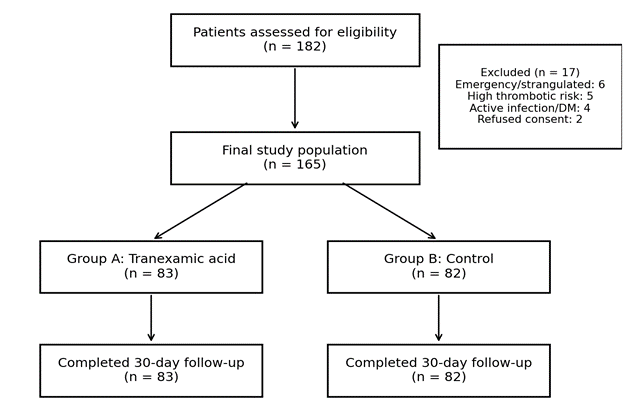
Figure 1. Patient flow diagram.
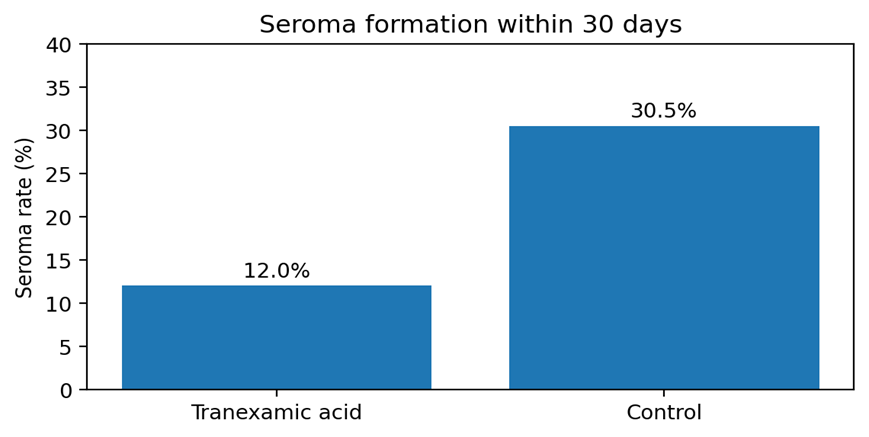
Figure 2. Seroma formation in both groups.
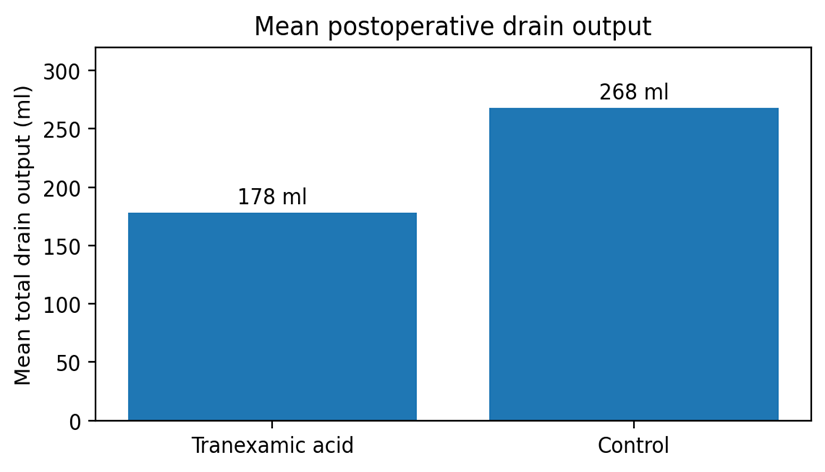
Figure 3. Mean total drain output.
DISCUSSION :
Seroma formation is a frequent postoperative complication after ventral hernia repair. It occurs due to accumulation of serous fluid in the dead space created by tissue dissection, lymphatic disruption, and inflammatory response to prosthetic mesh [3-6]. Although small seromas are often self-limiting, larger or persistent seromas may cause discomfort, delayed wound healing, secondary infection, repeated aspirations, prolonged follow-up, and increased treatment cost [5,6].
In the present study, tranexamic acid significantly reduced seroma formation in patients undergoing ventral hernia repair. Seroma occurred in 12.0% of patients receiving tranexamic acid compared with 30.5% in the control group. This difference was statistically significant and suggests that tranexamic acid may be effective in reducing postoperative seroma formation.
The mechanism by which tranexamic acid reduces seroma may be related to its antifibrinolytic effect. Tranexamic acid inhibits activation of plasminogen to plasmin, thereby stabilizing fibrin clot and reducing microvascular bleeding [9,10]. Reduced oozing from raw tissue surfaces may decrease postoperative inflammatory fluid production and drain output. This mechanism is supported by the significantly lower drain output observed in the tranexamic acid group.
Our findings are consistent with previous studies that have reported beneficial effects of tranexamic acid in ventral hernia repair. Aftab and Anwar reported lower seroma formation after mesh repair in patients receiving tranexamic acid [3]. Zubair et al. also observed reduced postoperative drain output and earlier drain removal after ventral hernioplasty with tranexamic acid [4]. Similarly, Ahmed et al. reported that tranexamic acid was associated with reduced seroma formation and improved postoperative recovery [5].
The present study also showed significantly shorter drain duration in the tranexamic acid group. Drain removal time was 3.1 +/- 1.0 days in Group A compared with 4.7 +/- 1.5 days in Group B. Prolonged drain placement may increase patient discomfort, restrict mobility, delay discharge, and increase risk of ascending infection. Therefore, early drain removal is clinically beneficial.
Hemoglobin drop was also significantly lower in the tranexamic acid group. This supports the established role of tranexamic acid in reducing perioperative blood loss [9,10]. Ker et al. reported that tranexamic acid reduces surgical blood loss across different operative procedures [10]. The present findings extend this benefit to patients undergoing ventral hernia repair.
The rates of hematoma, surgical site infection, and readmission were lower in the tranexamic acid group, although these differences were not statistically significant. The lack of statistical significance may be due to the relatively small sample size. However, the trend suggests a possible additional benefit of tranexamic acid in reducing wound-related complications.
No thromboembolic event was observed in the tranexamic acid group. This finding is important because concerns about thrombosis may limit the routine use of tranexamic acid. However, patients with known high thromboembolic risk were excluded from this study. Therefore, tranexamic acid should be used cautiously in patients with a history of deep vein thrombosis, pulmonary embolism, stroke, severe renal impairment, or active clotting disorders [9,10].
Evidence from other surgical fields also supports the safety and efficacy of tranexamic acid. In breast surgery, tranexamic acid has been shown to reduce wound complications and postoperative bleeding [11,12]. However, some studies have found greater benefit in reducing hematoma rather than seroma [15]. Variation in results may be due to differences in dose, route of administration, surgical technique, drain policy, and definition of seroma.
This study has some limitations. It was conducted at a single center, and the sample size was moderate. The study was not blinded, which may introduce assessment bias. Follow-up was limited to 30 days, so late seroma, chronic mesh infection, and long-term recurrence were not assessed. In addition, both onlay and sublay repairs were included, and mesh position may influence seroma formation [7,8]. Despite these limitations, the findings suggest that tranexamic acid is a useful and safe adjunct for reducing postoperative seroma in selected patients undergoing ventral hernia repair.
CONCLUSION :
Tranexamic acid significantly reduced postoperative seroma formation, total drain output, drain removal time, hemoglobin drop, and hospital stay in patients undergoing ventral hernia repair with mesh. No significant drug-related adverse effect was observed in selected patients. Tranexamic acid may be considered an effective adjunct for seroma prevention in elective ventral hernia repair, provided contraindications are carefully excluded.
RECOMMENDATIONS
Larger randomized controlled trials are recommended to confirm these findings. Future studies should compare intravenous and topical tranexamic acid, include routine ultrasound follow-up, standardize mesh position, and assess long-term outcomes including recurrence and chronic wound complications.
LIMITATIONS
• Single-center study design
• Moderate sample size
• Non-blinded assessment
• Short follow-up period of 30 days
• Mixed mesh placement techniques
• Ultrasound was not performed routinely in all patients
DECLARATIONS
Conflict of Interest: The authors declare no conflict of interest.
Funding: No external funding was received.
Ethical Approval: Ethical approval was obtained from the institutional review board
Informed Consent: Written informed consent was obtained from all patients included in the study.
Authors Contribution: All authors contributed to study design, data collection, statistical analysis, manuscript writing, critical revision, and final approval of the manuscript.
BIBLIOGRAPHY:
1. Sanders DL, Pawlak MM, Simons MP, Aufenacker T, Balla A, Berger C, et al. Midline incisional hernia guidelines: the European Hernia Society. Br J Surg. 2023;110(12):1732-1768.
2. Earle D, Roth JS, Saber A, Haggerty S, Bradley JF 3rd, Fanelli R, et al. SAGES guidelines for laparoscopic ventral hernia repair. Surg Endosc. 2016;30(8):3163-3183.
3. Aftab AL, Anwar MI. Seroma formation in ventral wall hernia after mesh repair: impact of tranexamic acid in its prevention. Biol Clin Sci Res J. 2025;6(6):311-314.
4. Zubair R, Mirza MR, Habib L, Iftikhar J, Zehra B. Role of tranexamic acid in prevention of seroma formation after ventral hernioplasty. Pak J Surg. 2020;36(2):126-129.
5. Ahmed H, Dawani S, Rasul S, Jafferi S. Seroma reduction and role of tranexamic acid in ventral hernia repair. J Surg Pak. 2020;25(2):89-92.
6. Kazzam ME, Ng P. Postoperative seroma management. In: StatPearls. Treasure Island: StatPearls Publishing; 2023.
7. Bittner R, Bain K, Bansal VK, Berrevoet F, Bingener-Casey J, Chen D, et al. Update of guidelines for laparoscopic treatment of ventral and incisional abdominal wall hernias. Surg Endosc. 2019;33(11):3511-3549.
8. Ibrahim R, Abounozha S, Kheder A, Alshahri T. Incidence of seroma in sublay versus onlay mesh repair of incisional hernia. Ann Med Surg. 2020;61:155-160.
9. Dunn CJ, Goa KL. Tranexamic acid: a review of its use in surgery and other indications. Drugs. 1999;57(6):1005-1032.
10. Ker K, Prieto-Merino D, Roberts I. Systematic review, meta-analysis and meta-regression of the effect of tranexamic acid on surgical blood loss. Br J Surg. 2013;100(10):1271-1279.
11. Oertli D, Laffer U, Haberthuer F, Kreuter U, Harder F. Perioperative and postoperative tranexamic acid reduces the local wound complication rate after surgery for breast cancer. Br J Surg. 1994;81(6):856-859.
12. Ausen K, Fossmark R, Spigset O, Pleym H. Randomized clinical trial of topical tranexamic acid after reduction mammoplasty. Br J Surg. 2015;102(11):1348-1353.
13. Tarar J, Nadeem K, Rashid I, Naeem M, Ahmed R. Role of tranexamic acid in preventing seroma formation after ventral hernia repair. Biol Clin Sci Res J. 2023;2023(1):211.
14. Ausen K, Hagen AI, Ostbyhaug HS, Olafsson S, Kvalsund B, Spigset O, et al. Topical moistening of mastectomy wounds with diluted tranexamic acid to reduce bleeding: randomized clinical trial. BJS Open. 2020;4(2):216-224.
15. Huynh MNQ, Wong C, McRae M, Voineskos S. The effects of tranexamic acid in breast surgery: a systematic review and meta-analysis. Plast Reconstr Surg. 2023;152(6):993e-1004e.