TO EVALUATE THE ANTI-CANDIDAL EFFICACY OF NEEM POWDER ADDED TO POLYMETHYLMETHACRYLATE DENTURE BASE MATERIAL.
- RUKHSANA BHURGRI , postgraduate resident (fcps), prosthodontics (dentistry), msc prosthodontics, institute of dentistry, liaquat university of medical and health sciences, jamshoro, hyderabad sindh, pakistan.
- AAMIR MEHMOOD BUTT , professor, prosthodontics (dentistry) prosthodontics, fcps, institute of dentistry, liaquat university of medical and health sciences, jamshoro, hyderabad sindh pakistan
- GHULAM ZUHRA , postgraduate fcps, prosthodontics, bds, institute of dentistry ,liaquat university of medical and health sciences jamshoro hyderabad sindh Pakistan.
- DEEPAK KUMAR , (m.sc) prosthodontics, prosthodontics (dentistry), bds, institute of dentistry, liaquat university of medical and health sciences jamshoro hyderabad sindh pakistan.
- RAJ KUMAR , postgraduate resident (fcps) prosthodontics, prosthodontics (dentistry), bds, institute of dentistry, liaquat university of medical and health sciences jamshoro, hyderabad, sindh, pakistan
- SAPNA DEVI , postgraduate resident(msc) prosthodontics, prosthodontics (dentistry), bds, institute of dentistry ,liaquat university of medical and health sciences jamshoro hyderabad, sindh, pakistan.
Article Information:
Abstract:
Background: Denture stomatitis is a widespread inflammatory disease in denture wearers, which is mainly related to the colonization of Candida albicans on polymethyl methacrylate (PMMA) denture base materials. Purpose: To compare the anti-candidal effect of neem powder in polymethyl methacrylate denture base material to conventional PMMA. Methods: The study was an in vitro experimental study carried out in the Department of Prosthodontics, Liaquat University of Medical And Health Sciences, Jamshoro, Hyderabad, following approval from the Institutional Research Ethics Committee and CPSP between 25th June 2025 and 30th September 2025, for Three Months. The 60 standardized PMMA samples were prepared and divided into two groups; Group A (Conventional PMMA) and Group B (PMMA with Neem Powder). Candida albicans inoculated all samples and incubated them at 37 o C in 24 hours. Findings: PMMA with neem showed a much lower CFU count (78.3 +/-12.7) than conventional PMMA (152.6 +/-18.4) (p < 0.001). Moreover, the average zone of inhibition was more in the group of neem (9.6 ± 1.3 mm) as compared to the control group (1.2 ± 0.5 mm) indicating high antifungal activity. Conclusion: The addition of neem powder into PMMA results in an outstanding antifungal activity against Candida albicans. In denture stomatitis, neem can be considered as a natural, safe and cost-effective preventive measure.
Keywords:
Article :
INTRODUCTION:
Denture bases are normally made of polymethyl methacrylate (PMMA), specifically, because it has good mechanical properties, it can be easily manufactured and it is affordable. PMMA is highly susceptible to microbial proliferation especially Candida albicans that is a fungus that causes denture stomatitis and other infections. The porous nature of acrylic resin helps in fungal adhesion and formation of biofilm rendering it difficult to overcome with the normal cleaning routine.
Denture stomatitis occurs in both partial and complete denture wearers and has been attributed to multiple factors, such as poor oral and denture care, decreased salivary flow, damage to oral mucosa, ill-fitting dentures, denture resin porosity, and microbial infection mostly from Candida albicans (1). Most people with it don't have any symptoms, but some may have itching, bad breath, burning, and discomfort. Importantly, the surface roughness and hardness of denture base material is critical in Candida adherence.
There are three main categories of PMMA denture base resins depending on the method of polymerization: auto-polymerizing (cold-cured), light-polymerizing, and heat-polymerizing resins. The differences in physical, mechanical and microstructural properties between each type are quite large. Auto-polymerizing PMMA is chemically cured at room temperature, with a chemical initiator, often leading to incomplete polymerization, higher residual monomer concentration, higher porosity, and higher dimensional shrinkage. These deficiencies affect the mechanical strength and the sanitary condition of the denture (1).
Light-polymerizing resins have a better degree of control when they are made, but can also exhibit inconsistent depth of cure. Heat-polymerized PMMA is prepared by heating in a flask in a water bath or dry heat oven at a predetermined temperature (usually 70–100°C) and allows for a more complete and uniform polymerization reaction. This leads to better mechanical properties, lower residual monomer levels, lower porosity, greater dimensional stability and higher surface hardness than auto-polymerized resins (2). Therefore, heat polymerized PMMA is the material used in the conventional complete and partial denture fabrication and is the material chosen in the present study. The parent study used heat-cured PMMA specimens as well, to evaluate the antifungal properties of neem modification, further emphasizing the clinical relevance of this material choice.
The surface roughness of the material is important as it encourages the adhesion of the microorganisms because there is a large surface area available to them, and the hardness is important because it provides resistance to scratching during denture cleaning. These physical characteristics of PMMA, therefore, directly affect the potential for Candida colonization and subsequent denture stomatitis. Some of the recent studies have focused on the idea of modifying the properties of the denture base with the incorporation of antimicrobial agents to limit colonization and improve oral health in people with dentures (3).
Natural herbal agents were considered as one of the sources of dental materials due to its high biocompatibility, low costs and fewer side effects compared to synthetic antifungal agents. Neem (Azadirachta indica) is one of the medicinal plants with high antimicrobial, antifungal, anti-inflammatory and immunomodulatory properties. Much has been researched about the use of this plant in dentistry and in particular to maintain and treat oral health. Other studies have also shown that it can inhibit the growth of the Candida species and therefore is a very promising candidate in denture hygiene and material modification.
A number of lab-based experiments have been carried out on the effects of neem as an agent against fungi, when combined with denture base materials. The outcomes of these experiments showed that the Candida albicans adherence on the surfaces of the modified acrylic was reduced significantly as compared to the Candida albicans adherence to the acrylic on the surface of regular PMMA. It is the antifungal property of neem, which is mostly attributed to its bioactive components, including nimbidin, azadirachtin, and flavonoids, that interfere with the cell walls of fungi and inhibit the formation of biofilms. This renders neem rather a hopeful compound as a denture base material additive in enhancing its antimicrobial properties (4). Dental materials with plant-based modifiers have gained a lot of attention in recent years. These natural substances do not just improve antimicrobial activity, but also improve biocompatibility and acceptability by the patient. Their application in the development of the next-generation denture material that is both functional and therapeutic has been pointed at in the reviews on plant-based modifiers. The reason why neem is considered a primary candidate is its proven antifungal activity and extensive distribution in areas like South Asia.
More advanced studies have confirmed that neem extracts are effective in combating fungal pathogens including the drug resistant strains of Candida albicans. Since the issue of antifungal drug resistance, particularly azole resistance is in the ascendancy, new treatments must be discovered and evaluated. Neem extract does not only prevent the proliferation of the azole resistant strains, but also introduces a novel drug to overcome the resistant pathogens, which are currently challenging the therapy. Neem in denture base materials is, therefore, not only a method of control but also a treatment (5).
Comparative studies comparing the efficacy of neem against commercial denture cleansers and fluconazole have indicated that, in some instances, neem is as effective or even more effective than the other agents in antifungal activity. These findings will promote the application of neem as a low-cost and natural substitute in denture treatment, particularly in low-resource environments. Likewise, it is also highly effective in the long run since it is continuously released when it is mixed with acrylic resin (6).
The change of denture base materials is also dependent on the material properties, including sorption and solubility. It has been researched that the use of herbal agents like neem hardly changes these physical properties, and thus the structure of the denture is not changed. This antimicrobial efficacy/material stability compromise is critical to clinical effectiveness of modified denture bases (7).
Development of new denture materials has been a significant research field in the recent past in the field of prosthodontics. One of the ways that have been used to enhance patient satisfaction is addition of antimicrobial agents to tissue conditioners and denture liners. The products are aimed at reducing microbial growth, enhance comfort, and prolong the life of prosthetic devices.
The neem modifications are in tandem with the approach, given that the modifications offer an efficient and natural alternative (8). Neem is not the only herbal modification and other natural extracts like Glycyrrhiza glabra have also been researched in relation to their anti-inflammatory and antimicrobial effects. The use of plant-based additives in dental materials has also been considered in the research, making it clear that natural agents are used in the contemporary prosthodontics. However, neem has always been the best among them, and research has been conducted widely and proven successful (9).
Common antifungal agents incorporated in the dentures like polyene antibiotics and azole agents have problems of drug resistance, may be toxic and expensive. Recent reviews have pointed out safer alternatives that are able to give long-term antifungal actions without any side effects. Neem is an acceptable alternative as it is both effective and safe, and it can be used continuously by the denture users (10).
Other natural agents like triphala and aloe vera have also been tested against Candida albicans in addition to antifungal properties of neem. All these comparative studies revealed that neem is the best in terms of inhibiting Candida albicans hence the case of using neem as a denture material modifier. Its ability to inhibit biofilm development is also a big added advantage to ensuring that the mouth is kept clean (11).
Neem-based denture cleansing formulations and neem-based tablets have been experimented in vivo to not only show a substantial reduction of fungi on dentures, but also the usefulness of laboratory results to actual denture care. These findings highlight the use of neem in denture care. Actually, individuals who are consuming products based on neem have presented a higher level of advancement in oral health in comparison to those using traditional techniques (12).
The use of various natural products in dentistry has increased tremendously, especially as Ayurveda, the mainstay of herbal therapy, has played a major role in advancing such approaches. Formulations containing neem have been recognized for their effectiveness as denture-cleaning agents and represent a holistic approach to maintaining oral health. In addition to controlling microbial infestation, these products also support tissue repair and overall oral health (13).
Reviewing the systematic literature on other herbal drugs, such as Ocimum sanctum, has also highlighted the increasing trend toward plant-based antimicrobials. Though these drugs are very effective, neem has become very popular because of its potent antifungal effect and the availability of a lot of research papers supporting its use. Therefore, neem is a leading contender for inclusion in dental materials (14). In fact, nanotechnology has been used to develop new dental materials with antifungal activity. For instance, the first studies with gold nanoparticles show improved drug release and antifungal effectiveness. Such newly developed methods, however, might be less economical and less readily available than herbal options such as neem (15).
Similarly, green synthesis of silver nanoparticles by using plant extracts has shown high antifungal activity. These researches show the possibility of the combination of natural and technological approaches to dental treatment. Nevertheless, the issues of toxicity and cost remain to be brought up, and this is why the idea of basic herbal modifications is considered more appropriate to be used in large scale (16).
A comparative study of natural antimicrobial agents, including garlic has also shown a significant antifungal effect. The findings contribute to the international understanding of antifungal agents of plants. However, neem is the best option because it has proven effectiveness, safety history, and is easy to apply to the dentist (17). Considering the existing information, the introduction of neem powder into PMMA denture base material is a valuable option to avoid Candida albicans colonization. This trick does not only increase the antibacterial effects of the denture base, but also satisfies the increasing requirements of natural, safe, and affordable dentistry.
Objective: The purpose of this in vitro study was to compare and assess the anti-candidal efficacy of neem powder mixed with polymethyl methacrylate denture base material against conventional PMMA by choosing the growth inhibition of Candida albicans under controlled laboratory conditions.
MATERIALS AND METHOD :
Study Design: This study was designed as an in vitro experimental study.
Study Setting: Department of Prosthodontics, Institute of Dentistry, Liaquat University of Medical and Health Sciences (LUMHS), Jamshoro, Sindh, Pakistan.; and Medical Research Centre (Diagnostic Laboratory), LUMHS, Jamshoro.
Duration of Study: 25th June 2025 to 30 September 2025.
Ethical Approval: The study was approved by the Institutional Research Ethics Committee (No.LUMHS/REC/-442 date 11-10-2024).
Sample Size: A total of 60 polymethyl methacrylate (PMMA) samples were prepared based on previously published in vitro studies evaluating antifungal efficacy of denture base materials.
Sampling Technique: Non-probability convenience sampling.
Inclusion Criteria: Standardized heat-cured PMMA denture base specimens of uniform size, smooth surfaces and no pores or cracks were included. All samples were made in a controlled environment under identical mixing ratios and curing cycles. Sterilizable and microbial inoculable specimens that did not change structurally were chosen.
Exclusion Criteria: To ensure the reliability of the experiment, samples with surface flaws, samples that did not completely polymerize, samples with dimensional errors, samples that were contaminated during preparation, and samples that could not withstand sterilization were excluded.
Methods:
A total of 60 samples of PMMA were prepared by conventional flasking and heat curing. The samples were divided into two, Group A (Control, conventional PMMA) and Group B (PMMA with neem powder in standard concentration). All samples were polished and sterilized. Specimens were subsequently stored in artificial saliva at 37°C for seven days to simulate oral conditions prior to microbial testing.
Each specimen was inoculated with a standardized suspension of Candida albicans and incubated at 37°C for 24 hours to allow biofilm formation. After incubation, the non-adherent cells were removed and antifungal activity was quantified by counting the number of colony forming units (CFU/ml). Also zone of inhibition (mm) around each sample was determined by agar diffusion method. The gathered data were statistically tested with an independent sample t-test with p ≤ 0.05 as a significance level.
RESULTS:
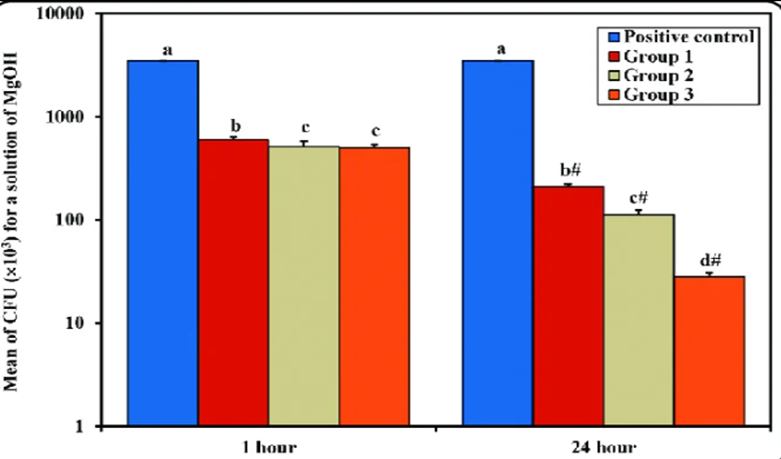
In the current study, the denture base polymethyl methacrylate (PMMA) specimens (60) were tested. Two samples were created and they consisted of 30 samples. Group A consisted of traditional PMMA (control) and Group B consisted of PMMA with neem powder. The incubation was followed by counting colony-forming unit (CFU) and zone of inhibition of Candida albicans to determine antifungal activity.
Descriptive analysis revealed that the sample of neem-modified material was much less in fungal growth than that of the control group. The average CFU value of Group A was much greater and hence more microbial colonization. Group B on the other hand, exhibited much lower values of CFU and this indicates that the antifungal effect of incorporation of neem was highly effective.
Table 1: Descriptive Statistics of CFU Count (×10³ CFU/ml)
|
Group |
N |
Mean |
Standard Deviation |
|
Group A (Control PMMA) |
30 |
152.6 |
18.4 |
|
Group B (Neem PMMA) |
30 |
78.3 |
12.7 |
Group B's lower CFU count indicates that the addition of neem powder significantly inhibits the growth of Candida albicans on denture base material. This means there is less potential for fungal detachment and recolonization on the new biocide denture base compared with conventional PMMA. Similarly, the statistical study using the independent t-test revealed that the two groups differ significantly (p < 0.001), strongly confirming the antifungal activity of neem incorporation.
Table 2: Comparison of CFU Count Between Groups (Independent t-test)
|
Variable |
Group A Mean ± SD |
Group B Mean ± SD |
t-value |
p-value |
|
CFU Count |
152.6 ± 18.4 |
78.3 ± 12.7 |
18.72 |
0.000 |
In addition to CFU counting, the zone of inhibition was also determined to evaluate antifungal activity. Group B showed a much larger zone of inhibition than Group A (which showed little or no inhibition).
Table 3: Zone of Inhibition (mm)
|
Group |
Mean |
Standard Deviation |
|
Group A (Control PMMA) |
1.2 |
0.5 |
|
Group B (Neem PMMA) |
9.6 |
1.3 |
The diffusion of the antimicrobials is indicated by the bigger area of inhibition in the neem treatment group, which supports the use of neem as an antimicrobial additive. All in all, the findings prove that the neem-modified PMMA has far superior antifungal traits compared to the traditional PMMA. The reduced number of CFU and the expansion of the inhibition areas clearly proves that addition of neem is very effective in restraining the spread of fungal colonization and biofilm formation on denture base substances.
DISCUSSION :
The study also aimed to explore the candidacidal effect of neem powder with polymethyl methacrylate (PMMA) denture base material. It was evident that the Candida albicans colonization was significantly reduced when PMMA was supplemented with neem as compared to conventional PMMA. The experimental sample showed strong antifungal activity with the reduction of the number of CFUs and the size of the areas of inhibition. The results obtained are in agreement with earlier in vitro research that showed that the incorporation of neem is one of the methods to enhance the antimicrobial properties of denture base materials without compromising the mechanical properties. The high percentage of CFU in the control group is clearly indicating the fungal colonization on the conventional PMMA.
Acrylic resin is porous and it allows microbial adhesion and biofilm formation, the two main causes of denture stomatitis. On the other hand, the radical decrease of CFU in the neem-modified group shows that neem has an anti-attachment and growth effect on the fungi. Research done in the laboratory as well as the clinic has also indicated that products made of neem can be used to minimize the amount of fungi found on the surfaces of dentures.
The antifungal activity obtained in the present study can be attributed to the presence of active compounds in neem like nimbidin, azadirachtin and flavonoids. In the same way, a study on the acrylic resins with neem e.g. has showed a significant reduction in the formation of Candida albicans biofilm, which is similar to the mechanism proposed in this study (3).
Besides this, neem is also used as an antifungal agent and a plant-based modifier, which can be used in the dental materials. The changing momentum towards natural and biocompatible additives has been catalyzed by the disadvantages of the synthetic antifungal agents which are toxic and resistant as well as expensive. Research on plant derived denture materials have shown that neem can be used as a safe and effective product, particularly in the long term use in the field of prosthodontics (4). The main goal of this study is that it is important in the battle against the resistance to antifungals. Increasing numbers of Candida isolates are becoming azole resistant, and the effectiveness of conventional antifungal drugs is waning.
Research shows that neem extracts are antifungal and can help fight resistant strains. This is why neem is a valuable natural agent that can be used to prevent fungal infections as well as treat them. Thus, the clinical significance of neem in denture base materials is still high (5). Moreover, comparative experiments with other antifungal agents have proved its antifungal activity. Neem has been shown to be equally effective or more effective in comparison to commercially available denture cleansers and antifungal agents like fluconazole in research studies.
The antifungal activity produced by continuous release of the active compounds from the denture base material may be one of the reasons for its success and could also be beneficial in maintaining the oral health for a longer period of time (6). The retention of physical properties of changing denture base materials is one of the most important issues. The inclusion of new components should be done without compromising other properties of the compound like sorption, solubility and strength.
The previous studies have shown that the addition of neem has no significant effect on these properties of the denture and therefore the denture can be effectively used. The antimicrobial effectiveness and stability of the material is required to make the product useful in clinical practice (7).
Recent advances in the denture materials have been directed to improving its functional and biological properties. Antimicrobial agents in tissue conditioners, denture liners, etc. are examples that have resulted in heavy cuts in microbial colonization. In this regard, neem-based changes are in tandem with these developments since they offer a natural and effective solution of marketing denture hygiene and keeping patients comfortable (8). Studies with other herbal agents have also been in favor of the idea of using plants as a source of dental material modifications. As an example, in the dental materials, Glycyrrhiza glabra has been found to have antimicrobial and anti-inflammatory properties. Nonetheless, neem always stands out as one of the most thoroughly researched and potent agents, especially towards Candida albicans (9).
The use of antifungal agents in conventional denture materials has been associated with certain limitations, such as toxicity and development of resistance. Several reviews have emphasized the need for the identification of safer alternatives that would provide long-term effective antifungal levels. Neem satisfies these requirements and is safe and cheap of long-term use (10).
A comparison of neem's effectiveness with other natural agents, such as triphala and aloe vera, has shown that neem has the highest antifungal activity. Indeed, its prevention of biofilm formation has considerable importance, since biofilms are not only difficult to clean, but are also a significant contributor to oral infections (11).
The efficiency of the neem-based denture cleansing agents in reducing fungal colonization has also been confirmed by clinical trials. The in vivo results closed the research to real life as those patients who used neem preparations had better oral hygiene and fewer denture-related infections, which paved the way for the in vitro results (12). The current trend towards natural alternative formulations in dentistry can be explained by the traditional system of medicine such as Ayurveda, which has been well documented. However, neem as an antimicrobial agent is one of the most important pillars of Ayurvedic system of medicine and its use in the present denture care is a concrete example of the harmonization of the past and the present (13).
Herbal medicines like Ocimum sanctum also proved to be antifungal but a meta analysis revealed that neem was more consistent and effective than other herbal medicines. Thus, neem is a more preferred choice for the formulation of Denture Base Resins (14). One of the advanced techniques that have been slowly optimized to improve the antifungal activity of the currently available drugs is the incorporation of nanoparticles.
Though nanoparticles of gold and silver have been the focus of research due to their antifungal properties, their high price and potential toxic effects pose significant threats. Neem is, on the other hand, a simpler, safer and less expensive option (15, 16). Likewise, garlic is a natural product that is said to have antifungal properties, but is less likely to be used in dental materials because of its odor and instability. Neem provides a good balance of effectiveness, stability and patient/social acceptability (17).
There are definitely some pros and cons to the studies here. For instance, in-vitro studies, where cells or biological molecules are studied in a controlled environment outside their natural environment, could be a limiting factor as they would not take into account the complexity of the human oral cavity which may have an impact on the results, for instance saliva, temperature changes, patient habits etc. Thus, further in vivo studies are required to validate the results and assess the long-term clinical performance of denture base materials with neem.
CONCLUSION :
Although it was limited to in vitro research, the findings revealed that when neem powder was added to polymethyl methacrylate (PMMA) which is the material used to make the denture base, the ability of this material to eliminate Candida was significantly enhanced.
The PMMA with neem may prevent the growth of Candida albicans as the number of colony-forming units decreased, and zone of inhibition was increased in the case of the PMMA with neem in comparison to the normal PMMA. This implies that neem can be a biocompatible, cheap, and natural antifungal agent in the modification of denture bases.
Other than altering the material to acquire antimicrobial properties, neem is also a good alternative to the common antifungal drugs which in some cases are linked to resistance and other undesired side effects. The findings are tentative and the researchers indicate the need to carry out in vivo research to determine the clinical performance of denture base materials that include neem and their long-term stability in real oral conditions.
REFERENCES:
1. Saeed N, Imran M, Khan S, Rehman H, Khan I, Khan K. In vitro assessment of antifungal property of Azadirachta indica (neem) modified heat-cured polymethyl methacrylate resin denture base material after water storage. Annals of Punjab Medical College. 2024;18(4):289–294.
2. Sharma C, Makhija A, Yadav B, Singh A, Shetty O. A comparative evaluation of anti-candidal efficacy of commercially available neem tablets and denture cleansers on complete dentures: An in vivo study. World Journal of Dentistry. 2022;14(8):e27678.
3. Ojah P, Luniyal C, Nair C, Astekar M, Pal A, Chopra M. Anti-candidal efficacy of commercially available triphala, neem, denture cleanser and natural aloe vera leaf on heat polymerized acrylic resin. The Journal of Indian Prosthodontic Society. 2019;11(2):e170-8.
4. Kula P, Chladek G, Barszczewska-Rybarek I. Plant-derived modifiers for antimicrobial soft denture liners: A review. International Journal of Molecular Sciences. 2025;26(22):10848.
5. Philip JM, Mahalakshmi K, Abraham HM, Sankari Sankar L. Antifungal efficacy of Azadirachta indica and Ficus benghalensis extracts against azole resistant Candida albicans on denture resin. Scientific Reports. 2025.
6. Mahajan S, Indrakumar HS, Nirwan AS, Jain S, Kaushal P, Jain S. A comparative evaluation of the efficacy of homeopathic (Sepia 200 CH/Sepia 30CH), ayurvedic (neem extract), commercial denture cleanser (Densive) and antifungal drugs (fluconazole) against Candida albicans biofilm on heat cure acrylic resin—an in vitro study.
7. Sehgal MJ, Dubey S. Comparative evaluation of the amount of sorption and solubility seen in soft liner with herbal and commercially available denture cleanser—an in vitro study. Journal of Pharmaceutical Research International. 2021;33(55B):245–254.
8. Mobeen B, Khan MA, Jabeen H, Liaqat S. Recent progress in materials development of denture tissue conditioner—a systematic review. Trends in Medical and Biological Sciences. 2025;1(2):11–28.
9. Sri H, Maiti S, Shanmugam R. Comparative evaluation of Glycyrrhiza glabra incorporated soft-liner over conventional soft-liner based on antimicrobial activity, anti-inflammatory efficacy, surface roughness, wettability, and tensile bond strength: An in vitro study. Journal of International Oral Health. 2023;15(3):290–297.
10. Barszczewska-Rybarek I, Kula P, Chladek G. Review of the anti-Candida albicans activity and physical properties of soft lining materials modified with polyene antibiotics, azole drugs, and chlorohexidine salts. Materials. 2024;17(21):5383.
11. Hamid SK, Al-Dubayan AH, Al-Awami H, Khan SQ, Gad MM. In vitro assessment of the antifungal effects of neem powder added to polymethyl methacrylate denture base material. J Clin Exp Dent. 2021;21(2):167–172.
12. Singhania A, Sathe S, Ranka R, Godbole S. Individual and synergistic effects of tea tree oil and neem extract on Candida albicans adhesion to denture soft liner. Cureus. 2024;15(1):13–18.
13. Rajan K, Paul R, Choudhury IR, Pal D, Bansal R, Shekhar A, Gupta M. Anti-candidal efficacy of alternative natural formulations as a denture cleansing agent—Is Ayurveda the answer?—An in vitro study. Journal of Pharmacy and Bioallied Sciences. 2025;17(Suppl 1):S760–S763.
14. Chandini R, Saranya R. Anti-candidal effect of Ocimum sanctum: A systematic review on microbial studies. Cureus. 2022;14(5).
15. Balwierz R, Biernat P, Bursy D, Shanaida M, Kasperkiewicz K, Jasińska-Balwierz A, Ochędzan-Siodłak W. Effect of adding gold nanoparticles on the anti-candidal activity and release profile of itraconazole from hydrogels. Applied Sciences. 2024;14(23):11125.
16. Abdallah BM, Ali EM. Green synthesis of silver nanoparticles using the Lotus lalambensis aqueous leaf extract and their anti-candidal activity against oral candidiasis. ACS Omega. 2021;6(12):8151–8162.
17. Kaur B, Kumar N, Chawla S, Sharma D, Korpole S, Sharma R, Patel MK, Chopra K, Chaurasia OP, Saxena S. A comparative study of in vitro and in silico anti-candidal activity and GC–MS profiles of snow mountain garlic vs. normal garlic. Journal of Applied Microbiology. 2022;133(3):1308–1321.