Association of Methylxanthines with Cardiac Arrhythmias in Acute Exacerbation of COPD
- Zahid Hussain , Assistant Professor, Department of Pulmonology, Akhter Saeed Medical College, Islamabad, Pakistan.
- Muhammad Faisal Bacha , Assistant Professor, Department of Medicine, Akhter Saeed Medical College, Islamabad, Pakistan.
- Wajahat Sultan Baig , Assistant Professor, Department of Medicine, Wah Medical College (NUMS), Wah Cantt, Pakistan.
- Syed Abidain Haider , Assistant Professor, Department of Pulmonology, Wah Medical College (NUMS), Wah Cantt, Pakistan.
- Arshad Rabbani , Associate Professor, Department of Medicine, Akhter Saeed Medical College, Islamabad, Pakistan.
- Muhammad Muddaser Iqbal , Senior Registrar, Department of Medicine, Akhter Saeed Medical College, Islamabad, Pakistan.
Article Information:
Abstract:
Chronic obstructive pulmonary disease (COPD) has been associated with several cardiovascular complications contributing to significant morbidity and hospitalization. Certain therapies, particularly beta-agonists, anti-muscarinic agents, and methylxanthines, have been reported to contribute to cardiac rhythm disturbances particularly during acute flares. Objective: The aim of this study was to determine whether there is a significant association between the use of methylxanthines and the occurrence of cardiac arrhythmias in patients with COPD during episodes of acute exacerbation. Materials and Methods: We did this observational analytical cross-sectional study in Farooq hospital, ASMC, Islamabad from 1st Sep 2025 to 28th Feb 2026. A total of patients with acute exacerbation were included, and were placed in 2 groups. Group A received Methylxanthines while the participants in group 2 were not exposed to methylxanthines use. Demographic and clinical data were collected using a structured questionnaire. Data were analyzed using SPSS version 26. The primary outcome was the presence and type of cardiac arrhythmia diagnosed on basis of screening ECG. Results: The study comprised of mean age of 61.46 ± 8.738. Out of total of 134 patients, 57 (42.5%) patients were male and 69 (51.5%) patients had irregular rhythm. 12(9%) of patients were in GOLD stage 1, 94(70.1%) in stage 2 and 29(20.9%) in stage 3 and none of patient were recorded in GOLD stage 4. Methylxanthines users group included 34 (26.11%) of all the patients. Conclusion: Our study showed slightly higher risk of developing cardiac arrhythmias in patients with COPD taking Methylxanthines during acute exacerbation, however it was not statistically significant.
Keywords:
Article :
INTRODUCTION:
Chronic Obstructive Pulmonary Disease (COPD) is a common and treatable chronic respiratory disease affecting the small airways characterized by persistent symptoms and progressive airflow limitation due to airway and/or alveolar abnormalities usually caused by long-term exposure to harmful particles or gases such as cigarette smoke and environmental pollutants. The clinical spectrum of COPD is variable with symptoms either because of chronic bronchitis or emphysema including cough, shortness of breath and sputum production1. The estimated prevalence of COPD in Pakistan is approximately more than 4% 2 showing the high disease burden and need for appropriate preventive strategies. COPD is linked with various cardiovascular complications including cardiac failure coronary artery disease, cardiac arrhythmias etc3 and these complications contribute to significant morbidity in these patients. Cardiac arrhythmias are often seen in people with COPD due to the chronic effects on disease itself on heart leading to right sided chamber enlargement or sometimes linked with the therapy used for management. The prevalence of arrhythmias during acute exacerbations in COPD (AECOPD) is quite high approaching almost 15%, with increased risk of in-hospital mortality4. Although rhythm related disturbances are the recognized as complications in people with COPD due to right sided atrial enlargement however the risk of complications and mortality is high when the cardiac arrhythmias are found during the episodes of acute exacerbations, more in elderly people and those with sepsis4. COPD has found to be an independent risk factor for development of significant cardiac arrhythmias and continuous monitoring has been suggested to reduce the risk of fatal outcomes5. People with COPD are more prone to atherosclerosis therefore an overall increased risk of cardiac complications, stroke and extra pulmonary complications. Theophylline, belongs to methylxanthines class of family that has been widely used in people with COPD due to its anti-inflammatory and bronchodilator activities. It has been found to improve the clinical outcomes in patients with COPD admitted during acute exacerbations without significant toxicity6. However, the literature review has revealed conflicting evidence as the use of methylxanthines in COPD has been linked with the risk of fatal cardiac arrhythmias and therefore recommendations against its use7. Due to its cost effectiveness and anti- inflammatory properties, many clinicians are still in favor of its use in COPD patients whereas safety concerns are there regarding the potentially serious cardiac effects particularly in elderly people and those with pre-existing structural heart diseases. We planned this study to evaluate whether the use of methylxanthines in patients with acute exacerbation of COPD is associated with an increased frequency of cardiac arrhythmias.
MATERIALS AND METHODS:
This is a hospital-based observational analytical cross-sectional study and it was conducted at Pulmonology department of Farooq hospital, Murree expressway, Islamabad, which is teaching hospital for Akhtar Saeed medical college from 1st Sep 2025 to 28th Feb 2026, ethical approval was taken from the IRB of institution (approval number IRB0711).
A total of 134 patients of either gender, between age 18 to 75 years were included in our study who have diagnosis of COPD based on the GOLD criteria. Patients were divided into two groups; Group A included 35 Patients with COPD receiving methylxanthines (Theophylline, Doxyphylline) for at least 4 weeks and Group B included 99 Patients of COPD not receiving methylxanthines. Expected arrhythmia prevalence: 40% vs 15%2. The study had >80% power to detect the observed difference at α = 0.05. Patients who had structural heart disease, history of cardiac arrhythmias, those on anti-arrhythmic or having persistent electrolyte disturbances were excluded from our study.
Demographic and clinical data were collected using a structured questionnaire, including, MR number Name, Age, gender, Cardiac rhythm, severity of COPD, type of arrhythmias noted in ECG and Current medications. Screening ECG was done in the Hospital.
Severity of COPD was measured from results of Spirometry like FEV1, FVC, FEV1/FVC ratio. Types of arrhythmias were recorded as Atrial fibrillation, APCs, PVC's, VT/VF and MAT. The primary outcome was the presence and type of cardiac arrhythmia diagnosed on basis of screening ECG. Data were analyzed using SPSS version 26. The descriptive statistics were calculated as mean ± SD for continuous variables, and frequency and percentages (%) for categorical variables. Independent t-test was used to compare continuous variables between the two groups. Chi-square test / Fisher’s exact test was used for comparison of presence of arrhythmias between groups. (categorical variables). Binary logistic regression was applied to determine the association of methylxanthines with arrhythmias after adjusting for confounding factors like age, gender, severity of COPD.A p-value <0.05 was considered statistically significant
RESULTS:
A total of 134 patients were evaluated statistically for this study. Appropriate descriptive statistics were used to define the baseline characteristics of study population. Age, severity of COPD and spirometric values were recorded as mean ± SD. Regularity of rhythm, presence of other arrhythmias and drugs used were presented as frequency and their percentages.
Our study comprised of mean age of 61.46 ± 8.738. Out of total of 134 patients, 57 (42.5%) patients were male and 69 (51.5%) patients had irregular rhythm. 12(9%) of patients were in GOLD stage 1 ,94(70.1%) in stage 2 and 29(20.9%) in stage 3 and none of patient were recorded in GOLD stage 4. Methylxanthines users group included 34 (26.11%) of all the patients.
Table 1: Baseline characteristics
|
|
Methylxanthines users |
Non Methylxanthines users |
|
Count n (%) |
35 (26.11%) |
99 (73.88%) |
|
Mean Age ± SD |
61.8±9.88 |
61.3± 8.34 |
|
Irregular rhythm |
25 (71.42%) |
44 (44.44%) |
|
GOLD stage 1 |
1 (2.85%) |
11 (11.11%) |
|
GOLD stage 2 |
26 (74.28%) |
68 (68.68%) |
|
GOLD stage 3 |
8 (22.8%) |
20 (20.20%) |
|
GOLD stage 4 |
0 (0%) |
0 (0%) |
|
Arrythmia |
25 (71.42%) |
43 (43.43%) |
|
AFIB |
15 (42.8%) |
9 (9.09%) |
|
VPCS |
14 (40%) |
20 (20.20%) |
|
VT/ VFIB |
3 (8.57%) |
0 (0%) |
|
APC |
0 (0%) |
1 (1.01%) |
|
MAT |
9 (25.7%) |
20 (20.20%) |
Out of total 99 patients who were included in non-methylxanthines users group, 43 had an arrhythmia, while among the methylxanthines user group, 25 out of total 35 patients showed some type of arrhythmia as highlighted in the table 2 and Fig 1.
Table 2: Methylxanthines usage and presence of Arrhythmia
|
|
No arrhythmia |
Arrhythmia |
|
|
Non user |
56 (41.79%) |
43 (32.08%) |
99 |
|
User |
10 (7.46%) |
25 (18.65%) |
35 |
|
|
66 |
68 |
134 |
Table 3: Chi square test analysis of methylxanthines users for different arrhythmias
|
Type of Arrhythmia |
Non users |
users |
Chi square |
p-value |
|
Arrhythmias |
43 (43.43%) |
25 (71.42%) |
8.108 |
0.004 |
|
A-fib |
9 (9.09%) |
15 (42.8%) |
20.053 |
0.000 |
|
VPC |
20 (20.20%) |
14 (40%) |
5.353 |
0.021 |
|
VT/V-fib |
0 (0%) |
3 (8.57%) |
8.680 |
0.003 |
|
APC |
1 (1.01%) |
0 (0%) |
0.356 |
0.551 |
|
MAT |
20 (20.20%) |
9 (25.7%) |
0.463 |
0.496 |
Binary logistic regression was performed to assess the association between methylxanthines usage and the presence of different arrhythmias. (A-Fib, MAT, VPCs, APCs, VT). Independent variables included age, gender and COPD severity.
Table 4: Multivariate Logistic Regression Predicting Cardiac Arrhythmias
|
Variable |
Adjusted OR |
95% C.I for EXP(B) |
p-value |
|
|
Lower |
Upper |
|||
|
Methylxanthines use |
0.307 |
0.131 |
0.721 |
0.007 |
|
Age |
1.038 |
0.995 |
1.083 |
0.086 |
|
Gender |
0.798 |
0.382 |
1.666 |
0.548 |
|
Severity of COPD |
1.188 |
0.601 |
2.351 |
0.620 |
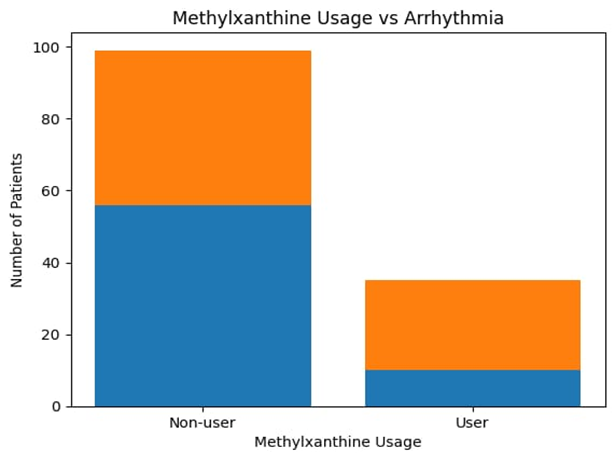
Fig 1: Cardiac arrhythmia in Methylxanthines users and non-users
Multivariate binary logistic regression was performed to evaluate the independent association between methylxanthines use and cardiac arrhythmias in COPD patients.
After adjusting for confounding factors like age, gender, and COPD severity, methylxanthines use was found to be significantly associated with lower odds of arrhythmias (AOR = 0.307, 95% CI: 0.131–0.721; p = 0.007). Age showed a borderline association with arrhythmias. (AOR = 1.038, 95% CI: 0.995–1.083; p = 0.086) but the Gender (p = 0.548) and the severity of COPD (p = 0.620) are not significantly associated with arrhythmia occurrence in the adjusted model. Older people trend toward more arrhythmias, but not statistically significant
DISCUSSION :
We planned this study to see how frequently the use of methylxanthines lead to cardiac arrhythmias that has always remained a major concern among the physicians while managing patients with COPD. More recently the use of methylxanthines is significantly reduced due to potential risk of fatal cardiac events. Our study results revealed that in patients with COPD admitted during acute exacerbations, who were using methylxanthines, the risk of cardiac arrhythmias although more than those with non-methylxanthines user group, was not significantly higher. Review of literature shows that Methylxanthines particularly Theophylline is an effective treatment option in people with COPD however they also noted an increased trend of developing side effects8. Among the Methylxanthines group, Theophylline has been used in Pakistan for management of COPD but the data shows other newer agents in this group like Acebrophylline is more effective and safer as compared with Theophylline9 however our study didn’t include any participant taking Acebrophylline. Unexpectedly, the arrhythmia-promoting effect of Aminophylline was diminished in those patients with COPD who were also given Salbutamol by molecular mechanisms10. The efficacy and safety of Theophylline was evaluated in one study and the results showed good safety profile with no significant life-threatening side effects, similar to results of our study11. These findings suggest that these drugs can be used in people with COPD as they are cost effective with good efficacy. Methylxanthines has many benefits in patients with COPD mediated via its anti-inflammatory effects, bronchodilation, mucolytic properties and strengthening of diaphragmatic muscles. All these effects lead to overall improvement in symptoms in COPD patients. Doxyphylline has been found to be more effective than Theophylline with better safety profile12, although we have not compared these two drugs in our study individually, Randomized control trials may be planned later on to find out the best and safer one particularly in our population. The tachycardia causing properties of Methylxanthines may be actually useful in some situations like people with COPD having bradyarrhythmias because of sinus node dysfunction13. A meta-analysis revealed good safety profile of methylxanthines in patients with acute exacerbation of COPD similar to our observations14. They found Theophylline as quite effective in reducing the symptoms as well as in improving the oxygenation in these patients. The risk of toxicity and cardiac arrhythmia with Theophylline increases at drug levels above the therapeutic range so monitoring of the drug levels could be a safe option in reducing the risk of arrhythmias15, however it may not be a feasible and cost effective option in resource limited facilities.
We focused on a very important aspect of COPD management as cardiac arrhythmias are quite important while considering a low cost but effective treatment option in our setting, results showed a better safety profile.
Our study had a few limitations as well. First of all, there are some potential confounders as well during acute exacerbation of COPD like hypoxia, electrolyte disturbances and acidosis as all these factors can contribute to the increased risk of developing arrhythmias. Secondly, we didn’t check or monitored the drug levels (of Methylxanthines) as that would have provided a reliable assessment. Third, it was a single centered study, preferably multi centric study from different regions would have been more accurate in assessment of disease burden in our community.
CONCLUSION :
Use of Methylxanthines in patients with COPD during the acute exacerbations is associated with slightly increased, but not statistically significant risk of developing cardiac arrhythmias. Further studies with a larger sample size and preferably multi centric type would be helpful in more accurate and better estimation.
Conflict of interest: None
Funding: None.
REFERENCES:
1. Khan MA. Monthly and seasonal prevalence of asthma and chronic obstructive pulmonary disease in the District Dera Ismail Khan, Khyber Pakhtunkhwa, Pakistan. Egypt J Bronchol. 2022;16(1). Available from: http://dx.doi.org/10.1186/s43168-022-00166-2
2. Amir Khan M, Ahmar Khan M, Walley JD, Khan N, Imtiaz Sheikh F, Ali S, et al. Feasibility of delivering integrated COPD-asthma care at primary and secondary level public healthcare facilities in Pakistan: a process evaluation. BJGP Open [Internet]. 2019;3(1):bjgpopen18X101632. Available from: http://dx.doi.org/10.3399/bjgpopen18x101632
3. Cobb K, Kenyon J, Lu J, Krieger B, Perelas A, Nana‐Sinkam P, Kim Y, Rodriguez‐Miguelez P. COPD is associated with increased cardiovascular disease risk independent of phenotype. Respirology. 2024 Dec;29(12):1047-57.
4. Ding N, Qiu W, Chen J, Wang K, Chen Z, Cai R, et al. Prevalence and risk factors of arrhythmias in patients with acute exacerbations of chronic obstructive pulmonary disease: A systematic review and meta-analysis. Int J Chron Obstruct Pulmon Dis 2025;20:3059–72. Available from: http://dx.doi.org/10.2147/COPD.S545658
5. Coleman KM, Wolf RE, Varrias D, Schwartz J, Garcia B, Roselli V, Lam B, Leavitt J, Sharma N, Dumchin G, Altschul E. High Prevalence of Unrecognized Actionable Cardiac Arrhythmias in Patients with Moderate to Severe Chronic Obstructive Pulmonary Disease. medRxiv. 2024 Oct 13:2024-10.
6. Zheng S, Zhou L, Gao R. Therapeutic effect of theophylline on acute exacerbation of chronic obstructive pulmonary disease: A meta‐analysis. Hong Kong Journal of Emergency Medicine. 2025 Oct;32(5):e70040.
7. Cazzola M, Page CP, Hanania NA, Calzetta L, Matera MG, Rogliani P. Asthma and cardiovascular diseases: Navigating mutual pharmacological interferences. Drugs. 2024;84(10):1251–73. Available from: http://dx.doi.org/10.1007/s40265-024-02086-5
8. Yang Q, Tang P, Zhang X. Effects of additional oral theophylline with inhaled therapy in patients with stable chronic obstructive pulmonary disease: a systematic review and meta-analysis. PLoS One. 2025 May 6;20(5):e0321984.
9. Iram S, Krupa K, Deepthi A. Comparative Study on Safety And Efficacy Of Theophylline Vs Acebrophylline In The Treatment Of COPD. African Journal of Biomedical Research. 2025 May 2;28.
10. Kabanov D, Vrana Klimovic S, Beckerová D, Molcan M, Scurek M, Brat K, Bebarova M, Rotrekl V, Pribyl J, Pesl M. Salbutamol attenuates arrhythmogenic effect of aminophylline in a hPSC-derived cardiac model. Scientific Reports. 2024 Nov 9;14(1):27399.
11. Zheng S, Zhou L, Gao R. Therapeutic effect of theophylline on acute exacerbation of chronic obstructive pulmonary disease: A meta‐analysis. Hong Kong Journal of Emergency Medicine. 2025 Oct;32(5):e70040.
12. Cazzola M, Page CP, Hanania NA, Calzetta L, Matera MG, Rogliani P. Asthma and cardiovascular diseases: navigating mutual pharmacological interferences. Drugs. 2024 Sep 26;84(10):1251.
13. Roth HR, Reinert JP. Methylxanthine Derivatives in the Treatment of Sinus Node Dysfunction: A Systematic Review. Cardiology in Review. 2025 May 1;33(3):246-55.
14. Zheng S, Zhou L, Gao R. Therapeutic effect of theophylline on acute exacerbation of chronic obstructive pulmonary disease: A meta‐analysis. Hong Kong Journal of Emergency Medicine. 2025 Oct;32(5):e70040.
15. Szarłowicz J, Mazur M, Waz D, Goliszek Z, Sobek KŁ, Tabin-Barczak W, Sokołowska A, Fikas K, Chwaliszewski K, Samuła S. Theophylline revisited. mechanisms, challenges, and new horizons. Quality in Sport. 2025 Jan 2;37:57009.