Thyroid Dysfunction In Primary Infertile Women With Menstrual Irregularities
- Waheeda , FCPS Consultant obstetrician and gynecologist Institute: Shaheed Mohtarma Benazir Bhutto Medical University Department: OBS /gynae unit 3 Shaikh Zaid Women Hospital larkana
- Tooba Parveen , FCPS Consultant Gynae & Obs Shaheed Mohtarma Benazir Bhutto Medical University SZWH
- Benish , FCPS consultant OBSGYNAE Shaheed Mohtarma Benazir Bhutto Medical University Shaikh Zaid Women Hospital
- Tabassum Naz , FCPS Consultant Gynae & Obs Shaheed mohtarma benazir bhutto medical university larkana Shaikh Zaid Women Hospital larkana
- Asma , FCPS Consultant Gynae & Obs.
Article Information:
Abstract:
Objective: To determine the frequency of thyroid dysfunction in infertile women with menstrual irregularities.Setting & Duration of Study: department of Obstetrics & Gynecology of Shaikh Zayd Women hospital, CMCH, SMBBMU LarkanaMethodology: 149 female patients had age between 18 to 35 years with history of primary infertility and menstrual irregularity were included in the study and thyroid profile that includes T3, T4, TSH, and anti-TPO antibody was performed in all patients.Results: The mean age of participants was 33.93 ± 5.86 years, mean body mass index (BMI) was 25.89 ± 5.13 kg/m², mean duration of infertility was 3.2 ± 2.3 years and average duration of menstrual irregularity was 1.9 ± 0.4 years. Regarding menstrual complaints, menorrhagia was the most frequently reported problem, affecting 84 women (56.3%). A high prevalence of thyroid dysfunction was observed among primary infertile women presenting with menstrual irregularities, affecting 101 participants (67%) of the study population. The most common abnormality was subclinical hypothyroidism, detected in 66 women (65.3%).Conclusion: The current study revealed high prevalence of thyroid disorder in primary infertile women with menstrual disorder which concludes that thyroid dysfunction plays a significant role in primary infertility which may manifest as menstrual disturbances.
Keywords:
Article :
INTRODUCTION:
Thyroid disorders are a significant and common cause of infertility in women. The thyroid gland plays a crucial role in regulation of metabolism and hormonal homeostasis and is required for normal reproductive function. Hypothyroidism and hyperthyroidism can induce disruption to the hypothalamic-pituitary-ovarian (HPO) axis and lead to menstrual disorders and ovulatory failure and cause fertility impairment. In addition, subclinical thyroid disease in its asymptomatic state can have adverse effects on ovulatory cycles and endometrial environment crucial for successful implantation.2
Overt and subclinical hypothyroidism is particularly associated with menstrual disorders in the pattern of oligomenorrhea, menorrhagia, or amenorrhea. It can also interfere with the functioning of the luteal phase with defective progesterone production and failed embryo implantation.3 Elevated thyroid-stimulating hormone (TSH) has also been associated with excess secretion of prolactin with consequential inhibition of gonadotropinreleasing hormone (GnRH) and disruption of ovulation.4 Untreated hypothyroidism in females generally presents with infertility as the foremost symptom and significantly reverses with thyroid hormone replacement therapy upon detection. Hyperthyroidism, while being less frequent than hypothyroidism, also impacts fertility by generating menstrual disorders such as oligomenorrhea or amenorrhea.5 Elevated thyroid hormone also increases the level of sex hormone-binding globulin (SHBG) and alters peripheral conversion of estrogen and hence disturbs normal feedback mechanisms within the HPO axis.6 In autoimmune hyperthyroidism such as in Graves’ disease thyroid stimulating immunoglobulines can also lead to reproductive malfunction through hitherto unknown mechanisms. Autoimmune thyroid disease (AITD), even in the euthyroid state, has been associated with increased risk of infertility and miscarriage.7 Anti-thyroid peroxidase (anti-TPO) and anti-thyroglobulin autoantibodies are widespread in women with unexplained infertility and recurrent spontaneous abortion.8 The inbuilt autoimmune reactive state has the capability to induce a pro-inflammatory environment to disrupt receptivity of the endometrium and early embryo development.9 Screening for thyroid function and autoantibodies should therefore become a standard part of the evaluation for infertility, especially in women with anovulatory cycles, history of miscarriage, or with any autoimmune disorders.10
Despite the well-known connection among thyroid malfunction and female infertility, local statistics are limited. Given the likely impact of undetected thyroid illness upon reproductive capability, prevalence in this specified group has merit in being evaluated. Conducting this study would enrich regional clinical practices' knowledgebase, refine diagnostic processes, and guide focused management strategies to infertile females in the region. The objective of this study was to assess the prevalence of thyroid disorder in primary infertile women with menstrual irregularities.
METHODOLOGY:
This study was conducted over a period of Six months in department of Obstetrics & Gynecology of Shaikh Zayd Women hospital, CMCH, SMBBMU Larkana after the approval of synopsis from Ethical review Committee. A total of 149 female patients had age between 18 to 35 years with history of primary infertility and menstrual irregularity were included in the study using non-probability sampling technique. Patients with menstrual disorder having any known organic pathology like uterine fibroid, adenomyosis, tubercular endometriosis, polyp, uterine malignancy, etc. and patients with IUCD in utero were excluded from study. Women with a documented history of uterine fibroids, prior hormonal therapy, chemotherapy, or radiation exposure were excluded, as were those previously diagnosed with elevated prolactin levels that had not been treated. The sample size was calculated using OPENEPI calculator by taking the prevalence of thyroid dysfunction i.e. 37 (55.20%) in infertile women with menstrual irregularities, margin 0f error =8%, confidence interval = 95%, then calculate sample came out to be 149.
After taking detailed history regarding age, age of menarche, menstrual disorders and dysmenorrhea, general physical examination along with pelvic examination was carried out. Routine investigation like Hb, Platelet count, TLC, DLC, ESR, ABO-Rh, and thyroid profile that includes T3, T4, TSH, and anti-TPO antibody was performed in all patients. Direct quantitative determination of T3, T4, and TSH by ELISA using human serum-based calibration was performed. The calibrators were calibrated using a reference preparation, which has been assayed against the WHO 2nd IRP 80/558. They were also subjected to special investigations which include Trans-abdominal scan, endometrial sampling, and hysteroscopy (wherever indicated).
Patients were considered as euthyroid if the TSH, T3, and T4 were within normal range (TSH level = 0.39–6.16 µIU/ml, free T3 level = 1.4–4.2 pg/ml, and free T4 level = 0.8–2.0 ng/ml); when TSH was high with T3 and T4 within normal range, they were labeled as subclinical hypothyroidism. Overt hypothyroidism was diagnosed with high TSH and low T3 and T4 levels, subclinical hyperthyroidism if the TSH was low and T3 and T4 levels were in normal range, and overt hyperthyroidism when TSH level was low and T3 and T4 levels were high.
Data was analyzed on computer using SPSS software version 27.0. Mean + SD were computed for quantitative data, whereas, frequency and percentages were computed for qualitative data. Bar graph & pie chart was also used to present the qualitative data. Effect modifiers were controlled through stratification of age, BMI, duration of infertility, duration of menstrual irregularities and type of menstrual irregularity. Post-stratification, chi-square test will be applied. P-value < 0.05 was considered as significant.
RESULTS:
The 149 enrolled women's baseline clinical and demographic data are listed in Table 1. The majority of women were in the early to mid-reproductive age range, as indicated by the participants' mean age of 33.93 ± 5.86 years. As indicated by the average body mass index (BMI) of 25.89 ± 5.13 kg/m2, most participants fell into the upper normal to overweight category.
The average length of infertility was 3.2 ± 2.3 years, indicating that the majority of women had been infertile for a moderate amount of time prior to participation. Recent disruptions in menstrual patterns among the study group were indicated by the average duration of menstrual irregularity, which was 1.9 ± 0.4 years.
The most common menstrual complaint was menorrhagia, which affected 84 women (56.3%), followed by polymenorrhea, which affected 33 women (22.1%). Metrorrhagia was a less frequent complaint, recorded by 18 women (12.3%), but amenorrhea and oligomenorrhea were reported by 8 women (5.3%). These results show that among the recruited patients, heavy and frequent menstrual bleeding was the most common clinical manifestation.
Women in their thirties who had moderately long periods of infertility, a slightly raised BMI, and a high prevalence of menstrual disorders, especially menorrhagia, made up the majority of the research population overall.
Table#1: Descriptive Statistics of the Enrolled Women (n=149)
|
Descriptive Statistics |
(mean + sd)/n(%) |
|
Age (Years) |
33.93±5.859 |
|
BMI (kg/m2) |
25.89±5.13 |
|
Duration of infertility (years) |
3.2±2.3 |
|
Duration of Menstrual Irregularity (months) |
1.9±0.4 |
|
Menstrual complaints · Amenorrhea (5.3%) · Oligomenorrhea (5.3%) · Metrorrhagia (12.3%) · Menorrhagia (56.1%) · Polymenorrhea (21.1%) |
8 (5.3%) 8 (5.3%) 18 (12.3%) 84 (56.3%) 33 (22.14%) |
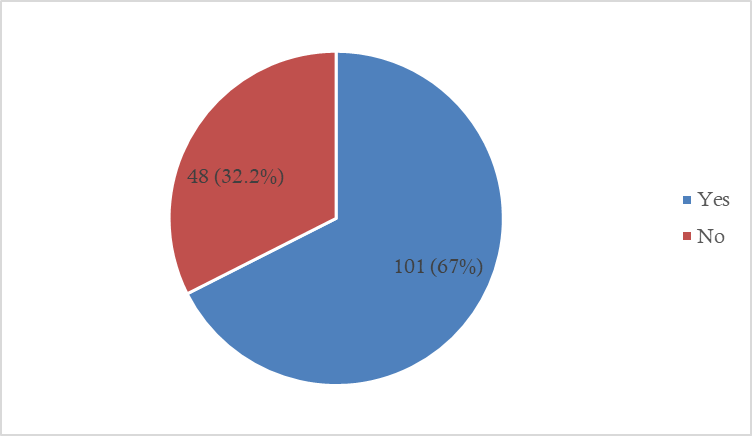
Figure#1: Frequency of thyroid dysfunction in primary infertile women with menstrual irregularities
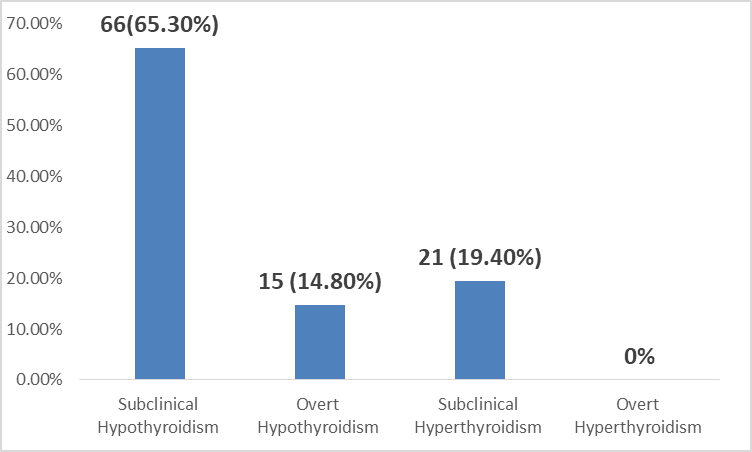
Figure#2: Type of Thyroid Disorder (n=101)
101 participants (67%) of the study population had thyroid dysfunction, which was found to be more prevalent among primary infertile women who presented with irregular menstruation. Subclinical hypothyroidism was the most prevalent anomaly, found in 66 women (65.3%), suggesting that most thyroid conditions were minor and silent. Subclinical hyperthyroidism, which affected 21 women (19.4%), came next, with overt hypothyroidism making up a smaller percentage of cases. Interestingly, no individual had a direct diagnosis of hyperthyroidism, as shown in figure#1 & 2.
The comparison of clinical and demographic traits between women with and without thyroid disease is shown in Table 2. Thyroid dysfunction was found to be statistically significantly associated with all evaluated factors (p < 0.05).
Compared to women without thyroid dysfunction (n=14), the majority of those with thyroid dysfunction (n=90) were older than 30 years, indicating a high correlation between aging and thyroid abnormalities (p=0.000). Likewise, women with BMI >25 kg/m² (n=41) had significantly greater rates of thyroid dysfunction than women with BMI <25 kg/m² (n=7) (p=0.001), indicating a possible association between increased body weight and compromised thyroid function.
Thyroid level was also significantly correlated with the length of infertility. Thirteen women without thyroid disorder experienced infertility that lasted longer than two years (p=0.000), while the majority of women with thyroid dysfunction (n=97) experienced infertility that lasted longer than two years. Similarly, thyroid insufficiency was substantially linked to monthly irregularity lasting longer than 12 months (n=44 vs. n=7; p=0.000).
In terms of menstruation symptoms, women who presented with menorrhagia (n=71) were most likely to have thyroid dysfunction, followed by those who presented with polymenorrhea (n=14) and metrorrhagia (n=11). On the other hand, polymenorrhea and amenorrhea were more frequently reported by women without thyroid problems. There was a significant difference in the distribution of menstrual symptoms between the two groups (p=0.000), suggesting a close connection between the underlying thyroid condition and the pattern of menstrual disruption.
Table#2: Comparison of thyroid dysfunction with respect to Demographic Data
|
Descriptive Statistics |
Thyroid Dysfunction |
P-value |
|
|
Yes (n=101) |
No (n=48) |
||
|
Age (Years) · 18-30 · >30 |
11 90 |
34 14 |
0.000 |
|
BMI (kg/m2) · < 25 · > 25 |
60 41 |
41 07 |
0.001 |
|
Duration of infertility (years) · 1-2 Years · >2 Years |
04 97 |
35 13 |
0.000 |
|
Duration of Menstrual Irregularity (months) · >6-12 · >12 |
57 44 |
41 07 |
0.000 |
|
Menstrual complaints · Amenorrhea · Oligomenorrhea · Metrorrhagia · Menorrhagia · Polymenorrhea |
02 03 11 71 14 |
06 05 07 13 19 |
0.000 |
DISCUSSION :
Over 1.5 to 6% of people globally suffer from thyroid dysfunction, a serious public health issue that has a high morbidity and mortality rate. Reproductive physiology cannot be maintained without normal thyroid function. Infertility may present as an irregular menstrual cycle due to a malfunction in its function (9). Nonetheless, the thyroid system probably plays a role in the development of both follicles and embryos. The correlation between infertility and thyroid illness suggests that TH and TSH have paracrine effects on the ovary and endometrium.11 Infertility must be ruled out because it is a social shame in our society. The purpose of this study was to determine how common thyroid dysfunction was among primary reproductive women who experienced irregular menstruation.
The majority of the women in the current study were in the early to mid-reproductive age range, with a mean age of 33.93±5.859 years. This age distribution is consistent with earlier research showing that infertility typically manifests in the third decade of life, when fecundity and ovarian reserve start to wane.12,13With a mean BMI of 25.89 ± 5.13 kg/m2, a significant percentage of women were overweight. Regional studies have documented similar mean BMI values among infertile women, highlighting the rising prevalence of obesity-related reproductive diseases in South Asian communities.14
Thyroid diseases can affect women's reproductive function. Menstrual disturbances that were frequently reported included menorrhagia and polymenorrhea. This type of presentation was documented in our investigation and is comparable to research by Joshi JV et al.15, Krassas GE et al.16, and Dittrich R et al.17
Among primary infertile women who presented with irregular menstruation, a significant frequency of thyroid dysfunction was found in the current study (101, or 67%), which is comparable to another study done in Peshawar (73.31%)21. According to the Ghazi et al.22 study, the percentage of primary infertility was 54.5%. The results of other research by Kasius et al.19 and Mosher18 are also the same. Girish and Manjunath's study21, on the other hand, revealed a greater rate of primary infertility, at 80%.
In this study the prevalence of hyperthyroidism was 19.5%, which is almost similar to a study done at a local tertiary care hospital which was 16%.26 Other studies report prevalence of hyperthyroidism as 26% by Biradar et al22 and 23% by Singh et al23. Many studies have found prevalence of hyperthyroidism as 2.1%,24 2.2%,25 3.1%26 and 4.2%27 respectively. These percentages are much lower than my study which may reflect regional differences.
In addition, this study found that thyroid dysfunction is substantially linked to older age, higher BMI, longer infertility duration, prolonged irregular menstruation, and certain menstrual abnormalities, especially menorrhagia, in primary infertile women. Similar findings were reported in studies by Knudsen N et al.28 and Asvold BO29, whereas Manji N et al.30 came to the conclusion that there was no proof linking BMI to thyroid health within the normal range.
Strength of our study was use of consecutive sampling best suited for our study design, primary infertile patients having menstrual irregularity were categorized and evaluated for thyroid dysfunction and sample selection, as our inclusion and exclusion criteria was stringent.
The cross-sectional design, which makes it impossible to determine the etiology, and the single-center experience are the primary limitations of this study; as a result, the figure does not accurately represent the frequency and severity of the illness. Furthermore, because this study was carried out in an urban setting with a small sample size, the findings may not apply to broader populations.
CONCLUSION :
The present study found that a large percentage of women with basic infertility and menstrual disorders also had thyroid disorders. This suggests that thyroid dysfunction is a major factor in primary infertility, which can show up as irregular menstruation. To further understand the association between thyroid dysfunction and primary infertility, more carefully planned case control studies are required to ascertain the prevalence of thyroid dysfunction in women who are primary infertile and experiencing menstrual irregularities. Consequently, the usual workup of primary infertile women who report with irregular menstruation history must include the thyroid hormone profile.
Funding: This study was not funded by any organization.
Patient’s consent: Patient’s consent was obtained before inclusion in the study
Conflict of Interest: Authors declared no conflict of interest.
REFERENCES:
1. Khan I, Irfan M, Ali IS, Elrefy A, Obeidat YM, Khan Z. Frequency of thyroid disorders in patients with menstrual irregularities presenting to the OPD in tertiary care hospital. Professional Med J 2024; 31(04):626-30.
2. Mazzilli R, Medenica S, Di Tommaso AM, Fabozzi G, Zamponi V, Cimadomo D, et al. The role of thyroid function in female and male infertility: A narrative review. Journal of endocrinological investigation. 2023 Jan; 46(1):15-26.
3. Alqahtani HA, Almagsoodi AA, Alshamrani ND, Almalki TJ, Sumaili AM, Alshamrani N, Sumaili A. Common electrolyte and metabolic abnormalities among thyroid patients. Cureus. 2021 May 30; 13(5):6-10.
4. Poppe K, Bisschop P, Fugazzola L, Minziori G, Unuane D, Weghofer A. 2021 European thyroid association guideline on thyroid disorders prior to and during assisted reproduction. European Thyroid Journal. 2021 Feb 1; 9(6):281-95.
5. Azhary JMK, Leng LK, Razali N, Sulaiman S, Wahab AVA, Adlan ASA and Hassan J.
6. The prevalence of menstrual disorders and premenstrual syndrome among adolescent girls living in North Borneo, Malaysia: a questionnaire-based. BMC Women’s Health. Aug 2022; 22:341.
7. Wang JW, Liao XX, Li T. Thyroid autoimmunity in adverse fertility and pregnancy outcomes: timing of assisted reproductive technology in AITD women. J Transl Int Med. 2021;9(2):76-83.
8. Brown EDL, Obeng-Gyasi B, Hall JE, Shekhar S. The thyroid hormone axis and female reproduction. Int J Mol Sci. 2023;24(12):9815
9. P HH, G S, K P, Penumalla S, Kandimalla R. Hypothyroidism and its impact on menstrual irregularities in reproductiveage women: a comprehensive analysis at a tertiary care center. Cureus. 2024;16(6):e63158.
10. Feldt-Rasmussen U, Effraimidis G, Bliddal S, Klose M. Consequences of undertreatment of hypothyroidism. Endocrine. 2024;84(2):301-308. https://doi.org/10.1007/s12020-023-03460-1
11. Kumari P, Das S. Determination of the frequency of thyroid dysfunction in primary infertile women with menstrual irregularities. Pak Euro Journal of Medical and Life Sciences.2021;1(4):9-18. https://doi.org/10.31580/pjmls.v4i1.1620
12. Vander Borght M, Wyns C. Fertility and infertility: Definition and epidemiology. Clin Biochem. 2018 Dec;62:2-10. doi: 10.1016/j.clinbiochem.2018.03.012.
13. Carson SA, Kallen AN. Diagnosis and Management of Infertility: A Review. JAMA. 2021 Jul 6;326(1):65-76. doi: 10.1001/jama.2021.4788.
14. Bano R, AlShammari E, Khan S. Association of body mass index with menstrual irregularities and infertility in South Asian women. J Obstet Gynaecol Res. 2020;46(9):1765-1772.
15. Joshi JV, Bhandarkar SD, Chadha M, Balaiah D, Shah R. Menstrual irregularities and lactation failure may precede thyroid dysfunction or goitre. Institute for Research in Reproduction, Seth GS Medical College, Parel, Bombay, Maharashtra. case reports year 1993,39(3):137-41.
16. Krassas GE, Poppe K, Glinoer D. Thyroid function and human reproduc tive health. EndocrRev. 2010;31(5):702-55.
17. Dittrich R, Beckmann MW, Oppelt PG, Hoffmann I, Lotz L, Kuwert T, Mueller A. Thyroid hormone receptors and reproduction. J Reprod Immunol. 2011;90(1):58-66.
18. Ghazi A, Saddique M, Siddiq N, Jabbar S, Ali T, Jaipal S. Subfertility: experience in a tertiary care hospital. Pak J Surg 2007; 23: 4-7.
19. Mosher W. Reproductive impairments in the United States. Demography 1998; 31: 915-30.
20. Kasius JC, Broekmans FJM, Sie-Go DMDS, Bourgain C, Eijkemans MJC, Fauser BC, et al. The reliability of the histological diagnosis of endometritis in asymptomatic IVF cases: a multicenter observer study. Hum Reprod 2012; 27: 153-8.
21. Girish CJ, Manjunath ML. Morphological patterns of endometrium in infertile woman-a prospective study. Int J App Basic Med Res 2011; 2: 512-20.
22. Jamal T. Tubal factor in infertility. J Postgrad Med Inst 2011; 2004; 18: 255-60. 27. Biradar SM, Poornima RT, Sonagra AD, Jayaprakash Murthy DS. Thyroid dysfunction in infertile women. Int J Pharm Bio Sci 2012; 2: 53-8.
23. Singh L, Agarwai CG, Chowdhary SR, Mehra P, Khare R. Thyroid profile in infertile women. J Obstet Gynecol India 1990; 40: 248-53.
24. Poppe K, Velkeniers B, Glinoer D. Thyroid disease and female reproduction. Clin Endocrinol (Oxf) 2007;66:309-21.
25. Sadia S, Waqar F, Akhtar T, Sultana S. Characteristics of infertile patients with ovulatory dysfunction and their relation to body mass index. J Ayub Med Coll Abbottabad 2009; 21: 12-6.
26. Sharma B, Singh C, Kansal R. Significance of thyroid profile (serum T3, T4 & TSH) in infertile women. Indian J Community 2012; 24: 149-52.
27. Elahi S, Tasneem A, Nazir I, Nagra SA, Hyder SW. Thyroid dysfunction in infertile women. J Coll Physicians Surg Pak 2007; 17: 191-4.
28. Mohsin A, Nargis HK, Rida D, Qurat-ul-ain F, Zunera T, Shoaib AM, Tauseef MA, Asadullah, Muhammad MTK, Mohammad ZM. Thyroid Abnormalities in Relation to Type 1 and Type 2 Diabetes Mellitus Patients in Quetta, Balochistan. Pakistan Journal of Zoology. 2021;53(2):669-674.
29. Asvold BO, Bjoro T,Vatten LJ. Association of serum TSH with high body mass differs between smokers and never-smokers. J Clin Endocrinol Metab. 2009;94(12):5023-7
30. Manji N, Boelaert K, Sheppard MC, Holder RL, Gough SC, Franklyn JA. Lack of association between serum TSH or free T4 and body mass index in euthyroid subjects. Clin Endocrinol (Oxf). 2006;64(2):125-8.