Frequency of Surgical Site Infection after Laparotomy in Pediatric Population
- Shuja ur Rehman , TMO/PGR, Department of Paediatric Surgery, Lady Reading Hospital – MTI, Peshawar, Pakistan
- Muhammad Yunas Khan , Associate Professor, Department of Paediatric Surgery, Lady Reading Hospital – MTI, Peshawar, Pakistan
Article Information:
Abstract:
SSI is a frequent postoperative complication after the laparotomy in children that leading to increased morbidity and higher healthcare costs. Children are vulnerable due to higher susceptibility to contamination. Early identification of risk factors is crucial for improving the outcomes and minimize the postoperative complications in the paediatric surgical patients. Objective: To determine the frequency of surgical site infection following laparotomy in paediatric populations at Lady Reading Hospital, Peshawar. Methodology: This descriptive study included One hundred sixteen patients, aged 2 to 15 years, who underwent emergency or elective laparotomy were included in this study at Department of Paediatric Surgery, Lady Reading Hospital, Peshawar from August 2025 to November 2025. Children with pre-existing local skin infections, acquired immunodeficiency syndrome, children on long-term immunosuppressive therapy were excluded. Surgical site infection was assessed after 30 days of the procedure. Surgical site infection was defined as the presence of swelling, redness, pain, warmth and puss like discharge from the wound. Data was analysed with SPSS 25. Chi square/Fisher exact test was used for stratification with p-value ≤ 0.05 considered statistically significant. Results: The median age of the patients was 8 years (IQR: 4-11), there were 68 (58.6%) male patients. Emergency surgeries were conducted in 107 (92.2%) cases. Surgical site infection was observed in 26 (22.4%) children. Associated risk factors for SSI were malnourishment (p=0.006), dirty and contaminated wounds (p=0.043), prolonged duration of surgery (p=0.018) and drain usage (p<0.001). Conclusion: The frequency of surgical site infection after paediatric laparotomy in the present study was 26 (22.4%). Malnutrition, dirty and contaminated wounds, prolonged surgery duration, and drain use were significantly associated with surgical site infection.
Keywords:
Article :
INTRODUCTION:
Surgical site infection (SSI) is a major clinically significant complication after the abdominal surgery. Regardless of the advancements in the surgical techniques, aseptic protocols. SSIs persist to pose a main challenge in the surgical practice globally and is associated with raised postoperative morbidity, surplus medical costs and mortality 1,2. Among the paediatric surgical patients such infections can have serious concerns as children usually have immature immune responses and might present with the congenital conditions that expose them to infection 3.Laparotomy is frequently performed in the paediatric surgical practice for the broad spectrum of conditions such as intestinal obstruction, gastrointestinal anomalies and abdominal trauma. Though this open surgical approach permits the suitable management of intra-abdominal pathology but it also exposes surgical wound for microbial contamination 4-6.
Risk of SSI is generally greater within the open abdominal procedures in comparison to the minimally invasive surgery due to extensive incisions and longer operative times 7. Wound infection remains a distinguished reason for delayed recovery among the children undergoing laparotomy. SSI rates reported in pediatric population was 10.3%, highlighting the persistent burden even in the modern surgical context 8. SSIs not merely affect physical recovery of child but may also antibiotic therapy and sometime reoperation. Consequently, SSIs denote as major contributor towards the morbidity and healthcare expenditure. SSI related pathogens frequently display resistance to generally used antibiotics thus highlighting the need for antimicrobial stewardship and enhanced the infection prevention strategies 9.
Burden of surgical site infection in poor countries remains high due to the resource restrictions and variations in the peri-operative care protocols. SSIs considerably increase the post-operative hospital stay, contributes to the patient discomfort and delayed recovery 10. A study conducted in Pakistan identified that the operative duration and inadequate peri-operative preparation are the predominant factors leading to postoperative infection within the pediatric population 11. Preventive strategies intended at minimizing the SSIs have consequently become a priority in the paediatric surgical care. Evidence based measures comprise the strict adherence to the sterile surgical approach, nutritional status optimisation and proper postoperative wound care 12.
Children undergoing laparotomy are vulnerable to infection due immature immune systems. Though improvements in surgical techniques and infection control measures have minimizes the overall occurrence of SSIs. However these infections remain to occur particularly in the developing countries where the infection prevention practices may vary. The aim of this study is to determine the occurrence of SSI following the laparotomy in the paediatric population which may aid in ascertaining the extent of the problem and support the development of effective preventive strategies for improving the postoperative outcomes in the children.
Surgical site infection (SSI) is a major clinically significant complication after the abdominal surgery. Regardless of the advancements in the surgical techniques, aseptic protocols. SSIs persist to pose a main challenge in the surgical practice globally and is associated with raised postoperative morbidity, surplus medical costs and mortality 1,2. Among the paediatric surgical patients such infections can have serious concerns as children usually have immature immune responses and might present with the congenital conditions that expose them to infection 3.Laparotomy is frequently performed in the paediatric surgical practice for the broad spectrum of conditions such as intestinal obstruction, gastrointestinal anomalies and abdominal trauma. Though this open surgical approach permits the suitable management of intra-abdominal pathology but it also exposes surgical wound for microbial contamination 4-6.
Risk of SSI is generally greater within the open abdominal procedures in comparison to the minimally invasive surgery due to extensive incisions and longer operative times 7. Wound infection remains a distinguished reason for delayed recovery among the children undergoing laparotomy. SSI rates reported in pediatric population was 10.3%, highlighting the persistent burden even in the modern surgical context 8. SSIs not merely affect physical recovery of child but may also antibiotic therapy and sometime reoperation. Consequently, SSIs denote as major contributor towards the morbidity and healthcare expenditure. SSI related pathogens frequently display resistance to generally used antibiotics thus highlighting the need for antimicrobial stewardship and enhanced the infection prevention strategies 9.
Burden of surgical site infection in poor countries remains high due to the resource restrictions and variations in the peri-operative care protocols. SSIs considerably increase the post-operative hospital stay, contributes to the patient discomfort and delayed recovery 10. A study conducted in Pakistan identified that the operative duration and inadequate peri-operative preparation are the predominant factors leading to postoperative infection within the pediatric population 11. Preventive strategies intended at minimizing the SSIs have consequently become a priority in the paediatric surgical care. Evidence based measures comprise the strict adherence to the sterile surgical approach, nutritional status optimisation and proper postoperative wound care 12.
Children undergoing laparotomy are vulnerable to infection due immature immune systems. Though improvements in surgical techniques and infection control measures have minimizes the overall occurrence of SSIs. However these infections remain to occur particularly in the developing countries where the infection prevention practices may vary. The aim of this study is to determine the occurrence of SSI following the laparotomy in the paediatric population which may aid in ascertaining the extent of the problem and support the development of effective preventive strategies for improving the postoperative outcomes in the children.
Surgical site infection (SSI) is a major clinically significant complication after the abdominal surgery. Regardless of the advancements in the surgical techniques, aseptic protocols. SSIs persist to pose a main challenge in the surgical practice globally and is associated with raised postoperative morbidity, surplus medical costs and mortality 1,2. Among the paediatric surgical patients such infections can have serious concerns as children usually have immature immune responses and might present with the congenital conditions that expose them to infection 3.Laparotomy is frequently performed in the paediatric surgical practice for the broad spectrum of conditions such as intestinal obstruction, gastrointestinal anomalies and abdominal trauma. Though this open surgical approach permits the suitable management of intra-abdominal pathology but it also exposes surgical wound for microbial contamination 4-6.
Risk of SSI is generally greater within the open abdominal procedures in comparison to the minimally invasive surgery due to extensive incisions and longer operative times 7. Wound infection remains a distinguished reason for delayed recovery among the children undergoing laparotomy. SSI rates reported in pediatric population was 10.3%, highlighting the persistent burden even in the modern surgical context 8. SSIs not merely affect physical recovery of child but may also antibiotic therapy and sometime reoperation. Consequently, SSIs denote as major contributor towards the morbidity and healthcare expenditure. SSI related pathogens frequently display resistance to generally used antibiotics thus highlighting the need for antimicrobial stewardship and enhanced the infection prevention strategies 9.
Burden of surgical site infection in poor countries remains high due to the resource restrictions and variations in the peri-operative care protocols. SSIs considerably increase the post-operative hospital stay, contributes to the patient discomfort and delayed recovery 10. A study conducted in Pakistan identified that the operative duration and inadequate peri-operative preparation are the predominant factors leading to postoperative infection within the pediatric population 11. Preventive strategies intended at minimizing the SSIs have consequently become a priority in the paediatric surgical care. Evidence based measures comprise the strict adherence to the sterile surgical approach, nutritional status optimisation and proper postoperative wound care 12.
Children undergoing laparotomy are vulnerable to infection due immature immune systems. Though improvements in surgical techniques and infection control measures have minimizes the overall occurrence of SSIs. However these infections remain to occur particularly in the developing countries where the infection prevention practices may vary. The aim of this study is to determine the occurrence of SSI following the laparotomy in the paediatric population which may aid in ascertaining the extent of the problem and support the development of effective preventive strategies for improving the postoperative outcomes in the children.
METHODOLOGY:
The present descriptive study was conducted in the Department of Paediatric Surgery, Lady Reading Hospital, Peshawar. Before commencing the study, an ethical approval was taken from the institute (Ref: No.363/LRH/ MTI). The sample size of this study was 116, which was calculated using OpenEpi web based software keeping the following assumptions, previous frequency of surgical site infection of 25.9% following laparotomy in paediatric cases,13 absolute precision 8% and confidence level of 95%. Consecutive non-probability sampling method was used to include the participants.
Children 2 to 15 years of age, of either gender, undergoing elective or emergency laparotomy were included. For this study laparotomy was defined as a surgical procedure involving an open incision via abdominal wall to gain access to the abdominal cavity for diagnostic evaluation/therapeutic intervention for conditions such as intestinal obstruction, appendicitis, perforation or congenital anomalies. Patients with pre-existing local skin infections, acquired immunodeficiency syndrome, children on long-term immunosuppressive therapy including corticosteroids or chemotherapy and concurrent infections at the time of surgery were excluded from the study.
After taking informed written consent from the parents of the patients, children who met the selection criteria for this study were subjected to physical examination and their medical history was taken. Children who underwent laparotomy were followed, and surgical site infection was recorded. Clinical assessment of wound area was performed for the diagnosis of surgical site infection within 30 days of the procedure, recording all of the following features like swelling, redness, pain, warmth, and pus like discharge from the wound site. Risk factors such as wound classification (according to the CDC classification14), nutritional status (according to the WHO standard for child growth15), type of surgery, duration of surgery and usage of drains were also recorded. All the assessments were performed under the direct supervision of a consultant paediatric surgeon.
For data analysis, SPSS 25 was used. For numerical variables such as age, median IQR was used, after assessing for normality with Shapiro Wilk test. For categorical variables such as surgical site infection, type of surgery, wound classification, nutritional status, duration of surgery, use of drains, wound dehiscence and gender were presented as frequency and percentages. Chi square test/Fisher exact test was used for stratification of surgical site infection with risk factors, p value ≤ 0.05, was considered statistically significant
RESULTS:
One hundred sixteen children between the ages of 2 to 15 years who underwent laparotomy were included in this study. The median age of the patients was 8 years with IQR 4 to 11 years. Majority of the presenting patients were male 68 (58.6%) (Figure 1).
Table I presents the clinical presentation of the patients. Appendectomy was the most frequently performed surgical procedure in 79 (68.1%) cases. Most of the procedures were performed on an emergency basis 107 (92.2%).
Surgical site infection was developed in 26 (22.4%) children (Table II). Table III presents the classification of SSI according to the Centers for Disease Control and Prevention.
Table IV presents the factors associated with SSI, it was observed that children who developed SSI, majority were malnourished (p=0.006). SSI was more common in emergency procedures, but the association was not significant (p=0.413).
When comparing children who developed surgical site infection with those who did not, several factors showed significant associations. Nutritional status emerged as an important factor, with 14 (53.8%) of infected children being malnourished compared to only 23 (25.6%) in the non-infected group, and this difference was statistically significant. Although emergency surgeries comprised 23 (88.5%) of the infected cases compared to 84 (93.3%) in the non-infected group, the difference did not reach statistical significance (p=0.41). Wound classification showed that SSI was more common in dirty and contaminated wounds (p=0.043). Prolonged duration of surgery also showed significant association with SSI (p=0.023). The use of drains was also significantly associated with the development of SSI (p < 0.001) (Table IV).
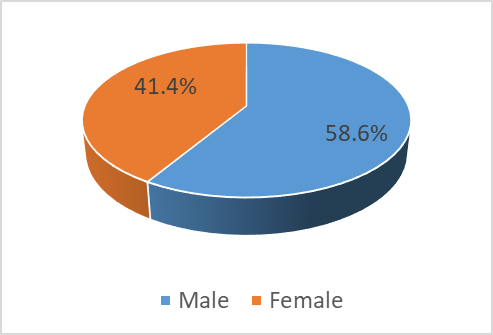
Figure 1: Gender distribution
Table 1: Clinical presentation of the patients
|
Clinical presentation |
n |
% |
|
|
Surgical procedure |
Appendectomy |
79 |
68.1% |
|
Intestinal obstruction |
17 |
14.7% |
|
|
Perforation peritonitis |
12 |
10.3% |
|
|
Other abdominal procedures |
8 |
6.9% |
|
|
Nutritional status |
Well nourished |
79 |
68.1% |
|
Malnourished |
37 |
31.9% |
|
|
Type of surgery |
Emergency |
107 |
92.2% |
|
Elective |
9 |
7.8% |
|
|
Wound class |
Clean |
18 |
15.5% |
|
Clean contaminated |
33 |
28.4% |
|
|
Contaminated |
40 |
34.5% |
|
|
Dirty |
25 |
21.6% |
|
|
Duration of surgery |
< 60 minutes |
35 |
30.2% |
|
60 to 120 minutes |
51 |
44.0% |
|
|
> 120 minutes |
30 |
25.9% |
|
|
Use of drains |
Yes |
38 |
32.8% |
|
No |
78 |
67.2% |
|
Table II: Frequency of surgical site infection & wound dehiscence
|
SSI & wound dehiscence |
n |
% |
|
|
Surgical site infection |
Yes |
26 |
22.4% |
|
No |
90 |
77.6% |
|
|
Wound dehiscence |
Yes |
7 |
6.0% |
|
No |
109 |
94.0% |
|
Table III: Classification of SSI according to CDC
|
CDC classification |
n |
% |
|
Superficial incisional |
14 |
53.8% |
|
Deep incisional |
8 |
30.8% |
|
Organ space |
4 |
15.4% |
Table IV: Risk factors for surgical site infection
|
Risk factors |
Surgical site infection |
p value |
||||
|
Yes |
No |
|||||
|
n |
% |
n |
% |
|||
|
Nutritional status |
Well nourished |
12 |
46.2% |
67 |
74.4% |
0.006 |
|
Malnourished |
14 |
53.8% |
23 |
25.6% |
||
|
Type of surgery |
Emergency |
23 |
88.5% |
84 |
93.3% |
0.417 |
|
Elective |
3 |
11.5% |
6 |
6.7% |
||
|
Wound class |
Clean |
2 |
7.7% |
16 |
17.8% |
0.043 |
|
Clean contaminated |
5 |
19.2% |
28 |
31.1% |
||
|
Contaminated |
8 |
30.8% |
32 |
35.6% |
||
|
Dirty |
11 |
42.3% |
14 |
15.6% |
||
|
Duration of surgery |
< 60 minutes |
4 |
15.4% |
31 |
34.4% |
0.018 |
|
60 to 120 minutes |
10 |
38.5% |
41 |
45.6% |
||
|
> 120 minutes |
12 |
46.2% |
18 |
20.0% |
||
|
Use of drains |
Yes |
17 |
65.4% |
21 |
23.3% |
< 0.001 |
|
No |
9 |
34.6% |
69 |
76.7% |
||
|
Chi square/Fisher exact test used |
||||||
DISCUSSION :
The present study examined the burden of surgical site infections following laparotomy in one hundred sixteen children. An infection rate of 22.4% was observed. This figure aligns with the 25.9% reported by Imran et al. in their study on paediatric laparotomies.13 Another study reported SSI rate of 14.5%, which appear lower than the rate observed in the present study, this discrepancy can be attributed to various factors such as differences in perioperative care protocols, infection control practices, and mixed cases observed in the present study including emergency and elective procedures.16 Another study reported infection rates ranging from 6.3% in high human development index countries, 34.2% in middle human development index countries and 24.7% in low development countries, which aligns with present findings.17
The present study found a male predominance, a finding which is consistent with the gender distribution reported in multiple studies. Kamath et al. in their study on paediatric appendectomies reported 57.7% males, while Khan and colleagues from Pakistan documented 66.7% males in their laparoscopic appendectomy series.18,19
Nutritional status was a significant factor associated with surgical site infection in this study. Wabada et al. similarly reported low serum albumin, a biomarker for nutritional compromise as an independent predictor of surgical site infection in their study.16 Ankita et al. also reported that malnourished children had an infection rate of 22.4% compared to well nourished children.7 These findings highlight the critical role of preoperative nutritional status in paediatric surgical care. Malnutrition compromises immune function and wound healing, leading to increase in postoperative infections, and this relationship appears particularly more common in low resource settings.
The majority of the procedures, more than 90%, in the present study were performed on an emergency basis. Among the infected children 23 (88.5%) underwent emergency surgery, but the association could not reach statistical significance. The insignificant association between emergency surgery and infection can be attributed to the small number of elective cases. Studies have demonstrated higher infection rates following emergency procedures.7,16
Among infected children, dirty wounds and contaminated wounds were significantly associated with SSI. Wabada et al. documented infection rates of 10.4% for clean wounds, 16.7% for clean contaminated, 27.1% for contaminated, and 45.8% for dirty wounds.16 In low development countries the infection rates have reported 39.0% for contaminated procedures compared to 17.2% for clean contaminated procedures.17
Prolonged duration of surgery was also a significant factor of SSI in the present study. This finding aligns with various studies. Imran et al. reported that surgery duration > 120 minutes was associated with a 41.4% infection rate compared to procedures < 30 minutes.13 Kamath et al. reported that each minute increase in surgery duration is a significant risk factor for SSI.18 Similarly various studies have reported that duration of surgery is associated with higher risk of SSI.16,20 In the present study, the use of drain also emerged as a significant factor for SSI, a finding which is in agreement with the literature.18,20
This study provided current data from a local setting where the majority of paediatric laparotomies are performed on an emergency basis and where malnourishment is prevalent. While individual risk factors have been described in previous studies, the combination of variables examined in this study and their relative contribution in a clinical setting adds to the existing knowledge.
Several limitations of this study needs to be acknowledged. Data on relevant variables like preoperative antibiotic timing, intraoperative hypoglycaemia and postoperative hyperglycaemia, were not reported. The single centre design of the study may limit generalisability to other settings with different patient population. The study did not include microbiological confirmation for all suspected infections. The study lacked long term follow up after the hospital discharge which means that infections presenting after discharge may have been missed.
CONCLUSION :
In conclusion, this study found surgical site infection rate of 22.4% after paediatric laparotomy. The study further identified malnutrition, contaminated wounds, dirty wounds, prolonged surgery duration and drain usage as significant risk factors for surgical site infection. These findings highlight the significant burden of post laparotomy infection in paediatric population and emphasize the need for targeted preventive strategies.
Declarations
· No conflict of interest declared by the authors.
· Ethical approval was obtained (Ref: No.363/LRH/ MTI)
· Consent was taken from parents
· No funding was received for the study.
REFERENCES:
1. Seidelman JL, Mantyh CR, Anderson DJ. Surgical site infection prevention: a review. JAMA. 2023;329(3):244-52. Doi:10.1001/jama.2022.24075
2. Vicentini C, Elhadidy HS, Marengo N, Paladini G, Cornio AR, Zotti CM. Mortality and case fatality rates associated with surgical site infections: a retrospective surveillance study. Surg Infect. 2023;24(8):734-40. Doi:10.1089/sur.2023.082
3. Alganabi M, Biouss G, Pierro A. Surgical site infection after open and laparoscopic surgery in children: a systematic review and meta-analysis. Pediatr Surg Int. 2021;37(8):973-981. doi: 10.1007/s00383-021-04911-4.
4. Emeka CK. Laparotomy in Children in a Tertiary Hospital in a Developing Country: Indications, Complications and Outcome. Clin Surg J. 2022;5(2):34-40. https://wjclinicalsurgery.com/articles/Laparotomy-in-Children-in-a-Tertiary-Hospital-in-a-Developing-Country.pdf
5. Utsumi M, Yamada T, Yamabe K, Katsura Y, Fukuchi N, Fukunaga H, et al. Differences in risk factors for surgical site infection between laparotomy and laparoscopy in gastrointestinal surgery. PLoS One. 2022;17(9):e0274887. DOI:10.1371/journal.pone.0274887
6. Temesgen F, Gosaye A, Starr N, Kiflu W, Getachew H, Dejene B, et al. Early outcome of laparotomy wounds in pediatric patients in TASH, Addis Ababa, Ethiopia: a six-months prospective study. Ethiop J Health Sci. 2021;31(1):111-17 DOI: 10.4314/ejhs.v31i1.13
7. Ankita, Xess NG, Tirkey K, Sahu SS, Ranjan A, Singh AK, et al. Incidence and Risk Factors for Surgical Site Infections in Pediatric Abdominal Surgery: A Multicenter Cohort Study. J Pharm Bioallied Sci. 2025;17(4):S3349-S3351. Doi: 10.4103/jpbs.jpbs_1418_25.
8. Rehan M, Talat N, Abdullah F, Mirza B, Ameer A. Risk factors for surgical site infections in pediatric patients: A cross-sectional study. J Med Sci. 2024;32(4): 315-319. https://www.researchgate.net/publication/387773671_RISK_FACTORS_FOR_SURGICAL_SITE_INFECTIONS_IN_PEDIATRIC_PATIENTS_A_CROSS-SECTIONAL_STUDY
9. Jamal Z, Waqar SH, Khan Z, Shakoor A, Rahab A, Khan MH. Prevalence of Causative Organisms at Surgical Site Infections in Patients Undergoing Surgery at a Tertiary Care Hospital: A Cross-Sectional Study. MedERA-J CMH LMC and IOD. 2025;7(2):322-28. DOI:10.61982/medera.v7i2.410
10. Zehra A, Rawtani G, ul Ain HN, Gauhar M, Kumar D, Arshad S, et al. Surgical Site Infection: its Morbidity and Hospital Burden in a Public Sector Hospital. J Dow Uni Health Sci. 2025;19(3):144-50. DOI:10.36570/jduhs.2025.3.2645
11. Khan H, Azhar M, Baig T, Niaz H, Jami MM, Zeb M, et al. Frequency of surgical site infections after emergency laparotomy. Professional Med J. 2025;32(06):628-33. DOI: DOI:10.29309/TPMJ/2025.32.06.7691
12. Fayyaz M, Akram F, Muneer B, Naeem U, Islam B, Shahzadi M, et al. Implementation of Peri-Operative Strategies for Prevention of Surgical Site Infection: Peri-Operative Strategies for Prevention of Surgical Site Infection. Pak J Health Sci. 2023;4(03):14-20. DOI:10.54393/pjhs.v4i03.584
13. Imran M, Rehman FU, Ali S, Saeed K. Surgical site infections in pediatric population-an experience at a tertiary care hospital. J Med Sci. 2020;28(3):298-301. https://jmedsci.com/Jmedsci/article/view/863
14. Yin V, Cobb JP, Wightman SC, Atay SM, Harano T, Kim AW. Centers for Disease Control (CDC) Wound Classification is Prognostic of 30-Day Readmission Following Surgery. World J Surg. 2023;47(10):2392-2400. doi: 10.1007/s00268-023-07093-3.
15. WHO Child Growth Standards and the Identification of Severe Acute Malnutrition in Infants and Children: A Joint Statement by the World Health Organization and the United Nations Children’s Fund. Geneva: World Health Organization; 2009. English. Available from: https://www.ncbi.nlm.nih.gov/books/NBK200776/
16. Wabada S, Abubakar AM, Chinda JY, Adamu S, Bwala KJ, Mohammed Y. Risk factors for surgical site infections in childhood. Arch Pediatr. 2017;2:106. DOI:10.29011/2575-825X.100006
17. GlobalSurg Collaborative. Surgical site infection after gastrointestinal surgery in children: an international, multicentre, prospective cohort study. BMJ Glob Health. 2020;5(12):e003429. doi: 10.1136/bmjgh-2020-003429.
18. Kamath R, Kumar AS, Bari T, RJ V, Kamath S, Sugunan A, et al. Risk factors for surgical site infections after paediatric appendectomies in a tertiary care teaching hospital in coastal Karnataka. F1000Res. 2025;14:565. doi: 10.12688/f1000research.163894.1.
19. Khan MJ, Khan J, Shah AA, Uziar M. Frequency of port-site infection in children undergoing laparoscopic appendectomy for uncomplicated appendicitis. J Pediatr Adolesc Surg. 2020;1(1):37-40. DOI: 10.46831/jpas.v1i1.11
20. Koumu MI, Jawhari A, Alghamdi SA, Hejazi MS, Alturaif AH, Aldaqal SM. Surgical Site Infection Post-appendectomy in a Tertiary Hospital, Jeddah, Saudi Arabia. Cureus. 2021;13(7):e16187.
21. Azmeraw M, Temesgen D, Kitaw TA, Feleke SF, Haile RN, Kassaw A, Abate BB. Surgical site infection following appendectomy in children. Sci Rep. 2025;15(1):6321. doi: 10.1038/s41598-024-79939-2.