ACUTE KIDNEY INJURY IN PATIENTS PRESENTING WITH PLACENTAL ABRUPTION AT TERTIARY CARE HOSPITAL
- Joshna , postgraduate trainee, gynecologists and obstetrician, mbbs, civil hospital karachi / dow university of health sciences, karachi, pakistan
- Urooj naz , Assistant professor, obstetrics and gynecology, mbbs, fcps, civil hospital karachi / dow university of health sciences, karachi, pakistan
- Salma , Consultant gynecologists, obstetrics and gynecology, fcps, district headquarter hospital umerkot sindh and pakistan
- Aruna kumari hira , Assistant professor, obstetrics and gynecology, mbbs, fcps, civil hospital karachi / dow university of health sciences, karachi, pakistan
- Saman naz , postgraduate trainee, obstetrics and gynecology, mbbs, civil hospital karachi / dow university of health sciences, karachi, pakistan
- Rahila shabeer , postgraduate trainee, obstetrics and gynecology unit ii, fcps, civil hospital karachi / dow university of health sciences, karachi, Pakistan
Article Information:
Abstract:
Abstract: Objective:To frequency of acute kidney injury (AKI) in patients admitted with placental abruption at a tertiary care hospital of Karachi.Study Design: Descriptive cross-sectional study.Study Setting And Duration: This six-month from April 2025 to October 2025, institutional study was carried out in the Department of Gynecology and Obstetrics, Civil Hospital Karachi.Methodology: This study included 139 cases of placental abruption diagnosed over a period of six months and that met the inclusion and exclusion criteria. Blood samples were collected under aseptic conditions and were analysed for serum creatinine level in the hospital laboratory on admission. We defined patients with AKI if any of three criteria were fulfilled during their hospitalisation: (1) an increase in serum creatinine (sCr) >0.3 mg/dL within 48 h compared with baseline values recorded at admission or within the previous six months; (2) an increase in sCr >50% within a week compared with baseline values; or (3) a decrease in urine output to <0.5 mL/kg/hour for at least six hours, confirmed according to a 24-h urine output chart. Statistical analyses were conducted using SPSS version 27. Results were shown as mean ± standard deviation for quantitative variables or as frequencies and percentages for qualitative variables. For variables that had associations with p≤0.05, appropriate tests were performed.Results: Mean maternal age was 32.14±6.49 years, mean gestational age was 32.72±3.24 weeks, and Mean interpregnancy interval was 5.68±2.24 years. In a cohort of 139 patients, 25 (18.0%) were diagnosed with acute kidney injury, while 114 patients (82.0%) were without acute kidney injury. Maternal age was significantly associated with the incidence of AKI (p=0.01), and there was an increase in AKI in the age group of 20–30 years. AKI was not significantly associated with gestational age (p=0.85), interpregnancy interval (p=0.43), parity (p=0.93), or gravida (p=0.31) status, however.Conclusion: Acute kidney injury was found in a large proportion of the patients presenting with placental abruption, pointing towards the considerable renal complications associated with this obstetric emergency. Classifications Early detection and timely management of placental abruption may potentially prevent AKI and benefit maternal outcomes.
Keywords:
Article :
INTRODUCTION:
The comparison of the incidence of obstetric acute kidney injury (AKI) in this study and previous studies in developed countries over the past half-century demonstrates that the incidence of obstetric AKI in developed countries has significantly decreased from 40% of all cases to 10% of all cases. Nevertheless, it remains a major public health problem in developing countries. † Obstetric AKI accounts for approximately a quarter of dialysis needs in pregnancy and contributes significantly to maternal morbidity and mortality, with reported mortality rates between 30% and 60%. Large-scale observational studies from several countries, including Bangladesh and Pakistan, reported a prevalence of pregnancy-related AKI as high as 11%–36% in Pakistan during the past decade (9%–13% in neighbouring India 9. In a 25-year study from 1990 to 2014, obstetric causes were determined to be the cause of 25.6% of all AKI cases. Emerging facts hint that the changing pattern of AKI could be associated with an increasing trend of hypertensive disorders of pregnancy and treatment as well. In addition, the maternal mortality rate in pregnant women with ARF is increased by a factor of 4.5, the risk of cesarean delivery by 1.49, and the risk of stillbirth or perinatal death by a factor of up to four. ³
Placental abruption: This is the most important cause of significant bleeding in later pregnancy and is defined as the separation of a normally implanted placenta after 20 weeks of gestation and before delivery. Clinically, placental abruption is characterized by painful vaginal bleeding, uterine tenderness, and contractions, while placenta accreta is usually associated with painless vaginal bleeding, especially in the third trimester. ⁴ The condition is associated with high levels of perinatal morbidity and mortality, with reported rates of perinatal death as high as 20%–67%, depending on gestational age, birth weight, and severity of placental separation. ⁵ As such, it continues to hold its place as the leading cause of stillbirth and therefore the largest proportion of perinatal loss.
The precise etiology of placental abruption remains unknown, but maternal smoking, hypertensive disorders of pregnancy, intrauterine growth restriction (IUGR), advanced maternal age, male fetal sex, and a history of previous placental abruption have been consistently associated. ⁶ Other established risk factors include alcohol intake, cocaine use, and cigarette smoking. Although the relationship of these factors with placental abruption is well established, there is scant evidence regarding the association of opioid use and placental abruption. ⁷˒⁸
Several mechanisms have been proposed through which placental abruption may lead to acute renal dysfunction, including severe blood loss with resulting hypovolemia and hypotension; disseminated intravascular coagulation; systemic microvascular injury; and the release of inflammatory cytokines and vasoactive mediators that result in renal ischemia and damage138. ⁹˒¹⁰ It is unclear, however, whether this kidney injury is fully reversible or whether it causes a permanently increased risk of renal impairment in affected women.
AKI has long been recognized as a transient and reversible process. However, an already accumulating body of data suggests a relationship between AKI and an increased risk of post-AKI chronic kidney disease (CKD) and permanent renal impairment. AKI has become a significant cause of maternal morbidity, mortality, and adverse fetal outcomes among obstetric populations. There is an obvious clinical significance to this problem, yet few local or international data exist from studies specifically investigating the burden of acute kidney injury (AKI) in women with placental abruption. Determining the prevalence of acute kidney injury (AKI) and its associated factors in this population is crucial to improving risk stratification, guiding preventive measures, and the development of management strategies to reduce maternal and fetal complications.
METHODOLOGY:
It was an observational descriptive cross-sectional study carried out over 6th months from April 2025 to October 2025 in the Department of Obstetrics and Gynaecology, Civil Hospital Karachi, after approval from the Institutional Ethical Review Committee and CPSP. The objective of this study was to assess the prevalence of AKI among women with placental abruption.
A Non-probability consecutive sampling technique was used to enrol a total of 139 pregnant females. Eligible women were aged 20–45 years at presentation with singleton pregnancies with a cephalic fetal presentation, a gestational age of ≥20 weeks, parity and gravidity of ≥1, and placental abruption as a confirmed diagnosis at presentation. Women with a history of nephrotoxic drugs, diabetes mellitus, sepsis, diarrhea, connective tissue disorders, vasculitis, or autoimmune diseases would be excluded. Hypertensive disorders of pregnancy data were collected through a comprehensive history and chart review.
Sample size The sample size was calculated based on anticipated acute kidney injury frequency,4 to be 10%, with a 95% confidence interval and a margin of error of 5%, and a minimum required sample size of 139 participants, using the WHO sample size calculator.
Following informed consent, demographic and clinical data were captured on a pro forma. Venous blood samples were obtained at admission under aseptic technique and then sent to the hospital laboratory for serum creatinine determination. Urinary output was measured and recorded in ml/hr by a calibrated measuring container. Patients were then followed up during their hospital stay until discharge.
Acute kidney injury was diagnosed using accepted international clinical criteria and was defined to be present if at least one of the following conditions developed during the hospitalization: (1) an increase in serum creatinine by > 0.3 mg/dL within 48 h compared to baseline values obtained at admission or documented within the last six months; or (2) an increase in serum creatinine by> 50% within 7 days compared to baseline values; or (3) a decrease in urine output to < 0.5mL/kg/h for at least 6h, based on the direct urine output monitoring chart.
Data were entered and analysed using Statistical Package for the Social Sciences (SPSS) version 27. Data was described as mean ± standard deviation for quantitative variables and frequency and percentage for qualitative variables. We conducted stratification by potential effect modifiers, including maternal age, gestational age, inter-pregnancy interval, gravidity, and parity. The Chi-square test and Fisher’s exact test were used to evaluate post-stratification associations between categorical variables. A p-value ≤ 0.05 was used as a criterion for statistical significance.
RESULTS:
A total of 139 females who fulfilled the pre-defined inclusion and exclusion criteria and were presented with placental abruption were included from the Department of Obstetrics and Gynaecology, Civil Hospital Karachi. The age of those included ranged from 20 to 40 yrs. Mean maternal age was 32.14 ± 6.49 years, and mean gestational age at presentation was 32.72 ± 3.24 weeks. The spacing between pregnancies averaged 5.68 ± 2.24 years.
According to obstetric characteristics, 49 (35.3%) women were primiparous, and 90 (64.7%) were multiparous. Similarly, 51(36.7%) were primigravida and 88 (63.3%) were multigravida (Table l).
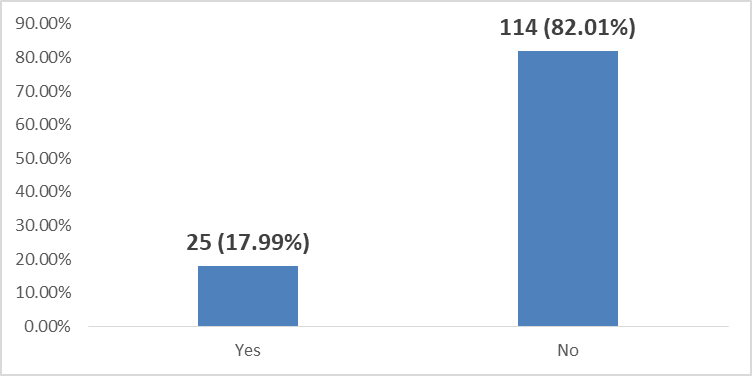
Out of 139 study subjects, 25 women were found to have acute kidney injury (AKI), giving an incidence of 18.0%. The other 114 (82.0%) did not evolve to AKI (Figure 1).
In a stratified analysis, the association between AKI and maternal age was significantly more frequent among women with placental abruption (p = 0.01). In relation to age, individuals aged 20–30 years had a higher prevalence of AKI than older participants. By contrast, no statistically significant associations were observed between AKI and gestational age (p = 0.85), interpregnancy interval (p = 0.43), parity (p = 0.93), or gravidity (p = 0.31) (Table 3). These data imply that maternal age might be an important associated risk factor for AKI in patients with placental abruption; however, the other obstetric variables studied were not significantly associated with the development of AKI.
Table#1: Descriptive Statistics of the Patients
|
VARIABLE |
MEAN ± SD/n(%) |
|
Age (Years) |
32.14±6.49 |
|
Gestational Age (Weeks) |
32.72±3.24 |
|
Interpregnancy Interval (Years) |
5.68±2.24 |
|
Parity Distribution · Primipara · Multipara |
49 (35.2%) 90 (64.7%) |
|
Gravida Distribution · Primigravida · Multigravida |
51 (36.9%) 88 (63.31%) |
|
Interpregnancy Interval Distribution · < 3 years · >3 years |
68 (48.92%) 71 (51%) |
Figure#1: Frequency of AKI in patients with placental abruption
Table#2: Comparison of the frequency of AKI in patients with placental abruption with respect to descriptive statistics.
|
VARIABLE |
AKI |
P-value |
|
|
Yes (n=25) |
No (n=114) |
||
|
Age (Years) · 20-30 · >30-45 |
14 (29.8%) 11 (12%) |
33 (70.2%) 81 (88%) |
0.01 |
|
Gestational Age (Weeks) · ≤ 30 Weeks · > 30 Weeks |
12 (17.4%) 13 (18.6%) |
57 (82.6%) 57 (81.4%) |
0.85 |
|
Interpregnancy Interval (Years) · ≤ 3 · > 3 |
14 (20.6%) 11 (15.5%) |
54 (79.4%) 60 (84.5%) |
0.43 |
|
Parity Distribution · Primipara · Multipara |
09 (18.4%) 16 (17.8%)
|
40 (81.6%) 74 (82.2%) |
0.93 |
|
Gravida Distribution · Primigravida · Multigravida |
07 (13.7%) 18 (20.5%)
|
44 (86.3%) 114 (82%) |
0.31 |
DISCUSSION :
Kidney disease is a major cause of morbidity and mortality worldwide; 6.3% of the reproductive-aged population is estimated to have chronic kidney disease (CKD), and 14.4% of females are at risk of developing CKD during their lifetime. Placental abruption, which causes microvascular compromise to the systemic microvasculature, can result in renal injury and precipitate renal decompensation. Despite being a potent risk factor for both heart disease and stroke10,11, little is known about the association of placental abruption and kidney disease in the postpartum period. The majority of patients with placental abruption may display acute kidney injury (AKI).
CONCLUSION :
The high incidence of AKI among patients presenting with placental abruption emphasizes the potential for significant renal threat during this obstetric emergency. The findings highlight the need for early detection and immediate treatment of AKI facilitated by close observation and supportive care.
Ethical Approval:The study was approved by the Institutional review board/Ethical review board (IRB-4167/DUHS/Approval/506).
REFERENCES:
1. Akhtar T, Shaikh SN, Bhutto A. FREQUENCY OF ABRUPTION PLACENTA IN GRAND MULTIGRAVIDA. Pak Armed Forces Med J. 2020 Jan. 27 [cited 2026 Feb. 8];70(Suppl-1):S74-77.
2. Kister TS, Remmler J, Schmidt M, Federbusch M, Eckelt F, Isermann B, et al. Acute kidney injury and its progression in hospitalized patients-Results from a retrospective multicentre cohort study with a digital decision support system. PLoS One. 2021 Jul 12;16(7):e0254608. doi: 10.1371/journal.pone.0254608.
3. Naqvi R. Epidemiological trends in community acquired acute Kidney Injury in Pakistan: 25 years Experience from a Tertiary Care Renal Unit. Pak J Med Sci. 2021 Mar-Apr;37(2):312-319. doi: 10.12669/pjms.37.2.3876.
4. Prakash J, Niwas SS, Parekh A, Pandey LK, Sharatchandra L, Arora P. Acute kidney injury in pregnancy in developing countries: etiology and outcome. J Obstet Gynaecol Res. 2017;43(4):623-629.
5. Novotny S, Lee-Plenty N, Wallace K, Kassahun-Yimer W, Jayaram A, Bofill JA, Martin JN Jr. Acute kidney injury associated with preeclampsia or hemolysis, elevated liver enzymes, and low platelets syndrome. Pregnancy Hypertens. 2020 Jan;19:94-99.doi: 10.1016/j.preghy.2019.11.010.
6. Piccoli GB, Zakharova E, Attini R, Ibarra Hernandez M, Covella B, Alrukhaimi M, et al. Acute Kidney Injury in Pregnancy: The Need for Higher Awareness. A Pragmatic Review Focused on What Could Be Improved in the Prevention and Care of Pregnancy-Related AKI, in the Year Dedicated to Women and Kidney Diseases. J Clin Med. 2018 Oct 1;7(10):318. doi: 10.3390/jcm7100318.
7. Prakash J, Ganiger VC, Prakash S, Iqbal M, Kar DP, Singh U, Verma A. Acute kidney injury in pregnancy with special reference to pregnancy-specific disorders: a hospital based study (2014-2016). J Nephrol. 2018 Feb;31(1):79-85. doi: 10.1007/s40620-017-0466-y
8. Naqvi R, Ahmed E, Sheikh R, Rizvi A. Obstetrical acute kidney injury: 25 years’ experience from nephrology care unit in Pakistan. Open Access Library J 2015; 2(8):1-7. doi: 10.4236/oalib. 1101778.
9. Zafar S, Jaleel R, Lodhani KK. Frequency of factors leading to acute renal failure in obstetric patients. Professional Med J 2021; 28(5):640-46.doi.org/10.29309/TPMJ/2021.28.05.4204
10. Mohammad N, Qazi Q, Liaqat N. Frequency of adverse perinatal outcomes in patients with pregnancy related acute renal (kidney) injury in a tertiary care hospital. Pak J Med Sci. 2024;40(10):2267-2270. doi: https://doi.org/10.12669/pjms.40.10.9228
11. Trakarnvanich T, Ngamvichchukorn T, Susantitaphong P. Incidence of acute kidney injury during pregnancy and its prognostic value for adverse clinical outcomes: A systematic review and metaanalysis. Medicine (Baltimore). 2022;101(30):e29563. doi: 10.1097/ MD.0000000000029563
12. Bentata Y, Housni B, Mimouni A, Abouqal R. Obstetric acute renal failure in an intensive care unit in Morocco. Int J Gynaecol Obstet. 2011; 115(2):196-8.
13. Huang C, Chen S. Acute kidney injury during pregnancy and puerperium: A retrospective study in a single centere. BMC Nephrol 2017; 18(1):146. doi: 10.1186/s12882-017- 0551-4.
14. Silva GB Jr, Monteiro FA, Mota RM,. Acute kidney injury requiring dialysis in obstetric patients: A series of 55 cases in Brazil. Arch Gynecol Obstet. 2009; 279(2):131- 137.
15. Miguil M, Salmi S, Moussaid I, Benyounes R. Insuffisance renale aigue hemodialysee en obstetrique. Nephrol Ther. 2011; 7(3):178-181.
16. Drakeley AJ, Le Roux PA, Anthony J, Penny J. Acute renal failure complicating severe preeclampsia requiring admission to an obstetric intensive care unit. Am J Obstet Gynecol 2002; 18
17. Mal P, Ahsan MN, Kumar M, Gurbukshani S, Fatima A, Khanzada I. Acute Kidney Injury Due to Obstetric Complications. J Coll Physicians Surg Pak 2023; 33(05):535-538.
18. Ansari MR, Laghari MS, Solangi KB. Acute renal failure in pregnancy: one year observational study at Liaquat University Hospital, Hyderabad. J Pak Med Assoc. 2016;66(1):61-64.
19. Mehrabadi A, Liu S, Bartholomew S, Hutcheon JA, Kramer MS, Liston RM. Hypertensive disorders of pregnancy and risk of severe maternal morbidity. Obstet Gynecol. 2015;125(4):905-912.
20. Gammill HS, Jeyabalan A. Acute renal failure in pregnancy. Crit Care Med. 2015;43(3):720-726.
21. Goplani KR, Shah PR, Gera DN, Gumber M, Dabhi M, Feroz A. Pregnancy-related acute renal failure: a single-center experience. Indian J Nephrol. 2018;18(1):17-21.
22. Acharya A, Santos J, Linde B, Anis K. Acute kidney injury in pregnancy—current status. Adv Chronic Kidney Dis. 2020;27(6):508-517.
23. Bentata Y. Acute kidney injury in pregnancy: current concepts and new insights. Nephrol Ther. 2019;15(5):315-324.