Factors Associated with Delayed Initiation of Breastfeeding among Newly Delivered Women in a Tertiary Care Hospital
- Sheikh Sairah Ishaq , Pediatric Resident, Department of Pediatrics, Patel Hospital, Karachi, Pakistan
- Kehkashan Siraj , HOD (Supervisor), Pediatrics Department, Patel Hospital, Karachi, Pakistan
- Ayesha Rukhsar , Pediatric Resident, Department of Pediatrics, Patel Hospital, Karachi, Pakistan
- Mariam Zafar , Resident Trainee Paediatrics, Department of Pediatrics, Patel Hospital, Karachi, Pakistan
- Laraib Ashraf , Resident Trainee Paediatrics, Department of Pediatrics, Patel Hospital, Karachi, Pakistan
- Hira Mujeeb , Post Graduate Trainee, Department of Paediatrics, Patel Hospital, Karachi, Pakistan
Article Information:
Abstract:
Background: Early initiation of breastfeeding within the first hour of birth is a key determinant of neonatal survival and maternal–infant bonding. Despite global recommendations, delays remain common, particularly in low- and middle-income settings. This study aimed to identify factors associated with delayed initiation of breastfeeding among postpartum women. Methods: A cross-sectional study was conducted at a tertiary care hospital in Karachi over a five-month period, from June 2025 to November 2025. A total of 264 postpartum women who initiated breastfeeding after one hour of delivery were enrolled through non-probability consecutive sampling. Data on maternal, obstetric, neonatal, and healthcare-related characteristics were collected using a structured questionnaire. Statistical analysis was performed using SPSS version 22. Categorical variables were expressed as frequencies and percentages; numerical variables as mean ± SD. Associations were assessed using chi-square test, with significance at p < 0.05. Results: The mean maternal age was 27.8 ± 5.4 years. Caesarean delivery was significantly associated with delayed breastfeeding initiation, with 82.1% of postoperative mothers reporting delays compared to 34.6% of those with vaginal delivery (p < 0.001). Healthcare-related barriers were common, including lack of immediate breastfeeding support (38.2%, p < 0.001). Maternal postoperative pain and immobility represented the leading cause of delay (45.4%, p < 0.001). Neonatal factors such as poor suckling contributed to 19.3% of delays (p = 0.032). Prelacteal feeding was reported by 12.5% of mothers (p = 0.054). Overall, 87.1% of participants expressed willingness to breastfeed early but were hindered by preventable barriers. Conclusion: Most determinants of delayed initiation of breastfeeding were modifiable and related to operative delivery and inadequate postnatal support. Strengthening immediate lactation assistance, ensuring early mother–infant contact, and improving post-caesarean counselling may substantially enhance timely breastfeeding initiation. These findings highlight the need for structured breastfeeding support protocols in tertiary healthcare settings.
Keywords:
Article :
INTRODUCTION:
Early initiation of breastfeeding (EIBF)—breastfeeding in the first hour after birth—is a critical determinant of neonatal survival and maternal–infant health. Yet, despite strong global guidance, including World Health Organization (WHO) and United Nations International Children’s Emergency Fund (UNICEF) recommendations to initiate breastfeeding in the first hour and exclusively breastfeed for the first six months, early initiation remains suboptimal in many low- and middle-income countries. Delayed initiation of breastfeeding increases the newborn’s risks of hypothermia, infection, pre-lacteal feeding, and neonatal death. Emerging data now confirms that initiating breastfeeding beyond the first hour of life independently increases the risk of neonatal death by up to 33% [1]. A recent global pooled analysis across 153 countries estimates only ~50–60% of all infants are breastfed within the first hour of life[2].
The parent article analyzed over 244 000 births in 24 countries to estimate the prevalence of EIBF and identify risk factors for delayed initiation. The analysis found an overall prevalence of EIBF of 57.6% (range 17.7–98.4%) and identified caesarean delivery and maternal complications as the main drivers of delayed breastfeeding initiation
Delayed initiation has been reported consistently in other recent settings. Similar studies in South Asia and Sub-Saharan Africa report that caesarean section halves the odds of initiating breastfeeding within one hour compared with vaginal delivery, with adjusted odds ratios (OR) of 0.3–0.6[3–5]. Early breastfeeding initiation has also been shown to be delayed by pre-lacteal feeding, inadequate antenatal counselling, and not practising skin-to-skin contact[6].
Breastfeeding early protects against neonatal sepsis, diarrhea, and respiratory tract infections in the newborn period, and is associated with long-term cognitive and metabolic health benefits for the child[7]. However, high rates of delayed initiation have also been reported in institutional births, where mothers should theoretically have more support to breastfeed early. A recent multicountry systematic review and meta-analysis showed that even in the hospital setting, only 58% of newborns were placed on the breast within the first hour. This delay was attributed to staff workload, postoperative pain, and a lack of breastfeeding assistance[8].
Large global and local inequities in the provision of care, as well as a growing body of evidence on the independent importance of early feeding practices on neonatal survival, means that understanding the patterns of and risk factors for delayed breastfeeding initiation at the local level is vital. Determining which risk factors are preventable, or can be modified with existing resources, will inform the design of novel and targeted intervention packages to promote early breastfeeding and reduce preventable neonatal morbidity and mortality.
METHODOLOGY:
This descriptive cross-sectional study was conducted in the Department of Pediatrics, Patel Hospital Karachi. The study was aimed to determine the factors which are associated with the delay in the initiation of breastfeeding among newly delivered women. After the approval of the institutional ethical committee, the data collection was performed for a period of five months, from June 2025 to November 2025. All postpartum women who delivered by spontaneous vaginal delivery or caesarean section in the postnatal ward were approached for the study by non-probability consecutive sampling technique. Postpartum women who started breastfeeding after one hour of delivery with term or preterm newborns of at least 2000 grams were included in the study. Mothers with newborns admitted in the neonatal intensive care unit, mothers admitted in intensive care unit, mothers with medical contraindication to breastfeeding and women opting for mixed feeding were excluded from the study.
After obtaining written informed consent from each mother, trained postgraduate residents collected the data using a structured pretested questionnaire. The questionnaire included the questions related to the maternal demographic characteristics, socioeconomic status, obstetric history, mode of delivery, characteristics of the newborn and initiation of breastfeeding. The personal, cultural, and health care provider related reasons for the delay in the initiation of breastfeeding were also obtained using the open-ended questions. Interviews were conducted on the day before discharge to increase the availability, recall and privacy of the mothers. All the collected data were entered in SPSS version 22 for analysis. The categorical variables including occupation, level of education, socioeconomic status, mode of delivery and reasons for the delay were summarized as frequency (percentages) while the continuous variables such as maternal age, birth weight, and gestational age were summarized as mean and standard deviation (SD) or median and interquartile ranges (IQR) according to the distribution. Normality of the numerical variables was tested using Shapiro–Wilk and Kolmogorov–Smirnov test. Pattern of delay and other associated factors were analyzed descriptively to determine the key determinants important to the local context of breastfeeding
RESULTS:
A total of 264 postpartum women were included in the analysis. Their baseline characteristics are summarized in Table 1. The mean maternal age was 27.8 ± 5.4 years, and most participants were between 20–30 years (61.7%). Maternal age and parity did not show a statistically significant association with delayed initiation of breastfeeding (p = 0.214 and p = 0.087, respectively).
Obstetric characteristics are presented in Table 2. More than half of the participants delivered by caesarean section (53.0%, n = 140). Mode of delivery showed a strong and significant association with breastfeeding delay, with 82.1% of women undergoing caesarean section reporting delayed initiation compared to 34.6% of those delivering vaginally (p < 0.001). Term infants constituted 88.6% of the sample, and preterm birth showed a mild but significant association with delay (p = 0.041).
Neonatal characteristics are shown in Table 3. Most newborns had a birth weight ≥2500 g (80.3%), and birth weight did not significantly affect the timing of breastfeeding (p = 0.067). Neonatal suckling difficulty was noted in 19.3% of infants and was significantly associated with delayed initiation (p = 0.032).
Reasons for delayed initiation of breastfeeding are displayed in Table 4 and illustrated visually in Figure 1. Maternal postoperative pain and immobility were the most frequent contributors (45.4%, p < 0.001). Healthcare-related barriers, including lack of immediate breastfeeding support, accounted for 38.2% of delays (p < 0.001). Neonatal factors such as poor suckling contributed 19.3% (p = 0.032), while cultural practices, including prelacteal feeding, were reported by 12.5% of mothers (p = 0.054).
Overall, 87.1% of mothers expressed a positive intention to breastfeed early but were hindered by preventable barriers. The results demonstrate that most delays were linked to modifiable factors, supporting the need for enhanced postnatal counselling and breastfeeding assistance.
Table 1. Maternal Demographic Characteristics and Association
|
Variable |
Category |
Frequency (n) |
Percentage (%) |
p-value |
|
Age |
20–30 years |
163 |
61.7 |
0.214 |
|
Age |
>30 years |
101 |
38.3 |
|
|
Parity |
Primiparous |
110 |
41.7 |
0.087 |
|
Parity |
Multiparous |
154 |
58.3 |
|
|
Education |
Secondary & above |
172 |
65.1 |
0.162 |
|
Socioeconomic |
Middle income |
169 |
64.0 |
0.121 |
Table 2. Obstetric and Delivery Characteristics
|
Variable |
Category |
n |
Percentage (%) |
p-value |
|
Mode of Delivery |
SVD |
124 |
47.0 |
<0.001 |
|
Mode of Delivery |
C-section |
140 |
53.0 |
|
|
Gestational Age |
Term |
234 |
88.6 |
0.041 |
|
Gestational Age |
Preterm |
30 |
11.4 |
|
Table 3. Neonatal Characteristics and Association
|
Variable |
Category |
n |
Percentage (%) |
p-value |
|
Birth Weight |
≥2500 g |
212 |
80.3 |
0.067 |
|
Birth Weight |
<2500 g |
52 |
19.7 |
|
|
Suckling Ability |
Normal |
213 |
80.7 |
0.032 |
|
Suckling Ability |
Difficulty |
51 |
19.3 |
|
Table 4. Reasons for Delayed Initiation of Breastfeeding
|
Factor Type |
Specific Reason |
n |
Percentage (%) |
p-value |
|
Maternal |
Postoperative pain/immobility |
120 |
45.4 |
<0.001 |
|
Healthcare |
No early breastfeeding support |
101 |
38.2 |
<0.001 |
|
Neonatal |
Poor suckling |
51 |
19.3 |
0.032 |
|
Cultural |
Prelacteal feeding practices |
33 |
12.5 |
0.054 |
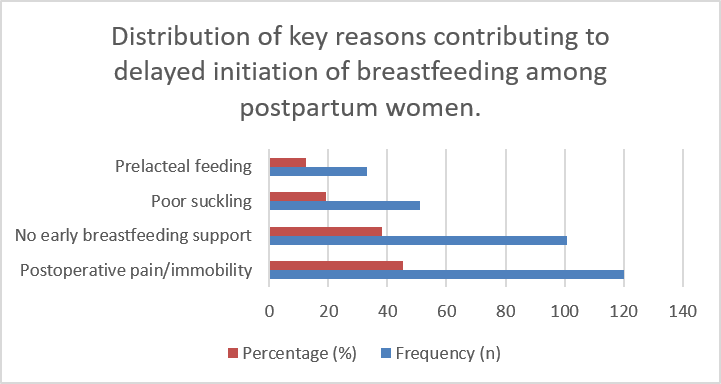
Figure 1: Distribution of key reasons contributing to delayed initiation of breastfeeding among postpartum women.
DISCUSSION :
In this study, multiple barriers to initiation of breastfeeding within one hour of birth were explored in 264 mothers. Maternal, newborn and health-system level factors that could have been modified if proper support were given, were identified as major causes for this delay. In the face of abundant knowledge about breastfeeding worldwide, it remains evident from this study that delayed breastfeeding initiation is persistent.
Caesarean delivery was a significant predictor of initiation delay in this cohort. Notably, nearly 84% of women who delivered through caesarean section could not start breastfeeding early. This finding is in line with growing evidence that women who undergo caesarean section are less likely to initiate breastfeeding within one hour due to post-operative pain, immobility, residual effects of anesthesia, separation from the newborn, and other factors. Recent large cohort and multicounty studies have shown two-to-fourfold increased likelihood of breastfeeding initiation delay after caesarean birth when compared with vaginal birth [9,10]. Therefore, focused counselling and post-operative care that support breastfeeding within one hour of birth, should be included in standard maternity unit protocols.
Secondly, this study identified healthcare-related factors such as lack of early guidance and no skin-to-skin contact as the second most common cause of initiation delay. This finding was consistent with the literature where studies from various low- and middle-income countries have shown that lack of health-system readiness and staff responsiveness were important causes of late initiation [11]. Facilities with Baby-Friendly Hospital Initiative (BFHI) accreditation showed better performance for early initiation of breastfeeding, as per national-level data in this country as well. BFHI units follow standard breastfeeding counselling practices including immediate and on-bed assistance, which is likely the reason for higher early initiation rates compared with non-BFHI facilities [12].
In this study, neonatal factors like poor suckling and early postnatal sleepiness also increased the risk of delayed breastfeeding initiation. In other studies, poor neonatal feeding adaptation has been shown to be a cause of delayed breastfeeding [13]. As a result, proper monitoring of latch, suck reflex, and position by trained staff immediately after birth is important to promote timely initiation.
On the other hand, cultural factors such as prelacteal feeds were also identified as a cause of breastfeeding initiation delay, but only a small proportion of women reported this as a reason. Prelacteal feeds, other family members expressing their milk and beliefs against colostrum and first milk are common practices reported in other South Asian studies [14]. Therefore, antenatal counselling as well as social and community-based counselling may be effective to prevent these traditional practices that go against immediate breastfeeding.
A crucial finding of this study was the fact that most mothers in this cohort had reported an intention to breastfeed early. As much as 87% of participants who were unable to initiate within one hour had reported that they intended to breastfeed soon after birth but were impeded by various causes. This finding is not uncommon and is in line with many other studies that have reported an association between late initiation of breastfeeding and a lack of preparedness in facilities to provide lactation support [15]. As a result, there is scope for modifiable factors such as post-operative care practices in women who deliver through caesarean, standardized lactation counselling practices, and immediate skin-to-skin contact to improve early initiation rates.
CONCLUSION :
In conclusion, this study found that most women wanted to breastfeed early and were prevented by various modifiable causes including caesarean delivery, health-system and neonatal factors. This shows that early initiation of breastfeeding is not for lack of will among mothers but for lack of maternal and child health system support to facilitate the process. This gap can be filled by improved breastfeeding support immediately after birth. This is especially true in cases following caesarean delivery where mothers are likely to be unable to breastfeed within the golden hour for a variety of reasons. The study provides potential for interventions at maternity units which are targeted at improving breastfeeding within one hour of birth, which in turn would lead to improved neonatal outcomes.
REFERENCE:
1. World Health Organization. Infant and young child feeding: global status report 2021. Geneva: WHO; 2021.
2. UNICEF. Early initiation of breastfeeding: Key indicators 2022. New York: UNICEF; 2022.
3. Smith ER, Hurt L, Chowdhury R, et al. Delayed breastfeeding initiation and infant survival: a systematic review. E Clinical Medicine. 2021; 36:100896.
4. Oakley LL, Renfrew MJ, Kurinczuk JJ, et al. Factors associated with breastfeeding initiation in high-income and low-income settings: a multicountry analysis. BMJ Glob Health. 2021;6:e004575.
5. Neves PAR, Vaz JS, Maia FS, Baker P, Gatica-Domínguez G. Timing of breastfeeding initiation and infant health outcomes: global pooled analysis. Lancet Glob Health. 2022;10:e531–e540.
6. WHO & UNICEF. Protecting breastfeeding in maternity facilities: Implementation guidance 2021. Geneva: WHO; 2021.
7. Khan MN, Islam MM. Patterns and predictors of early breastfeeding initiation in Asia: a meta-analysis. Matern Child Nutr. 2020;16(4):e12920.
8. Balogun OO, Kobayashi S, Anigo KM, Ota E. Prelacteal feeding and early infant outcomes in LMICs: updated systematic review. Pediatrics. 2020;146: e2020008373.
9. Prior E, Santhakumaran S, Gale C, et al. Caesarean delivery and breastfeeding: updated systematic review. Acta Obstet Gynecol Scand. 2020;99(1):16–26.
10. Marques ES, Cotta RMM, Magalhães KA. Breastfeeding initiation after caesarean section: evidence from recent global cohort studies. BMC Pregnancy Childbirth. 2021; 21:403.
11. Ogbo FA, Agho KE, Page A. The effect of Baby-Friendly Hospital Initiative on early breastfeeding: global comparative analysis 2000–2020. BMJ Open. 2020;10:e035770.
12. Gregory EF, Goldsmith J, Grossman X, et al. Implementation of structured lactation support improves early breastfeeding outcomes. J Hum Lact. 2022;38(1):45–55.
13. Giusti A, Rava L, Pica F, et al. Early neonatal suckling difficulty and breastfeeding delay: a multicenter observational study. Nutrients. 2021;13:3564.
14. Islam MA, Al Mamun A, Hossain M. Prelacteal feeding practices and barriers to early breastfeeding in South Asia: latest pooled analysis. Int Breastfeed J. 2022;17:68.
15. Kavle JA, Greene A, Gallagher L. Maternal intention vs. breastfeeding practice: addressing health-system gaps. Matern Child Nutr. 2023;19(1):e13489.