A Cross – Sectional Community based assessment of Reproductive Health Profile of working and non-working women in Urban slums of Karimnagar city, Telangana State, India.
- Pratima Matli , Associate Professor, Department of Community Medicine, Chlameda Anand Rao Institute of Medical sciences, Karimnagar.
- Nama Suman , Associate Professor, Department of Community Medicine, Chlameda Anand Rao Institute of Medical sciences, Karimnagar.
- Jannu Rajamouli , Professor and HOD, Department of Community Medicine, Chlameda Anand Rao Institute of Medical sciences, Karimnagar.
- Sachin Gurnule , Statistician, Department of Community Medicine, Chlameda Anand Rao Institute of Medical sciences, Karimnagar.
- Pratyusha Maramulla , Post-Graduate, Department of Community Medicine, Chlameda Anand Rao Institute of Medical sciences, Karimnagar.
Article Information:
Abstract:
Rapid urbanization and industrialization in India have led to increased migration to urban slums, where inadequate infrastructure and limited access to basic services may adversely affect the reproductive health of women. Employment among women in such settings may influence health outcomes due to the dual burden of work and household responsibilities.Methods: A cross-sectional observational study was conducted in January 2025 in urban Karimnagar by the Department of Community Medicine of a tertiary care teaching institution. Women aged 18–49 years were enrolled using simple random sampling after obtaining informed consent. Data were collected through in-depth interviews using a pretested structured questionnaire covering socio-demographic characteristics and reproductive health indicators. Data were analyzed using SPSS version 23.0.Results: A total of 193 women participated in the study, including 106 working women (54.9%) and 87 homemakers (45.1%). Most participants reported regular menstrual cycles (95.9%) and menstrual duration of 3–5 days (79.8%). Sanitary pads were the most commonly used menstrual hygiene product (77.2%). Dysmenorrhea (35.2%), low backache (30.6%), and lower abdominal pain (17.6%) were common symptoms suggestive of reproductive tract infections, yet only 5.7% reported receiving treatment. Permanent contraceptive methods were used by 37.3% of participants, while 21.2% used temporary methods. Among working women, 41% reported absence of toilet facilities at their workplace.Conclusion: The study highlights the presence of reproductive health concerns and low treatment-seeking behaviour among women, along with inadequate sanitation facilities at workplaces for working women in urban Karimnagar.
Keywords:
Article :
INTRODUCTION:
In recent decades, India has experienced profound industrialization, leading to the emergence of extensive employment opportunities that have catalyzed substantial rural-to-urban migration. Nevertheless, this accelerated urban expansion frequently surpasses the pace of infrastructure advancement, compelling numerous migrant laborers into congested, informal habitats referred to as slums. These regions are distinguished by limited land availability, inadequate sanitary conditions, and a deficiency of fundamental amenities, such as safe drinking water, effective drainage systems, and sufficient waste disposal facilities. Inhabitants of these areas exhibit heightened susceptibility to infections, which further intensifies nutritional deficiencies within the population.1
Within these marginalized communities, women and children constitute the most vulnerable demographic, often confronting significant challenges pertaining to reproductive and child health (RCH). Industrialization creates jobs, but women who work often have to do both household chores and outside work at the same time. This double burden frequently results in adverse health outcomes for both mothers and their children.2,3 Current research demonstrates that access to health care for reproductive and child health services is markedly inadequate among slum residents, with multiple studies emphasizing considerable obstacles to utilization.2,3
Recent literature indicates that a woman's employment status in a slum context exhibits a multifaceted relationship with health indicators. On one hand, having a job is linked to getting married and having your first child later in life.2,4 On the other hand, the demands of work often lead to insufficient spacing between births; for example, a significant number of working women have intervals of less than 36 months between their children. Additionally, working mothers often do not make full use of antenatal care (ANC) services, which could lead to more miscarriages and more babies being born with low birth weight.4,5
Child health outcomes are also affected by mothers' employment status. Research shows a high rate of malnutrition, particularly underweight children, among the children of working women living in slums.6-9 This issue often relates to the early start of complementary feeding when mothers go back to work, along with insufficient overall dietary intake. 4,5 Furthermore, immunization coverage is very low in this group, with many children only getting partial vaccinations. 6-9
Despite these well-documented problems, there is a lack of focused research on how maternal employment specifically impacts reproductive and child health profiles in urban slums. Filling these research gaps is essential for public health. This may involve improving access to anganwadi services and offering support for nursing mothers at or near their workplaces. A clear understanding of these issues is vital for creating effective health policies that reduce the risks in urban slums and address the unique challenges faced by working women. Therefore this study was designed to understand the reproductive health needs and service utilization among women in urban slums of Karimnagar city.
Material And Methods:
A cross-sectional observational study was designed to assess the Reproductive Health Profile of women in Urban slums of Karimnagar by the department of Community Medicine of a tertiary health care and teaching institution in Karimnagar in January 2025. Permission to conduct the study was obtained from the Institutional Ethics Committee of Chalmeda Anand Rao Institute of Medical Sciences, Karimnagar.. Women in the age group of 18 to 49 years were enrolled in the study after obtaining their informed consent. Participants were chosen through simple random sampling technique. Participants were interviewed at their homes or at their place of work. Minimum sample size was calculated as 178 by using prevalence of contraceptive usage among women as 68% from NFHS -5 data for Karimnagar and a marginal error of 7% was fixed for sample size estimation. The working women to home-makers ratio was kept as close as possible to 1:1 to ensure comparability.
A pretested, structured questionnaire was used to collect the data by multiple trained unbiased interviewers using an in-depth interview technique. The questionnaire contained questions on their socio- demographic data, their current reproductive health status and their contraceptive practices. Additional general data regarding sanitation and hygiene at their places of work and home was recorded. The data collected was analysed using SPSS v 23.0.
Observations & Results:
A total of 193 participants were enrolled in the study. The mean age of the study participants was 34.8 ± 7.9 years. Majority of the study participants were between the ages of 18 to 40 years. 106 study participants (54.9%) were working women while 87 of them (45.1%) were homemakers. 46% of the study participants were working women between the ages 18-40 years while 33.6% of the study population were homemakers in the ages 30 – 49 years.
Based on the Modified BG Prasad’s Scale (2025), the largest proportion of participants belonged to the upper middle class (33.2%), followed by the upper class (26.4%) and middle class (23.8%). A smaller proportion belonged to the lower middle class (13.5%) and lower class (3.1%) categories. (Table 1)
Regarding educational qualifications, 27.5% of participants were graduates, representing the highest proportion. This was followed by primary school education (26.9%), secondary school education (23.3%), and intermediate level education (13%). Illiteracy was reported among 9.3% of the participants. (Table 2)
Table 3: Socio-demographic profile of the study participants
|
Variable |
Sub-category |
Working women |
Home-makers |
Total |
|
Age group |
18-30 years |
48 (25.1) |
23 (12) |
71 (37.2) |
|
31-40 years |
40 (20.9) |
32 (16.8) |
72 (37.7) |
|
|
41–49 years |
16 (8.4) |
32 (16.8) |
48 (25.1) |
|
|
Socio- Economic status (As per Modified BG Prasad’s scale, 2025) |
Upper class |
33 (17.1) |
18 (9.3) |
51 (26.4) |
|
Upper middle class |
40 (20.7) |
24 (12.4) |
64 (33.2) |
|
|
Middle class |
19 (9.8) |
27 (14) |
46 (23.8) |
|
|
Lower middle class |
12 (6.2) |
14 (7.3) |
26 (13.5) |
|
|
Lower class |
2 (1) |
2 (2.1) |
6 (3.1) |
|
|
Educational qualifications |
Illiterate |
9 (4.7) |
9 (4.7) |
18 (9.3) |
|
Primary School |
25 (13) |
27 (14) |
52 (26.9) |
|
|
Secondary School |
17 (8.8) |
28 (14.5) |
45 (23.3) |
|
|
Intermediate |
16 (8.3) |
9 (4.7) |
25 (13) |
|
|
Graduation |
39 (20.2) |
14 (7.3) |
53 (27.5) |
|
|
Type of Family |
Joint Family |
6 (3.1) |
3 (1.6) |
9 (4.7) |
|
Nuclear Family |
100 (51.8) |
84 (43.5) |
184 (95.3) |
|
|
Total |
106 (54.9) |
87 (45.1) |
193 (100) |
|
The majority of participants (95.3%) belonged to nuclear families, while only 4.7% reported living in joint families. Most participants reported regular menstrual cycles (95.9%), with a slightly higher proportion among working women (53.4%) compared to homemakers (42.5%). Only 4.1% of women reported irregular cycles as shown in (Table 2).
Regarding duration of menstrual flow, the majority of participants (79.8%) reported a cycle duration of 3–5 days, which is considered physiologically normal. Shorter durations (<3 days) were reported by 12.4%, while 7.8% experienced longer durations (>5 days).
The use of sanitary pads was the most common menstrual hygiene practice (77.2%), followed by cloth pads (13%), and both methods (9.8%).
Among the participants’ self - reported symptoms of RTIs, dysmenorrhea (35.2%) was the most commonly reported complaint, followed by low backache (30.6%) and lower abdominal pain (17.6%). Other symptoms such as abnormal vaginal discharge (9.3%), painful coitus (3.1%), and vulval itching or burning (1%) were less commonly reported. Genital ulceration was very rare (0.5%). Despite the presence of symptoms, only 5.7% of participants reported ever seeking treatment for reproductive tract infections, while a large majority (94.3%) had never received treatment.
Table 4: Reproductive health profile of the study participants
|
Variable |
Sub-category |
Working women |
Home-makers |
Total |
|
|
Menstruation related information |
Regular cycles |
No |
3 (1.6) |
5 (2.6) |
8 (4.1) |
|
Yes |
103(53.4) |
82 (42.5) |
185(95.9) |
||
|
Duration of Cycle |
< 3 days |
8 (4.1) |
16 (8.3) |
24 (12.4) |
|
|
3-5 days |
90 (46.6) |
64 (33.2) |
154(79.8) |
||
|
> 5 days |
8 (4.1) |
7 (3.6) |
15 (7.8) |
||
|
Menstrual hygiene products used |
Cloth Pads |
14 (7.3) |
11 (5.7) |
25 (13) |
|
|
Sanitary Pads |
82 (42.5) |
67 (34.7) |
149(77.2) |
||
|
Both |
10 (5.2) |
9 (4.7) |
19 (9.8) |
||
|
Signs/symptoms of Reproductive tract infections currently |
Abnormal Vaginal Discharge |
16 (8.3) |
2 (1) |
18 (9.3) |
|
|
Low back ache |
37 (19.2) |
22 (11.4) |
59 (30.6) |
||
|
Lower Abdominal Pain |
21 (10.9) |
13 (6.7) |
34 (17.6) |
||
|
Genital ulceration |
1 (0.5) |
0 (0) |
1 (0.5) |
||
|
Vulval itching / burning |
0 (0) |
2 (1) |
2 (1) |
||
|
Painful coitus |
2 (1) |
4 (2.1) |
6 (3.1) |
||
|
Dysmenorrhoea |
46 (23.8) |
22 (11.4) |
68 (35.2) |
||
|
Ever treated for Reproductive tract infections |
Yes |
6 (3.1) |
5 (2.6) |
11 (5.7) |
|
|
No |
100(51.8) |
82 (42.5) |
182(94.3) |
||
|
Ever used Contraception |
Temporary methods |
30 (15.5) |
11 (5.7) |
41 (21.2) |
|
|
Permanent methods |
42 (21.8) |
30 (15.5) |
72 (37.3) |
||
|
Age of conception |
Less than 21 years |
29 (15) |
30 (15.5) |
59 (30.6) |
|
|
21 years or more |
46 (23.8) |
50 (25.9) |
96 (49.7) |
||
Regarding contraceptive practices, permanent methods (37.3%) were more commonly used than temporary methods (21.2%). A greater proportion of homemakers reported the use of permanent methods compared to working women. Nearly half of the participants (49.7%) reported conceiving at 21 years of age or later, while 30.6% conceived before the age of 21 years, suggesting that early conception still occurs among a considerable proportion of women.
Figure 1 shows the availability of toilet facilities at the workplace among working women. More than half of the working women (53%) reported the presence of common toilets shared by all workers at their workplace. However, a substantial proportion (41%) reported no toilet facilities available at the workplace. Only a small proportion of respondents (6%) reported access to public toilets near or at their workplace.
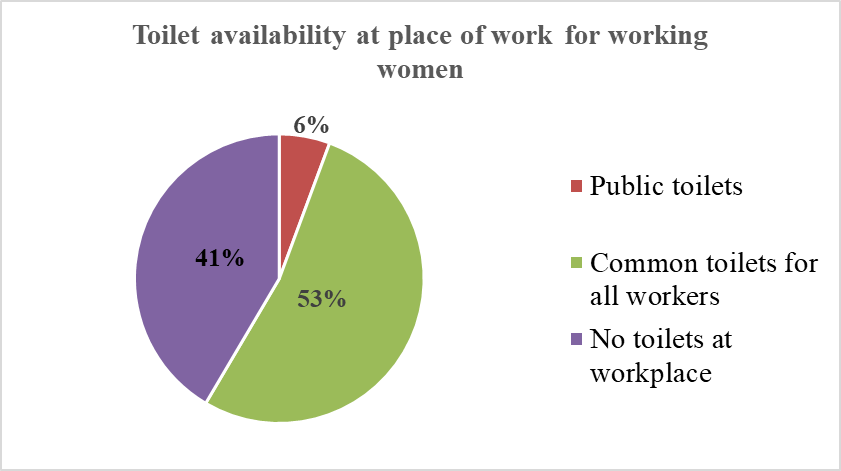
Figure 1: Toilet availability for working women at their workplace
DISCUSSION :
The results of this study offer a detailed view of how a woman's job affects her reproductive health in a city. A key finding was that working women typically had more education and came from better-off families than stay-at-home moms. Employment was positively correlated with higher educational attainment (20.2% graduates) and higher socio-economic status (17.1% upper class). Numerous studies support the link between jobs and education, showing that urban industrialization creates jobs that need and want educated women.3,4,10-13 The study also showed that most people (95.3%) prefer nuclear family structures. This is in line with what happens when people move to cities: they often move in small groups and leave behind support from extended family.
Nearly half of the participants (49.7%) delayed their first conception until age 21 or older. These findings are consistent with broader research indicating that maternal employment in urban slum environments is strongly associated with delayed marriage and conception. It may be attributable to the factor that as women gain employment and higher education, they prioritize career stability, which naturally postpones traditional reproductive milestones.
37.3% of women used permanent sterilization, and 21.2% utilized some form of contraception overall. There is a divergence observed here as several studies report that the pressure to return to work often leads to inadequate birth spacing (intervals less than 36 months) and a high unmet need for family planning (18.6% in some regions).3,13 The higher uptake of contraception in this study may be attributed to the specific success of local urban health initiatives in Karimnagar or higher levels of health literacy and socio-economic status among the participants compared to the more marginalized "non-notified" slum populations studied elsewhere.
A large number of women in the current study (77.2%) said they used sanitary pads. Findings from other South Indian urban slums, like those in Hyderabad10-15, where sanitary pad use was reported to be between 56% and 64%, show that this is higher. Changes in usage rates are often caused by differences in location, changes in the timing when programs are implemented, and differences in how easy it is to get government-subsidized hygiene products.
Working women exhibited markedly elevated rates of physical manifestations of reproductive tract illnesses (RTIs), including dysmenorrhea (23.8%) and low back pain (19.2%), in contrast to homemakers. This corroborates findings from studies conducted in Hyderabad and other urban centers that report a significant prevalence of reproductive health issues among urban slum residents.3,4,10-15 The similar results can be explained by the "dual responsibility burden," which means that working women have to do both outside work and household chores. This puts more strain on their bodies, especially in nuclear families. 95.3% of the study population indicated insufficient extended support within their families, thereby reinforcing the preceding inference.
Despite high symptom prevalence, only 5.7% of women had ever been treated for reproductive tract infections (RTIs). This study reflects a widespread consensus in public health research that RTI treatment utilization is critically low and variable among urban poor populations. Common barriers identified across all studies include financial constraints, lack of time due to demanding work schedules, and poor communication or counselling from healthcare providers.2-4,13 While government schemes like Janani Suraksha Yojana (JSY) have improved institutional delivery rates, our findings suggest they may not be sufficiently addressing the routine gynecological needs of the urban working women.
A significant proportion of working women (41%) in the study participants, reported no toilet facilities available at the workplace, indicating inadequate sanitation infrastructure in many work settings. The observations suggest that although some workplaces provide shared sanitation facilities, a significant proportion of working women lack access to toilets at their workplace, which may adversely affect hygiene, comfort, and occupational health.
This study's limitations include its cross-sectional design, which prevents the determination of definitive causal relationships between employment and health outcomes. Self-reported data for reproductive symptoms and contraceptive use creates the possibility of recall bias. Moreover, the study was confined to urban Karimnagar potentially limiting the generalizability of the findings to other urban areas in India.
CONCLUSION :
The study highlights several important aspects of reproductive health among women in urban Karimnagar. While the majority of women indicated regular menstrual cycles and a significant percentage utilized sanitary pads, symptoms indicative of reproductive tract infections were frequently reported. Even so, very few people sought treatment for these conditions. Moreover, permanent contraceptive methods were utilized more often than temporary ones, and early conception was still noted among a significant percentage of women. Also, a large number of working women did not have access to good sanitation facilities at work. These results show that women in the study group don't use reproductive health services as much as they should and that the workplace isn't adequate with respect to sanitation needs of working women.
Efforts should be made to improve awareness and accessibility of reproductive health services, particularly for the diagnosis and treatment of reproductive tract infections among women. Adequate toilet facilities should be ensured at workplaces where women are employed to promote hygiene, comfort, and occupational health.
Conflict of Interest : None
Funding : None
BIBLIOGRAPHY:
1. Sundaran,S., Darivemula, S.B. Bala,S., Tondare, D. Kumar, S., Molagara, S. Prevalence of unmet need for contraception among married women aged 15-49 years in urban and rural areas of Telangana. Indian Journal of Health sciences and Biomedical research KLEU, 17(2), 119-124.
2. Viramgami AP, Verma PB, Vala MC, Sharma S. A cross-sectional study to assess reproductive and child health profile of working women residing in urban slums of Rajkot city. Indian J Community Med 2019;44:313-6.
3. Hazarika I. Women’s reproductive health in slum populations in India: Evidence from NFHS-3. J Urban Health 2010;87:264-77.
4. Devasenapathy N, Ghosh Jerath S, Allen E, Sharma S, Shankar AH, Zodpey S, et al. Reproductive healthcare utilization in urban poor settlements of Delhi: Baseline survey of ANCHUL (Ante natal and child health care in urban slums) project. BMC Pregnancy Childbirth 2015;15:212.
5. Mukesh S, Monica A, Imchen T, Rehman HM, Yadav K, Singh S. Utilization of maternal health care services in slums of Lucknow, capital of Uttar Pradesh. Int J Interdiscip Multidiscip Stud 2015;2:23-7.
6. Kumar A, Bharadwaj P. To estimate the extent of utilization of maternal health services in the urban slums of Lucknow city Uttar Pradesh. IOSR-JHSS 2016;21:1-6.
7. Banerjee A, Patel U, Verma P, Viramgami A, Vala M. Health status of children under three years of age residing in slums of Rajkot city, Gujarat, India. JMR 2015;1:118-21.
8. Varma, P., Mohandas, A., Anushruthi, S., Balakrishna, N., Pattnaik, S., Mathai, D., Narayan, B., & Das. Out of pocket expenditure and utilization of government financial assistance among women WHO has institutional delivery in an urban slum of Telangana, India. National journal of community medicine. https://doi.org/10.55489/njcm.140920233017
9. Verma, A., A.K.Ranjan, P., Tiwari, V.K. Utilization pattern of selected RCH services among women in slums of Delhi, India: n observational study. https://doi.org/ 10.36347/sjams.2020.v08i04.028
10. Reddy, P.S. Women’s reproductive health status in Hyderabad slums: Institutional based cross sectional study. Paripex Indian Journal of Research, 3(8), 63-65
11. Kumar,S.Agarwal, M., Mishra,P. Mishra, C. Utilization of reproductive and child health services and client satisfaction from urban primary health centers by recently delivered women living in urban slums of Lucknow, India. Indian Journal of Community Health, 3592), 139-145.
12. Garikapati, S., Boudot,C. To pad or not to pad: Towards better sanitary care for women in Indian slums. Journal of International Development, 29(1), 32-51.
13. Batura, N., Poupakis, S., Das, S., Bapat, U., Alcock, G., Skordis. Factors Associated with women’s decision – making during and after pregnancy in urban slums in Mumbai, India: A cross-sectional analysis. BMC Public Health, 22(1).
14. Sridevi, N.H., Kumar, N.P., Swathi, H.N. A study to assess maternal and child health care utilization by slum dwellers in Shivamogga. International Journal of Community Medicine and Public Health, 8(4).
15. Singh, N., Ponna, S.N., Upadrasta, V.P., Dudala, S.R., Sadasivuni, R. Determinants of utilization of antenatal and postnatal care services in Telangana. International Journal of reproduction, contraception, obstetrics and gynaecology, 6(8).