A Comparison and Evaluation of Tridax procumbens and 0.2% Chlorhexidine Against Oral Microorganisms: An In Vitro Study
- Adarsh vignu M , I st year post graduate,RVS Dental College And Hospital, kumaran kottam,sulur,coimbatorte.
- Dr. Deepshika Saravanan , MDS HOD ( Head of The Department of Periodontology ,RVS Dental College And Hospital, kumaran kottam,sulur,coimbatorte.
- Dr. Senthil kumar , MDS,MSc Professor ,RVS Dental College and Hospital, kumaran kottam,sulur,coimbatorte.
- Dr.Vijay V.K , MDS,MBA(HM),FADI,dip(icoi),mfds- rcps(uk)Principal Cum Director, RVS Dental College and Hospital, kumaran kottam,sulur,coimbatorte.
- Dr.Soundara pandiyan.P , MSc,M.Phil.Phd(USA) HOD ( Head of the Department of Microbiology, RVS Dental College And Hospital, kumaran kottam,sulur,coimbatore
- Dr.Jayasakthi.S , 3rd year post graduate,RVS Dental College and Hospital , kumaran kottam,sulur,coimbatore
Article Information:
Abstract:
Herbal medicines have gained increasing attention in dentistry due to their antimicrobial and anti-inflammatory properties with minimal adverse effects. Tridax procumbens, a medicinal plant extensively used in traditional medicine, exhibits wound-healing and antimicrobial activities that may be beneficial in periodontal therapy.Aim:To evaluate and compare the antimicrobial efficacy of Tridax procumbens extract at different concentrations with 0.2% chlorhexidine against oral microorganisms under in vitro conditions.Materials and Methods:Fresh leaves of Tridax procumbens were processed to obtain a crude extract, which was diluted with Normal Sterile saline to prepare concentrations of 3%, 5%, and 10%. Plaque samples were collected from patients diagnosed with generalized chronic periodontitis and cultured using standard microbiological techniques. Antimicrobial efficacy was assessed using the well diffusion method. Zones of inhibition were measured and compared with those produced by 0.2% chlorhexidine.Results:The Tridax procumbens extract demonstrated concentration-dependent antimicrobial activity. The 10% concentration showed the inhibitory effect, though chlorhexidine exhibited superior antimicrobial efficacy overall.Conclusion:The findings suggest that Tridax procumbens possesses notable antimicrobial properties and may serve as a promising natural adjunct in oral healthcare. Further in vivo studies are required to validate its clinical applicability.
Keywords:
Article :
INTRODUCTION:
Periodontal diseases are primarily initiated and sustained by microbial plaque, resulting in inflammation and progressive destruction of the supporting tissues of teeth. Chemical plaque control agents such as chlorhexidine are widely regarded as the gold standard due to their broad-spectrum antimicrobial activity. However, long-term use of chlorhexidine is associated with undesirable effects including tooth staining, taste alteration, and mucosal irritation, necessitating the search for safer alternatives.
Tridax procumbens, commonly known as coat-button or Mexican daisy, is a fast-growing herb traditionally used in Ayurvedic medicine and referred to as Jayanti Veda or Jivanti. The plant is rich in bioactive compounds such as flavonoids, tannins, alkaloids, and saponins, which contribute to its antimicrobial, anti-inflammatory, and wound-healing properties.
Considering the increasing interest in plant-based therapeutics, the present study aims to assess the antimicrobial efficacy of Tridax procumbens extract against oral microorganisms and compare its effectiveness with 0.2% chlorhexidine.
AIM
To evaluate the antimicrobial efficacy of Tridax procumbens extract using the well diffusion method and compare it with 0.2% chlorhexidine.
OBJECTIVES
1. To prepare Tridax procumbens extract at concentrations of 3%, 5%, and 10%.
2. To assess the antimicrobial activity of the prepared extracts against oral microorganisms.
3. To compare the antimicrobial efficacy of Tridax procumbens extract with 0.2% chlorhexidine.
MATERIALS AND METHODS:
Study Design
An in vitro experimental study.
Sample Selection
Inclusion Criteria
· Patients diagnosed with generalized chronic periodontitis
· Age group between 35 and 50 years
· Presence of at least 24 natural teeth
· Periodontal pocket depth greater than 4 mm
· Clinical attachment loss present
Exclusion Criteria
· Patients with systemic diseases
· Pregnant or lactating women
· Patients undergoing orthodontic treatment
· History of periodontal therapy within the past six months
· Immunocompromised individuals
· Patients on long-term medication
Preparation of Tridax procumbens Extract ( Figure 1- 3 )
Fresh leaves of Tridax procumbens were collected from the local surroundings of Sulur, Coimbatore. The leaves were thoroughly washed, air-dried, and ground using a sterile mortar and pestle without the addition of any solvent. The obtained juice was filtered using Whatman No.1 filter paper (1) and centrifuged at 1000 rpm for 20 minutes. The supernatant was diluted with normal saline to obtain 3%, 5%, and 10% concentrations.
Collection and Processing of Plaque Samples ( Figure 4- 7 )
Plaque samples were collected using sterile Gracey curettes and transferred into peptone water. The samples were transported to the Department of Microbiology, RVS Dental College and Hospital, and incubated at 37°C for 12 hours. Subcultures were then prepared on nutrient agar, blood agar, and MacConkey agar plates.
Antimicrobial Assay ( Fiqure 8-10 )
The antimicrobial activity of the test solutions was evaluated using the well diffusion method. Wells were prepared on nutrient agar, blood agar, and MacConkey agar, ( Fiqure 8-9) and equal volumes of each concentration 3%,5%and 10% of Tridax procumbens extract and 0.2% chlorhexidine were introduced. Plates were incubated at 37°C for 24 hours , and zones of inhibition were measured in millimeters.(2)
INSTITUTIONAL ETHICAL CLEARANCE
The study protocol was reviewed and approved by the Institutional Ethical Committee of RVS Dental College and Hospital, Sulur, Coimbatore, Tamil Nadu, India.
Ethical Clearance Number:
EC/NEW/INST/2023/TN/0323
All participants provided informed consent prior to sample collection. The study adhered to the ethical principles of the Declaration of Helsinki.
RESULTS:
The antimicrobial efficacy of Tridax procumbens extract at concentrations of 3%, 5%, and 10% was evaluated and compared with 0.2% chlorhexidine using the well diffusion method. Zones of inhibition were measured in millimeters after 24 hours of incubation at 37°C.
A clear concentration-dependent increase in antimicrobial efficacy was observed. The 3% and 5% extract produced the no zone of inhibition, while progressively inhibition was noted with 10% concentrations.
Among the group of 10 individuals, the 10% Tridax procumbens extract exhibited the zone of inhibition, indicating superior antimicrobial activity when compared to lower concentrations. However, 0.2% chlorhexidine showed the highest antimicrobial efficacy overall, producing significantly larger zones of inhibition than all concentrations of the herbal extract. The negative control (normal saline) did not show any inhibitory effect.( Fiqure – 10 )
These findings indicate that Tridax procumbens possesses significant antimicrobial activity against oral microorganisms, although its efficacy was lower than that of chlorhexidine.
|
Test Agent |
Concentration |
Zone of Inhibition (mm) Mean ± SD |
|
Tridax procumbens extract |
3% |
0± 0.1 |
|
Tridax procumbens extract |
5% |
0 ± 0.1 |
|
Tridax procumbens extract |
10% |
1± 1.25 |
|
Chlorhexidine |
0.2% |
10 ± 1.10 |
Figure ( 1 – 10 )
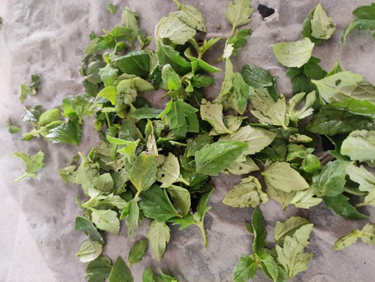
- Tridax Procumbens leaves
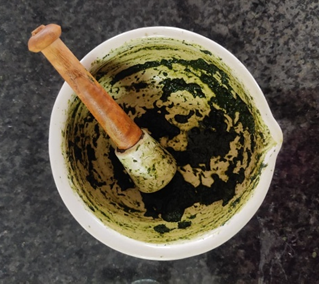
- Grinded leaves in mortar and pestel
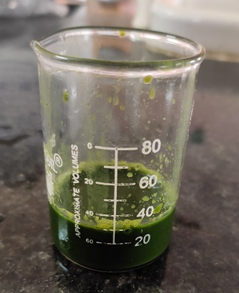
- Tridax procumbens extract
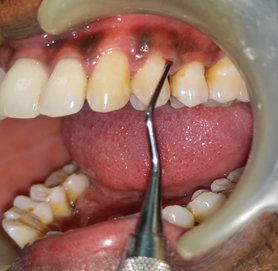
- Collection of Plaque sample
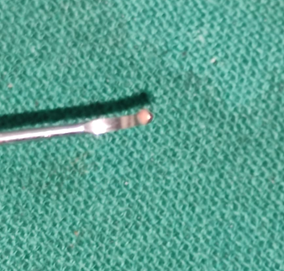
- Dental plaque sample
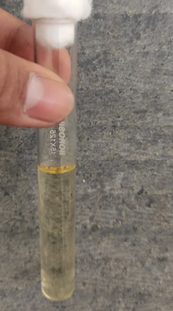
- Peptone water
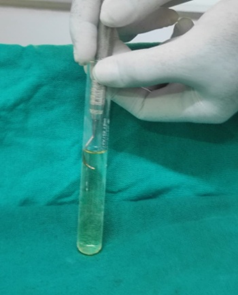
- Plaque inoculation
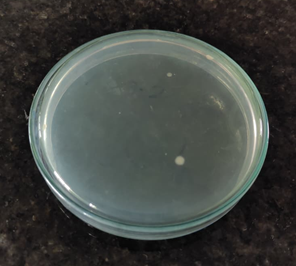
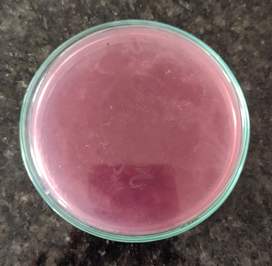
- Agar medium for culturing
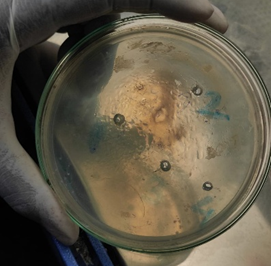
- Well preparation for well diffusion method
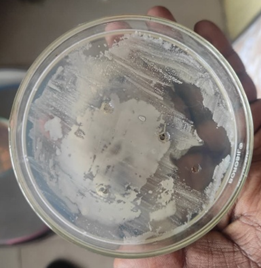
- Zone of inhibition in culture medium
DISCUSSION :
The present in vitro study demonstrated that Tridax procumbens possesses antimicrobial activity against oral microorganisms, with increased efficacy observed at higher concentrations. The antimicrobial action of the plant may be attributed to its phytochemical constituents, which interfere with microbial cell walls and metabolic pathways.(3) Although chlorhexidine showed superior antimicrobial effects, the herbal extract exhibitedpromising results, suggesting its potential as a natural alternative or adjunct in periodontal therapy. However, the in vitro nature of the study limits the extrapolation of results to clinical scenarios, as factors such as saliva, biofilm complexity, and host immune response were not simulated.
Additionally, cytotoxicity and long-term safety of the extract were not evaluated. Future studies should focus on identifying specific active compounds, assessing biocompatibility, and conducting in vivo clinical trials.
CONCLUSION :
Within the limitations of the study, Tridax procumbens demonstrated significant antimicrobial activity against oral microorganisms. Its natural origin and therapeutic properties make it a potential candidate for incorporation into oral healthcare products. Further research is warranted to establish its clinical effectiveness and safety.
BIBLIOGRAPHY:
1. Yaduvanshi R, Mathur R, Velpandian T. Evaluation of wound healing potential of topical formulation of leaf juice of Tridax procumbens L. in mice. Indian Journal of Pharmaceutical Sciences. 2011.
2. Deshmukh R, Agrawal R, Chauragde S, Lilhare S. Formulation and evaluation of ointment containing natural wound healing activity of Tridax procumbens. Research Journal of Pharmacy and Technology. 2017.
3. Devi V, Prabha L, Ragunathan R, Johney J. A systematic review on wound healing and pharmacological properties of Tridax procumbens. South Asian Journal of Research in Microbiology. 2015.
4. Zade LR, Gautam HK, Thote V. Therapeutic potential of Tridax procumbens in wound management. International Ayurvedic Medical Journal. 2023.
5. Chinnappan BA, Krishnasamy M, Bal T, Rajora AD. In vitro and in vivo wound healing efficacy of Tridax procumbens extract-loaded films. International Journal of Biological Macromolecules. 2023.
6. Jain NK, Kulkarni SK. Antimicrobial activity of Tridax procumbens leaf extracts. Indian Journal of Natural Products and Resources. 2012;3(2):219–223.\
7. Saxena VK, Albert S. β-sitosterol-3-O-β-D-xylopyranoside from the flowers of Tridax procumbens. Journal of Chemical Sciences. 2005;117(3):263–266.
8. Olabanji SO, Omobuwajo OR, Ceccato D, et al. Effects of extracts of Tridax procumbens on blood coagulation and wound healing. Fitoterapia. 2007;78(1):38–41.
9. Pattanayak S, Nayak SS, Panda D. Evaluation of antimicrobial activity of Tridax procumbens against selected oral pathogens. Journal of Herbal Medicine and Toxicology. 2010;4(2):53–57.
10. Prabu GR, Gnanamani A, Sadulla S. Guaijaverin—a plant flavonoid as potential antiplaque agent against Streptococcus mutans. Journal of Applied Microbiology. 2006;101(2):487–495.
11. Marsh PD. Microbial ecology of dental plaque and its significance in health and disease. Advances in Dental Research. 1994;8(2):263–271.
12. Jones CG. Chlorhexidine: Is it still the gold standard? Periodontology 2000. 1997;15(1):55–62.
13. Addy M, Moran J. Clinical indications for the use of chemical adjuncts to plaque control: Chlorhexidine formulations. Periodontology 2000. 1997;15:52–54.
14. Groppo FC, Ramacciato JC, Simões RP, Florio FM, Sartoratto A. Antimicrobial activity of garlic, tea tree oil, and chlorhexidine against oral microorganisms. Journal of Dentistry. 2002;30(2–3):69–75.
15. Cowan MM. Plant products as antimicrobial agents. Clinical Microbiology Reviews. 1999;12(4):564–582.
16. Prashant GM, Chandu GN, Murulikrishna KS, Shafiulla MD. The effect of mango and neem extract on four organisms causing dental caries: Streptococcus mutans, Streptococcus salivarius, Streptococcus mitis, and Streptococcus sanguis. Indian Journal of Dental Research. 2007;18(4):148–151.
17. Haffajee AD, Socransky SS. Microbial etiological agents of destructive periodontal diseases. Periodontology 2000. 1994;5:78–111.
18. Haffajee AD, Socransky SS. Microbial etiological agents of destructive periodontal diseases. Periodontology 2000. 1994;5:78–111.
19. Balappanavar AY, Sardana V, Singh M. Comparison of the effectiveness of 0.5% tea, 0.2% chlorhexidine, and placebo mouthwashes on dental plaque and gingivitis. Journal of Indian Society of Periodontology. 2013;17(3):293–299