MOLECULAR IDENTIFICATION OF DENTAL BACTERIAL PATHOGEN BY 16S rRNA GENE.
- Bharath Kumar Nithyanandan , Undergraduate, Department of Conservative Dentistry and Endodontics, Saveetha Dental College and Hospitals, Saveetha Institute of Medical and Technical Sciences (SIMATS), Saveetha University, Chennai – 600077, Tamil Nadu, India.
- Vigneshwar. T , Associate professor, Department of Conservative Dentistry and Endodontics, Saveetha Dental College and Hospitals, Saveetha Institute of Medical and Technical Sciences (SIMATS), Saveetha University, Chennai – 600077, Tamil Nadu, India.
Article Information:
Abstract:
Dental infections caused by bacterial pathogens pose significant challenges to oral health. This study aimed to identify and characterize dental bacterial pathogens utilizing molecular techniques focused on the 16S-rRNA gene. Dental samples were collected from patients exhibiting clinical signs of infection, and the 16S rRNA gene was amplified and sequenced. Phylogenetic analysis revealed a diverse array of bacterial species, including known oral pathogens. The findings provide insights into the microbial composition of dental infections, paving the way for targeted therapeutic interventions. This molecular approach enhances our understanding of the microbial dynamics in oral health and disease, offering potential implications for improved diagnostics and treatment strategies.
Keywords:
Article :
INTRODUCTION:
Oral health is closely related to the delicate balance of the human oral microbiome, wherein bacterial communities are essential for either promoting pathogenic conditions or preserving homeostasis(1–3). Of all the microbes that inhabit the oral cavity, bacterial pathogens are particularly problematic to dental health because they can cause periodontitis, caries, and other illnesses(4). The lack of precision in traditional approaches for identifying these diseases has made advanced molecular techniques necessary(5,6).
The advent of molecular biology has revolutionized our understanding of microbial ecology, and the application of molecular tools, such as polymerase chain reaction (PCR) amplification of the 16S ribosomal RNA (rRNA) gene, has become a cornerstone in unraveling the complexity of bacterial communities(7). The 16S rRNA gene, characterized by conserved regions essential for bacterial function and variable regions that offer species-specific signatures, provides an ideal target for the molecular identification of bacterial pathogens(8)(9).
This study delves into the molecular identification of dental bacterial pathogens utilizing the 16S rRNA gene as a genetic marker. By employing state-of-the-art sequencing technologies and bioinformatics analyses, we aim to elucidate the microbial landscape within the oral cavity with unprecedented accuracy(10). The comprehensive characterization of these bacterial communities not only enhances our understanding of the etiology of oral diseases but also paves the way for targeted therapeutic interventions tailored to the specific microbial signatures associated with dental pathology.
As we embark on this investigative journey, the implications of our findings extend beyond the realms of basic science. A deeper comprehension of the oral microbiome and its dynamic interactions can inform the development of innovative strategies for disease prevention, diagnosis, and treatment(5). Through this molecular exploration, we aspire to contribute valuable insights that resonate within both the realms of academic research and clinical practice, ultimately advancing our capacity to promote optimal oral health in diverse populations(11).
Dental caries remain the most prevalent oral disease worldwide. The development of dental caries is highly associated with the microbiota in the oral cavity. Microbiological research of dental caries has been conducted for over a century, with conventional culture-based methods and targeted molecular methods being used in order to identify the microorganisms related to dental caries. These methods’ major limitation is that they can identify only part of the culturable microorganisms in the oral cavity. Introducing sequencing-based technology and bioinformatics analysis has boosted oral microbiome research and greatly expanded the understanding of complex oral microbiology(12,13). With the continuing revolution of molecular technologies and the accumulated sequence data of the oral microbiome, researchers have realized that microbial composition alone may be insufficient to uncover the relationship between caries and the microbiome.
The aim of the study is to identify the dental bacterial pathogens by 16S rRNA.
MATERIALS AND METHODS:
Caries was excavated from dentin and was placed in LB media for 24 hours for the enrichment of the bacteria. Serial dilution was then done. On dilution, different concentrations of bacterial cultures were obtained. 10^-4 concentrate was taken for fürther culture and 12 different streaks were cultured, on which 2 were selected based on colour and morphology and gene amplification was done using 16S rRNA PCR technique. 27 forward primers and 1492 reverse primers were used.
RESULTS:
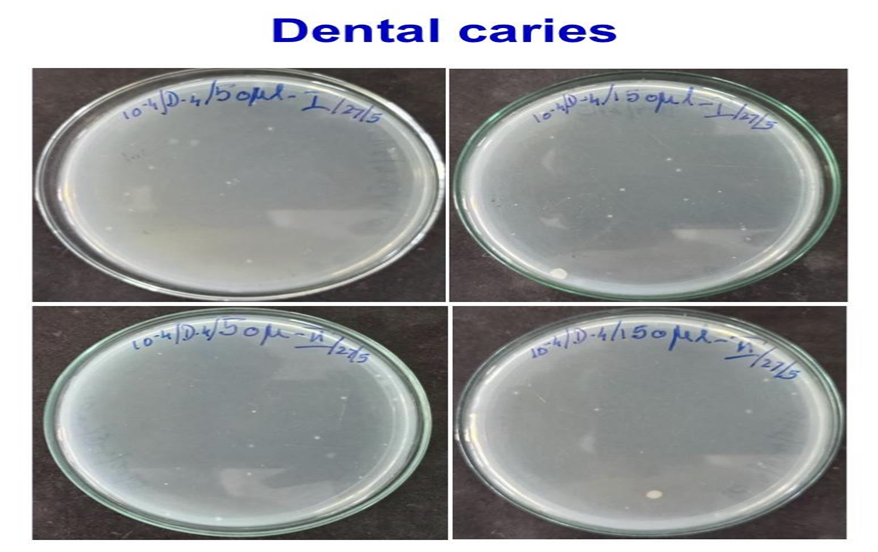
Figure 2: Serial Dilution
Twelve bacterial colony isolates were obtained for this investigation, of which ten colonies showed effective growth.
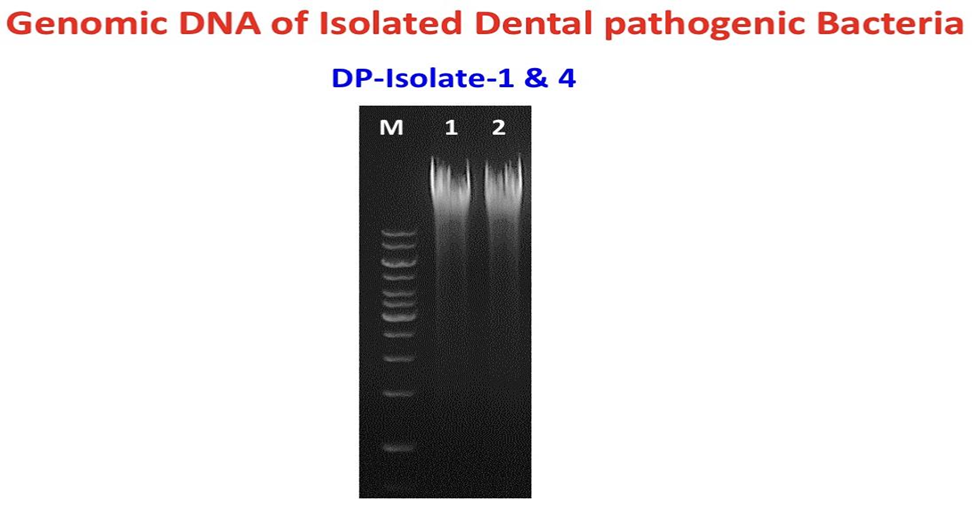
Two isolates were chosen among the ten colonies based on their appearance and color, and their genomic DNA was extracted.
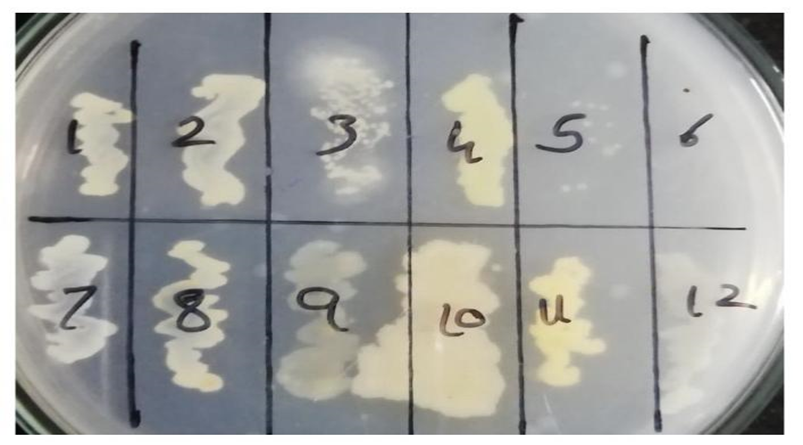 Figure 3: Isolated bacterial colonies
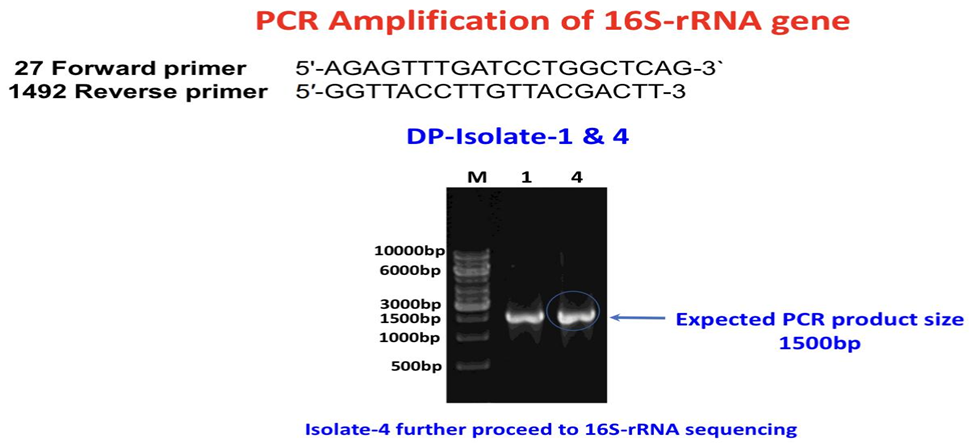
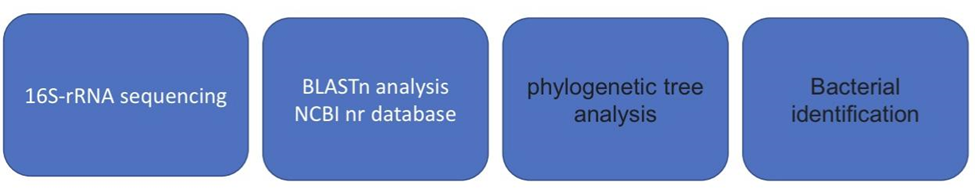
Using 16S rRNA PCR, this isolated genomic DNA was amplified to 1500 base pairs.
And we were able to obtain the bacteria's amplified chain.
Primer 27f/1492r is the most widely used primer for species-level identification (Frank et al., 2008).
DISCUSSION :
The application of molecular techniques, specifically targeting the 16S rRNA gene, has afforded us a nuanced glimpse into the intricate microbial tapestry woven within the oral cavity. Our findings reveal a dynamic landscape of bacterial communities, providing valuable insights into the role of specific pathogens in the etiology of oral diseases(14). In this comprehensive discussion, we navigate through the implications of our results, compare them with existing literature, and underscore the potential clinical applications of our molecular approach(14,15).
Diversity and Dynamics of Oral Bacterial Communities
Our study demonstrates the vast diversity of bacterial species inhabiting the oral environment. The 16S rRNA gene, with its conserved and variable regions, allowed for precise identification, shedding light on the nuanced variations in microbial composition. The dynamic nature of these communities, influenced by factors such as host genetics, lifestyle, and environmental conditions, emphasizes the need for a personalized approach to oral health management(16,17).
Identification of Pathogenic Signatures
Through molecular identification, we discerned specific bacterial species associated with oral diseases, corroborating and expanding upon prior research. Notably, our results underscore the significance of certain taxa in disease manifestation, providing a foundation for targeted interventions(18,19). Understanding the pathogenic signatures within the oral microbiome is paramount for developing strategies aimed at disrupting disease progression.
Comparisons with Existing Literature
Our findings align with and extend upon existing literature in the field. The utilization of the 16S rRNA gene for bacterial identification has proven effective, and our results contribute to the growing body of knowledge elucidating the role of microbial communities in oral health and disease. Discrepancies between our study and previous research offer avenues for further investigation, prompting questions about the influence of geographic and demographic factors on oral microbiome composition(19,20).
Clinical Implications and Therapeutic Prospects
The molecular identification of dental bacterial pathogens has direct implications for clinical practice. Our study provides a foundation for developing targeted therapeutic interventions, moving beyond generic approaches to personalized treatments based on the specific microbial signatures of individual patients. This precision medicine approach holds promise for enhancing treatment efficacy and minimizing side effects(1,2).
Acknowledging the limitations of our study is crucial for contextualizing the results. Factors such as sample size, regional variations, and potential biases in sequencing technologies warrant consideration. Future research should delve deeper into these aspects, employing larger cohorts and multi-center studies to ensure the generalizability of our findings. Additionally, exploring the functional aspects of the identified bacterial communities can unveil mechanisms of pathogenesis and potential therapeutic targets.
In conclusion, our investigation into the molecular identification of dental bacterial pathogens through the 16S rRNA gene illuminates the intricate interplay between microbial communities and oral health. The richness of data obtained contributes not only to the scientific understanding of oral microbiology but also lays the groundwork for transformative advancements in clinical practice. As we unravel the microbial complexities within the oral cavity, the potential for tailored, precision-driven approaches to oral health emerges, ushering in a new era of targeted interventions and improved patient outcomest.
CONCLUSION :
This study thus concludes that the bacterial colony was successfully isolated and 16S rRNA gene was extracted and purified. This isolated dental pathogen will be carried out for sequencing of the 16S-rRNA gene and the identification of bacteria, then antibiotic testing and sensitivity testing can be done which helps us in the selection of the drug of choice for the specific bacteria identified..
REFERENCES:
1. Goncharoff P, Figurski DH, Stevens RH, Fine DH. Identification of Actinobacillus actinomycetemcomitans: polymerase chain reaction amplification of lktA-specific sequences. Oral Microbiol Immunol. 1993 Apr;8(2):105–10.
2. Tanner ACR, Mathney JMJ, Kent RL, Chalmers NI, Hughes CV, Loo CY, et al. Cultivable anaerobic microbiota of severe early childhood caries. J Clin Microbiol. 2011 Apr;49(4):1464–74.
3. Dincer S, Özdenefe MS, Arkut A. Bacterial Biofilms. BoD – Books on Demand; 2020. 362 p.
4. Fejerskov O, Kidd E. Dental Caries: The Disease and Its Clinical Management. John Wiley & Sons; 2009. 641 p.
5. Gonzales-Marin C, Spratt DA, Millar MR, Simmonds M, Kempley ST, Allaker RP. Identification of bacteria and potential sources in neonates at risk of infection delivered by Caesarean and vaginal birth. J Med Microbiol. 2012 Jan;61(Pt 1):31–41.
6. Siqueira JF Jr, Rôças IN. Molecular detection and identification of Synergistes phylotypes in primary endodontic infections. Oral Dis. 2007 Jul;13(4):398–401.
7. Maloy SR. Experimental Techniques in Bacterial Genetics. Jones & Bartlett Learning; 1990. 196 p.
8. Riggio MP, Aga H, Murray CA, Jackson MS, Lennon A, Hammersley N, et al. Identification of bacteria associated with spreading odontogenic infections by 16S rRNA gene sequencing. Oral Surg Oral Med Oral Pathol Oral Radiol Endod. 2007 May;103(5):610–7.
9. Obata J, Takeshita T, Shibata Y, Yamanaka W, Unemori M, Akamine A, et al. Identification of the microbiota in carious dentin lesions using 16S rRNA gene sequencing. PLoS One. 2014 Aug 1;9(8):e103712.
10. Ciantar M, Newman HN, Wilson M, Spratt DA. Molecular identification of Capnocytophaga spp. via 16S rRNA PCR-restriction fragment length polymorphism analysis. J Clin Microbiol. 2005 Apr;43(4):1894–901.
11. Doan N, Contreras A, Flynn J, Slots J, Chen C. Molecular identification of Dialister pneumosintes in subgingival plaque of humans. J Clin Microbiol. 2000 Aug;38(8):3043–7.
12. Leys EJ, Griffen AL, Strong SJ, Fuerst PA. Detection and strain identification of Actinobacillus actinomycetemcomitans by nested PCR. J Clin Microbiol. 1994 May;32(5):1288–94.
13. Liu D. Molecular Detection of Human Bacterial Pathogens. CRC Press; 2011. 1282 p.
14. Nas F, Aissaoui N, Mahjoubi M, Mosbah A, Arab M, Abdelwahed S, et al. A comparative GC-MS analysis of bioactive secondary metabolites produced by halotolerant Bacillus spp. isolated from the Great Sebkha of Oran. Int Microbiol. 2021 Aug;24(3):455–70.
15. Huang KY, Chang TH, Jhong JH, Chi YH, Li WC, Chan CL, et al. Identification of natural antimicrobial peptides from bacteria through metagenomic and metatranscriptomic analysis of high-throughput transcriptome data of Taiwanese oolong teas. BMC Syst Biol. 2017 Dec 21;11(Suppl 7):131.
16. Korona-Głowniak I, Siwiec R, Berger M, Malm A, Szymańska J. Molecular diagnostics of periodontitis. Postepy Hig Med Dosw . 2017 Jan 28;71(0):47–56.
17. Liaqat I, Sabri AN. Isolation and characterization of biocides resistant bacteria from dental unit water line biofilms. J Basic Microbiol. 2009 Jun;49(3):275–84.
18. Fouad AF, Barry J, Caimano M, Clawson M, Zhu Q, Carver R, et al. PCR-based identification of bacteria associated with endodontic infections. J Clin Microbiol. 2002 Sep;40(9):3223–31.
19. Xia T, Baumgartner JC, David LL. Isolation and identification of Prevotella tannerae from endodontic infections. Oral Microbiol Immunol. 2000 Aug;15(4):273–5.
20. Wahlfors J, Meurman JH, Väisänen P, Alakuijala P, Korhonen A, Torkko H, et al. Simultaneous detection of Actinobacillus actinomycetemcomitans and Porphyromonas gingivalis by a rapid PCR method. J Dent Res. 1995 Nov;74(11):1796–801.