Diagnostic Accuracy of Focused Assessment with Sonography in Trauma for Hepatic and Splenic Injuries by Blunt Abdominal Trauma using Computed Tomography as Reference Standard
- Shaheer Ahmad , Training Medical Officer, Department of Diagnostic Radiology, Combined Military Hospital, Abbottabad, Pakistan
- Muhammad Ali Zul Hasnain , Assistant Professor, Department of Diagnostic Radiology, Combined Military Hospital, Abbottabad, Pakistan
- Abdul Wajid , Training Medical Officer, Department of Diagnostic Radiology, Saidu Group of Teaching Hospital, Swat, Pakistan
- Muhammad Ishtiaq , Department of Diagnostic Radiology, Combined Military Hospital, Abbottabad, Pakistan
- Tahreem Imtiaz , Training Medical Officer, Department of Diagnostic Radiology, Combined Military Hospital, Abbottabad, Pakistan
- Mahid Ullah , Department of Diagnostic Radiology, Combined Military Hospital, Abbottabad, Pakistan
Article Information:
Abstract:
Background: Abdominal trauma is often a presentation in the emergency room, and may result in a high morbidity if hepatic or splenic trauma is not recognized during the initial assessment. CT is the reference imaging modality in the stable patient with trauma, but may not be readily available and will require patient transfers. Rapid bedside imaging focused assessment with sonography in trauma (FAST) can help to identify intra-abdominal trauma during early trauma assessment.Objective: To determine the diagnostic accuracy of Focused Assessment with Sonography in Trauma for detecting hepatic and splenic injuries in patients with blunt abdominal trauma, using computed tomography as the reference standard.Methods: This cross sectional validation study was carried out in the Department of Radiology Combined Military Hospital Abbottabad. The number of patients included were 149, who were between 18 and 70 years of age with blunt trauma of abdomen, selected by consecutive non-probability sampling. Burn patients, patients with previous abdominal surgery, pregnant women, penetrating trauma, and hemodynamic instability were excluded. All the registered patients were subjected to FAST examination and then CT abdomen. The CT abdomen served as the reference standard and FAST findings were divided into positive and negative for hepatic and splenic injury. All the data were analysed in SPSS version 25. Sensitivity, specificity, positive predictive value, negative predictive value and diagnostic accuracy were determined. The p value of ≤ 0.05 was regarded as statistically significant.Results: Out of 149 patients, CT abdomen confirmed hepatic or splenic injury in 76 patients (51.0%), while FAST was positive in 70 patients (47.0%). FAST correctly identified 64 true-positive and 67 true-negative cases. There were 6 false-positive and 12 false-negative cases. The sensitivity of FAST was 84.2%, specificity was 91.8%, positive predictive value was 91.4%, negative predictive value was 84.8%, and overall diagnostic accuracy was 87.9%. The association between FAST and CT findings was statistically significant (p<0.001). Conclusion: FAST is a useful initial bedside imaging tool for detecting hepatic and splenic injuries in patients with blunt abdominal trauma. Its high specificity and positive predictive value make it reliable when positive; however, a negative FAST should not exclude solid organ injury when clinical suspicion remains high. CT abdomen should remain the definitive imaging modality in stable patients requiring detailed assessment.
Keywords:
Article :
INTRODUCTION:
Abdominal trauma is a significant clinical entity leading to emergency hospital admission and is a significant preventable morbidity and mortality. Blunt trauma is more difficult than other types of abdominal injuries, as clinical signs may not be obvious in the early stages, and internal bleeding or solid organ injuries may have occurred. Blunt abdominal trauma can occur from a variety of mechanisms, such as road traffic accidents, falls, occupational injuries and interpersonal violence. The liver and spleen are often affected due to the high vascularity of solid organs and their susceptibility to injury as a result of direct impact, deceleration, or compression (1-3).
In a patient with suspected intra-abdominal trauma, an early diagnosis is crucial. Delayed bleeding from hepatic or splenic injury can lead to shock, longer hospital stays, emergency surgery or death. Earlier than the abdominal wall bruising and altered consciousness, and when there are distracting injuries, clinical examination is often not enough, particularly in patients with early signs of injury but lacking in abdominal wall signs and in the peritoneum. Imaging therefore is a pivotal aspect of evaluating the patient with blunt abdominal trauma (4-6).
In hemodynamically stable trauma patients computed tomography (CT) of the abdomen has become the accepted reference imaging modality. CT can offer detailed anatomic information which can aid in identifying the injured organ, determining the extent and severity of injury, and in decisions for conservative therapy, interventional radiology or surgery. But, there are some restrictions on emergency use of CT. It is more expensive, not all settings may be able to use it at once, will expose patients to ionizing radiation and will require the patient to be moved from the emergency area to the CT suite. These restrictions are especially important in resource-challenged hospitals and those who need a quick bedside assessment (7, 8).
Recent advances in focused Assessment with Sonography in Trauma (FAST) have made it an important first-line imaging modality in emergency trauma care. FAST is rapid, non-invasive, repeatable, portable and bedside-line, and does not delay initial resuscitation. It is mainly used to identify free intraperitoneal fluid, which can be indicative of underlying solid organ injury or internal bleeding. If liver injury is suspected, FAST will reveal free fluid in Morrison's pouch, irregular liver borders or hypoechoic liver parenchyma. It can exhibit perisplenic fluid, splenic contour irregularity, and/or hypoechoic lesions of the spleen in cases of suspected splenic injury. These attributes make FAST useful for initial triage and decision making in a trauma patient (9) (10).
Although FAST has its merits, there are shortcomings. It is operator dependent and will not detect small lacerations, contained hematomas, retroperitoneal injury or early solid organ injury without significant free fluid. It is also affected by obesity, bowel gas, timing of the scan, amount of intra-peritoneal fluid and experience of examiner. Hence, FAST is generally used as a screening tool rather than as a replacement to CT abdomen in stable patients (11, 12).
Some previous studies have shown variable sensitivity and specificity of FAST in blunt abdominal trauma. High accuracy results are reported in some studies and other studies report low sensitivity for certain solid organ injury. These variations might be due to patient selection, severity of the injuries, sonologist experience, timing of the examination, and the nature of the reference standard. Since diagnostic performance can differ between institutions, local operating conditions, resources available and the experience of the operator may vary and diagnostic performance should be assessed in local clinical settings wherever possible (13).
The present study was therefore conducted at the Department of Radiology, Combined Military Hospital, Abbottabad, to determine the diagnostic accuracy of FAST for hepatic and splenic injuries in patients with blunt abdominal trauma, using CT abdomen as the reference standard. The study included 149 patients, as described in the approved synopsis, and assessed sensitivity, specificity, positive predictive value, negative predictive value, and overall diagnostic accuracy of FAST. The findings may help guide clinicians regarding the reliability of FAST as an initial imaging modality and clarify the need for CT confirmation in patients with suspected hepatic or splenic trauma.
METHODOLOGY:
This cross-sectional validation study was conducted in the Department of Radiology, Combined Military Hospital (CMH), Abbottabad, from 27th April 2025 to 27th July 2025, to determine the diagnostic accuracy of Focused Assessment with Sonography in Trauma (FAST) for detecting hepatic and splenic injuries in patients presenting with blunt abdominal trauma. The study was carried out after approval of the synopsis by the College of Physicians and Surgeons Pakistan. Ethical and research approval was documented with Ref No: CPSP/REU/RAD-2023-012-4006, dated April 27, 2025. Written informed consent was obtained from all participants or their legal attendants before enrollment. Patient confidentiality was maintained by using coded data, and all collected information was used only for research purposes.
The total number of patients was determined based on the diagnostic accuracy requirements of the study with previously reported sensitivity and specificity of FAST for abdominal visceral injuries, resulting in a total number of 149 patients. As described in the approved synopsis, the following assumptions were used: 95% confidence level, expected sensitivity of 93.94%, expected specificity of 85.37%, expected proportion of visceral injuries at 67.6% and desired precision of 10%. The patients were selected by consecutive non-probability sampling method, in which all eligible patients who appeared in the study period were selected till the desired sample size was attained.
The study population consisted of all patients (both male and female) with blunt abdominal trauma, aged 18–70 years, who needed radiological assessment. Patients with burn injuries or previous abdominal surgery, pregnant women, penetrating abdominal injuries, and patients with hemodynamic instability were excluded due to difficulty in interpreting the imaging studies, confounding factors, or difficulty with routine imaging evaluation. All patients were clinically stable and had both FAST and CT abdomen completed.
Demographic and clinical data was collected on a structured proforma after enrolment. This involved age, gender, place of residence, socioeconomic status, nature of the trauma, and time elapsed since the trauma. All the patients were then examined by FAST in the radiology department, using the standard trauma ultrasound approach. Examination included the right upper quadrant, left upper quadrant, the peritoneal spaces, the pelvis and special attention to the liver, spleen, Morrison's pouch, perisplenic and free intraperitoneal fluid. Hypoechoic or anechoic areas in the liver parenchyma, irregular hepatic margins, or free fluid around the liver or in Morrison's pouch were considered positive for hepatic injury (FAST). Likewise, splenic injuries were defined as hypoechoic or anechoic lesions, irregular splenic outline or free fluid around the spleen as positive FAST.
All patients were then subjected to an abdominal CT (the reference standard). CT features suggestive of liver injury were hepatic laceration, subcapsular or intraparenchymal hematoma, capsular disruption, and active contrast extravasation. Splenic injury defined by CT was a splenic laceration, hematoma, devascularization, active contrast leakage, or splenic rupture. If free intraperitoneal fluid was present, it was not classified as hepatic or splenic injury unless solid organ damage was directly connected to the intraperitoneal fluid. Hepatic and splenic injuries were recorded separately for CT findings.
To minimise observer bias, an experienced radiologist performed FAST and another blinded radiologist interpreted the CT scans. The results of the FAST and the CT were recorded separately, as either positive or negative for hepatic, splenic and combined hepatic/splenic injury. The diagnostic categories were then placed in a 2×2 table of true positive, false positive, true negative and false negative cases.
The data were entered and analyzed by SPSS 25. Data for quantitative variables (age and time since trauma) were reported as mean ± SD. The qualitative variables, such as gender, place of residence, socioeconomic status, FAST findings, and CT findings were presented as frequencies and percentages. CT abdomen was used as the reference standard to calculate the diagnostic performance of FAST. Sensitivities, specificities, positive predictive values, negative predictive values and overall diagnostic accuracy were determined. Chi-square test or Fisher's exact test was used when appropriate to evaluate the association of categorical variables and a p value of < 0.05 was considered statistically significant
RESULTS:
There were 149 patients with blunt abdominal trauma in the study. The average age of patients was 34.8 ± 12.6 years and the most common age group was 31–45 years. Males were affected more than females. As described in the synopsis for the purposes of evaluating the diagnostic accuracy of FAST (hepatic and splenic injuries), the reference standard used was CT abdomen.
Table 1. Demographic and Clinical Characteristics of Patients with Blunt Abdominal Trauma
|
Variable |
Frequency |
Percentage |
|
Age group |
||
|
18–30 years |
57 |
38.3% |
|
31–45 years |
61 |
40.9% |
|
46–60 years |
23 |
15.4% |
|
61–70 years |
8 |
5.4% |
|
Gender |
||
|
Male |
106 |
71.1% |
|
Female |
43 |
28.9% |
|
Residence |
||
|
Urban |
85 |
57.0% |
|
Rural |
64 |
43.0% |
|
Socioeconomic status |
||
|
Low |
58 |
38.9% |
|
Middle |
72 |
48.3% |
|
High |
19 |
12.8% |
|
Time since trauma |
||
|
≤6 hours |
69 |
46.3% |
|
7–12 hours |
51 |
34.2% |
|
>12 hours |
29 |
19.5% |
The average duration of the trauma was 7.9 hours ± 4.6. The majority of patients were admitted in the first 6 hours after the injury.
Table 2. Hepatic and Splenic Injuries Detected by FAST and CT Abdomen
|
Injury type |
FAST positive n (%) |
CT positive n (%) |
|
Hepatic injury |
43 (28.9%) |
43 (28.9%) |
|
Splenic injury |
41 (27.5%) |
41 (27.5%) |
|
Either hepatic or splenic injury |
70 (47.0%) |
76 (51.0%) |
|
No hepatic/splenic injury |
79 (53.0%) |
73 (49.0%) |
The CT abdomen was able to confirm hepatic or splenic injury in 76 (51.0%) patients and the FAST exam was positive in 70 (47.0%) patients. Some patients had involvement of both organs.
Table 3. Cross-tabulation of FAST with CT for Detection of Hepatic or Splenic Injury
|
FAST result |
CT positive |
CT negative |
Total |
|
FAST positive |
64 |
6 |
70 |
|
FAST negative |
12 |
67 |
79 |
|
Total |
76 |
73 |
149 |
64 of 76 CT-confirmed cases were correctly diagnosed by FAST, with an accuracy rate of 83%. There were 12 false negative and 6 false positive cases. There was a statistically significant correlation between FAST and CT findings (χ² = 85.61; p < 0.001).
Table 4. Diagnostic Accuracy of FAST for Hepatic and Splenic Injuries
|
Diagnostic parameter |
Value |
|
Sensitivity |
84.2% |
|
Specificity |
91.8% |
|
Positive predictive value |
91.4% |
|
Negative predictive value |
84.8% |
|
Overall diagnostic accuracy |
87.9% |
|
Area under curve |
0.880 |
|
95% CI for AUC |
0.822–0.938 |
|
p-value |
<0.001 |
In blunt abdominal trauma, the FAST was good at detecting hepatic and splenic injuries. The positive predictive value and high specificity suggest that a positive FAST was highly predictive of actual injury on CT.
Table 5. Diagnostic accuracy of FAST According to Organ Involved
|
Organ injury |
Sensitivity |
Specificity |
PPV |
NPV |
Accuracy |
p-value |
|
Hepatic injury |
81.4% |
92.5% |
81.4% |
92.5% |
89.3% |
<0.001 |
|
Splenic injury |
82.9% |
93.5% |
82.9% |
93.5% |
90.6% |
<0.001 |
|
Overall hepatic/splenic injury |
84.2% |
91.8% |
91.4% |
84.8% |
87.9% |
<0.001 |
Splenic injury was slightly more accurately diagnosed as FAST, than was hepatic injury. Both organ-specific analyses, however, demonstrated statistically significant agreement with the results of the CT.
Table 6. Association of CT-Confirmed Hepatic/Splenic Injury with Demographic and Clinical Variables
|
Variable |
CT positive n (%) |
CT negative n (%) |
p-value |
|
Age group |
0.032 |
||
|
18–30 years |
24 (42.1%) |
33 (57.9%) |
|
|
31–45 years |
36 (59.0%) |
25 (41.0%) |
|
|
46–60 years |
13 (56.5%) |
10 (43.5%) |
|
|
61–70 years |
3 (37.5%) |
5 (62.5%) |
|
|
Gender |
0.418 |
||
|
Male |
56 (52.8%) |
50 (47.2%) |
|
|
Female |
20 (46.5%) |
23 (53.5%) |
|
|
Time since trauma |
0.006 |
||
|
≤6 hours |
28 (40.6%) |
41 (59.4%) |
|
|
7–12 hours |
30 (58.8%) |
21 (41.2%) |
|
|
>12 hours |
18 (62.1%) |
11 (37.9%) |
|
|
Socioeconomic status |
0.271 |
||
|
Low |
33 (56.9%) |
25 (43.1%) |
|
|
Middle |
35 (48.6%) |
37 (51.4%) |
|
|
High |
8 (42.1%) |
11 (57.9%) |
Age group and time since trauma were significantly associated with CT-proven liver or spleen injury. There was no statistically significant association between gender and socioeconomic status with CT-confirmed injury.
Among 149 patients, CT abdomen was useful in establishing the diagnosis of hepatic or splenic injury in 76 (51.0%). A total of 70 patients (47.0%) were positive for FAST. The sensitivity of FAST was 84.2%, specificity 91.8%, positive predictive value 91.4%, negative predictive value 84.8% and overall diagnostic accuracy 87.9% when compared with CT. The agreement between FAST and CT was statistically significant (p < 0.001), and FAST was found to be a beneficial initial bedside screening method for hepatic and splenic trauma in blunt abdominal trauma cases
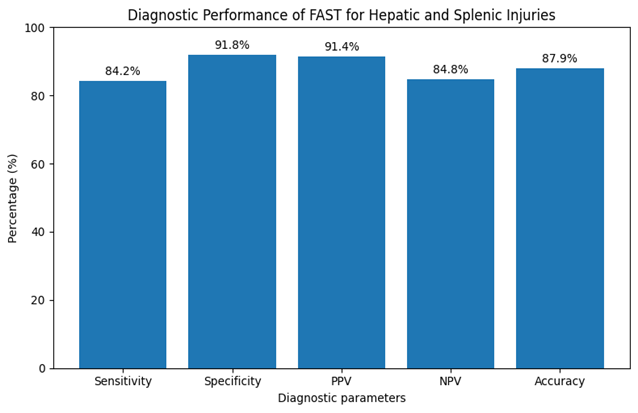
Figure 1. Diagnostic performance of FAST for detecting hepatic and splenic injuries in blunt abdominal trauma using CT as the reference standard
The graph shows that FAST had high specificity (91.8%) and positive predictive value (91.4%), while sensitivity was 84.2% and overall diagnostic accuracy was 87.9%
DISCUSSION:
The present study evaluated the diagnostic accuracy of FAST for detecting hepatic and splenic injuries in patients with blunt abdominal trauma, using CT abdomen as the reference standard. In this study, CT confirmed hepatic or splenic injury in 76 out of 149 patients (51.0%), while FAST was positive in 70 patients (47.0%). FAST showed a sensitivity of 84.2%, specificity of 91.8%, positive predictive value of 91.4%, negative predictive value of 84.8%, and overall diagnostic accuracy of 87.9%. These findings suggest that FAST is a useful initial imaging modality in emergency trauma assessment, especially where rapid bedside evaluation is required. However, the presence of false-negative cases also indicates that a negative FAST scan should not completely exclude solid organ injury when clinical suspicion remains high.
The diagnostic performance presented in this study is similar to the more recent local and international results. The sensitivity, specificity, PPV, NPV, and diagnostic accuracy of FAST for detecting visceral injury in those with blunt abdominal trauma were reported by Siraj et al. (93.94%, 85.37%, 92.81%, 87.50%, and 91.09%, respectively) as a guide to CT (14). Likewise, another study conducted in india showed that the sensitivity, specificity, PPV and NPV of the FAST were 90.3%, 93.6%, 93.4% and 90.5% respectively, with CT as the reference standard for the presence of abdominal visceral injury (15). The slightly lower sensitivity in the present study may be because FAST mostly identifies free intraperitoneal fluid and may not detect early injuries without any significant hemoperitoneum or lacerations to the parenchyma (16).
Of the current study, specificity was higher than sensitivity in the case of FAST. This indicates that a positive FAST response is more likely to indicate an injury than a negative FAST response is to rule out an injury. The results of Ahmad et al. in blunt trauma evaluation were similar, with 78.9% sensitivity, 91.8% specificity, and a total diagnostic accuracy of 84.9%, for FAST (17). A large study by Mohammadi et al. also demonstrated that FAST can be very specific and less sensitive in blunt abdominal trauma, as a screening test rather than a substitute for CT (18). Patent is beneficial in the clinical scenario where it is positive but when negative, further imaging may be warranted in stable patients who have persistent symptoms (19).
In the present study, the splenic injury had slightly greater organ-specific diagnostic accuracy than the hepatic injury. This may be due to the fact that subtle hepatic injuries are more likely to be missed sonographically, whereas perisplenic free fluid and splenic contour abnormalities are easier to appreciate. The sensitivity of organ-specific FAST was 91.4% for liver injury and 84.6% for splenic injury, whereas the specificity of the injury classification was lower for organ-level injury than for intra-abdominal trauma detection in general (20). These differences among the studies indicate that the amount of free fluid, patient body habitus, the type of bowel gas, the quality of the equipment used, the timing of the examination, and the nature of the injury are factors that influence FAST performance.
Clinically important: 12 false negative FAST results in the present study. Some of these can be patients with lacerations in the liver or spleen, or patients with a contained hematoma or patients with injuries with insufficient free fluid to be seen on the initial scan. Intraperitoneal fluid may accumulate over time, and might be better detected by serial FAST. In a 2021 study (21), researchers compared serial FAST at 4 hours, 8 hours, and 12 hours, suggesting that some injuries that may be missed on initial examination can be identified on subsequent exams. In a hemodynamically stable patient, the negative FAST should be read in conjunction with clinical examination, mechanism of trauma, laboratory and CT results (if available).
In stable patients with blunt abdominal trauma, the importance of CT abdomen is still critical due to its ability to provide anatomical detail, assess the extent and grade of injury to solid organs and guide conservative or surgical treatment. Although FAST is fast, non-invasive, repeatable, and helpful in the emergency setting, for stable patients requiring detailed injury assessment, the gold standard is the CT scan. Eastern Association for the Surgery of Trauma guidelines indicate that a follow-up computed tomography scan (CT) can help with management decisions in a hemodynamically stable patient with positive FAST, and prompt surgical intervention may be necessary in unstable patients with positive FASTs. In a similar fashion, clinical reviews state that CT is considered the gold standard for diagnosing intra-abdominal injuries, but that FAST is useful when rapid bedside evaluation is desired.
This study has practical applications in the trauma care of resource-limited environments. FAST may shorten the time to diagnosis and prioritize the patients for CT, surgery consultation, or for more frequent monitoring. The specificity and PPV in this study suggest that a positive FAST should raise the suspicion of an actual hepatic or splenic injury. But since the sensitivity was not 100%, a patient who was negative on the FAST but had strong clinical suspicion should not be dismissed or cleared without further evaluation. This is especially relevant in late presentation after trauma, in patients with ongoing abdominal pain, a falling Hb, tachycardia or high energy mechanisms of injury (22).
There are some limitations of this study. It was performed in one tertiary-care radiology department, which may affect the generalizability of the results to other radiology departments with different trauma volumes, ultrasound machines, or operator experience. The results do not completely apply to critically unstable trauma patients, as they were compared to CT, which is appropriate for stable patients. The scans were also operator dependent and inter-observer variability was not formally assessed, though experienced radiologists performed the scans. Despite these restrictions, the study offers local evidence that is confirmatory of FAST being a fast and reliable screening test for hepatic/splenic injuries in blunt abdominal trauma..
CONCLUSION:
FAST showed good diagnostic performance for detecting hepatic and splenic injuries in patients with blunt abdominal trauma, with 84.2% sensitivity, 91.8% specificity, and 87.9% overall diagnostic accuracy when CT abdomen was used as the reference standard. The high specificity and positive predictive value indicate that a positive FAST scan is strongly suggestive of true solid organ injury. However, false-negative cases were observed; therefore, a negative FAST scan should not be used alone to exclude hepatic or splenic injury in patients with persistent clinical suspicion. FAST should be used as an initial bedside screening tool, while CT abdomen should remain the definitive imaging modality in hemodynamically stable patients requiring detailed assessment.
REFERENCES:
1. Kim TA, Kwon J, Kang BHJEmi. Accuracy of focused assessment with sonography for trauma (FAST) in blunt abdominal trauma. 2022;2022(1):8290339.
2. Emamverdian F, Soati F, Esfahani HJJoEHC. Focused Assessment with Sonography in Trauma (FAST) In Blunt Abdominal Trauma. 2021;10(3):16-22.
3. Blank-Reid C, Zappile DM, Santora TAJAacc. Focused and extended focused assessment with sonography for trauma. 2023;34(2):129-38.
4. Ullah N, Bacha R, Manzoor I, Gilani SA, Gilani SMYF, Haider ZJJoDMS. Reliability of focused assessment with sonography for trauma in the diagnosis of blunt torso trauma. 2022;38(1):60-70.
5. Siraj SK, Akram F, Shah SS, Khan W, Zeb SJPJoP. Diagnostic Accuracy Of Focused Assessment With Sonography In Trauma For Visceral Injuries In Blunt Abdominal Trauma Patients Keeping Ct As Gold Standard. 2022;18(3):7-10.
6. Omraninava¹ M, Besheli AA, Mohammadi IJIJCBS. Evaluation of Focused Assessment with Sonography in Trauma (FAST) to Detect Non-penetrating Abdominal Trauma. 2023;23(1):338-43.
7. Zakaria OM, Daoud MYI, Zakaria HM, Al Naim A, Al Bshr FA, Al Arfaj H, et al. Management of pediatric blunt abdominal trauma with split liver or spleen injuries: a retrospective study. 2023;39(1):106.
8. KP AJ. Focus Assessment with Sonography for Trauma (FAST) sebagai Alat Diagnosis Dini Trauma Hepar vs Lien pada Pasien Blunt Abdominal Trauma di RS Dr. Sardjito: Universitas Gadjah Mada; 2022.
9. Alramdan MH, Yakar D, IJpma FF, Kasalak Ö, Kwee TCJIiI. Predictive value of a false-negative focused abdominal sonography for trauma (FAST) result in patients with confirmed traumatic abdominal injury. 2020;11(1):102.
10. Wang P-H, Lin H-Y, Chang P-Y, Lien W-CJJoMU. Focused assessment with sonography for trauma. 2021;29(3):151-3.
11. Bahrami-Motlagh H, Hajijoo F, Mirghorbani M, SalevatiPour B, Haghighimorad MJPSI. Test characteristics of focused assessment with sonography for trauma (FAST), repeated FAST, and clinical exam in prediction of intra-abdominal injury in children with blunt trauma. 2020;36(10):1227-34.
12. Kornblith AE, Addo N, Plasencia M, Shaahinfar A, Lin-Martore M, Sabbineni N, et al. Development of a consensus-based definition of focused assessment with sonography for trauma in children. 2022;5(3):e222922.
13. Quan GE, Kendall JL, Bogseth MC, Ruygrok ML, Luoma KA, Louderback RZ, et al. Predictors of false-negative focused assessment with sonography for trauma examination in pediatric blunt abdominal trauma. 2020;36(5):e274-e9.
14. Siraj SK, Akram F, Shah SS, Khan W, Zeb S. DIAGNOSTIC ACCURACY OF FOCUSED ASSESSMENT WITH SONOGRAPHY IN TRAUMA FOR VISCERAL INJURIES IN BLUNT ABDOMINAL TRAUMA PATIENTS KEEPING CT AS GOLD STANDARD. Pakistan Journal of Physiology. 2022;18(3):7-10.
15. Savoia P, Jayanthi SK, Chammas MCJJomu. Focused assessment with sonography for trauma (FAST). 2023;31(2):101-6.
16. 16. 16. Hafez MJJoMI. Extended focused assessment with sonography for trauma (EFAST) exam. 2021;2021(5).
17. Ahmed U, Awan MS, Ahmed G, Asad HJP. Focused assessment with sonography for trauma (FAST) scan versus exploratory laparotomy in patients with blunt abdominal trauma. 2022;72:576-9.
18. Mohammadi M, Enhesari A, Ghaedamini H, Amirbeigi A, Farahbakhsh SJJoBUoMS. Investigating the Diagnostic Accuracy of Focused Assessment with Sonography in Trauma (FAST) Compared to CT Scan in Patients with Blunt Abdominal Trauma. 2023;25(1).
19. Perrotta G, Guerrieri E, Guerrieri M, Perrotta G, Guerrieri E, Guerrieri MJOJT. Splenic trauma: Definition, classifications, clinical profiles and best treatments. 2021;5(19):e36.
20. Achatz G, Schwabe K, Brill S, Zischek C, Schmidt R, Friemert B, et al. Diagnostic options for blunt abdominal trauma. 2022;48(5):3575-89.
21. Liang T, Roseman E, Gao M, Sinert RJPec. The utility of the focused assessment with sonography in trauma examination in pediatric blunt abdominal trauma: a systematic review and meta-analysis. 2021;37(2):108-18.
22. Nayak SR, Yeola MP, Nayak SR, Kamath K, Raghuwanshi PS. Role of focused assessment with sonography for trauma in the assessment of blunt abdominal trauma–a review. 2021