Incongruity between Heart-type Fatty Acid-Binding Protein and Other Cardiac Parameters: Covariant in Early Diagnosis in Cardiac Infarction.
- Nousheen Zaib , Lecturer, Department of Physiology, Hamdard University, Karachi, Pakistan
- Saeeda Naseer , Chief Lady Medical Officer, Jam Ghulam Qadir Hospital, Hub, Pakistan
- Rizwan Ali Lakho , Consultant Urologist, SIUT, Karachi, Pakistan
- Shafaque Batool Korai , Assistant Professor Histopathology, Gambat Institute of Medical Sciences, Gambat, Pakistan
- Avinash Prithianis , Senior Lecturer, Forensic Medicine, Gambat Institute of Medical Sciences, Gambat, Pakistan
- Khushboo Jawed , Women Medical Officer, Khairpur Medical College, Khairpur, Pakistan.
Article Information:
Abstract:
Acute myocardial infarction (AMI) is a leading cause of mortality worldwide and remains a major public health challenge, particularly in low- and middle-income countries. Early diagnosis is essential for timely reperfusion therapy and reduction of myocardial damage. Conventional biomarker such as cardiac troponin is widely used but may show delayed elevation during the early hours of myocardial injury. Heart-type fatty acid binding protein (H-FABP) released rapidly from damaged cardiomyocytes, has emerged as a potential early biomarker. Therefore, the objective of the current study is to appraise the serum levels of H-FABP as an early diagnosis of cardiac infarction with other myocardial parameters like cardiac troponin. Methods: It was a case-controlled study. Total 131 participants were included in the current study, out of which 76 participants having cardiac infarction were admitted in ICU, JPMC, Karachi was selected as affected group, and another 55 individuals having normal physical examination were selected as control group from March 2025 to November 2025. To evaluate the serum levels of H-FABP with cardiac troponin as early diagnostic biomarkers, with sensitivity and specificity in early cardiac infarction between two study groups. Results: The levels of H-FABP and cardiac troponin in study group were significantly elevated as compared to control group (p<0.00*). Multivariate regression analysis had shown that H-FABP and cardiac troponin were all strong and early detection of cardiac infarction. H-FABP alone has better diagnostic efficacy for cardiac infarction as compared to cardiac troponin. Specificity, sensitivity, and AUC of all cardiac parameters were statistically higher and had revealed that these two cardiac parameters collectively have prompt and early diagnostic capability in cardiac infarction. The levels of H-FABPP and cardiac troponin were positively associated with blood glucose and tri-glyceraldehyde, LDL and HDL (p<0.00*. Conclusions: Alone H-FABP was the good indicator of early detection of infarction while in combination of these cardiac parameters i.e. H-FABPP and cardiac troponin have much higher specificity and sensitivity in early diagnosis of cardiac infarction as compared with single one and this can give better clinical support for the early and precise diagnosis of infarction with prompt management.
Keywords:
Article :
INTRODUCTION:
Cardiac infarction is a stern life-threatening inadequate blood supply to the coronary artery due to atherosclerosis in heart vessels or idiopathic causes, which leads to ischemia and hypoxia in myocardium subsequently followed by ischemic necrosis, and left untreated causes death 1. Its important clinical symptom is sharp, sudden, and constant pericardial pain, radiating towards the left shoulder, left forearm, which cannot be relieved by any medication and rest 2. Ischemic heart attack has very significant modifications in electrocardiography and utmost early chemical changes in laboratory pictures 1. In early stages patients have mild or sometimes chest tightness with no symptoms most of the time, while on the other hand severe conditions display with sudden heart failure, arrhythmias, cardiac shock, and sudden death even in very short time.
Furthermore, the situation of patients with heart attack is perilous and unpredictable, and they are prone to ruthless life-threatening complications 3. Indeed, percutaneous coronary intervention has made advancement and been extensively used, with treatment options are limited. Therefore, early precise diagnosis and effective management are exceptionally vital in dipping the mortality and improving the prognosis of patients 4. Moreover, for the early diagnosis of heart infarction, dynamic modification of ECG and cardiac enzymology are frequently used. However, for myocardial infarction patients with atypical symptoms and distracted modification in ECG, the revealing of cardiac markers has suited an imperative basis for diagnosis.
Early detection of myocardial markers is one of the most vital steps in early diagnoses of myocardial infarction 5-6. Currently, immense improvement has been made in exploring cardiac markers. Cardiac troponin is mainly a major and extensively used biomarker in early myocardial infarction 7. Cardiac parameters serum levels increase within 2-3 hours after chest pain, but its specificity is very poor 8. Although troponin has very high specificity and sensitivity and its serum levels escalate about 6-8 hours after chest pain. More importantly another cardiac enzyme i.e. Heart-type fatty acid-binding protein (H-FABP) is one of the extremely sensitive biomarker indicators in early detection of heart attack, which has been widely limelight nowadays in clinical practices 9. In this current study, the levels of H-FABP with combined detection of another widely used biomarker, cardiac troponin, have been used to evaluate the perfection of single detection and diverse amalgamation of other cardiac markers.
MATERIALS AND METHOD:
This is a case control study and conducted in Intensive Care unit, JPMC, Karachi after Getting IRB. All 131 participants were included in the current study between 45-70 years of age, divided into two groups. 76 participants having cardiac infarction admitted in ICU, JPMC were selected as affected group, and another 55 individuals having normal physical examination of same age window were selected as control group from March 2025 to November 2025. The inclusion criterion of the current study is having early diagnosis of myocardial infarction with sharp chest pain that cannot be relieved by rest and any medication with significant modifications in ECG.
The exclusion criteria were other cardiovascular diseases, autoimmune diseases, malignant tumors, severe liver, kidney, hyperthyroidism, and other diseases that lead to inability to participate in the study. After written and informed consent and admission, 10 ml of venous blood was collected from all study participants, and was centrifuged at 4000 r/mint for 20 minutes, and collected serum for biochemical examination. Serum levels of H-FABP and cardiac troponin were measured amongst two groups by using ELISA method. Blood fasting levels, lipid profile, and Urea/ creatinine were determined by automatic biochemical analyzer. All tests were recorded according to standard operative procedures.
Data Analysis: The analyses were performed by using SPSS version 24. Independent t-test was used for data feeding and analysis, and to correlate the data. AUC (area under curve) and for single and combined analysis of H-FABP and cardiac troponin had been done to find out its sensitivity and specificity. For continuous variables mean and standard deviation was used and p-value >0.05 was considered statistically significant.
RESULTS:
and were statistically significant in affected group as compared to control group (Table-02). After comparing the correlation and association of H-FABP levels with cardiac troponin, there are significantly higher levels of H-FABP in the affected group (r=0.83) than the control. More importantly, on evaluation and association with cardiac troponin levels in affected groups, H-FABP has shown significantly higher levels in affected groups that ultimately showed much higher sensitivity and specificity of H-FABP than cardiac troponin (Table-02).
After linear regression analysis of all of H-FABP with cardiac troponin, independently and collectively, H-FABP has revealed significant better and early detector of cardiac infarction as compared with cardiac troponin. The AUC (area under the curve) of H-FABP was 91.4%, the sensitivity was 88.7. %, and the specificity was 94.5 %, which was much higher than cardiac troponin, signifying that alone H-FABP has been a better diagnostic marker and potent efficacy in early cardiac infarction. Collectively, AUC of H-FABP and cardiac troponin were detected as was 94.7%, the specificity was 96.9%, with sensitivity 96.4 %, (Table- 03: Figure-01)
which were significantly much higher than H-FABP and cardiac troponin individually, which designate that their collective relevance has utmost higher diagnostic effectiveness in early infarction. The associated analysis of H-FABP and cardiac troponin with other parameters had shown positive correlation with glucose, lipid profile while no significant relation between renal parameters.
Table 01: Analysis of General Data (n=131)
|
Parameters |
Groups |
p-value |
|
|
Control Group |
Affected Group |
||
|
Male |
55 (41.9 %) |
76 (58.1) |
0.33 |
|
Age (years) |
68.3 ± 7.2 |
70.6 ± 7.8 |
0.07 |
|
Height (cm) |
169.2 ± 3.4 |
170.5 ± 3.9 |
0.08 |
|
Weight (kg) |
74.8 ± 6.9 |
72.9 ± 5.2 |
0.43 |
|
BMI (kg/m2) |
24.3±3.4 |
24.1±2.1 |
0.39 |
Table 02: Comparison of H-FABP and Troponin within Groups (n=131)
|
Parameters |
Groups |
p-value |
|
|
Control Group |
Affected Group |
||
|
H-FABP (ng/ml) |
3.77±0.48 |
45.76±11.38 |
0.001* |
|
Cardiac Troponin (ug/ml) |
1.23±0.34 |
5.1±1.52 |
0.001* |
Table 03: Diagnostic Capacity of H-FABP and Troponin Alone & in Combination (n=131)
|
Parameters |
Odd ratio |
Specificity % |
Sensitivity % |
Diagnosis Error Rate% |
AUC |
|
H-FABP (ng/ml) |
2.561 |
94.5 |
88.7 |
11.32 |
0.916 |
|
Cardiac Troponin (ug/ml) |
15.872 |
88.2 |
90.1 |
14.56 |
0.891 |
|
CombinedDetection |
- |
93.9 |
94.8 |
5.34 |
0.943 |
Table 04: Regression Analysis of H-FABP and Troponin with other parameters within Groups (n=131)
|
Parameters |
H-FABP |
Cardiac troponin |
||
|
Correlation Coefficient (r) |
p-value |
Correlation Coefficient (r) |
p-value |
|
|
Fasting Glucose |
0.75 |
0.00* |
0.69 |
0.00* |
|
Triglycerides |
0.86 |
0.00* |
0.78 |
0.00* |
|
LDL |
0.77 |
0.00* |
0.69 |
0.00* |
|
VLDL |
0.87 |
0.00* |
0.81 |
0.00* |
|
Urea |
0.043 |
0.41 |
0.056 |
0.32 |
|
Creatinine |
0.10 |
0.67 |
0.91 |
0.68 |
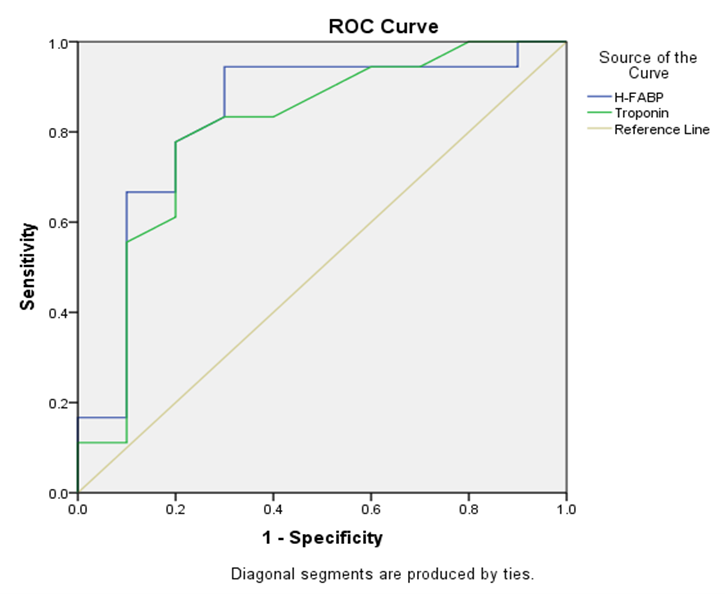
Figure 01: AUC of H-FABP and Cardiac Troponin
DISCUSSION :
The early diagnosis of cardiac infarction is difficult and challenging, especially by cardiologist, in emergency conditions, regardless of the extensive relevance of sensitive troponin in emergency setup, because its rise in myocardial cell injury delayed approximately 6-hours after cardiac ischemia 10-11. The pathophysiology of cardiac infarction is present in the coronary network in heart which on atherosclerotic occlusion escorts towards coronary thrombosis and stenosis 12. Coronary thrombosis causes cardiac necrosis in the cells due to ischemia and hypoxia. Ultimately the symptoms of fatigue, irritability, hypertension than hypotension and other medical complications. In the current study, H-FABP and cardiac troponin were used to detect better biomarkers individually and collectively in cardiac infarction.
The results have revealed that H-FABP and cardiac troponin were all appropriate markers for cardiac infarction 13. The H-FABP was 88.7 % sensitive and 94.5 % specific which were much higher than cardiac troponin, revealing that alone H-FABP was a better and early diagnostic biomarker in cardiac infarction. Collectively, AUC of H-FABP, and cardiac troponin were detected as 92.7%, the specificity was 96.9%, with sensitivity 94.4 %, which were significantly higher than individual parameters, signifying collective relevance that represents individuals. Heart attack is a very complex and life-threatening condition which gives rise to high mortality, that gravely influences population health. Rezar et al 14. concluded that H-FABP is more sensitive than troponin in early diagnosis of infarction. Anand et al 15 significantly found a relationship between an increased level of H-FABP and cardiac troponin, and revealed that H-FABP is a much higher and particularly early diagnostic biomarker in cardiac insufficiency, individually. Wang et al 16 evaluated the diagnostic capability of H-FABP and cardiac troponin and myoglobin in non-lethal patients having chest pain.
The authors revealed that H-FABP is a better biomarker than troponin in the early phase of cardiac infarction 17. Muzyk et al 18 consider troponin is only present in myocardial cells, therefore its specificity is much higher, and due to this reason, it’s an utmost vital biomarker in early detection of cardiac infarction, but more importantly its diagnostic capability is limited as compared to H-FABP. Maheshwari et al 19 have inveterate that in early infarction, the specificity and sensitivity of traditional cardiac enzymes are limited and its capacity to find out early cardiac infarction is inadequate, therefore, it is alleged that H-FABP can possibly substitute traditional cardiac enzymes to foresee and appraise cardiac injury in very early phase of cardiac infarction 20. However, combination of all biomarkers in diagnosis of cardiac infarction can improve early detection and management of cardiac infarction 21.
LIMITATIONS
It comprises small sample size, limited time for follow up, and still a gap is present in between research content and diagnostic capacity of markers. As a result, I need in depth research with a larger sample size to find out the combined capability of all these biomarkers for early detection of cardiac infarction.
CONCLUSION :
Ending notes with conclusion, that H-FABP is better and early cardiac biomarker in cardiac infarction as compared with troponin while in combination of all these two biomarkers i.e. H-FABP and troponin have shown higher sensitivity and specificity in early cardiac infarction with high clinical outcome.
BIBLIOGRAPHY:
1. Claassens DM, Coers DO, Bergmeijer TO, Yin DRCP, Ten Berg JM. Is there a place for heart-type fatty acid binding protein in the era of high-sensitive cardiac troponin T for the diagnosis of acute myocardial infarction? A systematic review. Emerg Care J. 2019;15(2):8049.
2. Vupputuri A, Sekhar S, Krishnan S, Venugopal K, Natarajan K. Heart-type fatty acid-binding protein(H-FABP) as an early diagnostic biomarker in patients with acute chest pain. Indian Heart J 2015;67(6):538-42.
3. Kabekkodu SP, Mananje SR, Saya RP. A study on the role of heart type fatty acid binding protein in the diagnosis of acute myocardial infarction. J Clin Diag Res. 2016;10(1):OC07-OC10.
4. Agnello L, Bivona G, Novo G, Scazzone C, Muratore R, Levantino P, et al. Heart-type fatty acid binding protein is a sensitive biomarker for early AMI detection in troponin negative patients: a pilot study. Scandinavian J Clin Lab Invest. 2017;77(6):428-32
5. Jo MS, Lee J, Kim S-Y, Kwon HJ, Lee HK, Park DJ, et al. Comparison between creatine kinase MB, heart-type fatty acid-binding protein, and cardiac troponin T for detecting myocardial ischemic injury after cardiac surgery. Clin Chim Acta. 2019;488:174-8
6. Bivona G, LUISA A, DANIELA B, CIACCIO M. CLINICAL UTILITY OF HFABP IN ACUTE MYOCARDIAL INFARCTION. Acta Med Mediterranea. 2018;34:1621-5.
7. Kim S-J. Global awareness of myocardial infarction symptoms in general population. Korean Circ J. 2021;51(12):997-1000.
8. Riley RF, Miller CD, Russell GB, Soliman EZ, Hiestand BC, Herrington DM, et al. Usefulness of Serial 12-Lead Electrocardiograms in Predicting 30-Day Outcomes in Patients With Undifferentiated Chest Pain(the ASAP CATH Study). Am J Cardiol. 2018;122(3):374-80.
9. Omran F, Kyrou I, Osman F, Lim VG, Randeva HS, Chatha KJIJoMS. Cardiovascular biomarkers: lessons of the past and prospects for the future. Int J Mol Sci. 2022;23(10):5680.
10. Bivona G, Agnello L, Bellia C, Sasso BL, Ciaccio M. Diagnostic and prognostic value of H-FABP in acute coronary syndrome: Still evidence to bring. Clin Biochem. 2018;58:1-4.
11. Westwood M, Ramaekers B, Grimm S, Worthy G, Fayter D, Armstrong N, et al. High-sensitivity troponin assays for early rule-out of acute myocardial infarction in people with acute chest pain: a systematic review and economic evaluation. Health Technol Asses. 2021;25(33):1-276.
12. Ralapanawa U, Sivakanesan R. Epidemiology and the magnitude of coronary artery disease and acute coronary syndrome: a narrative review. J Epidemiol Glob Health. 2021;11(2):169-77
13. Salari N, Morddarvanjoghi F, Abdolmaleki A, Rasoulpoor S, Khaleghi AA, Hezarkhani LA, et al. The global prevalence of myocardial infarction: a systematic review and meta-analysis. BMC Cardiovasc Disord. 2023;23(1):206.
14. Rezar R, Jirak P, Gschwandtner M, Derler R, Felder TK, Haslinger M, et al. Heart-type fatty acid-binding protein(H-FABP) and its role as a biomarker in heart failure: what do we know so far? J Clin Med. 2020;9(1):164.
15. Anand A, Lee KK, Chapman AR, Ferry AV, Adamson PD, StrachanFE, et al. High-Sensitivity Cardiac Troponin on Presentation to RuleOut Myocardial Infarction: A Stepped-Wedge Cluster RandomizedControlled Trial. Circulation. 2021;143(23):2214-2224.
16. Wang X-Y, Zhang F, Zhang C, Zheng L-R, Yang J. The Biomarkers for Acute Myocardial Infarction and Heart Failure. BioMed Research International. 2020;2020:2018035
17. Kwok CS, Bennett S, Azam Z, Welsh V, Potluri R, Loke YK, et al. Misdiagnosis of acute myocardial infarction: A systematic review of the literature. Crit Path Cardiol. 2021;20(3):155-62
18. Muzyk P, Twerenbold R, Morawiec B, Ayala PL, Boeddinghaus J, Nestelberger T, et al. Use of cardiac troponin in the early diagnosis of acute myocardial infarction. Kardiol Pol. 2020;78(11):1099-106.
19. Maheshwari M, Singh V, Thadani DJIP. Heart-type Fatty Acid-binding Protein(H-FABP) as an Early Diagnostic and Reperfusion Biomarker in Patients with Acute Chest Pain and its Correlation with Echocardiographic Left Ventricular Ejection Fraction andAngiographic Spectrum of Coronary Vessels. Indian Practitioner 2023;76(3).
20. Goel H, Melot J, Krinock MD, Kumar A, Nadar SK, Lip GY. Heart-type fatty acid-binding protein: An overlooked cardiac biomarker. Ann Med. 2020;52(8):444-61
21. Sipos B, Jirak P, Paar V, Rezar R, Mirna M, Kopp K, et al. Promising novel biomarkers in cardiovascular diseases. Appl Sci. 2021;11(8):3654.