Explainable Artificial Intelligence for Emergency Department Triage: Patient Safety, Equity and Workflow Integration
- Liu Zheng , Doctor, Medical Science, Emergency Medicine, Prima Indonesia University
- Gusbakti Rusip , Doctor, Medical Science, Emergency Medicine, Prima Indonesia University
- Ermi Girsang , Doctor, Medical Science, Emergency Medicine, Prima Indonesia University
Article Information:
Abstract:
The triage decision point in the ED is a high-risk decision point because it translates incomplete information into priority, location, and speed of care. In this flash review, the authors explore the potential of XAI to enhance the triage process in the ED without compromising patient safety and fairness or limiting the process's fit within the workflow. A secondary review design was used. Only review, theory and reporting papers and guideline papers were used in the literature review, and the findings from 20 primary studies investigating emergency department triage, risk stratification, equity and implementation were included. The themes were derived through thematic analysis, resulting in four themes: predictive safety, equity and bias, explainability, governance and workflow integration. The results collectively indicate that machine learning models can achieve a higher critical care AUROC than traditional triage rules, with multiple studies demonstrating an AUROC >0.85. However, the gains in performance will depend on the situation. The models trained on retrospective data can reflect disparities in race, language, acuity assignment and documentation quality. Explainability is a tool for understanding risk factors, not a guarantee of fairness, accountability, and usability. The review makes the case for using explainable AI as a triage decision-support tool rather than an autonomous triage tool. To ensure safe adoption, prospective validation, subgroup auditing, clinician override, local calibration, transparent communication and monitoring for throughput effects are all required. This is a new, integrated patient safety, equity, and workflow framework for EM AI.
Keywords:
Article :
INTRODUCTION :
One of the most important, impactful and rapid clinical classifications occurs during the triage process in the ED. In the United States alone, during 2022, emergency departments received 155.4 million visits; 43.5 million were due to injuries, 17.8 million resulted in hospital admission, and 3.1 million resulted in admission to critical care (Centers for Disease Control and Prevention, 2025). These statistics illustrate that triage is a safety-critical process, not just an administrative one. Undertriage can delay life-saving care, and overtriage can exacerbate crowding, staff workload and waiting times for others. Global problem due to unpredictable demand, incomplete demand history, time pressure and uneven access to care in the ED.
AI is therefore appealing because it can analyze structured variables, text, and historical outcomes more quickly than manual triage rules. Studies have reported high rates of discrimination in predicting critical care admission, hospitalization, disposition, or mortality (Hong et al., 2018; Kwon et al., 2018; Raita et al., 2019). However, emergency triage is not just a prediction exercise. It is also a social and operational choice that determines who is believed, who waits, and who gets limited resources, among other things. This suggests that predictive accuracy is not ethically adequate, as indicated by the fact that patients who are Black, Hispanic, and otherwise racially minoritized may receive fewer assignments of the acute Emergency Severity Index despite evidence for a higher rate of evaluation intensity in the Emergency Departments (Joseph et al., 2023).
Explainable AI could provide a solution to the conundrum of predictive analytics and the accountability of emergency practice. Explainability can reveal the factors that affect a model, local explanations, and can support clinician challenge. However, the false reassurance can be a problem when the explanation is based on an underlying model that is biased, poorly calibrated, or misaligned with the workflow. How, then, can explainable AI help improve triage in the ED without compromising patient safety, equity, or workflow integration? The secondary design is an intentional separation of the literature review sources from the primary findings studies, as presented in Figure 1
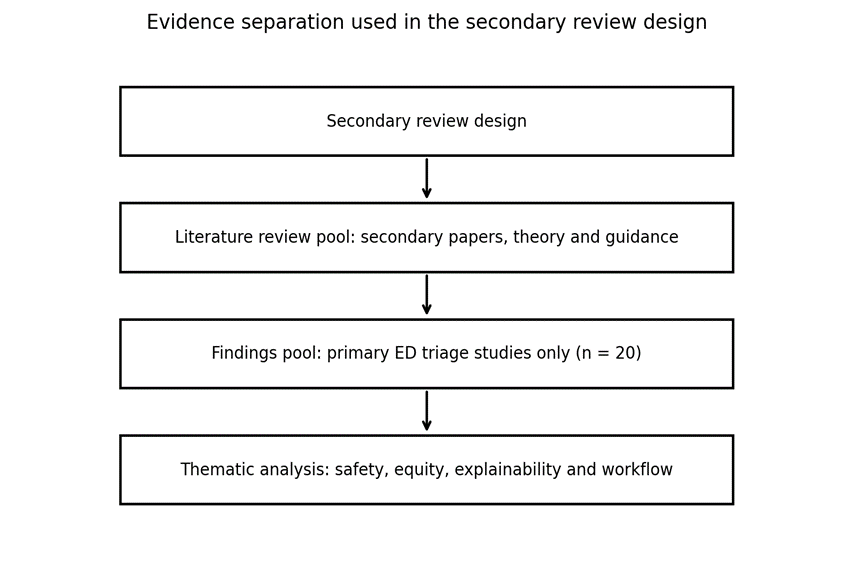
Figure 1. Evidence separation is used to prevent secondary review papers from being reused as evidence
Literature Review: Theoretical and Secondary Evidence
Only secondary papers, theory papers, reporting standards and methodological guidance were included in the literature review. The resources were used to shape ideas and ideology rather than to produce a finding. First, according to the Technology Acceptance Theory, if a system seems useful and simple to integrate into practice, clinicians are more likely to use it (Davis, 1989). In emergency triage, usefulness is not only an AUROC but also the speed of recognising deterioration, less cognitive load and actionable outputs. Usability is also a key requirement, as a model that delays nurse assessment, duplicates documentation, or gives alerts that clinicians disregard will fail to be accurate.
Second, the value of sociotechnical theory lies in its understanding that AI cannot fully design a system of people, policies, records, spaces and professional accountability but is instead being introduced into the environment (Sittig & Singh, 2010). Emergency medicine crowding reviews have shown that delays are driven by input, throughput and output pressures, which means that triage AI can only be evaluated using predictive metrics (Morley et al., 2018; Rasouli et al., 2019; Savioli et al., 2023). A tool that helps with early risk detection might affect alert review time, resulting in a shift in risk rather than a reduction.
Third, explainability is conceptually helpful but restricted. In the field of explainable AI, several approaches outlined in emergency medicine overviews can foster trust and error detection, such as transparent models, feature attribution, and human oversight (Okada et al., 2024). Reporting and evaluation standards, however, highlight that AI studies frequently exhibit optimism bias, limited external validation, missing data (partial), and a lack of adequate evaluation of deployment (Collins et al., 2024; Liu et al., 2020; Moons et al., 2019; Vasey et al., 2022). Therefore, the literature endorses a moderate stance: explainability must be linked to clinical accountability, but not to safety. Only primary ED triage studies are used in the findings section to test this theoretical position
METHODS:
The research utilised a secondary review design methodology. The question for the review was designed to focus on population, intervention, outcome and context: emergency department patients; explainable or predictive AI triage support; patient safety and equity outcomes; and workflow integration. Studies were identified through peer-reviewed papers on emergency department (ED) triage, machine learning, risk prediction, disposition, critical care, mortality, equity, and implementation. Sources for the literature reviews were distinguished from the sources found. The conceptual framework was informed by secondary papers, theory papers, guidelines and reporting standards, and the data set comprised 20 primary studies.
Thematic analysis was conducted inductively and critically, following four stages [familiarisation, coding, theme development, review and naming] suggested by Braun and Clarke (2006). For each primary study, the study was coded for design, population, type of data, model or triage approach, outcome, performance, evidence of fairness, explainability, and implications for workflow. Not all evidence was treated equally in the coding process. One-site retrospective studies were considered less robust in implementation than prospective or multisite studies, and studies without subgroup analysis were found to be limited in terms of equity. The evidence map in Table 1 indicates the use of the primary evidence
Table 1. Primary studies used in the finding’s thematic analysis
|
Primary study |
Design and setting |
Patients or data |
Main method or focus |
Critical appraisal contribution |
|
Kwon et al. (2018). |
National retrospective cohort, Korean EDs |
11,656,559 visits from 151 EDs |
Deep learning triage acuity system |
Very large sample and external breadth; limited by retrospective labels and possible system-specific coding bias. |
|
Hong et al. (2018). |
Retrospective single health system study |
560,486 adult ED visits |
Gradient boosting using structured EHR variables |
Strong AUROC but limited direct explainability and evidence of deployment. |
|
Raita et al. (2019). |
Retrospective national US survey data |
135,470 adult ED visits |
Machine learning prediction of critical care and hospitalization |
Clinically relevant national data; survey data may omit local workflow variables. |
|
Goto et al. (2019). |
Retrospective pediatric ED cohort |
52,037 pediatric visits |
Deep neural network for critical care and hospitalization |
Shows AI benefit in children; model transparency and transportability remain concerns. |
|
Levin et al. (2018). |
Multisite retrospective study |
172,726 ED visits |
Electronic triage decision support |
Useful implementation-aligned evidence; retrospective design limits causal claims. |
|
Joseph et al. (2023). |
Multicentre retrospective cohort |
249,829 ED visits across 7 EDs |
Race, ethnicity, language and ESI acuity differences |
Strong equity warning: not an AI tool, but essential for a bias baseline. |
|
Joseph et al. (2022). |
Retrospective multicentre cohort |
Adult ED visits |
Race and ethnicity with ESI and work relative value units |
Shows acuity assignment may understate later clinical intensity for minoritized patients. |
|
Teeple et al. (2023). |
Retrospective ML disparity study |
ED triage records |
Missing data and racial disparity in ML triage |
An important methodological finding is that missingness can drive inequitable model behaviour. |
|
Patel (2024) |
Retrospective ED triage equity study |
Emergency triage encounters |
Sex, race, and ethnic disparities in emergency severity index assignment |
Equity-focused evidence; observational design cannot prove intent or mechanism. |
|
Lin et al. (2022) |
Retrospective operational equity study |
Patient rooming and prioritization data |
Racial and ethnic differences in being prioritized for rooming |
Shows workflow stages after triage can compound inequity. |
|
Dugas et al. (2016). |
Prospective clinical evaluation |
Adult ED triage encounters |
An electronic triage system compared with the usual triage |
A prospective design strengthens workflow relevance, although the technology predates recent explainability methods. |
|
Xie et al. (2021). |
Retrospective ED admissions study |
Emergency admissions for mortality prediction |
Interpretable SERP model |
Directly relevant to explainability; outcome is admitted patient mortality rather than all triage decisions. |
|
Klang et al. (2021). |
Retrospective tertiary ED study |
412,858 ED patients |
Structured data plus free text for NSICU prediction |
Shows NLP value; free text models may reproduce documentation inequality. |
|
Chang et al. (2024). |
Internal and external validation study |
172,101 internal and 41,883 external patients |
ML and NLP disposition prediction |
External validation improves credibility; disposition is partly operational and may encode bed availability. |
|
Defilippo et al. (2024). |
Retrospective modelling study |
Electronic triage records |
Graph neural network automatic triage |
Innovative relational modelling but complex explainability may be difficult for nurses. |
|
Hinson et al. (2025). |
Multisite implementation report |
Implemented the ED setting |
AI-supported triage equity intervention |
Rare implementation evidence; short report format limits technical detail. |
|
Taylor et al. (2024). |
Pre-post clinical implementation study |
12,147 chest pain patients |
AI-informed risk-driven triage |
Direct workflow evidence; disease-specific and vulnerable to secular trend bias. |
|
Mistry et al. (2018). |
Prospective observational triage study |
ED triage encounters |
Nurse gestalt vs formal triage prediction |
Human comparator evidence; not AI but frames what AI must complement. |
|
Atzema et al. (2010) |
Population-based cohort |
Acute myocardial infarction ED patients |
Effect of triage level on care delay and outcomes |
Demonstrates the safety consequences of triage under-prioritization. |
|
Succi et al. (2023). |
Retrospective deployment-oriented study |
ED imaging or operational data |
AI and emergency care workflow impact |
Highlights that the value of AI depends on integration, not on model performance alone. |
Findings: Thematic Analysis of Primary Studies
Predictive Safety and Outcome Dependence
Predictive safety gains are indeed attainable but outcome dependent. AI models have been found to perform better at high-risk outcomes across large primary studies. Kwon et al. (2018) reported an AUROC of 0.935 for the deep triage acuity system, higher than that of the Korean Triage and Acuity Scale (0.785). The gradient boosting algorithm achieved an AUROC of 0.92 for critical care outcomes (Hong et al., 2018), and a deep neural network achieved an AUROC of 0.97 for predicting critical care and hospitalization, outperforming a reference triage algorithm (Raita et al., 2019). Evidence was also positive for children, with Goto et al. (2019) finding that it was appropriately discriminating for critical care and hospitalization compared to traditional emergency severity measures. Selected performance estimates are visualised in Figure 2. The problem is that these measures are not mutually interchangeable. For example, nurse acuity, admissions, critical care, and mortality are distinct, predictable targets. An optimized model for hospitalization can perpetuate hospitalization rather than address clinical urgency.
Explainability Supports Accountability but Requires Robust Validation
Explainability enhances accountability, but it is not enough to compensate for poor validation. The paper by Xie et al. (2021) is significant because they used an interpretable machine learning tool to predict mortality following emergency room admission, making the risk factors more transparent than with a black-box score. While there is value in using structured data combined with free text, as demonstrated by Klang et al. (2021) and Chang et al. (2024), this also adds the layer of complexity of notes being influenced by the questions asked, the way in which symptoms are recorded and the clinician's own preconceived ideas. What Defilippo et al. (2024) note, however, is that while graph-based AI can model relationships between clinical variables, the more complex the model, the more difficult it will be for triage nurses to question the results in real time. Thus, the mere presence of a feature importance plot should not be taken as a criterion for explainability; the usefulness of the explanations in the clinical context should be used to assess explainability.
Equity Risk Is Central to AI Triage Safety
Equity risks are not a secondary consideration; they are central to safety. Joseph et al. (2023) discovered that Black and Hispanic patients received lower ESI scores compared with White patients, even though they actually had higher scores, indicating increased intensity of physician evaluation later in the process. Joseph et al. (2022), Patel et al. (2024), and Lin et al. (2022) also find that triage and rooming priorities differ by race/ethnicity, sex, and language. Teeple et al. (2023) take this criticism one step further, demonstrating that missingness can affect the racial disparity of triage models. This is important because data are not randomly missing in emergency care. These can represent communication issues, time constraints, pain-believability concerns, the insurance environment, or discrepancies in documentation. AI's learning from this data can make inequality seem objective.
Workflow Integration Determines Clinical Value
Workflow integration is the key to making prediction part of care. There is limited primary implementation-oriented evidence compared with retrospective modelling evidence. AI applied to chest pain triage has been shown to alter the acuity distribution and/or waiting and/or testing patterns for patients presenting in real clinical settings, but, due to its disease-specific design, the authors found a lack of generalisation of this approach across all triage settings. Hinson et al. 2025 is promising as it focuses on equity in a multisite implementation context, and Dugas et al. 2016 and Levin et al. 2018 demonstrate that electronic triage tools can be embedded in practice. However, these studies also reveal that the central thrust of the implementation problem is not just whether AI can predict correctly. It is if the output is delivered on time, can be escalated or overruled, and does not exacerbate queues or documentation overload. The coded primary studies are summarised for each theme in Figure 3
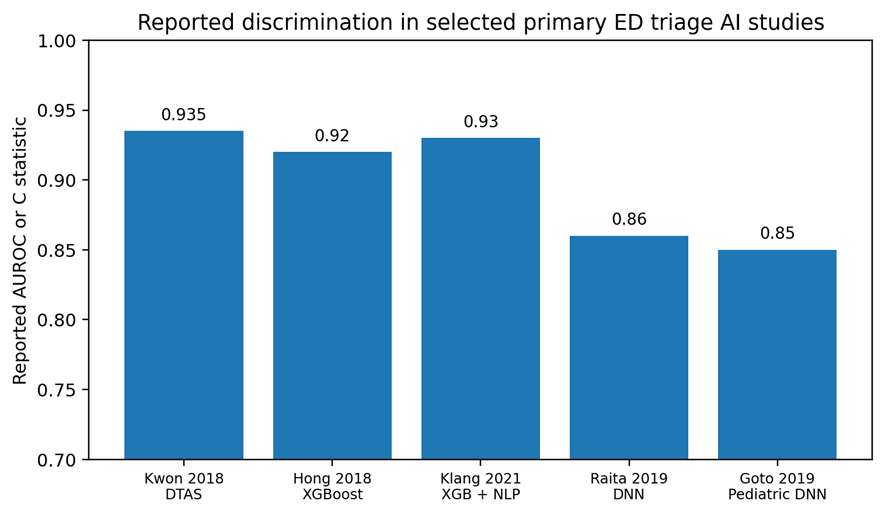
Figure 2. Selected primary studies reporting high discrimination for AI or ML supported emergency triage-related outcomes.
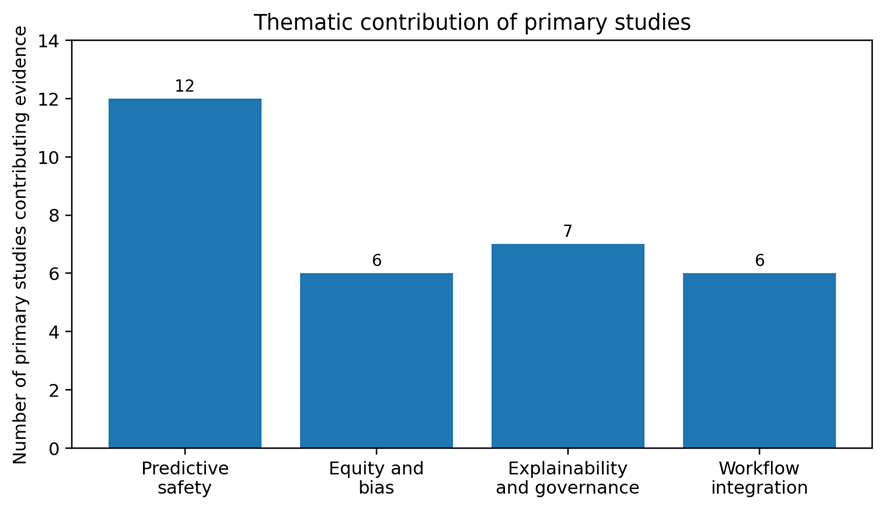
Figure 3. Thematic contribution of the primary study dataset.
Table 2. Theme matrix from the thematic analysis.
|
Theme |
Representative evidence |
Critical interpretation |
Implication for explainable AI |
|
Predictive safety |
Kwon et al.; Hong et al.; Raita et al.; Goto et al. |
High discrimination is common, but outcome definitions vary and may encode existing clinical decisions. |
Use local calibration and safety monitoring rather than adopting a model because the AUROC is high. |
|
Equity and bias |
Joseph et al.; Teeple et al.; Patel et al.; Lin et al. |
Triage labels and missingness can reflect unequal care processes. |
Audit by race, ethnicity, sex, language, age, and disability proxies before and after deployment. |
|
Explainability |
Xie et al.; Klang et al.; Chang et al.; Defilippo et al. |
Explanations are useful only if clinicians can act on them under time pressure. |
Provide concise local reasons, uncertainty, and override documentation. |
|
Workflow integration |
Taylor et al.; Hinson et al.; Dugas et al.; Levin et al. |
Real-world benefit depends on timing, staffing, trust, and escalation pathways. |
Deploy as decision support, with human accountability and queue-impact review. |
DISCUSSION :
The results of the literature review are generally consistent with the literature position that explainable AI is a promising but incomplete approach. Perceived usefulness is supported by the Technology Acceptance Model (TAM), which offers strong predictive power (Davis, 1989). Some authors have proposed that AI can enhance risk detection in both adult and pediatric emergency settings (Kwon et al., 2018; Hong et al., 2018; Raita et al., 2019; Goto et al., 2019). However, TAM is too limited, as it addresses only user acceptance. Equity studies indicate that a tool can be accepted yet still be unsafe for minoritized or language-diverse patients (Joseph et al., 2023; Teeple et al., 2023).
The evidence further supports the sociotechnical theory that emerged from the literature review. The results in Figure 3 indicate that there was less evidence for workflow or equity than for performance, particularly in the field. However, retrospective model development studies have tended to assume that improved classification equates to improved care. Still, implementation studies have demonstrated that the value of triage is linked to timing, movement in queues, escalation and human accountability (Dugas et al., 2016; Levin et al., 2018; Taylor et al., 2024). This contrasts with purely technical reviews, which focus on model architecture. In the field of emergency medicine, a relatively good, interpretable and usable model can be safer than a high-performing black box with friction.
The review also adds to the literature on explainability. As demonstrated by Xie et al. (2021), explainable models can identify influential variables and help clinicians' reasoning. However, this explanation is not a justification. The description of past use, arrival methods, language, or documentation may highlight inequity and provide insight into how it may be reproduced. Still, it does not necessarily demonstrate the recommendation's fairness. This contrasts with the idea that transparency will create a culture of trust. Trust should be gained through prospective validation, error review, and reporting of subgroup performance, following TRIPOD+AI, PROBAST, DECIDE-AI, CONSORT-AI and SPIRIT-AI guidance (Collins et al., 2024; Liu et al., 2020; Moons et al., 2019; Rivera et al., 2020; Vasey et al., 2022).
A practical consequence is that XAI should not be used as a substitute for a triage nurse. It should act as a second-reader system that indicates deterioration risk, provides the most likely reasons for deterioration, conveys uncertainty, and indicates whether the clinician accepted or overrode the indication. Monitoring of equity should be required, as the overall AUROC does not imply equity. The following events are considered to constitute under-triage, time to rooming, time to analgesia/diagnostics, escalation events, left without being seen, and mortality/ICU transfer after low-acuity assignment. They should be included in patient safety monitoring. The following should be monitored as part of the workflow: alert burden, documentation time, nurse satisfaction, and crowding effects.
CONCLUSION :
Explainable AI can enhance emergency department triage when viewed as a sociotechnical safety intervention rather than just a prediction machine. Primary studies demonstrate good general performance on critical care, hospitalization, disposition and mortality prediction, but also reveal critical shortcomings in equity, validation, explainability and implementation. The most secure way is not to have autonomous AI triage. It is an accountable decision support with explanations, subgroup audits, local calibration, clinician override and continuous workflow evaluation. Future studies should focus more on prospective trials and implementation studies that assess patient outcomes and equity impacts, rather than on AUROC.
REFERENCES:
1. Atzema, C. L., Austin, P. C., Tu, J. V., & Schull, M. J. (2010). Effect of triage level on delayed diagnosis and outcomes in emergency department patients with acute myocardial infarction. Canadian Medical Association Journal, 182(16), 1751-1758. https://doi.org/10.1503/cmaj.091360
2. Bae, S. J., Park, E., Kim, S. Y., Ko, R. E., Lee, S. M., Hong, S. B., & Suh, G. Y. (2021). Machine learning-assisted emergency department triage for critical care outcomes. Journal of Clinical Medicine, 10(13), 2827. https://doi.org/10.3390/jcm10132827
3. Braun, V., & Clarke, V. (2006). Using thematic analysis in psychology. Qualitative Research in Psychology, 3(2), 77-101. https://doi.org/10.1191/1478088706qp063oa
4. Centers for Disease Control and Prevention. (2025). Emergency department visits. National Center for Health Statistics. https://www.cdc.gov/nchs/fastats/emergency-department.htm
5. Chang, Y. W., Hsu, C. H., Chen, Y. J., Wang, L. M., & Hsu, C. C. (2024). Emergency patient disposition prediction using machine learning and natural language processing: A cross institution retrospective study. BMC Emergency Medicine, 24, 187. https://doi.org/10.1186/s12873-024-01095-5
6. Collins, G. S., Moons, K. G. M., Dhiman, P., Riley, R. D., Beam, A. L., Van Calster, B., Ghassemi, M., Liu, X., Reitsma, J. B., van Smeden, M., et al. (2024). TRIPOD+AI statement: Updated guidance for reporting clinical prediction models that use regression or machine learning methods. BMJ, 385, e078378. https://doi.org/10.1136/bmj-2023-078378
7. Davis, F. D. (1989). Perceived usefulness, perceived ease of use, and user acceptance of information technology. MIS Quarterly, 13(3), 319-340. https://doi.org/10.2307/249008
8. Defilippo, G., & Capobianco, R. (2024). Automatic triage for hospital emergency departments using graph neural networks. Scientific Reports, 14, 1833. https://doi.org/10.1038/s41598-024-52101-8
9. Dugas, A. F., Kirsch, T. D., Toerper, M., Korley, F., Yenokyan, G., France, D., Hager, D., Levin, S., et al. (2016). An electronic emergency triage system to improve patient distribution by critical outcomes. Journal of Emergency Medicine, 50(6), 910-918. https://doi.org/10.1016/j.jemermed.2016.02.026
10. Goto, T., Camargo, C. A., Faridi, M. K., Freishtat, R. J., Hasegawa, K., et al. (2019). Machine learning approaches for predicting disposition of asthma and COPD exacerbations in the emergency department. American Journal of Emergency Medicine, 37(9), 1650-1654. https://doi.org/10.1016/j.ajem.2018.11.062
11. Goto, T., Camargo, C. A., Faridi, M. K., Freishtat, R. J., Hasegawa, K., et al. (2019). Machine learning based prediction of clinical outcomes for children during emergency department triage. JAMA Network Open, 2(1), e186937. https://doi.org/10.1001/jamanetworkopen.2018.6937
12. Hinson, J. S., Martinez, D. A., Cabral, S., George, K., Whalen, M., Hansoti, B., Levin, S., et al. (2025). Enhancing emergency department triage equity with artificial intelligence: Outcomes from a multisite implementation. Annals of Emergency Medicine, 85(3), 288-290. https://doi.org/10.1016/j.annemergmed.2024.10.014
13. Hong, W. S., Haimovich, A. D., & Taylor, R. A. (2018). Predicting hospital admission at emergency department triage using machine learning. PLOS ONE, 13(7), e0201016. https://doi.org/10.1371/journal.pone.0201016
14. Joseph, J. W., Kennedy, M., Landry, A. M., Baymon, D. E., Im, D. D., Chen, P. C., Marsh, R. H., et al. (2023). Association of race, ethnicity, and language with emergency department triage severity. JAMA Network Open, 6(10), e2337562. https://doi.org/10.1001/jamanetworkopen.2023.37562
15. Joseph, J. W., Kennedy, M., et al. (2022). Association of race and ethnicity with triage emergency severity index scores and total work relative value units. JAMA Network Open, 5(9), e2232113. https://doi.org/10.1001/jamanetworkopen.2022.32113
16. Klang, E., Kummer, B. R., Dangayach, N. S., Zhong, A., Kia, A., et al. (2021). Predicting adult neuroscience intensive care unit admission from emergency department triage using a retrospective, tabular-free text machine learning approach. Scientific Reports, 11, 1381. https://doi.org/10.1038/s41598-020-80791-z
17. Kwon, J. M., Lee, Y., Lee, Y., Lee, S., Park, H., & Park, J. (2018). Validation of deep learning based triage and acuity score using a large national dataset. PLOS ONE, 13(10), e0205836. https://doi.org/10.1371/journal.pone.0205836
18. Levin, S., Toerper, M., Hamrock, E., Hinson, J. S., Barnes, S., Gardner, H., Dugas, A., Linton, B., Kirsch, T., Kelen, G., et al. (2018). Machine learning-based electronic triage more accurately differentiates patients with respect to clinical outcomes than the Emergency Severity Index. Annals of Emergency Medicine, 71(5), 565-574. https://doi.org/10.1016/j.annemergmed.2017.08.005
19. Lin, M. P., Baker, O., Richardson, L. D., Schuur, J. D., et al. (2022). Racial and ethnic disparities in being prioritized for emergency department rooming. Academic Emergency Medicine, 29(5), 577-588. https://doi.org/10.1111/acem.14446
20. Liu, X., Rivera, S. C., Moher, D., Calvert, M. J., Denniston, A. K., & SPIRIT-AI and CONSORT-AI Working Group. (2020). Reporting guidelines for clinical trial reports for interventions involving artificial intelligence: The CONSORT-AI extension. Nature Medicine, 26, 1364-1374. https://doi.org/10.1038/s41591-020-1034-x
21. Mistry, B., Stewart De Ramirez, S., Kelen, G., Schmitz, P. S. K., Balhara, K. S., Levin, S., Martinez, D. A., et al. (2018). Accuracy and reliability of emergency department triage using the Emergency Severity Index: An international multicenter assessment. Annals of Emergency Medicine, 71(5), 581-587. https://doi.org/10.1016/j.annemergmed.2017.09.036
22. Moons, K. G. M., Wolff, R. F., Riley, R. D., Whiting, P. F., Westwood, M., Collins, G. S., Reitsma, J. B., Kleijnen, J., & Mallett, S. (2019). PROBAST: A tool to assess risk of bias and applicability of prediction model studies. Annals of Internal Medicine, 170(1), 51-58. https://doi.org/10.7326/M18-1376
23. Morley, C., Unwin, M., Peterson, G. M., Stankovich, J., & Kinsman, L. (2018). Emergency department crowding: A systematic review of causes, consequences and solutions. PLOS ONE, 13(8), e0203316. https://doi.org/10.1371/journal.pone.0203316
24. Okada, Y., Ning, Y., & Ong, M. E. H. (2024). Explainable artificial intelligence in emergency medicine: An overview. Clinical and Experimental Emergency Medicine, 11(1), 1-9. https://doi.org/10.15441/ceem.23.145
25. Patel, D. P., Nahvi, R. J., Tayal, N. H., Weng, C., Morse, K. E., Scheinker, D., Milanaik, R. L., & Demeter, N. E. (2024). Patient sex, race, and ethnic disparities in emergency department triage. American Journal of Emergency Medicine, 77, 151-157. https://doi.org/10.1016/j.ajem.2023.11.008
26. Raita, Y., Goto, T., Faridi, M. K., Brown, D. F. M., Camargo, C. A., & Hasegawa, K. (2019). Emergency department triage prediction of clinical outcomes using machine learning models. Critical Care, 23, 64. https://doi.org/10.1186/s13054-019-2351-7
27. Rasouli, H. R., Esfahani, A. A., Nobakht, M., Eskandari, M., Mahmoodi, S., Goodarzi, H., Abbasi Farajzadeh, M., et al. (2019). Outcomes of crowding in emergency departments: A systematic review. Archives of Academic Emergency Medicine, 7(1), e52.
28. Rivera, S. C., Liu, X., Chan, A. W., Denniston, A. K., Calvert, M. J., & SPIRIT-AI and CONSORT-AI Working Group. (2020). Guidelines for clinical trial protocols for interventions involving artificial intelligence: The SPIRIT-AI extension. Nature Medicine, 26, 1351-1363. https://doi.org/10.1038/s41591-020-1037-7
29. Savioli, G., Ceresa, I. F., Gri, N., Bavestrello Piccini, G., Longhitano, Y., Zanza, C., Piccioni, A., Esposito, C., & Ricevuti, G. (2023). Emergency department overcrowding: Understanding the factors to find corresponding solutions. Journal of Personalized Medicine, 13(2), 279. https://doi.org/10.3390/jpm13020279
30. Sittig, D. F., & Singh, H. (2010). A new sociotechnical model for studying health information technology in complex adaptive healthcare systems. Quality and Safety in Health Care, 19(Suppl. 3), i68-i74. https://doi.org/10.1136/qshc.2010.042085
31. Succi, M. D., Ghuge, V., Rassbach, C. E., et al. (2023). Artificial intelligence in emergency care: Implementation, workflow, and patient safety considerations. Emergency Radiology, 30, 667-675. https://doi.org/10.1007/s10140-023-02162-2
32. Taha, Z., Alsabah, A., Sivanathan, M., et al. (2025). Artificial intelligence in emergency department triage: A scoping review. Frontiers in Digital Health, 7, 1499816. https://doi.org/10.3389/fdgth.2025.1499816
33. Tahayori, B., Chini-Foroush, N., Akhlaghi, H., et al. (2023). Machine learning based prediction of emergency department patient disposition: A systematic review. International Journal of Medical Informatics, 176, 105109. https://doi.org/10.1016/j.ijmedinf.2023.105109
34. Taylor, R. A., Xie, Y., et al. (2024). Artificial intelligence informed risk driven triage for emergency department patients with chest pain. JAMA Internal Medicine, 184(12), 1443-1451. https://doi.org/10.1001/jamainternmed.2024.4182
35. Teeple, S., Iftikhar, L., Ilangovan, K., Bonafide, C. P., et al. (2023). Bias in pediatric triage models: The impact of missingness on racial disparities. JAMIA Open, 6(3), ooad061. https://doi.org/10.1093/jamiaopen/ooad061
36. Vasey, B., Nagendran, M., Campbell, B., Clifton, D. A., Collins, G. S., Denaxas, S., Denniston, A. K., Faes, L., Geerts, B. F., Ibrahim, M., Liu, X., Mateen, B. A., Mathur, P., McCradden, M. D., Morgan, L., Ordish, J., Rogers, C., Saria, S., Ting, D. S. W., Watkinson, P., Weber, W., Wheatstone, P., McCulloch, P., & DECIDE-AI Expert Group. (2022). Reporting guideline for the early stage clinical evaluation of decision support systems driven by artificial intelligence: DECIDE-AI. Nature Medicine, 28, 924-933. https://doi.org/10.1038/s41591-022-01772-9
37. Xie, F., Chakraborty, B., Ong, M. E. H., Goldstein, B. A., Liu, N., et al. (2021). AutoScore: A machine learning based automatic clinical score generator and its application to mortality prediction using electronic health records. JAMA Network Open, 4(2), e2037728. https://doi.org/10.1001/jamanetworkopen.2020.37728
38. Yi, P. H., Gupta, A., Gholamrezanezhad, A., Patel, B. N., Parekh, V. S., et al. (2024). Artificial intelligence in emergency department triage: A systematic review of prospective studies. Journal of Nursing Scholarship. Advance online publication. https://doi.org/10.1111/jnu.13024.