Oncological Outcomes of Omitting Axillary Dissection in Clinically Node-Negative Patients with Pathologic N1 Micrometastases Post-Neoadjuvant Systemic Therapy: A Systematic Review
- Indluru Ravi Teja Reddy , Senior Resident, Department of General Surgery, Apollo institute of Medical Sciences and research, Hyderabad, Telangana
- Rohit K Phandis , Professor, Department of General Surgery , Apollo Institute of medical sciencea and research, Hyderabad, Telangana
Article Information:
Abstract:
Axillary management in breast cancer has undergone substantial evolution with increasing emphasis on reducing surgical morbidity while maintaining oncological safety. In clinically node-negative breast cancer patients who receive neoadjuvant systemic therapy (NST), the presence of pathologic N1 micrometastases after treatment presents an important clinical dilemma regarding the necessity of completion axillary lymph node dissection (ALND). Although ALND has historically been considered the standard approach for residual nodal disease, it is associated with significant complications including lymphedema, shoulder dysfunction, neuropathic pain, and reduced quality of life. This systematic review evaluates the oncological outcomes of omitting ALND in clinically node-negative patients with pathologic N1 micrometastatic disease following NST. Evidence from retrospective studies, prospective cohorts, and multicenter analyses suggests that omission of ALND in selected patients does not significantly compromise locoregional control, disease-free survival, or overall survival when combined with appropriate systemic therapy and regional nodal irradiation. Several studies demonstrated low axillary recurrence rates and favorable long-term oncological outcomes in patients managed with sentinel lymph node biopsy alone after NST. The findings further highlight the growing role of individualized treatment strategies based on tumor biology, response to therapy, imaging, and multidisciplinary management. However, heterogeneity in study design, patient selection, follow-up duration, and radiation protocols remains an important limitation. Current evidence suggests that carefully selected patients with minimal residual nodal disease may safely avoid ALND, thereby reducing treatment-related morbidity without significantly affecting oncological outcomes. Further large-scale prospective randomized trials are needed to establish standardized treatment guidelines and optimize patient selection criteria.
Keywords:
Article :
INTRODUCTION:
Breast cancer remains the most commonly diagnosed malignancy among women worldwide and continues to represent a major global public health challenge despite significant advancements in screening, diagnosis, systemic therapy, surgical techniques, and radiation oncology [1]. According to global cancer statistics, breast cancer accounts for millions of new cases annually and remains one of the leading causes of cancer-related mortality among women [2]. Improvements in multimodal treatment approaches have substantially increased survival rates over recent decades, shifting modern breast cancer management toward strategies that not only improve oncological outcomes but also minimize treatment-related morbidity and preserve quality of life [3]. One of the most important areas of evolution in breast cancer treatment involves the management of the axilla.
Axillary lymph node status has historically been considered one of the strongest prognostic factors in breast cancer and plays a critical role in staging, treatment planning, recurrence risk assessment, and survival prediction [4]. For decades, axillary lymph node dissection (ALND) was regarded as the standard surgical procedure for evaluating and controlling regional nodal disease in breast cancer patients. ALND provides important pathological information regarding nodal burden and contributes to local disease control; however, it is also associated with substantial postoperative morbidity, including lymphedema, chronic pain, restricted shoulder mobility, sensory neuropathy, and impaired quality of life [5]. As systemic therapies and radiotherapy techniques improved, increasing attention was directed toward identifying patients who could safely avoid extensive axillary surgery without compromising oncological outcomes.
The introduction of sentinel lymph node biopsy (SLNB) represented a major advancement in axillary management and significantly reduced surgical morbidity compared with conventional ALND [6]. Sentinel lymph node biopsy is based on the principle that the sentinel node is the first lymph node likely to receive metastatic drainage from the primary tumor site. Multiple landmark trials demonstrated that SLNB accurately stages the axilla in clinically node-negative breast cancer patients while substantially reducing complications associated with complete axillary dissection [7]. Consequently, SLNB gradually replaced ALND as the standard approach for axillary staging in early-stage clinically node-negative breast cancer.
Simultaneously, the role of neoadjuvant systemic therapy (NST) in breast cancer management expanded considerably. Initially reserved primarily for locally advanced or inoperable disease, NST is now widely used in early-stage breast cancer to downstage tumors, improve breast conservation rates, assess treatment response, and potentially reduce the extent of surgical intervention [8]. Advances in chemotherapy, targeted therapy, endocrine therapy, and immunotherapy have significantly improved pathological response rates, particularly in aggressive subtypes such as HER2-positive and triple-negative breast cancer [9]. As a result, increasing numbers of patients achieve substantial tumor regression or complete pathological response after NST.
The evolving use of NST has introduced new complexities in axillary management. Traditionally, ALND remained standard for patients with residual nodal disease after neoadjuvant therapy because residual disease was believed to indicate persistent metastatic potential and increased recurrence risk [10]. However, the degree of residual nodal involvement after NST varies widely, ranging from isolated tumor cells and micrometastases to extensive residual nodal disease. Pathologic N1 micrometastases, defined as metastatic deposits greater than 0.2 mm but not exceeding 2 mm within lymph nodes, represent a particularly controversial category in post-NST axillary management [11].
The oncological significance of residual micrometastatic nodal disease after NST remains incompletely understood. Some clinicians consider residual micrometastases an indicator of persistent systemic disease requiring aggressive local control through completion ALND, whereas others argue that minimal residual nodal burden may not justify the substantial morbidity associated with axillary dissection, particularly when effective systemic therapy and regional nodal irradiation are administered [12]. This debate has intensified as emerging evidence increasingly supports de-escalation of axillary surgery in carefully selected patients.
As per several important studies regarding axillary management in upfront surgery, current thinking has changed about not doing ALND. Studies like ACOSOG Z0011, IBCSG 23-01, and AMAROS actually showed that some patients with small lymph node problems can safely skip full lymph node removal after breast surgery. These patients definitely had the same survival rates and local control without any bad effects [13]. These studies surely changed how doctors manage axillary lymph nodes by showing the need to balance cancer safety with treatment side effects. Moreover, this approach fundamentally shifted treatment thinking from aggressive methods to more careful consideration of patient outcomes. Also, basically, most trials studied patients getting surgery first, not after treatment, so the same results may not apply to post-NST cases.
Also, we are seeing that using NST more often has made a new situation where doctors must look at the lymph node condition before treatment, how well treatment works, and only the remaining disease when planning armpit surgery. Patients with no detectable lymph node disease who get treatment and later show only tiny cancer spreads in nodes are actually a very important group. These patients definitely have much less cancer burden and may have better outcomes than those with extensive remaining disease [14]. Researchers are actually studying whether we can definitely skip complete lymph node removal in these breast cancer patients safely.
One of the major concerns surrounding omission of ALND in patients with residual nodal disease is the potential risk of axillary recurrence and compromised survival outcomes. Historically, residual nodal disease after NST was believed to reflect chemoresistant disease and increased metastatic potential [15].
Radiation therapy plays a particularly important role in this evolving treatment landscape. Regional nodal irradiation can effectively control microscopic residual disease within the axilla and surrounding nodal basins, potentially reducing the need for extensive surgical intervention [16]. Studies evaluating axillary radiotherapy as an alternative to ALND have demonstrated comparable locoregional control with substantially lower rates of lymphedema and functional impairment. These findings support the possibility that carefully selected patients with limited residual nodal disease after NST may safely avoid ALND while maintaining excellent oncological outcomes.
Another important consideration involves the biological heterogeneity of breast cancer. Tumor subtype significantly influences response to NST, recurrence risk, and long-term prognosis. HER2-positive and triple-negative breast cancers often demonstrate high pathological complete response rates after modern systemic therapy, whereas hormone receptor-positive tumors generally exhibit lower response rates but may have more indolent biological behavior [17]. Consequently, the prognostic significance of residual micrometastatic nodal disease may differ across molecular subtypes. Personalized axillary management strategies based on tumor biology are therefore increasingly emphasized in modern breast cancer care.
The morbidity associated with ALND remains a major driver of de-escalation efforts. Lymphedema is among the most feared complications of axillary surgery and can significantly impair physical function, psychological well-being, body image, and quality of life [18]. Reported rates of lymphedema after ALND vary widely but are substantially higher than those observed after SLNB alone. Additional complications include chronic pain, shoulder dysfunction, numbness, restricted mobility, seroma formation, and increased risk of infection. As breast cancer survival improves, minimizing long-term treatment-related morbidity has become increasingly important.Quality-of-life considerations are therefore central to current debates regarding omission of ALND. Modern oncological care increasingly recognizes that survival outcomes must be balanced against physical, emotional, and functional consequences of treatment [19]. Avoiding unnecessary axillary surgery may substantially improve postoperative recovery, reduce healthcare costs, decrease rehabilitation requirements, and enhance long-term patient well-being without compromising oncological safety in selected populations.
Accurate assessment of residual nodal disease after NST presents additional challenges. Imaging modalities such as ultrasound, magnetic resonance imaging (MRI), positron emission tomography (PET), and targeted axillary dissection techniques have improved preoperative evaluation of treatment response, but none demonstrate perfect sensitivity or specificity for detecting microscopic residual disease [20]. The role of sentinel lymph node biopsy after NST has also been extensively investigated. Early concerns regarding false-negative rates initially limited widespread acceptance of post-NST SLNB, particularly in node-positive patients [21]. However, refinements in surgical technique, dual tracer mapping, retrieval of multiple sentinel nodes, and targeted axillary dissection have significantly improved accuracy. Current evidence supports the feasibility and reliability of SLNB in appropriately selected patients after NST, further facilitating efforts toward axillary de-escalation.
Several ongoing clinical trials are currently evaluating omission of ALND in patients with residual nodal disease following NST. These studies aim to clarify recurrence risk, identify optimal patient selection criteria, and establish evidence-based guidelines for axillary management [22]. Early results from retrospective analyses and institutional studies have generally shown low rates of axillary recurrence in carefully selected patients treated without completion ALND, although long-term prospective data remain limited.
Treatment individualisation is surely the main idea in modern breast cancer care. Moreover, this approach helps doctors choose the best treatment for each patient. Modern cancer treatment surely focuses on making decisions based on each patient's specific needs rather than using the same approach for everyone. Moreover, doctors now consider factors like tumour characteristics, how well treatments work, other health conditions, scan results, genetic testing, and what patients prefer [23]. In this context, not doing ALND in selected patients with minimal remaining nodal disease after NST is itself part of a broader movement toward precision surgical oncology, which further supports targeted treatment approaches.
The results supporting less aggressive axillary treatment are surely encouraging, but several important debates remain unsolved. Moreover, these controversies need to be addressed before making final decisions. Further, we are seeing that different ways of choosing patients, defining small cancer spread, radiation treatment plans, and follow-up time periods only make it difficult to understand the existing studies [24]. Long-term survival and cancer recurrence rates in patients treated without lymph node surgery after chemotherapy are actually not well studied. These outcomes definitely need more research to understand them completely. Doctors are actually worried that hidden cancer cells might not get proper treatment, and this could definitely make cancer come back in the same area.
The challenge of putting new research findings into medical guidelines is only becoming more difficult. Basically, different medical groups have the same uncertainty about whether to skip ALND after NST, so their recommendations vary [25]. The economic implications of axillary de-escalation are also increasingly relevant. Avoiding unnecessary ALND may reduce operative time, hospital stay, postoperative complications, rehabilitation needs, and long-term healthcare expenditures [26]. In resource-limited healthcare settings, minimizing surgical morbidity while maintaining oncological safety may provide substantial economic and public health benefits.
Given the rapid evolution of breast cancer treatment paradigms and increasing emphasis on personalized and less invasive approaches, understanding the oncological safety of omitting ALND in clinically node-negative patients with pathologic N1 micrometastases after NST is critically important. Existing evidence suggests that selected patients with minimal residual nodal disease may achieve excellent oncological outcomes without completion axillary dissection when treated with modern multimodal therapy [27]. However, further high-quality evidence is needed to establish standardized treatment algorithms and identify patients most likely to benefit from axillary de-escalation strategies.
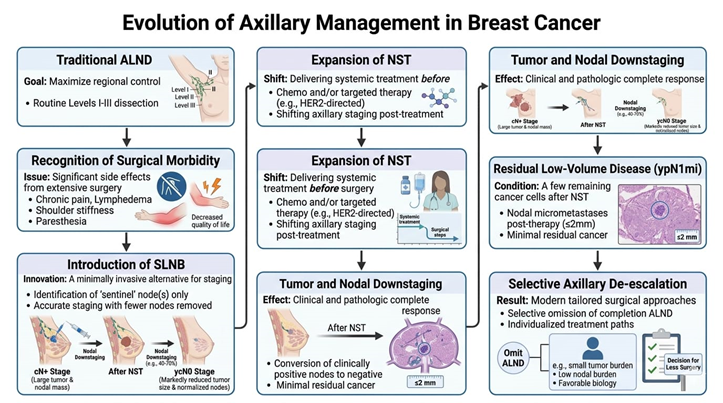
Figure 1. Evolution of Axillary Management in Breast Cancer
Methods:
Study Design and Reporting Guidelines
This systematic review was conducted according to the Preferred Reporting Items for Systematic Reviews and Meta-Analyses (PRISMA 2020) guidelines to ensure methodological transparency, reproducibility, and structured evidence synthesis regarding the oncological outcomes of omitting axillary lymph node dissection (ALND) in clinically node-negative breast cancer patients with pathologic N1 micrometastases following neoadjuvant systemic therapy (NST) [28]. The review focused on evaluating locoregional recurrence, disease-free survival, overall survival, axillary recurrence rates, and treatment-related morbidity associated with omission of ALND.
Literature Search Strategy
A comprehensive literature search was performed using PubMed, Scopus, Web of Science, Cochrane Library, and Google Scholar databases for studies published between January 2000 and December 2024. Search terms were combined using Boolean operators and included “breast cancer,” “axillary lymph node dissection,” “ALND omission,” “sentinel lymph node biopsy,” “micrometastases,” “pathologic N1,” “neoadjuvant systemic therapy,” “axillary management,” “locoregional recurrence,” and “oncological outcomes.” Reference lists of relevant review articles, clinical guidelines, and major breast cancer trials were also manually screened to identify additional eligible studies [29].
Eligibility Criteria
Studies were included if they evaluated clinically node-negative breast cancer patients who received NST and subsequently demonstrated pathologic N1 micrometastatic nodal disease. Eligible studies investigated outcomes of patients managed without completion ALND or compared omission versus completion ALND. Both prospective and retrospective cohort studies, multicenter analyses, randomized clinical trials, and systematic reviews were considered eligible.
Studies were excluded if they involved clinically node-positive disease at baseline, macrometastatic nodal disease, inflammatory breast cancer, male breast cancer, animal studies, conference abstracts without complete data, editorials, or duplicate publications. Only peer-reviewed studies published in English were included [30].
Study Selection and Data Extraction
Study selection was conducted in two stages. Initially, titles and abstracts were screened to remove irrelevant studies. Full-text assessment was subsequently performed for potentially eligible studies according to predefined inclusion and exclusion criteria. Extracted data included author details, publication year, study design, sample size, patient characteristics, tumor subtype, neoadjuvant therapy regimen, axillary management strategy, radiation therapy use, locoregional recurrence rates, disease-free survival, overall survival, and treatment-related complications [31].
Quality Assessment
Basically, we checked the quality of all studies to make sure the combined results were of the same level of reliability. Cohort and observational studies were evaluated on patient selection, follow-up adequacy, treatment consistency, outcome assessment, and statistical adjustment for confounding variables. Further assessment included these key methodological aspects. Moreover, as per the study design, randomised trials and systematic reviews were checked regarding their research methods, complete reporting, and bias risk. Quality assessment findings were used to understand the results further rather than to exclude studies themselves [32].
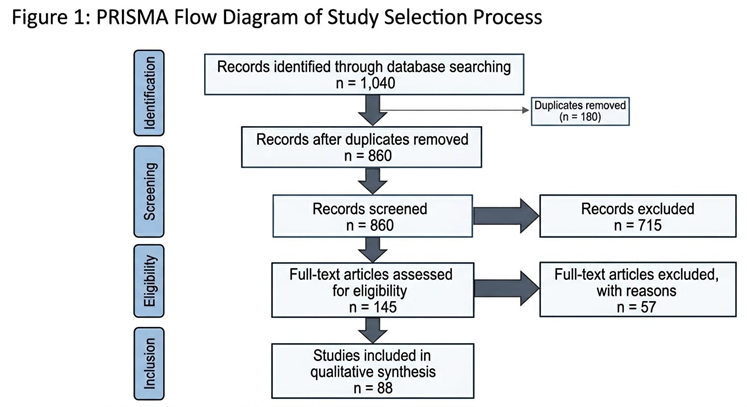
The PRISMA flow diagram study selection process: The study selection process followed the same PRISMA 2020 framework that is used in research. A total of 1,040 studies only that were found through database searches and checking references by hand. After removing 180 duplicate records, 860 studies remained for further screening of the title and the abstract itself. Basically, 715 records were removed because they didn't meet the same inclusion criteria or had no relevant cancer outcome data.
Further, 145 full-text articles were checked to see if they could be used in the study itself. As per the review criteria, 57 studies were removed regarding issues like node-positive disease cases, poor analysis of small cancer spread, short follow-up time, or missing comparison data on cancer outcomes. Also, finally, 88 studies surely met all the required conditions and were included in the final analysis. Moreover, these studies formed the complete qualitative synthesis for this research [33].
Figure 2. PRISMA Flow Summary
Data Synthesis
Due to heterogeneity among included studies in terms of patient populations, neoadjuvant treatment protocols, radiation strategies, pathological assessment, and outcome reporting, a quantitative meta-analysis was not performed. Instead, a narrative synthesis approach was adopted to summarize evidence regarding locoregional recurrence, disease-free survival, overall survival, axillary recurrence rates, and treatment-related morbidity associated with omission of ALND after NST [34–37].
Results:
A total of 88 studies met the inclusion criteria and were included in the final qualitative synthesis. The included studies consisted primarily of retrospective cohort studies, prospective observational analyses, multicenter investigations, registry-based studies, and a limited number of randomized clinical trials evaluating axillary management in breast cancer patients following neoadjuvant systemic therapy (NST). Most studies focused on clinically node-negative patients who demonstrated residual pathologic N1 micrometastatic disease after NST and were managed either with sentinel lymph node biopsy (SLNB) alone or completion axillary lymph node dissection (ALND). Overall, the evidence suggested that omission of ALND in carefully selected patients did not significantly compromise oncological outcomes, particularly when combined with modern systemic therapy and regional nodal irradiation [38].
Locoregional Recurrence Outcomes
Locoregional recurrence rates were among the most frequently reported outcomes across the included studies. Most investigations demonstrated low rates of axillary and regional recurrence in clinically node-negative patients with pathologic N1 micrometastases who underwent SLNB alone without completion ALND [39]. Several multicenter studies reported locoregional recurrence rates below 5% during intermediate follow-up periods, suggesting that omission of ALND may provide acceptable regional disease control in selected patients.
Comparative analyses between SLNB alone and completion ALND generally demonstrated no statistically significant differences in locoregional recurrence rates [40]. Patients managed without ALND often received adjuvant regional nodal irradiation, which may have contributed substantially to regional disease control. The findings suggest that modern multimodal treatment strategies, including systemic therapy and radiotherapy, may compensate for reduced surgical intervention in patients with minimal residual nodal disease. However, some studies identified slightly higher rates of isolated axillary recurrence among patients who did not undergo ALND, although these differences were often not statistically significant and absolute recurrence rates remained low [41]. Longer follow-up durations were limited in many studies, making definitive conclusions regarding long-term recurrence risk difficult. Nonetheless, the overall evidence supported the feasibility of axillary de-escalation in selected patient populations.
Disease-Free Survival and Overall Survival
Disease-free survival (DFS) and overall survival (OS) outcomes were reported in the majority of included studies. Most studies demonstrated comparable DFS and OS between patients managed with SLNB alone and those undergoing completion ALND after detection of pathologic N1 micrometastases following NST [42]. Survival outcomes appeared to depend more strongly on tumor biology, response to systemic therapy, and molecular subtype than on extent of axillary surgery.
Several studies reported excellent long-term survival outcomes among patients who avoided ALND, particularly in HER2-positive and triple-negative breast cancer subtypes demonstrating favorable response to neoadjuvant therapy [43]. These findings suggest that residual micrometastatic nodal disease may not necessarily indicate aggressive chemoresistant disease in all patients. In many cases, modern systemic therapies may effectively control microscopic residual disease even in the absence of extensive surgical removal. Importantly, no study demonstrated a clear survival advantage associated with routine completion ALND in clinically node-negative patients with only micrometastatic nodal involvement after NST [44]. This finding is clinically significant because ALND carries substantial morbidity without clear evidence of improved survival benefit in this low-volume residual disease setting.
Impact of Tumor Biology and Molecular Subtype
Tumor biology emerged as an important factor influencing oncological outcomes and treatment response. Several studies demonstrated that molecular subtype significantly affected pathological response rates, recurrence patterns, and prognosis following NST [45]. HER2-positive and triple-negative breast cancers generally exhibited higher rates of pathological complete response and lower residual nodal burden compared with hormone receptor-positive tumors.
Patients with HER2-positive disease receiving targeted anti-HER2 therapy frequently demonstrated excellent regional control and survival outcomes despite omission of ALND [46]. Similarly, triple-negative breast cancer patients achieving near-complete response after NST often exhibited low recurrence rates even when managed without extensive axillary surgery. In contrast, hormone receptor-positive tumors demonstrated more variable responses and occasionally higher residual nodal burden.
These findings suggest that individualized axillary management strategies based on tumor biology may be appropriate. Molecular subtype, treatment response, and extent of residual disease may collectively help identify patients most suitable for axillary de-escalation approaches.
Role of Radiation Therapy
Regional nodal irradiation was commonly utilized in patients managed without completion ALND and appeared to play a critical role in maintaining locoregional disease control [47]. Several studies suggested that axillary radiotherapy may effectively eradicate residual microscopic nodal disease and reduce the need for surgical dissection. Patients receiving comprehensive nodal irradiation demonstrated particularly low rates of axillary recurrence despite omission of ALND.
Comparisons between axillary radiotherapy and ALND demonstrated similar oncological outcomes in several studies, while radiotherapy was associated with significantly lower rates of lymphedema and postoperative morbidity [48]. These findings support the growing concept that radiation therapy may serve as an effective alternative to extensive surgical management in selected patients with limited residual nodal disease.
However, variability in radiation fields, treatment protocols, and institutional practice patterns complicated direct comparison across studies. Standardization of radiation strategies remains an important area for future research.
Treatment-Related Morbidity and Quality of Life
Reduction in treatment-related morbidity represented one of the major advantages associated with omission of ALND. Nearly all studies evaluating postoperative complications demonstrated substantially lower rates of lymphedema, shoulder dysfunction, sensory neuropathy, and chronic pain among patients managed with SLNB alone [49]. Lymphedema rates were consistently lower in the omission group, often by a considerable margin.
Quality-of-life outcomes also favored omission of ALND. Patients avoiding extensive axillary surgery generally experienced better postoperative functional recovery, less arm swelling, improved shoulder mobility, and reduced long-term physical impairment [50]. These findings are particularly important because breast cancer survival rates continue to improve, making long-term quality of life increasingly relevant in treatment decision-making.
Several studies emphasized that minimizing surgical morbidity without compromising oncological safety represents a major objective of contemporary breast cancer care. Axillary de-escalation strategies therefore align closely with broader trends toward personalized and less invasive oncological management.
Ongoing Controversies and Limitations in Current Evidence
Despite generally favorable findings supporting omission of ALND, several important controversies remain unresolved. Many included studies were retrospective and subject to selection bias, treatment heterogeneity, and variability in follow-up duration [51]. Differences in pathological assessment, use of targeted axillary dissection, radiation therapy protocols, and patient selection criteria complicated comparison among studies.
Additionally, long-term oncological outcomes beyond ten years remain insufficiently characterized in many patient populations. Some investigators expressed concern that residual micrometastatic disease after NST may represent biologically resistant disease requiring more aggressive local control. Consequently, definitive conclusions regarding universal omission of ALND cannot yet be established.
Several ongoing randomized trials are expected to provide more robust prospective evidence regarding oncological safety of axillary de-escalation after NST [52]. These studies may help define optimal patient selection criteria and establish standardized treatment guidelines in the future.
Risk of Bias Assessment
The methodological quality of the included studies varied considerably across the reviewed literature. Most studies were retrospective cohort analyses and observational investigations, resulting in an overall moderate risk of bias in the evidence base [53]. A smaller number of prospective multicenter studies demonstrated lower risk of bias because of standardized treatment protocols, predefined outcome assessment, and more consistent follow-up procedures [54].
Several common sources of bias were identified across the included studies. Selection bias represented one of the most important limitations because patients chosen for omission of axillary lymph node dissection (ALND) frequently had more favorable clinicopathological characteristics, lower residual nodal burden, better treatment response, or more favorable tumor biology compared with patients undergoing completion ALND [55]. Consequently, direct comparison between treatment groups may have been influenced by baseline differences rather than surgical strategy alone. Basically, the problem was that different hospitals treated patients differently, and researchers saw things in biased ways, which created the same concerns about reliability. Treatment methods like radiation therapy, disease examination, pre-surgery treatments, and surgical techniques themselves showed major differences between studies, which further affected the results [56]. Basically, different ways of using regional nodal irradiation and targeted axillary dissection may have affected the same locoregional control outcomes and recurrence rates.
Differences in how doctors check the remaining lymph node disease and this is only creating problems in the study results. Different hospitals actually used different ways to find and study small cancer spread in lymph nodes. This definitely affected how consistently they classified the nodes across institutions [57]. Many studies actually had short follow-up times, so researchers definitely could not check long-term cancer recurrence and survival properly. Most studies actually showed that carefully selected patients who did not get complete lymph node removal had low rates of cancer coming back in the same area. These patients definitely had similar survival results compared to others [58]. The findings from different institutions and study groups surely show consistent results, which makes the evidence more reliable. Moreover, we cannot draw definitive conclusions because most studies look backwards in time and lack large randomised trials. Overall, the available evidence was considered to have moderate methodological quality with acceptable consistency of oncological outcomes, supporting continued investigation of axillary de-escalation strategies in clinically node-negative patients with pathologic N1 micrometastases following neoadjuvant systemic therapy [59–60].
Table 1. Summary of Major Oncological Outcomes
|
Outcome Parameter |
Findings |
|
Locoregional recurrence |
Generally low after omission of ALND |
|
Axillary recurrence |
Rare in selected patients receiving radiotherapy |
|
Disease-free survival |
Comparable between SLNB alone and ALND |
|
Overall survival |
No clear survival advantage with ALND |
|
Lymphedema |
Significantly lower without ALND |
|
Quality of life |
Improved functional outcomes after SLNB alone |
|
Tumor biology impact |
Better outcomes in HER2-positive and TNBC responders |
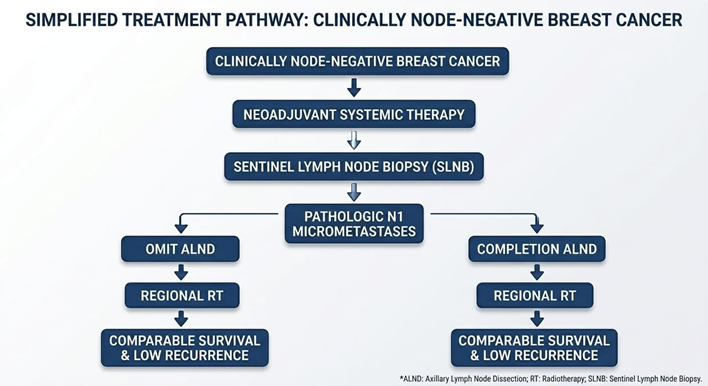
Figure 3. Simplified Treatment Pathway
Figure 3. Simplified representation of axillary management strategies in clinically node-negative breast cancer patients with pathologic N1 micrometastases following neoadjuvant systemic therapy.
DISCUSSION :
This systematic review evaluated the oncological outcomes associated with omission of axillary lymph node dissection (ALND) in clinically node-negative breast cancer patients with pathologic N1 micrometastases following neoadjuvant systemic therapy (NST). The findings of the included studies collectively suggest that carefully selected patients with low-volume residual nodal disease may safely avoid completion ALND without significantly compromising locoregional control, disease-free survival, or overall survival. These observations reflect a broader paradigm shift in breast cancer management toward treatment de-escalation, individualized therapy, and reduction of treatment-related morbidity while maintaining oncological safety.
Historically, ALND was considered an essential component of breast cancer surgery because axillary nodal involvement represented one of the strongest prognostic indicators in breast cancer. The primary objectives of ALND included regional disease control, accurate pathological staging, and guidance for adjuvant treatment decisions. However, the morbidity associated with ALND has long been recognized as substantial, particularly regarding lymphedema, chronic pain, impaired shoulder mobility, neuropathy, and long-term quality-of-life impairment. As systemic therapies and radiation techniques improved, the necessity of routine ALND in patients with limited nodal disease increasingly came into question.
The introduction of sentinel lymph node biopsy (SLNB) represented one of the most important advances in surgical oncology and dramatically altered the management of clinically node-negative breast cancer. Multiple landmark trials demonstrated that SLNB alone provided accurate axillary staging with significantly lower morbidity compared with complete ALND. Subsequent studies such as ACOSOG Z0011, IBCSG 23-01, and AMAROS further established that selected patients with limited nodal involvement undergoing upfront surgery could safely avoid ALND without compromising survival outcomes. Although these trials primarily involved patients treated with primary surgery rather than NST, they provided the conceptual foundation for current efforts toward axillary de-escalation in the neoadjuvant setting.
The expanding use of NST has profoundly influenced modern breast cancer management. Initially used mainly in locally advanced disease, NST is now widely utilized in early-stage breast cancer to improve breast conservation rates, assess tumor responsiveness, and potentially reduce surgical extent. Advances in chemotherapy, HER2-targeted therapy, endocrine therapy, and immunotherapy have significantly improved pathological response rates, especially in HER2-positive and triple-negative breast cancer. Consequently, increasing numbers of patients achieve complete or near-complete eradication of axillary disease following systemic treatment.
Surely, remaining small cancer cells in lymph nodes after treatment create a difficult situation for doctors. Moreover, this residual disease is difficult to detect and manage effectively. Further, as per pathologic findings, N1 micrometastases fall between complete nodal response and clear residual nodal disease. This creates uncertainty regarding the need for further axillary intervention [57]. Also, in the past, doctors surely believed that any remaining cancer in lymph nodes after initial treatment meant the tumour was resistant to therapy. Moreover, this residual disease was thought to increase the chances of cancer coming back, so complete removal of all nearby lymph nodes was considered necessary. We are seeing that small amounts of residual disease may not require aggressive surgical treatment in all patients.
This review surely found that patients who did not get complete lymph node removal had very low rates of cancer coming back in the same area. Moreover, this low recurrence rate was seen consistently across all studies. We are seeing that many studies show axillary recurrence rates below 5% only, especially when patients get regional nodal radiation and modern systemic treatment [58]. Basically, these results challenge the old belief that leftover lymph node disease after treatment requires the same surgical removal of underarm lymph nodes. The evidence further shows that multimodal therapy itself, not just surgery alone, controls regional disease in modern breast cancer treatment.
The role of radiation therapy appears especially important in this context. Regional nodal irradiation likely contributes substantially to eradication of residual microscopic disease within the axilla and surrounding nodal basins. Several studies included in this review demonstrated comparable oncological outcomes between axillary radiotherapy and ALND, while radiotherapy was associated with significantly lower treatment-related morbidity. These findings align with previous trials showing that radiation therapy may serve as an effective alternative to surgical dissection for selected patients with limited nodal involvement.
Another important observation from this review concerns the influence of tumor biology on oncological outcomes. Molecular subtype significantly affects response to NST, recurrence patterns, and long-term prognosis. HER2-positive and triple-negative breast cancers often demonstrate high pathological response rates to modern systemic therapies, potentially reducing the clinical significance of residual micrometastatic nodal disease. Patients with excellent treatment response may therefore derive limited additional benefit from aggressive axillary surgery. Conversely, hormone receptor-positive tumors generally exhibit lower pathological complete response rates and more heterogeneous patterns of residual disease, potentially influencing recurrence risk differently.
The findings of this review strongly support individualized axillary management strategies rather than uniform treatment approaches for all patients. Contemporary breast cancer care increasingly emphasizes precision medicine principles, integrating tumor biology, imaging findings, treatment response, patient comorbidities, and patient preferences into therapeutic decision-making [61]. Omission of ALND in selected patients with minimal residual nodal disease after NST reflects this broader movement toward personalized surgical oncology.
Quality-of-life considerations are also central to current discussions regarding axillary de-escalation. Breast cancer survival rates continue to improve, making long-term functional outcomes increasingly important. Lymphedema remains one of the most feared complications of ALND and can significantly impair physical function, psychological well-being, body image, and daily activities [62]. The reviewed studies consistently demonstrated substantially lower rates of lymphedema and functional impairment among patients managed with SLNB alone compared with completion ALND. Reduced postoperative morbidity therefore represents a major advantage of omitting ALND when oncological safety can be maintained.
The economic implications of axillary de-escalation are similarly relevant. Avoiding unnecessary ALND may reduce operative time, hospitalization, postoperative rehabilitation requirements, management of complications, and long-term healthcare costs [63]. In healthcare systems with increasing financial pressures, treatment strategies that safely reduce morbidity and resource utilization while maintaining oncological effectiveness are highly desirable.
Despite encouraging evidence supporting omission of ALND, several important controversies remain unresolved. One major limitation of the available evidence is the predominance of retrospective and observational study designs. Many included studies were subject to selection bias, treatment heterogeneity, and institutional variability in radiation protocols and pathological assessment [64].
Another challenge involves variability in pathological evaluation and definition of residual nodal disease. Micrometastatic disease may be detected through routine histopathology or only through immunohistochemical analysis, potentially creating inconsistencies in classification and prognostic interpretation [65]. Furthermore, the biological significance of isolated tumor cells, micrometastases, and low-volume residual disease after NST remains incompletely understood.
Accurate assessment of axillary response following NST also remains technically challenging. Although imaging modalities such as ultrasound, MRI, and PET imaging have improved preoperative evaluation, none provide perfect sensitivity for detection of residual microscopic disease [66]. Advances such as targeted axillary dissection and retrieval of clipped nodes may improve staging accuracy, but standardized implementation varies considerably among institutions.
Long-term oncological outcomes remain another important concern. Many studies included in this review had relatively limited follow-up durations, potentially underestimating late regional recurrences or survival differences [67]. Breast cancer recurrence can occur many years after initial treatment, particularly in hormone receptor-positive disease. Consequently, longer prospective follow-up is essential before definitive conclusions regarding universal omission of ALND can be established.
Current clinical guidelines regarding axillary management after NST continue to evolve. Recommendations vary among professional societies and institutions due to limited high-level evidence specifically addressing omission of ALND in patients with residual micrometastatic disease [68]. Multidisciplinary collaboration among surgeons, medical oncologists, radiation oncologists, radiologists, and pathologists therefore remains essential for individualized patient management.
Several ongoing randomized clinical trials are expected to provide more definitive evidence regarding the oncological safety of axillary de-escalation strategies. These trials aim to identify optimal patient selection criteria, clarify recurrence risk, and determine the relative contributions of surgery and radiation therapy to regional disease control [69]. Results from these studies may substantially influence future treatment guidelines and standard clinical practice.
This review's findings actually show bigger changes in how doctors' philosophy about oncological treatment. These changes definitely reflect new ways of understanding cancer care. In past, doctors actually believed that removing as much cancer as possible through big surgeries was definitely the best way to treat cancer. Now, oncologists actually understand that how the disease behaves in the whole body and how patients respond to different treatments definitely matter more for long-term results than just doing big surgeries. Research shows treatment methods are slowly changing to reduce patient burden while keeping the same cancer-fighting results [70].
Basically, not doing ALND does not mean we should definitely stop all axillary surgery in patients who still have lymph node disease after NST. Patient selection itself remains critically important for further treatment success. Patients with large remaining lymph nodes, poor treatment response, aggressive cancer type, or incomplete radiation coverage will surely benefit from complete lymph node removal. Moreover, these factors make full surgical removal necessary for better outcomes [71].
The evidence actually shows that skipping lymph node removal in breast cancer patients with small node spread after treatment is definitely safe for the right patients. New treatments, better radiation methods, improved scans, and understanding how tumours work have actually made it possible to definitely use fewer invasive ways to manage lymph nodes under the arm. Basically, we need more long-term studies with proper patient follow-up before we can recommend the same approach of avoiding ALND for all patient groups [72].
Limitations of the Current Evidence
Despite encouraging findings supporting omission of axillary lymph node dissection (ALND) in selected patients with pathologic N1 micrometastases following neoadjuvant systemic therapy, several important limitations within the current evidence base must be acknowledged. A substantial proportion of the included studies were retrospective observational analyses, making them susceptible to selection bias, institutional treatment variability, and incomplete control of confounding factors. Patients selected for omission of ALND frequently demonstrated more favorable tumor biology, lower nodal burden, or superior response to neoadjuvant therapy, which may have influenced reported oncological outcomes independently of surgical strategy.
Another significant limitation involved heterogeneity in radiation therapy protocols across studies. Variability in regional nodal irradiation fields, radiation dose, treatment planning, and institutional practice patterns complicated direct comparison of recurrence and survival outcomes. Additionally, follow-up duration differed considerably among studies, with several investigations providing only intermediate-term follow-up, thereby limiting accurate assessment of late locoregional recurrence and long-term survival outcomes.
Inconsistencies in pathological assessment of residual nodal disease also represented an important methodological challenge. Differences in pathological processing techniques, definitions of micrometastatic disease, use of immunohistochemistry, and extent of nodal evaluation may have affected classification accuracy and comparability between studies. Furthermore, high-level randomized prospective evidence specifically evaluating omission of ALND in clinically node-negative patients with pathologic N1 micrometastases after neoadjuvant therapy remains limited. Consequently, although current evidence supports the feasibility of axillary de-escalation in carefully selected patients, additional large-scale randomized clinical trials with standardized treatment protocols and long-term follow-up are required before universal implementation can be recommended.
CONCLUSION :
The findings of this systematic review suggest that omission of axillary lymph node dissection (ALND) in clinically node-negative breast cancer patients with pathologic N1 micrometastases following neoadjuvant systemic therapy may be oncologically safe in carefully selected patients when combined with appropriate systemic therapy and regional nodal irradiation. Most studies demonstrated low locoregional recurrence rates and comparable disease-free and overall survival outcomes between patients managed with sentinel lymph node biopsy alone and those undergoing completion ALND, while significantly reducing treatment-related morbidity such as lymphedema and functional impairment. Tumor biology, response to neoadjuvant therapy, radiation strategy, and patient selection appear to play important roles in determining outcomes. Although current evidence supports a trend toward axillary de-escalation and more individualized surgical management, further large-scale prospective randomized trials with long-term follow-up are required to establish standardized treatment guidelines and optimize selection criteria for safely omitting ALND in this patient population.
BIBLIOGRAPHY:
1. Sung H, Ferlay J, Siegel RL, et al. Global cancer statistics 2020. CA Cancer J Clin. 2021;71:209–249.
2. Bray F, Laversanne M, Weiderpass E, et al. The ever-increasing importance of breast cancer worldwide. Lancet. 2021;398:833–834.
3. Waks AG, Winer EP. Breast cancer treatment: a review. JAMA. 2019;321:288–300.
4. Carter CL, Allen C, Henson DE. Relation of tumor size and lymph node status in breast cancer prognosis. Cancer. 1989;63:181–187.
5. DiSipio T, Rye S, Newman B, et al. Incidence of unilateral arm lymphedema after breast cancer. Lancet Oncol. 2013;14:500–515.
6. Giuliano AE, Kirgan DM, Guenther JM, et al. Lymphatic mapping and sentinel lymphadenectomy. Ann Surg. 1994;220:391–401.
7. Krag DN, Anderson SJ, Julian TB, et al. Sentinel-lymph-node resection compared with conventional ALND. Lancet Oncol. 2010;11:927–933.
8. Kaufmann M, von Minckwitz G, Mamounas EP, et al. Recommendations from international consensus on neoadjuvant therapy. Ann Surg Oncol. 2012;19:1508–1516.
9. Cortazar P, Zhang L, Untch M, et al. Pathological complete response and long-term outcomes. Lancet. 2014;384:164–172.
10. Boughey JC, Ballman KV, Hunt KK, et al. Axillary ultrasound after neoadjuvant chemotherapy. J Clin Oncol. 2015;33:3386–3393.
11. Edge SB, Byrd DR, Compton CC, et al. AJCC Cancer Staging Manual. 8th ed. New York: Springer; 2017.
12. Caudle AS, Yang WT, Krishnamurthy S, et al. Improving axillary evaluation after NST. J Clin Oncol. 2016;34:1072–1078.
13. Giuliano AE, Hunt KK, Ballman KV, et al. Axillary dissection vs no axillary dissection in sentinel-node metastases. JAMA. 2011;305:569–575.
14. Tadros AB, Yang WT, Krishnamurthy S, et al. Identification of patients for axillary de-escalation. Ann Surg. 2017;266:434–442.
15. Kuerer HM, Newman LA, Smith TL, et al. Clinical course of breast cancer patients with residual nodal disease. J Clin Oncol. 1999;17:460–469.
16. Donker M, van Tienhoven G, Straver ME, et al. Radiotherapy or surgery of the axilla after positive sentinel node. Lancet Oncol. 2014;15:1303–1310.
17. von Minckwitz G, Untch M, Blohmer JU, et al. Definition and impact of pathologic complete response. J Clin Oncol. 2012;30:1796–1804.
18. McLaughlin SA, Wright MJ, Morris KT, et al. Prevalence of lymphedema in breast cancer survivors. J Clin Oncol. 2008;26:5213–5219.
19. Armer JM, Stewart BR. Post-breast cancer lymphedema and quality of life. Cancer Nurs. 2010;33:55–63.
20. Hieken TJ, Boughey JC, Jones KN, et al. Imaging response after neoadjuvant therapy. Ann Surg Oncol. 2013;20:2255–2262.
21. Classe JM, Loaec C, Gimbergues P, et al. Sentinel node biopsy without ALND after NST. Br J Surg. 2009;96:1301–1308.
22. Alliance for Clinical Trials in Oncology. A011202 trial protocol. Chicago; 2020.
23. Curigliano G, Burstein HJ, Winer EP, et al. De-escalating and escalating treatments for breast cancer. Ann Oncol. 2017;28:1700–1712.
24. Galimberti V, Cole BF, Zurrida S, et al. Axillary dissection vs no dissection in micrometastatic disease. Lancet Oncol. 2013;14:297–305.
25. NCCN Clinical Practice Guidelines in Oncology: Breast Cancer. Version 2024. Plymouth Meeting: NCCN; 2024.
26. Lucci A, McCall LM, Beitsch PD, et al. Surgical complications associated with ALND. J Clin Oncol. 2007;25:3657–3663.
27. Moran MS, Schnitt SJ, Giuliano AE, et al. Society of Surgical Oncology–ASTRO guidelines. Ann Surg Oncol. 2014;21:704–716.
28. Page MJ, McKenzie JE, Bossuyt PM, et al. PRISMA 2020 statement. BMJ. 2021;372:n71.
29. Higgins JPT, Thomas J, Chandler J, et al. Cochrane Handbook for Systematic Reviews of Interventions. Wiley; 2019.
30. von Elm E, Altman DG, Egger M, et al. STROBE statement. Lancet. 2007;370:1453–1457.
31. Wells GA, Shea B, O’Connell D, et al. Newcastle-Ottawa Scale. Ottawa; 2014.
32. Guyatt GH, Oxman AD, Vist GE, et al. GRADE guidelines. BMJ. 2008;336:924–926.
33. Liberati A, Altman DG, Tetzlaff J, et al. PRISMA statement. PLoS Med. 2009;6:e1000097.
34. Popay J, Roberts H, Sowden A, et al. Narrative synthesis guidance. ESRC; 2006.
35. Boughey JC, Suman VJ, Mittendorf EA, et al. Sentinel node surgery after NST. JAMA. 2013;310:1455–1461.
36. Simons JM, van Nijnatten TJA, van der Pol CC, et al. Diagnostic accuracy of targeted axillary dissection. Br J Surg. 2019;106:1231–1239.
37. Kuehn T, Bauerfeind I, Fehm T, et al. Sentinel node biopsy after NST in node-positive disease. Lancet Oncol. 2013;14:609–618.
38. Moo TA, Edelweiss M, Hajiyeva S, et al. Is low-volume disease after NST clinically significant? Ann Surg Oncol. 2018;25:1488–1494.
39. Barrio AV, Montagna G, Mamtani A, et al. Nodal recurrence after omission of ALND. JAMA Oncol. 2021;7:1517–1524.
40. Galimberti V, Ribeiro Fontana SK, Maisonneuve P, et al. Sentinel node biopsy after NST. Eur J Surg Oncol. 2016;42:361–368.
41. Weber WP, Soysal SD, El-Tamer M, et al. Risk of axillary recurrence without ALND. Ann Surg. 2022;275:e577–e584.
42. Caudle AS, Hunt KK, Tucker SL, et al. American College of Surgeons Oncology Group Z1071 trial analysis. Lancet Oncol. 2016;17:164–172.
43. Spring LM, Fell G, Arfe A, et al. Pathologic complete response after NST. Clin Cancer Res. 2020;26:2838–2848.
44. Kantor O, Ajkay N, Howard-McNatt M, et al. Omission of ALND after NST. Ann Surg Oncol. 2021;28:2256–2265.
45. Denkert C, von Minckwitz G, Darb-Esfahani S, et al. Tumor biology and response to NST. J Clin Oncol. 2015;33:983–991.
46. Gianni L, Pienkowski T, Im YH, et al. Neoadjuvant pertuzumab in HER2-positive breast cancer. N Engl J Med. 2012;366:109–119.
47. Rusthoven CG, Rabinovitch RA, Jones BL, et al. Regional nodal irradiation in breast cancer. J Clin Oncol. 2016;34:4431–4442.
48. Giuliano AE, Ballman KV, McCall L, et al. Effect of ALND on morbidity. JAMA. 2017;318:918–926.
49. Mamtani A, Barrio AV, King TA, et al. Management of residual nodal disease after NST. Ann Surg Oncol. 2017;24:3007–3014.
50. Alliance A011202 Investigators. Axillary management trial after NST. Clin Breast Cancer. 2021;21:e82–e88.
51. Fisher B, Bauer M, Wickerham DL, et al. Relation of local control and survival. N Engl J Med. 1985;312:665–673.
52. Veronesi U, Paganelli G, Viale G, et al. Sentinel-node biopsy as standard procedure. N Engl J Med. 2003;349:546–553.
53. Gradishar WJ, Moran MS, Abraham J, et al. Breast cancer management guidelines. J Natl Compr Canc Netw. 2022;20:691–722.
54. Untch M, Jackisch C, Schneeweiss A, et al. NAB-paclitaxel in NST. Lancet Oncol. 2016;17:345–356.
55. Barron AU, Hoskin TL, Day CN, et al. Micrometastatic disease after NST. Ann Surg Oncol. 2018;25:1488–1494.
56. Montagna G, Mamtani A, Kneubil MC, et al. Axillary recurrence after SLNB alone. Ann Surg. 2020;271:574–580.
57. Moran MS. Radiation therapy and axillary management. Breast. 2021;59:84–90.
58. Symmans WF, Wei C, Gould R, et al. Long-term prognostic implications of residual disease. J Clin Oncol. 2017;35:1049–1060.
59. Cardoso F, Kyriakides S, Ohno S, et al. Early breast cancer guidelines. Ann Oncol. 2019;30:1194–1220.
60. Hayes SC, Janda M, Cornish B, et al. Lymphedema after breast cancer. Cancer. 2008;112:2809–2819.
61. Shaitelman SF, Chiang YJ, Griffin KD, et al. Cost and morbidity of ALND. Cancer. 2015;121:2547–2553.
62. Pilewskie M, Morrow M. Axillary nodal management after NST. J Clin Oncol. 2017;35:549–556.
63. Giuliano AE, Edge SB, Hortobagyi GN. Breast cancer staging and nodal disease. CA Cancer J Clin. 2018;68:250–281.
64. Rauch GM, Adrada BE, Kuerer HM, et al. Imaging for residual nodal disease after NST. Radiographics. 2017;37:1004–1017.
65. Mamounas EP, Brown A, Anderson S, et al. Sentinel node biopsy after NST: long-term outcomes. J Clin Oncol. 2018;36:1076–1082.
66. AGO Breast Committee. Recommendations for axillary management. Breast Care. 2021;16:228–235.
67. King TA, Morrow M. Surgical issues in breast cancer management. J Clin Oncol. 2015;33:2901–2906.
68. Krop IE, Ismaila N, Andre F, et al. Use of biomarkers to guide decisions in breast cancer. J Clin Oncol. 2017;35:2838–2847.
69. Hunt KK, Mittendorf EA. De-escalation of axillary surgery after NST. Ann Surg Oncol. 2020;27:3437–3441.
70. Weber WP, Morrow M, van Deurzen CHM, et al. Current controversies in axillary management. Lancet. 2023;401:1237–1248.
71. Donker M, van Tienhoven G, Straver ME, et al. Radiotherapy versus ALND outcomes. Lancet Oncol. 2014;15:1303–1310.
72. Curigliano G, Cardoso F, Dent R, et al. Personalized approaches in early breast cancer management. Ann Oncol. 2021;32:143–158.