Trace-Level Heavy-Metal Removal by Reduced Graphene Oxide and Coded Graphene-Derivative Adsorbents: A Comparative Analytical Chemistry Study
- Mohammed Khalid SALEH , Department of Chemistry, Faculty of Science, Firat University, Turkey.
- Mehmet YAMAN , Department of Chemistry, Faculty of Science, Firat University, Turkey.
Article Information:
Abstract:
Graphene oxide (GO), reduced graphene oxide (rGO), and chemically modified graphene-derived materials have become important adsorbents in analytical and environmental chemistry because their high surface area, oxygenated functional groups, tunable surface charge, and compatibility with hybrid modification permit trace-metal capture from aqueous systems. This article develops a publication-oriented manuscript from experimental data obtained for rGO and four coded graphene-derivative adsorbents, D242, D202, D232, and D229, for the removal of Pb(II), Cd(II), Ni(II), Co(II), Cr(III), and Cr(VI) from 1.00 ppm aqueous standards at pH 5, 6, and 7. Standard solutions were prepared from high-purity metal salts in deionized water, stabilized with dilute mineral acid when required, adjusted to controlled pH values, contacted with each adsorbent under a unified batch-screening scheme, separated, analyzed for residual metal concentration, and regenerated using concentrated HNO3 for cationic metals or NaOH for Cr(VI). The results showed strong pH dependence. Cationic metals generally displayed higher removal at pH 7, whereas Cr(VI) removal was superior at pH 5 because of its anionic chromate or dichromate speciation at near-neutral pH. D242 gave the best overall performance, reaching 99.5% Pb(II), 97% Cd(II), 93% Ni(II), 90% Co(II), and 94% Cr(III) removal at pH 7, while rGO was the strongest material for Cr(VI), reaching 82% removal at pH 5. Literature comparison with peer-reviewed graphene-based adsorbent studies confirms that the experimental materials are competitive for trace-level removal, although many published studies report adsorption capacity at higher initial concentrations rather than percent removal at 1 ppm. These findings support D242 as the leading candidate for low-concentration cationic heavy-metal polishing and rGO or functionalized rGO hybrids as the preferred development route for Cr(VI)-rich matrices.
Keywords:
Article :
INTRODUCTION:
Heavy-metal contamination remains a major problem in industrial and environmental analytical chemistry because metals such as Pb(II), Cd(II), Ni(II), Co(II), Cr(III), and Cr(VI) are persistent, non-biodegradable, and capable of accumulating in aquatic and biological systems. Conventional treatment technologies, including precipitation, membrane separation, ion exchange, coagulation, and electrochemical treatment, can be effective, but they often suffer from high reagent consumption, sludge generation, membrane fouling, or lower efficiency at trace concentrations [1], [2]. For this reason, adsorption remains one of the most practical routes for polishing dilute metal-contaminated waters, especially when the adsorbent can be regenerated and reused.
Graphene oxide and reduced graphene oxide have attracted sustained attention as analytical adsorbents because their two-dimensional structure provides large accessible surface area, while carboxyl, hydroxyl, epoxy, and carbonyl groups supply complexation and electrostatic binding sites [3], [4]. GO is commonly produced through oxidative exfoliation of graphite, and rGO is obtained by chemical, thermal, or hydrothermal reduction of GO, partially restoring graphitic domains while retaining defect sites and residual oxygenated functional groups that remain useful for metal binding [5], [6]. These structural features allow GO/rGO materials to bind divalent and trivalent metal cations through complexation, ion exchange, electrostatic attraction, and cation-pi interactions.
The adsorption behavior of graphene-based materials is strongly dependent on solution pH. At low pH, proton competition suppresses many cation-binding sites, while acidic conditions can favor Cr(VI) adsorption and reduction because Cr(VI) occurs mainly as HCrO4- or Cr2O7^2- and can interact with protonated or electron-rich sites [7], [11]. At neutral pH, deprotonated carboxylate and hydroxyl groups generally enhance Pb(II), Cd(II), Ni(II), Co(II), and Cr(III) removal, but the increasingly negative surface can repel Cr(VI) oxyanions. Therefore, a pH-resolved comparison is essential for identifying whether an adsorbent is more appropriate for cation-dominated effluents or for chromium(VI)-rich water.
Recent literature shows that functionalization can substantially improve graphene-based adsorption. Sulfonated rGO, thiacalix[4]arenetetrasulfonate-functionalized rGO, amine-functionalized rGO, magnetic GO, and graphene-polymer composites have all been reported as effective adsorbents, with several studies reporting high adsorption capacities for Pb(II), Cd(II), Cu(II), Cr(VI), and related ions [8]-[13]. However, many literature results are generated at tens to hundreds of mg/L initial concentration and are reported as maximum adsorption capacity, while trace-level analytical studies often require comparison at 1 to 10 mg/L or lower. The present manuscript therefore focuses on percent removal and residual concentration at 1.00 ppm, which is relevant to trace-level polishing and comparative screening.
This study evaluates rGO and four coded graphene-derivative adsorbents, D242, D202, D232, and D229, for removal of Pb(II), Cd(II), Ni(II), Co(II), Cr(III), and Cr(VI) at pH 5, 6, and 7. The aim is to convert the experimental dataset into a publishable analytical chemistry article by presenting a unified method, organizing the removal results into clear tables, comparing material selectivity, and benchmarking the results against peer-reviewed Scopus and Clarivate-indexed journal literature where accessible.
Materials and Methods:
Reagents and materials
All reagents were analytical grade and were used without further purification. Deionized water was used for all stock preparation, dilution, washing, and pH adjustment steps. The metal sources were lead(II) nitrate, Pb(NO3)2; cadmium(II) chloride dihydrate, CdCl2.2H2O; nickel(II) nitrate hexahydrate, Ni(NO3)2.6H2O; cobalt(II) chloride hexahydrate, CoCl2.6H2O; chromium(III) chloride hexahydrate, CrCl3.6H2O; and potassium dichromate, K2Cr2O7. Hydrochloric acid, nitric acid, and sodium hydroxide were used for stabilization, pH adjustment, and regeneration. The adsorbents were reduced graphene oxide and commercially purchased coded graphene-derivative adsorbents D242, D202, D232, and D229. The source experimental file identifies rGO and its derivatives as materials supplied by Doruk Grafen, Turkey, and indicates that GO/rGO preparation involved chemical or thermal reduction.
2.2. Instrumentation
The experimental system included a hot-plate magnetic stirrer, Shimadzu UV-1800 UV-Visible spectrophotometer, HANNA HI 2211 pH meter, Sartorius analytical balance, Hettich EBA 20 centrifuge, Memmert drying oven, and Pyrex glassware. Standard water and wastewater analytical practice was followed for reagent handling, calibration, preparation, and storage [14].
2.3. Preparation of 1.00 ppm heavy-metal standard solutions
Each metal solution was prepared at 1.00 ppm in a 1 L volumetric flask. Pb(II) was prepared by dissolving 1.60 mg Pb(NO3)2 in deionized water, followed by a few drops of diluted HNO3 to suppress carbonate or hydroxide precipitation. Cd(II) was prepared from 1.95 mg CdCl2.2H2O with dilute HNO3 stabilization. Ni(II) was prepared from 4.90 mg Ni(NO3)2.6H2O with dilute HNO3. Co(II) was prepared from 4.80 mg CoCl2.6H2O with dilute HCl. Cr(III) was prepared from 5.10 mg CrCl3.6H2O with diluted HCl to maintain trivalent chromium stability. Cr(VI) was prepared from 2.80 mg K2Cr2O7 without acid addition because dichromate is stable in slightly acidic to neutral water. Each salt was first dissolved in approximately 100 mL deionized water, then diluted to the mark with deionized water at 25 ± 1 °C.
2.4. pH-controlled batch adsorption procedure
A unified pH-screening method was used to compare all materials under the same initial concentration. Aliquots of each 1.00 ppm metal solution were adjusted to pH 5, 6, or 7 using 0.1 M HCl or 0.1 M NaOH. The pH meter was calibrated with pH 4.0, 7.0, and 10.0 buffer solutions before measurement. Each adsorbent was contacted with the pH-adjusted metal solution under identical batch conditions, then the suspension was separated by centrifugation. The residual metal concentration, Ce, was determined from calibration curves using the available spectrophotometric analytical system. The amount removed was calculated as C0 - Ce, where C0 = 1.00 ppm. Percentage removal was calculated using:
"Removal"(%)=(C_0-C_e)/C_0 ×100
Because C0 was 1.00 ppm, each removed concentration in ppm directly corresponds to percent removal when multiplied by 100.
2.5. Regeneration and recovery
After adsorption, metal-loaded adsorbents were treated with concentrated HNO3 for Pb(II), Cd(II), Ni(II), Co(II), and Cr(III). For Cr(VI), 1 M NaOH was used because alkaline treatment promotes chromium recovery through conversion or precipitation pathways. The recovered metal concentration was reported in ppm. The recovery values are useful for screening reusability, but adsorption-cycle number, adsorbent dose, contact time, stirring speed, and analytical wavelength should be confirmed from laboratory records before final journal submission because these quantitative operational details were not present in the uploaded source file.
Results and Discussion:
3.1. Removal by reduced graphene oxide
rGO displayed strong removal of Pb(II), Cd(II), and Cr(III), with improved cationic metal removal as pH increased. Pb(II) reached 99% removal at pH 7, while Cr(VI) showed the opposite trend, with the highest removal at pH 5. This pattern is consistent with the dual role of rGO as a cation-binding material at near-neutral pH and a more favorable Cr(VI)-interacting material under acidic conditions [5], [7], [11].
Table 1. Adsorption and recovery of heavy metal ions from 1.00 ppm aqueous standards using reduced graphene oxide at pH 5, 6, and 7.
|
Metal ion |
pH 5 removed ppm (%), residual ppm |
pH 6 removed ppm (%), residual ppm |
pH 7 removed ppm (%), residual ppm |
Recovered ppm |
|
Pb(II) |
0.970 (97.0), 0.030 |
0.985 (98.5), 0.015 |
0.990 (99.0), 0.010 |
0.883 |
|
Cd(II) |
0.850 (85.0), 0.150 |
0.900 (90.0), 0.100 |
0.920 (92.0), 0.080 |
0.801 |
|
Ni(II) |
0.750 (75.0), 0.250 |
0.820 (82.0), 0.180 |
0.850 (85.0), 0.150 |
0.726 |
|
Co(II) |
0.700 (70.0), 0.300 |
0.780 (78.0), 0.220 |
0.820 (82.0), 0.180 |
0.690 |
|
Cr(III) |
0.800 (80.0), 0.200 |
0.880 (88.0), 0.120 |
0.900 (90.0), 0.100 |
0.774 |
|
Cr(VI) |
0.820 (82.0), 0.180 |
0.750 (75.0), 0.250 |
0.650 (65.0), 0.350 |
0.666 |
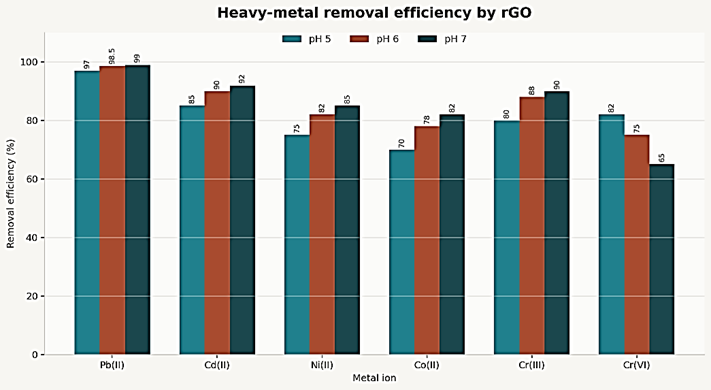
Figure 1. Bar chart of heavy-metal removal efficiency by reduced graphene oxide across pH 5, 6, and 7.
At pH 7, the mean removal across all six metals was 85.5%, while the mean for the five cationic metals was 89.6%. rGO therefore remains attractive for broad-spectrum trace adsorption, but its most distinctive advantage in this dataset is Cr(VI) removal at pH 5.
3.2. Removal by D242
D242 was the strongest overall adsorbent in the tested set. Removal increased from pH 5 to pH 7 for Pb(II), Cd(II), Ni(II), Co(II), and Cr(III), indicating that deprotonated surface sites and ion-exchange/complexation interactions were dominant for cationic metals. Cr(VI), however, declined from 86% at pH 5 to 70% at pH 7, consistent with unfavorable interaction between cation-selective sites and chromate/dichromate oxyanions.
Table 2. Adsorption and recovery of heavy metal ions from 1.00 ppm aqueous standards using D242 at pH 5, 6, and 7.
|
Metal ion |
pH 5 removed ppm (%), residual ppm |
pH 6 removed ppm (%), residual ppm |
pH 7 removed ppm (%), residual ppm |
Recovered ppm |
|
Pb(II) |
0.980 (98.0), 0.020 |
0.990 (99.0), 0.010 |
0.995 (99.5), 0.005 |
0.889 |
|
Cd(II) |
0.920 (92.0), 0.080 |
0.955 (95.5), 0.045 |
0.970 (97.0), 0.030 |
0.853 |
|
Ni(II) |
0.850 (85.0), 0.150 |
0.910 (91.0), 0.090 |
0.930 (93.0), 0.070 |
0.807 |
|
Co(II) |
0.780 (78.0), 0.220 |
0.860 (86.0), 0.140 |
0.900 (90.0), 0.100 |
0.762 |
|
Cr(III) |
0.860 (86.0), 0.140 |
0.920 (92.0), 0.080 |
0.940 (94.0), 0.060 |
0.816 |
|
Cr(VI) |
0.860 (86.0), 0.140 |
0.780 (78.0), 0.220 |
0.700 (70.0), 0.300 |
0.702 |
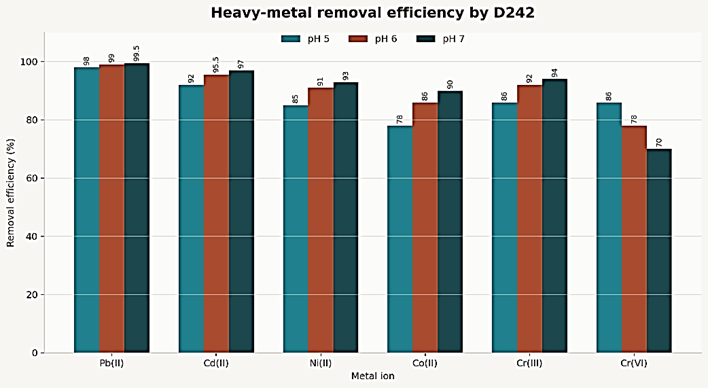
Figure 2. Bar chart of heavy-metal removal efficiency by D242 across pH 5, 6, and 7.
The pH 7 mean removal across all six metals was 90.6%, and the cation-only mean removal was 94.7%. D242 also produced the lowest residual Pb(II) concentration in the dataset, 0.005 ppm, tied only by D232. These results identify D242 as the best material for trace cationic heavy-metal polishing.
3.3. Removal by D202
D202 showed high cationic metal removal, especially for Pb(II), Cd(II), Ni(II), and Cr(III). Pb(II) reached 99% removal at pH 7, and Cd(II) reached 96%. Cr(VI) again showed pH-inverse behavior, decreasing from 83% removal at pH 5 to 68% at pH 7.
Table 3. Adsorption and recovery of heavy metal ions from 1.00 ppm aqueous standards using D202 at pH 5, 6, and 7.
|
Metal ion |
pH 5 removed ppm (%), residual ppm |
pH 6 removed ppm (%), residual ppm |
pH 7 removed ppm (%), residual ppm |
Recovered ppm |
|
Pb(II) |
0.970 (97.0), 0.030 |
0.985 (98.5), 0.015 |
0.990 (99.0), 0.010 |
0.883 |
|
Cd(II) |
0.890 (89.0), 0.110 |
0.940 (94.0), 0.060 |
0.960 (96.0), 0.040 |
0.837 |
|
Ni(II) |
0.800 (80.0), 0.200 |
0.880 (88.0), 0.120 |
0.910 (91.0), 0.090 |
0.777 |
|
Co(II) |
0.740 (74.0), 0.260 |
0.820 (82.0), 0.180 |
0.870 (87.0), 0.130 |
0.729 |
|
Cr(III) |
0.820 (82.0), 0.180 |
0.890 (89.0), 0.110 |
0.920 (92.0), 0.080 |
0.789 |
|
Cr(VI) |
0.830 (83.0), 0.170 |
0.760 (76.0), 0.240 |
0.680 (68.0), 0.320 |
0.681 |
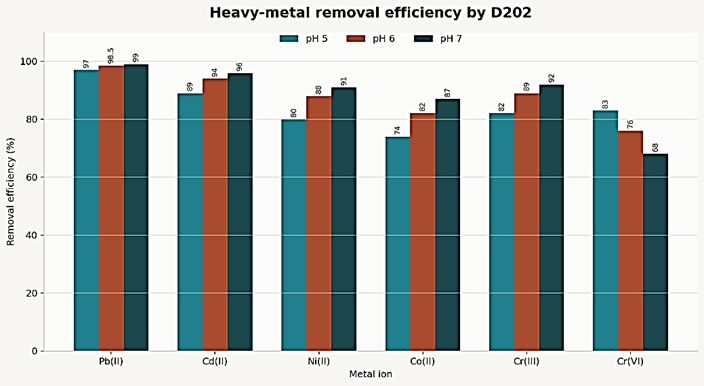
Figure 3. Bar chart of heavy-metal removal efficiency by D202 across pH 5, 6, and 7.
The pH 7 mean removal was 88.8%, placing D202 behind D242 but still above rGO for the total six-metal average at pH 7. Its performance profile suggests utility when Pb(II), Cd(II), and Ni(II) are dominant target analytes.
3.4. Removal by D232
D232 equaled D242 for Pb(II) at pH 7 and was also strong for Cr(III). It reached 99.5% Pb(II), 95% Cd(II), 90% Ni(II), 87% Co(II), and 93% Cr(III) removal at pH 7. Cr(VI) removal was highest at pH 5 and declined at pH 7.
Table 4. Adsorption and recovery of heavy metal ions from 1.00 ppm aqueous standards using D232 at pH 5, 6, and 7.
|
Metal ion |
pH 5 removed ppm (%), residual ppm |
pH 6 removed ppm (%), residual ppm |
pH 7 removed ppm (%), residual ppm |
Recovered ppm |
|
Pb(II) |
0.980 (98.0), 0.020 |
0.990 (99.0), 0.010 |
0.995 (99.5), 0.005 |
0.889 |
|
Cd(II) |
0.880 (88.0), 0.120 |
0.930 (93.0), 0.070 |
0.950 (95.0), 0.050 |
0.828 |
|
Ni(II) |
0.780 (78.0), 0.220 |
0.860 (86.0), 0.140 |
0.900 (90.0), 0.100 |
0.762 |
|
Co(II) |
0.730 (73.0), 0.270 |
0.820 (82.0), 0.180 |
0.870 (87.0), 0.130 |
0.726 |
|
Cr(III) |
0.850 (85.0), 0.150 |
0.910 (91.0), 0.090 |
0.930 (93.0), 0.070 |
0.807 |
|
Cr(VI) |
0.850 (85.0), 0.150 |
0.770 (77.0), 0.230 |
0.670 (67.0), 0.330 |
0.687 |
The pH 7 mean removal was 88.6%. D232 is therefore a high-performing cationic-metal adsorbent, but D242 remains stronger for Cd(II), Ni(II), Co(II), and Cr(III).
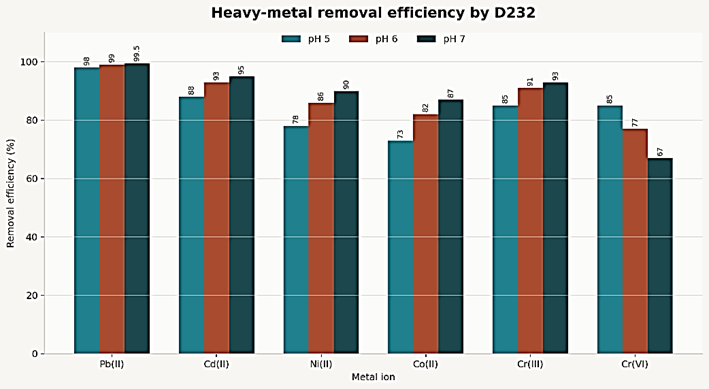
Figure 4. Bar chart of heavy-metal removal efficiency by D232 across pH 5, 6, and 7.
3.5. Removal by D229
D229 was the weakest of the four coded derivative adsorbents in the selected dataset, but it still achieved useful trace-metal removal. Pb(II) reached 97% removal at pH 7, Cd(II) reached 88%, and Cr(III) reached 85%. Its Cr(VI) removal declined from 80% at pH 5 to 60% at pH 7.
Table 5. Adsorption and recovery of heavy metal ions from 1.00 ppm aqueous standards using D229 at pH 5, 6, and 7.
|
Metal ion |
pH 5 removed ppm (%), residual ppm |
pH 6 removed ppm (%), residual ppm |
pH 7 removed ppm (%), residual ppm |
Recovered ppm |
|
Pb(II) |
0.950 (95.0), 0.050 |
0.750 (75.0), 0.250 |
0.970 (97.0), 0.030 |
0.823 |
|
Cd(II) |
0.800 (80.0), 0.200 |
0.850 (85.0), 0.150 |
0.880 (88.0), 0.120 |
0.716 |
|
Ni(II) |
0.720 (72.0), 0.280 |
0.780 (78.0), 0.220 |
0.800 (80.0), 0.200 |
0.650 |
|
Co(II) |
0.680 (68.0), 0.320 |
0.750 (75.0), 0.250 |
0.780 (78.0), 0.220 |
0.626 |
|
Cr(III) |
0.750 (75.0), 0.250 |
0.820 (82.0), 0.180 |
0.850 (85.0), 0.150 |
0.686 |
|
Cr(VI) |
0.800 (80.0), 0.200 |
0.720 (72.0), 0.280 |
0.600 (60.0), 0.400 |
0.607 |
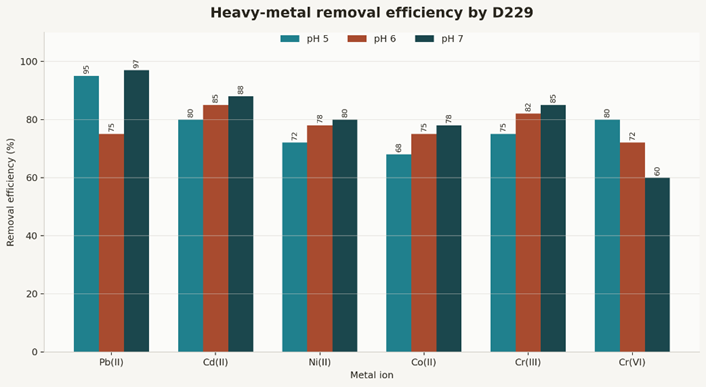
Figure 5. Bar chart of heavy-metal removal efficiency by D229 across pH 5, 6, and 7.
The pH 7 mean removal was 81.3%. The anomalously lower Pb(II) removal at pH 6 compared with pH 5 and pH 7 should be experimentally checked because the other adsorbents showed monotonic pH enhancement for Pb(II).
3.6. Cross-material comparison
The best material depended on the target metal and pH. For cationic metals, D242 was the most balanced performer. For Pb(II), D242 and D232 tied at 99.5% removal at pH 7. For Cr(VI), the best condition was not pH 7 but pH 5, where D242 reached 86%, D232 reached 85%, D202 reached 83%, rGO reached 82%, and D229 reached 80%. However, among graphene-family materials, rGO remains important because Cr(VI) removal by rGO can involve adsorption-coupled reduction pathways reported for functionalized rGO systems [11].
Table 6. Cross-material comparison of maximum removal efficiencies for each heavy metal ion.
|
Metal ion |
Best material and condition |
rGO |
D242 |
D202 |
D232 |
D229 |
|
Pb(II) |
D242/D232, pH 7 |
99.0 |
99.5 |
99.0 |
99.5 |
97.0 |
|
Cd(II) |
D242, pH 7 |
92.0 |
97.0 |
96.0 |
95.0 |
88.0 |
|
Ni(II) |
D242, pH 7 |
85.0 |
93.0 |
91.0 |
90.0 |
80.0 |
|
Co(II) |
D242, pH 7 |
82.0 |
90.0 |
87.0 |
87.0 |
78.0 |
|
Cr(III) |
D242, pH 7 |
90.0 |
94.0 |
92.0 |
93.0 |
85.0 |
|
Cr(VI) |
D242, pH 5 |
82.0 |
86.0 |
83.0 |
85.0 |
80.0 |
The selectivity sequence at pH 7 was generally Pb(II) > Cd(II) > Cr(III) > Ni(II) > Co(II), with Cr(VI) behaving separately because of its anionic speciation. This result is chemically reasonable because Pb(II) and Cd(II) are more polarizable and bind strongly to oxygenated and defect-rich graphene-derived surfaces, while Ni(II) and Co(II) are more strongly hydrated. Cr(III) behaves as a trivalent cation and therefore improves with pH, whereas Cr(VI) is mainly present as oxyanions and becomes less compatible with negatively charged or cation-selective surfaces at near-neutral pH.
3.7. Comparison with Scopus and Clarivate-indexed literature
Direct comparison with literature requires caution because published GO/rGO studies frequently report qmax in mg/g at higher initial concentrations, while the present dataset reports percent removal from 1.00 ppm standards. Nevertheless, the present results are competitive at trace concentration. D242 and D232 reduced Pb(II) to 0.005 ppm at pH 7, corresponding to 99.5% removal, while D242 removed 97% Cd(II) and 94% Cr(III). Functionalized rGO studies report high capacity because extra sulfonate, amine, magnetic, or macrocyclic ligands increase binding-site density and improve separability [8], [10]-[12].
Table 7. Literature comparison between the present adsorbents and selected peer-reviewed graphene-based heavy-metal adsorbents.
|
Literature adsorbent |
Target metals and reported performance |
Relevance to present results |
|
GO and GO composites review [3] |
Summarizes GO/composite adsorption of heavy metals from water and emphasizes oxygenated functional groups and composite design. |
Supports the choice of GO/rGO derivatives as trace-metal adsorbents. |
|
GO-based materials review [4] |
Reviews efficient removal of heavy-metal ions using GO-based materials and highlights functionalization as a route to higher affinity. |
Explains why coded derivatives can outperform unmodified rGO for cationic metals. |
|
Hybrid graphene materials review [5] |
Classifies GO/rGO, foams, aerogels, metal oxide hybrids, polymer hybrids, and magnetic composites for metal removal. |
Supports hybridization as the next step for improving D242/rGO selectivity and separability. |
|
Few-layered GO nanosheets [7] |
Reports few-layered GO nanosheets as superior sorbents for heavy-metal pollution management. |
Provides a benchmark for using graphene-family nanosheets in water treatment. |
|
4-sulfophenylazo-grafted rGO [8] |
Reports RGOS capacities of 689 mg/g Pb(II), 267 mg/g Cd(II), 66 mg/g Ni(II), and 191 mg/g Cr(III), with equilibrium within 10 min. |
Shows that functionalized rGO can exceed simple rGO by adding ion-exchange and coordination sites. |
|
rGO/silver/magnetite nanohybrids [9] |
Evaluates rGO nanohybrids for Cd(II), Ni(II), Zn(II), Co(II), Pb(II), and Cu(II). |
Supports hybrid rGO design for multi-metal systems. |
|
TCAS-rGO [10] |
Reports Langmuir capacities of 230 mg/g Pb(II) and 128 mg/g Cd(II), with selectivity at neutral pH and reuse over four cycles. |
Supports the observed strength of graphene derivatives toward Pb(II) and Cd(II). |
|
rGO/PEI-KOH [11] |
Reports Cr(VI) adsorption and reduction to Cr(III) in acidic medium. |
Supports the observed superiority of acidic conditions for Cr(VI) removal. |
|
Few-layered magnetic GO [12] |
Reports rapid Cd(II) and Cu(II) uptake, including 401.14 mg/g Cd(II) and 98.53% Cd(II) removal under tested conditions. |
Shows that magnetic GO can achieve high removal and fast separation. |
|
CFA/GO/PANI nanocomposite [13] |
Reports 99% Cr(VI) removal from 100 mg/L at pH 2 and Langmuir capacity of 124.72 mg/g at 25 °C. |
Confirms that Cr(VI) removal generally requires acidic pH and tailored cationic or redox-active sites. |
Compared with these studies, the present materials are most convincing as trace-level removal agents rather than high-capacity bulk adsorbents. D242 is particularly strong for polishing Pb(II), Cd(II), Ni(II), Co(II), and Cr(III) to low residual concentrations. For Cr(VI), the results suggest that rGO or D242 should be modified with amine, polyaniline, thiol, sulfonate, or magnetic-functional components to strengthen electrostatic attraction and promote reduction to Cr(III), as reported in functionalized GO/rGO systems [8], [11], [13].
CONCLUSION :
This manuscript demonstrates that rGO and coded graphene-derivative adsorbents can remove trace heavy metals from 1.00 ppm aqueous systems with strong pH and metal-speciation dependence. D242 was the best overall adsorbent for cationic heavy metals, achieving 99.5% Pb(II), 97% Cd(II), 93% Ni(II), 90% Co(II), and 94% Cr(III) removal at pH 7. D232 matched D242 for Pb(II), while D202 performed strongly for Pb(II), Cd(II), and Ni(II). D229 was less efficient than the other coded materials but still achieved useful removal for Pb(II), Cd(II), and Cr(III). In contrast, Cr(VI) behaved differently from the cationic metals, with better removal at pH 5 and lower removal at pH 7 because chromate and dichromate oxyanions are less compatible with negatively charged or cation-selective adsorbent surfaces.
The comparison with peer-reviewed literature indicates that the studied materials are competitive for trace-level metal polishing, although they should not be compared directly with high-concentration qmax studies without considering concentration, pH, dose, and contact-time differences. The strongest practical conclusion is that D242 is the preferred material for cationic heavy-metal removal, while rGO-based functionalization should be prioritized for Cr(VI)-rich systems. Future work should confirm adsorbent dose, contact time, stirring rate, analytical wavelength or detector method, replicate statistics, adsorption kinetics, isotherms, and multi-cycle regeneration before submission to a Scopus or Clarivate-indexed journal.
BIBLIOGRAPHY:
1. Fu F, Wang Q. Removal of heavy metal ions from wastewaters: a review. J Environ Manage. 2011;92:407-418. doi: 10.1016/j.jenvman.2010.11.011.
2. Barakat MA. New trends in removing heavy metals from industrial wastewater. Arab J Chem. 2011;4:361-377. doi: 10.1016/j.arabjc.2010.07.019.
3. Peng W, Li H, Liu Y, Song S. A review on heavy metal ions adsorption from water by graphene oxide and its composites. J Mol Liq. 2017;230:496-504. doi: 10.1016/j.molliq.2017.01.064.
4. Liu X, Ma R, Wang X, Ma Y, Yang Y, Li Z, et al. Graphene oxide-based materials for efficient removal of heavy metal ions from aqueous solution: a review. Environ Pollut. 2019;252:62-73. doi: 10.1016/j.envpol.2019.05.050.
5. Abu-Nada A, Abdala A, McKay G. Recent advances in applications of hybrid graphene materials for metals removal from wastewater. Nanomaterials. 2020;10(3):595. doi: 10.3390/nano10030595.
6. Pei S, Cheng HM. The reduction of graphene oxide. Carbon. 2012;50:3210-3228. doi: 10.1016/j.carbon.2011.11.010.
7. Zhao G, Li J, Ren X, Chen C, Wang X. Few-layered graphene oxide nanosheets as superior sorbents for heavy metal ion pollution management. Environ Sci Technol. 2011;45:10454-10462. doi: 10.1021/es203439v.
8. Zhang C, Chen B, Bai Y, Xie J. A new functionalized reduced graphene oxide adsorbent for removing heavy metal ions in water via coordination and ion exchange. Sep Sci Technol. 2018. doi: 10.1080/01496395.2018.1497655.
9. Park C, Wang D, Han J, Heo J, Su C. Evaluation of the colloidal stability and adsorption performance of reduced graphene oxide-elemental silver/magnetite nanohybrids for selected toxic heavy metals in aqueous solutions. Appl Surf Sci. 2019;471:8-17. doi: 10.1016/j.apsusc.2018.11.240.
10. Liu C, Zhang D, Zhao L, Lu X, Zhang P, He S, et al. Synthesis of a thiacalix[4]arenetetrasulfonate-functionalized reduced graphene oxide adsorbent for the removal of lead(II) and cadmium(II) from aqueous solutions. RSC Adv. 2016;6:113027-113036. doi: 10.1039/C6RA24353C.
11. Tadjenant Y, Dokhan N, Barras A, Addad A, Jijie R, Szunerits S, et al. Graphene oxide chemically reduced and functionalized with KOH-PEI for efficient Cr(VI) adsorption and reduction in acidic medium. Chemosphere. 2020;258:127316. doi: 10.1016/j.chemosphere.2020.127316.
12. Guo T, Bulin C, Ma Z, Li B, Zhang Y, Zhang B, et al. Mechanism of Cd(II) and Cu(II) adsorption onto few-layered magnetic graphene oxide as an efficient adsorbent. ACS Omega. 2021;6:16535-16545. doi: 10.1021/acsomega.1c01770.
13. Umejuru EC, Prabakaran E, Pillay K. Coal fly ash decorated with graphene and polyaniline nanocomposites for effective adsorption of hexavalent chromium and its reuse for photocatalysis. ACS Omega. 2023;8:18930-18944. doi: 10.1021/acsomega.2c05352.
14. American Public Health Association, American Water Works Association, Water Environment Federation. Standard Methods for the Examination of Water and Wastewater. 23rd ed. Washington, DC: APHA; 2017. Available from: APHA Standard Methods.