Biodegradable Implants in Fracture Fixation: Bone Union, Complications, and Reoperation Risk
- Wang Hairui , Faculty of Medicine, Dentistry, and Health Sciences, Prima Indonesia University
- Ermi Girsang , Faculty of Medicine, Dentistry, and Health Sciences, Prima Indonesia University
- Florenly , Faculty of Medicine, Dentistry, and Health Sciences, Prima Indonesia University
Article Information:
Abstract:
The presented research article is critical of biodegradable implants used to fix fractures, with particular focus on bone union, complications, and the risk of reoperation. The literature review was conducted as a secondary paper, and only primary clinical studies were used to generate the results. The open-ended coding using thematic analysis yielded 20 key papers or study reports. This evidence indicates that, with the use of biodegradable implants, high union rates can be achieved in selective low-load, peri-articular, pediatric, hand, and ankle applications, and the routine removal that accompanies metallic implants can be minimized. But the results are not consistent. Magnesium systems show good biological promise but rapidly degrade, form gas cavities, develop cysts, lose their reducing capacity, and screw breakages may become clinically relevant when the fixation environment is either mechanically demanding or biologically compromised. Polymer system relieves the weight of retained metal and, in older lactide or glycolide constructs, has been found to trigger an inflammatory response, slow down degradation, and occasionally result in it. The review posits that biodegradable fixation need not be presented as an explicit or universal replacement for titanium. Its worth is pegged to match material degradation, load sharing, fracture biology and site-specific mechanical demand.
Keywords:
Article :
INTRODUCTION:
Fracture fixation is a global clinical problem with technical implications. In 2019, it was estimated that 178 million new fractures were incurred, 455 million people had prevalent fractures with acute or long-term symptoms, and 25.8 years were lived with disability (GBD 2019 Fracture Collaborators, 2021). Another argument with this is that the absolute incidence, prevalence, and disability burden of fractures have been increasing since 1990 to 2019, particularly in older age categories, where the elderly are more prone to injury than in younger age groups (World Health Organization, 2024). These statistics provide a potent hook for implant innovation: fixation is required not only to reestablish alignment and achieve full union, but also to reduce future morbidity, which should be avoided. Metallic plates, screws and nails are also reliable, as they offer high early mechanical stability. Still, they might need to be removed due to irritation, pain, prominence, growth disturbance, imaging artifact or patient preference. Biodegradable implants aim to address that issue in the short term by supporting fracture repair and then resorbing after the biologically important phase of union.
The controversy is that the very property making biodegradable implants look nice, namely, loss of material over time, can also be used to fix it, making it go wrong. The mere juxtaposition between the biodegradable and metallic implants is, hence, misleading. The real question is: Is there a degradation rate in an implant that is compatible with the bone, the fracture pattern, and the loading environment? In fracture repair, this article reviews clinical evidence on biodegradable implants with respect to three closely related outcomes: bone union, complications, and risk of reoperation.
Another reason to critically review is that implant success is frequently reported with focused endpoints. A fracture may heal; however, the patient might still suffer from lack of reduction, stiffness, infection, sterile swelling or anxiety about the second operation. Alternatively, a biodegradable implant cannot be removed but may form gas cavities or cysts.
A further reason for critical review is that implant success is often reported with narrow endpoints. A fracture may unite, but the patient may still experience pain, loss of reduction, stiffness, infection, sterile swelling, or anxiety about a second operation. Conversely, a biodegradable implant may avoid removal but create gas cavities or cysts. The clinical question is therefore: When does biodegradation add value, and when does it merely replace one risk with another?
Literature Review: Secondary Evidence and Theory
Secondary literature frames biodegradable fixation as a trade-off rather than a miracle technology. Recent reviews suggest that bioabsorbable orthopaedic implants may be comparable to their metal counterparts in selected orthopaedic procedures, but outcomes vary with anatomical location, implant generation and mechanical loading (Blackman et al., 2025; Jee et al., 2024). Review articles on magnesium highlight osteoconductive and possibly osteogenic properties, a closer similarity in elastic modulus to bone, and a slow progression of stress transfer. However, they also point to corrosion rate, the trap of hydrogen gas formation, local alkalinity, and retention of mechanical strength as invariable obstacles to clinical use (Li et al., 2022; Xie et al., 2021). The argument in polymer reviews is different. Polylactic and polyglycolic acid implants do not require corrosion. They may be less complex to use in smaller bones, but they may lose strength, degrade slowly, produce acidic materials, and cause foreign-body reactions under vulnerable conditions (Jee et al., 2024).
Two theories can be used to interpret the evidence. First, the load-sharing theory implies that fixation must not be released until the processes of callus formation or direct bone healing can withstand physiological loads. Biodegradable devices are most appropriate when early fracture stability is not wholly reliant on long-term implant strength. Second, the mechanobiological healing theory implies that the union is based on a controlled relationship between stability and biological stimulation. Even a material that stimulates the bone and loses compression too quickly may fail. A firm piece of metal can maintain its position but is prone to stress shielding or subsequent irritation. These theories were used to inform the literature review. The original research used to generate the findings was maintained in different locations to prevent secondary findings from being duplicated.
Magnesium and polymer implants are conceptually separated in the secondary literature, as well. Magnesium alloys are appealing because their elastic modulus is closer to that of cortical bone than titanium, and because their corrosion products may interact with osteogenesis, unlike titanium (Li et al., 2022). Polymer systems PLLA, PLGA, and u-HA/PLLA composites do not corrode in the presence of metals and can be radioluminescent. Still, they degrade gradually and corrode, and their initial strength is lower than that of metal (Jee et al., 2024). The literature review thus anticipated that whether to be successful would not be ascertained through the mere mention of the term biodegradable. This would be dictated by the chemistry of the implants, fracture stability, soft-tissue envelope, age, and the severity of failure in the case of loss of late supports.
METHOD:
The secondary paper design was utilized. Review papers, systematic reviews and theoretical biomaterials literature were used as the literature review. The findings did not include these secondary articles. The background of the findings was primary clinical studies, including randomized trials, prospective studies, retrospective comparative cohort studies, and case series on fracture fixation using biodegradable polymer, composite, or magnesium implants. It was not a formal systematic review, since the purpose is not to create a flash article but to write a registered meta-analysis. Searches included biodegradable, bioabsorbable, resorbable, magnesium, PLGA, PLLA, fracture fixation, union, complications, and reoperation. The included primary studies were ankle, medial malleolus, forearm, hand, scaphoid, calcaneal, and mandibular fractures.
Thematic analysis was used. First, the study aims, design, implant material, anatomical locations, sample size, union results, risks, and removals were collected. Second, the grouping of the codes into patterns was based on the reliability of the healing, the type of complication and the burden of re-operation. Third, the patterns were clustered into three themes: high when matching mechanics with biology creates a new failure mode; low when complications are material-specific rather than uniformly lower; and reduced risk of reoperation when degradation does not create a new failure mode. The evidence-Mapping process applied in this article is summarised in Figure 1.
To be eligible for the findings, a human clinical fracture-fixation population was required, with at least one extractable outcome related to union, complication, or implant removal. This rule did not consider preclinical animal work and secondary reviews as part of the findings, even when such papers were helpful in the literature review. The method enables separation between theory and outcomes, yet also restricts. Others were particularly precise in their reports of union; others reported uneventful healing; and a few had different lengths of follow-up. Thus, they are not meta-analytic estimates but previous visual syntheses of numbers.
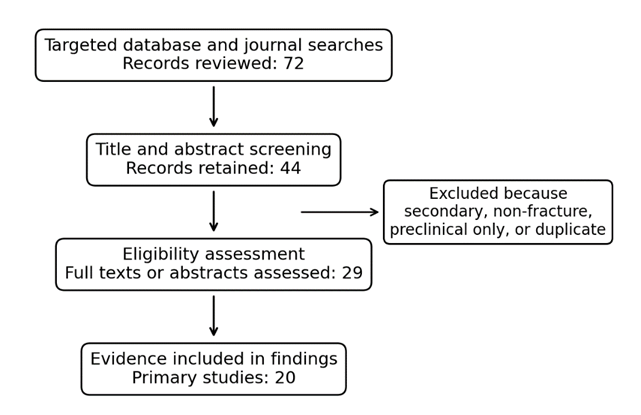
Figure 1 Evidence Mapping for the Secondary Review and Primary Study Thematic Analysis.
Findings: Thematic Analysis of Primary Studies
Primary studies that have been included are summarised in Table 1. They are not designed, and fracture sites are also heterogeneous; therefore, the findings cannot be read in terms of a pooled treatment effect. Instead, they demonstrate how the fixation of biodegradable materials performs in various mechanical settings. Figure 2 is a graphical illustration of the union or uneventful healing signals of the selected studies with extractable percentages, and Figure 3 is a comparative analysis of the complication, implant removal or failure indicators of major comparative studies.
A visible trend is that, in fractures where the implant is not the sole barrier to high cyclic loads, high union rates are clustered. The identical visual overview also demonstrates why the positive averages would be deceptive. Figure 2 makes it clear that the scaphoid magnesium cohort is a marked outlier, and Figure 3 makes it clear that the lowest event rates are not universal properties of biodegradable materials. These oppositions guided the following themes and hold to a comparative instead of a descriptive interpretation
Table 1 Primary Clinical Studies Used in the Findings
|
Study |
Fracture site |
Design |
Implant/comparator |
Sample |
Key finding |
|
Nudelman et al. (2024). |
Pediatric distal tibial ankle fractures |
Retrospective comparative cohort |
PLGA implants vs titanium or steel screws |
76 vs 52 |
Most healed without refracture; PLGA had 2 complications with reoperation vs 6 complications with metal. |
|
Korhonen et al. (2018). |
Pediatric forearm shaft fractures |
Prospective randomized trial |
PLGA biodegradable intramedullary nails vs titanium ESIN |
Trial cohort |
Longer-term comparison of healing and biodegradation, designed to avoid routine implant removal |
|
Lorincz et al. (2024). |
Pediatric diaphyseal forearm fractures |
Longitudinal follow-up cohort |
PLGA intramedullary implants |
38 |
One-year radiographic and functional evaluation supported mid-term fracture healing |
|
Kose et al. (2018). |
Medial malleolus fractures |
Retrospective case series |
MgYREZr compression screws |
11 |
All fractures united; no complications, removal, or revision |
|
May et al. (2020). |
Medial malleolus fractures |
Retrospective comparative cohort |
Magnesium screws vs titanium screws |
23 vs 25 |
Union in all cases; five titanium removals, no magnesium removals |
|
Holweg et al. (2020). |
Medial malleolus fractures |
Prospective first-in-human trial |
ZX00 Mg-Zn-Ca screws |
20 |
Early clinical and functional outcomes were excellent, with no removal signal at short follow-up. |
|
Herber et al. (2022). |
Medial malleolus fractures |
Mid-term follow-up study |
ZX00 Mg-Zn-Ca screws |
20 |
No Mg screws removed; 12 of 17 additional titanium implants were removed |
|
Xie et al. (2021). |
Medial malleolus fractures |
Prospective clinical series |
Ca-P-coated Mg-Nd-Zn-Zr screws |
9 |
Good alignment, AOFAS 90.4 +/- 8.9, and no infection, fixation failure, or malunion |
|
Egerci et al. (2025). |
Scaphoid fractures and nonunion |
Retrospective cohort |
Mg bioabsorbable compression screws |
20 |
Nonunion 40%, screw breakage 25%, no infection, and reduced injured-side motion and grip |
|
Polat et al. (2021). |
Acute scaphoid waist fractures |
Clinical cohort |
Magnesium screws |
21 |
Reported 100% union and a mean union time of about 11.2 weeks |
|
Konneker et al. (2023). |
Acute scaphoid fractures and nonunions |
Clinical cohort |
Magnesium screws |
12 |
Overall union approximately 91.6%, with weaker outcomes in nonunion cases |
|
Lee et al. (2023). |
Metacarpal and phalangeal fractures |
Case series |
Bioabsorbable magnesium K-wires |
20 cases |
Union in all cases; mean union 10.5 weeks; reduction loss in six cases |
|
Kosugi et al. (2020). |
Metacarpal fractures |
Long-term retrospective series |
u-HA/PLLA plates and screws |
6 patients, 8 fractures |
All fractures united by 3.5 months; no implant-specific complications; absorption may take around 8 years |
|
Dumont et al. (2007). |
Displaced metacarpal fractures |
Prospective clinical series |
Absorbable plates |
12 patients, 14 fractures |
Reported radiographic and functional follow-up after open fixation with absorbable plates |
|
Zhang et al. (2011). |
Intra-articular calcaneal fractures |
Retrospective series |
Bioabsorbable screws |
58 |
55 of 58 healed without additional complications |
|
Yasui et al. (2023). |
Intra-articular calcaneal fractures |
Retrospective comparative cohort |
F-u-HA/PLLA screws vs locking plates |
18 feet vs 29 feet |
Similar outcomes to locking plates; no skin necrosis or infection in either group |
|
Zeng et al. (2025). |
Sanders III calcaneal fractures |
Retrospective comparative study |
Absorbable screws plus K-wires vs hollow screws |
40 vs 40 |
Lower complications in the absorbable group, 2.5% vs 10% |
|
Rha et al. (2015). |
Mandibular fractures |
Retrospective clinical study |
Bioabsorbable plates and screws |
75 |
Ten years of experience emphasized careful, site-specific selection of constructs. |
|
Singh et al. (2016). |
Pediatric mandibular fractures |
Prospective clinical study |
Biodegradable fixation system |
60 |
Bite-force monitoring suggested stable fixation in growing patients |
|
Gareb et al. (2017). |
Mandibular, zygomatic, and maxillofacial fractures/osteotomies |
Multicenter RCT long-term follow-up |
Biodegradable Inion CPS vs titanium |
87 vs 134 |
Biodegradable removal 26.4% vs titanium 16.4%; the fracture subgroup had no biodegradable removal. |
Figure 2 Reported Union or Uneventful Healing in Selected Primary Studies
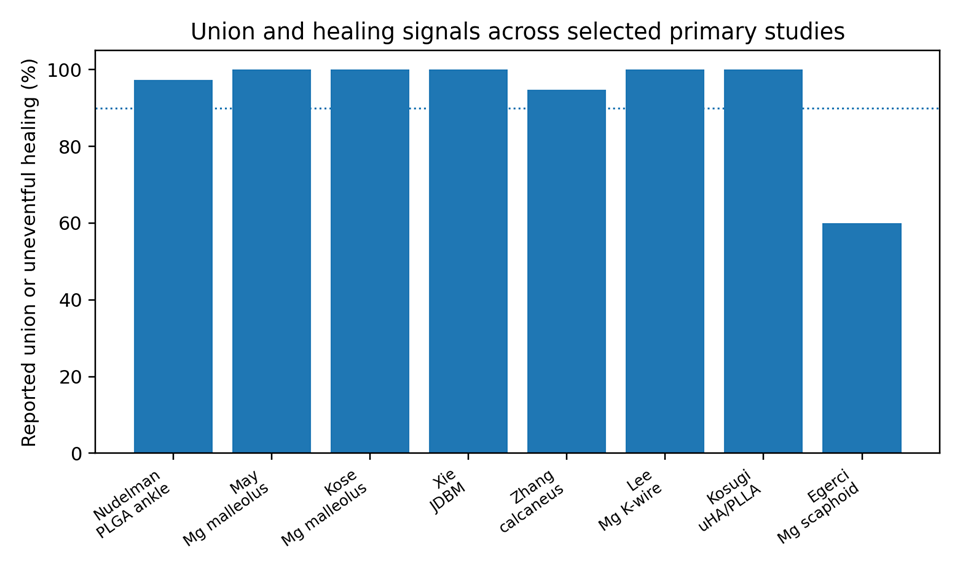
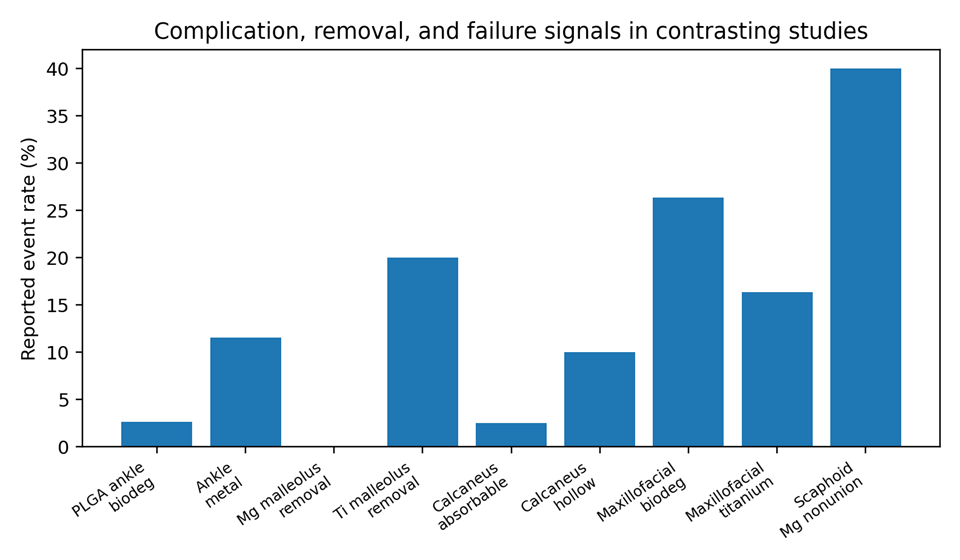
Figure 3 Event Rates for Complication, Removal, or Failure in Contrasting Studies
Theme 1: Bone Union Depends on Matching Implant and Fracture Demand
Bone union is large, with implant degradation equal to the fracture requirement. The most robust positive trend is observed in the medial malleolus and in some pediatric fractures.According to Kose et al. (2018), all 11 fractures of the medial malleolus were radiographically united with no signs of revision, infection, or implant removal. May et al. (2020) added to this trend with a comparative cohort study: in all patients with a medial malleolus fracture, both magnesium and titanium screws achieved union, but five of those receiving titanium screws required implant removal, with none of the magnesium screws requiring any form of removal. Xie et al. (2021) also noted good alignment and no infection in 9 patients treated with coated Mg-Nd-Zn-Zr screws. Such findings support the hypothesis that peri-articular ankle fixation can be appropriate for the use of biodegradable screws in cases of compression, with safeguarded rehabilitation and favourable local bone biology.
Pediatric evidence presents a similar, though not identical, picture. In 128 pediatric ankle fractures, Nudelman et al. (2024) compared PLGA implants with metallic screws and found few complications in both groups, with fewer major reconstruction surgeries in the PLGA group. According to Korhonen et al. (2018) and Lorincz et al. (2024), biodegradable intramedullary forearm nails might support Salmonella enteritidis healing and potentially avoid the need for nail removal in the future. Nevertheless, these articles also demonstrate the significance of patient selection, since diaphyseal forearm fractures undergo rotational and bending forces that differ from those experienced in epiphyseal ankle injuries. Therefore, high union is not a conjunction of biodegradation alone, but rather a conjunction of properly matched biodegradation.
This is furthered by calcaneal studies, which examine a more complex anatomical region. According to Zhang et al. (2011), most of the calcaneal fractures (55 of 58) healed without any further complications following bioabsorbable screw fixation. Yasui et al. (2023) found that postoperative results using F-u-HA/PLLA screws were similar to those of locking plates, and Zeng et al. (2025) reported fewer complications with the usage of absorbable screw plus Kirschner wire fixation compared to hollow screws in Sanders type III injuries. These results are promising, but the methods are mostly retrospective and technique-dependent. Part of the perceived implant benefit may be attributable to arthroscopy, the quality of reduction, and manipulation of soft tissues.
Theme 2: Complications Are Material-Specific
Not necessarily lower, complications are specific to materials. Magnesium complications are likely to be connected with degradation mechanisms, gas, cystic change, or sash-diminished stability. Lee et al. (2023) reported union in all 20 cases of bioabsorbable magnesium K-wires in the phalangeal joint (BP). Still, reduction loss occurred in six cases, and hydrogen gas cavities were visible in the early stages. In minor hand fractures, this can be tolerable when function is not impaired, but it demonstrates that union can conceal alignment problems. The scaphoid evidence is more warning. In 20 scaphoid fracture or nonunion cases involving patients treated with magnesium screws, a 40% nonunion rate and a 25% screw breakage rate were reported (Egerci et al., 2025). This is compared to past historic scaphoid cohorts indicated in Egerci et al. (2025), such as Polat et al. (2021), who are reported to have reported 100% union in cases of acute fractures, and Konneker et al. (2023) indicate a lower pattern of success in cases of nonunion than in such cases of acute fractures. This comparison implies that the performance of magnesium screws is overly sensitive to the complexity and vascularity of fractures.
The risk profile of polymer and composite implants differs. Kosugi et al. (2020) observed that all eight metacarpal fractures were united following u-HA/PLLA plate fixation, although u-HA/PLLA absorption could take approximately eight years. This biodegradation can be clinically silent, although it undermines the argument that all biodegradable implants are quickly lost. Gareb et al. (2017) found greater long-term biodegradable remove of biodegradable maxillofacial plates relative to titanium plates in general. However, the fracture subgroup was small and did not exhibit biodegradable remove. Thus, polymer systems can reduce palpability without necessarily creating inflammatory or removal issues due to degradation products building up or to unfavourable mechanical properties.
Studies on mandibular fractures demonstrate the same need for site-specific care. Rha et al. (2015) and Singh et al. (2016) confirm the possibility of bioabsorbable fixation in adult and pediatric mandibular fractures, but maxillofacial biomechanics is not the same as loading limbs. Bite force, plate palpability, tooth eruption and growth are the pertinent outcomes that do not readily map given ankle or hand studies. This implies that cross-specialty borrowing of evidence must also be done carefully. A device that works well in a pediatric mandible may not work well in other locations with comminution or vascular compromise.
Theme 3: Reoperation Risk Is Reduced, Shifted, or Reintroduced
The risk of reoperation moves but does not just dissipate. The clinical advantage of biodegradable fixation that is most appealing to clinical personnel is the absence of planned hardware removal. This is shown in at least two ways by Herber et al. (2022). Firstly, there is no Mg-Zn-Ca screws removal reported after medial malleolus fixation, whereas 12 out of 17 patients who had undergone the conventional titanium fixation of other ankle fragments also reported the removal of titanium screws. Similar results were achieved by May et al. (2020), who found five removals in the titanium group and none in the magnesium group. These results offer a viable edge in an anatomical area where shoe contact and local tensile irritation usually trigger elimination.
However, recurrence of the risk of reoperation may manifest as a failed revision. In PLGA pediatric ankle fixation, Nudelman et al. (2024) reported lower complication-related reoperation with PLGA fixation of Sanders III calcaneal fractures compared to hollow screw fixation. Zeng et al. (2025) reported fewer postoperative complications with arthroscopy-assisted absorbable screw fixation and Kirschner wire fixation of Sanders III calcaneal fractures than with hollow screw fixation. On the other hand, Egerci et al. (2025) demonstrate that biodegradable screws can pose a revision challenge when used to treat complex scaphoid nonunion. Figure 3 thus counts: a biodegradable implant reduces removal when it works, but not when it fails to work, such as when an inflammatory reaction forms or when there is insufficient mechanical support
DISCUSSION :
The current review results partially confirm but partially criticize the theories in the literature review. The data in the medial malleolus and the pediatric ankle support the load-sharing theory. Additional cast protection, limited early loading, or favourable metaphyseal biology often generate biodegradable screws sufficient to maintain enough stability until union (Kose et al., 2018; May et al., 2020; Nudelman et al., 2024). Scaphoid nonunion is a challenge to the theory. Even a material with osteogenic properties that promise high success can be unsuccessful in this case due to the limited blood supply in the scaphoid and the complexity and high cost of loading (Egerci et al., 2025). This would explain why, apparently successful in medial malleolus fixation but potentially risky in complex scaphoid nonunion, the same magnesium concept could look successful.
The discrepancy between polymer and magnesium evidence can also be explained using the mechanobiological theory. Magnesium might induce local bone response, yet corrosion and gas formation can compromise mechanical continuity when the degradation is rapid or uneven (Lee et al., 2023; Xie et al., 2021). Plate removal, sterile inflammation, or swelling might be associated with polymers that initially preserve a more predictable shape but result in delayed resorption and acidic by-products (Gareb et al., 2017; Kosugi et al., 2020). The evidence currently available thus disqualifies any simple hierarchy in which a biodegradable material is superior to metal. Rather, it justifies a decision-making framework: fixation using biodegradable polymers, in which the healing time is expected to be shorter than the mechanical loss to be incurred, soft-tissue irritation due to metal removal will probably occur, and the consequences of a delay in loss of rigidity are minor.
The research must also be methodologically critiqued. Small case series include numerous positive reports, such as Kose et al. (2018), Xie et al. (2021), and Kosugi et al. (2020). These are feasible, but with selection bias, surgeon learning effects and inadequate power to identify an uncommon complication. Comparative studies are more powerful yet contain limitations. May et al. (2020) conducted a retrospective study, and the nature of the fractures might have influenced the choice of implants. Nudelman et al. (2024) compared time-treated children but used only a retrospective design, which does not allow causal inference. Gareb et al. (2017) is a study with stronger methodology, as it was a multicenter randomized trial. Still, it included both trauma and orthognathic interventions, and the fracture subgroup was also small. All of these weaknesses imply that the evidence supports cautious clinical growth rather than a blanket replacement.
A practical implication is that the question that ought to be posed by surgeons is whether the fracture would cure itself before mechanical weakening, whether retained metal would realistically be removed, whether failure would be difficult to revise, and whether evidence is based on the same anatomical problem. Figure 2 and Figure 3 should be read concurrently, since a high union with low complications cannot be a complete success.
It has also been noted that there are gaps in reporting. Only a small number of primary papers can distinguish symptomatic degeneration from harmless imaging appearances, and few provide patient-centred outcomes over a long period to confirm full material uptake. Reoperation is inconsistently delineated among the planned removal, revision fixation, infection, irritation and nonunion. Subsequent trials are also expected to report union timing, reduction loss, infection, inflammatory reaction, implant breakage, patient-reported outcomes, cost, and revision separately.
CONCLUSION :
Fracture fixation biodegradable implants are clinically useful yet indication-sensitive. The best evidence signals occur in chosen ankle, pediatric, hand and calcaneal uses where union of bone is typically high and that removal of metal coloring can be prevented. The least powerful signal is observed when biodegradable screws are requested to resolve both in-mechanical instability and poor biology, or in complex scaphoid nonunion. The key finding is that biodegradable fixation must be applied through a place-specific framework rather than used as a universal substitute for titanium. Further studies ought to focus on appropriately powered randomized studies, long-term imaging of degradation, transparent reporting of reoperation causes and subgroup analyses about fracture biology, load and implant material in clinical practice.
REFERENCES:
1. Blackman, B., Okunbor, S., Sowa, A. M., McDonnell, J. M., Ross, T. D., Rigney, B., Darwish, S., & Butler, J. S. (2025). Bioabsorbable implants are a viable alternative to traditional metallic implants in orthopaedic surgery: A systematic review and meta-analysis. Journal of Orthopaedics. https://doi.org/10.1016/j.jor.2025.06.005
2. Dumont, C., Fuchs, M., Burchhardt, H., Appelt, D., Bohr, S., & Sturmer, K. M. (2007). Clinical results of absorbable plates for displaced metacarpal fractures. Journal of Hand Surgery, 32(4), 491–496. https://doi.org/10.1016/j.jhsa.2007.02.005
3. Egerci, O. F., Dogruoz, F., Cetin, H., Ertan, M. B., Yapar, A., & Kose, O. (2025). High rate of failure after magnesium bioabsorbable compression screw fixation for scaphoid fractures. Journal of Orthopaedic Surgery and Research, 20, 296. https://doi.org/10.1186/s13018-025-05701-7
4. Gareb, B., van Bakelen, N. B., Buijs, G. J., Jansma, J., de Visscher, J. G. A. M., Hoppenreijs, T. J. M., Bergsma, J. E., van Minnen, B., Stegenga, B., & Bos, R. R. M. (2017). Comparison of the long-term clinical performance of a biodegradable and a titanium fixation system in maxillofacial surgery: A multicenter randomized controlled trial. PLOS ONE, 12(5), e0177152. https://doi.org/10.1371/journal.pone.0177152
5. GBD 2019 Fracture Collaborators. (2021). Global, regional, and national burden of bone fractures in 204 countries and territories, 1990-2019: A systematic analysis from the Global Burden of Disease Study 2019. The Lancet Healthy Longevity, 2(9), e580-e592. https://doi.org/10.1016/S2666-7568(21)00172-0.
6. Herber, V., Labmayr, V., Sommer, N. G., Marek, R., Wittig, U., Leithner, A., Seibert, F., & Holweg, P. (2022). Can hardware removal be avoided using bioresorbable Mg-Zn-Ca screws after medial malleolar fracture fixation? Mid-term results of a first-in-human study. Injury, 53(3), 1283-1288. https://doi.org/10.1016/j.injury.2021.10.025
7. Holweg, P., Herber, V., Ornig, M., Hohenberger, G., Donohue, N., Puchwein, P., Leithner, A., & Seibert, F. (2020). A lean bioabsorbable magnesium-zinc-calcium alloy ZX00 used for operative treatment of medial malleolus fractures: Early clinical results of a prospective non-randomized first-in-man study. Bone & Joint Research, 9(8), 477-483. https://doi.org/10.1302/2046-3758.98.BJR-2020-0017.R2
8. Jee, E., Robichaux-Edwards, L., Montgomery, C., Bilderback, K., Perry, K., & Massey, P. A. (2024). Polylactic acid bioabsorbable implants of the hand: A review. Journal of Hand and Microsurgery, 100053. https://doi.org/10.1016/j.jham.2024.100053
9. Konneker, S., Schachinger, U., & Vogt, P. M. (2023). Magnesium-based compression screws in acute scaphoid fractures and nonunions. World Journal of Surgery, 47(5), 1129-1135. https://doi.org/10.1007/s00268-023-06937-2
10. Korhonen, L., Perhomaa, M., Kyro, A., Pokka, T., Serlo, W., & Sinikumpu, J. J. (2018). Intramedullary nailing of forearm shaft fractures by biodegradable compared with titanium nails: Results of a prospective randomized trial in children with at least two years of follow-up. Biomaterials, 185, 383-392. https://doi.org/10.1016/j.biomaterials.2018.09.020
11. Kose, O., Turan, A., Unal, M., Acar, B., & Guler, F. (2018). Fixation of medial malleolar fractures with magnesium bioabsorbable headless compression screws: Short-term clinical and radiological outcomes in eleven patients. Archives of Orthopaedic and Trauma Surgery, 138, 1069-1075. https://doi.org/10.1007/s00402-018-2941-x
12. Kosugi, K., Zenke, Y., Tajima, T., Yamanaka, Y., Menuki, K., & Sakai, A. (2020). Long-term outcomes of metacarpal fractures surgically treated using bioabsorbable plates: A retrospective study. BMC Musculoskeletal Disorders, 21, 817. https://doi.org/10.1186/s12891-020-03841-x
13. Lee, B. J., Lee, C. H., Lee, Y. H., & Woo, S. (2023). Intramedullary fixation of metacarpal and phalangeal bone fractures with bioabsorbable Mg K-wire in 20 cases. European Journal of Orthopaedic Surgery & Traumatology, 33, 2911-2920. https://doi.org/10.1007/s00590-023-03503-3
14. Li, Y., Zhou, J., Pavanram, P., Leeflang, M. A., Fockaert, L. I., Pouran, B., Tumer, N., Schroder, K. U., Mol, J. M. C., Weinans, H., Jahr, H., & Zadpoor, A. A. (2022). Update on the research and development of magnesium-based biodegradable implants. Journal of Magnesium and Alloys, 10(4), 879-902.
15. Lorincz, A., Lengyel, A. M., Kedves, A., Nudelman, H., & Jozsa, G. (2024). Pediatric diaphyseal forearm fracture management with biodegradable poly-L-lactide-co-glycolide intramedullary implants: A longitudinal study. Journal of Clinical Medicine, 13(14), 4036. https://doi.org/10.3390/jcm13144036
16. May, H., Kati, Y. A., Gumussuyu, G., Emre, T. Y., Unal, M., & Kose, O. (2020). Bioabsorbable magnesium screw versus conventional titanium screw fixation for medial malleolar fractures. Journal of Orthopaedics and Traumatology, 21, 9. https://doi.org/10.1186/s10195-020-00547-7
17. Nudelman, H. N., Lorincz, A., Lamberti, A. G., Varga, M., Kassai, T., & Jozsa, G. (2024). Management of pediatric ankle fractures: Comparison of biodegradable PLGA implants with traditional metal screws. Frontiers in Pediatrics, 12, 1410750. https://doi.org/10.3389/fped.2024.1410750
18. Polat, O., Toy, S., & Kibar, B. (2021). Surgical outcomes of scaphoid fracture osteosynthesis with magnesium screws. Journal of Joint Diseases and Related Surgery, 32(3), 721-728. https://doi.org/10.52312/jdrs.2021.298
19. Rha, E. Y., Paik, H., & Byeon, J. H. (2015). Bioabsorbable plates and screws fixation in mandible fractures: Clinical retrospective research during 10 years. Annals of Plastic Surgery, 74(4), 432-436. https://doi.org/10.1097/SAP.0b013e3182a60693
20. Singh, A. K., Mohammad, S., Singh, V., & Sharma, R. K. (2016). Management of pediatric mandibular fractures using bioresorbable fixation system. National Journal of Maxillofacial Surgery, 7(1), 45-50.
21. World Health Organization. (2024). Fragility fractures. https://www.who.int/news-room/fact-sheets/detail/fragility-fractures
22. Xie, K., Wang, L., Guo, Y., Zhao, S., Yang, Y., Dong, D., Ding, W., Dai, K., Gong, W., Yuan, G., & Hao, Y. (2021). Effectiveness and safety of biodegradable Mg-Nd-Zn-Zr alloy screws for the treatment of medial malleolar fractures. Journal of Orthopaedic Translation, 27, 96-100. https://doi.org/10.1016/j.jot.2020.11.007
23. Yasui, Y., Hiranaka, T., Mori, H., Matsubara, H., & Akita, S. (2023). Fixation of intra-articular calcaneal fractures: A comparative study of the postoperative outcome between HA/PLLA screws and locking plates. Heliyon, 9, e13957. https://doi.org/10.1016/j.heliyon.2023.e13957
24. Zeng, G., Xie, Q., Cai, L., Mai, H., Zhang, L., Liang, X., Huang, Z., & Su, B. (2025). Arthroscopy-assisted absorbable screw combined with Kirschner wire internal fixation for Sanders type III displaced intra-articular calcaneal fractures: A retrospective study. BMC Musculoskeletal Disorders, 26, 181. https://doi.org/10.1186/s12891-025-08438-w
25. Zhang, J., Xiao, B., & Wu, Z. (2011). Surgical treatment of calcaneal fractures with bioabsorbable screws. International Orthopaedics, 35, 529-533. https://doi.org/10.1007/s00264-010-1183-5