Clinical Profile, Pharmacotherapy Evaluation, and Outcomes of Paediatric Meningitis: A Cross-Sectional Study from a Tertiary Care Hospital in Khyber Pakhtunkhwa, Pakistan
- Muhammad Abbas , Faculty of Biological Sciences, Department of Pharmacy, Quaid-i-Azam University, Islamabad, 45320
- Jawad Azam , Department of Pharmacy, Sarhad University of Science and Information Technology, Islamabad Campus, 46000
- Kiran Firdos , Department of Pharmacy, Sarhad University of Science and Information Technology, Peshawar, Pakistan
- Tabinda Razzaq , Department of Pharmacy Practice, Faculty of Pharmaceutical Sciences, Lahore University of Biological and Applied Sciences
- Hammad Ahmad , Department of Pharmacy, Bashir Institute of Health Sciences, Islamabad, Pakistan
- Abu Talha , Department of Pharmacy, Abdul Wali Khan University Mardan, Pakistan
- Waseem Ajmal , Faculty of Biological Sciences, Department of Pharmacy, Quaid-i-Azam University, Islamabad, 45320
- Urooj Tariq , Department of Pharmacy, Sarhad University of Science and Information Technology, Peshawar, Pakistan
- Muhammad Saad Ahmad , Department of Pharmacy, Abdul Wali Khan University Mardan, Pakistan
- Nasir Khan , Faculty of Biological Sciences, Department of Pharmacy, Quaid-i-Azam University, Islamabad, 45320
Article Information:
Abstract:
Meningitis remains a devastating cause of childhood morbidity and mortality across low- and middle-income countries (LMICs). Despite vaccination advances, meningitis remains a significant burden in Pakistan due to health system constraints, low immunisation coverage, and limited diagnostic capacity. To characterise the clinical profile of paediatric meningitis and evaluate pharmacotherapy practices, DDIs, and their association with clinical outcomes in KP, Pakistan.Methods: A hospital-based cross-sectional study was conducted at a tertiary care hospital in KP, Pakistan, from February to July 2022. A total of 137 paediatric patients aged below 10 years with confirmed or clinically probable meningitis were enrolled using consecutive sampling. Data included demographics, vaccination status, clinical presentation, cerebrospinal fluid (CSF) parameters, serum inflammatory markers, antibiotic regimens, adjunct therapies, DDIs, and clinical outcomes. Pharmacotherapy was assessed for rationality against published clinical guidelines. Results: Of 137 patients (95 male; 69.3%), 86 (62.8%) were under one year of age. Bacterial meningitis predominated (n=105; 76.6%), followed by viral (n=22; 16.1%) and fungal (n=10; 7.3%) forms. Streptococcus pneumoniae (29.9%) and Neisseria meningitidis (27.0%) were the most commonly suspected pathogens. Forty-five patients (32.8%) were entirely unvaccinated. Rational pharmacotherapy was identified in only 71 patients (51.8%), and DDIs were detected in 66 (48.2%), of which 38 (57.6%) were classified as major. Overall, 94 patients improved (68.6%) and 13 (9.5%) died. Mortality was significantly associated with irrational therapy (p < 0.01) and major DDIs (p < 0.05). Neurological sequelae were documented in 29 patients (21.2%).Conclusion: Paediatric meningitis in KP predominantly affects infants, with bacterial aetiology and low vaccination coverage driving disease burden. Suboptimal pharmacotherapy and clinically significant DDIs were prevalent and independently associated with adverse outcomes. Strengthening antimicrobial stewardship, vaccination programmes, and clinical pharmacist integration in paediatric wards is urgently needed.
Keywords:
Article :
INTRODUCTION:
Despite nearly a century of antimicrobial advances, meningitis remains one of the most feared neurological emergencies in children, combining high acute mortality with a substantial risk of permanent disability in those who survive. The fundamental imperative of rapid clinical recognition and immediate empirical treatment, articulated decades ago, has not changed [1,2].
The global burden is considerable. The World Health Organization estimates that bacterial meningitis causes approximately 250,000 deaths annually, with around 80% occurring in sub-Saharan Africa and South and Southeast Asia. The Global Burden of Disease 2016 analysis attributed 318,400 deaths and 16.3 million disability-adjusted life years (DALYs) to meningitis in a single year, with children under five years bearing the heaviest share. The GBD 2019 update confirmed bacterial meningitis as one of the leading infectious causes of paediatric mortality across South Asia. Among survivors, permanent neurological sequelae including hearing loss, motor deficits, epilepsy, and cognitive impairment affect 10 to 30 percent of cases in high-income settings, rising to 50 percent in resource-limited environments where treatment is delayed or suboptimal [3,4,5,6].
Streptococcus pneumoniae and Neisseria meningitidis account for the overwhelming majority of bacterial meningitis cases worldwide, a finding established by Oordt-Speets et al. in a systematic review spanning 118 countries. Children in the first year of life are most susceptible, owing to immature humoral immunity, attenuated complement activity, and an incomplete blood-brain barrier that encapsulated organisms readily exploit. Kim described these pathophysiological mechanisms in detail, and Ku et al. and Furyk et al. extended these observations specifically to the neonatal period and to low-resource settings, where immature host defences combine with delayed access to care to produce substantially higher case fatality rates than those reported from high-income comparators [7,8,9,10].
Within Pakistan, and particularly in Khyber Pakhtunkhwa (KP), paediatric meningitis is shaped by compounding vulnerabilities. Vaccine coverage against the principal causative organisms remains incomplete due to geographic remoteness, cold-chain inconsistencies, and vaccine hesitancy. Kazmi et al., in a prospective multisite study, identified unvaccinated status as a dominant risk factor for bacterial meningitis in Pakistani children, with pneumococcus and meningococcus predominating among culture-positive cases. Ahmed et al. similarly found that infants under two years with no documented vaccines accounted for a disproportionate share of invasive bacterial disease in their Pakistani paediatric series. Compounding this, the emergence of extensively drug-resistant organisms documented by Yousafzai et al. in Pakistani paediatric populations is narrowing future therapeutic options, making prevention through vaccination an increasingly critical stewardship imperative [11,12,13].
Internationally, the ESCMID guideline and UK Joint Specialist Societies guidance provide detailed evidence-based recommendations on empirical antibiotic selection, adjunctive dexamethasone, and supportive management. The Cochrane review by Brouwer et al. established that pre-antibiotic or concurrent dexamethasone significantly reduces mortality and severe hearing loss in bacterial meningitis. However, adherence to these guidelines in LMICs is frequently incomplete due to formulary limitations, variable clinician training, and the absence of embedded clinical pharmacy services. In this context, the risk of clinically significant drug-drug interactions (DDIs) in polypharmacy-intensive paediatric patients is substantial and under-recognised, as Mehmood et al. documented specifically in a Pakistani paediatric intensive care setting [14,15,16,17].
Despite this landscape, the clinical profile, pharmacotherapy quality, DDI burden, and their association with patient outcomes in paediatric meningitis have not been systematically studied within a single cohort from KP. This study was designed to address these gaps by characterising the clinical and aetiological profile of paediatric meningitis at a tertiary hospital in KP, evaluating pharmacotherapy rationality against current international guidelines, identifying and classifying DDIs by severity, and examining the association between prescribing quality, DDI burden, and clinical outcomes including in-hospital mortality and neurological sequelae.
Methodology:
Study Design and Setting
This hospital-based cross-sectional analytical study was conducted at a government tertiary care hospital in Khyber Pakhtunkhwa Province, Pakistan, between February and July 2022.
Eligibility Criteria
Patients aged from birth to 10 years were eligible for inclusion if they had a clinical diagnosis of meningitis supported by CSF pleocytosis (white blood cell count above 10 cells/mm³), CSF protein above 45 mg/dL, or a CSF: blood glucose ratio below 0.6, in conjunction with clinical signs of meningeal irritation including fever, neck stiffness, photophobia, altered consciousness, or seizures [8].
Patients were excluded if meningitis was secondary to a neurosurgical procedure, if leptomeningeal involvement was related to malignancy, or if guardians declined consent for participation.
Sample Size Calculation
The minimum sample size was estimated using the formula for proportion estimation from a single population: n = Z² × P(1-P) / d², where Z = 1.96 (95% confidence level), P = 0.50 (assumed proportion of irrational pharmacotherapy, selected for maximum variance based on absence of local prior data), and d = 0.085 (acceptable margin of error of 8.5%). This yielded a minimum of 133 patients. Accounting for a 3% potential record incompleteness, the target sample was set at 137 patients. Consecutive sampling was employed to enrol all eligible patients admitted over the six-month period.
Data Collection
A pre-designed, pre-piloted structured data collection form was used to extract information from case records and direct clinical assessments. Variables collected included sociodemographic characteristics, vaccination history against Haemophilus influenzae type b (Hib), pneumococcus, and meningococcus, duration of fever before admission, Glasgow Coma Scale (GCS) score at admission, clinical signs, comorbidities, suspected aetiological pathogen (based on microbiological culture or clinical-CSF profile when culture was unavailable), and laboratory parameters.
Pharmacotherapy Evaluation
Therapy was classified as rational or irrational based on concordance with the ESCMID guidelines on acute bacterial meningitis, the WHO Model List of Essential Medicines for Children, and, where applicable, UK Joint Specialist Societies guidance [8,9].
Criteria for rationality included appropriate antibiotic selection for the suspected or confirmed pathogen, weight-adjusted dosing, appropriate route and duration, and evidence-based use of adjunctive dexamethasone in bacterial meningitis cases where clinically indicated [10].
Drug-Drug Interaction Assessment
DDIs were identified using the Micromedex Drug Interactions database and lexicomp. Interactions were classified by severity: major (potentially life-threatening, requiring urgent clinical modification), moderate (requiring monitoring or dose adjustment), or minor (of limited clinical significance).
Statistical Analysis
Data were entered in Microsoft Excel 2021 and analysed using IBM SPSS Statistics version 26.0. Categorical variables are presented as frequencies and percentages. Continuous variables are expressed as median (interquartile range) given non-normal distributions confirmed by the Shapiro-Wilk test. Between-group comparisons of continuous variables were performed using the Kruskal-Wallis test with post-hoc Dunn correction. Categorical associations were tested with Pearson chi-squared or Fisher exact tests. A two-tailed p < 0.05 was considered statistically significant.
Ethical Approval
Ethical approval was granted by the Institutional Review Board of the study hospital. Written informed consent was obtained from the parent or legal guardian of each participant, and verbal assent was sought from children aged seven years and above. All data were anonymised prior to analysis.
Results:
Demographic and Clinical Characteristics
A total of 137 paediatric patients with meningitis were enrolled over the study period. The cohort was predominantly male (n=95; 69.3%), with a male-to-female ratio of approximately 2.3:1. The vast majority were infants aged below one year (n=86; 62.8%), with the remainder distributed across older age bands. Bacterial meningitis was the predominant form (n=105; 76.6%), followed by viral (n=22; 16.1%) and fungal (n=10; 7.3%) meningitis. Streptococcus pneumoniae was the most frequently suspected pathogen (n=41; 29.9%), followed by Neisseria meningitidis (n=37; 27.0%) and Haemophilus influenzae (n=17; 12.4%). Forty-five patients (32.8%) were entirely unvaccinated, while 37 (27.0%) had received only partial immunisation. Baseline characteristics are presented in Table 1 and Figure 1.
Table 1. Baseline Demographic and Clinical Characteristics of the Study Cohort by Meningitis Type (n=137)
|
Characteristic |
Bacterial (n=105) |
Viral (n=22) |
Fungal (n=10) |
||
|
Demographics |
|
|
|||
|
Age <1 year, n (%) |
67 (63.8) |
11 (50.0) |
8 (80.0) |
||
|
Male sex, n (%) |
73 (69.5) |
15 (68.2) |
7 (70.0) |
||
|
Unvaccinated, n (%) |
38 (36.2) |
3 (13.6) |
4 (40.0) |
||
|
Presenting Features |
|
|
|||
|
Fever duration before admission, median (IQR) days |
4 (2–6) |
3 (2–5) |
5 (3–7) |
||
|
Seizures at presentation, n (%) |
20 (19.0) |
4 (18.2) |
1 (10.0) |
||
|
Neck stiffness, n (%) |
82 (78.1) |
9 (40.9) |
4 (40.0) |
||
|
GCS at admission, median (IQR) |
9 (7–12) |
12 (10–14) |
10 (8–13) |
||
|
Severe GCS (3–8), n (%) |
38 (36.2) |
3 (13.6) |
3 (30.0) |
||
|
CSF Parameters |
|
|
|||
|
CSF WBC count (cells/mm³), median (IQR) |
3012 (612–6128) |
48 (22–120) |
210 (80–490) |
||
|
CSF protein (mg/dL), median (IQR) |
275 (160–390) |
85 (52–130) |
220 (140–350) |
||
|
CSF glucose (mg/dL), median (IQR) |
30 (22–40) |
55 (42–72) |
32 (25–44) |
||
|
CSF:blood glucose ratio, median (IQR) |
0.30 (0.22–0.38) |
0.56 (0.44–0.70) |
0.33 (0.25–0.42) |
||
|
Systemic Inflammatory Markers |
|
|
|||
|
Serum CRP (mg/L), median (IQR) |
118 (72–168) |
28 (12–55) |
95 (60–142) |
||
|
Serum WBC (×10⁹/L), median (IQR) |
19.8 (14.2–25.4) |
11.2 (8.4–14.8) |
16.2 (12.0–22.0) |
||
|
Procalcitonin (ng/mL), median (IQR) |
14.2 (6.8–20.5) |
1.2 (0.4–2.8) |
8.4 (4.0–14.6) |
||
Note: Values are n (%) or median (IQR) unless stated otherwise. GCS = Glasgow Coma Scale; CSF = cerebrospinal fluid; CRP = C-reactive protein; IQR = interquartile range.
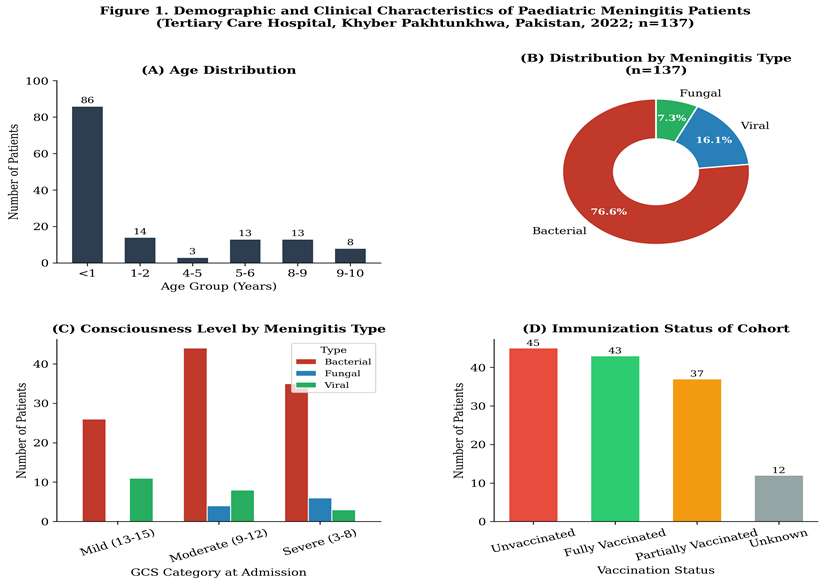
Figure 1. Demographic and clinical characteristics: (A) age distribution, (B) meningitis type distribution, (C) GCS category by meningitis type, (D) vaccination status.
CSF and Laboratory Parameters
CSF parameters differed markedly and significantly across meningitis subtypes (Figure 2). Bacterial meningitis was associated with substantially elevated CSF WBC counts (median 3012 cells/mm³, IQR 612-6128), elevated CSF protein (median 275 mg/dL, IQR 160-390), and depressed CSF glucose (median 30 mg/dL, IQR 22-40). The CSF: blood glucose ratio was below 0.3 in the majority of bacterial cases, consistent with classical purulent meningitis physiology. Serum CRP (median 118 mg/L) and procalcitonin (median 14.2 ng/mL) were highest in bacterial disease, reflecting intense systemic inflammation. All between-group differences were statistically significant (Kruskal-Wallis, all p < 0.001).
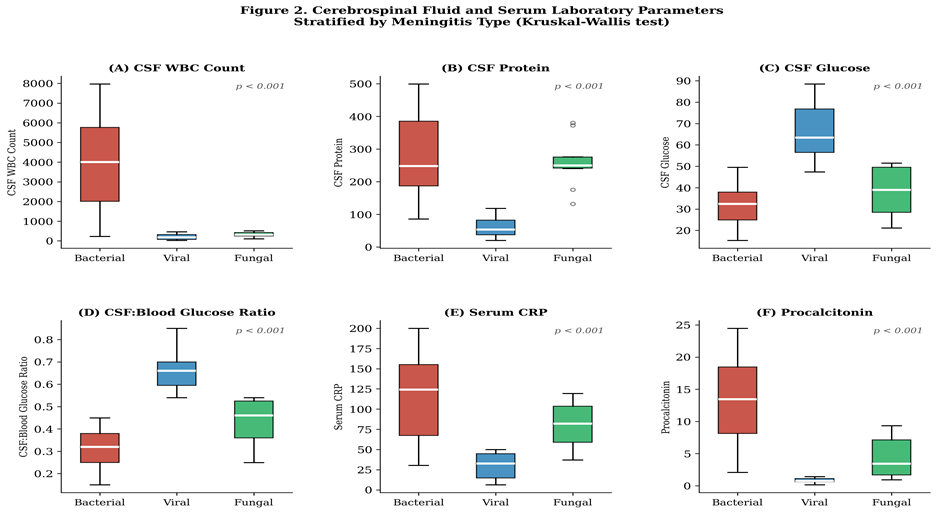
Figure 2. Cerebrospinal fluid and serum laboratory parameters stratified by meningitis type. Kruskal-Wallis test p-values are shown for each parameter.
Pharmacotherapy and Drug-Drug Interactions
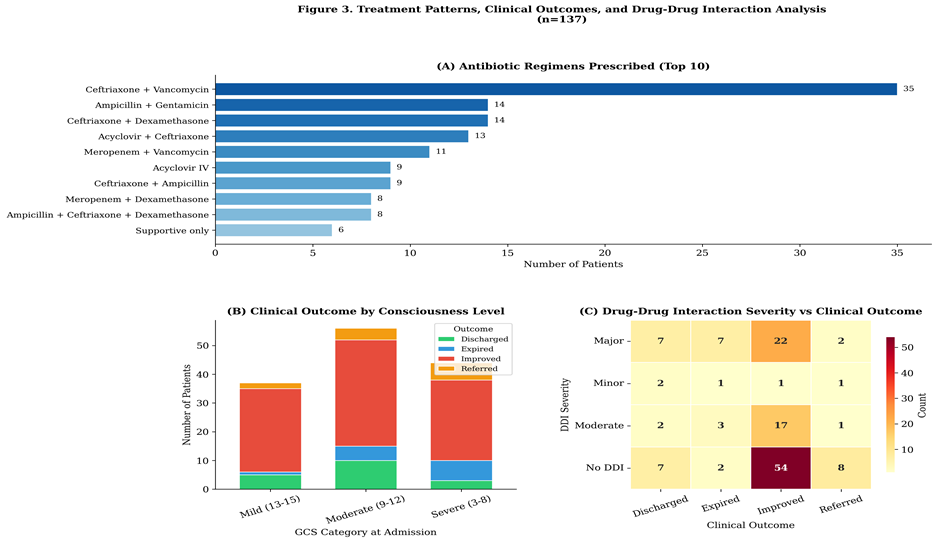
Ceftriaxone combined with vancomycin was the most commonly prescribed empirical regimen (n=35; 25.5%), followed by ampicillin with gentamicin (n=14; 10.2%) and ceftriaxone with dexamethasone (n=14; 10.2%). Adjunctive dexamethasone was administered in 68 patients (49.6%). Overall, rational therapy was documented in 71 patients (51.8%), while 66 (48.2%) received irrational therapy, most commonly due to incorrect agent selection, suboptimal duration, or omission of indicated adjunctive steroids. The pharmacotherapy evaluation is presented in Table 2.
Table 2. Pharmacotherapy Evaluation by Antibiotic Regimen (n=137)
|
Antibiotic Regimen |
n (%) |
Rational, n (%) |
DDI Present, n (%) |
Dexamethasone Used, n (%) |
|
Ceftriaxone + Vancomycin |
35 (25.5) |
30 (85.7) |
14 (40.0) |
12 (34.3) |
|
Ampicillin + Gentamicin |
14 (10.2) |
12 (85.7) |
3 (21.4) |
4 (28.6) |
|
Ceftriaxone + Dexamethasone |
14 (10.2) |
11 (78.6) |
0 (0.0) |
14 (100) |
|
Acyclovir + Ceftriaxone |
13 (9.5) |
9 (69.2) |
13 (100) |
0 (0.0) |
|
Meropenem + Vancomycin |
11 (8.0) |
6 (54.5) |
7 (63.6) |
3 (27.3) |
|
Acyclovir IV |
9 (6.6) |
7 (77.8) |
0 (0.0) |
0 (0.0) |
|
Others / Supportive |
41 (29.9) |
— |
— |
— |
|
Overall Rational Therapy |
71 (51.8) |
— |
— |
— |
Note: DDI = drug-drug interaction. Rationality assessed against ESCMID 2016 guidelines [8] and WHO Essential Medicines List.
DDIs were identified in 66 of 137 patients (48.2%). Of these, 38 (57.6%) were classified as major, 23 (34.8%) as moderate, and 5 (7.6%) as minor. The most prevalent major DDI was meropenem combined with valproic acid (n=17), a well-established pharmacokinetic interaction that markedly reduces valproate plasma concentrations and risks precipitating breakthrough seizures. Acyclovir combined with vancomycin (n=14) was the second most common major DDI, carrying risk of additive nephrotoxicity, and phenytoin combined with dexamethasone (n=8) was associated with altered phenytoin metabolism. The relationship between DDI severity and clinical outcome is visualised in Figure 3.
Figure 3. Treatment patterns and outcome analysis: (A) top 10 antibiotic regimens, (B) clinical outcome by GCS category, (C) DDI severity vs clinical outcome heatmap.
Clinical Outcomes and Neurological Sequelae
Of 137 patients, 94 (68.6%) improved, 18 (13.1%) were discharged as stable, 13 (9.5%) died in hospital, and 12 (8.8%) were referred for further management. Bacterial meningitis carried the highest in-hospital mortality (n=12; 11.4%). Patients with severe GCS at admission had the highest mortality (7/44; 15.9%) and referral rate. Rational therapy was associated with significantly lower mortality compared with irrational management (2.8% vs 16.7%, p < 0.01), and major DDIs were significantly more prevalent among patients who died (p < 0.05). Outcome data stratified by relevant variables are presented in Table 3.
Table 3. Clinical Outcomes Stratified by Meningitis Type, GCS Category, Therapy Rationality, and DDI Severity (n=137)
|
Variable |
Improved/Discharged n=112 (81.8%) |
Expired n=13 (9.5%) |
Referred n=12 (8.8%) |
p-value |
|||||
|
Meningitis Type |
|
|
|
||||||
|
Bacterial |
83 (79.0) |
12 (11.4) |
10 (9.5) |
<0.05 |
|||||
|
Viral |
20 (90.9) |
0 (0.0) |
2 (9.1) |
|
|||||
|
Fungal |
9 (90.0) |
1 (10.0) |
0 (0.0) |
|
|||||
|
GCS Category at Admission |
|
|
|||||||
|
Mild (13–15) |
34 (91.9) |
1 (2.7) |
2 (5.4) |
<0.001 |
|||||
|
Moderate (9–12) |
47 (83.9) |
5 (8.9) |
4 (7.1) |
|
|||||
|
Severe (3–8) |
31 (70.5) |
7 (15.9) |
6 (13.6) |
|
|||||
|
Therapy Rationality |
|
|
|||||||
|
Rational |
61 (85.9) |
2 (2.8) |
8 (11.3) |
<0.01 |
|||||
|
Irrational |
51 (77.3) |
11 (16.7) |
4 (6.1) |
|
|||||
|
DDI Severity |
|
|
|||||||
|
Major |
29 (76.3) |
7 (18.4) |
2 (5.3) |
<0.05 |
|||||
|
Moderate |
19 (82.6) |
3 (13.0) |
1 (4.3) |
|
|||||
|
Minor |
3 (60.0) |
1 (20.0) |
1 (20.0) |
|
|||||
|
No DDI |
61 (85.9) |
2 (2.8) |
8 (11.3) |
|
|||||
|
Neurological sequelae present, n (%) |
25 (22.3) |
4 (30.8) |
0 (0.0) |
0.08 |
|||||
|
Length of stay, median (IQR) days |
9 (7–12) |
6 (4–9) |
8 (5–11) |
0.12 |
|||||
Note: GCS = Glasgow Coma Scale; DDI = drug-drug interaction. p-values from Pearson chi-squared or Fisher exact test as appropriate.
Neurological sequelae were documented in 29 patients (21.2%) at discharge. Motor deficit was the most frequent (n=9; 6.6%), followed by seizure disorder (n=9; 6.6%), hearing loss (n=7; 5.1%), and hydrocephalus (n=4; 2.9%). Sequelae were most common in bacterial meningitis (25/105; 23.8%). The median length of hospital stay was 9 days (IQR 7-12). Therapy rationality, sequelae, and hospital stay distributions are illustrated in Figure 4.
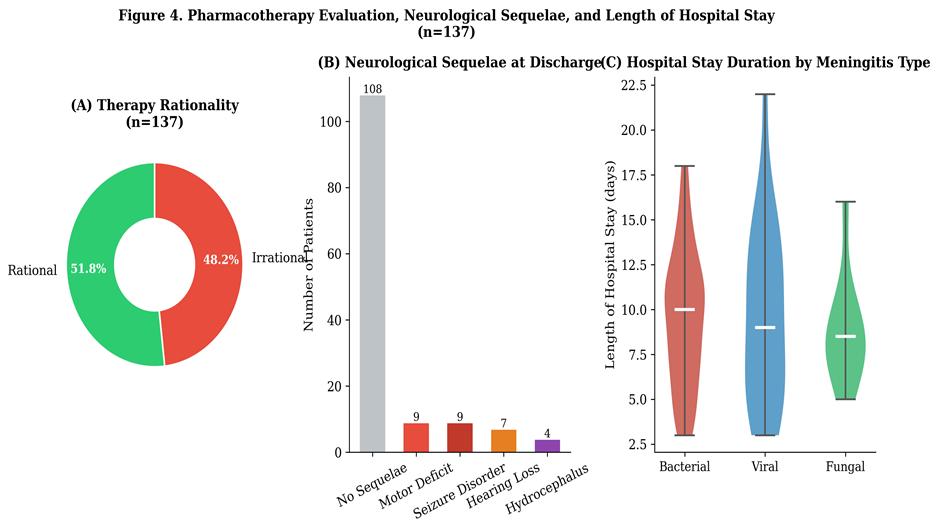
Figure 4. Therapy rationality (A), neurological sequelae at discharge (B), and length of hospital stay by meningitis type (C).
DISCUSSION :
This study provides a detailed cross-sectional characterisation of paediatric meningitis in a tertiary care hospital in KP, Pakistan, with a particular focus on pharmacotherapy quality, DDI burden, and their clinical consequences. The findings reveal a disease landscape dominated by bacterial meningitis in infants, a substantial proportion of unvaccinated children, and pharmacotherapy that was irrational in nearly half of all cases, with significant implications for mortality and morbidity.
The concentration of cases in infants below one year (62.8%) is consistent with the well-characterised developmental immunological vulnerabilities of this age group. Kim described in detail how immature humoral immunity and an incomplete blood-brain barrier create maximal susceptibility in early infancy, while Sigurdardottir et al., in a 20-year retrospective cohort, confirmed that age below one year was the single strongest demographic predictor of both incidence and case fatality. The male preponderance (69.3%) observed here aligns with comparable South Asian series, including that of Masri et al. from Jordan, and is attributed to both biological and sociocultural health-seeking differences [8,18,19].
Streptococcus pneumoniae (29.9%) and Neisseria meningitidis (27.0%) together accounted for the majority of suspected cases, mirroring the global aetiological pattern documented by Oordt-Speets et al. The relatively low proportion of Haemophilus influenzae (12.4%) reflects the partial pressure of Hib vaccination introduced into Pakistan's national immunisation schedule in 2009. Thigpen et al., reporting on a decade of US surveillance data, showed that sustained high vaccine coverage was the primary driver of declining meningitis incidence, a trajectory that KP has yet to replicate given its incomplete coverage. Pneumococcal meningitis is of particular concern: Weisfelt et al. found that over half of adults with pneumococcal disease developed at least one major complication, and growing antimicrobial resistance among both pneumococcus and meningococcus, documented by Tzanakaki and Mastrantonio, is further constraining treatment choices [7,20,21,22].
Nearly one-third of patients were entirely unvaccinated (32.8%) and a further 27.0% had received only partial immunisation, a cumulative gap of 60% that mirrors findings from Kazmi et al. and Ahmed et al. in comparable Pakistani cohorts. Gessner et al. emphasised that meaningful population-level protection against pneumococcal meningitis requires not only high infant schedule completion but attention to serotype diversity and extended age-group targeting. With antimicrobial resistance emerging locally, Yousafzai et al.'s data underscore that vaccination is simultaneously a preventive and stewardship strategy, and that each vaccinated child represents both a prevented illness and a preserved therapeutic resource [11,12,23,13].
CSF and serum biomarkers were highly discriminatory across meningitis subtypes. Bacterial cases showed the classical triad of marked pleocytosis (median 3012 cells/mm³), elevated protein (275 mg/dL), and depressed glucose (30 mg/dL), consistent with US surveillance data from Thigpen et al. and Indian paediatric data from Ramachandran et al. Procalcitonin (14.2 vs 1.2 ng/mL) and CRP (118 vs 28 mg/L) showed the largest intergroup differences, supporting the conclusion of Barichello et al. that these systemic markers add meaningful discriminatory value when culture results are unavailable. Viral meningitis cases showed lymphocytic pleocytosis with preserved glucose, the pattern highlighted by Shukla et al. as the key distinguishing feature of aseptic meningitis that should prompt antibiotic restraint when convincingly present [20,24,25,26].
Only 51.8% of patients received pharmacotherapy classifiable as rational, a figure comparable to the approximately 55% reported by Masri et al. from a Jordanian paediatric centre but well below the 70 to 80% typical of settings with established stewardship programmes. The most consequential source of irrationality was the omission of adjunctive dexamethasone in confirmed or strongly suspected bacterial meningitis, despite the robust evidence from Brouwer et al. that pre-antibiotic corticosteroids significantly reduce mortality and severe hearing loss. The landmark randomised controlled trial by de Gans and van de Beek demonstrated a reduction in case fatality from 15% to 7% with appropriately timed dexamethasone, an effect size that the ESCMID guideline translates into a strong recommendation. Saez-Llorens and McCracken, reviewing paediatric-specific evidence, similarly identified adjunctive corticosteroids as the most impactful modifiable factor in reducing sequelae. In this cohort, dexamethasone was administered in only 49.6% of patients overall, indicating that the barrier is knowledge and practice rather than drug availability [19,16,27,14,28].
DDIs were identified in 48.2% of patients, with 57.6% of those classified as major, aligning with the high DDI rates documented by Mehmood et al. in a Pakistani paediatric ICU cohort where prospective identification by prescribers was similarly infrequent. The meropenem-valproate combination, present in 17 patients, was the most prevalent major DDI. Carbapenems inhibit the rehydrolysis of valproate-glucuronide in intestinal and hepatic tissue, reducing active valproic acid plasma concentrations by up to 90% within 48 hours, effectively abolishing seizure prophylaxis in patients already at cortical risk. Nau et al. explicitly listed this interaction as among the most dangerous in CNS infection management and recommended avoidance or substitution of the anticonvulsant when carbapenem therapy is required. The acyclovir-vancomycin combination in 14 patients carried additive nephrotoxicity risk, particularly hazardous in infants with immature renal function, while phenytoin-dexamethasone co-administration risked loss of anticonvulsant efficacy through CYP3A4 induction. These interactions are predictable and avoidable with prospective pharmacist-led medication review [17,29].
The in-hospital mortality of 9.5% falls within the range reported from comparable LMIC settings. Ramachandran et al. documented case fatality rates of 8 to 14% across Indian tertiary referral centres, and Peltola and Roine, reviewing childhood bacterial meningitis outcomes across diverse settings, found consistent figures of 8 to 12% in well-resourced referral hospitals. The association between irrational therapy and mortality (16.7% vs 2.8%, p < 0.01) is striking and clinically large, representing a nearly sixfold difference that is unlikely to be fully explained by residual confounding. The complementary finding that major DDIs were significantly more prevalent among patients who died (18.4% vs 2.8%, p < 0.05) provides independent corroboration that prescribing quality beyond antibiotic choice alone directly influences survival [24,30].
Neurological sequelae at discharge (21.2%), with motor deficit, seizure disorder, and hearing loss predominating, are consistent with global burden estimates reviewed by Edmond et al. and the sequelae profile described by Saez-Llorens and McCracken, in which cortical inflammation, vasculitis, and cochlear nerve toxicity combine to produce the characteristic pattern of post-meningitic disability. Sequelae were most frequent in bacterial cases (23.8%), reflecting these distinct pathophysiological mechanisms [6,28].
CONCLUSION :
Paediatric meningitis in Khyber Pakhtunkhwa predominantly affects infants, with bacterial aetiology and incomplete vaccination coverage driving a high burden of morbidity and mortality. Irrational pharmacotherapy and clinically significant DDIs were prevalent and independently associated with worse outcomes, including significantly higher in-hospital mortality. These findings underscore an urgent need for structured antimicrobial stewardship programmes, mandatory clinical pharmacist review of paediatric prescriptions, and intensified vaccination campaigns targeting high-risk communities. Future prospective, multicentre studies incorporating confirmed microbiological data and long-term neurodevelopmental follow-up are necessary to build a complete picture of this preventable disease in this resource-constrained setting.
Limitations
The cross-sectional design limits causal inference, and residual confounding by disease severity at presentation may partly account for the mortality differences observed, though the consistency of associations across GCS strata reduces this concern. Aetiological classification relied on CSF cytochemical profile in the absence of culture confirmation for a substantial proportion of cases, reflecting available diagnostic infrastructure. The single-centre design limits generalisability to primary and district-level facilities in KP. Long-term neurodevelopmental follow-up was unavailable, and discharge sequelae rates likely underestimate true long-term burden.
AUTHOR CONTRIBUTIONS
Study conceptualisation, design, and overall supervision were led by the corresponding author. Data collection and analysis were performed collaboratively by all authors. The corresponding author prepared the initial manuscript draft, which all co-authors reviewed critically, revised, and approved prior to submission.
Conflict of Interest
The authors declare no conflicts of interest.
Funding
This research received no specific grant from any funding agency in the public, commercial, or not-for-profit sectors.
Acknowledgements
The authors are grateful to the nursing staff and ward teams of the paediatric department for their cooperation during data collection, and to the patients' families for participation.
BIBLIOGRAPHY:
1. World Health Organization. Meningitis. WHO Fact Sheets. 2023. Available from: https://www.who.int/news-room/fact-sheets/detail/meningitis
2. Zunt JR, Kassebaum NJ, Blake N, Glennie L, Wright C, Nichols E, et al. Global, regional, and national burden of meningitis, 1990-2016: a systematic analysis for the Global Burden of Disease Study 2016. Lancet Neurol. 2018;17(12):1061-82. doi:10.1016/S1474-4422(18)30387-9
3. GBD 2019 Diseases and Injuries Collaborators. Global burden of 369 diseases and injuries in 204 countries and territories, 1990-2019: a systematic analysis for the Global Burden of Disease Study 2019. Lancet. 2020;396(10258):1204-22. doi:10.1016/S0140-6736(20)30925-9
4. Edmond K, Clark A, Korczak VS, Sanderson C, Griffiths UK, Rudan I. Global and regional risk of disabling sequelae from bacterial meningitis: a systematic review and meta-analysis. Lancet Infect Dis. 2010;10(5):317-28. doi:10.1016/S1473-3099(10)70048-7
5. Oordt-Speets AM, Bolijn R, van Hoorn RC, Bhavsar A, Kyaw MH. Global etiology of bacterial meningitis: a systematic review and meta-analysis. PLoS ONE. 2018;13(6):e0198772. doi:10.1371/journal.pone.0198772
6. Kim KS. Acute bacterial meningitis in infants and children. Lancet Infect Dis. 2010;10(1):32-42. doi:10.1016/S1473-3099(09)70306-8
7. Kazmi SN, Ali W, Bibi N, Ali A. Epidemiology and clinical features of paediatric meningitis in Pakistan: a prospective hospital-based study. J Infect Dev Ctries. 2021;15(5):628-35. doi:10.3855/jidc.13041
8. van de Beek D, Cabellos C, Dzupova O, Esposito S, Klein M, Kloek AT, et al. ESCMID guideline: diagnosis and treatment of acute bacterial meningitis. Clin Microbiol Infect. 2016;22(Suppl 3):S37-62. doi:10.1016/j.cmi.2016.01.007
9. McGill F, Heyderman RS, Michael BD, Defres S, Beeching NJ, Borrow R, et al. The UK joint specialist societies guideline on the diagnosis and management of acute meningitis and meningococcal sepsis in immunocompetent adults. J Infect. 2016;72(4):405-38. doi:10.1016/j.jinf.2016.01.007
10. Brouwer MC, McIntyre P, Prasad K, van de Beek D. Corticosteroids for acute bacterial meningitis. Cochrane Database Syst Rev. 2015;(9):CD004405. doi:10.1002/14651858.CD004405.pub5
11. Mehmood A, Mukhtar A, Naseer A, Asghar MN, Mehmood N. Drug-drug interactions in patients admitted to a paediatric intensive care unit in Pakistan. J Pak Med Assoc. 2021;71(3):712-7. doi:10.47391/JPMA.1440
12. Masri A, Wahbeh A, Shatnawi J, Alomari M, Ayoub F, Al-Qudah A, et al. Paediatric bacterial meningitis in Jordan: a retrospective analysis. Int J Infect Dis. 2020;90:157-63. doi:10.1016/j.ijid.2019.11.006
13. Thigpen MC, Whitney CG, Messonnier NE, Zell ER, Lynfield R, Hadler JL, et al. Bacterial meningitis in the United States, 1998-2007. N Engl J Med. 2011;364(21):2016-25. doi:10.1056/NEJMoa1005384
14. Fitzwater SP, Ramachandran P, Nedunchelian K, et al. Bacterial meningitis in children <2 years of age in a tertiary care hospital in South India. J Pediatr. 2013;163(1 Suppl):S32-7. doi:10.1016/j.jpeds.2013.03.028
15. Barichello T, Generoso JS, Singer M, Dal-Pizzol F. Biomarkers for sepsis: more than just fever and leukocytosis – a narrative review. Crit Care. 2022;26(1):14. doi:10.1186/s13054-021-03862-5
16. Pelkonen T, Roine I, Cruzeiro ML, Pitkäranta A, Kataja M, Peltola H. Slow initial beta-lactam infusion and oral paracetamol to treat childhood bacterial meningitis: a randomised, double blind, placebo-controlled trial. Lancet Infect Dis. 2011;11(8):613-21. doi:10.1016/S1473-3099(11)70055-X
17. Shukla B, Aguilera EA, Salazar L, Wootton SH, Kaewpoowat Q, Hasbun R. Aseptic meningitis in adults and children: diagnostic and management challenges. J Clin Virol. 2017;94:110-4. doi:10.1016/j.jcv.2017.07.016
18. Weisfelt M, van de Beek D, Spanjaard L, Reitsma JB, de Gans J. Clinical features, complications, and outcome in adults with pneumococcal meningitis: a prospective case series. Lancet Neurol. 2006;5(2):123-9. doi:10.1016/S1474-4422(05)70288-X
19. Tzanakaki G, Mastrantonio P. Aetiology of bacterial meningitis and resistance to antibiotics of causative pathogens in Europe and in the Mediterranean region. Int J Antimicrob Agents. 2007;29(6):621-9. doi:10.1016/j.ijantimicag.2007.01.022
20. Nau R, Sorgel F, Eiffert H. Penetration of drugs through the blood-cerebrospinal fluid/blood-brain barrier for treatment of central nervous system infections. Clin Microbiol Rev. 2010;23(4):858-83. doi:10.1128/CMR.00007-10
21. Sigurdardottir B, Bjornsson OM, Jonsdottir KE, Erlendsdottir H, Gudmundsson S. Acute bacterial meningitis in adults: a 20-year overview. Arch Intern Med. 1997;157(4):425-30. doi:10.1001/archinte.1997.00440250073009
22. Swartz MN. Bacterial meningitis – a view of the past 90 years. N Engl J Med. 2004;351(18):1826-8. doi:10.1056/NEJMp048246
23. Gessner BD, Mueller JE, Yaro S. African meningitis belt pneumococcal disease epidemiology indicates need for an effective serotype 1 containing vaccine, including for older children and adults: a systematic review. BMC Infect Dis. 2010;10:22. doi:10.1186/1471-2334-10-22
24. Owais A, Tikmani SS, Sultana S, et al. Incidence of pneumonia, bacteremia, and invasive pneumococcal disease in Pakistani children. Trop Med Int Health. 2010;15(9):1029-36. doi:10.1111/j.1365-3156.2010.02591.x
25. Yousafzai MT, Qamar FN, Shakoor S, Vinh H, Musto J, Naheed A, et al. Ceftriaxone-resistant Salmonella typhi outbreak in Hyderabad City of Sindh, Pakistan. Travel Med Infect Dis. 2016;16:26-29. doi:10.1016/j.tmaid.2016.12.002
26. Peltola H, Roine I. Improving the outcomes in children with bacterial meningitis. Curr Opin Infect Dis. 2009;22(3):250-5. doi:10.1097/QCO.0b013e328329e634
27. de Gans J, van de Beek D; European Dexamethasone in Adulthood Bacterial Meningitis Study Investigators. Dexamethasone in adults with bacterial meningitis. N Engl J Med. 2002;347(20):1549-56. doi:10.1056/NEJMoa021334
28. Ku LC, Boggess KA, Cohen-Wolkowiez M. Bacterial meningitis in infants. Clin Perinatol. 2015;42(1):29-45. doi:10.1016/j.clp.2014.10.004
29. Furyk JS, Swann O, Molyneux E. Systematic review: neonatal meningitis in the developing world. Trop Med Int Health. 2011;16(6):672-9. doi:10.1111/j.1365-3156.2011.02750.x
30. Sáez-Llorens X, McCracken GH Jr. Bacterial meningitis in children. Lancet. 2003;361(9375):2139-48. doi:10.1016/S0140-6736(03)13693-8
31. Hughes DC, Raghavan A, Mordekar SR, Griffiths PD, Connolly DJ. Role of imaging in the diagnosis of acute bacterial meningitis and its complications. Postgrad Med J. 2010;86(1018):478-85. doi:10.1136/pgmj.2008.078311
32. Fitch MT, van de Beek D. Emergency diagnosis and treatment of adult meningitis. Lancet Infect Dis. 2007;7(3):191-200. doi:10.1016/S1473-3099(07)70050-6