Comparative Evaluation of 3D Printed PEKK and Resin Ceramic Crowns on the Basis of Marginal Adaptability and Shear Bond Strength – An In Vitro Study
- K. Dhruv Kiran , Saveetha Dental college and Hospitals,Saveetha Institute of Medical and Technical Sciences, Saveetha University,Chennai - 600077
- L. Keerthi Sasanka , Senior Lecturer,Department of prosthodontics,Saveetha Dental college and Hospitals,Saveetha Institute of Medical and Technical Sciences,Saveetha University,Chennai- 600077, Tamil Nadu, India
Article Information:
Abstract:
The advancement of biomaterials and additive manufacturing has introduced new possibilities in restorative dentistry. Polyetherketoneketone (PEKK) and resin ceramic materials are increasingly used for crown fabrication due to their favorable mechanical and aesthetic properties. Aim: To comparatively evaluate the marginal adaptability and shear bond strength of 3D printed PEKK and resin ceramic crowns.Materials and Methods: Two samples each of 3D printed PEKK and resin ceramic crowns were fabricated using additive manufacturing techniques. All samples underwent thermocycling between 5°C and 55°C with 12 seconds immersion and 5 seconds transfer time. Marginal adaptability was assessed using a stereomicroscope. For shear bond strength analysis, cylindrical samples (3 mm diameter × 4 mm height) were bonded to natural teeth using Type I glass ionomer cement. Testing was performed using Instron ElectroPuls. Results: Both materials demonstrated satisfactory marginal adaptability. PEKK samples exhibited higher maximum force and compressive stress values compared to resin ceramic samples during shear bond strength testing.Conclusion: PEKK crowns showed superior mechanical strength, while resin ceramic crowns exhibited favorable bonding and aesthetic characteristics. Both materials are viable options for restorative applications, with selection depending on clinical requirements.
Keywords:
Article :
INTRODUCTION:
Polyetherketoneketone (PEKK), a high-performance thermoplastic polymer belonging to the polyaryletherketone (PAEK) family, has recently emerged as a promising material in modern dentistry. Its growing popularity is primarily attributed to its exceptional physicochemical and mechanical properties, including high compressive strength, excellent wear resistance, low plaque affinity, and outstanding biocompatibility. Additionally, PEKK exhibits superior chemical stability and resistance to hydrolysis, making it highly suitable for the harsh oral environment where fluctuations in pH, temperature, and mechanical stress are common.
Another notable advantage of PEKK is its modulus of elasticity, which is closer to that of natural bone compared to traditional metallic or ceramic materials. This property allows for better stress distribution, reducing the risk of stress concentration and potential failure of restorations. Consequently, PEKK has been widely explored for various dental applications such as crowns, bridges, implant-supported prostheses, and frameworks for removable partial dentures. [1-5]
The integration of additive manufacturing (3D printing) technology has further revolutionized the use of PEKK in prosthodontics. 3D printing enables the fabrication of highly precise, customized restorations with improved marginal fit and reduced material wastage. It also allows for rapid prototyping and reproducibility, making it a valuable tool in digital dentistry workflows. These advancements contribute to enhanced clinical outcomes, patient comfort, and overall efficiency in dental practice. [6-7]
On the other hand, resin ceramic materials have gained significant acceptance in restorative dentistry due to their superior aesthetic properties and favorable bonding characteristics. These hybrid materials combine the advantages of resin composites and ceramics, offering a unique balance of strength, flexibility, and translucency. Their ability to closely mimic the optical properties of natural teeth makes them highly desirable for anterior and posterior restorations.
Resin ceramic crowns are widely used in clinical applications such as single crowns, inlays, onlays, and veneers. Their inherent resilience reduces the risk of brittle fracture commonly associated with conventional ceramics, while their resin component enhances machinability and bonding to tooth structures. Furthermore, these materials exhibit good polishability and wear compatibility with opposing dentition, contributing to their long-term clinical success. [8-10]
Despite the individual advantages of PEKK and resin ceramic materials, their comparative performance in key clinical parameters remains an area of ongoing research. Marginal adaptability is a critical factor influencing the success and longevity of dental restorations. Poor marginal fit can lead to microleakage, secondary caries, plaque accumulation, and periodontal complications. Therefore, achieving optimal marginal integrity is essential for the durability and biological compatibility of restorations.
Similarly, shear bond strength plays a vital role in determining the retention and stability of restorations. Adequate bonding between the restorative material and tooth structure ensures resistance to dislodgement under functional forces. Variations in material composition, surface treatment, and bonding protocols can significantly influence bond strength outcomes.
In this context, a comparative evaluation of 3D printed PEKK and resin ceramic crowns, focusing on marginal adaptability and shear bond strength, is essential to determine their clinical applicability. Such studies provide valuable insights into material performance, guiding clinicians in selecting the most appropriate restorative option based on functional and aesthetic requirements. [11-15]
AIM
To compare the marginal adaptability and shear bond strength of 3D printed PEKK and resin ceramic crowns.
OBJECTIVES
1. To evaluate the marginal adaptability of PEKK and resin ceramic crowns
2. To assess the shear bond strength of both materials
3. To compare the mechanical performance of the two restorative materials
Material And Methods:
Study Design
This in vitro comparative study evaluated two restorative materials fabricated using additive manufacturing.
Sample Preparation
• Two samples each of 3D printed PEKK and resin ceramic crowns were fabricated.
• Additive manufacturing techniques were employed to ensure precision and standardization.
Thermocycling Procedure
● All samples were subjected to thermocycling to simulate oral conditions:
o Temperature range: 5°C to 55°C
o Immersion time: 12 seconds
o Transfer time: 5 seconds
Marginal Adaptability Assessment
● Marginal fit was evaluated using a stereomicroscope.
● The marginal gap between the crown and tooth structure was assessed qualitatively.
Shear Bond Strength Testing
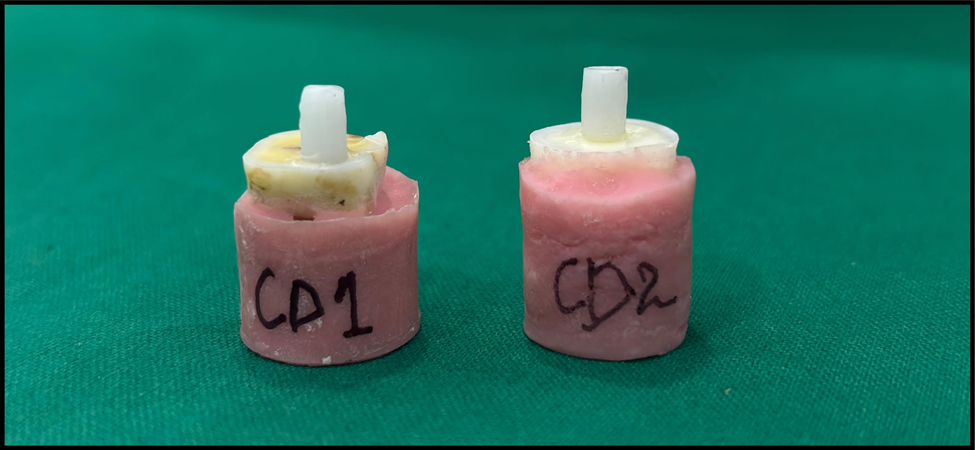
● Cylindrical samples (3 mm diameter × 4 mm height) were prepared.
● Samples were bonded to natural teeth using Type I glass ionomer cement (GIC).
● Shear bond strength was measured using Instron ElectroPuls.
Data Analysis
● Maximum force and compressive stress values were recorded.
● Comparative evaluation between the two materials was performed.
RESULTS::
Marginal Adaptability
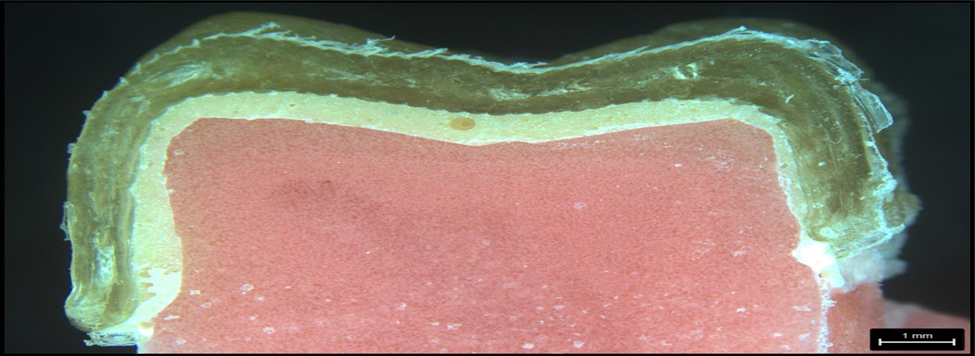
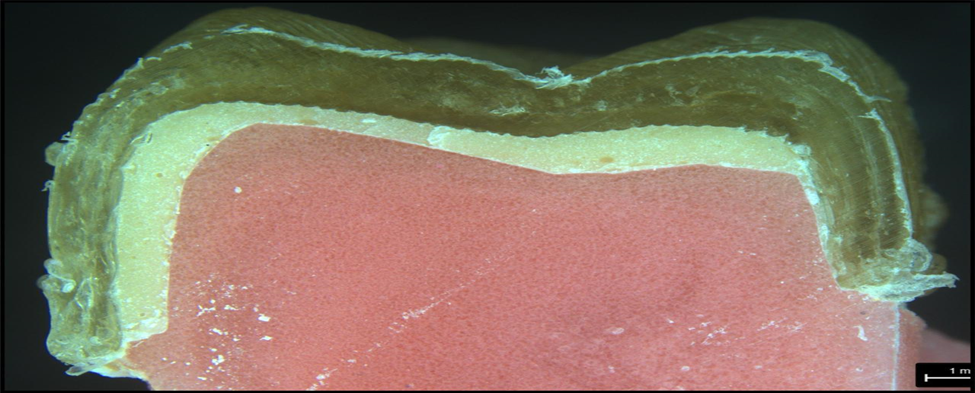
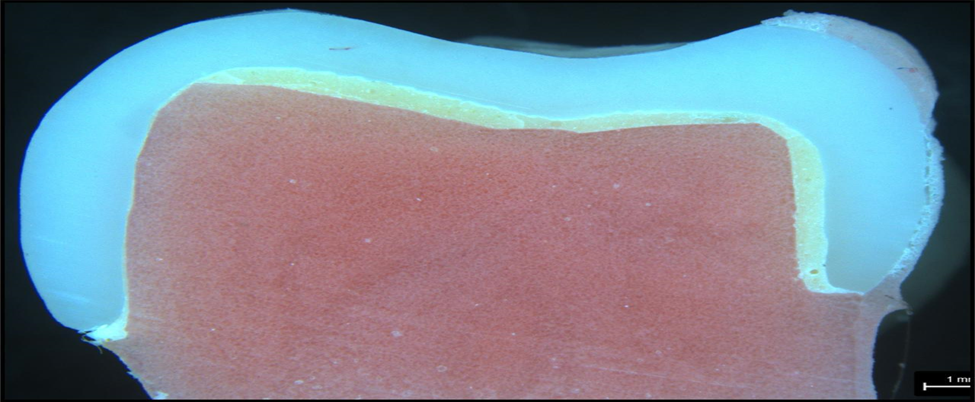
Both PEKK and resin ceramic crowns demonstrated good marginal adaptability when observed under a stereomicroscope. No significant marginal discrepancies were noted in either group, indicating that both materials provide clinically acceptable marginal fit.
Shear Bond Strength
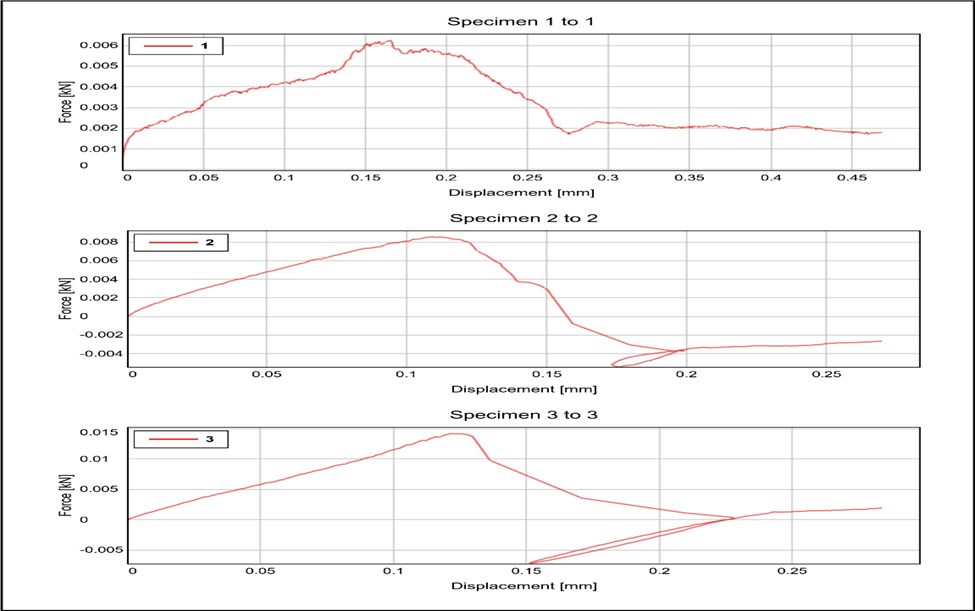
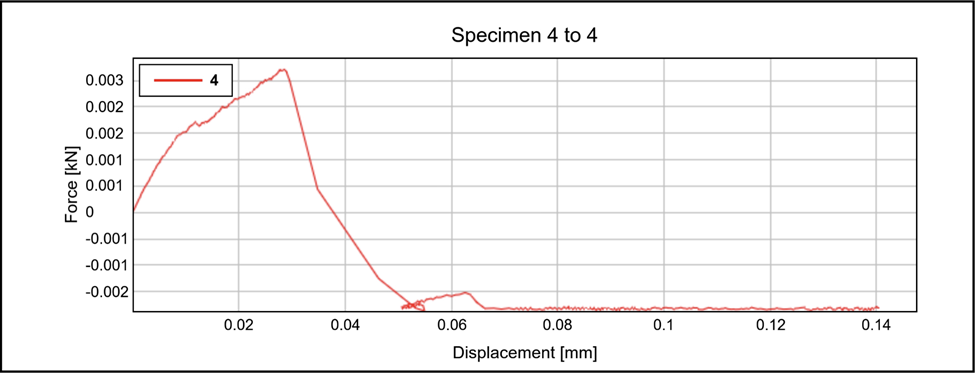
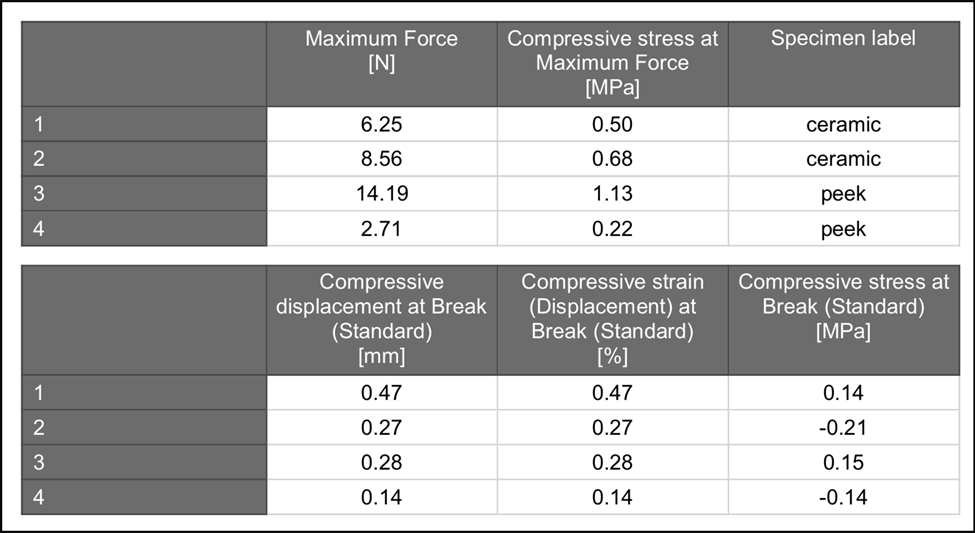
● PEKK samples showed higher maximum force values compared to resin ceramic samples.
● Compressive stress at maximum force was also greater in PEKK specimens.
● Resin ceramic samples exhibited consistent bonding but comparatively lower strength values.
● The compressive stress at break showed variability (both positive and negative values) in both materials.
DISCUSSION :
Marginal Adaptability
Marginal adaptability is one of the most critical determinants of the clinical success and longevity of dental restorations. An optimal marginal seal prevents microleakage, which is a major cause of secondary caries, postoperative sensitivity, pulpal irritation, and periodontal complications. Poor marginal fit may also facilitate bacterial colonization and plaque accumulation, ultimately compromising the restoration and surrounding tissues.
In the present study, both PEKK and resin ceramic crowns demonstrated satisfactory marginal adaptability when evaluated under a stereomicroscope. This finding indicates that both materials, when fabricated using additive manufacturing techniques, are capable of achieving clinically acceptable marginal precision. The accuracy observed may be attributed to the advancements in digital dentistry workflows, including computer-aided design (CAD) and 3D printing technologies, which allow for precise control over restoration geometry and dimensions.
PEKK crowns, due to their thermoplastic nature and favorable processing characteristics, may exhibit slight adaptability during fabrication, potentially enhancing marginal fit. Similarly, resin ceramic materials benefit from their hybrid composition, which allows for easier machining and finishing, contributing to improved marginal integrity.
However, it is important to note that stereomicroscopic evaluation provides only a two-dimensional assessment of marginal gaps. For a more comprehensive and quantitative analysis, advanced imaging techniques such as scanning electron microscopy (SEM) or micro-computed tomography (micro-CT) are recommended. These methods can provide high-resolution, three-dimensional visualization of marginal discrepancies, enabling more precise measurement and comparison between materials.
Furthermore, factors such as cement thickness, preparation design, and printing accuracy can influence marginal fit and should be considered in future investigations.
Shear Bond Strength
Shear bond strength is a crucial parameter that determines the retention, durability, and clinical performance of restorative materials under functional loading conditions. Adequate bond strength ensures that restorations remain securely attached to the tooth structure, resisting dislodgement caused by masticatory forces.
In this study, PEKK specimens exhibited higher maximum force and compressive stress values compared to resin ceramic specimens. This observation can be attributed to the inherent mechanical properties of PEKK, including its high fracture toughness, resilience, and resistance to deformation. The polymeric structure of PEKK allows it to absorb and distribute stress more effectively, reducing the likelihood of catastrophic failure under load.
However, despite its superior mechanical strength, PEKK is known to have relatively low surface energy, which can affect its bonding capability. Surface treatment methods such as sandblasting, plasma treatment, or adhesive primers are often required to enhance its bond strength in clinical applications. In this study, the use of Type I glass ionomer cement may have influenced the bonding performance of PEKK, as alternative adhesive systems could potentially yield different results.
Resin ceramic materials, although demonstrating slightly lower mechanical strength, exhibited consistent and reliable bonding performance. This can be attributed to their resin matrix, which facilitates chemical adhesion to tooth structure and luting agents. The presence of ceramic fillers further enhances their mechanical properties while maintaining adequate bond strength.
The variation observed in compressive stress at break for both materials indicates differences in fracture behavior. PEKK tends to exhibit a more ductile mode of failure, characterized by deformation before fracture, whereas resin ceramic materials may show a relatively brittle fracture pattern. These differences are clinically significant, as they influence how materials respond to functional stresses over time.
Overall, while PEKK offers superior strength and durability, resin ceramic materials provide balanced performance with reliable bonding and aesthetic advantages.
LIMITATIONS AND FUTURE SCOPE
Limitations
1. Sample Size: The study utilized a limited number of samples, which may not fully represent the variability and performance of the materials in real clinical scenarios. A larger sample size would improve the statistical validity and reliability of the findings.
2. Thermocycling Conditions: Although thermocycling is widely used to simulate oral environmental conditions, it cannot fully replicate the complex intraoral environment. Factors such as occlusal forces, saliva composition, pH fluctuations, and microbial activity were not accounted for in this study.
3. Bonding Agent Selection: Only Type I glass ionomer cement was used as the luting agent. Different bonding systems, including resin-based cements and adhesive primers, may significantly influence the shear bond strength of both PEKK and resin ceramic materials.
4. Evaluation Techniques: The use of a stereomicroscope limits the accuracy of marginal gap assessment. More precise analytical tools could provide better insights into marginal discrepancies.
Future Scope
1. Increased Sample Size: Future studies should incorporate a larger number of samples to enhance the reliability, reproducibility, and generalizability of the results.
2. Long-Term In Vivo Studies: Clinical trials conducted over extended periods are necessary to evaluate the long-term performance, wear resistance, and durability of PEKK and resin ceramic crowns under real-life oral conditions.
3. Advanced Imaging Techniques: The use of advanced imaging modalities such as SEM and micro-CT can provide high-resolution, three-dimensional analysis of marginal fit and internal adaptation.
4. Surface Treatment and Bonding Protocols: Investigating different surface modification techniques and bonding agents can help optimize the adhesion properties of PEKK and improve overall restoration performance.
5. Comparative Studies with Other Materials: Future research can include comparisons with other restorative materials such as zirconia and lithium disilicate to establish a broader understanding of material performance.
6. Integration with Digital Dentistry: Further exploration of CAD/CAM and AI-driven design systems could enhance the precision, efficiency, and predictability of restorative outcomes.
CONCLUSION:
Both PEKK and resin ceramic crowns demonstrated satisfactory marginal adaptability under stereomicroscopic evaluation. PEKK exhibited superior shear bond strength, indicating higher mechanical durability, while resin ceramic crowns provided reliable bonding and superior aesthetic properties.
Overall, PEKK shows promise as a durable restorative material, whereas resin ceramic remains a preferred option for aesthetic restorations. The choice between the two materials should be based on clinical requirements, balancing strength and aesthetics.
BIBLIOGRAPHY:
1. Moreira A, Gomes PS, Clemente MP, Mendes J. Comparative Evaluation of 3D-Printed Resins for Single-Tooth Dental Crowns-Provisional and Permanent: A Scoping Review. European Journal of Prosthodontics & Restorative Dentistry. 2025 Sep 1;33(3).
2. El-Farag SA, Elerian FA, Elsherbiny AA, Abbas MH. Impact of different CAD/CAM materials on internal and marginal adaptations and fracture resistance of endocrown restorations with: 3D finite element analysis. BMC Oral health. 2023 Jun 25;23(1):421.
3. Gökay GD, Aladağ SÜ. Comparison of the shear bond strengths of two different polyetheretherketone (PEEK) framework materials and CAD–CAM veneer materials. BMC Oral Health. 2024 Apr 12;24(1):444.
4. Vakkala SB. Comparison of Surface Roughness of PEKK and PEEK Material After Surface Modification and Its Effect on the Shear Bond Strength to Indirect Composite Veneering Material-An In vitro Study (Master's thesis, Rajiv Gandhi University of Health Sciences (India)).
5. Aktaş N, Akın Y, Ocak M, Atabek D, Bankoğlu Güngör M. Marginal and internal adaptation and absolute marginal discrepancy of 3D-printed, milled, and prefabricated crowns for primary molar teeth: an in vitro comparative study. BMC Oral Health. 2025 Apr 15;25(1):575.
6. Chuchulska B, Dimitrova M, Vlahova A, Hristov I, Tomova Z, Kazakova R. Comparative analysis of the mechanical properties and biocompatibility between CAD/CAM and conventional polymers applied in prosthetic dentistry. Polymers. 2024 Mar 22;16(7):877.
7. Refaie AM. The Effect of Cyclic Loading on Fracture Strength of 3D Printed Zirconia Crowns and CAD/CAM Zirconia Crowns (Doctoral dissertation, Universitäts-und Landesbibliothek Bonn).
8. Direk A, Tekin S, Khurshid Z. Fracture strength of cad-cam milled polyetheretherketone (PEEK) post-cores vs conventional post-cores; an in vitro study. PeerJ. 2024 Sep 5;12:e18012.
9. Zol, S.M., Alauddin, M.S., Said, Z., Mohd Ghazali, M.I., Hao-Ern, L., Mohd Farid, D.A., Zahari, N.A.F.H., Al-Khadim, A.H.A. and Abdul Aziz, A.H., 2023. Description of poly (aryl-ether-ketone) materials (PAEKs), polyetheretherketone (PEEK) and polyetherketoneketone (PEKK) for application as a dental material: a materials science review. Polymers, 15(9), p.2170.
10. Emam M, Metwally MF. Effect of coping materials zirconia or polyetheretherketone with different techniques of fabrication on vertical marginal gap and fracture resistance of posterior crowns with composite veneering. BMC oral health. 2023 Aug 9;23(1):546.
11. Tartuk BK, Akın Tartuk G. Impact of Thermomechanical Aging on Marginal Fit and Fracture Resistance of CAD/CAM Endocrowns Fabricated from Different Materials. Polymers. 2026 Jan 5;18(1):143.
12. Wan CW. Comparative Finite Element Analysis of Stress Distribution of Different Implant-Supported Crown and Abutment Materials (Master's thesis, University of Malaya (Malaysia)).
13. Beleidy M, Ziada A. Marginal accuracy and fracture resistance of posterior crowns fabricated from CAD/CAM PEEK cores veneered with HIPC or nanohybrid conventional composite. Egyptian Dental Journal. 2020 Oct 1;66(4-October (Fixed Prosthodontics, Removable Prosthodontics and Dental Materials)):2541-52.
14. ElMalah NS, Ibrahim Y, Mostafa D. Evaluation of 3D printed nano-modified resin shear bond strength on titanium surfaces (an in-vitro study). BMC oral health. 2025 May 27;25(1):806.
15. Kharboush MG, Othman HI, Aldamaty MF, Alameldin AM. Fracture resistance and mode of failure of modified Polyether-ether-ketone versus lithium disilicate endocrowns. BMC Oral Health. 2025 Jan 8;25(1):40.