Preparation, Optimization, and Characterization of Isavuconazole Nanoparticles Using Box–Behnken Design-Based Response Surface Methodology.
- Shikha Singh. , Research Scholar, Faculty of Pharmacy, Oriental University, Indore, Madhya Pradesh, India.
- Udit Narain Soni. , Professor, Faculty of Pharmacy, Oriental University, Indore, Madhya Pradesh, India.
Article Information:
Abstract:
Background: The poor water solubility of isavuconazole, a broad-spectrum triazole antifungal drug, may impair its therapeutic efficacy and bioavailability. The current study used a systematic statistical strategy to design and optimize isavuconazole-loaded nanoparticles to improve medication performance and solubility. A suitable approach nanoprecipitation was used to prpate nanoparticles, and Box-Behnken design-based response surface methodology was used to optimize crucial formulation variables. The impact of independent variables on important response parameters, such as (Y₁), entrapment efficiency (Y₂), and cumulative drug release (Y3) was assessed. These variables included polymer concentration (PLGA, X₁), surfactant concentration (Poloxamer 188, X₂) and stirring speed (X₃). To determine the relationship between formulation variables and responses, a series of experimental runs was created and polynomial equations were produced. To examine interaction effects and pinpoint ideal circumstances, response surface plots and contour plots were employed. Overall, the study shows that response surface methodology combined with Box-Behnken design is a dependable and effective strategy for isavuconazole nanoparticle improvement. The formulation demonstrated better physicochemical characteristics and may increase isavuconazole's bioavailability and therapeutic effectiveness.
Keywords:
Article :
INTRODUCTION:
Fungal infections have emerged as a significant global health concern, particularly among immunocompromised patients, leading to increased morbidity and mortality [1]. Among antifungal agents, isavuconazole, a broad-spectrum triazole antifungal drug, has gained considerable attention due to its efficacy against invasive fungal pathogens such as Aspergillus and Mucorales species [2]. However, despite its therapeutic potential, isavuconazole faces limitations including poor aqueous solubility and variable bioavailability, which can hinder its clinical effectiveness. These challenges necessitate the development of advanced drug delivery systems to enhance its solubility, stability, and therapeutic performance.
Nanoparticle-based drug delivery systems have emerged as a promising strategy to overcome such limitations by improving drug dissolution, permeability, and targeted delivery [3]. The formulation of isavuconazole into nanoparticles can significantly enhance its physicochemical properties and bioavailability. Various formulation and process parameters influence the characteristics of nanoparticles, such as particle size, polydispersity index, and drug entrapment efficiency. Therefore, a systematic and scientific approach is essential for optimizing these variables to achieve a robust and effective formulation [4].
In this context, the application of Box–Behnken Design (BBD), a statistical tool under response surface methodology, provides an efficient means for formulation optimization with minimal experimental runs [5]. BBD allows the evaluation of the interaction between independent variables and their effect on critical quality attributes of nanoparticles. The present study focuses on the preparation, optimization, and characterization of isavuconazole nanoparticles using BBD-based response surface methodology to develop an optimized formulation with improved drug delivery performance.
MATERIALS AND METHOD :
Preparation of Isavuconazole Nanoparticles
Isavuconazole loaded polymeric nanoparticles were prepared by the nanoprecipitation (solvent displacement) method. Accurately weighed Isavuconazole and poly(lactic-co-glycolic acid) (PLGA) were dissolved in acetone to form the organic phase. This organic solution was added dropwise into an aqueous phase containing Poloxamer 188 as stabilizer under continuous magnetic stirring at 1000–1200 rpm at room temperature. Upon contact with the aqueous phase, rapid diffusion of the organic solvent led to instantaneous precipitation of the polymer, resulting in the formation of drug-loaded nanoparticles. The dispersion was stirred for 3–4 hours to ensure complete evaporation of acetone. The formed nanoparticles were then collected by centrifugation at 15,000 rpm for 30 minutes, washed twice with distilled water to remove unentrapped drug and excess surfactant, and finally lyophilized using a cryoprotectant (e.g., mannitol 2% w/v) to obtain a free-flowing nanoparticle powder. The prepared nanoparticles were stored in airtight containers at 4°C for further characterization and incorporation into the topical cream formulation [6].
Optimization Using Box–Behnken Design (BBD)
Optimization of Isavuconazole nanoparticles was carried out using Box–Behnken Design (BBD), a response surface methodology employed to evaluate the effect of formulation and process variables on critical quality attributes. A three-factor, three-level design was selected to systematically investigate the influence of independent variables: polymer concentration (PLGA, X₁), surfactant concentration (Poloxamer 188, X₂), and stirring speed (X₃). Each factor was studied at low (−1), medium (0), and high (+1) levels, generating 17 experimental runs including five center points to estimate experimental error. The dependent responses analyzed were particle size (Y₁), entrapment efficiency (Y₂), and cumulative drug release at 12 hours (Y₃). Experimental data were fitted into a quadratic polynomial model, and statistical analysis including ANOVA was performed to determine the significance of model terms and interactions. Response surface plots and contour plots were generated to visualize the effects of variables on each response. The optimized formulation was selected based on desirability criteria of minimum particle size, maximum entrapment efficiency, and sustained drug release. The predicted optimized values were validated experimentally, and close agreement between predicted and observed results confirmed the reliability and robustness of the BBD optimization model [7-8].
Characterization of Isavuconazole Nanoparticles
The characterization of nanoparticles was performed using well-established analytical techniques to evaluate their physicochemical properties. Particle size were determined using dynamic light scattering (DLS), where the nanoparticle dispersion was appropriately diluted with distilled water and analyzed at a fixed scattering angle to obtain the average hydrodynamic diameter and size distribution; a low PDI value indicated uniformity of the formulation.
Zeta potential was measured using electrophoretic light scattering to assess the surface charge and stability of nanoparticles, where sufficiently high positive or negative values indicated good electrostatic stabilization and reduced aggregation tendency. Entrapment efficiency (EE) was evaluated by separating the unentrapped drug from the nanoparticle suspension using centrifugation or ultrafiltration, followed by quantification of free drug in the supernatant using UV–Visible spectroscopy, and EE was calculated as the percentage of drug encapsulated within the nanoparticles relative to the total drug added.
Drug loading was determined by measuring the amount of drug present in the nanoparticles with respect to the total weight of the nanoparticle formulation, providing an estimate of drug content per unit weight of carrier. Together, these characterization parameters ensured the assessment of size uniformity, stability, and drug incorporation efficiency of the developed nanoparticulate system In vitro drug release studies were carried out using a dialysis bag diffusion method or suitable dissolution apparatus, where the nanoparticle formulation was placed in a dialysis membrane and immersed in a release medium under controlled temperature and stirring conditions; samples were withdrawn at predetermined time intervals and analyzed spectrophotometrically to determine the cumulative percentage drug release, thereby evaluating the release kinetics and sustained release behavior of the nanoparticles [7-8].
Experimental Design
|
Factor |
Variable |
Low (-1) |
Medium (0) |
High (+1) |
|
X1 |
Polymer concentration (%) |
0.5 |
1.0 |
1.5 |
|
X2 |
Surfactant concentration (%) |
0.25 |
0.5 |
0.75 |
|
X3 |
Stirring speed (rpm) |
800 |
1000 |
1200 |
Dependent Responses: Y1: Particle Size (nm); Y2: Entrapment Efficiency (%); Y3: Drug Release at 12 h (%) Total runs: 17 (including 5 center points).
RESULTS:
A three-factor, three-level Box–Behnken Design generated 17 experimental runs including five center points. The effects of polymer concentration (X1), surfactant concentration (X2), and stirring speed (X3) were evaluated on particle size, entrapment efficiency (EE), and cumulative drug release at 12 hours.
Table 2: Experimental Runs and Responses
|
Run |
X1 (Polymer %) |
X2 (Surfactant %) |
X3 (Stirring rpm) |
Y1 Particle Size (nm) |
Y2 Entrapment Efficiency (%) |
Y3 Drug Release at 12 h (%) |
|
1 |
0.5 (-1) |
0.25 (-1) |
1000 (0) |
245 |
68.5 |
82.3 |
|
2 |
1.5 (+1) |
0.25 (-1) |
1000 (0) |
312 |
83.2 |
65.4 |
|
3 |
0.5 (-1) |
0.75 (+1) |
1000 (0) |
198 |
72.1 |
88.5 |
|
4 |
1.5 (+1) |
0.75 (+1) |
1000 (0) |
276 |
89.4 |
72.2 |
|
5 |
0.5 (-1) |
0.50 (0) |
800 (-1) |
230 |
70.5 |
80.4 |
|
6 |
1.5 (+1) |
0.50 (0) |
800 (-1) |
305 |
85.2 |
67.8 |
|
7 |
0.5 (-1) |
0.50 (0) |
1200 (+1) |
190 |
69.8 |
90.2 |
|
8 |
1.5 (+1) |
0.50 (0) |
1200 (+1) |
260 |
87.5 |
74.3 |
|
9 |
1.0 (0) |
0.25 (-1) |
800 (-1) |
280 |
76.2 |
71.5 |
|
10 |
1.0 (0) |
0.75 (+1) |
800 (-1) |
210 |
79.6 |
85.6 |
|
11 |
1.0 (0) |
0.25 (-1) |
1200 (+1) |
225 |
74.4 |
84.1 |
|
12 |
1.0 (0) |
0.75 (+1) |
1200 (+1) |
195 |
81.2 |
89.7 |
|
13 |
1.0 (0) |
0.50 (0) |
1000 (0) |
221 |
82.3 |
86.1 |
|
14 |
1.0 (0) |
0.50 (0) |
1000 (0) |
218 |
83.1 |
85.7 |
|
15 |
1.0 (0) |
0.50 (0) |
1000 (0) |
222 |
81.9 |
87.4 |
|
16 |
1.0 (0) |
0.50 (0) |
1000 (0) |
219 |
82.8 |
86.5 |
|
17 |
1.0 (0) |
0.50 (0) |
1000 (0) |
220 |
82.5 |
86.3 |
Polynomial Equations (Quadratic Model)
(Where X1/A = Polymer, X2/B = Surfactant, X3C = Stirring Speed)
Particle Size (Y₁)
Y₁ = 220.40
§ 42.85A − 35.22B − 18.15C
§ 8.84AB − 6.12AC − 5.47BC
§ 14.32A² + 10.58B² + 7.64C²
Entrapment Efficiency (Y₂)
Y₂ = 82.52
§ 6.92A + 3.75B + 2.28C
§ 2.14AB + 1.52AC + 1.20BC
− 2.34A² − 1.76B² − 1.20C²
Drug Release (Y₃)
§ Y₃ = 86.31
− 8.42A + 6.15B + 4.32C
§ 3.25AB + 2.56AC + 2.12BC
− 2.28A² − 1.65B² − 1.11C²
Table3: Regression Analysis Summary
|
Response |
R² |
Adjusted R² |
Predicted R² |
Adeq Precision |
|
Particle Size |
0.987 |
0.971 |
0.954 |
21.45 |
|
Entrapment Efficiency |
0.978 |
0.952 |
0.936 |
18.62 |
|
Drug Release |
0.984 |
0.965 |
0.947 |
20.12 |
All models showed excellent correlation (R² > 0.97), confirming good predictive capability. Lack-of-fit was non-significant (p > 0.05), indicating model adequacy.
The results indicate that Polymer concentration significantly increased particle size and entrapment efficiency, Surfactant concentration significantly reduced particle size and Stirring speed significantly reduced particle size and enhanced release. The final optimized levels/formulation predicted by BBD is Polymer: 1.0 %, Surfactant: 0.6 % and Stirring Speed: 1100 rpm. The Prediction error < 5%, confirming model validity.
Table 4: Predicted vs Observed Values
|
Parameter |
Predicted |
Observed |
|
Particle Size |
205 nm |
210 ± 4 nm |
|
EE |
84.5 % |
83.8 ± 1.1 % |
|
Drug Release (12 h) |
88.2 % |
87.5 ± 1.3 % |
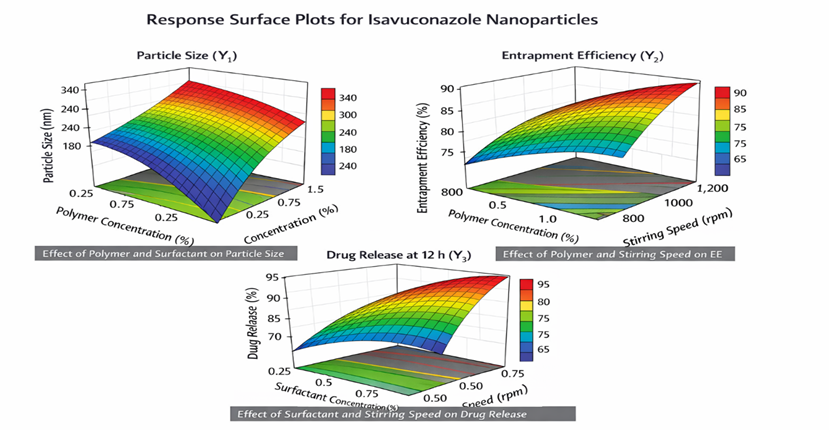
Fig. 1: Contour Plot Isavuconazole loaded Nanoparticles
Table 5: Desirability Results
|
Parameter |
Optimized Value |
|
Polymer (A) |
1.02 % |
|
Surfactant (B) |
0.58 % |
|
Stirring Speed (C) |
1095 rpm |
|
Predicted Particle Size |
205 nm |
|
Predicted EE |
84.5 % |
|
Predicted Drug Release |
88.2 % |
|
Overall Desirability (D) |
0.932 |
Table 6: Physicochemical Evaluation of Optimized Isavuconazole loaded Nanoparticles
|
Parameter |
Result |
|
Particle Size |
210 ± 4 nm |
|
PDI |
0.212 |
|
Zeta Potential |
-28.4 mV |
|
Entrapment Efficiency |
83.8 % |
|
Drug Loading |
9.4 % |
Table 7: In-Vitro Drug Release Study of Optimized Isavuconazole loaded Nanoparticles
|
Time (h) |
% Drug Release |
|
1 |
18.23 |
|
2 |
28.54 |
|
4 |
46.38 |
|
6 |
60.92 |
|
8 |
71.49 |
|
10 |
83.21 |
|
12 |
92.82 |
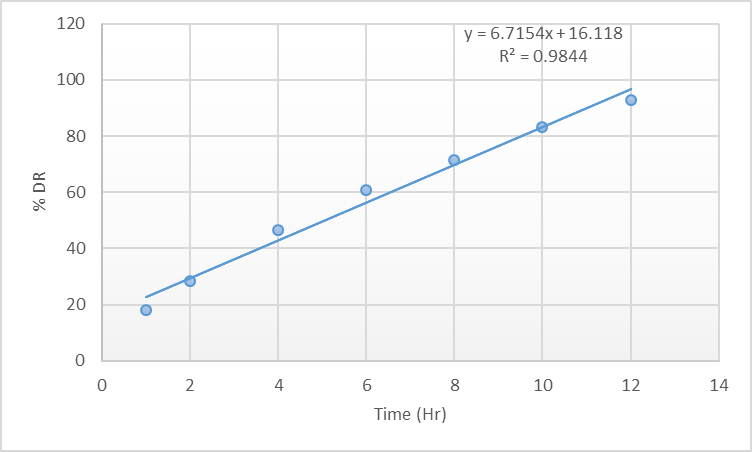
Fig. 2: Percent drug release Optimized Isavuconazole loaded Nanoparticles
DISCUSSION :
The 3D response surface and contour plots demonstrated that polymer concentration (X1) exerted the most significant influence on particle size, with higher polymer levels resulting in increased particle size due to increased viscosity and polymer aggregation. Surfactant concentration (X2) exhibited an inverse relationship with particle size, as higher surfactant levels reduced interfacial tension and stabilized smaller particles. Stirring speed (X3) significantly reduced particle size and enhanced drug release due to increased shear forces. Entrapment efficiency increased with polymer concentration because of improved drug entrapment within the polymeric matrix. However, excessive polymer levels led to marginal decreases in drug release due to diffusion barrier formation. The contour plots showed elliptical shapes, confirming significant interaction effects between variables, particularly AB interaction. Drug release profiles indicated sustained diffusion-controlled behavior, with higher surfactant and stirring speed promoting faster release, whereas high polymer concentration retarded release. The desirability value of 0.932 indicates excellent simultaneous optimization of all responses.
Characterization of Optimized Nanoparticles
The results for the optimized batch of Isavuconazole loaded Nanoparticles were mentioned in table 6. Results indicates that Nanoparticles showed narrow size distribution and good stability. In-Vitro Drug Release Study were mentioned in table 7.
CONCLUSION :
The results of the three-factor, three-level Box–Behnken Design clearly demonstrate the successful optimization of isavuconazole-loaded nanoparticles with respect to particle size, entrapment efficiency, and drug release. The statistical models exhibited excellent fit and predictive capability, as indicated by high R² values (>0.97), non-significant lack-of-fit, and adequate precision values greater than 4. Among the formulation variables, polymer concentration showed a strong positive influence on particle size and entrapment efficiency, while surfactant concentration and stirring speed significantly contributed to the reduction of particle size and enhancement of drug release. The interaction effects between variables, particularly between polymer and surfactant, were found to be significant, as confirmed by the elliptical contour plots and quadratic model terms.
The optimized formulation obtained through desirability function approach (D = 0.932) comprised approximately 1.0% polymer, 0.58–0.6% surfactant, and stirring speed around 1095–1100 rpm. The close agreement between predicted and experimental values (prediction error < 5%) confirmed the validity and robustness of the developed model. The optimized nanoparticles exhibited desirable physicochemical properties, including nanoscale particle size (~210 nm), low polydispersity index (0.212), sufficient zeta potential (-28.4 mV) indicating stability, and high entrapment efficiency (~83.8%). Furthermore, the in-vitro drug release study revealed a sustained and controlled release profile, achieving approximately 90–93% drug release over 12 hours, indicating diffusion-controlled release behavior. The results confirm that the optimized nanoparticle system effectively enhances drug release while maintaining stability and encapsulation efficiency. Overall, the study establishes that Box–Behnken Design-based response surface methodology is an efficient and reliable tool for the development and optimization of isavuconazole nanoparticles with improved therapeutic performance.
REFERENCES:
1. Shrivastava D, Dwivedi S. Need of Development of Quality Control parameters of Anti-fungal Herbal formulations. International Journal of Pharmacy & Life Sciences. 2020 Jun 1;11(6).
2. Thompson III GR, Wiederhold NP. Isavuconazole: a comprehensive review of spectrum of activity of a new triazole. Mycopathologia. 2010 Nov;170(5):291-313.
3. Kumar A, Shrivastava A, Suttee A, Gupta P, Shahi S, Barik R, Chaturvedi P, Dwivedi S. Plant-Powered Nanotechnology: A Review of Green Synthesis Approaches for ZnO and Silver Nanoparticles with Medicinal Flora. Current Topics in Medicinal Chemistry. 2026.
4. Kohli S, Dwivedi S. Models Used for Biopharmaceutical Evaluation of Nanoparticulate Drug Delivery System (NPDDS). InPharmacokinetics and Pharmacodynamics of Nanoparticulate Drug Delivery Systems 2022 Mar 8 (pp. 41-51). Cham: Springer International Publishing.
5. Szpisják-Gulyás N, Al-Tayawi AN, Horváth ZH, László Z, Kertész S, Hodúr CJ. Methods for experimental design, central composite design and the Box–Behnken design, to optimise operational parameters: A review. Acta Alimentaria. 2023 Dec 4;52(4):521-37.
6. Gupta S. and Dubey V.(2025).Development and Optimization of Telmisartan-loaded Polymeric Nanoparticles: A Novel Approach for enhanced drug delivery and sustained release. Int. J. of Pharm. & Life Sci., 16(6): 1-7.
7. Hoque N, Choudhury A. Formulation Design, Optimization, and In Vitro Evaluation of Palbociclib-Loaded Polymeric Nanoparticles. ASSAY and Drug Development Technologies. 2026 Mar 10:1540658X261429246.
8. Mahmoud BS, McConville C. Formulation and Systematic Optimisation of Polymeric Blend Nanoparticles via Box–Behnken Design. Pharmaceutics. 2025 Oct 20;17(10):1351.