Hospital Volume and Outcomes of Inguinal Hernia Mesh Repair at Secondary Care Hospital in Badin
- Danish Aslam , Senior Registrar, Department General Surgery, Dr Sikander Ali Mandharo Civil Hospital Badin, Pakistan
- Akhtar , Consultant, Department of General Surgery, Dr Sikander Ali Mandharo Civil Hospital Badin, Pakistan
- Muhammad Musadaq , Registrar, Department of General Surgery, Dr Sikander Ali Mandharo Civil Hospital Badin, Pakistan
- Mahmood Ahmad Khan , Consultant, Department of General Surgery/ Urology, Indus Hospital and Health Network, Badin, Pakistan
- Muhammad Aizazuddin , Medical Officer, Department of General Surgery, Indus Hospital and Health Network, Badin, Pakistan
- Muhammad Muzamil Ali , Medical Officer, Department of General Surgery, Indus Hospital and Health Network, Badin, Pakistan
Article Information:
Abstract:
Inguinal hernia repair is one of the world's most common general surgery procedures. The impact of hospital volume on outcomes after surgery has been reported, but little is known about outcomes in secondary care hospitals in resource-poor settings. Assessing outcomes of mesh repair in such environments is crucial for quality improvement and healthcare management. Objective: To evaluate the relationship between hospital volume and outcomes of inguinal hernia mesh repair at a secondary care hospital in Badin. Methods: Our retrospective, cross-sectional study was performed at Dr. Sikandar Ali Mandhoro Civil Hospital, Badin, between July 2023 and June 2024. We enrolled 100 patients, aged 18-80 years, who had inguinal hernia repair with a mesh, via non-probability consecutive sampling. A proforma was used to record patient demographic, clinical, operative and postoperative information from medical records. Postoperative complications, hospital stay, recovery period and surgical success were evaluated. SPSS version 26 was used for data analysis with p<0.05 set as the level of significance. Results: The mean age was 46.7 ± 14.8 years, and 99.0% of patients were male. All procedures were performed in the medium hospital volume category. Mean operative duration was 37.6 ± 10.4 minutes, mean hospital stay was 3.2 ± 1.2 days, and mean recovery time was 1.9 ± 0.6 weeks. Postoperative complications occurred in 5.0% of patients, while 95.0% had no complications. Successful surgical outcomes were achieved in all patients. Conclusion: Mesh repair for inguinal hernia repair in a secondary care hospital showed good outcomes, minimal complications, short hospital stay and a high success rate. These results confirm the utility of a standardized mesh repair procedure in low-resource settings and the role of quality assurance in hospitals.
Keywords:
Article :
INTRODUCTION :
Inguinal hernia repair is one of the most common general surgical procedures performed worldwide, with over 20 million surgical hernia repairs being performed globally and thus placing a considerable burden on health care system {1}. The introduction of mesh-based tension free techniques for hernia repair has improved the results of hernia repair by decreasing recurrence rates and combined reducing postoperative pain and improving long-term results as compared with non-mesh repair techniques {2}. Although overall outcomes such as those listed above are favorable, there are specific outcomes such as surgical site infection, recurrence, chronic groin pain and length of hospital stay that are highly variable between and within different health care systems {3}. Some factors influencing surgical results have already been mentioned. The volume of surgical procedures performed in a hospital (hospital volume) is another important variable affecting the results of surgical patients. Results are best with high volumes of a procedure, because high-volume centers have more experienced surgeons, a standardized preoperative, operative, and postoperative course, and full exploitation of all available resources {4}. The medical literature shows that high-volume centers (compared with low-volume centers) generally have a lower rate of postoperative complications, shorter surgical time and hospital stay and higher patient satisfaction in hernia surgery {5, 6}. There is a need for information on the impact of hospital volume on postoperative results from elective inguinal hernia surgery in low- and middle-income countries, where secondary care hospitals perform the majority of such surgery. There is no information from Pakistan on local secondary care hospitals in relation to volume of mesh repair procedures and postoperative results. With improvement in surgical techniques and recent emphasis on quality indicators in hernia surgery {7} including institutional factors and patient risk factors, there is a need for local data to enable us to optimize surgical quality and to develop referral systems and training programs for surgeons. To see association between volume of procedures performed at tertiary care centre and postoperative outcomes of inguinal hernia mesh repairs and to find out whether higher volume of procedures is associated with increased numbers of postoperative complications and smoother patient recovery.
METHODLOGY:
This cross-sectional study was conducted on all adult patients (aged 18–80 years) who underwent inguinal hernia mesh repair using conventional tension free technique from July 2023 to June 2024 in Surgical Unit, Dr. Sikandar Ali Mandhoro Civil Hospital, Badin. Patients of age group below 18 years and above 80 years, those with missing data and patients who underwent non-mesh repair were excluded from the study. Sample size was calculated using the formula for estimation of proportion i.e. n = Z²p(1−p)/d². Here Z = 1.96 at 95% confidence level, p = 0.50 (as there is no antecedent opinion regarding the issue) and margin of error (d) was set at 0.05. So, minimum sample size required was 100 patients. Non-probability consecutive sampling technique was used in present study, in which all patients fulfilling the inclusion criteria during the study period were enrolled in the study. A retrospective analysis of medical records was undertaken. Participants completed a standardized proforma which contained demographic and clinical data at the time of consent, and surgical data including the surgeon’s level of experience and hospital surgical volume (low: 50–100, medium: 101–200 or high: 201–300 surgeries per annum). Duration of surgery and surgical outcome (successful or unsuccessful) were recorded. The hospital’s volume of surgery (the primary independent variable) was examined in relation to postoperative outcomes (the dependent variables). In addition to the primary endpoint, potential confounding variables were recorded. Data was recorded and analyzed on Statistical Package for Social Sciences (SPSS) version 26. Descriptive statistics (mean ± SD, median (IQR), Frequency (%)) for variables of demographic (patient & surgeon), clinical post-operative complications, and post-operative outcomes were calculated. In addition, correlation and linear regression after adjustment for confounders were conducted to evaluate the association between volume of surgical cases performed in a hospital and outcomes. p < 0.05 was considered significant. Throughout the study, patients’ information was kept confidential. The Declaration of Helsinki guidelines were adhered to.
RESULT:
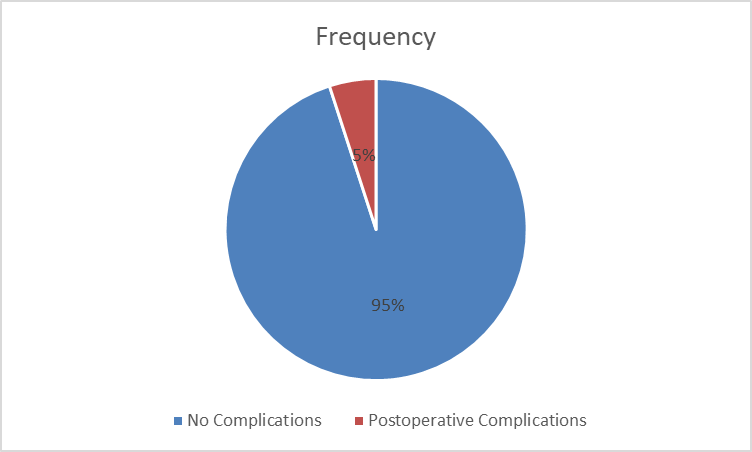
100 patients with inguinal hernia underwent mesh repair surgery. The mean age of the patients was 46.7 ± 14.8 years (range: 18–75 years). All the patients were male except for one female (1.0%). Most of the patients did not have any comorbidity (87.0%), but 13 patients (13.0%) had associated comorbidities like hypertension, chronic obstructive pulmonary disease, asthma, ischemic heart disease, diabetes, and obesity. The mean body mass index was 23.6 ± 3.2 kg/m². Table 1 shows demographic data and baseline clinical characteristics of the studied patients. All surgical procedures were performed in a hospital with medium and regular surgical activity, amounting to 100 bone and soft tissue tumour resections (100%). Mean operation time, mean hospitalisation time, and mean time to full recovery and resumption of usual activities were 37.6 ± 10.4 minutes, 3.2 ± 1.2 days, and 1.9 ± 0.6 weeks, respectively. All patients had a good postoperative recovery. The majority of the patients (95, 95.0%) had no postoperative complications; 5 patients (5.0%) had minor postoperative complications mostly related to surgical site infections. The overall surgical outcome was successful for all the patients (100, 100%) including no failed repairs. Figure 1. Surgical outcome distribution. Figure 2. Frequency of postoperative complications.
Table 1. Baseline Demographic and Clinical Characteristics
|
Variable |
n |
% |
|
Gender |
|
|
|
Male |
99 |
99.0 |
|
Female |
1 |
1.0 |
|
Comorbidity |
|
|
|
Present |
13 |
13.0 |
|
Absent |
87 |
87.0 |
|
Hospital Volume |
|
|
|
Medium |
100 |
100 |
|
Age (years), Mean ± SD |
46.7 ± 14.8 |
|
|
BMI (kg/m²), Mean ± SD |
23.6 ± 3.2 |
|
Table 2. Surgical and Outcome Variables
|
Variable |
n |
% |
|
No complications |
95 |
95.0 |
|
Postoperative complications |
5 |
5.0 |
|
Successful outcome |
100 |
100 |
|
Duration of surgery (minutes), Mean ± SD |
37.6 ± 10.4 |
|
|
Length of hospital stay (days), Mean ± SD |
3.2 ± 1.2 |
|
|
Recovery time (weeks), Mean ± SD |
1.9 ± 0.6 |
|
Figure 1. Distribution of overall surgical outcomes among patients undergoing inguinal hernia mesh repair, showing successful outcomes in the study population.
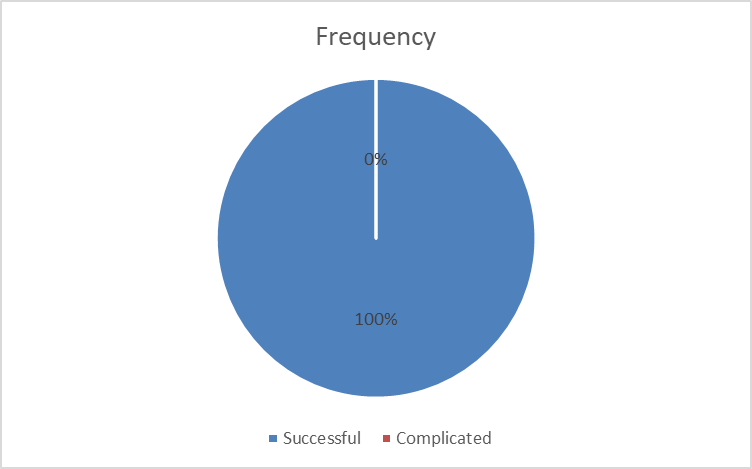
Figure 2. Frequency distribution of postoperative complications following inguinal hernia mesh repair, demonstrating the proportion of patients with and without complications.
DISCUSSION :
A high success and low complications rate with short hospital stay was observed in our secondary care setting. The results obtained in this study demonstrate that secondary-level hospitals can obtain satisfactory results from groin hernia surgery, both for primary and recurrent hernias, using a sound surgical technique and a biological mesh. Recently, tension-free mesh repair of groin hernias has been associated with low recurrence and postoperative complications rates, and is now considered the standard technique in hernia surgery {8,9}. We also considered the volume and outcomes issue. In this study, all procedures were performed in a medium volume centre with good results. Outcomes are affected by procedure volume, surgeon familiarity with procedure and systems, and adherence to protocols and systems. While high volume centres have been shown to have lower morbidity, shorter operative time and greater efficiency due to accumulated experience, previous studies have shown a volume-outcome relationship {10,11}. However, good systems can be established and excellent surgical teams can operate successfully in secondary care centres comparable to the largest centres. Little information is available as to why complications should be so few. The mesh may have a number of benefits such as removing tissue tension and reducing recurrence. Standardisation of technique may remove some of the complications caused by inexperienced surgeons hurting tissue. Surgeon experience and patient selection may play a major role. Today accurate surgical dissection, avoiding infection and optimising perioperative care are the key elements in achieving a good result from groin hernia surgery {13,14}. The European Hernia Society’s quality improvement programme, EU Hernia, describes a number of different surgical care pathways. A low rate of postoperative complications
and good recovery of patients were observed. Several recent series have reported postoperative complications in less than 10% of patients scheduled for elective surgery {16,17}. Other multicenter studies have demonstrated good patient recovery and short hospital stay when patients were sent home earlier, when evidence-based practice was followed and structured perioperative pathways were in place {18}. The majority of cases in this study group had a good outcome. Patients suitable for appropriate optimisation prior to elective surgery played a large role in this. Good outcomes after mesh repair of rectal prolapse are due in part to the permanent nature of posterior wall reinforcement, the decreased inflammatory response seen with current mesh, and the prevention of over-seating of the defect which is commonly associated with recurrence. Outcomes are also dependent upon other technical aspects of the surgery and the changing quality indicators such as the use of operative care pathways and patient optimisation. {19, 20}. We report several key findings. Firstly, the study provides local data from a relatively constrained resource setting where published evidence is limited. Secondly, it addresses a particular aspect of hospital volume at a hospital setting not previously studied. The study outcomes are clinically relevant addressing postoperative complications, hospital stay, and patient recovery. The findings are felt to support strengthening of structured hernia services and training models in other similar tertiary care centers. The study has several limitations. The study was of a retrospective cross-sectional design, thus, limits the ability to draw firm conclusions regarding causality between centre volume and patient outcomes. The data was collected from a single centre, thus, generalisation to other centres may be limited. All pancreatic resections were performed within the same high hospital volume category and, therefore, no direct comparisons were made between the low, medium and high-volume surgical centres. As with any retrospective study, there is always a degree of potential documentation bias in record-based data. However, prospective multicentre data collected on all patients undergoing pancreatic resection and followed up for recurrence would be very useful. Clinical data indicate that patients with inguinal hernias are likely to have good outcomes when treated in settings other than high-volume tertiary programs, as long as mesh repair is performed by a surgeon who is adequately trained and follows the guidelines of evidence-based perioperative care. Research efforts should continue to attempt to define optimal volume thresholds and the influence of surgeon volume on hernia repair outcomes. In addition, quality indicators for hernia surgery should be developed to measure long-term patient outcomes.
CONCLUSION :
Inguinal hernia mesh repair performed in a secondary care center had very good surgical outcomes with very low postoperative complications and very short hospital stay. Good results can be achieved with standardized technique and proper care of patients using mesh for repair of inguinal hernia. We got satisfactory results in a medium-volume secondary care center provided there is proper standardization of practice and good surgical skill. It would be interesting to evaluate the relationship between hospital volume and surgical outcomes and how volume is related to other institutional quality indicators. A large multicenter prospective study would be ideal to further confirm our findings.
BIBLIOGRAPHY:
1. HerniaSurge Group. Update of the international HerniaSurge guidelines for groin hernia management. BJS Open. 2023;7(5):zrad080.
2. Köckerling F, Simons MP. Current concepts of inguinal hernia repair. Visc Med. 2021;37(2):145-54.
3. Aiolfi A, Cavalli M, Ferraro SD, Manfredini L, Lombardo F, Bonitta G, et al. Treatment of inguinal hernia: systematic review and updated network meta-analysis. Ann Surg. 2021;274(6):954-61.
4. Sheetz KH, Dimick JB, Ghaferi AA. Impact of hospital volume on surgical outcomes: recent evidence and policy implications. Ann Surg. 2021;274(6):e1042-e1048.
5. Gonzalez A, Prabhu AS, Carbonell AM, Hope W, Warren J. Hospital procedural volume and outcomes after abdominal wall and groin hernia surgery. Surgery. 2022;172(4):1180-87.
6. Henriksen NA, Montgomery A, Kaufmann R, Berrevoet F, East B, Fischer J, et al. European Hernia Society quality indicators for groin hernia surgery. Br J Surg. 2022;109(3):e6-e14.
7. Muysoms FE, Campanelli G, Champault GG, et al. Quality improvement and outcome measures in abdominal wall surgery. Front Surg. 2024;11:1342287.
8. Stabilini C, van Veenendaal N, Aasvang E, Agresta F, Aufenacker T, Berrevoet F, et al. Update of the international HerniaSurge guidelines for groin hernia management. BJS Open. 2023;7(5):zrad080.
9. Reinhorn M, Fullington N, Agarwal D, Olson MA, Ott L, Canavan A, et al. Posterior mesh inguinal hernia repairs: propensity matched analysis of laparoscopic and robotic versus open approaches. Hernia. 2023;27(1):93-104.
10. Jan Z, Ali S, Ahmed N, Sarwar MA. Comparison of postoperative complications between Lichtenstein repair and laparoscopic TAPP repair for unilateral inguinal hernia. Cureus. 2021;13(9):e17863.
11. Hootsmans N, Parmiter S, Connors K, Badve SB, Snyder E, Turcotte JJ, et al. Outcomes of an enhanced recovery after surgery program in minimally invasive GI and hernia surgery. Surg Endosc. 2023;37(9):7192-98.
12. Maneck M, Lauterberg J, Marzi I, et al. Hospital volume and outcome in inguinal hernia repair: analysis of routine data. BMC Health Serv Res. 2020;20:xxx-xxx.
13. Wouters D, et al. Standardization and quality indicators in abdominal wall surgery. Front Surg. 2022;9:847279.
14. Pereira Rodríguez JA, López-Cano M. EHS guidelines for inguinal hernia repair: the reality of implementation during training. Cir Esp (Engl Ed). 2023;101 Suppl 1:S24-S27.
15. Ielpo B, Nuñez J, Ferri V, Silva J, Quijano Y, Vicente E, et al. Laparoscopic inguinal hernia repair: cost-effectiveness analysis. Updates Surg. 2021;73(5):1945-53.
16. Bou-Ayash N, Gokcal F, Kudsi OY. Robotic inguinal hernia repair for incarcerated hernias. J Laparoendosc Adv Surg Tech A. 2021;31(8):926-30.
17. Murgante Testa N, Mongelli F, Sabbatini F, Iaquinandi F, Prouse G, Pini R, et al. Safety and feasibility of emergency robot-assisted repair for incarcerated inguinal hernia. World J Surg. 2024;48(3):622-28.
18. Almutairi H, et al. Laparoscopic management of inguinal hernia: current perspectives. Cureus. 2024;16:e56789.
19. Rodrigues-Gonçalves V, et al. Open versus robot-assisted preperitoneal inguinal hernia repair outcomes. Front Surg. 2024;11:1385395.
20. Lorenz R, Akkersdijk GJ, Paiva de Oliveira M, Warren J, Soler M. Acceptance of open preperitoneal repair in inguinal hernia surgery: Delphi consensus recommendations. Hernia. 2025;29(1):1-10.