Comparing the Efficiency of Lignocaine Nebulization and Airway Nerve Blocks for Fiberoptic Nasotracheal Intubation
- Zaeem Mahmood , MBBS, Post Graduate Trainee (PGT) Department of Anesthesiology, POF Hospital
- Brig (R) Imran ul Haq , MBBS, FCPS, Professor of Anesthesia, HOD Anesthesia Department of Anesthesia, POF Hospital
- Muhammad Fareed Azam , MBBS, FCPS, CHPE, Assistant Professor, Department of Anesthesia, Intensive care & Pain Management Wah Medical College Pakistan Ordnance Factories Hospital
- Verdah Sabih , FCPS Anesthesia, Assistant Professor, Anesthesiology Department POF Hospital wah-Cantt
- Faiqa Latif , MBBS, Post Graduate Trainee (PGT), Department of Anesthesiology, POF Hospital
- Rashada Farooqi , FCPS Anesthesia, Assistant Professor, Anesthesia Department, POF Hospital, WMC
Article Information:
Abstract:
Fiberoptic nasotracheal intubation is an essential technique for airway management in patients with anticipated difficult airways; however, inadequate airway anesthesia may lead to patient discomfort and prolonged intubation time.Objectives: To compare the efficiency of lignocaine nebulization and airway nerve blocks in terms of intubation time and patient comfort during fiberoptic nasotracheal intubation.Study Design & Setting: This comparative study was conducted in the Department of Anesthesiology at POF Hospital, Wah Cantt from 4 August 2025 to 4 November 2025.Methodology: A total of 50 adult patients aged 18–60 years, with ASA physical status I–II, scheduled for elective fiberoptic nasotracheal intubation were enrolled and divided into two equal groups. Group A received airway nerve blocks, while Group B received lignocaine nebulization. Mean intubation time and patient comfort level were recorded. Data were analyzed using SPSS version 26. Independent-samples t-test was applied for comparison of mean intubation time, and chi-square test was used for comfort level. Stratification was performed for age, gender, BMI, and ASA status, with a p-value ≤0.05 considered statistically significant.Results: The mean intubation time was 2.95 ± 0.62 minutes in the airway nerve block group and 3.58 ± 0.71 minutes in the lignocaine nebulization group, showing a statistically significant difference (p < 0.001). The mean difference in intubation time between groups was −0.63 minutes with a 95% confidence interval of −0.82 to −0.44. Comfortable intubation was reported in 72.0% of patients in the airway nerve block group compared to 44.0% in the lignocaine nebulization group, while severe discomfort occurred in 12.0% and 28.0% of patients, respectively (p = 0.128). Stratified analysis by age, gender, BMI, and ASA status demonstrated consistently shorter intubation times in the airway nerve block group across all subgroups (p ≤ 0.05). Conclusion: Airway nerve blocks are more efficient than lignocaine nebulization in reducing intubation time during fiberoptic nasotracheal intubation, while patient comfort levels were comparable between the two techniques.
Keywords:
Article :
INTRODUCTION :
Fiberoptic nasotracheal intubation (FONI) is a common and highly effective procedure used in patients who require airway management. This technique is widely employed in various clinical settings, including those involving head and neck surgeries, trauma patients, and situations where oral intubation is contraindicated.1,2 The key challenge during fiberoptic nasotracheal intubation is the potential discomfort and pain experienced by patients as the endotracheal tube is passed through the nasal passage into the trachea.3 This discomfort can result in complications such as laryngeal spasm, patient anxiety, or a traumatic intubation experience.4
The fiberoptic bronchoscope (FOB) for intubation was initially introduced by Peter Murphy in 1967, with reported success rates ranging from 88% to 100%.5 Effective strategies to minimize adverse effects involve preoperative airway anesthesia and adequate local anesthetic techniques. Among the most widely used agents for this purpose is lignocaine (also known as lidocaine), a local anesthetic with proven efficacy in reducing pain and discomfort during various medical procedures. This technique involves the inhalation of fine particles of lignocaine, which can anesthetize the nasal and pharyngeal mucosa effectively.6
Airway nerve blocks, on the other hand, represent a more direct method of providing anesthesia to specific areas of the airway. These blocks involve the targeted injection of local anesthetics, such as lignocaine, to block the sensory nerves that innervate the nasal and pharyngeal regions. By providing dense and localized anesthesia, airway nerve blocks can effectively suppress airway reflexes, reduce coughing and discomfort, and facilitate smoother fiberoptic intubation. This targeted approach may result in improved intubating conditions and reduced procedural time compared to topical techniques alone.7,8 Two common airway nerve blocks include the glossopharyngeal block and the superior laryngeal nerve block. These nerve blocks have the potential to provide a more focused and profound level of anesthesia, which may be particularly beneficial for patients who experience inadequate relief with nebulized lignocaine. Two common airway nerve blocks include the glossopharyngeal block and the superior laryngeal nerve block. These nerve blocks have the potential to provide a more focused and profound level of anesthesia, which may be particularly beneficial for patients who experience inadequate relief with nebulized lignocaine.9,10 Shah et al. (2022) reported that the mean intubation time for the nerve block group was 2.98 ± 0.636 min, while the mean intubation time for the nebulization group was 3.58 ± 0.676 min, which showed a p-value of 0.0001 (highly significant).11
This study aims to compare the efficacy of lignocaine nebulization and airway nerve blocks for fiberoptic nasotracheal intubation, a common procedure associated with significant patient discomfort. While both methods are widely used, limited research exists in Pakistan regarding their comparative effectiveness, particularly in terms of intubation time and patient comfort. By providing data on the relative advantages of each technique, this research will contribute to optimizing anesthesia practices in difficult airway management. Additionally, it will fill the gap in existing literature regarding regional differences in procedural outcomes, especially in Pakistani healthcare settings. This study will help refine anesthesia protocols and improve patient care during fiberoptic intubation. The objective is to compare the mean intubation time and comfort level of lignocaine nebulization and airway nerve blocks in fiberoptic nasotracheal intubation.
MATERIALS AND METHODS:
After approval from the Hospital Ethical Review Board and CPSP, patients scheduled for elective fiberoptic nasotracheal intubation in the Outpatient Department of Anesthesiology, POF Hospital, Wah Cantt from 4 August 2025 to 4 November 2025, who fulfilled the inclusion criteria were counseled and informed about the details of the study. Written informed consent was obtained, and a detailed history was taken from each patient. The patients were then divided into two groups: Group A, the airway nerve block group, and Group B, the lignocaine nebulization group.
The sample size was calculated at a 5% level of significance and 80% power, taking the expected mean intubation time as 2.98 ± 0.636 minutes in the airway nerve block group and 3.58 ± 0.676 minutes in the lignocaine nebulization group. The calculated sample size was 22 patients in each group, with a total of 44 patients.11 The sample size formula for comparison of two means was applied:
Adult patients aged 18–60 years who were scheduled for elective fiberoptic nasotracheal intubation and belonged to ASA (American Society of Anesthesiologists) physical status I or II were included in the study. Patients with a history of significant allergic reactions to lignocaine or other local anesthetics, those with severe cardiovascular or neurological diseases, patients with known respiratory disorders such as asthma or chronic obstructive pulmonary disease (COPD), patients with anatomical abnormalities of the airway or conditions that could complicate nasotracheal intubation (such as large tumors or major nasal obstructions), and pregnant or lactating mothers (as per dating scan) were excluded from the study.
A thorough preoperative evaluation was conducted, including history taking, physical examination, and airway assessment. The anesthesia team determined the method of airway management based on the patient’s clinical profile. Patients were positioned supine with the head and neck in a neutral alignment. Standard monitoring, including pulse oximetry and non-invasive blood pressure monitoring, was applied to all patients. Oxygen was administered via nasal cannula throughout the procedure. Intubation was performed using a 5.0-mm flexible fiberoptic bronchoscope with an appropriately sized flexometallic endotracheal tube.
In Group A, patients received airway nerve blocks, including glossopharyngeal and superior laryngeal nerve blocks, prior to intubation. The glossopharyngeal block was performed using 2% lignocaine administered via a percutaneous approach, while the superior laryngeal nerve block was performed at the level of the thyrohyoid membrane. In Group B, patients received 4% lignocaine nebulization, which was administered through a nebulizer device for 5–10 minutes to ensure adequate local anesthesia of the nasal and oropharyngeal regions.
Mean intubation time and comfort level were assessed according to the operational definitions. All intubation procedures were performed by a single anesthesiologist (supervisor with 10 years of experience), and all pre- and post-procedure assessments were conducted by the candidate herself to minimize bias. Confounding variables were controlled through the exclusion criteria. Patient demographic details, including age, gender, ASA physical status, height, weight, BMI, procedure-related data such as intubation time, and follow-up patient comfort were recorded on the attached proforma by the candidate herself.
All collected data were entered into SPSS version 26. Numerical variables such as age, height, weight, BMI, and duration of intubation were presented as mean ± standard deviation and range. An independent sample t-test was applied for comparison of mean duration of intubation between the two groups, with a p-value of <0.05 considered statistically significant. Categorical variables such as gender and ASA status were presented as frequency and percentage, and the chi-square test was applied for comparison of comfort levels between the two groups. Data were stratified for age, gender, BMI, and ASA status to address effect modifiers, and post-stratification independent sample t-tests and chi-square tests were applied, taking a p-value of ≤0.05 as statistically significant.
RESULTS:
The baseline characteristics of the study participants showed that the mean age was 37.44 ± 8.55 years in the airway nerve block group and 40.24 ± 10.01 years in the lignocaine nebulization group. Patients aged 18–40 years constituted 64.0% of the airway nerve block group and 48.0% of the lignocaine nebulization group, while those aged 41–60 years accounted for 36.0% and 52.0%, respectively. Males comprised 44.0% of the airway nerve block group and 52.0% of the lignocaine nebulization group. The mean height and weight were comparable between groups, with mean BMI values of 25.46 ± 3.42 kg/m² and 25.94 ± 3.51 kg/m², respectively. A BMI ≥25 kg/m² was observed in 52.0% of patients in the airway nerve block group and 60.0% in the lignocaine nebulization group. Regarding ASA physical status, ASA II was more frequent in the airway nerve block group (72.0%), while ASA I predominated in the lignocaine nebulization group (52.0%), as given in Table 1.
Table 1: Baseline Demographic and Clinical Characteristics of Study Participants (n = 50)
|
Variable |
Airway Nerve Block Group (n = 25) |
Lignocaine Nebulization Group (n = 25) |
|
years) |
||
|
Mean ± SD |
37.44 ± 8.55 |
40.24 ± 10.01 |
|
18–40 years |
16 (64.0%) |
12 (48.0%) Age ( |
|
41–60 years |
9 (36.0%) |
13 (52.0%) |
|
Gender |
||
|
Male |
11 (44.0%) |
13 (52.0%) |
|
Female |
14 (56.0%) |
12 (48.0%) |
|
Height (cm) |
|
|
|
Mean ± SD |
165.92 ± 4.92 |
165.04 ± 6.01 |
|
Weight (kg) |
|
|
|
Mean ± SD |
69.80 ± 7.08 |
70.32 ± 7.70 |
|
BMI (kg/m²) |
25.46 ± 3.42 |
25.94 ± 3.51 |
|
< 25 kg/m² |
12 (48.0%) |
10 (40.0%) |
|
≥ 25 kg/m² |
13 (52.0%) |
15 (60.0%) |
|
ASA Physical Status |
||
|
ASA I |
7 (28.0%) |
13 (52.0%) |
|
ASA II |
18 (72.0%) |
12 (48.0%) |
The mean intubation time was 2.95 ± 0.62 minutes in the airway nerve block group and 3.58 ± 0.71 minutes in the lignocaine nebulization group, with a mean difference of −0.63 minutes. The 95% confidence interval of the difference ranged from −0.82 to −0.44 minutes, and the difference between the two groups was statistically significant (p < 0.001), as given in Table 2.
Table 2: Comparison of Mean Intubation Time Between Airway Nerve Block and Lignocaine Nebulization Groups
|
Variable |
Airway Nerve Block Group (n = 25) Mean ± SD |
Lignocaine Nebulization Group (n = 25) Mean ± SD |
Mean Difference |
95% CI of Difference |
p-value |
|
Intubation time (minutes) |
2.95 ± 0.62 |
3.58 ± 0.71 |
−0.63 |
−0.82 to −0.44 |
<0.001 |
Independent-samples t-test (equal variances assumed); p < 0.05 considered statistically significant
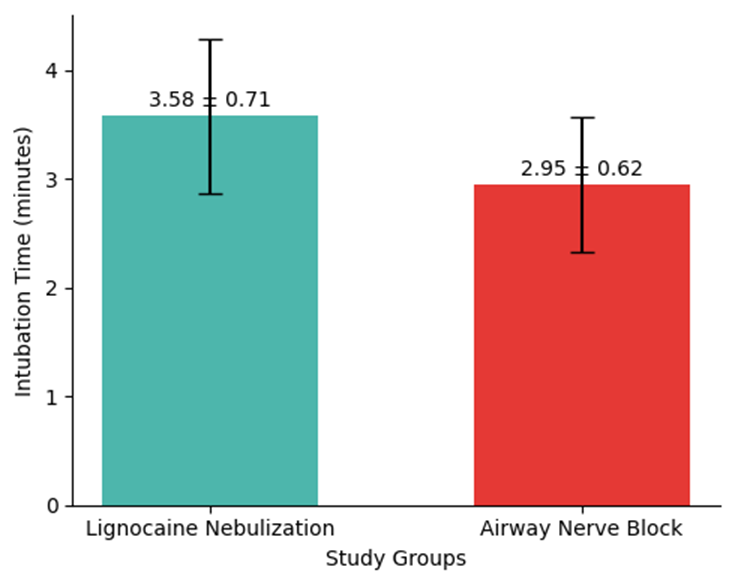
Figure 1: Comparison of mean intubation time (minutes) between lignocaine nebulization and airway nerve block groups during fiberoptic nasotracheal intubation.
Regarding patient comfort level, 72.0% of patients in the airway nerve block group were comfortable compared to 44.0% in the lignocaine nebulization group. Mild discomfort was observed in 16.0% of patients in the airway nerve block group and 28.0% in the lignocaine nebulization group, while severe discomfort was reported in 12.0% and 28.0% of patients, respectively. Overall, the difference in comfort level distribution between the two groups was not statistically significant (p = 0.128), as given in Table 3.
Table 3: Comparison of Patient Comfort Level Between Airway Nerve Block and Lignocaine Nebulization Groups (n = 50)
|
Comfort Level |
Airway Nerve Block Group (n = 25) |
Lignocaine Nebulization Group (n = 25) |
Total |
p-value |
|
Comfortable |
18 (72.0%) |
11 (44.0%) |
29 (58.0%) |
0.128 |
|
Mild discomfort |
4 (16.0%) |
7 (28.0%) |
11 (22.0%) |
|
|
Severe discomfort |
3 (12.0%) |
7 (28.0%) |
10 (20.0%) |
|
|
Total |
25 (100%) |
25 (100%) |
50 (100%) |
Pearson Chi-square test was applied; p < 0.05 was considered statistically significant
After stratification, the mean intubation time remained lower in the airway nerve block group across all subgroups. Among patients aged 18–40 years, the mean intubation time was 2.88 ± 0.59 minutes in the airway nerve block group compared to 3.52 ± 0.68 minutes in the lignocaine nebulization group (p = 0.003), while in patients aged 41–60 years it was 3.10 ± 0.66 minutes versus 3.78 ± 0.75 minutes, respectively (p = 0.01). In male patients, the mean intubation time was 2.92 ± 0.61 minutes in the airway nerve block group and 3.55 ± 0.70 minutes in the lignocaine nebulization group (p = 0.002), whereas in female patients it was 2.98 ± 0.64 minutes and 3.62 ± 0.72 minutes, respectively (p = 0.004). Similarly, in patients with BMI <25 kg/m², the mean intubation time was 2.84 ± 0.56 minutes in the airway nerve block group compared to 3.46 ± 0.64 minutes in the lignocaine nebulization group (p = 0.003), and in those with BMI ≥25 kg/m² it was 3.06 ± 0.67 minutes versus 3.74 ± 0.77 minutes, respectively (p = 0.01). With respect to ASA physical status, patients classified as ASA I had mean intubation times of 2.86 ± 0.58 minutes in the airway nerve block group and 3.49 ± 0.66 minutes in the lignocaine nebulization group (p = 0.002), while those with ASA II status showed mean intubation times of 3.05 ± 0.65 minutes and 3.69 ± 0.74 minutes, respectively (p = 0.01), as given in Table 4.
Table 4: Stratification of Mean Intubation Time (minutes) by Age, Gender, BMI, and ASA Status
|
Stratification Variable |
Category |
Airway Nerve Block |
Lignocaine Nebulization |
p-value |
|
Age (years) |
18–40 |
2.88 ± 0.59 |
3.52 ± 0.68 |
0.003 |
|
41–60 |
3.10 ± 0.66 |
3.78 ± 0.75 |
0.01 |
|
|
Gender |
Male |
2.92 ± 0.61 |
3.55 ± 0.70 |
0.002 |
|
Female |
2.98 ± 0.64 |
3.62 ± 0.72 |
0.004 |
|
|
BMI (kg/m²) |
< 25 |
2.84 ± 0.56 |
3.46 ± 0.64 |
0.003 |
|
≥ 25 |
3.06 ± 0.67 |
3.74 ± 0.77 |
0.01 |
|
|
ASA Status |
ASA I |
2.86 ± 0.58 |
3.49 ± 0.66 |
0.002 |
|
ASA II |
3.05 ± 0.65 |
3.69 ± 0.74 |
0.01 |
Independent-samples t-test applied after stratification; p ≤ 0.05 considered statistically significant
After stratification, severe discomfort was observed across all subgroups in both study groups. Among patients aged 18–40 years, severe discomfort was reported in 6.2% of patients in the airway nerve block group and 16.7% in the lignocaine nebulization group (p = 0.21), while in patients aged 41–60 years it was observed in 22.2% and 38.4% of patients, respectively (p = 0.32). With respect to gender, severe discomfort was reported in 9.1% of male patients in the airway nerve block group compared to 23.0% in the lignocaine nebulization group (p = 0.29), and in 14.3% versus 33.3% of female patients, respectively (p = 0.27). In patients with BMI <25 kg/m², severe discomfort was present in 8.3% of the airway nerve block group and 30.0% of the lignocaine nebulization group (p = 0.18), whereas among those with BMI ≥25 kg/m² it was reported in 15.4% and 26.7% of patients, respectively (p = 0.34). Regarding ASA physical status, no patient with ASA I in the airway nerve block group experienced severe discomfort compared to 23.1% in the lignocaine nebulization group (p = 0.15), while among patients with ASA II status, severe discomfort was observed in 16.7% and 33.3% of patients, respectively (p = 0.24), as given in Table 5.
Table 5: Stratification of Patient Comfort Level by Age, Gender, BMI, and ASA Status (n = 50)
|
Stratification Variable |
Category |
Airway Nerve Block |
Lignocaine Nebulization |
p-value |
|
Age (years) |
18–40 |
1 (6.2%) |
2 (16.7%) |
0.21 |
|
41–60 |
2 (22.2%) |
5 (38.4%) |
0.32 |
|
|
Gender |
Male |
1 (9.1%) |
3 (23.0%) |
0.29 |
|
Female |
2 (14.3%) |
4 (33.3%) |
0.27 |
|
|
BMI (kg/m²) |
< 25 |
1 (8.3%) |
3 (30.0%) |
0.18 |
|
≥ 25 |
2 (15.4%) |
4 (26.7%) |
0.34 |
|
|
ASA Status |
ASA I |
0 (0.0%) |
3 (23.1%) |
0.15 |
|
ASA II |
3 (16.7%) |
4 (33.3%) |
0.24 |
Chi-square test applied after stratification; p ≤ 0.05 considered statistically significant
DISCUSSION :
Fiberoptic nasotracheal intubation is a widely used technique for airway management, particularly in patients with anticipated difficult airways. Despite its effectiveness, the procedure is often associated with patient discomfort, coughing, and prolonged intubation time if airway anesthesia is inadequate.12 Various methods are used to anesthetize the airway, including lignocaine nebulization and airway nerve blocks. Lignocaine nebulization is simple and noninvasive, whereas airway nerve blocks provide targeted and profound anesthesia.13 However, the relative efficacy of these techniques remains debatable. Limited local data are available comparing these methods, especially in terms of intubation time and patient comfort.
In the present study, airway nerve blocks demonstrated superior efficiency compared to lignocaine nebulization for fiberoptic nasotracheal intubation, as evidenced by a significantly shorter mean intubation time of 2.95 ± 0.62 minutes versus 3.58 ± 0.71 minutes in the nebulization group (p < 0.001). These findings are in strong agreement with the results reported by Mathur et al. (2018), who observed a markedly shorter intubation time in the airway nerve block group [115.2 ± 14.7 s] compared with the nebulization group [214.0 ± 22.2 s] (p = 0.029).14 Similar to our study, Mathur et al. also reported better intubating conditions and a higher degree of patient comfort in the nerve block group, although all patients were successfully intubated in both groups.14 Basina et al. (2024) further corroborated these findings, reporting significantly shorter intubation times in the airway nerve block group (114.6 ± 3.2 s) compared to the nebulization group (212.7 ± 1.6 s, p < 0.0001), with no significant differences in demographic variables, BMI, or ASA status between groups, which is consistent with the baseline comparability observed in our study.15 Although Basina et al. reported optimal intubating conditions in a higher proportion of patients in the nerve block group (60% vs 33%), the difference did not reach statistical significance (p = 0.116), a finding that parallels our observation of improved procedural efficiency without a statistically significant difference in overall comfort levels.15
Chavan et al. (2020) also reported that intubation time, patient comfort scores, and intubation conditions were superior in the airway block group compared to nebulization, while airway complications such as cough and laryngospasm were more frequently observed in the nebulization group. This aligns with our findings, where severe discomfort was consistently less frequent in the airway nerve block group across age, gender, BMI, and ASA strata, although these differences did not reach statistical significance.16 In contrast, Khandelwal et al. (2018) reported no statistically significant differences in intubation time, hemodynamic parameters, or intubation grading scale between the two groups; however, they found overall patient comfort and satisfaction to be better when lignocaine nebulization was used as an adjunct to airway nerve blocks. This contrast may be explained by differences in study design, technique combinations, and subjective assessment tools used for comfort evaluation.17
Further supporting our results, Malla et al. (2021) demonstrated better intubating conditions and reduced cough in the airway nerve block group, with 27 patients experiencing no cough compared to 20 patients in the nebulization group (p = 0.02), although hemodynamic changes were comparable between groups.18 Similarly, Solanki et al. (2021) reported significantly shorter intubation times in the nerve block group (120.3 ± 42.6 s) compared to the nebulization group (200.4 ± 60.3 s, p < 0.001), along with lower cough severity and reduced recall of unpleasant events, while all intubations were successful.19 Harpreet et al. (2020) also demonstrated significantly better intubation scores and shorter intubation times (p = 0.00) with improved patient comfort (p = 0.05) in the fiberoptic-guided nerve block group, alongside more stable hemodynamic parameters.20
Overall, the findings of the present study are largely consistent with existing literature, reinforcing the evidence that airway nerve blocks provide superior procedural efficiency and favorable intubating conditions compared to lignocaine nebulization, while differences in patient comfort may be influenced by subjective assessment methods, adjunctive techniques, and study design variations.
Study Strengths and Limitations
A key strength of this study is its comparative design, directly evaluating two commonly used airway anesthesia techniques under standardized conditions. The use of uniform intubation equipment and performance by a single experienced anesthesiologist minimized procedural variability. Stratification for age, gender, BMI, and ASA status helped control potential confounders. However, the study was limited by a relatively small sample size and single-center setting. Patient comfort assessment was subjective in nature. Additionally, the findings may not be generalizable to emergency or pediatric populations.
CONCLUSION :
Airway nerve blocks were associated with shorter intubation times compared to lignocaine nebulization during fiberoptic nasotracheal intubation. Although patient comfort levels varied between groups, no statistically significant difference was observed after stratification. These findings suggest that airway nerve blocks may offer procedural advantages in selected patients.
please simmulate and give me data which you used in making of our results give me data which if reviewer run in spss give same results also give coding of data which used in spss
BIBLIOGRAPHY:
1. Wong J, Lee JS, Wong TG, Iqbal R, Wong P. Fibreoptic intubation in airway management: a review article. Singapore Med J. 2019;60(3):110–115.
2. El Din Farmawy MS, Salem Mohammed EM, Nofal OA. Fiberoptic intubation and its role in management of difficult airway in awake patients. Zagazig Univ Med J. 2024;30(9):4667–4675.
3. Galway U, Khatib R, Zura A, Khanna S, Wang M, Thida F, et al. Awake fiberoptic intubation: a narrative clinical review based on the Cleveland Clinic experience. Trends Anaesth Crit Care. 2021;41(4):50–60.
4. Wallace S, McGrath BA. Laryngeal complications after tracheal intubation and tracheostomy. BJA Educ. 2021;21(7):250–257.
5. Yiqi OL, Au-Yong AP, Lim O, Yong AP. Challenges of emergency low-skill fibreoptic intubation in airway obstruction by a neck haematoma after the Sistrunk procedure. Cureus. 2024;16(8):e87687.
6. Hamdan AL, Sataloff RT, Hawkshaw MJ. Topical anesthesia in office-based laryngeal surgery. Office-Based Laryngeal Surg. 2022;14(1):123–137.
7. Li LT, Chitilian HV, Alfille PH, Bao X. Airway management and anesthesia for airway surgery: a narrative review. Transl Lung Cancer Res. 2021;10(12):4631–4636.
8. Zheng J, Du L, Du B, Zhang W, Zhang L, Chen G. Airway nerve blocks for awake tracheal intubation: A meta-analysis of randomized control trials and trial sequential analysis. Journal of Clinical Anesthesia. 2023 Sep 1;88:111122.
9. Ismail TI, Mahrous RS, Bedewy AA. Optimizing tracheostomy anesthesia: a comparative study of nerve blocks. Trends Anaesth Crit Care. 2025;15(3):101–154.
10. Hassanein A, Talaat M, Shehatah O. Airway nerve blocks as an adjunct to lignocaine nebulization for awake fiberoptic intubation. Egyptian Journal of Anaesthesia. 2020 Jan 1;36(1):162-9.
11. Shah RB, Thaker I, Bhavsar CM, Hudda R, Monpara M, Sanjaybhai TS. Comparison between lignocaine nebulization and airway nerve block for awake fiberoptic guided nasotracheal intubation. Int J Pharm Clin Res. 2022;14(12):836–844.
12. Park DH, Lee CA, Jeong CY, Yang HS. Nasotracheal intubation for airway management during anesthesia. Anesthesia and pain medicine. 2021 Jul 31;16(3):232-47.
13. Hassanein A, Talaat M, Shehatah O. Airway nerve blocks as an adjunct to lignocaine nebulization for awake fiberoptic intubation. Egyptian Journal of Anaesthesia. 2020 Jan 1;36(1):162-9.
14. Mathur PR, Jain N, Kumar A, Thada B, Garg D. Comparison between lignocaine nebulization and airway nerve block for awake fiberoptic bronchoscopy-guided nasotracheal intubation: a single-blind randomized prospective study. Korean journal of anesthesiology. 2018 Apr 2;71(2):120-6.
15. Basina C, Gollapalli R, Ravi V, Chandra AS. Comparative efficacy of lignocaine nebulization and airway nerve block techniques for awake fiberoptic orotracheal intubation: a randomized controlled study. Int J Acad Med Pharm. 2024;6(4):128-31.
16. Chavan G, Chavan AU, Patel S, Anjankar V, Gaikwad P. Airway blocks vs la nebulization-an interventional trial for awake fiberoptic bronchoscope assisted nasotracheal intubation in oral malignancies. Asian Pacific journal of cancer prevention: APJCP. 2020 Dec;21(12):3613.
17. Khandelwal M, Saini VK, Kothari S, Sharma G. Role of lignocaine nebulization as an adjunct to airway blocks for awake fiber-optic intubation: a comparative study. Anesthesia Essays and Researches. 2018 Jul 1;12(3):735-41.
18. Malla MS, Farooq B, Najib R, Ashraf S. Comparative effectiveness of topical lignocaine nebulization and airway nerve blocks for awake fiber-optic nasal intubation in TM joint ankylosis. Asian Journal of Medical Sciences. 2021 Dec 1;12(12):73-7.
19. Solanki RN, Thakkar JM. Comparison between lignocaine nebulisation and airway nerve blocks for awake fiberoptic nasotracheal intubation in oral cancer surgery patients. Saudi J Anaesth. 2021;25:1795-800.
20. Harpreet K, Harjeet S, Brij M, Ojaswani RS, Jaspreet. A prospective randomized study to compare analgesic and sedative effect of midazolam and nalbuphine with midazolam and fentanyl in patients undergoing awake fiberoptic intubation. Indian J Clin Anaesth 2019;6(2):235-41.