IN VITRO ANTIBACTERIAL ACTIVITY OF KEDO SDF SOLUTION VS SDF GEL AGAINST ENTEROCOCCUS FAECALIS
- Srigopika T , Undergraduate student Saveetha Dental College and Hospitals, Saveetha Institute of Medical and Technical Sciences Saveetha University, Chennai-600077.
- Lavanya Govindaraju , 2Department of Paediatric and Preventive Dentistry, Saveetha Dental College and Hospitals, Saveetha Institute of Medical and Technical Sciences, Saveetha University, Chennai-600077.
Article Information:
Abstract:
Dental caries is the most common disease of the oral cavity; they are multifactorial in nature. The most common cause is the interaction between the dental plaque, the high sugar diet and the susceptibility of the host. Enterococcus faecalis is a facultative anaerobic gram-positive bacterium which has been frequently recovered from dental caries. Early Childhood Caries (ECC), is one of the most common chronic childhood diseases and is considered a worldwide health problem and prevention of this is of utmost concern. One recent advancement involves the usage of Silver Diamine Fluoride (SDF), which is a non-invasive, topical agent that has been shown to arrest caries progression in primary teeth by up to 80%, making it particularly valuable for underserved populations and children with dental anxiety or special healthcare needs.Materials and methods Antibacterial activity was assessed against Enterococcus faecalis, using Mueller–Hinton agar plate by agar well-diffusion technique. Inoculum containing 106 cfu/mL of the freshly prepared bacterial culture was spread onto the MHA plates. Two wells (9 mm) were punched into the agar plate medium and filled with different concentrations (100 μg, and 25 μg). After incubation, the diameter of the ZOI was recorded in each plate. The results were expressed as mean value with standard deviation. Statistical analysis was performed to compare the antibacterial efficacy of the two delivery systems. Statistical significance was set at p < 0.05. All calculations were performed using SPSS 23.0 software.Results As for antibacterial activity in SDF solution group, ZOI ranged from 32 mm to 34 mm, with a calculated mean of 32.8 ± 0.84 mm, whereas the SDF gel group produced zones of inhibition ranging from 27 mm to 30 mm, with a mean value of 28.4 ± 1.14 mm. The antibacterial activity of SDF solution was found to be significantly greater than that of SDF gel with a p-value of 0.00012 (p < 0.001).Conclusion Kedo SDF solution showed better antibacterial properties against E. faecalis.
Keywords:
Article :
INTRODUCTION :
Dental caries is the most common disease of the oral cavity; they are multifactorial in nature. The most common cause for its occurrence is the interaction between the dental plaque, the high sugar diet and the susceptibility of the host [1]. Dental caries is a global public health challenge, specifically in low and middle income countries and it has been linked to underlying socioeconomic and social disadvantages [2]. Caries have adverse effects on both oral and general health. This has been noted by the dental community and public health authorities and it is well recognized as a disease in both permanent and deciduous teeth [3].
Enterococcus faecalis is a facultative anaerobic gram-positive bacterium which has been frequently recovered from secondary and persistent endodontic infections and dental caries [4]. The ability of E. faecalis to form dense biofilms on root canal walls is attributed to its biofilm-associated pili (Ebp) and its collagen-binding protein (Ace), making this microorganism invade dentinal tubules and root canal complexities [5]. This microorganism is known for its high cariogenic potential, acidogenicity, and acid tolerance. It metabolizes carbohydrates and produces acids, thereby demineralizing the tooth structure. If left untreated, carious lesions penetrate the dentin and reach the pulp, leading to endodontic infections that cause pulpal and periapical alterations [6] .
Apart from dental caries in adults, another important sub division includes Early Childhood Caries (ECC), which is also one of the most common chronic childhood diseases and is considered a worldwide health problem [7]. Early Childhood Caries (ECC) is defined as the presence of one or more decayed, non- cavitated or cavitated lesions, missing or filled due to caries surfaces, in any primary tooth of a child under six years of age [8]. This leads to pain, infection and its advancement leads to pulpal involvement and this eventually forms dental abscess [9]. If not treated at the early stage, it might even lead to loss of the tooth structure [10].
For dental caries, as well as ECC, it is crucial that the progression is cut short in the initial stages. leading to improvement in the oral hygiene of the patient. Although conventional methods such as restorations using amalgam or composite and root canal therapy exist, these methods are invasive and are the last resort to save the tooth. By application of fluorides and other gels, the treatment becomes less invasive and time consuming and the majority of the tooth structure can be saved [11].
Prevention of caries with the help of fluoride administration in a great variety of forms has been extensively studied in the past, [12] and one recent advancement involves the usage of Silver Diamine Fluoride (SDF). Countries such as Argentina, Australia, Brazil, China and Japan have used silver diamine fluoride (SDF), which is generally used as a 38% solution, as an anti-caries agent [13] and is effective in arresting cavitated carious lesions and prevents development of new caries [14] [15]. In 2014, SDF was approved by the US Food and Drug Administration as a treatment for dentinal sensitivity and from then on, it has been used extensively in preventive dentistry [16].
SDF is a colorless solution with a pH value between 9 and 10 [17] and when silver combines with fluoride in an ammonia solution, silver, which is anti-bacterial in nature, is released along with fluoride ions. Bacterial resistance against silver is hard to develop because silver kills bacteria through multiple pathways and it interferes with bacterial metabolism [18]. SDF is a non-invasive, cost-effective topical agent that has been shown to arrest caries progression in primary teeth by up to 80%, making it particularly valuable for underserved populations and children with dental anxiety or special healthcare needs [19].
SDF has better stability and less oxidizing effect in the diamine-silver complex compared to the silver fluoride, and the equilibrium lies within the diamine-silver ion [20]. For this reason, SDF is generally used in high concentrations (38%) as a means of arresting and preventing the progression of dental caries [21]. In vitro studies have demonstrated that SDF has antibacterial properties, has the potential to increase the pH of biofilm, decrease dentin demineralization, and exhibit antimicrobial action against cariogenic bacteria, thereby terminating its growth [22].
Fluoride works as a remineralisation agent reacting with hydroxyapatite to form fluoride hydroxyapatite via ion exchange [23] . Fluoride-substituted hydroxyapatite is more acid-resistant than hydroxyapatite and is thus resilient to acid attack [24]. Furthermore, fluoride can precipitate as calcium fluoride and it is said that it can act as a depot and release fluoride ions under an acidic environment to form fluorohydroxyapatite steadily. Fluoride at a higher concentration also has antimicrobial effects on cariogenic bacteria [25]. Thus, the aim of this study is to compare the in vitro antibacterial activity of kedo SDF gel and solution against E. faecalis.
Materials and Methods:
Antibacterial activity of the gel and solution sample was assessed against Gram positive bacteria Enterococcus faecalis, using Mueller–Hinton agar (MHA, Himedia, Mumbai, India) plate by agar well-diffusion technique. The plates were prepared in double distilled water (pH 7.0) and sterilized in an autoclave at 121 ˚C for 15 min. Then, the sterilized MHA agar was poured into the petri plate and allowed to solidify at room temperature in laminar flow. Inoculum containing 106 cfu/mL of the freshly prepared bacterial culture was spread onto the MHA plates with a sterile cotton swab moistened with the suspension of the respective microbial culture. Then, two wells (9 mm in diameter) were punched into the agar plate medium and filled with different concentrations (100 μg, and 25 μg) of compound with the help of micropipette, and kept at room temperature for 4 hours to diffuse the gel and liquid sample into the medium. Then, the culture plates were incubated at 37 °C for 24 hours. After incubation, the diameter (mm) of the zone of inhibition was recorded in each plate. The results were expressed as mean value with standard deviation (SD).
Methodology for statistical analysis
The data collected from the five replicates of each group (Kedo SDF solution and SDF gel) were tabulated. Statistical analysis was performed to compare the antibacterial efficacy of the two delivery systems against Enterococcus faecalis. Data was analyzed to compare the mean zones of inhibition between the liquid and gel groups. Statistical significance was set at p < 0.05. All calculations were performed using SPSS 23.0 software.
Results
Figure 1 shows the antibacterial activity of Kedo SDF solution and SDF gel against Enterococcus faecalis was evaluated by measuring the zones of inhibition (ZOI) across five experimental replicates. Both formulations demonstrated distinct and measurable antibacterial properties. The Kedo SDF solution consistently exhibited larger zones of inhibition compared to the SDF gel. Figure 2 shows the zones of inhibition where it can be observed that for the SDF liquid group, ZOI ranged from 32 mm to 34 mm, with a calculated mean of 32.8 ± 0.84 mm, whereas the SDF gel group produced zones of inhibition ranging from 27 mm to 30 mm, with a mean value of 28.4 ± 1.14 mm. SDF solution formulation showed a statistically superior inhibitory effect (based on the higher mean) compared to the gel. This difference in efficacy may be attributed to the lower viscosity of the solution , potentially allowing for faster and more extensive diffusion of the silver and fluoride ions through the agar medium. Figure 3 shows the results of the independent t - test, where it can be observed that the antibacterial activity of SDF solution was found to be significantly greater than that of SDF gel with a p-value of 0.00012 (p < 0.001). These results suggest a superior inhibitory effect of the Kedo SDF solution over the SDF gel against E. faecalis.
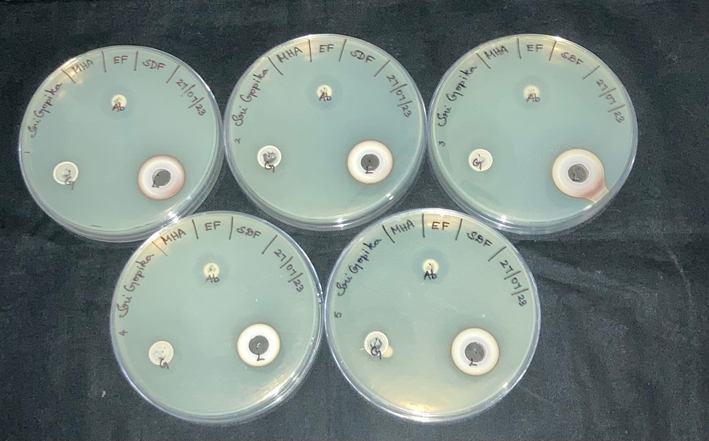
Figure 1 - Antibacterial activity (ZOI) of SDF solution and SDF gel against E. faecalis
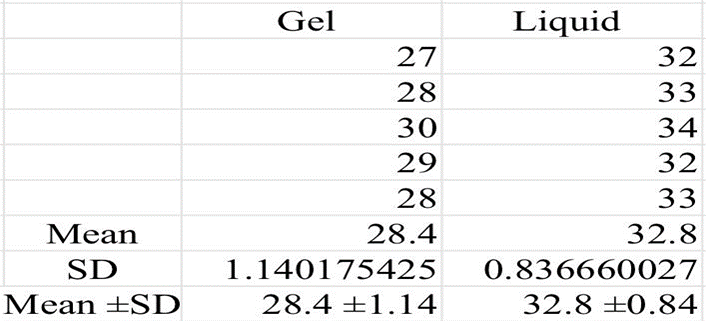
Figure 2 - Zone of Inhibition of SDF gel and SDF solution
|
Study group |
ZOI (in mm) |
P value |
|
SDF solution |
32.8 ± 0.84 mm |
0.00012 |
|
SDF gel |
28.4 ± 1.14 |
|
Figure 3 - Statistical analysis of SDF gel and SDF solution
DISCUSSION :
Enterococcus faecalis is a gram positive facultative anaerobic bacteria associated with endodontic infections and periapical periodontitis and implicated in reinfection of endodontically treated root canals [26]. In a recent study conducted in 2022, it was observed that, apart from preventing caries progression, SDF may be effective against E. faecalis and can be used as an intracanal medicament and/or irrigant to prevent reinfection of the root canals and improve the outcomes of endodontic treatment [27].
In a study that wanted to check the efficacy of SDF in arresting cavitated caries lesions in primary molars, it was noted that SDF application was found to be overall effective in arresting caries progression (ES = 0.35, p < 0.01). In a total of 622 arrested lesions, out of 1205 considered, the caries arrest rate was 51.62% ± 27.40% using SDF ≥ 38% applied annually or biannually [28].
Another study concluded that SDF + NaF had significantly greater caries arrest effect than SDF alone (p = 0.03) with significant difference (p = 0.03) between moderate (p = 0.005) and advanced (p = 0.08) lesions [29]. While comparing the effectiveness of using SDF or ART in arresting caries lesions, it was noted that out the 118 participants who received treatment (SDF, n = 59; ART, n = 59), after 12-month follow-up, 91.5% of caries lesions in the SDF and 90.2% in the ART group were arrested (p = 1.000). After 24 months, 72% were arrested in the SDF group and 95.2% in the ART group [30].
The MIC and MBC of SDF for S. mutans are lower than that of silver ammonium nitrate and sodium fluoride, showing that SDF is more effective compared the two in inhibiting bacterial growth. SDF also possesses strong antimicrobial action against S. mutans, A. naeslundii and L. acidophilus [31], as well as E. faecalis biofilm on root canals [32]. Studies have also observed that SDF works against a wide variety of bacteria as well. One such study noted that both gel and solution forms exhibit antimicrobial efficacy against Streptococcus mutans and Lactobacillus acidophilus and that, the incorporation of potassium iodide (KI) significantly enhances the antimicrobial activity of SDF [15].
As for the frequency of SDF application, a randomised control trial confirmed from their observations that semiannual application of SDF is a highly effective and practical method for managing early and moderate caries in primary teeth, particularly in uncooperative children with ECC [33]. SDF, apart from working as an antibacterial agent, a study has also proven its antifungal activity. In a study, it was observed that disc-diffusion and time-kill assays as well as MIC50 and MIC90 evaluations against therapeutic concentrations confirmed the broad-spectrum anti-candidal potency of SDF. SDF appears to effectively abrogate filamentation of C. albicans even at very low concentrations [34].
In a recent study conducted in 2023, while comparing the antibacterial activity of silver diamine fluoride liquid and gel against organisms causing dental caries, the anticariogenic activity of SDF preparations were similar and not statistically significant. Overall performance of FAgamin SDF solution was better than the other two. It was noted that against S.mutans, Kidz-e SDF solution performed well in 25 μl and 50 μl preparations and Fagamin SDF solution was better in 100 μl concentration. Similar results were obtained against Lactobacilli i.e, Kidz-e SDF solution performed well in 25 μl and 50 μl preparations and Fagamin SDF solution was better in 100 μl concentration [35].
CONCLUSION :
From this study, it can be concluded that Kedo SDF solution showed better antibacterial properties against E. faecalis. However, in vivo studies also have to be carried out in order to understand the full extent of its activity and its limitations as well.
Acknowledgement
We express our sincere gratitude to Saveetha Dental College and Hospitals and Saveetha Institute of Technical and Medical Sciences for their constant support and encouragement.
Conflict of Interest
Nil.
BIBLIOGRAPHY:
1. Fejerskov O. Changing paradigms in concepts on dental caries: consequences for oral health care. Caries Res. 2004 May-Jun;38(3):182–91.
2. Kassebaum NJ, Smith AGC, Bernabé E, Fleming TD, Reynolds AE, Vos T, et al. Global, Regional, and National Prevalence, Incidence, and Disability-Adjusted Life Years for Oral Conditions for 195 Countries, 1990-2015: A Systematic Analysis for the Global Burden of Diseases, Injuries, and Risk Factors. J Dent Res. 2017 Apr;96(4):380–7.
3. Yousaf, M.; Aslam, T.; Saeed, S.; Sarfraz, A.; Sarfraz, Z.; Cherrez-Ojeda, I. Individual, Family, and Socioeconomic Contributors to Dental Caries in Children from Low- and Middle-Income Countries. Int. J. Environ. Res. Public Health 2022, 19, 7114. https://doi.org/10.3390/ijerph19127114
4. Momenijavid, M., Salimizand, H., Korani, A. et al. Effect of calcium hydroxide on morphology and physicochemical properties of Enterococcus faecalis biofilm. Sci Rep 12, 7595 (2022). https://doi.org/10.1038/s41598-022-11780-x
5. Bouillaguet S, Manoil D, Girard M, Louis J, Gaïa N, Leo S, et al. Root Microbiota in Primary and Secondary Apical Periodontitis. Front Microbiol. 2018 Oct 9;9:393282.
6. Lobo CIV, Rinaldi TB, Christiano CMS, De Sales Leite L, Barbugli PA, Klein MI. Dual-species biofilms of Streptococcus mutans and Candida albicans exhibit more biomass and are mutually beneficial compared with single-species biofilms. Journal of Oral Microbiology [Internet]. 2019 Mar 20 [cited 2026 Apr 18]; Available from: https://www.tandfonline.com/doi/abs/10.1080/20002297.2019.1581520
7. Edelstein BL. Solving the problem of early childhood caries: a challenge for us all. Arch Pediatr Adolesc Med. 2009 Jul;163(7):667–8.
8. Al-Kaff AA, Alshehri AZ, Alasmari RA, Alsubaie N, Aldaws A, Althaqeel A, et al. Minimally Invasive Techniques for Managing Dental Caries in Children: Efficacy, Applications, and Future Directions. Cureus. 2025 Jul;17(7):e87450.
9. Chu CH. Treatment of early childhood caries: a review and case report. Gen Dent. 2000 Mar-Apr;48(2):142–8.
10. Xuedong Z. Dental Caries: Principles and Management. Springer; 2015. 183 p.
11. de Almeida L de FD, Cavalcanti YW, Valença AMG. In vitro antibacterial activity of silver diamine fluoride in different concentrations. Acta Odontol Latinoam. 2011;24(2):127–31.
12. König KG. Fluorides in preventive dentistry. Int Dent J. 1980 Dec;30(4):364–8.
13. Gao SS, Amarquaye G, Arrow P, Bansal K, Bedi R, Campus G, et al. Global Oral Health Policies and Guidelines: Using Silver Diamine Fluoride for Caries Control. Front Oral Health. 2021 Jul 30;2:685557.
14. Gao SS, Zhao IS, Hiraishi N, Duangthip D, Mei ML, Lo ECM, et al. Clinical Trials of Silver Diamine Fluoride in Arresting Caries among Children: A Systematic Review. JDR Clin Trans Res. 2016 Oct;1(3):201–10.
15. Fathima A, Govindaraju L. Evaluation of the Caries-Arresting Potential of Silver Diamine Fluoride Gel With Potassium Iodide Versus Sodium Fluoride Varnish: An Observational Study. Cureus. 2024 Jul;16(7):e64970.
16. Available from: US Food and Drug Administration. Diammine Silver Fluoride Dental Hypersensitivity Varnish [510(k) premarket notification]. 2017. http://www.accessdata.fda.gov/scripts/cdrh/cfdocs/ cfpmn/pmn.cfm?ID=K102973. Accessed February 28, 2017.
17. Zheng FM, Yan IG, Duangthip D, Gao SS, Lo ECM, Chu CH. Silver diamine fluoride therapy for dental care. Jpn Dent Sci Rev. 2022 Nov;58:249–57.
18. Wu MY, Suryanarayanan K, van Ooij WJ, Oerther DB. Using microbial genomics to evaluate the effectiveness of silver to prevent biofilm formation. Water Sci Technol. 2007;55(8-9):413–9.
19. Evidence-Based Dentistry Update on Silver Diamine Fluoride. Dental Clinics of North America. 2019 Jan 1;63(1):45–68.
20. Li R, Lo ECM, Liu BY, Wong MCM, Chu CH. Randomized clinical trial on arresting dental root caries through silver diammine fluoride applications in community-dwelling elders. J Dent. 2016 Aug;51:15–20.
21. Elango R, Govindaraju L. In Vitro Evaluation of Kedo Sdf Gel Effect on the Micro-Hardness of Natural Carious Dentin. Ann Dent Spec. 2025;13(2):12-4. https://doi.org/10.51847/fQknFGnize
22. Whiting P, Savović J, Higgins JPT, Caldwell DM, Reeves BC, Shea B, et al. ROBIS: A new tool to assess risk of bias in systematic reviews was developed. J Clin Epidemiol. 2016 Jan;69:225–34.
23. Mei ML, Lo ECM, Chu CH. Arresting Dentine Caries with Silver Diamine Fluoride: What’s Behind It? J Dent Res. 2018 Jul;97(7):751–8.
24. ten Cate JM. Contemporary perspective on the use of fluoride products in caries prevention. Br Dent J. 2013 Feb;214(4):161–7.
25. Buzalaf MAR, Pessan JP, Honório HM, Ten Cate JM. Mechanisms of action of fluoride for caries control. Monogr Oral Sci. 2011 Jun 23;22:97–114.
26. Evans M, Davies JK, Sundqvist G, Figdor D. Mechanisms involved in the resistance of Enterococcus faecalis to calcium hydroxide. Int Endod J. 2002 Mar;35(3):221–8.
27. Shabbir J, Khurshid Z, Zafar MS, Farooqui WA, Imran E, Najeeb S, et al. Antimicrobial Efficacy of Silver Diamine Fluoride against Enterococcus faecalis: A Systematic Review of In Vitro Studies. Biomed Res Int [Internet]. 2022 Dec 16 [cited 2023 Aug 23];2022. Available from: https://pubmed.ncbi.nlm.nih.gov/36567909/
28. Zaffarano L, Salerno C, Campus G, Cirio S, Balian A, Karanxha L, et al. Silver Diamine Fluoride (SDF) Efficacy in Arresting Cavitated Caries Lesions in Primary Molars: A Systematic Review and Metanalysis. Int J Environ Res Public Health [Internet]. 2022 Oct 9;19(19). Available from: http://dx.doi.org/10.3390/ijerph191912917
29. Abdellatif EB, El Kashlan MK, El Tantawi M. Silver diamine fluoride with sodium fluoride varnish versus silver diamine fluoride in arresting early childhood caries: a 6-months follow up of a randomized field trial. BMC Oral Health. 2023 Nov 17;23(1):875.
30. Rodrigues GF, Vollú AL, Vargas TR, Kamp LMK, da Cunha Costa T, Cruz LR, et al. Efficacy of 30% silver diamine fluoride compared to atraumatic restorative treatment in arresting dentin caries lesions in preschoolers: a randomized clinical trial. Clin Oral Investig. 2024 Dec 6;29(1):3.
31. Mei ML, Chu CH, Low KH, Che CM, Lo ECM. Caries arresting effect of silver diamine fluoride on dentine carious lesion with S. mutans and L. acidophilus dual-species cariogenic biofilm. Med Oral Patol Oral Cir Bucal. 2013 Nov 1;18(6):e824–31.
32. Zhao IS, Gao SS, Hiraishi N, Burrow MF, Duangthip D, Mei ML, et al. Mechanisms of silver diamine fluoride on arresting caries: a literature review. Int Dent J. 2018 Apr;68(2):67–76.
33. Kelmendi M, Robo I, Petro E, Kelmendi S. Silver Diamine Fluoride in Arresting Dental Caries Among Young Children: a Randomized Clinical Trial. Med Arch. 2025;79(5):399–405.
34. Fakhruddin KS, Egusa H, Ngo HC, Panduwawala C, Pesee S, Venkatachalam T, et al. Silver diamine fluoride (SDF) used in childhood caries management has potent antifungal activity against oral Candida species. BMC Microbiol. 2020 Apr 15;20(1):95.
35. View of A comparison of the efficiency of silver diamine fluoride liquid and gel against organisms causing dental caries - An in vitro study [Internet]. [cited 2023 Oct 3]. Available from: https://doi.org/10.47750/jptcp.2023.30.06.021