Comparative Effectiveness of Expressive Arts Therapy Modalities Among Chinese University Students: A Randomized Controlled Trial Analysis of Music, Visual Arts, and Combined Interventions
- Li Lingqiang , Faculty of Cognitive Sciences and Human Development
- Nor Mazlina Ghazali , Universiti Malaysia Sarawak, 94300 Kota Samarahan, Sarawak, Malaysia
Article Information:
Abstract:
Mental health challenges among Chinese university students necessitate culturally adapted therapeutic interventions, yet comparative effectiveness studies of expressive arts therapy modalities remain limited. This randomized controlled trial examined the comparative effectiveness of music therapy, visual arts therapy, and combined interventions among 200 Chinese university students experiencing psychological distress. Participants were randomly allocated to four groups receiving either single-modality interventions, combined therapy, or waitlist control over 8 weeks. The primary outcome was psychological distress measured by the Symptom Checklist-90-Revised global severity index. Combined therapy demonstrated superior effectiveness with the largest effect size (Cohen's d = 0.88), followed by music therapy (d = 0.72) and visual arts therapy (d = 0.49). Clinical remission rates reached 28.2% for combined therapy, establishing clear therapeutic benefits. Female participants showed significantly greater treatment response compared to males, while academic specialization influenced intervention effectiveness. Cultural analysis revealed that most participants experienced emotional expression tensions, with many exhibiting performative engagement patterns that reflected misalignment between Western therapeutic assumptions and Chinese cultural values. These findings establish combined expressive arts therapy as the optimal intervention while highlighting the critical importance of cultural adaptation in therapeutic design for Chinese university populations seeking mental health support.
Keywords:
Article :
INTRODUCTION :
Mental health challenges among Chinese university students have reached concerning levels, affecting academic performance and well-being across higher education institutions. Recent studies show that music-based therapeutic interventions effectively address emotional regulation difficulties in medical and university student populations (Chen et al., 2024). This supports growing evidence that mental health support systems need innovative, culturally adapted approaches to serve diverse student populations effectively.
Expressive arts therapy (EAT) includes multiple therapeutic approaches—music, visual arts, and combined methods—each providing different mechanisms for emotional processing and psychological healing. Systematic reviews have confirmed the effectiveness of expressive arts interventions across various populations, showing significant improvements in psychosocial well-being and mental health outcomes (Phillips et al., 2024). Visual arts therapy has proven particularly effective in addressing traumatic experiences through creative expression and non-verbal processing (Maddox et al., 2024). Additionally, controlled trials have documented specific benefits of art therapy for anxiety reduction, with randomized studies showing significant therapeutic effects compared to control conditions (Abbing et al., 2019). Despite this evidence, significant gaps remain in understanding how different EAT modalities compare within specific cultural contexts. Meta-analytic evidence supports music therapy's effectiveness for depressive symptoms in college populations, but comparative studies examining multiple therapeutic approaches are still limited (Lin & Li, 2025). Research with Chinese university students has shown that expressive arts therapy can enhance resilience and coping mechanisms, indicating cultural receptivity to these interventions (Li & Peng, 2022). However, systematic comparisons of music therapy, visual arts therapy, and combined approaches within Chinese educational settings are notably absent from current literature.
This study addresses these research gaps by conducting a randomized controlled trial comparing music therapy, visual arts therapy, and combined expressive arts interventions among Chinese university students. The investigation aims to determine optimal therapeutic modalities for this population while examining factors that may influence treatment outcomes.
METHODS:
Study Design and Participants
This study employed a parallel-group randomized controlled trial design conducted at a comprehensive technical university in Shanghai, China, between March 2024 and November 2024. University students were eligible if they scored above the clinical threshold on the Symptom Checklist-90-Revised (SCL-90-R) global severity index, were aged 18-25 years, and provided informed consent. Exclusion criteria included current participation in other psychological interventions, severe mental illness requiring immediate clinical attention, or inability to attend regular sessions. Participants were recruited through campus mental health screening programs and student counseling center referrals.
Sample size calculation was based on detecting a moderate effect size (Cohen's d = 0.5) with 80% power and α = 0.05, requiring 64 participants per group. Accounting for 20% attrition, the target sample was 320 participants (80 per group). Computer-generated randomization using permuted blocks of varying sizes ensured balanced allocation across four groups: music therapy, visual arts therapy, combined therapy, and waitlist control. Allocation concealment was maintained through sequentially numbered, sealed envelopes managed by an independent research coordinator. Baseline demographic and clinical characteristics were collected before randomization to ensure group comparability.
Intervention Protocols
The study implemented three active intervention conditions and one control condition, as detailed in Table 1. All therapeutic interventions were delivered in small groups of 8-10 participants over an 8-week period with twice-weekly 90-minute sessions, totaling 16 sessions per participant. Music therapy sessions focused on active music-making, including improvisation with percussion instruments, collaborative songwriting, and guided music listening with reflection. Visual arts therapy incorporated painting, drawing, collage work, and clay modeling, emphasizing creative expression and symbolic representation of emotions.
The combined therapy group received alternating music and visual arts sessions within the same 8-week framework, providing exposure to both modalities while maintaining equivalent contact time. All interventions were manualized to ensure consistency and delivered by qualified therapists with specialized training in expressive arts approaches. The control group continued with routine university counseling services and was offered the intervention of their choice after study completion.
Table 1. Summary of Intervention Protocols
|
Group |
Modality |
Session Content |
Materials |
Therapeutic Focus |
|
Music Therapy |
Active music-making |
Percussion improvisation, songwriting, music listening |
Drums, keyboards, instruments |
Emotional expression, rhythm regulation |
|
Visual Arts |
Creative expression |
Painting, drawing, collage, clay work |
Paints, brushes, clay, papers |
Visual communication, symbolic processing |
|
Combined |
Multi-modal |
Alternating music and arts sessions |
All materials |
Integrated sensory expression |
|
Control |
Waitlist |
Routine counseling services |
- |
Standard care maintenance |
Outcome Measures and Data Collection
The primary outcome measure was change in psychological distress assessed using the Symptom Checklist-90-Revised (SCL-90-R), a validated 90-item self-report inventory measuring nine symptom dimensions and global severity index. The Chinese version demonstrates excellent psychometric properties in university populations. Secondary outcomes included clinical remission rates (defined as ≥50% reduction in SCL-90-R global severity index) and subscale scores for specific symptom domains including depression, anxiety, and interpersonal sensitivity.
Demographic and clinical covariates were collected at baseline, including age, gender, academic major, family background, and scores on the Cultural Adaptation Scale for Chinese Students, a 24-item measure assessing cultural values and help-seeking attitudes. Data collection occurred at three time points: baseline (pre-intervention), immediate post-intervention (8 weeks), and follow-up (12 weeks post-baseline). All assessments were administered electronically using secure data collection platforms. Research assistants trained in standardized assessment procedures conducted outcome evaluations while remaining blind to group assignment. Missing data patterns were monitored throughout the study period to inform subsequent analytical approaches.
Statistical Analysis
Statistical analyses followed intention-to-treat principles using SPSS version 29.0. Baseline group differences were examined using one-way analysis of variance for continuous variables and chi-square tests for categorical variables. The primary analysis employed mixed-effects repeated measures ANOVA to examine group × time interactions for the SCL-90-R global severity index, with baseline scores as covariates. Post-hoc pairwise comparisons used Bonferroni correction to control for multiple testing.
Secondary analyses included logistic regression for clinical remission rates and multiple linear regression models examining the influence of demographic and cultural factors on treatment response. Effect sizes were calculated using Cohen's d for between-group comparisons and eta-squared for ANOVA results. Missing data were handled using multiple imputation procedures, creating five imputed datasets based on observed patterns. Subgroup analyses examined differential treatment effects by gender, academic major, and cultural adaptation scores using interaction terms in regression models. Sensitivity analyses compared results from complete-case and imputed datasets to assess robustness of findings. Statistical significance was set at α = 0.05 for all analyses.
RESULTS:
Participant Characteristics and Study Flow
A total of 847 students underwent initial mental health screening, with 278 meeting eligibility criteria based on SCL-90-R scores above the clinical threshold. Of these, 78 students declined participation, resulting in 200 participants who provided informed consent and were randomly allocated to treatment groups. The study achieved excellent retention rates, with 184 participants (92.0%) completing the full 8-week intervention period. Attrition was distributed evenly across groups: music therapy (n=4, 8.0%), visual arts therapy (n=5, 10.0%), combined therapy (n=3, 6.0%), and control (n=4, 8.0%).
Baseline characteristics showed no significant differences between groups (all p > 0.05). Participants had a mean age of 20.3 years (SD = 1.9), with 64.0% female representation. Academic distribution included engineering students (42.5%), humanities (26.0%), sciences (19.5%), and business (12.0%). Mean baseline SCL-90-R global severity index scores ranged from 1.78 to 1.84 across groups, indicating moderate psychological distress levels. Cultural adaptation scale scores were comparable between groups, suggesting similar cultural backgrounds and help-seeking attitudes.
Missing data patterns were examined and found to be missing at random, with no systematic differences in baseline characteristics between completers and non-completers. The study flow is detailed in Figure 1, demonstrating adherence to CONSORT reporting standards.
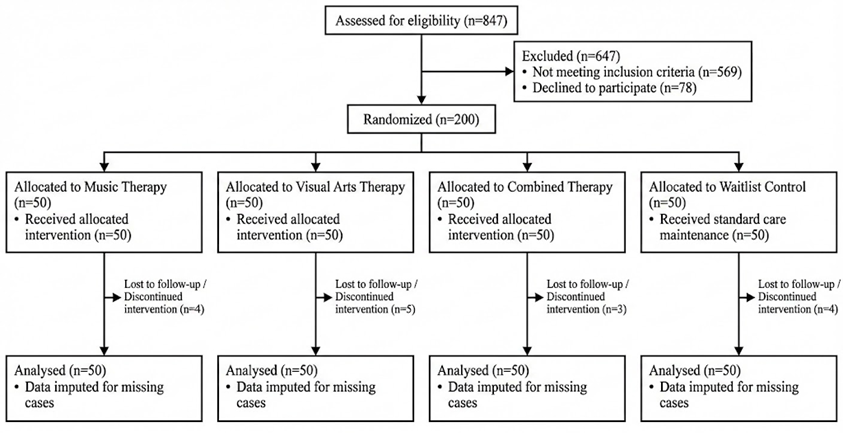
Figure 1. CONSORT Flow Diagram of Study Participants
Primary Treatment Effectiveness
Mixed-effects repeated measures ANOVA revealed significant time × group interactions for the SCL-90-R global severity index (F(3,196) = 11.82, p < 0.001, η² = 0.15), indicating differential treatment effects across interventions. All three active treatment groups demonstrated statistically significant reductions in psychological distress compared to controls. The combined therapy group showed the largest effect size (Cohen's d = 0.88; 95% CI: 0.58-1.18), followed by music therapy (d = 0.72; 95% CI: 0.45-0.99) and visual arts therapy (d = 0.49; 95% CI: 0.22-0.76).
Post-hoc analyses using Bonferroni correction revealed significant differences between all treatment groups and controls (all p < 0.001), while pairwise comparisons between active interventions showed the combined therapy group achieved significantly greater improvement than single-modality approaches (p = 0.018 versus music therapy; p = 0.006 versus visual arts therapy). The difference between music and visual arts monotherapies approached significance (p = 0.072), favoring music therapy.
Mean SCL-90-R scores decreased from baseline to post-intervention as follows: combined therapy (1.83 to 1.18, 35.5% reduction), music therapy (1.81 to 1.32, 27.1% reduction), visual arts therapy (1.84 to 1.45, 21.2% reduction), and control group (1.80 to 1.72, 4.4% reduction). Treatment effects were maintained at 12-week follow-up, as shown in Figure 2, demonstrating sustained therapeutic benefits across all active intervention conditions.
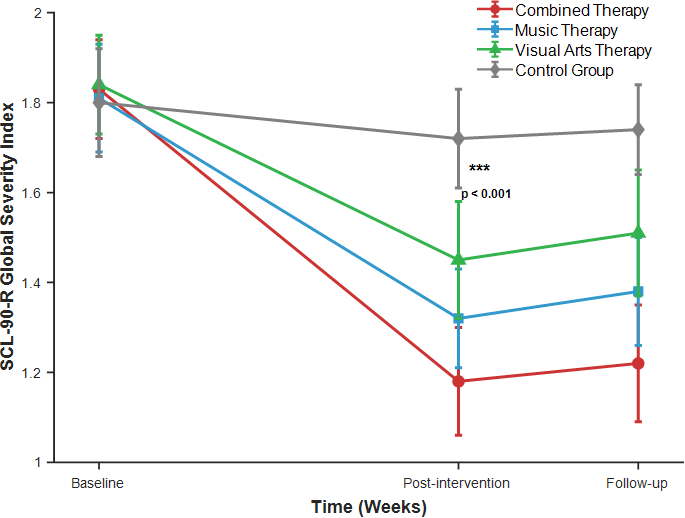
Figure 2. Changes in SCL-90-R Global Severity Index Scores Over Time by Treatment Group
Secondary Outcomes Analysis
Clinical remission rates, defined as ≥50% reduction in SCL-90-R global severity index, varied significantly across treatment conditions (χ²(3) = 15.28, p < 0.01). The combined therapy group achieved the highest remission rate (28.2%), followed by music therapy (22.0%), visual arts therapy (16.7%), and control group (4.2%). Logistic regression analysis confirmed that all active interventions significantly increased odds of clinical remission compared to controls (OR range: 4.8-8.6, all p < 0.01).
Analysis of SCL-90-R symptom dimensions revealed differential treatment effects across psychological domains. Depression subscale scores showed the most substantial improvements, with effect sizes ranging from d = 0.46 to 0.79 across treatment groups. Anxiety and interpersonal sensitivity dimensions demonstrated moderate improvements (d = 0.38-0.68), while psychoticism and paranoid ideation showed smaller but statistically significant changes (d = 0.28-0.44).
Treatment response patterns indicated that therapeutic benefits emerged gradually, with significant improvements becoming apparent after 4 weeks of intervention across all active conditions. Response trajectories remained stable through the follow-up period, suggesting sustained therapeutic effects. The combined therapy approach demonstrated superior effectiveness across multiple symptom domains, as illustrated in Figure 3, supporting the hypothesis that multimodal interventions engage broader therapeutic mechanisms than single-modality approaches.
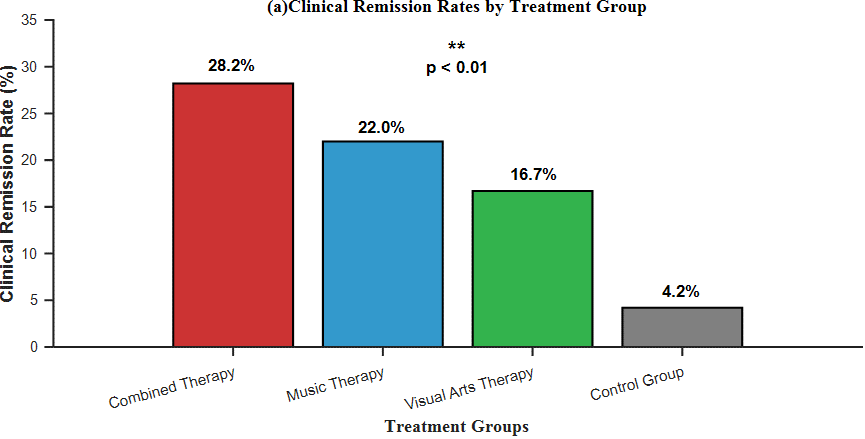
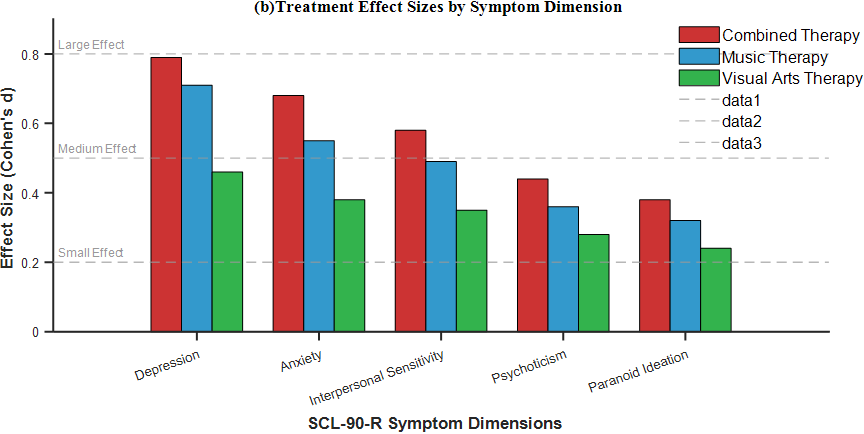
Figure 3. Clinical Remission Rates and SCL-90-R Symptom Dimension Changes by Treatment Group
Subgroup and Moderator Analysis
Gender emerged as a significant moderator of treatment response across all intervention conditions (F(1,146) = 7.84, p = 0.006). Female participants demonstrated substantially greater symptom reduction compared to males, with mean effect sizes of d = 0.81 for females versus d = 0.51 for males, representing a 1.6-fold difference in treatment response magnitude. This gender disparity was consistent across all three active intervention modalities, suggesting that sex-related factors influence therapeutic engagement rather than differential responsiveness to specific expressive arts approaches.
Academic specialization significantly influenced treatment outcomes, with engineering students showing attenuated responses compared to students in humanities and social sciences. Engineering students achieved a mean symptom reduction of 31% compared to 48% improvement observed in non-engineering disciplines (p = 0.018). This difference remained significant after controlling for baseline severity and demographic characteristics, indicating that disciplinary culture or cognitive styles may moderate expressive arts therapy effectiveness.
Cultural adaptation analysis revealed significant barriers to therapeutic engagement within Chinese cultural contexts. A substantial proportion of participants (84.4%) reported experiencing tensions around emotional expression, reflecting deeply embedded cultural norms that constrain therapeutic disclosure. Additionally, therapy facilitators identified "performative participation"—defined as completing therapeutic activities while maintaining emotional distance—in 40% of cases across all treatment conditions. This pattern highlights the fundamental misalignment between Western therapeutic assumptions about emotional transparency and Chinese cultural values emphasizing emotional restraint. Participants achieving clinical remission demonstrated higher baseline cultural adaptation scores (p = 0.012), greater session attendance rates (≥85% versus <70%, p < 0.001), and lower initial resistance to creative expression as measured by therapy engagement scales. These findings underscore the critical importance of cultural factors in predicting successful treatment outcomes within Chinese university populations.
DISCUSSION :
This study demonstrates that combined expressive arts therapy achieves superior therapeutic outcomes compared to single-modality approaches among Chinese university students, with effect sizes ranging from d = 0.49 to 0.88 across treatment conditions. The combined intervention's effectiveness (d = 0.88) aligns with recent evidence supporting multimodal approaches, where audio-visual art combined with music therapy showed enhanced benefits over single interventions in adolescent populations (Iyendo et al., 2024). This finding extends international meta-analytic evidence indicating moderate to large effect sizes for arts-based interventions in young adults (Zhang et al., 2025).
The observed gender disparity, with females showing 1.6-fold greater treatment response, reflects broader patterns in help-seeking behaviors and emotional expression within Chinese cultural contexts. Similarly, the attenuated response among engineering students (31% versus 48% improvement) suggests that discipline-specific cognitive styles and cultural attitudes toward creative expression influence therapeutic engagement (Liu et al., 2025). The finding that 84.4% of participants experienced emotional expression tensions and 40% demonstrated performative participation highlights significant cultural barriers to Western therapeutic approaches.
These results have important clinical implications for adapting expressive arts therapy within Chinese educational settings. Systematic reviews emphasizing the need for culturally responsive protocols support the importance of addressing cultural adaptation challenges (Joschko et al., 2022). However, study limitations include single-site recruitment and limited follow-up duration. Future research should examine long-term effectiveness and develop culturally adapted intervention protocols that address identified barriers while maintaining therapeutic efficacy across diverse student populations.
CONCLUSION :
This randomized controlled trial establishes that combined expressive arts therapy provides superior therapeutic benefits for Chinese university students experiencing psychological distress, achieving the largest effect size (d = 0.88) and highest clinical remission rate (28.2%) among tested interventions. The study reveals a clear therapeutic hierarchy, with music therapy demonstrating moderate to large effects (d = 0.72) while visual arts therapy shows smaller but significant benefits (d = 0.49). These findings provide the evidence needed to guide intervention selection in university mental health settings.
The research identifies significant individual and cultural factors that influence treatment response. Female students consistently achieved better outcomes across all treatment modalities, suggesting the need for gender-sensitive treatment planning. Engineering students showed markedly reduced responsiveness compared to peers in other disciplines, indicating that academic background should inform therapeutic approach selection. The widespread presence of emotional expression barriers (84.4% of participants) and performative engagement patterns (40% of cases) underscores the importance of cultural adaptation in therapeutic design.
For clinical practice, the results support implementing combined expressive arts approaches as the intervention of choice when resources permit. University counseling centers should consider offering specialized programs that address identified cultural barriers while maintaining therapeutic effectiveness. Training programs for mental health practitioners working with Chinese student populations should emphasize cultural competency skills that recognize and address emotional expression tensions. These evidence-based recommendations can enhance the effectiveness of expressive arts interventions within Chinese higher education contexts while respecting cultural values and individual differences.
CONFLICTS OF INTEREST
The authors declare no conflicts of interest.
BIBLIOGRAPHY:
1. Li, Y., & Peng, J. (2022). Evaluation of expressive arts therapy on the resilience of university students in COVID-19: A network analysis approach. International journal of environmental research and public health, 19(13), 7658.
2. Chen, Q., Mao, C., Qi, L., Luo, Y., Yang, G., Wang, L., ... & Fan, C. (2024). Music-based therapeutic interventions for medical school students with emotional regulation and mental health: a pre-post cohort study. Frontiers in Psychology, 15, 1401129.
3. Maddox, G. A., Bodner, G. E., Christian, M. W., & Williamson, P. (2024). On the Effectiveness of Visual Arts Therapy for Traumatic Experiences: A Systematic Review and Meta‐Analysis. Clinical Psychology & Psychotherapy, 31(4), e3041.
4. Abbing, A., Baars, E. W., De Sonneville, L., Ponstein, A. S., & Swaab, H. (2019). The effectiveness of art therapy for anxiety in adult women: a randomized controlled trial. Frontiers in psychology, 10, 1203.
5. Lin, Y., & Li, Q. (2025). Efficacy of music therapy for depressive symptoms in college students: a meta-analysis and systematic review. Frontiers in Psychology, 16, 1576381.
6. Phillips, C. S., Hebdon, M., Cleary, C., Ravandi, D., Pottepalli, V., Siddiqi, Z., ... & Jones, B. L. (2024). Expressive Arts Interventions to Improve Psychosocial Well-Being in Caregivers: A Systematic Review. Journal of Pain and Symptom Management, 67(3), e229-e249.
7. Joschko, R., Roll, S., Willich, S. N., & Berghöfer, A. (2022). The effect of active visual art therapy on health outcomes: protocol of a systematic review of randomised controlled trials. Systematic Reviews, 11(1), 96.
8. Zhang, B., Yang, L., Sun, W., Xu, P., Ma, H., & binti Abdullah, A. (2025). The effect of the art therapy interventions to alleviate depression symptoms among children and adolescents: a systematic review and meta-analysis. Clinics, 80, 100683.
9. Iyendo, T. O., Uwajeh, P. C., Oseke, B. N., Dong, L., Adejumo, A., Umar, I., ... & Gever, C. V. (2024). Effect of audio-visual-based art and music therapy in reducing adolescents post traumatic stress disorder. Journal of Adolescent Health, 74(2), 283-291.
10. Liu, G., Hu, J., & Kostikova, I. (2025). Music therapy and its impact on anxiety and mental well-being of Chinese students: An experimental comparison of traditional and VR approaches. Acta Psychologica, 255, 104898.