Hair Dye Poisoning Induced Rhabdomyolysis: A Retrospective Study of Patients in a Rural Intensive Care Unit in South India
- Harish Handyal , (Chief Intensivist, Department of critical care, RDT Hospital, Bathalapalli),
- U. Veerendra , (Assistant Professor, Department of pharmacy Practice RIPER)
- Chandra prakash , (Department of Pharmacy Practice, RIPER-Autonomous, Anantapur, AP, India)
- J.U. Nikitha Bai , (Department of Pharmacy Practice, RIPER-Autonomous, Anantapur, AP, India)
- N. Rajitha , (Department of Pharmacy Practice, RIPER-Autonomous, Anantapur, AP, India)
Article Information:
Abstract:
Background: Hair dye poisoning due to paraphenylenediamine (PPD) is a medical emergency in certain regions, often leading to rhabdomyolysis. Understanding its prevalence, clinical profile, and outcomes is critical for improving management.Objectives: To assess the proportion of rhabdomyolysis in hair dye poisoning, describe clinical features, evaluate outcomes, and analyze interventions.Methods: A retrospective observational study at the ICU of RDT Hospital, Bathalapalli, reviewing 46 PPD poisoning cases from September 2022 to August 2024. Data analyzed with IBM SPSS version 22.Results: Among 46 patients, 97.8% developed rhabdomyolysis (CPK 1,000 IU/L). Most were young females (76.1%, mean age 30.69 ± 12.11 years). Cervico-facial edema occurred in universally (100%); mean CPK was 67,846 ± 59,161 IU/L. All received forced alkaline diuresis and mechanical ventilation; 84.8% needed tracheostomy. Discharge rate was 91.3%; no in-hospital deaths occurred.Conclusion: Rhabdomyolysis is nearly universal in severe PPD poisoning. Early critical care, airway protection and forced alkaline diuresis, is essential to reduce morbidity and ensure favorable outcomes.
Keywords:
Article :
INTRODUCTION :
Hair dyeing has a rich history dating back to ancient Egypt, where vegetable dyes such as henna were used as far back as 5000 BC. The first synthetic hair dye was developed in 1856, and paraphenylenediamine (PPD) was described by the German chemist Hofmann in 1863 [1]. Today, PPD is a cornerstone of over 1000 hair dye formulations worldwide, valued for its small molecular weight, high protein-binding capacity, and ability to penetrate the hair shaft [1].
PPD-containing products, often sold as 'Kala Pathar' or 'Super Vasmol' in the Indian subcontinent, have become a significant method of deliberate self-harm due to their low cost and easy availability [2,8]. In developing countries such as India, Sudan, Morocco, and parts of East Africa, the unregulated use of PPD- containing dyes at high concentrations poses a major public health threat [3,5,7]
PPD is metabolized into reactive compounds including benzoquinone diamine and Brandowski's base, which trigger anaphylaxis and tissue damage through free radical formation [3,8]. The lethal dose is estimated at 7·10 grams, and toxicity is dose- dependent [7,8]. Clinical manifestations include cervico-facial edema causing airway compromise, rhabdomyolysis with myoglobinuria, acute kidney injury (AKI), cardiotoxicity, hepatitis, and metabolic acidosis [6,7,9].
Rhabdomyolysis · the breakdown of skeletal muscle with release of myoglobin and creatine kinase (CPK) into the circulation · has a reported incidence of 20· 69% in published series [5,9]. The mechanism involves calcium leakage from the sarcoplasmic reticulum, leading to continuous muscle contraction and irreversible structural damage [6]. Despite this, rhabdomyolysis in the context of PPD poisoning remains under-researched in Indian ICU settings. This retrospective study was conducted at a rural ICU in South India to evaluate the proportion, clinical characteristics, interventions, and outcomes of rhabdomyolysis induced by PPD hair dye poisoning.
Materials and Methods:
Study Design and Setting
This was a retrospective observational study conducted at the ICU of RDT Hospital, Bathalapalli, Anantapur District, Andhra Pradesh, India. The study received ethics approval (IEC No.: RDTH/BTP/ETHICS/2024/25) and covered two years of patient data (September 2022 to August 2024).
Participants
All patients aged ≥15 years admitted to the ICU with confirmed PPD hair dye ingestion were eligible. Rhabdomyolysis was defined as serum CPK >1,000 U/L or clinical myoglobinuria. Patients with incomplete records, co-ingestion of other toxins, or pre-existing renal/muscular disorders were excluded.
Data Collection
Retrospective data were extracted from the Hospital Information System (HIS). Variables included demographics, clinical features on admission, laboratory parameters within 24 hours, interventions, ICU complications, and discharge outcomes.
Statistical Analysis
Categorical variables are expressed as frequencies and percentages; continuous variables as mean ± SD and ranges. Chi-square tests assessed associations between categorical variables (p<0.05 considered significant). IBM SPSS version 22 was used for all analyses. Chi- square p-values for dose- and time-dependent comparisons are reported in Table 11.
Results:
Demographic Characteristics
A total of 46 patients with PPD hair dye poisoning were included. The majority were young females (76.1%, n=35) with a mean age of 30.69 ± 12.11 years. The most common age group was 21–30 years (47.8%), followed by 31–40 years (19.6%) (Table 1, Figure 1, Figure 2).
Table 1. Sociodemographic Characteristics of Study Participants (n = 46)
|
Variable |
Frequency (n) |
Percentage (%) |
|
Age 15–20 years |
8 |
17.4 |
|
Age 21–30 years |
22 |
47.8 |
|
Age 31–40 years |
9 |
19.6 |
|
Age 41–50 years |
4 |
8.7 |
|
Age 51–60 years |
1 |
2.2 |
|
Age 61–70 years |
1 |
2.2 |
|
Age >70 years |
1 |
2.2 |
|
Male |
11 |
23.1 |
|
Female |
35 |
76.1 |

Figure 1. Age Distribution of PPD Poisoning Patients (n=46). The 21–30-year age group was predominant (47.8%).
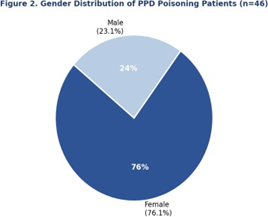
Figure 2. Gender Distribution. Females constituted 76.1% of the cohort.
Patient History and Poison Profile
Over half of patients (54.3%, n=25) consumed more than 60 mL of dye, and 63% (n=29) presented more than 3 hours after ingestion. Mean APACHE II score was 22.8 ± 5.7, reflecting moderate-to-severe illness (Table 2, Table 3).
Table 2. Patient History of PPD Poisoning
|
Variable |
Frequency (n) |
Percentage (%) |
|
Dye consumed <60 mL |
21 |
45.7 |
|
Dye consumed >60 mL |
25 |
54.3 |
|
Time to presentation <3 hours |
17 |
37.0 |
|
Time to presentation >3 hours |
29 |
63.0 |
|
APACHE II Score 0–71 |
46 |
100 |
Table 3. Descriptive Analysis of Key Variables
|
Variable |
Mean ± SD |
Median |
SEM |
|
Age (years) |
30.69 ± 12.11 |
27.50 |
1.78 |
|
Dye consumed (mL) |
69.02 ± 21.7 |
60.00 |
3.2 |
|
Time to presentation (hours) |
5.10 ± 3.91 |
3.90 |
0.57 |
|
APACHE II Score |
22.8 ± 5.7 |
22.0 |
0.84 |
|
Tracheostomy duration (days) |
4.69 ± 6.25 |
4.00 |
0.92 |
|
Mechanical ventilation (days) |
3.87 ± 5.47 |
3.00 |
0.80 |
|
ICU length of stay (days) |
6.56 ± 6.34 |
6.00 |
0.93 |
Proportion of Rhabdomyolysis
Rhabdomyolysis (CPK >750>1,000 IU/L) was detected in 97.8% of cases (45/46), confirming near-universal muscle injury from PPD toxicity (Table 4, Figure 3).
Table 4. Proportion of Rhabdomyolysis Among PPD Poisoning Patients
|
Rhabdomyolysis |
Frequency (n) |
Percentage (%) |
|
Yes |
45 |
97.8 |
|
No |
1 |
2.2 |
|
Total |
46 |
100 |
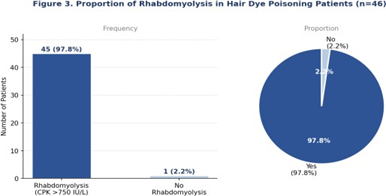
Figure 3. Proportion of Rhabdomyolysis in Hair Dye Poisoning Patients (n=46). 45/46 patients (97.8%) fulfilled CPK >1,000 IU/L criteria for rhabdomyolysis.
Clinical Features on Admission
Cervico-facial edema was present universally (100%), while dark-colored urine (97.8%), dysphagia, dyspnea, and muscle weakness (93.5% each) were highly prevalent. Altered sensorium was noted in 37%. Hypertension (28.3%), hypotension (8.7%), and cardiac arrhythmias (6.5%) indicated systemic involvement (Table 5, Figure 4).
Table 5. Clinical Features on Admission (n = 46)
|
Clinical Feature |
Yes (n) |
Yes (%) |
No (n) |
No (%) |
|
Cervico-facial edema |
46 |
100 |
0 |
0 |
|
Dark-colored urine |
45 |
97.8 |
1 |
2.2 |
|
Dysphagia |
43 |
93.5 |
3 |
6.5 |
|
Dyspnea |
43 |
93.5 |
3 |
6.5 |
|
Muscle weakness |
43 |
93.5 |
3 |
6.5 |
|
Altered sensorium |
17 |
37.0 |
29 |
63.0 |
|
Hypertension |
13 |
28.3 |
33 |
71.7 |
|
Hypotension |
4 |
8.7 |
42 |
91.3 |
|
Cardiac arrhythmias |
3 |
6.5 |
43 |
93.5 |

Figure 4. Clinical Presentations on Admission. Cervico-facial edema and dark-colored urine were the most universal features.
3.5 Patient Outcomes
The majority of patients (91.3%, n=42) were successfully discharged. 8.7% (n=4) left against medical advice (DAMA), reflecting challenges in follow-up care or patient compliance (Table 6, Figure 5). No in-hospital deaths were recorded during the study period; the outcomes of the four DAMA patients beyond discharge could not be ascertained from hospital records.
Table 6. Patient Outcomes (n = 46)
|
Outcome |
Frequency (n) |
Percentage (%) |
|
Discharged |
42 |
91.3 |
|
DAMA |
4 |
8.7 |
|
Total |
46 |
100 |
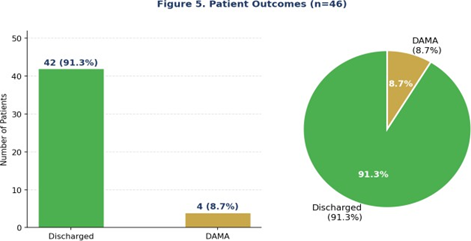
Figure 5. Patient Outcomes. 91.3% of patients were successfully discharged; 8.7% left against medical advice (DAMA).
Interventions
Forced alkaline diuresis and mechanical ventilation were administered universally (100%). Tracheostomy was required in 84.8% due to severe laryngeal edema. Invasive blood pressure monitoring was employed in 58.7%, and central venous catheterization in 28.3% (Table 7, Figure 6).
Table 7. Interventions Employed in PPD Poisoning Management
|
Intervention |
Yes (n) |
Yes (%) |
No (n) |
No (%) |
|
Forced alkaline diuresis |
46 |
100 |
0 |
0 |
|
Mechanical ventilation |
46 |
100 |
0 |
0 |
|
Tracheostomy |
39 |
84.8 |
7 |
15.2 |
|
Invasive BP monitoring |
27 |
58.7 |
19 |
41.3 |
|
Central venous catheter |
13 |
28.3 |
33 |
71.7 |
Figure 6. Interventions Administered. Forced alkaline diuresis and mechanical ventilation were universal;
tracheostomy was required in 84.8% of patients.
Laboratory Parameters
CPK levels were markedly elevated (mean 67,846 ± 59,161 IU/L) confirming severe rhabdomyolysis. LDH (mean 3,808 ± 3,771 IU/L) and hepatic enzymes (AST mean 1,342 ± 1,621 IU/L; ALT mean 381 ± 350 IU/L) reflected multi-organ involvement. Despite this, mean serum creatinine was 0.89 ± 0.40 mg/dL, indicating preserved renal function (Table 8).
Table 8. Laboratory Parameters of PPD Poisoning Patients
|
Parameter |
Mean ± SD |
Median |
SEM |
|
Urine pH |
6.05 ± 0.52 |
6.10 |
0.07 |
|
CPK (IU/L) |
67,846 ± 59,161 |
54,522.5 |
8722.89 |
|
LDH (IU/L) |
3,808 ± 3,771 |
2,389.0 |
556.00 |
|
AST (IU/L) |
1,342 ± 1,621 |
697.8 |
239.00 |
|
ALT (IU/L) |
381 ± 350 |
244.0 |
51.59 |
|
Blood urea (mg/dL) |
31.42 ± 14.5 |
32.0 |
2.13 |
|
Serum creatinine (mg/dL) |
0.89 ± 0.40 |
0.80 |
0.05 |
Complications
AKI occurred in 17.4% of patients, and VAP in 8.7%. Notably, 71.8% of patients had no ICU complications, and no CLABSI cases were recorded (Table 9).
Table 9. ICU Complications in PPD Poisoning Patients
|
Complication |
Frequency (n) |
Percentage (%) |
|
AKI only |
8 |
17.4 |
|
VAP only |
4 |
8.7 |
|
CLABSI |
0 |
0 |
|
CAUTI + AKI + VAP |
1 |
2.2 |
|
None |
33 |
71.8 |
|
Total |
46 |
100 |
ABG and Electrolyte Abnormalities
Metabolic acidosis was the dominant ABG finding (69.9%69.6%), consistent with rhabdomyolysis-associated lactic acidosis. Most patients (73.9%) maintained normal electrolytes; hyperchloremia (15.2%) was the most common imbalance (Table 10).
Table 10. ABG Abnormalities and Dyselectrolytemia
|
Variable |
Frequency (n) |
Percentage (%) |
|
Metabolic acidosis |
32 |
69.6 |
|
Metabolic alkalosis |
4 |
8.7 |
|
Normal ABG |
10 |
21.7 |
|
Hyperchloremia |
7 |
15.2 |
|
Hyperkalemia |
2 |
4.3 |
|
Hypernatremia |
1 |
2.2 |
|
Hypokalemia |
2 |
4.3 |
|
Normal electrolytes |
34 |
73.9 |
Dose- and Time-Dependent Toxicity
Higher dye consumption (>60 mL) and delayed presentation (>3 hours) correlated with worse clinical outcomes. Altered sensorium was more frequent in high-dose patients (52.0% vs. 19.0%; p=0.038) and in delayed presenters (55.2% vs. 5.9%; p=0.001). Cervico-facial edema was universal across all subgroups (100%). Dark-colored urine was present in 84.0% of high-dose vs. 100% of low-dose patients. Percentages in Table 11 reflect the proportion of each feature within the respective dose or time subgroup (Table 11).
Table 11. Clinical Manifestations by Quantity of Dye Ingested and Time to Presentation. Percentages reflect proportions within each subgroup: <60 mL (n=21), >60 mL (n=25), <3 hours (n=17), >3 hours (n=29). Chi-square p-values shown.
|
Clinical Feature |
<60 mL |
>60 mL |
<3 hours |
>3 hours |
|
Altered sensorium |
19.0% |
52.0% |
5.9% |
55.2% |
|
Cervico-facial edema |
100% |
84.0% |
100% |
100% |
|
Dysphagia |
90.5% |
76.0% |
88.2% |
96.6% |
|
Dyspnea |
90.5% |
76.0% |
94.1% |
58.7% |
|
Muscle weakness |
90.5% |
76.0% |
88.2% |
96.6% |
|
Dark-colored urine |
100% |
84.0% |
94.1% |
100% |
|
Hypotension |
9.5% |
8.0% |
0% |
13.8% |
|
Hypertension |
23.8% |
32.0% |
29.4% |
27.6% |
|
Cardiac arrhythmias |
14.3% |
0% |
5.9% |
4.3% |
DISCUSSION :
This study presents one of the few ICU-based retrospective analyses of PPD hair dye poisoning from rural South India. The predominance of young females (76.1%) aligns with published series from Pakistan and Egypt, where similar demographics have been reported [2,3,9].
The near-universal occurrence of rhabdomyolysis (97.8%) exceeds the 20–69% range cited in prior studies [5,9], reflecting the high-dose nature of poisoning in our population — over half consumed >60 mL and presented after >3 hours delay. The markedly elevated CPK levels (mean 67,846 IU/L) versus approximately 1,090 IU/L reported by Asghar et al. [3] underscore this severity.
Universal cervico-facial edema (100%) and high rates of dysphagia, dyspnea, and muscle weakness (93.5%) are consistent with PPD's well-described local irritant mechanism, necessitating tracheostomy in 84.8% — higher than the 77.6% reported by Asghar et al. [3] and 12% by Sayed et al. [9].
The preservation of renal function (mean creatinine 0.89 mg/dL) despite extreme rhabdomyolysis is noteworthy. AKI occurred in only 17.4%, compared to 14–100% in the literature [5,9,10], plausibly attributable to universal forced alkaline diuresis — which promotes urinary myoglobin excretion and reduces tubular injury [7,8].
Metabolic acidosis (69.6%) is consistent with rhabdomyolysis-associated lactic acidosis [8,10]. The absence of CLABSI and low multi-comorbidity rates attest to robust infection control. The 91.3% discharge rate underscores the effectiveness of protocol-driven aggressive ICU management at this centre.
The 8.7% DAMA rate warrants attention as these patients remain at risk for under-treated complications, potentially reflecting socioeconomic or logistic barriers. Notably, no in-hospital deaths were recorded in this cohort, in contrast to mortality rates of 12–47% reported in comparable series [2,3,5]; this outcome likely reflects the benefit of early, protocol-driven ICU management. No specific antidote for PPD exists [6,7,8]; current management remains supportive, and regulatory restrictions on PPD concentration and product availability are urgently needed [2,5,7].
Limitations. This study has several limitations inherent to its retrospective single-centre design. Selection bias cannot be excluded, as only patients admitted to the ICU were included, likely representing more severe cases. The absence of a control group precludes causal inference. Data on pre-hospital management, exact amount of PPD (as opposed to total dye volume), antidepressant co-ingestion, and suicidal intent were not systematically available. Long-term follow-up data for discharged patients and the four DAMA cases were not obtainable. The relatively small sample size (n=46) limits the power of subgroup analyses. Despite these limitations, this study contributes valuable ICU-based clinical data from a region where PPD poisoning is prevalent but under-reported.
CONCLUSION :
PPD hair dye poisoning is a severe, life-threatening condition with near-universal rhabdomyolysis and airway compromise, predominantly affecting young females in rural settings. Dose- and time-dependent toxicity underscores the critical importance of early intervention. Aggressive ICU management — universal forced alkaline diuresis, mechanical ventilation, and timely tracheostomy — was associated with a high discharge rate of 91.3% in this cohort. These findings emphasize the need for standardized clinical protocols for early airway protection and toxin elimination, alongside public health measures to regulate PPD-containing hair dye products. Future research should explore antidote development, long-term outcomes, and strategies to address barriers to follow-up care.
Declarations
Ethics approval: Institutional Ethics Committee of RDT Hospital, Bathalapalli (IEC No.: RDTH/BTP/ETHICS/2024/25). Patient data were anonymized.
Competing interests: The authors declare no competing interests.
Funding: No external funding was received for this study.
BIBLIOGRAPHY:
1. Palaniappan V, Karthikeyan K, Anusuya S. Dermatological adverse effects of hair dye use: A narrative review. Indian J Dermatol Venereol Leprol. 2024;90:458–70. doi:10.25259/IJDVL_745_2022.
2. Qasim AP, Ali MA, Baig A, Moazzam MS. Emerging trend of self-harm by using 'Kala Pathar' hair dye (paraphenylene diamine): An epidemiological study. APMC. 2016;10(1):26–30.
3. Asghar S, Mahbub S, Asghar S, Shahid S. Paraphenylenediamine (hair dye) poisoning: A prospective study on clinical outcome and side effects profile. Cureus. 2022;14(9):e29133. doi:10.7759/cureus.29133.
4. Oh RC, Arter JL, Tiglao SM, Larson SL. Exertional rhabdomyolysis: A case series of 30 hospitalized patients. Mil Med. 2015;180(2):201.
5. Bhagavathula AS, Bandari DK, Khan M, Shehab A. A systematic review and meta-analysis of the prevalence and complications of paraphenylenediamine-containing hair dye poisoning in developing countries. J Med Toxicol. 2018;14(4):261–272. doi:10.1007/s13181-018-0670-0.
6. Abdelraheem M, Hamdouk M, Zijlstra EE. Paraphenylene diamine (hair dye) poisoning in children. J Pediatr Nephrol. 2010;3(1):39–43.
7. A-Rahman NH, Ahmed AM. Hair dye poisoning: An overview. J Pharmacol Clin Toxicol. 2014;2(4):31–33.
8. Senthilkumaran S, Jena NN, Thirumalaikolundusubramanian P. Super Vasmol poisoning: Dangers of darker shade. Indian J Crit Care Med. 2019;23(Suppl 3):S192–S194. doi:10.5005/jp-journals-10071-23303.
9. Sayed AA, Abdelrahman AH, Sayed ZEA, Abdelhameid MA. Incidence and outcome of laryngeal edema and rhabdomyolysis after ingestion of black rock. Int J Emerg Med. 2024;17(1):3. doi:10.1186/s12245-023-00577-y.
10. Sampathkumar K, Yesudas S. Hair dye poisoning and the developing world. J Emerg Trauma Shock. 2009;2(1):35–39. doi:10.4103/0974-2700.50749.
11. Elevli M, Civilibal M, Ersoy O, Demirkol D, Gedik AH. Paraphenylene diamine hair dye poisoning. Eur J Pediatr. 2011;170(10):1351–1354. doi:10.1007/s00431-011-1447-2.