DIFFERENT ROUTES OF INTUBATION IN ORAL AND MAXILLOFACIAL SURGERY (OMFS): A PROSPECTIVE STUDY.
- Priya Kumari , BDS, Postgraduate student FCPS, Oral And Maxillofacial SurgeryShaheed Mohtarma Benazir Bhutto Institute of Trauma Affiliated With Dow Dental College.
- Shahjahan Katpar , BDS, MCPS, FCPS, CHPE, HoD, Oral & Maxillofacial Surgery Dow University of Health Sciences & Shaheed Mohtarma Benazir Bhutto Institute of Trauma - Karachi, Pakistan.
- Maria Shabbir , BDS, FCPS, Assistant Professor Oral and Maxillofacial Surgery, Shaheed Mohtarma Benazir Bhutto institute of trauma, Karachi.
- Hajra Rana , BDS, FCPS (OMFS), Department of Oral & Maxillofacial Surgery Shaheed Mohtarma Benazir Bhutto Institute of Trauma.
- Munir Hussain , B.D.S, (M.D.S), Department of Oral & Maxillofacial Surgery Institute: Dow Dental College.
- RAM Pershad , BDS, MSC, FCPS (OMFS)Department of Oral & Maxillofacial Surgery, Liaquat University of Medical & Health Sciences, Jamshoro.
Article Information:
Abstract:
Objective: This study aims to investigate different routes of intubation in oral and maxillofacial surgery (OMFS): a prospective study. Study Design: Prospective observational. Place and Duration of study: Department of Oral & Maxillofacial Surgery, Shaheed Mohtarma Benazir Bhutto Institute of Trauma (SMBBIT), Civil Hospital Karachi (CHK) from May 2024 to October 2024. Methodology: A total of 125 males and females of all age groups requiring general anesthesia for OMFS procedures were included in this study. The inferential statistics, such as X2-square/Fisher’s exact tests used to test the differences between the modes of general anaesthesia for each outcome variable. A p-value of <0.05 was considered statistically significant. Results: The overall mean age was 31.24±14.39 years, and most of the patients belonged to the age group between 13 years and 30 years (n = 61, 48.8%). In our study, most common diagnosis of surgery was trauma (n = 68, 54.4%) and most common technique used for general anesthesia intubation was nasal (n = 58, 46.4%). The most common morbidity was the presence of hypotension (n = 06, 4.8%). Nausea & headache were the most common side effects (n = 80, 64%) and (n = 22, 17.2%), respectively. There were 2 patients (1.6%) who had mortality after the procedure. Mortality was associated in patients with trauma & pathology in patients and those with tracheostomy & ETT, p-value 0.04. Conclusion: Our study reinforces the safety of general anesthesia in maxillofacial surgery, with low morbidity and manageable complications. However, airway management remains a critical determinant of outcomes. The association of tracheostomy with mortality underscores the need for judicious technique selection, and alternatives like submental intubation should be considered in high-risk cases.
Keywords:
Article :
INTRODUCTION :
General anaesthesia (GA) plays a crucial role in ensuring safe and pain-free oral & maxillofacial surgeries (OMFS) (1). Intubation, a vital component of general anaesthesia, involves securing the patient's airway to maintain proper ventilation during surgery. Almost all oral and maxillofacial procedures performed are predominantly done under GA, whereas minor oral surgery operative procedures can also be done under local anaesthesia (LA) (2). Many of oral and maxillofacial procedures need nasal intubation, and the work domain is thoroughly connected with the oral cavity (3).
The oral and maxillofacial surgeon providing us with full-spectrum dental anaesthesia services in the office-based environment nowadays has a multitude of anaesthetic options available. In fact, this may be the dawn of a new “golden age of anaesthesia” because of the novel agents and techniques being discovered that can rapidly render the patient unconscious yet also provide an extremely speedy and smooth emergence and recovery profile ideal for the unique dental environment (4, 5). The multitude of options available today provides practitioners with great flexibility to create an individualized anaesthetic plan, balancing the risks inherent with the patient’s medical history and the anticipated surgical plan to achieve many more Results (6).
The OMFS posed a lot of challenges to anaesthetists; the main anaesthetic concerns include management of the upper airways due to the sharing of the airway by both anaesthetist and the surgeon, pathology modifying the laryngotracheal structures resulting in difficulties in exposing the glottis, amongst others (7).
Concerning the significance and clinical importance of it, this study aims to identify and analyse various modes of general anaesthesia techniques employed, which may include endotracheal intubation, laryngeal mask airway (LMA), and fibreoptic intubation. The study will explore the frequency and distribution of these techniques within the studied population, highlighting any variations across different patient groups. The importance of careful patient selection, monitoring, and proper airway management during the surgery to ensure the safety and well-being of the patient. The choice of anaesthesia technique should be tailored to the individual patient's needs, surgical requirements, and the anaesthesiologist’s experience and expertise.
METHODS:
The cross-sectional study was conducted in the Department of Oral & Maxillofacial Surgery, Shaheed Mohtarma Benazir Bhutto Institute of Trauma (SMBBIT), Civil Hospital Karachi (CHK), through a non-probability convenience sampling technique. This study was conducted for a duration of six months from May 2024 to October 2024 after taking approval from the ethical review committee of the hospital. The sample size was calculated using the World Health Organization’s formula with the data: P = 36.73% (frequency of general anaesthesia used in maxillofacial surgery), power = 80%, level of significance 5%, and confidence interval 95%. A total of 125 patients were included in this study. Inclusion criteria for this study were males and females, all age groups, and those requiring general anesthesia for OMFS procedures. Exclusion of patients was made if OMFS was performed under local anesthesia, contraindication to general anesthesia, or those who did not consent to general anesthesia.
Consent was sought from all included patients after explaining the purpose of the study. Proper history and relevant clinical examination were performed in all the included patients. Data was collected by the principal investigator on a prescribed pretested questionnaire. The variables included demographic (Age and gender) and clinical (surgical procedure time, any perioperative complications, intubation, and extubation time).
Data analysis procedure:
Data was entered and analyzed using SPSS software version 26.0. Mean and standard deviation were calculated for all numerical variables, such as age, intubation, and extubation time. Frequency and percentages were calculated for gender and each mode of general anesthesia. The inferential statistics, such as X2-square/Fisher’s exact test) used to test the differences between the modes of general anaesthesia for each outcome variable. A p-value of <0.05 was considered statistically significant.
RESULTS :
A total of 125 patients who received general anesthesia for maxillofacial surgery were analyzed for the final analysis. The overall mean age was 31.24±14.39 years, and most of the patients belonged to the age group between 13 years and 30 years (n = 61, 48.8%). Among them, males were predominant as compared to females, 59.2% vs. 40.8%, respectively. Table 1.
In our study, the most common diagnosis of surgery was trauma (n = 68, 54.4%), and the most common technique used for general anesthesia intubation was nasal (n = 58, 46.4%). Tables 2 & 3. Furthermore, we also observed morbidity and adverse effects in patients who underwent different modes of general anesthesia. Most of the patients did not have morbidity during or after the surgery (n = 110, 88%), while the most common morbidity was the presence of hypotension (n = 06, 4.8%). With respect to side effects, nausea & headache were the most common side effects encountered, 64% (n = 80) and 17.2% (n = 22), respectively. Charts 1 & 2. Unfortunately, there were 2 patients (1.6%) who had mortality after the procedure. Mortality was associated with trauma & pathology, and those with tracheostomy & ETT, p value 0.04. Charts 3 & 4.
Table No. 01: Baseline & clinical parameters of study subjects (N = 35)
|
Parameters |
Frequency |
Percent |
|
Age - years |
31.24±14.39 |
|
|
Age groups - years |
||
|
≤12 |
3 |
2.4 |
|
13 - 30 |
61 |
48.8 |
|
31 - 45 |
42 |
33.6 |
|
46 - 60 |
19 |
15.2 |
|
Gender |
||
|
Male |
74 |
59.2 |
|
Female |
51 |
40.8 |
|
Area of residence |
||
|
Urban |
91 |
72.8 |
|
Rural |
34 |
27.2 |
|
Surgical time / minutes |
25.12±9.87 |
|
|
Recovery time / minutes |
10.09±6.21 |
Table 02. Underlying cause of surgeries (N = 125)
|
Diagnosis |
Frequency |
Percent |
|
Trauma |
68 |
54.4 |
|
Pathology |
34 |
27.2 |
|
Orthognathic |
14 |
11.2 |
|
Implant |
9 |
7.2 |
Table 03. Route of intubation among study subjects (N = 125)
|
Intubation technique |
Frequency |
Percent |
|
Nasal |
58 |
46.4 |
|
Oral |
39 |
31.2 |
|
Submental |
12 |
9.6 |
|
Tracheostomy |
6 |
4.8 |
|
Laryngeal mask airway |
2 |
1.6 |
|
Fiberoptic |
5 |
4 |
|
ETT |
3 |
2.4 |
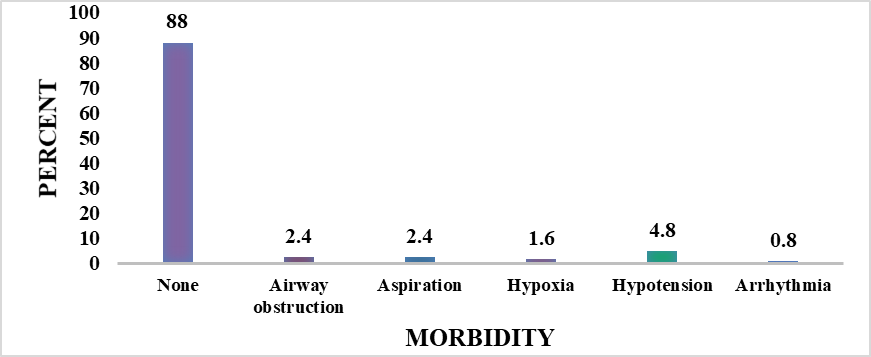
Chart 1: Morbidity observed in study subjects (N = 125)
DISCUSSION:
The decision of the airway management in the field of oral and maxillofacial surgery is one of the critical decisions, given the proximity of the surgical site. A proper understanding is a prerequisite to ensure an ease of procedure between an anesthesiologist and an oral and maxillofacial surgeon (8).
Endotracheal intubation was first described in 1543 by Andreas Vesalius (9). Mac Ewan, Kuhn, Rosenberg, Meltzer, Auer, and Elsberg are known to be the pioneers in the early days of endotracheal intubation use (10). The description of the nasotracheal intubation was first given by Kuhn in 1902, who felt that it was a more physiological approach to tracheal intubation (11). The use of nasotracheal intubation was popularized by Magill in the 1920s for its application in intraoral surgery (12).
The predominance of young adults (mean age 31.24 ± 14.39 years) and males (59.2%) in our cohort reflects well-established epidemiological patterns in maxillofacial trauma. Studies from Pakistan, such as Ahmad et al. (2024) in Lahore, report that 79.7% of trauma patients were male, with over half aged 15–35 years, closely mirroring our findings. Globally, similar trends are observed, with road traffic accidents (RTAs) being the leading cause of facial injuries among young males (13).
In our study, trauma was the most common indication for surgery (54.4%), consistent with data from Civil Hospital Karachi, where mandibular fractures and firearm-related injuries were prevalent. Internationally, trauma remains the dominant etiology, particularly in developing countries where RTAs and interpersonal violence are more frequent (14).
Nasal intubation was the most utilized technique (46.4%), which is standard in maxillofacial procedures requiring intraoral access. This aligns with global practice, where naso-endotracheal intubation is preferred for mandibular and midface surgeries due to its unobtrusive positioning. However, contraindications such as nasal bone or skull base fractures necessitate alternatives (15).
Our finding of mortality associated with tracheostomy is notable. While tracheostomy provides a secure airway, it carries a complication rate of 14–45% and should be reserved for cases requiring prolonged ventilation or where other routes are contraindicated. Submental intubation has emerged as a safer alternative, offering reduced morbidity and preserving surgical access (16).
The low morbidity rate (12%) and predominance of hypotension (4.8%) are consistent with international anesthesia safety profiles. Saodekar et al. (2022) reported hypotension in 30% of patients undergoing maxillofacial surgery under general anesthesia, though most cases were transient and manageable (17).
Postoperative nausea (64%) and headache (17.2%) in our cohort are also well-documented. These are among the most common anesthesia-related side effects, as confirmed by Xia et al. (2023), who emphasized the need for preoperative optimization to reduce such outcomes (18, 19).
The observed mortality rate of 1.6% is higher than expected but understandable given the trauma and pathology cases involved. Mortality was significantly associated with tracheostomy and trauma (p = 0.04), suggesting that airway complexity and systemic compromise are key contributors. Hussain et al. (PIMS Islamabad) similarly noted that panfacial trauma and airway obstruction are major risk factors for poor outcomes (20).
International literature supports this, highlighting that patients with complex trauma and compromised airways require multidisciplinary planning and early intervention to mitigate risk (21).
CONCLUSION :
Our study reinforces the safety of general anesthesia in maxillofacial surgery, with low morbidity and manageable complications. However, airway management remains a critical determinant of outcomes. The association of tracheostomy with mortality underscores the need for judicious technique selection, and alternatives like submental intubation should be considered in high-risk cases.
REFERENCES:
1. Greenidge E, Krieves M, Solorzano R. Global Anesthesia in Oral and Maxillofacial Surgery. Oral Maxillofac Surg Clin North Am. 2020;32(3):427-36.
2. Wang YH, Wang DR, Liu JY, Pan J. Local anesthesia in oral and maxillofacial surgery: A review of current opinion. J Dent Sci. 2021;16(4):1055-65.
3. Prasanna D, Bhat S. Nasotracheal Intubation: An Overview. Journal of Maxillofacial and Oral Surgery. 2014;13(4):366-72.
4. Singh MK, Singh PR, Chaurasiya MK, Tiwari T. Anesthesia for Maxillofacial Surgery: A Comprehensive Overview. The Traumaxilla.0(0):26323273241228536.
5. Kramer KJ, Brady JW. Anesthetic Agents Commonly Used by Oral and Maxillofacial Surgeons. Oral Maxillofac Surg Clin North Am. 2018;30(2):155-64.
6. Jacob R, Mahankali SS, Maria R, Ananathanarayana S, Sharma G, Thomas M. Anaesthesia for Maxillo Facial Surgery. In: Bonanthaya K, Panneerselvam E, Manuel S, Kumar VV, Rai A, editors. Oral and Maxillofacial Surgery for the Clinician. Singapore: Springer Nature Singapore; 2021. p. 95-117.
7. Williamson E, Ratnasabapathy U. Anaesthesia for maxillofacial surgery. Anaesthesia & Intensive Care Medicine. 2023;24(8):455-60.
8. Merola R, Troise S, Palumbo D, D'Auria D, Dell'Aversana Orabona G, Vargas M. Airway management in patients undergoing maxillofacial surgery: State of art review. J Stomatol Oral Maxillofac Surg. 2025;126(2):102044.
9. Ezri T, Evron S, Hadad H, Roth Y. [Tracheostomy and endotracheal intubation: a short history]. Harefuah. 2005;144(12):891-3, 908.
10. Brandt L, Pokar H, Schütte H. [100 years of intubation anesthesia. William Macewen, a pioneer of endotracheal intubation]. Anaesthesist. 1983;32(5):200-4.
11. Kuhn F. Die pernasale tubage. München Med Wochenschr. 1902;49:1456.
12. Magill IW. TECHNIQUE IN ENDOTRACHEAL ANAESTHESIA. Br Med J. 1930;2(3645):817-9.
13. Saodekar R, Gondhalekar R, Kalamkar J. Common Postoperative Complications Following General Anesthesia in Oal and Maxillofacial Surgery. Academia Anesthesiologica International, 2022.
14. Ahmad S, Zulfiqar G, Iftikhar B. Maxillofacial Trauma and Its Management in Lahore. JPMA, 2024.
15. Katpar S et al. Maxillofacial Trauma Spectrum at Civil Hospital Karachi. JKCD, 2015
16. Hussain S et al. Maxillofacial Trauma Management at PIMS Islamabad. JAMC, 2002.
17. Xia M. Complications Associated with Anesthesia in Oral and Maxillofacial Surgery. Springer, 2023.
18. Bhate K et al. Pathways to Airways: Intubation Techniques in Maxillofacial Surgery. Current Oral Health Reports, 2024.
19. Schütz P, Hamed H. Submental Intubation vs. Tracheostomy in Maxillofacial Trauma. J Oral Maxillofac Surg, 2008.
20. Oral Health Group. Airway Management in Maxillofacial Trauma. 2023.
21. Morosan M et al. Anaesthesia and Oral Maxillofacial Emergencies. BJA Education, 2012.