Hemp Fiber (Cannabis sativa) as a Novel Biodegradable Surgical Suture: A Systematic Review of Mechanical Strength, Antimicrobial Activity, and Biocompatibility
- Divya Deepak Patil , Post-Doctoral Fellow, Central Council of Research in Ayurvedic Sciences, New Delhi, Ministry of AYUSH, Govt. India; Department of Prasutitantra Evam Striroga, All India Institute of Ayurveda, Goa, India. Pin: 403513.
- Sujata Kadam , Dean (Academics & Administration), Professor & HOD, Department of Prasutitantra Evam Striroga, All India Institute of Ayurveda, Goa, India. Pin: 403513.
Article Information:
Abstract:
Surgical site infections and suboptimal wound healing remain challenges with commercial sutures. An ideal suture requires high tensile strength, biocompatibility, antimicrobial activity, biodegradability, and low cost, none currently meet all criteria. Hemp (Cannabis sativa) fiber has emerged as a candidate due to its mechanical robustness and inherent bioactive compounds.Objective: To systematically review evidence on mechanical properties, antimicrobial activity, biocompatibility, and wound healing potential of hemp fiber as a biodegradable surgical suture.Methods: Systematic review following PRISMA 2020 guidelines. PubMed, Scopus, and Google Scholar were searched from January 1990 to December 2024. Search terms included combinations of (“hemp fiber” OR “Cannabis sativa fiber”) AND (“mechanical properties” OR “tensile strength” OR “antimicrobial” OR “biocompatibility” OR “suture”). Original in vitro and in vivo studies reporting relevant outcomes were included. Risk of bias was assessed using appropriate tools.Results: Thirty-three studies met inclusion criteria. Hemp fiber exhibits tensile strength of 550–1110 MPa and Young’s modulus of 30–70 GPa, comparable to non absorbable synthetic sutures. Water retting produces smoother fibers. Cannabinoids and phenolics confer excellent in vitro antibacterial activity against S. aureus and E. coli. In a rat muscle implant model, hemp induced higher inflammation than cotton at 15 days but similar responses at 30 and 60 days (p>0.05). Critical gaps identified: no knot strength data, no sterilization effect studies, no direct comparison with commercial sutures, and no in vivo wound healing study using hemp as a suture.Conclusion: Hemp fiber possesses promising mechanical and biological properties for surgical suture development. However, substantial preclinical gaps remain. Future research must standardize degumming, evaluate knot strength and sterilization effects, and conduct comparative animal wound healing trials.
Keywords:
Article :
INTRODUCTION:
Approximately 13% of disability‑adjusted life years (DALYs) worldwide are attributable to surgical conditions [1]. Successful wound closure is fundamental to surgical outcome, and suture material plays a pivotal role. The ideal suture – high tensile strength at small diameter, sterilizability without property loss, low tissue reactivity, resistance to infection, biodegradability, and low cost – remains elusive.
Current sutures have major limitations. Catgut, the most common absorbable suture, is highly susceptible to bacterial infection and biofilm formation, delaying healing [2]. Silk, a typical non‑absorbable natural suture, exhibits the “wick effect”: its braided structure draws fluid and bacteria into deeper tissues, risking septicemia [3]. Multifilament materials harbor significantly more bacteria than monofilaments [4]. These drawbacks motivate the search for natural fibers with intrinsic antimicrobial properties.
Hemp fibers extracted by water retting comprise 73–77% cellulose, 7–15% hemicellulose, 5–12% lignin, and 1–3% pectin, depending on variety and processing [5]. They also contain bioactive compounds: terpenes, flavonoids, polyphenols, and cannabinoids [6]. Cannabidiol exhibits antioxidant, antibacterial, and anti‑proliferative properties [7].
Mechanically, hemp is promising with reported tensile strength of 550–1110 MPa and Young’s modulus of 30–70 GPa [8]. Several studies document antibacterial activity of hemp fibers and derivatives [9,10]. Figure 1 illustrates the multifunctional properties of Hemp (Cannabis sativa) fiber for surgical suture applications.
However, no prior review has critically appraised hemp specifically as a suture material integrating mechanical, antimicrobial, biocompatibility, and wound healing data. This systematic review (PRISMA 2020) fills that gap, identifies evidence needs, and outlines a translational roadmap.
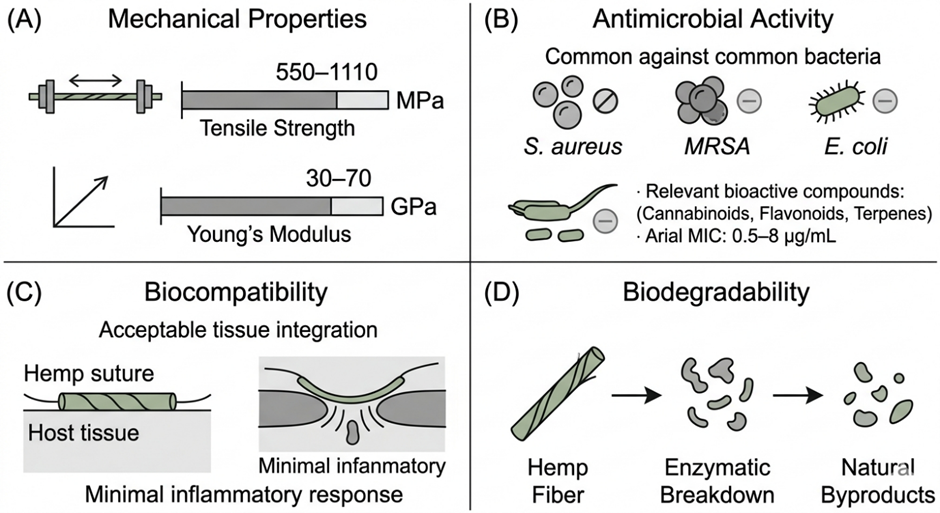
Figure 1: Multifunctional properties of Hemp fiber (Cannabis sativa) for surgical suture applications.
METHODOLOGY:
Protocol and registration
This review followed the PRISMA 2020 statement for systematic reviews. Due to the heterogeneous nature of outcomes, a protocol was not registered prospectively.
Search strategy
PubMed, Scopus, and Google Scholar were searched from January 1990 to December 2024. Search strings:
· PubMed: (“hemp fiber”[Title/Abstract] OR “Cannabis sativa fiber”[Title/Abstract] OR “Bhanga fiber”[Title/Abstract]) AND (“mechanical properties”[Title/Abstract] OR “tensile strength”[Title/Abstract] OR “Young’s modulus”[Title/Abstract] OR “antibacterial”[Title/Abstract] OR “antimicrobial”[Title/Abstract] OR “biocompatibility”[Title/Abstract] OR “inflammatory response”[Title/Abstract] OR “tissue reaction”[Title/Abstract] OR “suture”[Title/Abstract] OR “wound closure”[Title/Abstract])
· Scopus and Google Scholar used analogous terms. Reference lists of included studies and relevant reviews were manually screened.
Inclusion criteria
· Original research (in vitro, in vivo, ex vivo)
· Reported mechanical properties, antimicrobial activity, biocompatibility, tissue response, or wound healing of hemp fiber
· English language
· Peer‑reviewed journals
Exclusion criteria
· Reviews, conference abstracts, editorials
· Studies on cannabis extracts not involving fiber
· Industrial applications only
· Duplicate publications
Study selection and data extraction
Two reviewers independently screened titles/abstracts, then full texts. Disagreements resolved by consensus. Data extracted: author, year, study design, fiber processing, outcomes, key findings.
Risk of bias assessment
In vitro studies were assessed using a custom checklist (sample preparation, controls, blinding). In vivo studies used SYRCLE’s Risk of Bias tool. No study was excluded based on bias; findings were narratively synthesized.
Data synthesis
Meta‑analysis was impossible due to heterogeneity. Narrative synthesis was organized by thematic categories: mechanical properties, antimicrobial activity, biocompatibility, wound healing.
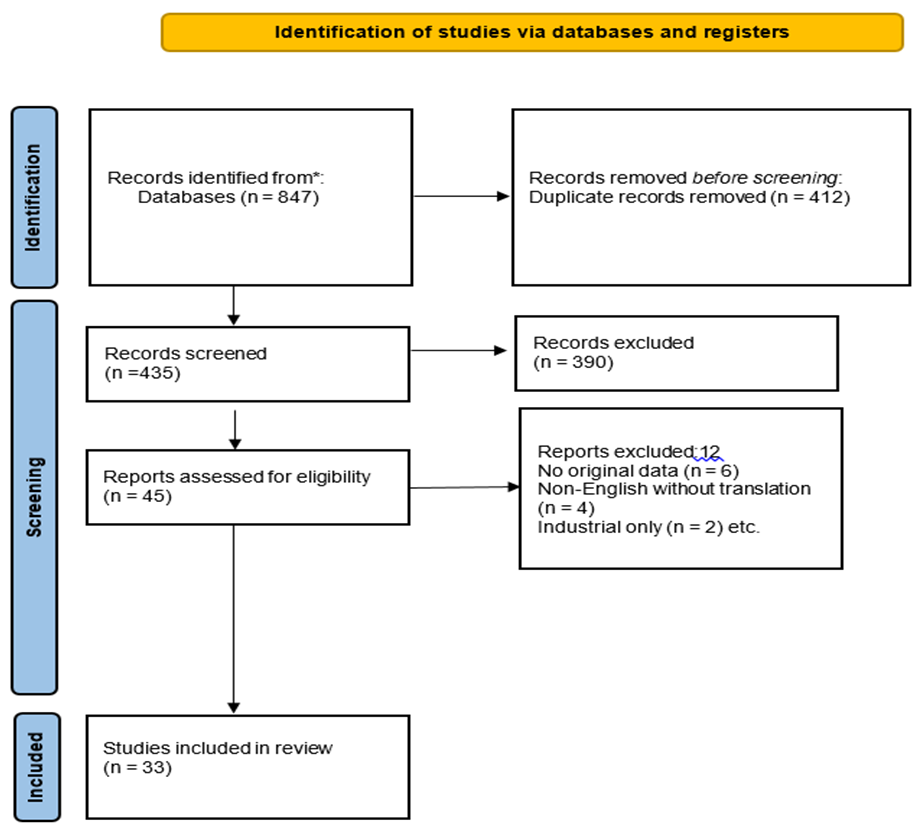
Figure 2: PRISMA flow diagram summarizes study selection.
RESULTS:
Study characteristics
The search yielded 847 records. After duplicate removal (n=412), 435 records were screened. Exclusion of 390 records (non‑English n=156, industrial only n=98, reviews n=87, irrelevant n=49) left 45 full‑text reports. A further 12 were excluded (no original data n=6, non‑English without translation n=4, industrial only n=2). Thirty‑three studies were included: 12 on mechanical properties, 15 on antimicrobial activity, 4 on biocompatibility, and 2 on wound healing (indirect, via extracts). The PRISMA flow diagram is shown in Figure 2.
Mechanical properties
Table 1 compares hemp with commercial sutures. Hemp’s tensile strength (550–1110 MPa [8]) and Young’s modulus (30–70 GPa [8]) exceed those of silk (350–580 MPa) and approach nylon (700–1100 MPa) [12]. However, elongation at break is low: 1.6–3.2% versus 15–40% for synthetics.
Stochioiu et al. (2024) reported tensile strength of Romanian hemp fibers between 412 and 566 MPa, strongly dependent on fiber diameter – smaller diameters approached elementary fiber strength [13].
Retting method significantly affects fiber quality. Water‑retted fibers are more uniform and flexible than dew‑retted [14]. Enzymatic degumming preserves tensile strength better as compared to that of alkali treatment [15,16]. Surface modifications such as plasma and alkali treatment may reduce stiffness [17,18]. However, no study has mentioned data on knot strength and knot security.
Table 1. Mechanical properties of hemp fiber versus commercial sutures
|
Material |
Tensile strength (MPa) |
Young’s modulus (GPa) |
Elongation at break (%) |
Knot strength retention (%)* |
|
Hemp fiber |
550–1110 |
30–70 |
1.6–3.2 |
Not reported |
|
Silk |
350–580 |
8–15 |
15–25 |
50–60 |
|
Nylon |
700–1100 |
2–4 |
25–40 |
65–75 |
|
Polypropylene |
400–700 |
1.5–3 |
20–35 |
70–80 |
|
Polyester |
600–900 |
8–12 |
15–25 |
75–85 |
|
Catgut |
300–500 |
1–2 |
10–20 |
40–50 |
*Knot strength retention = (knot‑pull strength / straight‑pull strength) × 100%. Never measured for hemp.
Recent advances in cellulose‑based sutures demonstrate the potential of natural fibers. Multifunctional cellulose sutures have been developed using wet spinning and interfacial polyelectrolyte complexation, offering enhanced mechanics, cytocompatibility, biodegradability, and antibacterial properties [19]. These provide a model for hemp suture development.
Antimicrobial activity
Table 2 summarizes the key studies related to the antimicrobial activity of hemp and its derivatives. Cassano et al. (2013) prepared hemp derivatives with excellent in vitro activity against S. aureus and P. aeruginosa [20]. Appendino et al. (2008) reported cannabidiol MIC against MRSA of 1–5 μg/mL [21]. Khan et al. (2014) reviewed that hemp contains flavonoids, terpenes, and cannabinoids which may exert antibacterial effects through disruption of bacterial membranes [6].
Subsequent studies showed that N‑halamine‑grafted hemp cellulose [22] and silver‑TEMPO‑oxidized hemp [23] achieved sustained activity. However, these used modified derivatives, not native suture‑grade fibers after degumming and sterilization. To data, no study has quantified antibacterial activity of sterilized hemp suture material.
Phytocannabinoids exhibit strong activity against Gram‑positive bacteria, including MRSA, with MICs of 0.5–8 μg/mL [24]. Cannabigerol (CBG) inhibits MRSA biofilm formation and eradicates mature biofilms [24]. Both CBD and CBG eliminate mature biofilms at concentrations below MIC [25]. This suggests hemp sutures might prevent biofilm formation - a major cause of surgical site infections provided that bioactive compounds are retained during processing.
Table 2. Key studies on antimicrobial activity of hemp and derivatives
|
Author (year) |
Test organisms |
Hemp preparation |
Key finding |
|
Cassano et al. (2013) |
S. aureus, P. aeruginosa |
Chemically modified hemp |
Excellent in vitro activity [20] |
|
Appendino et al. (2008) |
S. aureus, MRSA |
Purified cannabidiol |
MIC 1–5 μg/mL [21] |
|
Khan et al. (2014) |
Multiple |
Literature review |
Hemp has inherent antibacterial compounds [6] |
|
Lone & Lone (2012) |
S. aureus, B. subtilis |
Raw hemp fiber |
Significant zone of inhibition [10] |
|
Liu et al. (2021) |
S. aureus, E. coli |
N‑halamine grafted hemp cellulose |
Sustained rechargeable activity [22] |
Biocompatibility and inflammatory response
Only single study evaluating implantation of hemp fiber in vivo has been identified. Dorfman et al. (1994) implanted hemp and cotton fibers into rat muscle [26]. Hemp induced greater inflammation than cotton at 15 days (p<0.05), but at 30 and 60 days responses were similar (p>0.05). Based on the study findings, authors suggested that hemp fibers may possess suture potential.
Comparative tissue response studies show that silk generally elicits more inflammation than catgut or synthetic suture materials [27]. In addition, Multifilament materials area associated with more severe tissue reactions. Thus, hemp as a monofilament or tightly twisted fiber with smooth surface characteristics could achieve acceptable biocompatibility for surgical applications.
Wound healing studies
To date, hemp fiber has not been directly investigated as a suture material in any in vivo wound-healing model. Indirect evidence from cannabis extracts: topical cannabis extracts reduced wound healing time in rats [28]; oral cannabidiol enhanced oral wound healing in mice [29]; C. sativa essential oil increased tensile strength and collagen synthesis in mouse wounds [30]. A systematic review found cannabinoids regulate inflammation and may increase keratinocyte proliferation [31].
Recent cannabis‑based biomaterials support potential: levan‑based sponges with cannabis oil (Lev@CBDs) showed suitable swelling, mechanical properties, antioxidant/anti‑inflammatory effects, and antibacterial activity against S. aureus and P. aeruginosa without haemolysis [32]. Chitosan‑based cannabis oil films had improved mechanical parameters and biocompatibility [33].
Summary of evidence gaps
Several important evidence gaps were identified in the current literature concerning the use of hemp fiber as a potential surgical suture material. To date, no direct comparative studies have evaluated hemp sutures against commercially available suture materials under standardized conditions. Critical parameters such as knot strength and knot security, which are essential for surgical performance, have not been reported. Furthermore, the impact of commonly used sterilization methods, including autoclaving, ethylene oxide, and gamma irradiation, on the mechanical integrity and antimicrobial properties of hemp fibers remains unknown. There is also no standardized degumming protocol specifically developed for producing suture-grade hemp fibers, which may influence consistency and reproducibility. In addition, quantification of potentially bioactive constituents such as cannabidiol and related phytochemicals in processed fibers has not been undertaken. No in vivo wound-healing studies have yet assessed hemp when used directly as a suture material, and long-term biodegradation behavior beyond 60 days has not been investigated. Addressing these gaps is essential before clinical translation of hemp-based sutures can be considered.
DISCUSSION :
This systematic review of 33 studies demonstrates that Hemp fiber (Cannabis sativa) possesses promising mechanical and antimicrobial properties for surgical suture development which are discussed in the following section.
Mechanical adequacy
Hemp’s tensile strength (550–1110 MPa) falls within the range of non‑absorbable sutures [8]. The upper
range (~1110 MPa) meets or exceeds the lower bound of USP requirements for 2‑0 polypropylene when appropriate fiber diameter is considered. However, tensile strength alone is insufficient.
Low elongation at break (1.6–3.2%) is a clinical concern. Surgeons rely on suture stretch during knot tying to approximate tissue without strangulation. Materials with <5% elongation (e.g., stainless steel wire) require special handling and are associated with increased knot failure [12]. Hemp’s low elongation suggests it may behave as a rigid material, limiting use in dynamic wounds where tissue swelling and movement require compliance.
The relatively High Young’s modulus (30–70 GPa) indicates hemp is much stiffer than synthetic sutures (nylon 2–4 GPa, polypropylene 1.5–3 GPa) [12]. Stiff sutures have “memory” – they retain package coiling, making handling difficult and potentially causing tissue tear. Surface modifications (plasma, alkali) can reduce stiffness without compromising core strength [17,18], but these are not optimized for suture applications. Further studies are therefore required to improve the handling characteristics of hemp fiber while maintaining its mechanical integrity.
Antimicrobial potential
Hemp derivatives have demonstrated inhibitory activity against S. aureus and E. coli [6,20,21]. Mechanisms include membrane disruption by cannabinoids and phenolics. However, translational barriers exist. Most studies used derivatives (chemically modified fibers, extracts, or purified compounds), not native suture‑grade fibers [20,22,23]. No study has quantified cannabidiol content on processed hemp fiber after degumming, washing, drying, and sterilization. Antimicrobial activity under biological conditions (serum, proteins, tissue fluids) has not been evaluated.
Biofilm formation is a major cause of surgical site infections. Recent evidence that CBD and CBG can eliminate mature biofilms at sub‑MIC concentrations [24,25] is promising, but retention of these compounds on sutures is unproven.
From a clinical perspective, antimicrobial sutures have shown a significant reduction in surgical site infections. A meta‑analysis of 31 RCTs (17,968 patients) found that triclosan‑containing sutures significantly reduced SSI (RR 0.75; 95% CI 0.65–0.86) [35]. A second‑order meta‑analysis showed RR 0.68 (95% CI 0.59–0.76) [36]. A naturally antimicrobial suture would be a breakthrough, especially in resource‑limited settings.
Biocompatibility
Only one in vivo implant study exists (Dorfman et al., 1994 [26]). Hemp induced more inflammation than cotton at 15 days but similar at 30 and 60 days. However, cotton is not an ideal control – it provokes a well‑described foreign body response. An ideal suture should elicit minimal inflammation throughout healing, not just after the acute period.
Early inflammation may be due to pectins, hemicelluloses, and lignin [5] or residual processing chemicals. Fiber diameter and surface roughness affect macrophage activation – none systematically studied for hemp.
Comparative studies with commercial sutures are needed. Silk, catgut, and synthetic absorbables have predictable tissue reaction profiles [27]. Recent work on Dracaena angolensis cellulose fibers showed no significant difference in tissue response compared to silk sutures (p>0.05) [37], supporting the feasibility of plant‑based suture materials.
Wound healing
No published study has evaluated wound healing with hemp fiber as a suture. Existing literature focuses on cannabis extracts, oils, or hemp‑based dressings [28–33]. Although these support biological plausibility (anti‑inflammatory, pro‑proliferative effects), they do not substitute for suture‑specific studies.
A surgical suture is a foreign body that interacts mechanically and chemically with healing tissues. Topical extract application is qualitatively different from a suture running through wound edges. Generalizing extract studies to suture performance is invalid.
Comparison with existing sutures and SSI burden
Based on available data, Hemp fiber offers favourable tensile strength as compared to non‑absorbable sutures but lacks knot strength and handling data. Silk and catgut are vulnerable to bacterial growth [2,3,4,38]; non‑absorbables (nylon, polypropylene) are not intrinsically antimicrobial but are less adherent than braided naturals. Hemp farming is inexpensive, but medical‑grade purification and regulatory approval may offset cost advantages.
SSI burden justifies improved sutures. Antimicrobial sutures reduce the risk of postoperative SSI [35,36,39], but concerns about triclosan resistance and environmental persistence drive interest in natural alternatives.
Degumming, sterilization, and manufacturing
Degumming removes pectins and hemicelluloses. Harsh chemical treatment destroys cellulose and reduces strength. Fenton oxidation degumming [40] and biological enzyme degumming [40] are greener and preserve properties. Enzyme‑degummed fibers are better suited for medical applications.
Sterilization is unstudied for hemp. Gamma irradiation (≥25 kGy) is standard for many medical devices [41,42]. Gamma‑irradiated silk, polyamide, and catgut sutures-maintained knot‑pull tensile strength [41]. However, effects on hemp’s mechanics, elongation, knot strength, and antimicrobial activity are unknown. Ethylene oxide or gamma irradiation may be preferable to autoclaving, which could damage heat‑sensitive bioactive compounds.
Regulatory and clinical translation pathways
A hemp suture would be regulated as a medical device. Natural material variability challenges quality control. Standardized cultivation, harvesting, and processing guidelines are required. The presence of cannabinoids (even low THC in industrial hemp) may invite additional regulatory scrutiny.
No ideal suture exists – choice depends on clinical indication. Hemp could be advantageous in contaminated wounds, resource‑limited settings, or where affordability matters, but these remain theoretical pending experimental validation.
Limitations of this review
· High methodological heterogeneity prevented meta‑analysis.
· Most antimicrobial data are from derivatives, not suture‑grade fibers.
· Biocompatibility rests on a single 1994 study.
· English‑only and positive‑result bias possible.
· No grey literature included.
Recommendations for future research
Figure 3 presents the proposed translational pathway for hemp fiber suture development. Specific recommendations:
1. Standardize degumming – compare water retting, enzymatic degumming, and Fenton oxidation for tensile strength, elongation, knot pull strength (USP 2‑0 to 5‑0), surface roughness, and cannabinoid retention.
2. Antimicrobial assays – test suture‑grade hemp against S. aureus, E. coli, P. aeruginosa, MRSA using agar diffusion, shake flask, and biofilm formation assays with silk/nylon controls.
3. Sterilization studies – evaluate autoclaving, ethylene oxide, and gamma irradiation effects on surface morphology, mechanical properties, and antimicrobial activity.
4. Bioactive quantification – use HPLC‑MS to measure cannabinoids, flavonoids, and phenolics after degumming, sterilization, and incubation in simulated body fluid (7–28 days).
5. In vivo rat study – incisional wound model (n=6‑8/group) comparing hemp suture vs. silk vs. polypropylene; outcomes: wound breaking strength, histopathology, immunohistochemistry (CD68, TNF‑α), suture explant cultures.
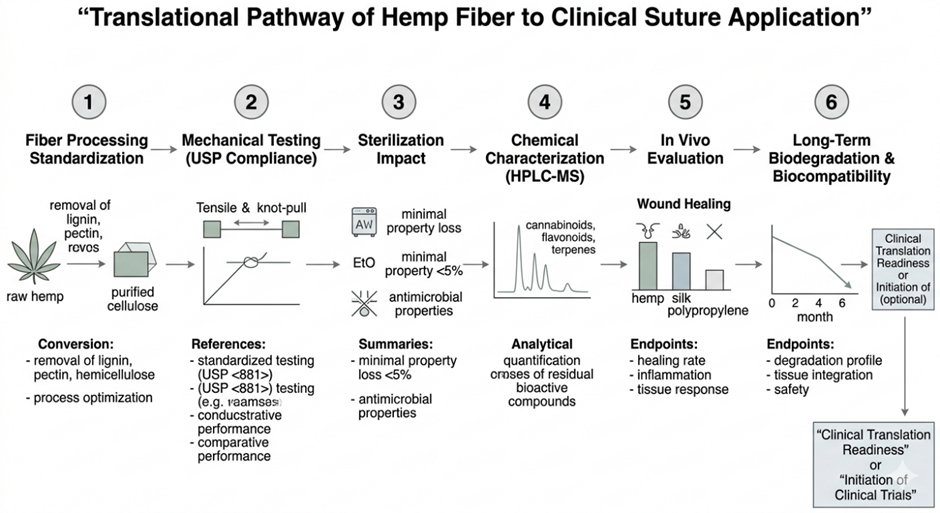
Figure 3: Proposed translational pathway for hemp fiber suture development.
CONCLUSION :
Hemp fiber exhibits tensile strength (550–1110 MPa) and Young’s modulus (30–70 GPa) comparable to non‑absorbable sutures, in vitro antibacterial activity against wound pathogens, and a tissue response in rat muscle similar to cotton by 30 days. However, critical evidence gaps remain: no knot strength data, no sterilization studies, no direct comparison with commercial sutures, and no in vivo wound healing
study using hemp as a suture. Future research must standardize degumming for medical grade, assess knot‑pull tensile strength, evaluate sterilization effects, quantify retained cannabinoids, and conduct randomized animal trials (hemp vs. silk vs. polypropylene) with histopathology and wound breaking strength. Natural plant‑based biomaterials offer high biocompatibility, biodegradability, low antigenicity, and renewability – they can prevent inflammatory reactions, stimulate collagen secretion, and support tissue restoration. Hemp suture is not yet ready for clinical testing, but it represents a promising direction following completion of the recommended preclinical studies.
Declarations
Conflict of interest: None declared.
Acknowledgement and Funding:
The author gratefully acknowledges the Central Council for Research in Ayurvedic Sciences (CCRAS) for providing financial assistance and academic support under the Post-Doctoral Fellowship Scheme, through which this review work was undertaken. The author sincerely appreciates the continued efforts of CCRAS in promoting advanced research and evidence-based studies in Ayurveda.
The author also expresses gratitude to the host institution, All India Institute of Ayurveda, Goa for providing the academic environment and institutional support during the fellowship period.
Ethical approval: Not applicable (review; proposed animal studies should follow institutional guidelines).
Data availability: All data from cited references. No new data generated.
AI declaration: AI tool used only for figure generation; all content and analysis by authors.
BIBLIOGRAPHY:
1. Weiser TG, Regenbogen SE, Thompson KD, et al. An estimation of the global volume of surgery: a modelling strategy based on available data. Lancet. 2008;372(9633):139-44.
2. Kruger TF, Botha MH. Clinical gynaecology. Cape Town: Juta; 2007. p.554.
3. Manor A, Kaffe I. Unusual foreign body reaction to a braided silk suture. J Periodontol. 1982;53(2):86-8.
4. Syaflida R, et al. Comparison of bacterial colonies adherence on silk and catgut sutures. J Dentomaxillofac Sci. 2021;3(1):12-8.
5. Zimniewska M, et al. Antioxidant potential of hemp and flax fibres. Molecules. 2018;23(8):1993.
6. Khan B, Warner P, Wang H. Antibacterial properties of hemp and other natural fibre plants: a review. Bioresources. 2014;9(2):3642-59.
7. Bshena O, et al. Antimicrobial fibres: therapeutic possibilities. Future Med Chem. 2011;3(14):1821-47.
8. Pickering KL, Efendy MG, Le TM. A review of natural fibre composites. Compos Part A. 2016;83:98-112.
9. Appendino G, et al. Antibacterial cannabinoids from Cannabis sativa. J Nat Prod. 2008;71(8):1427-30.
10. Lone TA, Lone RA. Evaluation of antibacterial activity of hemp fiber. Asian J Biochem Pharm Res. 2012;2(3):231-6.
11. Singh M, Vinodh KS, Waghmare S. Studies on the ancient mortar of Ellora caves. Curr Sci. 2019;116(8):1327-33.
12. Celeste C, Stashak TS. Selection of suture materials. In: Equine wound management. 2nd ed. Wiley-Blackwell; 2008. p.194.
13. Stochioiu C, Ciolcă M, Deca AL. Mechanical characterization of flax and hemp fibres cultivated in Romania. Materials. 2024;17(19):4871.
14. Jankauskienė Z, et al. Chemical composition and physical properties of dew- and water-retted hemp fibres. Ind Crop Prod. 2015;75:206-11.
15. Pakarinen A, et al. Enzymatic accessibility of fiber hemp. Bioresour Technol. 2012;107:275-81.
16. Sen S. A cleaning and reusable biochemical degumming method for hemp fibres. New J Chem. 2022;46(15):7120-30.
17. Pepi C, Pipistrelli ME, Gioffrè M. Random modeling of hemp fibres mechanical properties. Compos Part A. 2024;183:108225.
18. Kabir MM, et al. Chemical treatments on plant-based natural fibre composites. Compos Part B. 2012;43(7):2883-92.
19. Asghari S, et al. Cellulose-based sutures with multifunctionality: a review. Int J Biol Macromol. 2023;253:126933.
20. Cassano R, et al. Hemp fiber derivatives with antibacterial and chelating properties. Cellulose. 2013;20:547-57.
21. Appendino G, et al. Antibacterial cannabinoids from Cannabis sativa. J Nat Prod. 2008;71(8):1427-30.
22. Liu Y, et al. N halamine modified hemp fibres with antibacterial and antifungal properties. Cellulose. 2021;28(9):5723-36.
23. Saini S, et al. Antimicrobial properties of TEMPO-oxidized hemp fibres with silver nanoparticles. J Nat Fibres. 2012;9(4):235-48.
24. Alfei S, et al. Synthetic pathways to non-psychotropic phytocannabinoids as antibiotics. Pharmaceutics. 2023;15(7):1889.
25. Farha MA, et al. Uncovering the hidden antibiotic potential of cannabis. ACS Infect Dis. 2020;6(3):338-46.
26. Dorfman S, et al. Comparison of hemp and cotton fiber implants in rat muscle. Invest Clin. 1994;35(1):35-40.
27. Kakoei S, Baghaei F, Dabiri S, Parirokh M, Kakooei S. A comparative in vivo study of tissue reactions to four suturing materials. Iran Endod J. 2010;5(2):69-73.
28. Akarsu GD, Akarsu RH. Therapeutic potential of cannabis for surgical wound healing in rats. Vet Med (Praha). 2024;69(8):297-306.
29. Ribeiro A, et al. Effects of cannabidiol on oral wound healing in rats. J Oral Pathol Med. 2024;53(1):32-40.
30. Mazzardo-Martins L, et al. Wound healing efficacy of Cannabis sativa L. essential oil in mice. J Ethnopharmacol. 2023;305:116087.
31. Burr S, Kelsall J, O'Mara K. Cannabinoids in integumentary wound care: a systematic review. J Wound Care. 2022;31(5):412-22.
32. Chelminiak-Dudkiewicz D, et al. Levan@CBD biocomposite sponges for wound dressing. Int J Biol Macromol. 2023;253(Pt 3):126933.
33. Ahmad F, et al. A novel composite of hemp fiber and alginate hydrogel for wound dressings. J Polym Environ. 2023;31(6):2294-305.
34. Sadrmanesh V, Chen Y. Bast fibres: structure, processing, properties, and applications. Int Mater Rev. 2019;64(7):381-406.
35. de Jonge SW, et al. Triclosan-containing sutures for prevention of surgical site infection: a meta-analysis. JAMA Netw Open. 2025;8(3):e250306.
36. Depuydt M, et al. Surgical site infection in abdominal surgery: triclosan-coated vs uncoated sutures. Hernia. 2024;28(4):1017-27.
37. Kampeerapappun P, et al. Natural cellulose fibres from Dracaena angolensis as a non-absorbable surgical suture. Sci Rep. 2025;15:1291.
38. Edmiston CE, et al. Surgical Infection Society guidelines for antimicrobial-coated sutures. Surg Infect. 2019;20(4):285-300.
39. Otto-Lambertz C, et al. Can triclosan-coated sutures reduce postoperative wound infection? Surgery. 2023;174(3):638-46.
40. Zhang J, et al. Green degumming technology of hemp. J Nat Fibres. 2021;18(12):2156-67.
41. Singh R, et al. Sterilization of medical devices from natural polymers: a review. J Appl Biomater Funct Mater. 2020;18:2280800020966935.
42. Bshena O, et al. Antimicrobial fibres: therapeutic possibilities. Future Med Chem. 2011;3(14):1821-47.