EVALUATION OF ANTIBACTERIAL, ANTIFUNGAL, AND ANTIOXIDANT ACTIVITIES OF CICHORIUM INTYBUS
- Haris Sana , Department of Molecular Virology, COMSATS University Islamabad, Pakistan
- Muhammad Abbas , Department of Molecular Biology, Uskudar University, Istanbul, Türkiyex
- Muhammad Asghar Khan , Department of Pharmacy, Swat College of Pharmaceutical Sciences, Swat, Pakistan
- Maha Mir , Department of Pharmacy, Riphah International University, Islamabad, Pakistan
- Qirrat Sajjad , Department of Pharmacy, Abasyn University Islamabad Campus, Park Road, Islamabad, Pakistan
- Izaz Khan , Department of Biotechnology, Genetics, Forensic and Microbiology, University of Swat, Charbagh, Khyber Pakhtunkhwa, Pakistan
- Nain Tara Bukhari , Department of MLT/Microbiology, Bahria University of Health Sciences, Karachi Campus, Pakistan
- Israr Khan , Department of Biotechnology, Genetics, Forensic and Microbiology, University of Swat, Charbagh, Khyber Pakhtunkhwa, Pakistan
- Sohail Wahab , Department of Biotechnology, Genetics, Forensic and Microbiology, University of Swat, Charbagh, Khyber Pakhtunkhwa, Pakistan
- Afzaal Rahim , School of Health Sciences, leeds Beckett University, leeds, United kingdom
Article Information:
Abstract:
Medicinal plants are the rich source of bioactive compounds that play an important role in different activities. Besides health, these compounds are also used in food and cosmetic industry. The common bioactive compounds of the medicinal plants include alkaloids, tannins, flavonoids and phenolic compounds. These compounds have a diverse biological effect such as antibacterial, antiinflammatory, antiviral, antioxidant, and anticancer. The aim of the present study was to explore antibacterial, antifungal, and antioxidant potential of leaves extract of Cichorium intybus. For this purpose, extract was prepared using distilled water. The extract was then tested against human pathogenic bacterial and fungal species. To find out the antibacterial activity of plant extract, disc diffusion and well diffusion methods were applied. Extract was used at different concentrations (8, 6, and 4mg/ml) respectively. The extract used in the current study showed activity against all screened pathogens. Leaves extract of C.intybus were found very potent against Bacillus autrupheous and E. coli, while it was least active against Bacillus subtilis. Similarly, plant extract showed high activity against aspergillus then candida albicans. From the current study, it was also concluded that leaves of C.intybus contain bioactive compounds representing antioxidant activity. Hot water extract of C.intybus exhibited high antioxidant activity. The extract of the plant should be applied on other pathogenic microorganism for further antimicrobial activity and also bioactive compounds must be isolated.
Keywords:
Article :
INTRODUCTION :
Since the start of human civilization, mankind has been in symbiosis with plants directly or indirectly till to current era. Profound archaeological and historical data evidence that apart from healing and food, plants were used for building houses, tombs, agricultural tools, and fire (Jo Day et al., 2013). Among that, various species of plants were used for the pursuit of cures against minor and major diseases (Hassan et al., 2019). The plant generates many chemical compounds that play a major role against infection but additionally, it also defends the plant from predators like herbivores and insects (Ullah et al., 2019). In a spacious amount, plants produce therapeutic substances as their secondary metabolites (chowdhury et al., 2019). The therapeutic effect of the bioactive compounds of plants is due to phytochemicals which generate a physiological effect on the human body (Ahmad et al., 2019).
Such chemical compounds are non-nutritive constituents of plants, and they have a myriad of helpful effects on human health. The prominent secondary metabolites of plants are alkaloids, anthraquinones, phenols, terpenoids, flavonoids, saponin, glycosides, and cumerin (Singh et al., 2019). These compounds have a diverse biological effect such as antibacterial, anti-inflammatory, antiviral, antioxidant and anticancer. Among these compounds, flavonoids are confirmed for its antiviral, antitumor and anti-inflammatory activities and phenolic substance are known for its anti-ischemic effect (Benabderrahim et al., 2019). Fruits, juices, vegetables, wines, cereals and tea are the rich source of flavonoids, and they are major constituent for the synthesis of different drugs (Ayaz et al., 2019).
It is believed that infectious diseases have increased mortality rate around the world (Elizabeth et al., 2018). After the discovery of penicillin in 1942, several antibiotics are used against infectious disease worldwide. Unfortunately, the irrational and misuse of antibiotics have emerged antimicrobial resistance. According to World Health Organization (WHO) report, antimicrobial resistance has been alarmed as a threat to global public health (M. Qiao et al., 2017). From overall consumption of antibiotics by humans and animals, it is estimated that 30 to 90% of these antibiotics are released to the environment such as surface water, groundwater, soil, vegetables, municipal sewage and sediment globally. In 2013, China has nearly administered 92,700 tons of antibiotics, out of that 46% are released into the environment. Thus, prolong residues of antibiotics in the environment give opportunities to microbes to develop resistance (N. Hanna et al., 2018).
It is reported that in 2050 antibiotic resistance will be responsible for the mortality of 10 million deaths and will cost 100 trillion of US dollars (Sanganyado et al., 2019). In Europe and US antimicrobial resistance is low but in developing countries like Pakistan, Bangladesh and India where people take a huge amount of antibiotic have generated alarming resistance in microbes (R.Noor et al., 2015). The crucial resistant microbes are carbapenem-resistant A.baumannii (CRAB), Carbapenem-resistant Pseudomonas aeruginosa(CRPA), and vancomycin-resistant enterococcus faecium(VREfm) (chen et al., 2019). It is documented that methicillin-resistant Staphylococcus aureus(MRSA) and vancomycin-resistant Enterococcus (VRE) have presence nearly 16 to 25% in intensive care units among the hospital of the United States. Additionally, 41 to 45% multidrug-resistant Acinetobacter baumannii and carbapenem-resistant Enterobacteriaceae (CRE) are reported in patients admitted to hospitals (Blanco et al., 2019).
It is stated that in US, Staphylococcus aureus infection costs around 4.6 billion US dollars annually. The resistance shown by the bacteria is either alteration in drug target or bacteria enhance impermeability to antibiotics (Cepas et al., 2019). In 2017, the World Health Organization published a list of 12 bacterial families which show resistance and is a catastrophe to Human health (WHO 2017). Among that Pseudomonas aeruginosa, Enterobacteriaceae, and Acinetobacter baumannii are topmost in the list (Hrenovic et al., 2019). Antibiotic resistance microorganisms are described as a deadly threat to the world population. The WHO has initiated a stance against it in April 2011, in the name of “Against drug resistance: no action today, no drug available tomorrow” (Zhang et al., 2018).
Due to the emergence of antimicrobial resistance worldwide, there is a need for new antimicrobial agents from natural products that have the potential to overcome the above complication (Bereksi et al., 2018). It is believed that plant extracts contain multiple bioactive compounds that have the ability to combat resistant microbes (Kar et al., 2016). Recently, scientific research has turned toward the natural compounds from plants for the discovery of novel antimicrobial drugs because they are composed of diverse chemical compounds (Sasidharan et al., 2011). They have isolated a significant amount of chemical compounds against disease with low side effects. Valuable biological effects like antimicrobial, antioxidant, anti-inflammatory, anticancer, antidiarrheal, and analgesic are stated (Madhusudhan et al., 2019). However, medicinal plants are currently used in developing countries for the cure of many diseases but this trend is also shifted to the developed nations due to fewer side effects by traditional medicine in comparison to synthetic drugs (Benabderrahim et al., 2019).
In countries where pharmaceutical drugs are dominant have also turned toward the use of medicinal plants. One example is the US where 25% of pharmaceutical products are derived from plants (Alsnafi et al., 2019). In underdeveloped countries, people mostly rely on medicinal plants because they are affordable and their access is easy to them as compared to synthetic drugs (Suntar et al., 2019). Another reason for the use of plant natural products by indigenous and developing countries is due to their low toxicity and socioeconomic status to such health care services (Kumar et al., 2019). It is reported that World Health Organization has recommended the use of medicinal herbs for numerous diseases in order to reduce adverse effects (Hezarjaribi et al., 2019). Over 28,000 medicinal plants are recorded, unfortunately only 16% of them are tested for therapeutic activity. Ironically pharmaceutical industries get help from synthetic chemistry in drug designing where the generation of a new drug is limited. In contrast, plants are diverse in nature with unlimited components of biological potential that can lead to exploring new drugs. Recently work has been initiated on screening of natural products derived from plants for therapeutic effect to discover new drugs and hence it is a new beneficial research area (Mawalagedera et al., 2019).
C.Intybus is commonly known as chicory in English it is a short plant up to 10 inches in height and belongs to the Asteraceae family. The Asteraceae family has more than 1620 genera and 23600 species consisting of herbs, shrubs, and Trees (Ingles et al.,2019). C.Intybus is present as a wild plant on the roadsides in Europe and is now commonly found in North America, China, and Australia, where it has become highly natural. In Pakistan, it is locally known as Kasni (Chhikara et al., 2018). Cichorium taxonomy and phylogeny is variable because due to natural hybridization it developed a countless variation and has led to subspecies within a species.
There are two true main species belonging to the genus Cichorium (Cichorium intybus.), (Cichorium endivia). The leaves of C.intybus have a bitter taste, it goes under the process of baking, grounded, and then used as a substitute of coffee and food additive. In the 21st century, the extract inulin from the roots of chicory has been used as a sweetener in the manufacture of food and a source of dietary fiber (Sarkar et al., 2019). It is documented that Chicory is also used for the treatment of various disorders such as upset stomach, loss of appetite, constipation, liver and gallbladder disorders, cancer, and rapid heartbeat.
Another study suggests about the Pharmacological effects of chicory like photo-protection, hepatoprotection, lipid-lowering and anti-diabetic, anti-inflammation, antioxidant, antimalarial, antifungal, increased bone mineral density, as well as antitumor activity and vasorelaxant were wildly reported (Haji Akber et al., 2020). The beneficial effect of Chicory leaves is due to the phytochemicals like flavonoids, tannins, sesquiterpene lactones (lactucin and lactucopicrin), vitamins, inulin (starch-like polysaccharide), minerals, coumarins, , alkaloids, and volatile oils (wafor et al., 2017). It is suggested that these phytochemicals have the potential for antimicrobial and antifungal activity.
Different preparations of C.intybus are used for the treatment of different symptoms and illness. The juice of plant is used as a folk remedy for tumors and for the cancer of the uterus. Chemically, the major fraction of C.intybus is composed of aliphatic compounds while terpenoids constitute the minor portion (Renée A. Street et al., 2013). It is stated that Volatile oils are present in all parts of the plant but are in the high concentration in the roots which have been found to be effective at treating intestinal worms (Nwafor et al., 2017). The leaves of chicory are good sources of potassium as well as vitamins A and C, phenols, phosphorus, and calcium (Mulabagal et al., 2009). The flowers of chicory contain flavonoids, methoxycoumarin cichorine, saccharides, essential oils, and anthocyanins contributing to the blue color of the perianth (Renée A. Street et al., 2013).
MATERIALS AND METHODS:
Collection of plant materials
The designed research work was carried out at the Center for Biotechnology and Microbiology University of Swat (CB&M). C.intybus was collected from the Hilly areas of village Chitor, Islampur of district Swat.
Identification of plant materials
The plant sample was identified by Dr. Zahid Ullah, Center for Plant Science and Biodiversity University of Swat (KPK) Pakistan.
Plant extracts preparation
Fresh leaves of C.intybus were washed thoroughly under running tap water. The leaves were then kept in a shade for drying at room temperature. After few days the leaves were converted into fine powder by an electric grinder. The powder form of C.intybus (Leaves) was kept in a separate flask, and the flask was labeled. 1 gram of plant extract was mixed with 100 ml of distilled water in a conical flask and heated for 5 minutes. Then it was filtered through a cloth and then 2 times with Whatman filter paper no 1.
Test microorganisms
For checking the antibacterial activity of C.intybus leaves, bacteria (Bacillus subtilis, Bacillus atropheous, Staphylococcus aureus, E.coli, Salmonella typhi, Pseudomonas auruginosa, Agrobacterium tumifeciens) and fungi (Candida albicans, Aspergillus) were used.
Source of the Micro-organisms
Cultures of the bacteria; (Bacillus subtilis, Bacillus atropheous, Staphylococcus aureus, Escherichia coli, Salmonella typhi, Pseudomonas auruginosa, Agrobacterium tumifeciens) and fungi (Candida albicans and Aspergillus) were obtained from the laboratory of Center for Biotechnology and Microbiology, University of Swat. The bacteria were preserved in nutrient broth media at 5°C.
Inoculation of bacteria
1) First of all fresh media plates were inoculated from old-culture plates by streaking procedure using inoculation loops. The culture plates were incubated for 24 hrs at 35ºC.
2) The nutrient agar plates were sub-cultured from streaked culture and again incubated for 24 hrs.
3) Nutrient broth media 20 ml was inoculated from the pure sub-cultures and incubated for 18 hrs.
Media preparation
In the current study, we used nutrient agar media to check the antibacterial activity. 21 grams of nutrient agar and 7 grams of technical agar were dissolved in 1000 ml of distilled water and mixed well. For sterilization, autoclave was used. After autoclaving, it was transferred to a laminar flow hood (LFH) and then poured into sterile Petri dishes. After solidification, the plates were labeled and kept in incubator.
Preparation of Anti-biotic stock solution
Antibiotic (penicillin) was purchased from medical store and prepared its stock solution. The antibiotic powder was taken in a test tube and then dissolved in 5ml of distilled water to make a suspension. 1 ml from the suspension was taken and transferred to another test tube containing 11 ml distilled water to make the concentration of antibiotic 50µg/6µl.
Antimicrobial Assay
1 Disk diffusion assay
1. The standardized pure culture of bacteria (50µl) was taken through micropipette and spread on nutrient agar medium plates. extract of the C.intybus was diluted to three different concentrations (8, 6, and 4mg/ml) respectively.
2. Whatman filter paper no.1 was used for making discs (6 mm in diameter) using a punch machine and then autoclaved in an air-tight bottle.
3. Different concentrations of the extract were applied on media plates by using a Whatman filter paper disc (6mm). Linezolid (LZD) was also applied on culture plates for positive control.
4. Incubated for 24 hours.
5. Finally the zone of inhibition was measured in (mm).
Three times data was collected for the above experiments and the zone of inhibition was measured by the following formula.
Well diffusion assay
1. The standardized pure culture of bacteria (50µl) was taken through micropipette and spread on nutrient agar medium plates. Extract of the Cichorium intybus was diluted to three different concentrations (8, 6, and 4mg/ml) respectively.
2. Four separate wells were made in media plates, in one well penicillin was added as a positive control and the other three wells were filled with different concentrations of plant extract 8, 6, and 4mg/ml respectively
3. Incubated for 24 hours.
4. Finally the zone of inhibition was measured in (mm).
Three times data was collected for the above experiments and the zone of inhibition was measured by the following formula.
DPPH radical scavenging activity
Different extracts of the leaves of C.intybus were screened for antioxidant activity by DPPH radical scavenging assay (Mensor et al., 2001). Stock solution of various extracts were prepared and diluted in methanol to final concentration (250, 300, 350,400, 450, and 500µg/ml). Test samples and standard (2.5ml) were tested with a solution of one ml of 0.3mM DPPH methanol and incubated for 30 minutes at room temperature. Percentage of antioxidant activity of the extract was measured using the given formula:
AA% = (Abs control – Abs sample) /Abs control × 100
Negative control =1 ml of 0.3 mm DPPH plus methanol (2.5 ml)
Positive control = Solution of Gallic
The liver, kidneys, spleen, pancreas, gallbladder, and urinary bladder were normal. No ascites or lymphadenopathy was present. MRI of the abdomen and back further delineated a large, homogeneous, pedunculated soft-tissue mass arising from the right posterior-lateral abdominal wall. The lesion exhibited intermediate T1/T2 signal intensity, lacked cystic components, and showed no connection with the vertebral canal, spinal cord, or intra-abdominal cavity (Fig 3). There was no evidence of spinal dysraphism, neural tube defect, teratoma, or solid-organ involvement.
RESULTS:
Leaves of C.intybus were collected from the hilly areas of Chitor swat. The leaves were shade dried, grinded, and converted into powder form. Distilled water was used for the extraction. The extract was checked against bacterial species i.e. B.subtilis, Agrobacterium tumefactions, Pseudomonas aeruginosa, Bacillus autropheus, Staphylococcus aureus, Escherichia coli, Salmonella typhi, and fungal species i.e. Aspergillus, and Candida albicans.
Antimicrobial activity against Gram-positive bacteria
The antibacterial potential of leaves extracts of C.intybus at different concentrations 8, 6, and 4mg/ml respectively against Bacillus atrophaeus, Bacillus subtilis, and staphylococcus aureus through well diffusion susceptibility test was determined.
At 4mg/ml, the antibacterial activity of leaves extract was 33.5, 25, and 31.75% against Bacillus autrupheous, Bacillus subtilis, and Staphylococcus aureus respectively. While, at concentration of 6mg/ml Plant extract inhibited the growth of Bacillus autrupheous, Bacillus subtilis, and Staphylococcus aureus with the zone of inhibition 33.5, 27.5, and 32% respectively. On the other hand plant extract at 8mg/ml formed 39.6, 23.5, and 33% against the tested bacteria i.e Bacillus atrophaeus, Bacillus subtilis, and staphylococcus aureus respectively.
Table 1: Antibacterial activity of leaf extract of Cichorium intybus at concentrations 8mg/ml, 6mg/ml, and 4mg/ml.
|
S.No |
Specie |
Zone of inhibition (%)
|
Positive control (%) Penicillin (50µg/6µl) |
|||
|
1 |
Bacillus autropheaus |
|
100 |
|||
|
2 |
Bacillus subtilis |
|
100 |
|||
|
3 |
Staphylococcus aureus |
|
100 |
Figure 1: Antibacterial activity of leaf extract of Cichorium intybus at concentrations 8mg/ml, 6mg/ml, and 4mg/ml.
Antimicrobial activity against Gram-negative bacteria
The antibacterial potential of leaves extracts of C.intybus at different concentrations 8, 6, and 4mg/ml respectively against E.coli, Salmonella typhi, pseudomonas auruginosa, and Agrobacterium tumeficiens through well diffusion susceptibility test was determined.
At 4mg/ml, the antibacterial activity of leaves extract was 28, 32, 28, and 32.5% against E.coli, Salmonella typhi, pseudomonas auruginosa, and Agrobacterium tumeficiens respectively. While, at concentration 6mg/ml plant extract inhibited the growth of E.coli, Salmonella typhi, P.auruginosa, and Agrobacterium tumeficiens by producing zone of inhibition 38, 36, 29.5 and 35.6% respectively. On the other hand plant extract at 8mg/ml formed 39, 36, 35, and 39.5% against the tested bacteria i.e E.coli, Salmonella typhi, pseudomonas auruginosa, and Agrobacterium tumeficiens respectively.
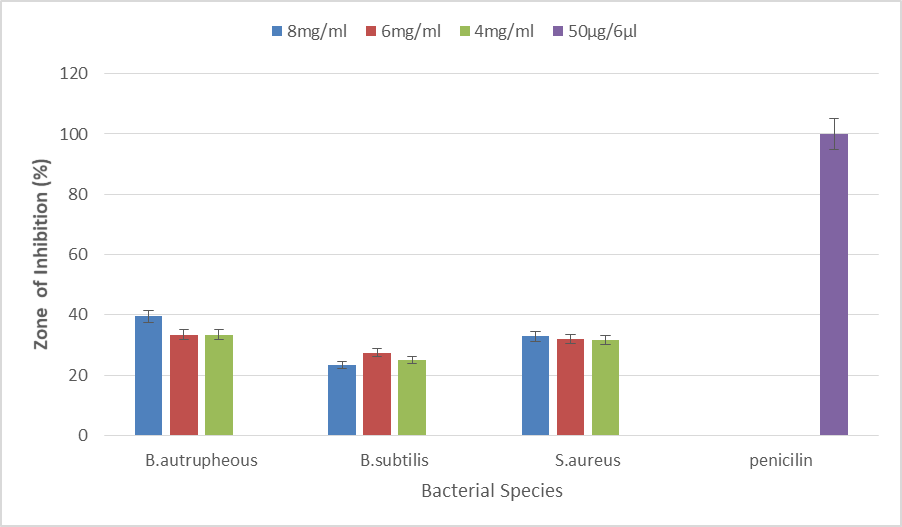
Table 2: Antibacterial activity of leaf extract of Cichorium intybus at concentrations 8mg/ml, 6mg/ml, and 4mg/ml. against Gram-negative bacteria (E.coli, S.typhi, P.auruginosa, and A.tumifeciens).
|
S.No |
specie |
Zone of inhibition (%)
|
Positive control (%) Penicillin (50µg/6µl) |
|||
|
1 |
E.coli |
|
100 |
|||
|
2 |
S.typhi |
|
100 |
|||
|
3 |
P.auruginosa |
|
100 |
|||
|
4 |
A.tumifeciens |
|
100 |
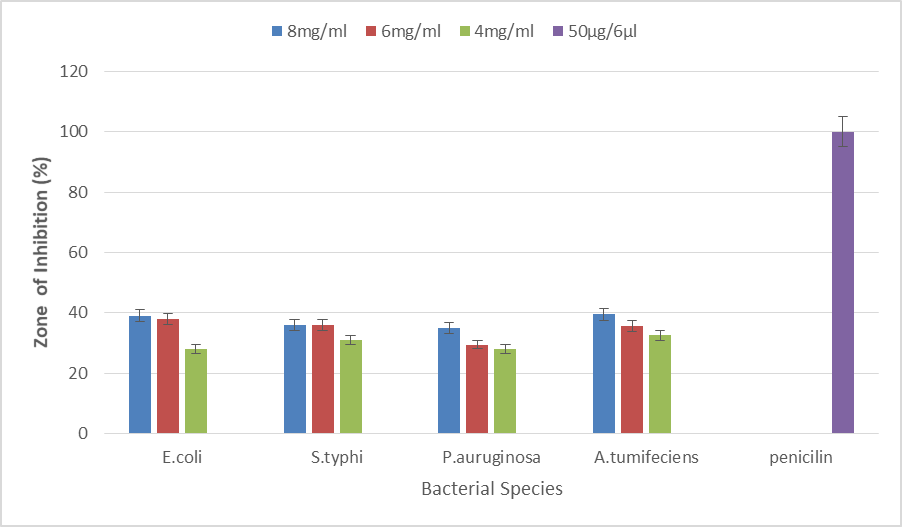
Figure 2: Antibacterial activity of leaf extract of C.intybus at concentrations 8mg/ml, 6mg/ml, and 4mg/ml. against Gram-negative bacteria (E.coli, S.typhi, P.auruginosa, and A.tumifeciens).
Antifungal activity of Cichorium intybus
The response of fungi to Chicory extract varied from fungus to fungus, nevertheless it was shown to be dose-dependent, as greater inhibition of growth was observed as the concentration of the extract increased. The anti-fungal potential of C.intybus plant extract at different concentrations (8, 6, and 4mg/ml) respectively against Aspergillus and Candida albicanss was determined.
Plant extract at a lower concentration of 4mg/ml produced 28% zone of inhibition against aspergillus and C.albicans, while at 6mg/ml formed 32.6, and 35% zone of inhibition against aspergillus and C.albicans respectively. On the other hand at greatest concentration of 8mg/ml plant extract greatly inhibited aspergilus and C.albicans by producing a maximum 38 and 37% zone of inhibition respectively.
Table 3: Antifungal activity of leaf extract of C.intybus at concentrations 8mg/ml, 6mg/ml, and 4mg/ml. against Aspergilus and Candida albicanss.
|
S.No |
Specie |
Zone of inhibition (%)
|
Positive control (%) Penicillin (50µg/6µl) |
|||
|
1 |
Aspergillus |
|
100 |
|||
|
2 |
Candida albicanss |
|
100 |
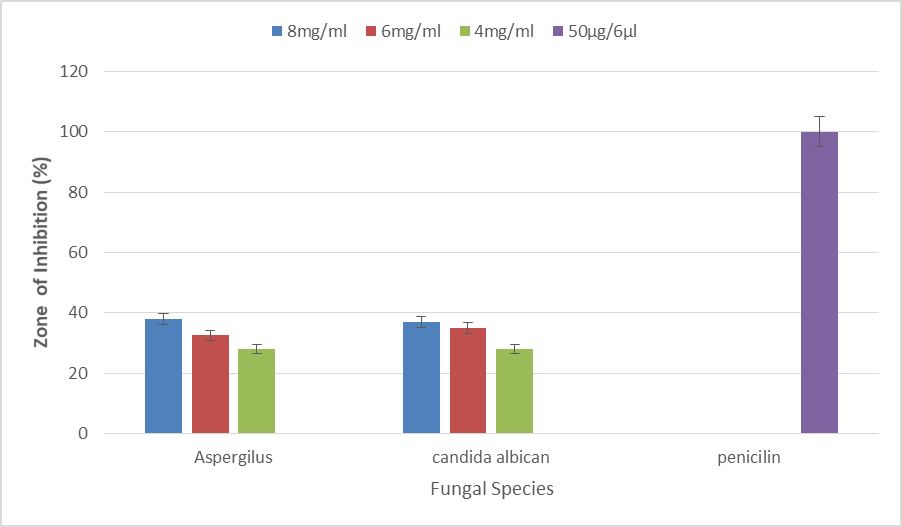
Figure 3: Antifungal activity of leaf extract of C.intybus at concentrations 8mg/ml, 6mg/ml, and 4mg/ml. Against Aspergillus and Candida albicanss.
Antioxidant activity
Radical scavenging activity of the leaf extract of C.intybus was measured by DPPH scavenging assay. The antioxidant activity of ethyl acetate, methanol, hot and cold water extracts of the leaf at various concentration (250, 300, 350, 400,450, and 500 µg/ml) are shown in Fig 4. All tested sample were active for antioxidant activity at both maximum and minimum concentration. The data shown in Fig.4 revealed that antioxidant activity of various extracts decreases with the decreasing concentration of extract. Among the tested samples, the hot water extract showed highest antioxidant activity of 85.625% at 500 µg/ml followed by cold water (48.8%). The data further revealed that the order of extract based on their antioxidant potential were hot water> cold water>methanol>ethyl acetate. The minimum antioxidant activity was noted in ethyl acetate extract at 250µg/ml (12.5%).
Figure 4: Antioxidant activity of leaf extract of C.intybus.
DISCUSSION :
The current study was carried out to explore the leaves extract of C.intybus plant in order to find out its antibacterial, antifungal and antioxidant potential. For this purpose different concentrations of the extract was prepared and tested against bacterial species (B. subtillus, B. autropeus, S. aureus, E. coli, S. typhi, P. auruginosa, A. tumefeciens) and fungal species (Aspergillus spp and Candida albicanss).
Three different concentrations (8, 6, 4mg/ml respectively) were applied against bacterial spp. Obtained data revealed that extracts from leaves of C.intybus were found active against all the tested bacteria. According to (Van hai et al., 2015) plant inhibit the growth of bacteria due to the presence of secondary metabolites such as phenolic, polyphenolic, quinone, alkaloid, terpenoid, lectine and polypeptide, possessed antibacterial activity. Results were obtained in dose dependent manner. The study carried out by (Panra et al., 2012) also described that different antibacterial activity of the same plant is due to variation and composition of bioactive compound in the plant.
In the current study large zone of inhibition was exhibited by the C.intybus against B. autropheaus and A. tumeficien. On the other side minimum zone of inhibition was formed against B.subtilis. The variation may be due to types of phytochemical constituents and extants of resistance of microorganisms. Similar results were also found by (N.sah et al., 2011). Also (Mostafa et al., 2017) also pointed the effects of plant extract againt gram positive and gram negative bacteria. In current study, we also obtained higher and minor activity against some of the bacteria. The results of (Bobis et al., 2014) revealed that different activiites of extract extract may be due to many factors i.e. concentrations, types of plant, medicinal range and pathogenicity of the organisms.
The antimicrobial activity of C.intybus extract could be due to the presence in the phytocomplex of various secondary metabolites. C.intybus is well-known source of several sesquiterpene lactones, flavonoids, coumarins, caffeic acid derivatives and phenolics that have been implicated as feeding deterrents or allelopathic agents (Poli et al., 2002). Several sesquiterpene lactones, known as ‘bitter principles’, with over 500 types, are present in Asteraceae plants, where they are the characteristic constituents of this family, except the tribe Tagetae (Herz W et al., 1977). The different types of molecules and the great variation in the content of sequiterpene lactones found in several genera and species belonging to this family have been also considered in chemotaxonomic studies (Heywood VH et al., 1977).
Radical scavenging activity is one of the most significant factor for assessing the therapeutic value of different part of the plants (Jayaprakasha et al., 2004). In the current study, leaves of the C.intybus were evaluated for their activity. Antioxidant activity is calculated in termed as percentage of control which indicates the quantity of each extract necessary to minimize the DPPH radical’s absorption.
The changing of the color from purple to yellow of extracts solution shows antioxidant activity (Jayaprakasha et al., 2004). Extraction solvent and plant material affect the antioxidant potential of the extract. In current study, leaves extract of C.intybus showed different antioxidant potential. The antioxidant activity in the current study was recorded, similar in the line (Patil et al., 2004). The data showed maximum antioxidant activity in hot water extract (85.625µg/ml). The current study was also focused on determining the best solvent for producing the extract with high antioxidant potential. Four different extraction solvents were used for the leaves of C.intybus like (Hot water, cold water, methanol, ethyl acetate). The effects of extraction solvent were also observed in this study. Among the tested sample of leaves, hot water extract showed maximum antioxidant potential followed by cold water, methanol and ethyl acetate. Similar finding were also reported that water extracts are the best solvent for the extraction of antioxidant potential (Bonoli et al., 2004).
BIBLIOGRAPHY:
1. Ahmad et al, & Iqbal et al, (2019). Antimicrobial properties of the essential oil of Juniperus Communis (L.) growing wild in east part of Kosovo. Am. J. Pharmacol. Toxicol., 8(3) , 128-133.
2. Ayaz et al, (2019). Investigate the antimicrobial effect of chicory leaf extract with different solvents on Staphylococcus aureus and Escherichia coli,. Int. J. Biosci., 5(9): , 399-405.
3. Benabderrahim et al, (2019). J. Food Sci. , 78(2): 258-263.
4. Bereksi et al, (2018). Phytochemical, antioxidant and mineral composition of hydroalcoholic extract of chicory (Cichorium intybus L.) leaves, . Saudi J. Biol. Sci., 22(3): , 322-326.
5. Blanco et al, (2019). In vitro Antibacterial Activity of Cichorium intybus against some Pathogenic Bacteria. . British J. Pharm. Res.,3(4): , 767-775.
6. Bobis et al, (2014). Phytochemical and antibacterial studies of chicory (Cichorium intybus L.)-a multipurpose medicinal plants. Adv Biol Res 2007; 1(1-2): , 17-21.
7. Bonoli et al, (2004). Radical scavenging and reducing properties of extracts of cashew shoots (Anacardium occidentale). Food Chem. 111, , 38-44.
8. Bonoli et al, (2004). Radical scavenging and reducing properties of extracts of cashew shoots (Anacardium occidentale). Food Chem. 111, , 38-44.
9. Cepas et al, (2019). Determination of some biochemicals and antioxidant properties of different parts of Cichorium ontybus (L.): A comparative study. The J. Anim. Plant Sci., 23(4): , 1060-1066.
10. chen et al, (2019). Antibacterial activity of Cichorium. Fitoterapia, 75(7–8): , 737-739.
11. Chhikara et al, & L. e. (2018). Sesquiterpene lactones of Cichorium intybus and Leontodon autumnalis. Phytochemistry 1985; 24: , 80-85.
12. chowdhury et al, & Bereksi et al, (2019). Evaluation of the liver protective potential of Cichorium intybus seed extract on Acetaminophen and CCl4-induced damage. Phytomedicine , 193-197.
13. Elizabeth et al, (2018). EVALUATION OF ANTIBACTERIAL ACTIVITY OF DIFFERENT SOLVENT. The Journal of Animal & Plant Sciences , 26.
14. Hassan et al, (2019). Antibacterial activity of some plants from family Apiaceae in relation to selected phytopathogenic bacteria. Kragujevac J. Sci , 28: 65-72.
15. Herz W, e. a. (1977). Antibacterial activity of Ballota limbata against potential multidrug resistant human pathogens. J Appl Sci Res 2009; 5(10): , 1611-1614.
16. Heywood VH et al, (1977). Synthesis, structural determination and antibacterial activity of compounds derived from vanillin and 4-aminoantipyrine. J Serb Chem Soc 2004; 69(12): , 991-998.
17. Hezarjaribi et al, (2019). Bitter sesquiterpenes lactones from chicory roots. J Agr Food Chem 2019; 38: , 1035-1038.
18. Hrenovic et al, (2019). Phytochemical and Antibacterial Studies of Chicory (Cichorium intybus L.) - A Multipurpose Medicinal Plant,. Advan. Biol. Res., 1(1-2): , 17-21.
19. Ingles et al, (2019). A guaianolide phytoalexin, cichoralexin, from Cichorium intybus. Phytochemistry 2019; 29: , 3449-3951.
20. Jayaprakasha et al., (2004). Antioxidant activities of extracts and fractions from Lysimachia foenumgraecum. Technol. 100, , 970-974.
21. Jayaprakasha et al., (2004). The antioxidant activity of aqueous spinach extract: chemical identification of active fractions. Phytochem. 58, , 143-152.
22. Jo Day et al, & Bauer et al., & Hassn et al, (2013). Procedure and Theoretical Consideration for Testing Antimicrobial Agents in Agar Media. 5th edition William Wilkins Baltimore , 180-195p.
23. Kar et al, (2016). Protective property of Cichorium intybus in CCl4 induced liver damage in mice. Arch Iran Med 2000; 3: , 46–47.
24. Kumar et al., & Ramamoorthy et al, (2019). Variation in the content of the main guaianolides and sugars in Cichorium intybus var. ‘Rosso di Chioggia’ selection during cultivation. Food chemistry , 139-147.
25. M. Qiao et al, (2017). Medical Herbs (European Agency for Reconstruction. First edition, Prishtinë (Kosovo) , 79p.
26. Madhusudhan et al, (2019). Coumarins from Cichorium intybus raceme. Khim Prir Soedin 1971; 7: , 115-118.
27. Mawalagedera et al, (2019). Green chemistry and the role of analytical methodology development. Cri Rev Anal Chem 2019; 29: , 750-756.
28. Mensor et al., (2001). Antioxidant activity and total phenolic content of Iranian Ocimum. Food Chem. 83, 547–550. , 547–550.
29. Mostafa et al, (2017). Antimicrobial activity of six selected plants against some strains of pathogenic organisms. J Microbiol Antimicrob 2012; 4(3): , 54-59.
30. Mulabagal et al., (2009). Sesquiterpene lactones in chicory (Cichorium intybus L.). Distribution in chicons and effect of storage. Food Res Int 1996; 29: , 12-17.
31. N.sah et al, (2011). Comparative antibacterial study of Convolvulus arvensis collected from different areas of Khyber Pakhtunkhwa, Pakistan. Int Rec J Pharm 2012; 3(10): , 220-222.
32. Panra et al, (2012). Antifungal activity of Tagetes patula extracts on some phytopathogenic fungi: Ultrastructural evidence on Pythium ultimum. Microbiol Res 2004; 159: , 295-304.
33. Patil et al, (2004). Phytochemical and antibacterial studies of chicory (Cichorium intybus L.) – a multipurpose medicinal plant. Adv. Biol. Res. 1 (1-2), , 17-21.
34. Poli F et al, (2002). Antimicrobial activities of some medicinal plants of West Bengal. Int J Pharm Biol Sci 2010; 1(3): , 1-10.
35. R. Noor et al, (2015). Antibacterial activity of some medicinal plants from Eastern Ghats, South India. Solai Bull. J. Ethnopharmacol., 72: , 39-41.
36. Sanganyado et al, (2019). Antimicrobial activity of some selected Indian medicinal flora. . Turk. J. of Biol., 29(1): , 41-47.
37. Sarkar et al, (2019). Sesquiterpene lactones fromPicris hieracioides L. var. japonica. . Chem Pharm Bull 1986; 34: , 2518-2521.
38. Sasidharan et al, (2011). Relationship between levels of sesquiterpene lactones in chicory and sensory evaluation. J Am Soc Hort Sci; 123: , 326-329.
39. Singh et al, (2019). . Les proprietes anti-microbiennes des huiles, essentielles et composes d’aromes. Sci.Aliment, 18: , 563-582.
40. Ullah et al, (2019). Comparison of Antibacterial Effect of Cichorium Intybus (L). with Vancomycin, Ceftriaxone, Ciprofloxacin and. Clin. Exp. Pharmacol.,2(3): , 1-3.
41. Van hai et al, (2015). Research on antifungal activity of flowers and leaves of Inula viscosa (Asteraceae). Parasitologia 1999; 41: , 579-582.
42. Zhang et al, (2018). Immature embryos culture in Italian red Chicory. Plant Cell Tissue Organ Cult., 62(1): , 75-77.